A house is more than just a structure. It is a place where your stories live. One of the most special projects I ever work on is a custom home library. Whether you are looking for a quiet place to escape or a grand room to show off your collection, a well-planned library is the heart of a home. Today, I want to walk you through how we create these timeless spaces, blending old-world charm with the precision of modern building.
The Renaissance of the Home Library
We are living in a very fast world. Everything is on a screen. Because of this, many of my clients in East Tennessee are looking for a way to slow down. That is why we are seeing a big comeback for the traditional home library. People want a place where they can hold a real book and sit by a fire. It is part of what we call the slow living movement. In a custom home, this room is not just for storage. It is a sanctuary.
When I talk to buyers, I explain that adding a library is a smart move for the value of the house. It adds what I call character value. It makes a home feel like it has a soul. In our area, we love to use local materials. We use Appalachian hardwoods like oak and cherry. This connects the house to the land around it. A home library built with local wood and classic style will never go out of fashion. It is a legacy you leave for your children.
Structural Foundations: Planning Your Layout

Before we pick out paint or wood, we have to look at the bones of the house. As an engineer, I start with the floor plan. You have to decide if you want a room all to itself or a space that fits into another area. A dedicated home library is great because it is quiet. You can close the door and leave the world behind. Some people like a hybrid space where the library and the home office are the same room.
Where should a home library be placed in a house? This is a question I get a lot. I usually suggest a quiet zone. You do not want it right next to a loud kitchen or a playroom. Placing it near the main bedroom or a private study works best. Natural light is also key. Northern light is the best because it is steady and soft. It does not glare on your pages or hurt your eyes.
We also have to talk about weight. Books are heavy. I mean really heavy. If you have shelves that go from the floor to the ceiling, you are putting a lot of stress on the floor. A standard house floor is built to hold a certain amount of weight. When we build a home library, we often have to beef up the floor joists. We use engineering math to make sure the floor will not sag over time. It is about precision and safety.
The Anatomy of Custom Cabinetry
The shelves are the most important part of any home library. I always recommend custom built-in shelves. They look like they grew right out of the walls. Floor to ceiling shelving makes a room look much taller and grander. It gives you that classic scholar look that many people want.
When it comes to wood, you want quality. Mahogany is a top choice for a traditional look because of its deep color. Walnut is also very popular because it is strong and has a beautiful grain. If you want something a bit warmer, cherry is a great pick. I tell my clients to avoid cheap materials like particle board. They will sag under the weight of your books. We use real wood or high-grade plywood with thick wood trim.
To make the shelves look finished, we add details like wainscoting and crown molding. Wainscoting is the wood paneling on the lower part of the wall. Crown molding is the trim where the wall meets the ceiling. These small touches make a big difference. They frame your collection and make the home library feel like a piece of fine furniture.
Architectural Focal Points
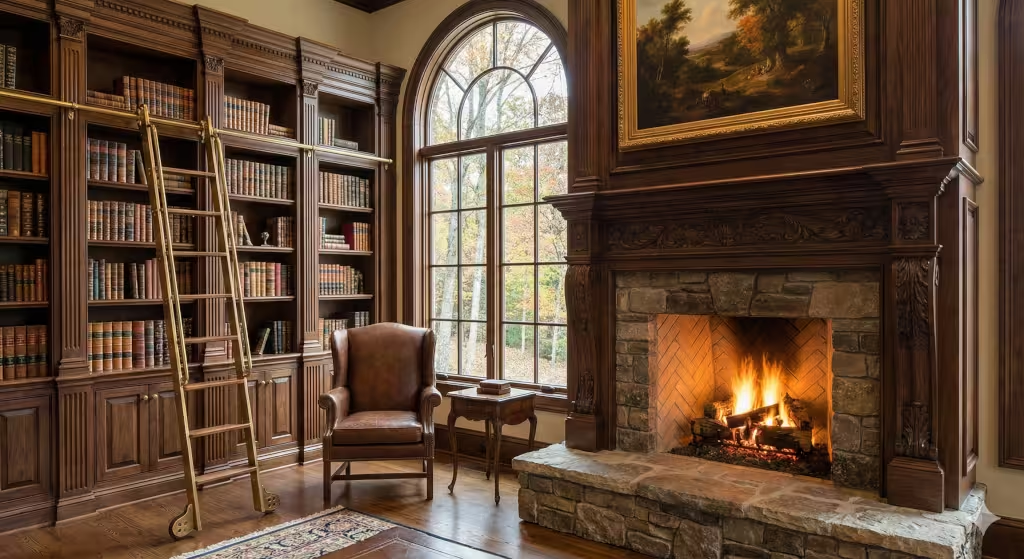
A great home library needs a center of attention. One of the coolest features we install is a rolling library ladder. It is not just for show. It helps you reach the high books safely. The sound of the wooden wheels on a brass rail is part of the experience. It makes the room feel historic.
Another must-have is a fireplace. In the Tri-Cities, our winters can get chilly. A fireplace makes the library the heart of the home. You can go with a classic wood-burning hearth or a modern gas insert. Either way, it provides a warm glow that makes reading even better. I like to use local stone or a carved wood mantel to match the shelves.
We also focus on symmetry. This comes from Georgian and Victorian styles. It means things are balanced. If you have a window in the middle, you put matching shelves on both sides. This creates a sense of calm. A home library should feel organized and steady. That is what good design is all about.
Lighting the Narrative
You cannot enjoy a home library if you cannot see the words on the page. We use layers of light. First, we have ambient light. This is the general light for the whole room. We might use a beautiful brass chandelier or recessed lights in the ceiling. Next, we have task light. This is light for reading. A classic floor lamp next to a chair is perfect for this.
We also add accent light. We put small lights at the top of the bookshelves. These are called picture lights. They shine down on the books and make the wood grain pop. It looks amazing at night. For the shelves themselves, we can hide LED strips. This makes the books easy to find without making the room too bright.
How do you light a home library? The goal is to avoid shadows. You want the light to be warm and soft. We also think about the sun. We use special glass on the windows to block UV rays. This stops the sun from fading your book covers and the wood on your shelves. It is all about protecting your investment.
Furniture and Textiles: The Comfort Factor
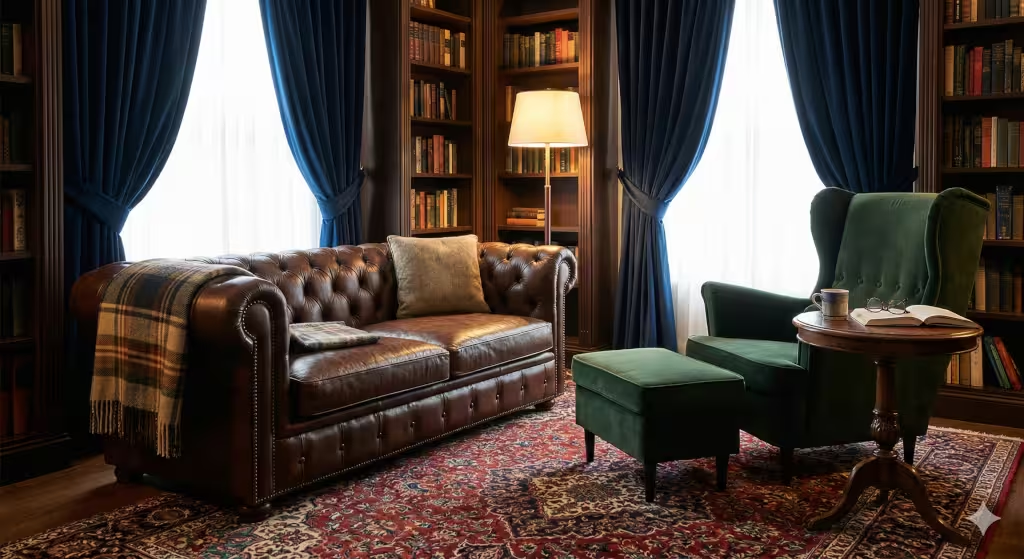
Once the room is built, we have to make it comfortable. A home library is only as good as its chairs. I am a big fan of the Chesterfield sofa. It has deep buttons and rolled arms. It is a classic look that never goes out of style. Leather is a great choice because it smells good and lasts a long time.
We also use textiles to make the room cozy. A thick Persian rug on the floor helps keep the room warm. It also makes the room quieter. Fabrics like velvet or heavy wool for the curtains add texture. We choose deep colors like forest green, navy blue, or burgundy. These colors feel rich and inviting.
Every home library needs a good reading nook. This might be a window seat or a deep wingback chair. We make sure there is a small table nearby. You need a place to put your coffee or a glass of water. A comfortable ottoman is also a good idea so you can put your feet up. It is your space to relax.
Modern Technology in a Traditional Shell
Even a traditional home library needs some modern features. We just hide them. We can build charging stations into the desks or inside a drawer. This way, you can charge your tablet or phone without seeing messy wires. We can also hide speakers behind the books so you can listen to soft music while you read.
Climate control is very important in Tennessee. Our air can get very humid in the summer. High humidity is bad for books. It can cause mold and make the pages wavy. We install high-tech systems to keep the air at the right moisture level. This protects the wood and your rare books.
We also think about acoustics. Books are actually great at soaking up sound. But we add extra help with heavy rugs and curtains. This makes the home library a very quiet place. It is a true escape from the noise of a busy household.
Questions Answered About Home Library Design
There are often a lot of questions about how to start. People ask, how do I make my home library look traditional? The answer is in the details. Use dark wood, gold or brass accents, and rich colors. Don’t be afraid of heavy furniture. It should feel sturdy and permanent.
Another question is, can a library double as a dining room? Yes, it can! We call this a library-dining room. We line the walls with books and put a large wooden table in the middle. It makes dinner parties feel very sophisticated. It is a great way to use space if you don’t have an extra room.
What are the best colors for a library? I always suggest moody colors. Think about a deep English green or a rich oxblood red. These colors make the room feel like a hug. They are warm and they help you focus. If you want something lighter, a creamy white can work, but the wood should still be the star.
Styling Your Collection: Beyond the Spine
A home library is not just for books. It is for your memories. We leave space on the shelves for things like globes, small statues, and family photos. This makes the room feel personal. It shows who you are and where you have been.
How you organize your books matters too. Some people like to do it by color. This looks very pretty but it can be hard to find a specific book. Others do it by subject or author. I like a precise system because of my engineering background. It makes me feel good to know exactly where everything is.
Don’t forget to leave some empty space. We call this negative space. If you jam every shelf full, the room can feel cluttered. Leaving a few gaps lets the eye rest. It also gives you room to grow your collection over time.
Building Your Legacy
Building a home library is one of the best things you can do for your home. It is a room that will grow with you. It is a place for quiet mornings and cozy evenings. As a builder in the Tri-Cities, I take pride in making sure these rooms are built to last. We use the best materials and the best plans to create a space you will love.
A library is more than just a place for books. It is a place for wisdom. It is a place where you can be yourself. Whether you live in Kingsport, Bristol, or Johnson City, I would love to help you plan your dream sanctuary. It is an investment in your home and your happiness.
A Checklist of Woods to Use for Your Home Library
Building a home library is a lot like building a high-quality piece of furniture, just on a much larger scale. You want to look at wood not just for its color, but for its “mechanical properties,” how it handles weight, how it reacts to the humidity we get here in the Tri-Cities, and how it holds a finish over fifty years.
For home libaries, many people pick a wood just because it looked good in a magazine, only to find out it warped under the weight of their encyclopedias. We aren’t going to let that happen to you. Here is a professional checklist for selecting the perfect timber for your home library.
1. Strength and Load-Bearing Capacity
Before you look at the grain, you have to look at the strength. A home library holds a massive amount of weight.
Check the “Janka” Rating: This is a scale that measures how hard a wood is. For a home library, you want something middle-to-high.
Avoid Softwoods: Pine and Cedar are beautiful for a cabin, but they are too soft for heavy books. They will dent and “smile” (sag) over time.
Select Hardwoods: Oak, Walnut, and Maple are the gold standards. They can span longer distances without needing extra support brackets.
2. Grain Pattern and Visual Texture
The grain is the “personality” of your home library.
Open Grain (Oak, Ash): These have a very visible, textured pattern. They feel traditional and rugged.
Closed Grain (Cherry, Maple): These feel smooth and “buttery.” They are great if you want a more polished, formal look.
Engineer’s Tip: If you want a very uniform look, ask for “quarter-sawn” wood. It’s more expensive, but the grain is straight and it is the most stable wood you can buy.
3. Color and “Aged” Appearance
Wood is a living material; it changes as it breathes and sees the sun.
Natural Darkening: Cherry starts out pale but turns a deep, rich red-brown over time. You have to plan for that change in your home library.
Staining vs. Natural: Walnut is naturally dark and rarely needs stain. Oak is very “porous” and takes stain perfectly if you want a specific color like a deep espresso or a classic honey.
4. Stability and Humidity Resistance
In East Tennessee, our humidity can swing wildly. This can make wood grow and shrink.
Moisture Content: Ensure your builder uses “kiln-dried” lumber. If the wood has too much moisture when it’s installed, your shelves will crack as they dry out in the winter.
Plywood Cores: For the main structure of the home library, I often recommend using high-grade “A-1” Birch plywood with solid wood “edge banding.” It is more stable than solid wide planks and won’t warp as much.
5. Cost and Availability
I always try to support our local economy when I can.
Local Hardwoods: We have some of the best White Oak and Walnut right here in the Appalachian region.
Exotics: Woods like Mahogany or Teak look incredible but will cost significantly more because they have to be shipped in.
The “Trim” Trick: If you are on a budget, use a less expensive wood for the “boxes” (the inside of the shelves) and spend your money on high-end wood for the “face frames” and “crown molding.” This gives you a luxury home library look for a fraction of the price.
Comparison of Popular Woods for a Home Library
| Wood Type | Durability | Best For… | Expert Note |
| White Oak | Very High | Heavy collections | Resists rot and wear; very traditional. |
| Black Walnut | High | Luxury looks | Naturally dark; smells wonderful. |
| Cherry | Medium | Warm, cozy vibes | Darkens beautifully with age. |
| Hard Maple | Extremely High | Painted libraries | Very smooth; doesn’t show grain through paint. |