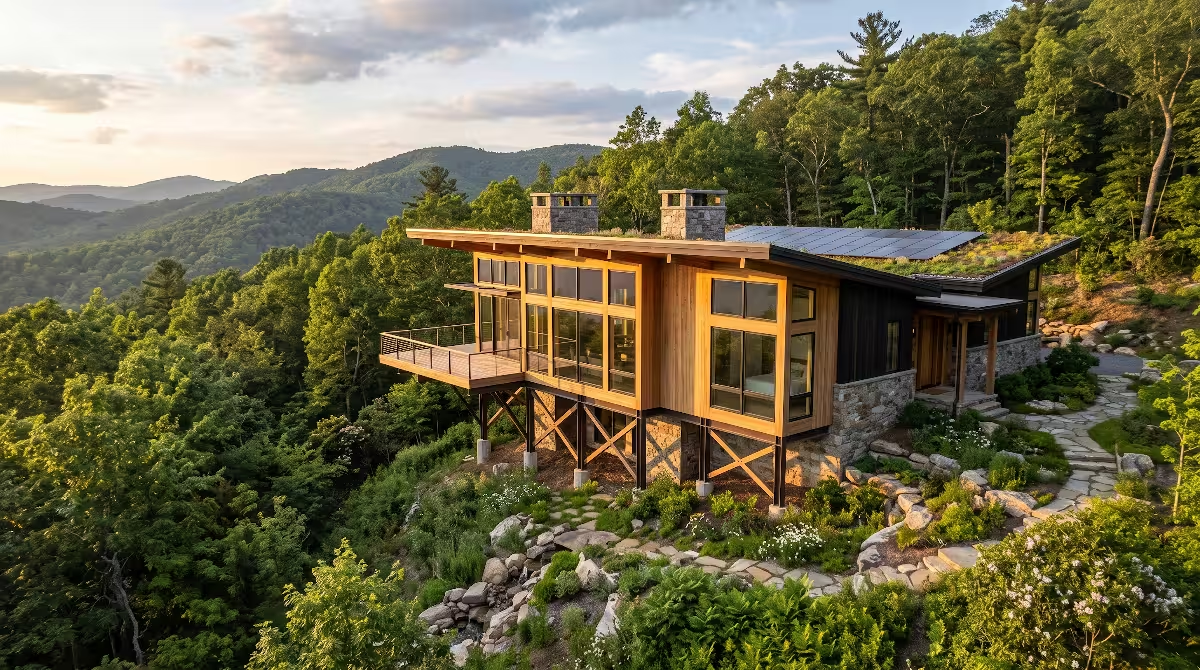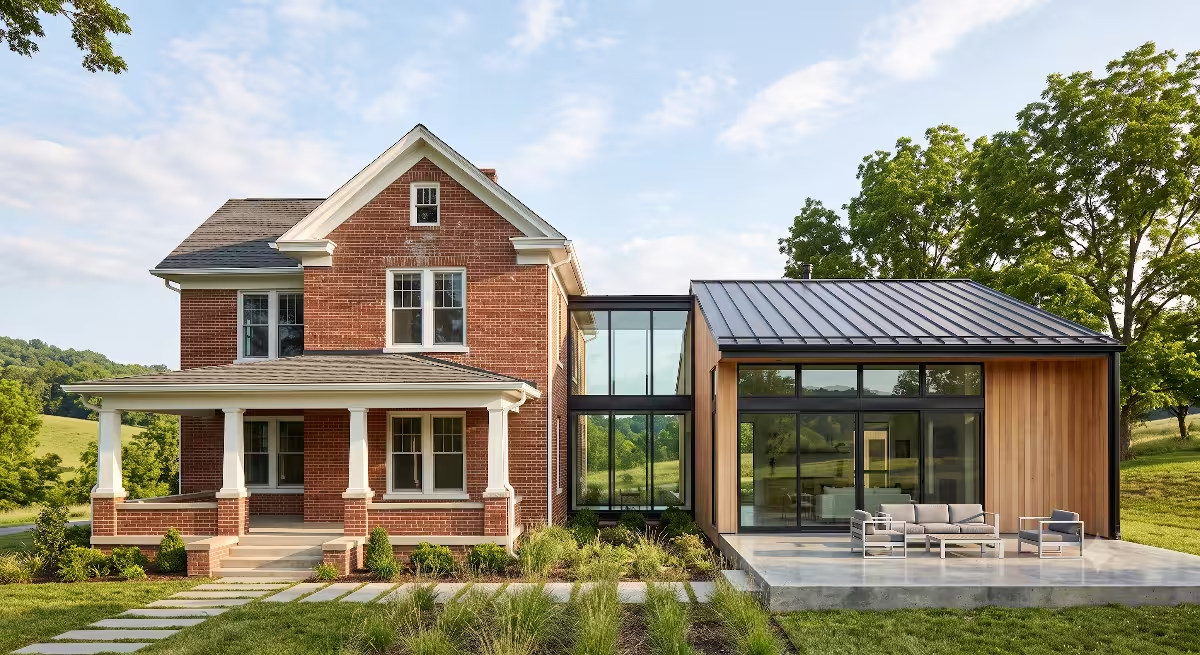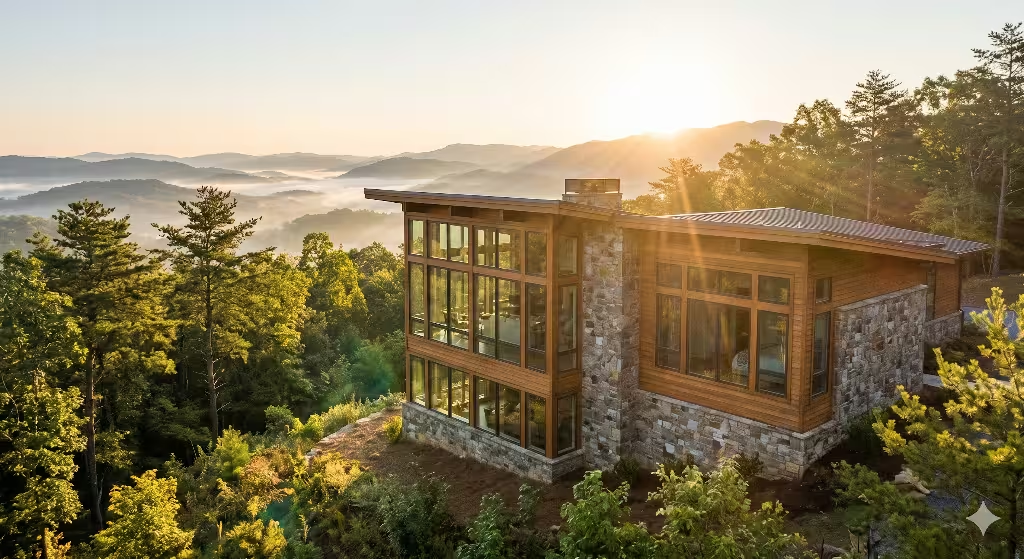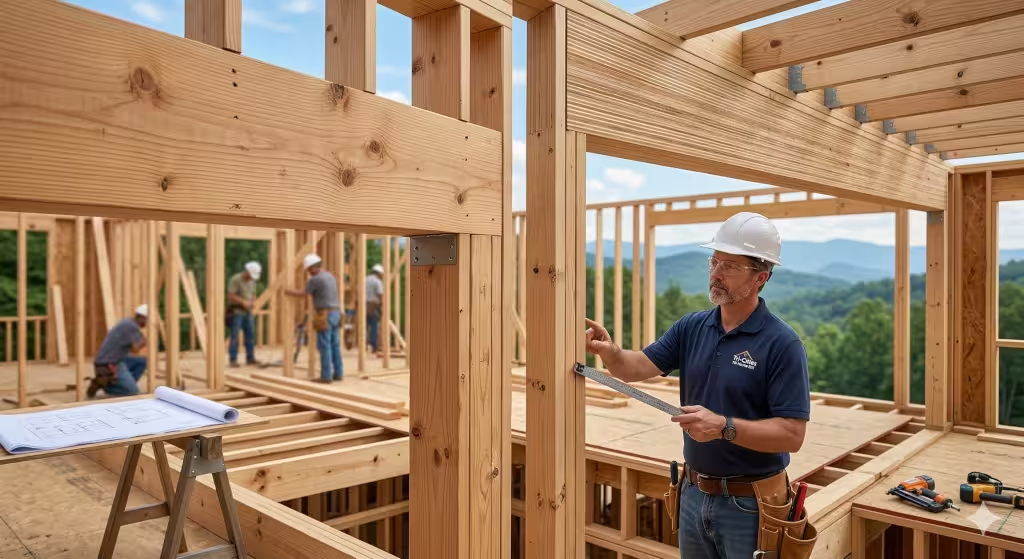
In the world of custom home building, there is a big difference between a house you like right now and a true forever home. A forever home is a place that stays useful and comfortable for you through every stage of life. It is a house that is smart enough to change as you do. When we talk about the key features of a “forever home,” we are looking at more than just pretty paint colors or the newest kitchen gadgets. We are talking about the soul and the structure of the building.
Building a forever home in the Tri-Cities means thinking about the future today. It means knowing that the stairs you climb easily at fifty might feel like a mountain at eighty. It means choosing materials that can handle our humid Tennessee summers and our chilly winters without falling apart. Our goal is to help you understand the technical side of building so you can make choices that have integrity. We want to build a home that is precise in its function and competent in its design. Let’s go through what it takes to create a space that you will never want to leave.
The Philosophy of the Forever Home
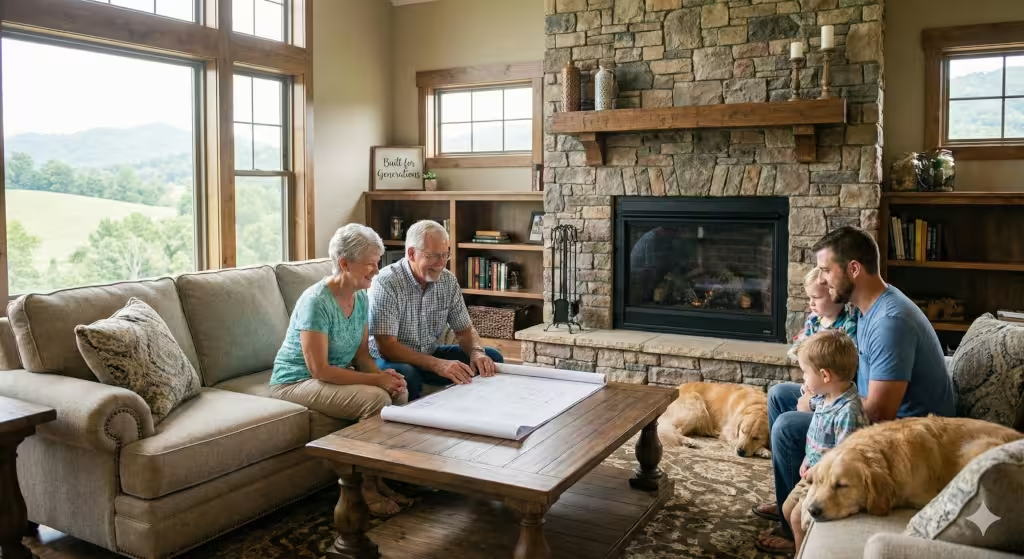
When most people start thinking about building, they focus on what they need right this second. They want a big playroom for the kids or a massive home office. But a forever home requires a different kind of mindset. You have to look at your life as a long story with many chapters. A forever home is designed to be the setting for all of those chapters. It is a home that moves from being a place to raise children to a place to host grandkids, and finally, a place where you can live safely and independently in your later years.
In the Tri-Cities, we have unique land. We have beautiful rolling hills, but those hills can make building a forever home tricky. If you build on a steep slope with lots of stairs just to get to the front door, you might find yourself moving out sooner than you planned.
A forever home starts with picking the right piece of land that allows for easy access. It also means looking at the layout. You want a home that feels cozy when it is just two people but can expand when the whole family comes over for Christmas dinner. The main idea is adaptability. If a room can only ever be one thing, it isn’t helping you stay in your home forever.
The Master-on-Main Priority
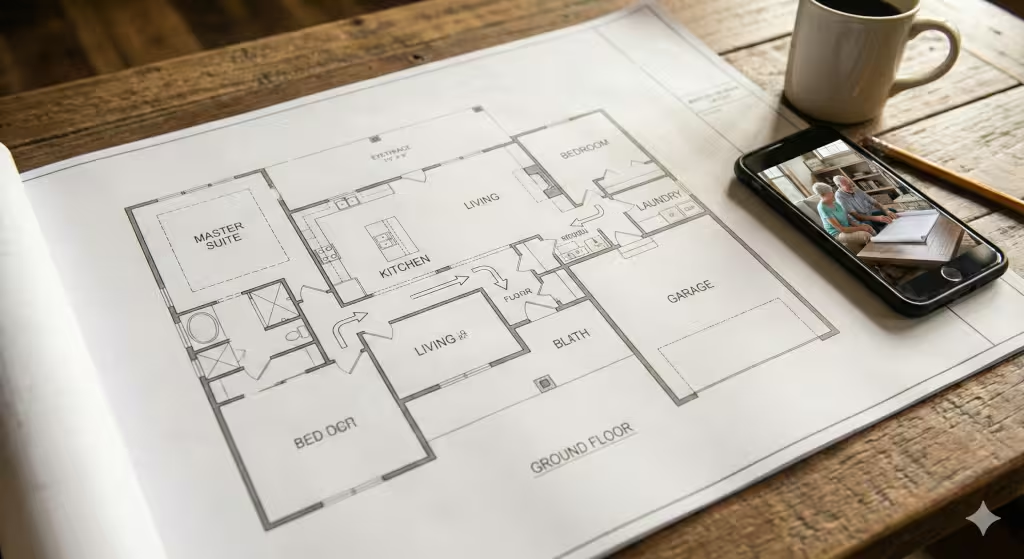
The most important layout choice for a forever home is putting the primary bedroom on the first floor. We often call this a “master-on-main” plan. This is a technical move that solves a lot of problems before they even start. If your bedroom, the kitchen, and the laundry room are all on the same level, you can live in your home even if you have trouble with stairs later on.
In Johnson City and Bristol, many of our older homes have all the bedrooms upstairs. While that works for young families, it creates a “move-out date” for older residents. By putting the main living spaces on the ground floor, you remove the biggest barrier to staying put. This doesn’t mean you can’t have a second floor for guest rooms or a hobby space. It just means the “engine” of your daily life—where you sleep, eat, and wash clothes—is all on one level. This kind of floor plan optimization is a key feature of a forever home because it keeps the house functional for decades.
Universal Design: The Invisible Accessibility
Many people hear the word “accessible” and think of hospital grab bars or ugly ramps. But in a true forever home, we use something called Universal Design. This is a way of building where the home is easy for everyone to use, regardless of their age or ability, and it looks beautiful. It is “invisible” because you don’t notice it until you need it.
One of the best examples is the zero-step entry. Instead of having a step up from the garage or the front porch, we design the house so the floor is flush with the outside. This is great for a person in a wheelchair, but it is also great for a mom pushing a stroller or someone carrying heavy bags of groceries. We also use wider doorways, usually 36 inches, and wider hallways. This makes the home feel more expensive and airy, but it also means a walker or a wheelchair can pass through easily. In addition be sure that the door threshold is not too high.
Another favorite is the curbless shower. By sloping the floor of the bathroom toward a drain, we can get rid of the “lip” on the shower. It looks like a high-end spa, but it removes a major tripping hazard. This is how we combine luxury with the key features of a “forever home.”
Flexible and Multi-Functional Spaces
A house that stays the same while your life changes will eventually become a burden. That is why a forever home needs flex rooms. A flex room is a space that doesn’t have a permanent “label” like “bedroom” or “dining room.” In the early years, it might be a nursery. Later, it becomes a home office or a gym. Eventually, it could be a suite for a live-in caregiver or a space for an aging parent.
We also look at “zoning” the house. This means grouping rooms together so that different generations can live under one roof while still having privacy. For example, having a separate wing for guests with its own small bathroom and sitting area is a huge plus. In the Tri-Cities, we are seeing more families build “in-law suites” or Accessory Dwelling Units (ADUs). These are spaces that give everyone their own front door while staying on the same property. This kind of flexibility is a hallmark of a forever home.
High-Performance Bones: Durability and Efficiency
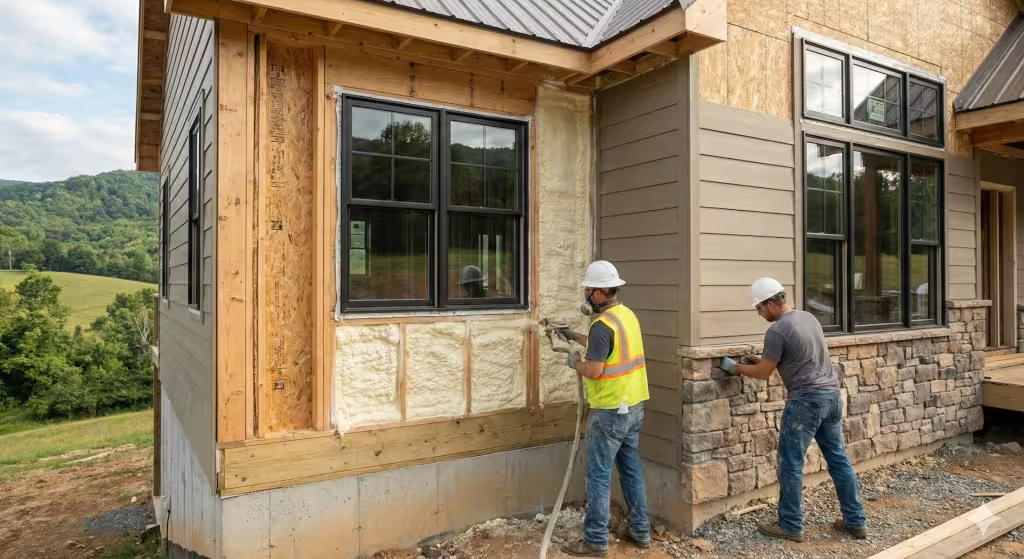
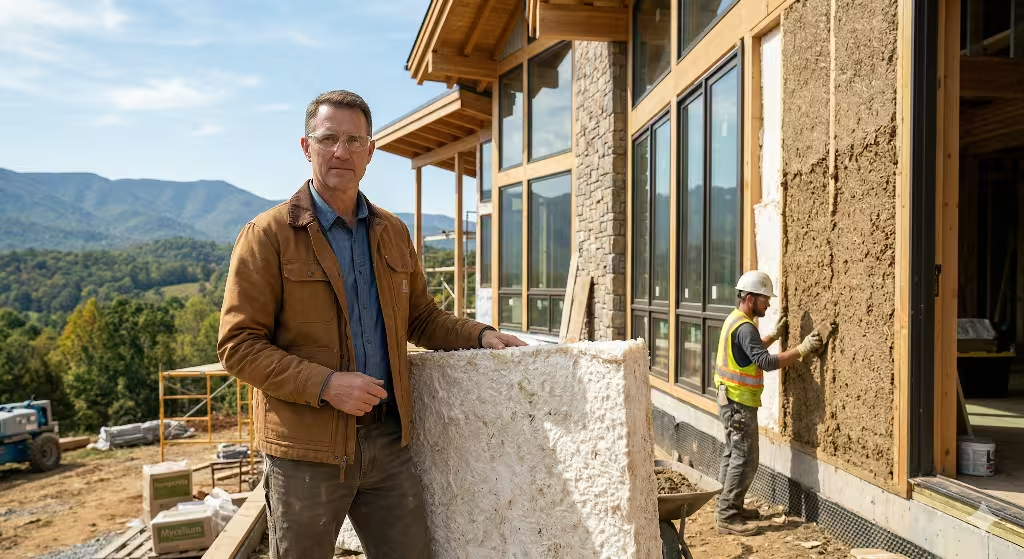
It is important to remember, that a forever home has to be built to last, or it won’t be around for you to grow old in. This means using materials that are tough. In East Tennessee, we have high humidity, which can lead to rot and mold if you aren’t careful. I always recommend stone, brick, or high-quality fiber cement siding. These materials don’t just look good; they protect the house for fifty years or more.
Energy efficiency is another huge part of a forever home. You don’t want to be on a fixed income in twenty years and have a massive heating bill because your house is drafty. Using spray foam insulation and high-performance windows keeps the heat in during the winter and the cool air in during the summer. We also look at the HVAC systems. Modern units are much more efficient than the ones from ten years ago. Building a home that costs very little to run is one of the smartest things you can do for your future self. It’s about being precise with your energy use so your home remains affordable.
The Tech-Ready Home: Future-Proofing Integration
Technology changes fast, but your house stays the same. To make a forever home, you have to build in the “nervous system” for the tech of tomorrow. This means running extra wires (like CAT6) inside the walls while the house is being built. It is much cheaper to do it before, than to tear up drywall later.
Smart home features are more than just toys; they are tools for staying independent. Voice-controlled lights, smart thermostats, and security cameras help you manage your home with less physical effort. For someone with limited mobility, being able to unlock the front door or turn off the oven from a phone is a game-changer. We also make sure the garage is ready for electric vehicles. Even if you don’t drive one now, you likely will in the future. Having the right wiring in place now is a key feature of a “forever home” that keeps you ahead of the curve.
Outdoor Living: Integrating with the TN Landscape
Our weather in the Tri-Cities is one of the best things about living here. A forever home should make it easy to enjoy the outdoors. We design “four-season” porches that can be screened in the summer and closed up in the winter. This gives you extra living space without the high cost of a full room addition.
We also think about maintenance. As we get older, we might not want to spend every Saturday mowing a massive lawn or weeding a complex garden. We use native Tennessee plants that are used to our soil and weather. These plants need less water and less work. We also look at the materials for decks and patios. Using composite decking instead of wood means you never have to sand or stain it again. It is all about making the outside of your forever home as easy to care for as the inside.
Addressing the Legal and Development Trends
When you build a forever home in Johnson City or Kingsport, you have to follow local building codes. These laws are there to make sure your home is safe. But a forever home often goes beyond the “minimum” code. For example, the code might say you only need a certain amount of insulation, but we might add more to save you money in the long run.
In our area, we are also seeing new trends in how neighborhoods are designed. Some people prefer “pocket neighborhoods” where homes are closer together, making it easier to walk to a neighbor’s house or a local park. Others want more land for privacy. Regardless of where you build, you need to make sure the legal paperwork, like your builder’s contract and warranties, is solid. A good contract is the foundation of a good building experience. You want to know exactly what you are getting so there are no surprises down the road.
Questions Often Asked About Forever Homes
People often ask, “What is the single most important part of a forever home?” Our answer is always the same: it’s the layout. You can change your kitchen cabinets or your flooring, but changing the basic shape of the house is very expensive. That’s why we spend so much time on the floor plan.
Another common question is about the cost. Does a forever home cost more to build? Usually, yes, by about 5% to 10%. This is because you are using better materials and adding features like wider doors and better insulation. But when you look at the cost of moving or the cost of a nursing home later in life, a forever home actually saves you a lot of money. It is an investment in your own future.
People also ask about “aging in place.” This just means being able to stay in your own home as you get older. A forever home is the best way to do that. It’s about removing the “stumbling blocks,” literally and figuratively, that make a house hard to live in as we age. By following these principles, you are creating a legacy for yourself and your family right here in East Tennessee.
Your Legacy in the Tri-Cities
Building a home is a big job. Building a forever home is an even bigger one. It requires you to be honest about what you need now and what you might need in thirty years. It takes a builder who is precise, competent, and has the integrity to do things the right way, even when no one is looking.
In Kingsport and Johnson City, we value our roots. We like things that are built to last. When you focus on the key features of a “forever home,” you are building more than just a structure. You are building a place where your family’s history will happen. You are building a sanctuary that will take care of you just as much as you take care of it. Whether it is the zero-step entry, the master-on-main layout, or the energy-efficient bones, every choice you make today is a gift to your future self.
Below is a Checklist of Technical Specifications for a “Master-on-Main” Suite
Here is a technical checklist for a “Master-on-Main” suite that ensures your forever home is both comfortable today and functional thirty years from now.
The Master-on-Main Technical Checklist
1. Entry and Transition
Zero-Threshold Entry: Ensure the transition from the hallway into the bedroom is perfectly flush. No transition strips or “lips” that could cause a trip.
Door Width: Specify a minimum of 36-inch clear opening for all doors (bedroom entry, closet, and bathroom). This allows for easy passage of furniture or mobility aids.
Lever-Style Handles: Replace traditional round doorknobs with lever handles. They are much easier to operate if you are carrying items or have limited grip strength.
2. The Sleeping Area
Circulation Space: Maintain at least 36 inches of clear floor space on both sides of the bed and at the foot of the bed.
Switch Placement: Install “rocker” style light switches 36 to 42 inches above the floor. Include a master light switch next to the bed so you can turn off the room lights without getting up.
Outlet Height: Raise electrical outlets to 18 or 24 inches from the floor (instead of the standard 12 inches) to reduce the need for deep bending.
Reinforced Walls: Add plywood backing behind the drywall in specific areas to allow for the future installation of grab bars or even a wall-mounted TV without hunting for studs.
3. The “Forever” Bathroom
Curbless Shower: Specify a “wet room” style or a true curbless shower. The floor should slope precisely toward a linear drain so there is no step-over height.
Shower Dimensions: Aim for a minimum of 60 inches by 36 inches to allow for a shower bench or assistance if needed.
Handheld Showerhead: Install a height-adjustable handheld showerhead in addition to a fixed rain head.
Comfort-Height Toilet: Select a “chair height” or “comfort height” toilet (usually 17-19 inches high). Ensure there is at least 18 inches of space from the center of the toilet to the nearest wall for maneuverability.
Vanity Design: Choose a vanity with a “removable front” or ensure it is designed so a person could sit while brushing their teeth or getting ready.
4. The Walk-In Closet
Variable-Height Shelving: Use adjustable hanging rods and shelves. As needs change, you can lower the rods to a reachable height.
Automated Lighting: Install motion-sensor lighting so the closet brightens the moment you walk in—no fumbling for a pull-cord in the dark.
Floor Surface: Use a non-slip, low-pile carpet or a hard surface like LVT (Luxury Vinyl Tile) to make moving heavy laundry baskets easier.
5. Technical Systems
Dedicated HVAC Zone: Ensure the master suite is on its own thermostat zone. This allows you to keep the bedroom cool at night without wasting energy cooling the rest of the house.
Sound Dampening: Use “Quiet Rock” drywall or Rockwool insulation in the interior walls of the suite to provide a peaceful, silent retreat from the rest of the home.
This list covers the “precision and competence” needed for in a high-quality build. By handing this to your builder, you’re speaking their language and ensuring the job is done right the first time.