

Building a custom home in the Tri-Cities of Tennessee is a dream for many. We have the beauty of the Appalachian Highlands, the rolling hills of Kingsport, and the vibrant communities of Johnson City and Bristol. However, our land hides a secret that can catch many buyers off guard. If you have spent any time looking for land here, you have likely heard the term “perk test.” In simple terms, this test measures how fast water moves through your soil.
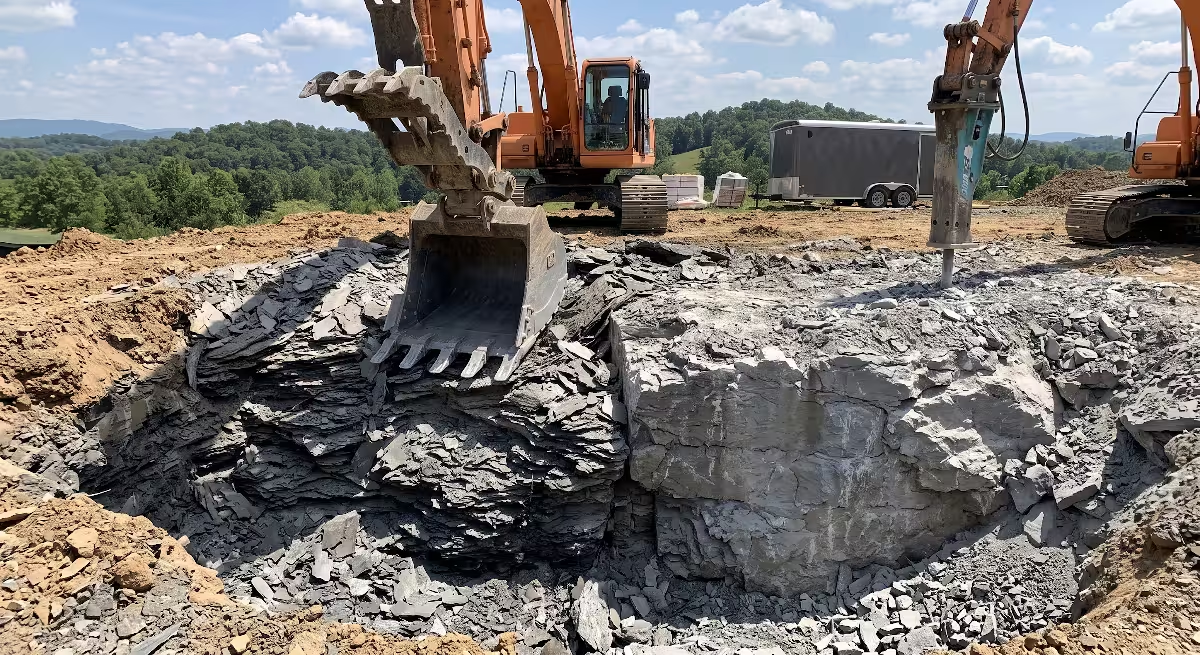
In East Tennessee, we deal with a lot of red clay and limestone bedrock. This “poor soil” often fails a standard test because the water simply has nowhere to go. Many families get heartbroken when they found out their land wouldn’t “perk” for a standard system. But here is the good news: a failed perk test is not the end of the road.
Many builders look at soil as a variable, not a roadblock. An alternative septic system for poor soil is a high-precision solution designed to work where nature needs a little help. We are going to examine how these systems work, why they are necessary for our local geography, and how you can ensure your home building experience stays on track even when the ground is stubborn.
Video Version of this Article
The Tri-Cities Soil Challenge
When you look at the mountains around Sullivan and Washington counties, you see beauty. When a builder looks at them, he sees layers of history that make drainage difficult. Our soil is often very dense. This density comes from the high clay content. Clay particles are tiny and flat; they pack together so tightly that water struggles to pass through them. In other areas, we have “karst” topography, which means limestone bedrock is very close to the surface.
If you try to put a standard septic system in shallow soil over rock, the waste water cannot be cleaned by the earth before it hits the rock layer. This can lead to groundwater pollution. This is why the state of Tennessee has strict rules. We have to protect our beautiful rivers and our drinking water. When we talk about “poor soil,” we are usually talking about one of three things: it’s too thick with clay, it’s too shallow over rock, or the water table stays too high during the rainy season. Understanding these local challenges is the first step in choosing the right technology for your home.
What Are Alternative Septic Systems for Poor Soil?
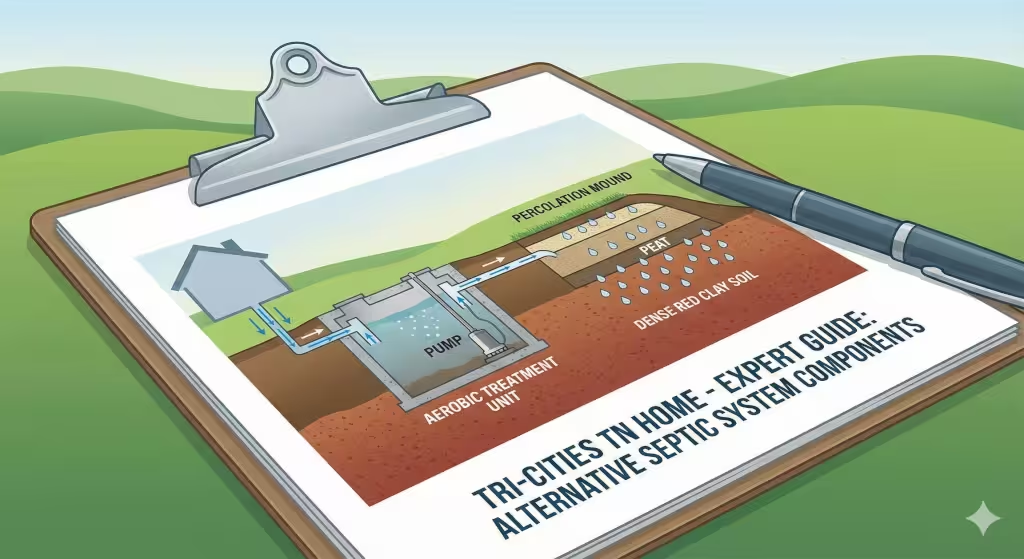
You might be used to the idea of a traditional septic system. It is a simple setup where gravity does all the work. Water flows from your house into a tank, and then out into a series of perforated pipes in the ground. But when the ground won’t take that water, we have to use an alternative septic system for poor soil.
These systems are more like mini-wastewater treatment plants for your own backyard. Instead of just letting the liquid soak into the dirt, these systems use pumps, air, or special filters to clean the water before it ever touches the ground. Because the water is much cleaner when it leaves the system, the soil doesn’t have to do as much work. This allows us to use much smaller areas of land or land that doesn’t drain perfectly.
Think of it like this: a standard septic system is like a coffee filter that relies on gravity. An alternative system is like a high-tech espresso machine that uses pressure and precision to get the job done. Both give you coffee, but the espresso machine can work in many more situations.
How Septic Systems Work in Difficult Terrains
To understand why we need these advanced tools, we have to look at the science of “effluent dispersal.” Effluent is just a professional word for the liquid waste that leaves your septic tank. In a perfect world, the soil has lots of tiny pockets of air. Helpful bacteria live in these pockets and “eat” the waste in the water as it trickles down.
In poor soil, there are no air pockets. The ground stays wet, the “good” bacteria die, and the system clogs up. Alternative septic systems solve this by adding “secondary treatment.” They might blow air into the tank to help bacteria grow faster, or they might run the water through a bed of peat moss or sand. By the time the water is released into your yard, it is often clear and odorless. This precision is what allows us to build on those ridge-tops with amazing views that wouldn’t support an old-fashioned system.
Mound Systems: Rising Above the Problem
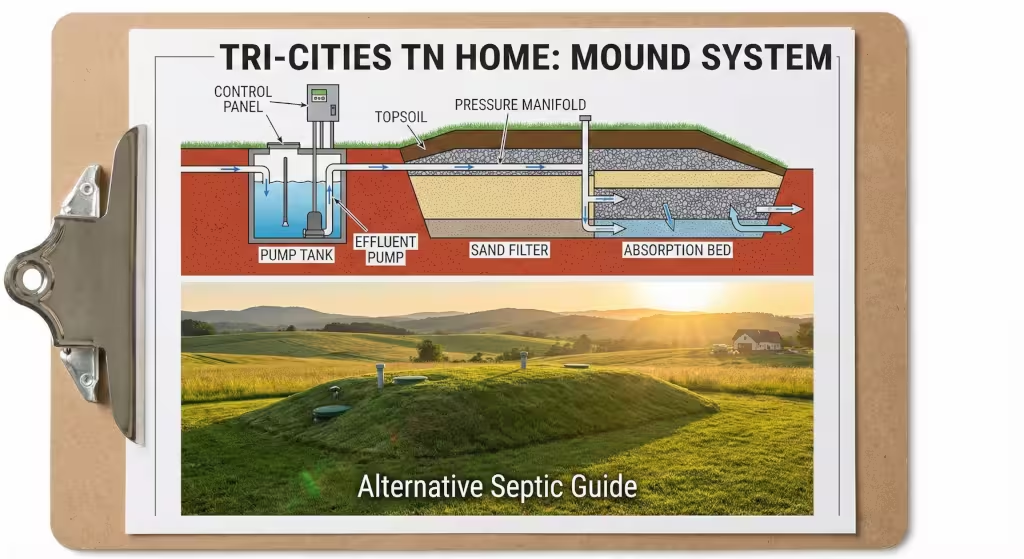
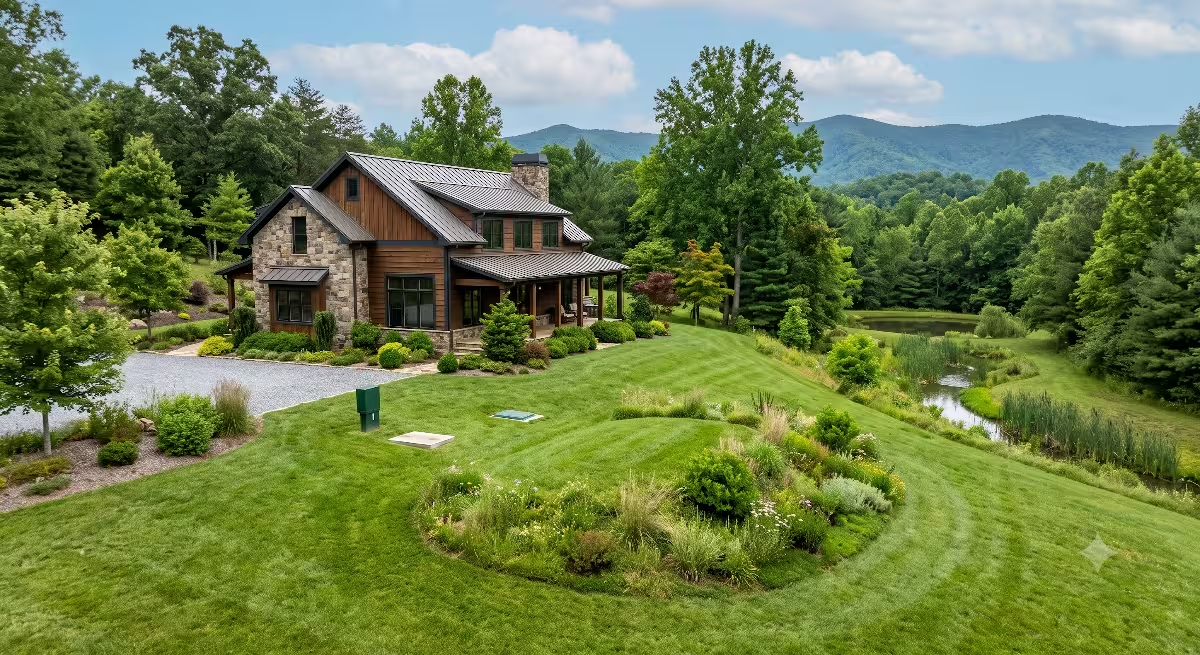
One of the most common sights in parts of the Tri-Cities where the soil is shallow is a mound system. If you see a long, neatly manicured hill in someone’s side yard, you are likely looking at a mound septic system.
A mound is exactly what it sounds like. We bring in high-quality sand and soil and build a hill on top of the natural ground. We then put the drain pipes inside this hill. This gives the waste water plenty of room to be cleaned by the sand before it ever reaches the “poor” natural soil underneath. It uses a pump to push the water up into the mound. It is a very reliable way to handle high water tables. While they take up some space in the yard, they are a tried-and-true engineering fix for difficult Tennessee lots.
Low Pressure Pipe (LPP) Systems
In the foothills of the Appalachians, we often have lots that are not just rocky, but also very steep. A standard gravity system doesn’t work well on a steep hill because the water would just rush to the bottom and pool up. This is where Low Pressure Pipe (LPP) systems come in.
Instead of big 4-inch pipes that let water trickle out slowly, LPP systems use small pipes and a strong pump.3 Several times a day, the pump turns on and pushes a precise amount of water through the whole system at once. This ensures that every inch of the drain field gets an equal amount of water. Because the pipes are small, we can tuck them into shallow trenches, which is great for rocky ground where we can’t dig deep.
Aerobic Treatment Units (ATUs)
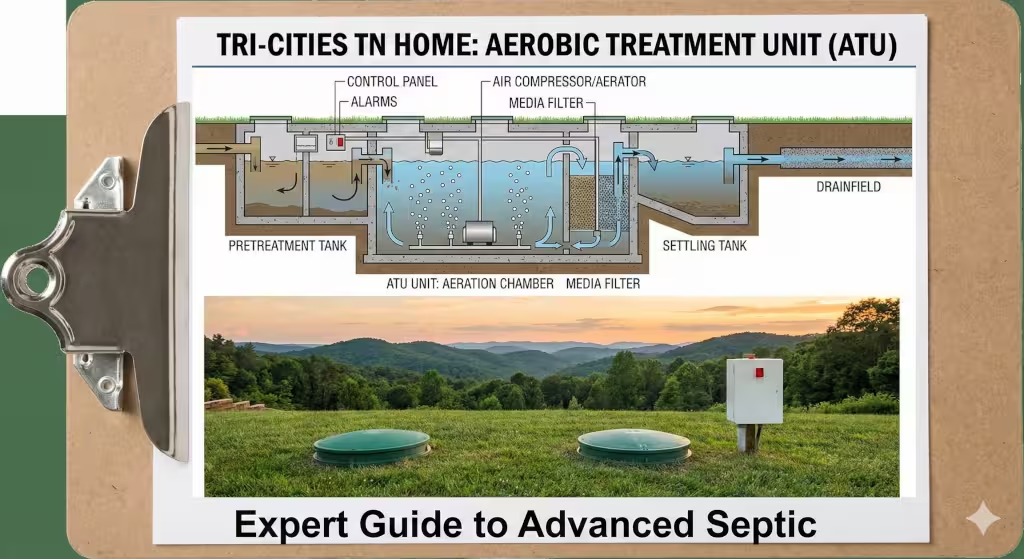
If you are building on a small lot in a place like Johnson City where space is at a premium, an Aerobic Treatment Unit, or ATU, might be your best bet. A standard septic tank is “anaerobic,” meaning it works without oxygen. It’s a slow process.
An ATU is different. It has a mechanical aerator that bubbles air into the tank, much like an aquarium pump. This oxygen allows aerobic bacteria to thrive. These bacteria are much more aggressive and efficient at breaking down waste. The result is water that is significantly cleaner than what comes out of a standard tank. Because the water is so clean, the state often allows you to use a much smaller drain field, which can save your backyard for that pool or deck you wanted.
Drip Distribution Systems
Drip distribution is perhaps the most advanced alternative septic system for poor soil we use today. It works very much like a drip irrigation system you might use for a garden. Instead of pipes in trenches, we use flexible tubing that is vibrated into the ground just a few inches deep.
This is a favorite for custom home buyers who want to keep their mature trees. Because the “plowing” of the lines is so thin, it doesn’t hurt the tree roots. It is also perfect for very thin soil or very steep slopes. The system is controlled by a computer that sends out tiny “doses” of water throughout the day. It is the ultimate in precision and is often the only way to get a permit on the most challenging mountain lots.
Navigating the TDEC Permitting Process
In Tennessee, we don’t just dig a hole and hope for the best. The Tennessee Department of Environment and Conservation (TDEC) oversees all septic systems. Before you can even get a building permit in Sullivan or Washington County, you have to have an approved “SSD” (Subsurface Sewage Disposal) permit.
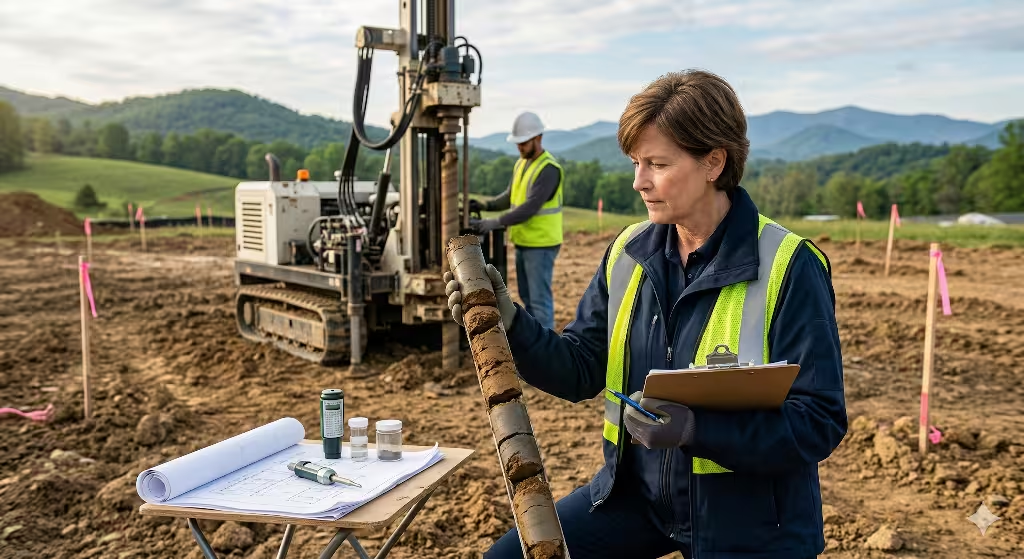
The process starts with a soil map. For a custom home on a difficult lot, you will likely need a “High-Intensity Soil Map.” This is created by a licensed soil scientist who walks your land and augers holes every few feet to see exactly what is happening under the surface. If the soil scientist finds that the ground is “non-perking,” they will recommend an engineered system. You then hire a Professional Engineer to design the specific alternative septic system for poor soil that fits your house and your land. It sounds like a lot of steps, but it is the best way to protect your property value and the environment.
The Role of the Soil Scientist and Engineer
Many buyers wonder why they need both a soil scientist and an engineer. It is often answered by the soil scientist tells us what “hand” we have been dealt by nature. They look at the color of the clay and the depth of the rock. The engineer then takes that information and “plays the hand.”
The engineer calculates how many bedrooms you have, how much water you will use, and what kind of pump is needed to move that water uphill or into a mound. Having these two experts work together is the “Precise” way to handle a build. It ensures that when you flush your toilet ten years from now, you aren’t thinking about your septic system at all.
Understanding the Costs: Conventional vs. Alternative
There are also budget considerations. A conventional gravity system is the cheapest option, usually costing between $5,000 and $10,000. However, if your land requires an alternative septic system for poor soil, you need to be prepared for a higher investment.
Because they require specialized pumps, control panels, and often extra sand or peat moss, these systems usually range from $15,000 to $30,000. In some very extreme cases on the side of a mountain, they can cost more. While this is a significant jump, remember that without this system, the land might be unbuildable. Investing in a high-quality engineered system adds to the long-term value and “buildability” of your real estate.
| System Type | Estimated Cost | Best Use Case |
| Conventional | $5k – $10k | Deep, well-draining soil |
| Mound System | $15k – $25k | High water table / Shallow rock |
| LPP System | $12k – $20k | Sloping lots with shallow soil |
| ATU / Drip | $20k – $35k | Very poor soil / Small lots / Wooded areas |
Can You Build on Land That Doesn’t Perk?
This is the number one question from buyers who find out that their land does not perk. The answer is almost always “Yes,” provided you have enough space and the right budget. In the old days, a “failed perk” meant the land was only good for hunting or timber. Today, with the alternative septic system for poor soil technology we have, we can build on almost anything.
The only time you truly cannot build is if there is absolutely no soil (just solid rock everywhere) or if the lot is so small that there is no room to put the alternative system far enough away from your well or the property lines. This is why I always tell my clients: never buy a piece of land in the Tri-Cities without a “contingency” in the contract that says it must be approved for some type of septic system.
Maintenance and Longevity in East Tennessee
Because an alternative septic system for poor soil has moving parts like pumps and alarms, it does require more care than a hole in the ground. I tell my clients to think of it like a car. You wouldn’t drive a car for ten years without changing the oil.
Most engineered systems in Tennessee require an annual inspection. A technician will come out, check the pump, clean the filters, and make sure the “good” bacteria are doing their job. In the Appalachian winters, we also have to make sure the pipes are buried at the right depth so they don’t freeze. If you take care of your system, it can last 30 years or more. If you ignore the alarms, you could be looking at a very expensive repair.
Protecting Your Drain Field
In our area, we get a lot of rain, especially in the spring. If your house is on a hill, all that rainwater wants to rush down into your septic area. If the ground gets “super-saturated” with rainwater, it can’t take the waste water from your house.
Part of a “competent” building plan includes “upslope diversion.” This means we use small ditches or “swales” to catch the rainwater and move it around your septic area. We also make sure you never drive heavy trucks or park cars on your drain field. Compacting the soil is the fastest way to kill even the best alternative septic system for poor soil.
The “Precise” Approach to Custom Home Building
It is important to remember, when you are building a custom home, that every detail matters. The septic system is the most important part of the house that you will never see. It is the foundation of a healthy home.
Choosing the right system means looking at the long-term goals for your property. Do you want a big garden? Do you want to keep the forest natural? Do you want a circular driveway? All of these things affect where the septic systems can go. By planning this early with your builder and engineer, you can design a site plan that works with the land instead of fighting against it.
The Importance of High-Quality Components
Not all septic systems are built with the same quality. When we design an alternative system, we have choices in the types of pumps and control panels we use. It is generally recommended to use “commercial grade” components.
In the Tri-Cities, our power can sometimes blink during mountain storms. A high-quality control panel will have surge protection and a battery backup for the alarm. This ensures that if the pump stops working, you will know about it long before the tank overflows. It is these small details that make the home building experience much less stressful for the homeowner.
Common Myths About Alternative Septic Systems
There is a lot of “job site talk” about these systems that isn’t always true. Some people think they smell bad. In reality, a properly working ATU or drip system actually smells much less than a conventional system because the water is treated so thoroughly.
Another myth is that you can’t use a garbage disposal with an alternative septic system for poor soil. While I generally tell people to limit their use of disposals (because grease and food scraps are hard on any system), most modern engineered systems can handle a normal amount of kitchen use as long as the tank is pumped out every 3 to 5 years.
Environmental Impact and Clean Water
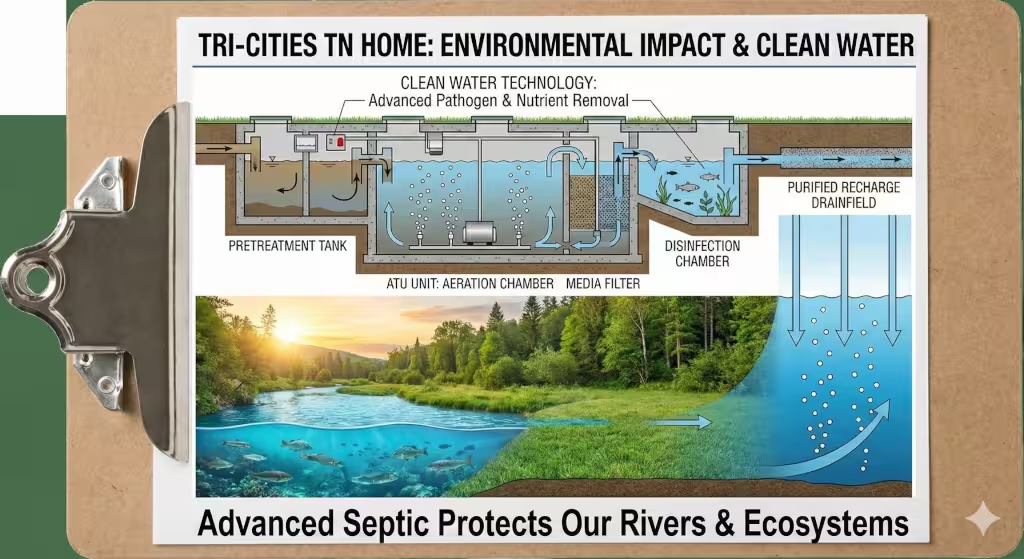
Having an alternative septic system helps you be a good steward of our Tennessee land. Traditional septic systems can sometimes leak “nitrates” into the groundwater if the soil isn’t perfect. Because an alternative septic system for poor soil cleans the water to such a high level, it is actually much better for the environment.
If you are building near South Holston Lake or the Watauga River, using an advanced system helps keep our fishing and swimming waters clean. It is a “win-win” for the homeowner and the community. We get to build beautiful homes, and we keep our natural resources pure for the next generation.
Making the Decision: Is the Lot Worth It?
If you find a beautiful lot in Johnson City but find out it needs an expensive alternative septic system for poor soil, you have to ask: is it worth it?
Most of the time, the answer is yes. Usually, lots that have “poor soil” are sold at a lower price because they are harder to build on. If you save $20,000 on the price of the land and spend $20,000 on an engineered septic system, you are in the same place financially, but you have a much better, modern system that will protect your home for years. It’s all about doing the math and staying calm through the process.
Working with the Best Experts
The Tri-Cities has a great network of professionals. When you start this journey, make sure your builder has experience with “engineered sites.” Ask them how many mound systems or LPP systems they have installed.
Networking is a big part of my job. I stay in touch with the best soil scientists and TDEC inspectors in the region. This helps make the permitting process go smoother. When everyone is on the same page, the “Technical” 20% of the job becomes a lot easier for the “Casual” 10% of the homeowner’s life.
Your Path to a Tri-Cities Dream Home
Building a home is a journey. It has its ups and downs, especially when it comes to what lies beneath the surface of your yard. But remember, the technology behind the alternative septic system for poor soil has come a long way. We are no longer limited by what the red clay allows.
By being precise, staying informed, and working with the right team, you can turn a “difficult” lot into the perfect homestead. Whether you are hunting in the morning or watching a basketball game in the evening, you should have peace of mind that your home is functioning perfectly. Don’t let a perk test scare you away from your dream. With the right septic systems in place, your East Tennessee home will be built on a solid and clean foundation.