

Every April in the Southern Appalachians, a quiet magic happens beneath the leafless hardwood trees. Pushing up through damp, brown leaf litter come bright green spears tipped with deep burgundy stems. Wild leeks, known by their scientific name Allium tricoccum, deliver the first bold, fresh flavor of spring. When those tender leaves hit a hot cast-iron pan with a knob of sweet butter, the kitchen fills with an electric aroma that blends sweet spring onion and punchy garlic.
Yet that incredible flavor has put these wild plants in real danger. Over the past twenty years, restaurant demand and commercial poaching have stripped entire hillsides bare. People dig up buckets of whole bulbs to sell at roadside stands and city markets, leaving behind churned-up mud where lush green colonies once thrived. Because of heavy overharvesting and habitat loss, conservation groups like NatureServe now list ramps as critically imperiled in Tennessee. Once a patch is ripped out of the ground, it can take decades to recover, if it ever comes back at all.
You do not have to give up this cherished spring tradition to protect the woods. Learning how to forage ramps sustainably without killing the plant comes down to one simple shift in habit. Instead of digging up the underground bulb, you harvest only a single outer leaf with a sharp blade. When you forage ramps using precision leaf cutting, you leave the root system intact, keep the forest healthy, and still bring home plenty of vibrant allium flavor for your kitchen.
Understanding the 7-Year Lifecycle of Wild Ramps (Allium tricoccum)
To understand why you must forage ramps with care, it helps to look at how the plant grows beneath the soil. Ramps are not fast-growing weeds like dandelions or wild garlic grass. They are slow, delicate woodland perennials that follow a strict rhythm tied to the forest canopy.
Spring Ephemeral Biology and Photosynthesis Windows
Botanists call ramps spring ephemerals. An ephemeral plant wakes up early, grows fast, and finishes its main work before summer arrives. In late March and April, sunlight pours straight through the bare branches of sugar maple, American beech, and yellow birch trees onto the forest floor. Ramps push their smooth, broad leaves up into this warm light to soak up energy through photosynthesis.
That sunny window lasts only four to six weeks. By late May, the overhead trees leaf out and cast deep shade across the cove hardwood forest. At that point, the ramp leaves turn yellow and melt back into the soil. All the energy those leaves gathered during April gets stored inside the white underground bulb. The plant uses that stored food to survive summer dormancy, send up a leafless flower stalk in July, and push out fresh leaves the following spring. When you forage ramps by ripping out the whole plant, you destroy years of saved solar energy in a single tug.
Seed Germination and Clonal Division
Ramps reproduce in two ways, and both happen at a snail’s pace. First, mature plants produce shiny black seeds in late summer. Those seeds fall into the leaf litter, where they must go through a warm summer, a cold winter, and another warm season before sprouting. It often takes up to 18 months just for a single seed to germinate. Once it sprouts, that tiny seedling needs 7 to 15 years of peaceful spring growth before it becomes large enough to produce seeds of its own.
Second, healthy adult bulbs multiply underground through clonal division. After the leaves die back in early summer, a strong bulb splits into two smaller bulbs right next to each other. Over many decades, this slow splitting creates the dense, carpet-like green patches that foragers love to find. If you forage ramps responsibly by leaving the bulbs in the earth, those natural divisions continue every single year, steadily expanding the colony.
Step-by-Step Guide on How to Forage Ramps Sustainably Without Killing the Plant
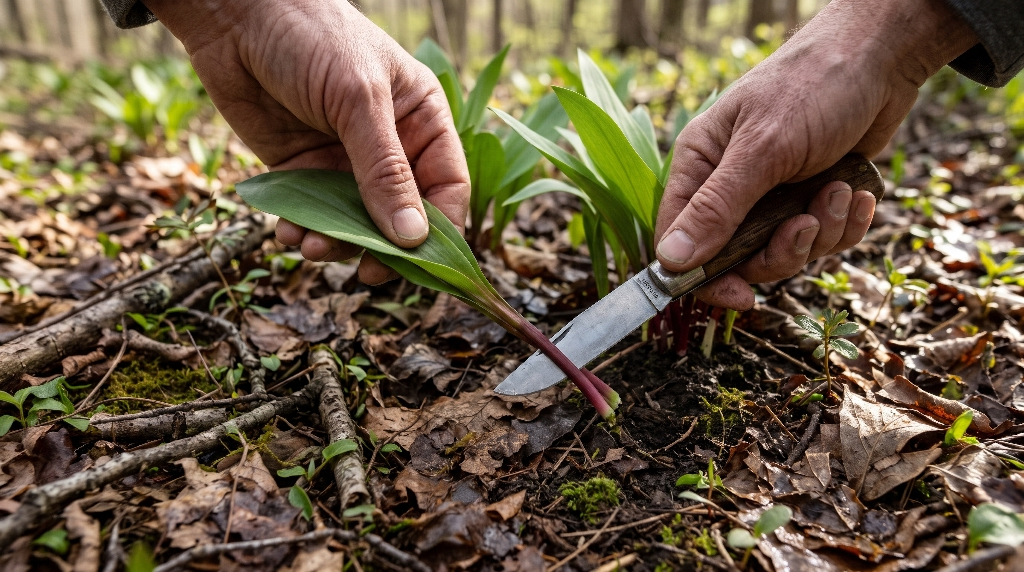
When you head into the woods this spring, leave your digging shovel in the garage. All you need is a clean basket, a sharp pocket knife or pair of kitchen shears, and patience. Follow these four field steps whenever you forage ramps to make sure every plant you touch survives and thrives.
Step 1: Scout Patch Density and Maturity Before Cutting
Before you open your knife, take a few minutes to walk the hillside and judge the health of the colony. Never harvest from small, scattered clusters of a dozen plants or lonely groups growing along thin, dry ridges. Those young patches are still trying to establish themselves, and taking even a few leaves can set them back for years.
Look instead for large, thriving colonies that stretch across several yards of rich, moist, north-facing forest slope. A good rule of thumb is the two-meter rule: only forage ramps from dense carpets where plants grow thick and close together across an area at least six feet wide. Healthy colonies look lush and crowded, with dozens of mature multi-leaf plants in every square foot.
Step 2: Follow the One-Leaf Rule on Multi-Leaf Plants
Once you find a dense, healthy patch, look closely at individual plants before making a cut. You will notice that young ramps send up only a single narrow leaf. Never touch single-leaf plants. Those juveniles are still building up their root systems and need every bit of sunlight they can catch.
Instead, look for mature ramps that have two or three broad leaves rising from the same burgundy stem. Follow the one-leaf rule: harvest at most one outer leaf from a healthy two-leaf or three-leaf plant. Leaving at least one full leaf attached gives the bulb plenty of green surface area to keep gathering sunlight through May. When you forage ramps this way, the plant stays alive, keeps feeding its bulb, and returns at full strength next April.
Step 3: Use a Sharp Blade Above the Soil Line
Never grab a ramp leaf and yank it upward with your bare hands. Ramp stems are tough and fibrous, so pulling by hand almost always rips the bulb loose or damages the basal plate. The basal plate is the firm, woody disc at the bottom of the bulb where the roots attach and new shoots form. Once that plate tears, the plant usually rots and dies.
Hold the outer leaf gently with one hand and use a sharp pocket knife or clean scissors to slice cleanly across the stem just above the soil line. You will get the tender green blade along with a nice piece of the flavorful purple-tinted stem, while the white bulb and roots stay safely tucked underground. Using a clean, sharp blade is the single best habit you can build when you forage ramps in any forest.
Step 4: Disperse Your Cuts Across the Colony
Avoid clearing every outer leaf from one small spot. Cutting heavily in a single circle creates bare patches that dry out in the sun and invite invasive weeds to take over. Instead, move steadily through the colony, taking one leaf here and another leaf a few feet away.
Keep your total harvest from any single patch below 5 to 10 percent of the available leaves. After you finish, the patch should look almost untouched to the next hiker walking down the trail. It is also smart to rotate your foraging spots from year to year. If you forage ramps on one ridge this spring, give that hillside a rest for two or three years while you explore other permitted woods.
When Is Digging Ramp Bulbs Acceptable? (And How to Do It Responsibly)
Many home cooks ask if there is ever a right time to harvest whole ramp bulbs. The honest answer is yes, but only under very strict conditions. You should never dig bulbs on public lands, national forests, state parks, or crowded local trails. Bulb digging belongs strictly on private property where you have direct permission from the landowner and where the ramp colony is massive and overcrowded.
Before digging even a handful of bulbs on private land, check the patch density. Ecological researchers suggest that a colony should hold at least 90 to 100 plants per square meter before any bulbs are thinned out. Even in an overcrowded private patch, never dig more than 5 percent of the bulbs in a single season.
Timing also makes a huge difference. Wait until May, right when the ramp leaves start turning slightly yellow and the trees overhead begin closing their canopy. By then, the bulb has already stored almost all the energy it needs for the year. Use a narrow soil knife or slim hand trowel to lift a small clump of dirt gently. Separate out just a few large bulbs for your kitchen, shake any loose soil and dormant seeds back into the hole, and press the smaller bulbs firmly back into the moist earth so they can keep growing.
How to Tell Ramps Apart from Toxic Look-Alikes
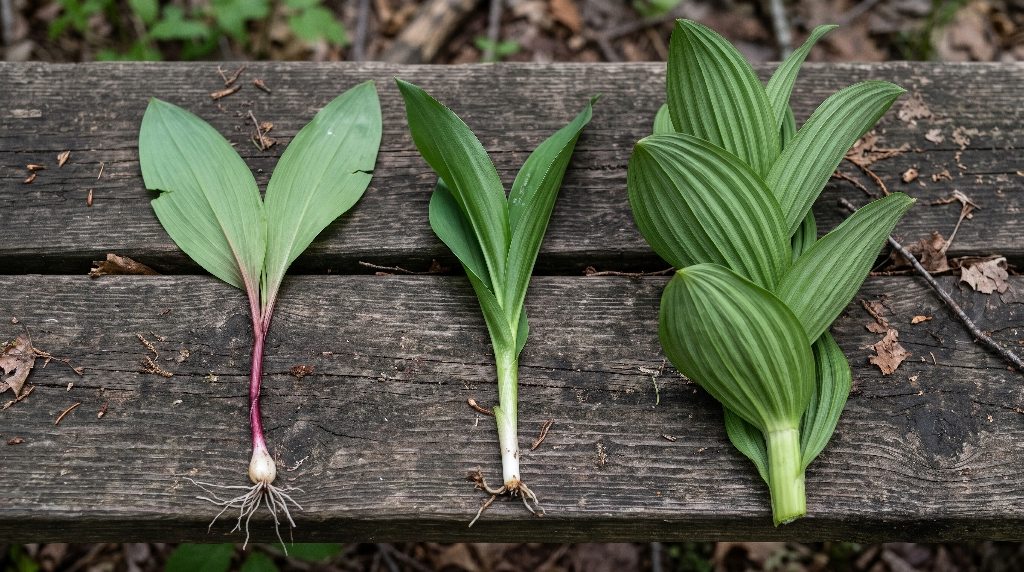
Whenever you forage ramps in the spring woods, safety comes first. Several poisonous woodland plants sprout at the exact same time and share the same shady hardwood slopes. A careless mistake can send you to the hospital, so you must verify every single leaf before it goes into your basket.
| Plant Name | Leaf Texture and Veins | Stem Color | Scent Test | Safety Status |
| Wild Ramps (Allium tricoccum) | Smooth, thin, flat, and slightly papery; veins run parallel | White bulb with reddish-purple or burgundy lower stem | Strong, unmistakable garlic and onion aroma | Safe and delicious edible |
| Lily of the Valley (Convallaria majalis) | Thick, waxy, rubbery leaves wrapped tightly together | Pale green base with no purple tint | No onion or garlic smell; faintly sweet or grassy | Deadly poisonous (contains cardiac glycosides) |
| False Hellebore (Veratrum viride) | Thick, heavily pleated, accordion-like ribs arranged spirally | Thick, sturdy green stalk | No onion or garlic smell | Extremely toxic (contains dangerous alkaloids) |
| Trout Lily (Erythronium americanum) | Smooth, fleshy leaves mottled with brown and purple spots | Thin, pale stem often bearing one nodding yellow flower | No onion or garlic smell | Mildly toxic if eaten in quantity; causes stomach upset |
| Bluebead Lily (Clintonia borealis) | Thick, shiny, oblong leaves with fine hairs along the edges | Pale green base rising directly from soil | Smells like fresh cucumber, never onion or garlic | Inedible and mildly toxic |
The nose test is your best friend when you forage ramps, with one important catch. Once you crush a few ramp leaves, the strong onion oil sticks to your fingertips for hours. If you rub a poisonous Lily of the Valley leaf with onion-scented fingers, you might trick yourself into thinking it smells like a ramp. Always crush a small piece of a new plant between clean fingers, or pinch the leaf with your fingernails and sniff the fresh cut edge directly. If it does not smell boldly of garlic and onion, leave it in the forest.
Foraging Laws and Permits in East Tennessee and Appalachia
Before you pack your basket to forage ramps, check the rules for the exact piece of land you plan to visit. Harvesting wild plants without checking local laws can result in steep fines and hurt conservation efforts across the Appalachian mountains.
- Private Property: Always ask the landowner for clear permission before stepping onto private woods. Many rural neighbors in East Tennessee are happy to share a small harvest if you explain that you only cut single leaves and never dig bulbs.
- Cherokee National Forest: If you live near Johnson City, Elizabethton, or Unicoi County, the Watauga and Nolichucky Ranger Districts of the Cherokee National Forest allow limited personal foraging with a free permit. You must pick up a free personal-use permit from a USDA Forest Service ranger office before you forage ramps on forest land. Each permit allows up to 40 ramps per person per year, stays valid for 15 days, and bans harvesting near trails, campgrounds, and streams.
- National Parks and Parkways: Collecting any plants, leaves, or bulbs is strictly illegal inside Great Smoky Mountains National Park and along the Blue Ridge Parkway. Rangers patrol popular spring trails closely, and poaching carries heavy federal penalties.
Chef Jim’s Kitchen Guide: Getting Maximum Flavor from Ramp Leaves Alone
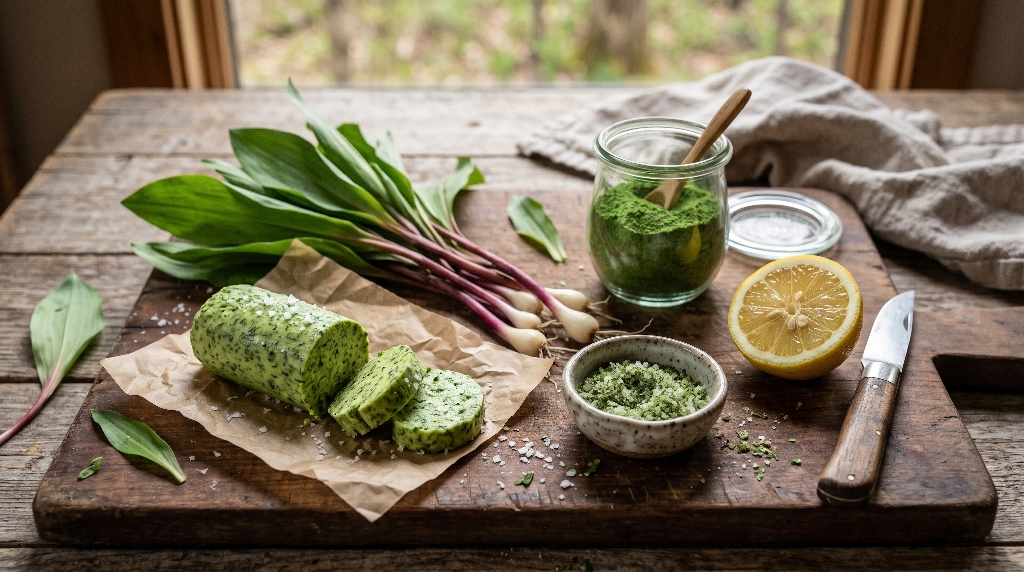
The main reason people dig bulbs is a common kitchen myth. Many cooks think all the big garlic and onion flavor hides in the white root, leaving the green leaves weak and grassy. After decades behind the stove, I can tell you that is simply not true. Ramp leaves hold vibrant essential oils that taste like a cross between sweet scallions, roasted garlic, and fresh chives. When you forage ramps for their leaves alone, you can capture that bold flavor and stretch a modest harvest across months of cooking.
Blanched Ramp Leaf Compound Butter
Compound butter is the easiest way to lock in fresh spring flavor. Bring a small pot of salted water to a rolling boil and set a bowl of ice water next to the stove. Drop two cups of clean ramp leaves into the boiling water for just 15 seconds, then plunge them straight into the ice bath. Blanching sets the bright emerald color and softens any harsh raw bite.
Squeeze the chilled leaves completely dry in a clean kitchen towel, then mince them very fine. Fold the minced greens into one pound of softened, cultured unsalted butter along with one teaspoon of flaky sea salt and the grated zest of half a lemon. Roll the green butter into a log inside parchment paper and chill it in the fridge or freezer. Slice off a coin to melt over grilled ribeye steaks, pan-seared Appalachian brook trout, or hot roasted new potatoes.
Dehydrated Ramp Green Powder
If you forage ramps during peak April season and bring home a generous basket of single leaves, turn half of them into emerald seasoning powder. Wash the leaves gently, pat them dry, and lay them in a single layer on dehydrator trays. Dry the leaves at 115 degrees Fahrenheit for 6 to 8 hours until they crumble crisp between your fingers. Keeping the heat low protects the delicate aroma compounds.
Once crisp and cool, blitz the dried leaves in a clean spice grinder or high-speed blender until they turn into a fine green dust. Store the powder in an airtight dark glass jar away from stove heat. A pinch stirred into scrambled eggs, creamy potato soup, or warm pasta brings back the taste of April woods in the middle of January.
Ramp Leaf Finishing Salt
Finishing salt takes less than ten minutes of hands-on prep and makes a wonderful gift for fellow food lovers. Combine one cup of coarse kosher salt or flaky sea salt with half a cup of fresh, finely chopped ramp leaves in a food processor. Pulse the mixture five or six times until the salt turns a vibrant spring green and feels slightly damp from the leaf oils.
Spread the green salt thinly across a parchment-lined baking sheet and let it air-dry at room temperature for 24 hours, stirring it once or twice with a fork. Pour the dry salt into a glass jar. Sprinkle it over sliced heirloom tomatoes, warm focaccia bread, or roasted asparagus for an instant burst of wild leek flavor.
Lacto-Fermented Ramp Leaves
Fermentation preserves both the crunch and the tangy depth of wild greens. Pack clean, chopped ramp leaves into a clean glass mason jar, leaving an inch of space at the top. Mix a simple brine using two tablespoons of non-iodized sea salt dissolved in one quart of filtered water, and pour it over the leaves until they stay completely submerged. Weigh the leaves down with a small glass weight or cabbage leaf, cover loosely, and let the jar sit on your counter for 5 to 7 days. Once bubbles form and the flavor turns pleasantly tangy, move the jar to your fridge where it will keep for months.
Proper Fridge Storage for Fresh Leaves
Fresh ramp leaves wilt fast if you toss them loose into a vegetable drawer. As soon as you return from the woods, trim a tiny sliver off the bottom of the stems, stand the leaves upright in a drinking glass with an inch of cold water, and drape a loose produce bag over the top. Stored like a bouquet of fresh flowers in your refrigerator, your leaves will stay crisp, perky, and ready to cook for up to five days.
How to Propagate Your Own Backyard Ramp Patch
The ultimate way to forage ramps sustainably without touching wild forest colonies is to grow a patch in your own shaded yard. Ramps thrive under mature deciduous trees such as oaks, maples, and poplars where the soil stays rich, damp, and cool through summer.
To start a backyard bed, loosen the top six inches of soil in a shady spot and mix in plenty of aged leaf compost along with a dusting of garden lime to raise the soil calcium. You can purchase certified sustainably grown ramp bulbs from native plant nurseries in early spring or late summer. Plant the bulbs about three inches deep and six inches apart, making sure the root end points down, then cover the bed with two inches of shredded autumn leaves. Water the bed during dry spells, resist harvesting anything for the first two years while the bulbs divide, and you will soon have a private spring harvest right outside your back door.
Frequently Asked Questions About Sustainable Ramp Harvesting
Do ramps grow back if you cut the leaves?
Yes, ramps will return the following spring if you cut only one leaf and leave the underground bulb untouched. A cut leaf will not grow back during the same April season, which is why leaving at least one whole leaf attached is vital so the plant can gather sunlight and feed its bulb for next year.
How much of a ramp patch can you sustainably harvest?
You should never take more than 5 to 10 percent of the leaves from a large, healthy ramp colony in a single year. Always spread your cuts across the entire patch, harvest only from mature plants with two or three leaves, and leave small or sparse clusters completely alone so they can multiply.
Is it better to cut ramp leaves or dig the bulbs?
Cutting a single leaf is always better than digging bulbs when you forage ramps in the wild. Slicing one outer leaf keeps the plant alive, protects the underground root system, and allows the colony to spread naturally, whereas digging bulbs removes plants that take seven or more years to mature from seed.
Can you replant ramp bulbs after harvesting?
Yes, you can replant ramp bulbs as long as the firm, woody basal plate at the bottom of the bulb remains intact and unbruised. Tuck the bulbs three inches deep into moist, shaded soil rich in decayed leaves, water them well, and mulch them with forest leaf litter to help the roots settle in.
What is the poisonous look-alike to wild ramps?
Lily of the Valley (Convallaria majalis) and False Hellebore (Veratrum viride) are the two most dangerous poisonous look-alikes that grow near wild ramps. Unlike ramps, which have thin, smooth leaves and a strong garlic-onion smell, Lily of the Valley has thick, waxy, odorless leaves, and False Hellebore has heavily ribbed, pleated leaves arranged in a spiral stalk.
Leaving Every Forest Patch Stronger Than You Found It
Stepping into the spring woods to forage ramps connects us directly to the land, the changing seasons, and the deep culinary roots of the Appalachian mountains. That connection comes with a clear duty to protect the fragile ecosystems that feed us. When we slow down, carry a sharp pocket knife instead of a digging spade, and take only one outer leaf from strong multi-leaf plants, we give wild leek colonies the breathing room they need to thrive for generations.
Next April, take pride in a modest basket of bright green leaves rather than a heavy bucket of uprooted bulbs. Bring those tender greens back to your kitchen, roll them into sweet compound butter, dry them into vibrant emerald powder, and savor every bite knowing you left the forest hillside just as lush and alive as you found it.