

When you start a new construction project, one of the first big questions you will face is simple on the surface: who buys builders risk insurance, the property owner or the builder? The short answer is that either the property owner or the general contractor can purchase the policy. Insurance companies do not force one side to buy it over the other. Instead, the decision comes down to three practical factors: the wording in your construction contract, the rules set by your construction lender, and which party holds the primary financial stake in the land and the partially built structure.
In the Tri-Cities area, whether we are framing a custom home overlooking Boone Lake or clearing a wooded lot outside Kingsport, the biggest headaches rarely happen because coverage was unavailable. They happen because of a simple miscommunication. The homeowner assumes the builder automatically carries builders risk insurance on every job, while the builder assumes the homeowner’s bank required the owner to buy the policy at loan closing. When a summer windstorm knocks down green framing or thieves strip copper wiring overnight, both sides suddenly realize nobody ever bound a policy.
In this guide, we will walk you through how this coverage works from the ground up. We will look at how contract language and loan requirements decide who secures the policy, when it makes the most sense for the owner to buy it, and when the builder should take the lead. We will also break down policy roles, look at real cost ranges, and explain how the premium flows through your project budget so you know who actually pays the bill in the end.
Contract Law vs. Insurance Rules: What Actually Decides Who Buys the Policy?
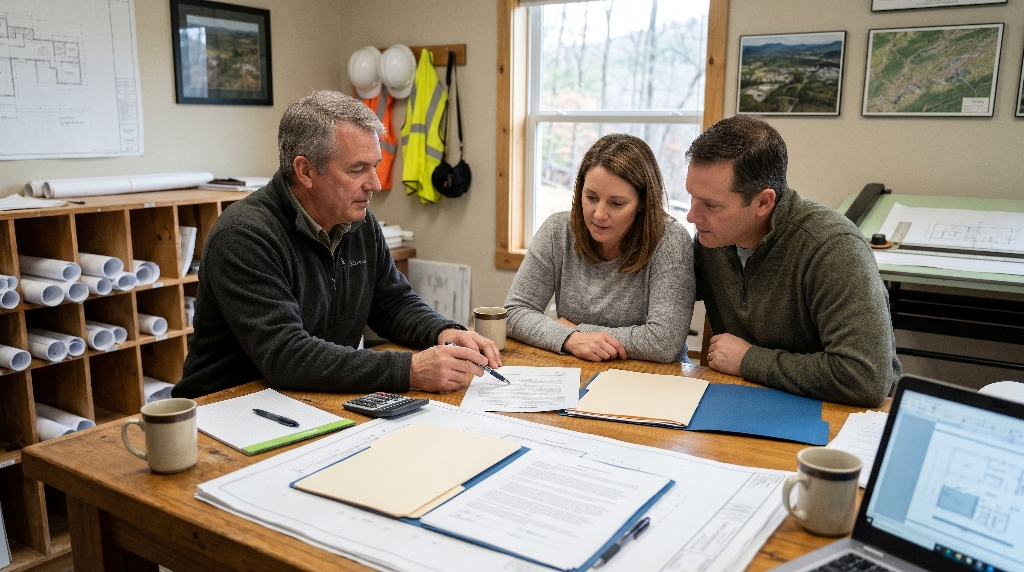
Many first-time home buyers think state law or insurance regulations dictate who has to buy builders risk insurance. In reality, insurance underwriters only care that a single, properly written policy covers the jobsite from day one. Who steps up to buy that policy is settled at the signing table before a single shovel hits the dirt.
The Role of the Construction Agreement
Your written construction contract is the rulebook for your entire build. Inside that agreement, there should be a clear insurance clause stating whether the property owner or the general contractor is responsible for buying and maintaining builders risk insurance.
In the commercial world and on many large custom residential projects, builders and architects often rely on standard industry forms. The most common template is the
However, standard templates are often edited before signing. Many residential home builders in Tennessee and across the country use their own custom contracts or ConsensusDocs agreements, which frequently shift the duty to buy builders risk insurance onto the general contractor. If your contract is silent on this issue, stop and add a clear sentence defining who buys the policy before you sign.
Understanding Insurable Interest
Even when a contract assigns responsibility, an insurance company will not issue a policy to someone who has no financial stake in the project. In insurance terms, this stake is called insurable interest. Having an insurable interest means that if the building burns down, gets hit by hail, or suffers theft during construction, you will suffer a direct, measurable financial loss.
Think of it like building a house step by step. If you bought a lot in Washington County and are paying a builder in monthly draws as walls go up, your money is tied up in the land, the concrete foundation, and the lumber already paid for. You clearly have an insurable interest. At the same time, your builder has money tied up in unpaid labor, materials ordered on credit, and scheduled profit. Because both the owner and the contractor stand to lose money if disaster strikes mid-build, both parties have a valid insurable interest in the project. That shared financial risk is why builders risk insurance exists and why both names belong on the same policy.
Lender and Mortgagee Mandates
If you are paying cash for your entire build, you only have to satisfy your contract terms. However, most homeowners and developers use a construction loan or a construction-to-permanent loan to fund the work. Banks and credit unions do not buy builders risk insurance themselves, yet they have strict rules about it.
Before a construction lender releases the first dollar at closing, they will demand written proof that active builders risk insurance is in place. The lender wants to protect the collateral backing their loan. If a fire destroys a half-finished house, the bank needs to know the insurance payout will either rebuild the home or pay off the loan balance. Lenders also require the policy to list the bank as the Loss Payee or Mortgagee. They will check the policy limit to make sure it equals at least the total loan amount or the full completed value of the home.
When the Property Owner Should Buy Builders Risk Insurance
In my experience overseeing custom builds, having the property owner buy builders risk insurance is often the cleanest and safest route when the owner controls the land and the financing. Let us look at the exact situations where the owner should take charge of the policy.
Custom Homes Built on Owner-Owned Land
When you already own the building lot, whether you bought two acres in Sullivan County last year or inherited family land near Bristol, you hold the deed from the start. In this setup, every nail driven into the framing becomes permanent property attached to your land. Because you own the underlying real estate and are funding the construction draws, you carry the heaviest long-term risk.
Buying your own builders risk insurance gives you direct oversight from the day grading begins until the day you move in. You do not have to wonder if your builder remembered to renew a policy or paid their monthly bill. You hold the paperwork in your own folder, work with your own insurance agent, and know with 100 percent certainty that your investment is protected.
Cost-Plus and Construction-Management Contracts
Custom homes frequently use a cost-plus contract or a construction-management agreement. In a
Under a cost-plus structure, it makes practical sense for the owner to purchase builders risk insurance directly. Since the final price of a cost-plus home can shift as you pick out upgraded cabinetry, custom stonework, or higher-end windows, you can easily call your insurance agent to adjust the coverage limit upward as the project value grows.
Key Advantages of Owner-Placed Policies
Choosing to buy builders risk insurance as the property owner brings three major benefits that protect your wallet and your peace of mind.
Direct Control Over Claim Proceeds
The person or company that buys the policy is listed as the First Named Insured. When a covered loss happens, the insurance company communicates directly with the First Named Insured and issues claim checks payable to that party alongside the lender. If a major storm damages your roof trusses halfway through the build, having direct control over the claim money ensures the funds go straight toward repairing your home. Even in the rare event that you and your contractor have a falling out mid-project, the policy stays with you, and you keep full control over the insurance recovery.
Protection for Soft Costs
Standard builders risk insurance covers hard construction costs, which means physical materials and labor like lumber, concrete, roofing, and framing. However, a major fire or windstorm does more than ruin physical supplies. It also delays your move-in date by months. During that delay, you still have to pay extra interest on your construction loan, renew expired building permits, pay new architectural or engineering review fees, and cover ongoing property taxes.
Insurance companies call these
No Contractor Markup
When a builder buys builders risk insurance for a custom project, they treat the premium as a business expense. In many contracts, builders add an overhead and profit markup of 10 percent to 20 percent on top of direct job costs. If the insurance policy costs $3,000, a 15 percent markup adds an extra $450 to your bill without giving you a penny of extra coverage. By purchasing the policy yourself, you pay the exact insurance rate with zero middleman markup.
When the Builder (General Contractor) Should Buy Builders Risk Insurance
While owner-placed coverage shines on custom builds, there are plenty of situations where the general contractor is the right party to purchase builders risk insurance. Good builders keep commercial insurance brokers on speed dial and can bind coverage fast when the project setup calls for it.
Spec Homes and Builder-Owned Lots
A speculative home, commonly called a spec home, is a house that a builder constructs on land the builder owns, with the goal of selling the finished home to a buyer later. On a spec home, there is no outside homeowner during construction. The builder owns the lot, finances the build, and carries 100 percent of the financial risk.
In this scenario, the builder must buy builders risk insurance. Once the house is finished, if it sits on the market waiting for a buyer, the builder will convert that policy into a vacant dwelling policy until closing day.
Turnkey Fixed-Price and Design-Build Contracts
Many home buyers prefer a turnkey fixed-price contract or a design-build agreement. In these arrangements, the builder agrees to design and build the entire home for one set price and hand over the keys at the end. Buyers choose this path because they want simplicity and predictable numbers without managing dozens of separate bills.
When a contractor runs a turnkey fixed-price project, they often prefer to buy builders risk insurance themselves. Doing so lets the builder control the timeline from start to finish. They do not have to wait around for a buyer’s personal homeowner agent, who might rarely write construction policies, to figure out the paperwork and delay the start of excavation.
Major Renovations and Additions
Remodeling an existing home creates a tricky insurance puzzle. Suppose you live in an older brick ranch in Kingsport and hire a contractor to tear off the back wall, add a two-story master suite, and rebuild the kitchen. Your regular homeowners insurance policy covers your existing house, but most standard homeowner policies exclude major structural renovations or limit coverage once walls are opened to the weather.
For major renovations and additions, a contractor-placed remodeling builders risk policy is often the smartest solution. Builders who specialize in large remodels know how to structure builders risk insurance so that the new addition, the open framing, and the remodeling materials are covered without creating a messy dispute between two different insurance companies.
Advantages of Builder-Placed Policies
When a general contractor purchases builders risk insurance, the project can benefit from industry efficiencies that an individual homeowner cannot access on their own.
Volume Pricing and Reporting Forms
An individual homeowner only builds one house at a time, so they have to buy a standalone, single-project policy. A regional home builder who starts 15 or 30 homes a year operates on a completely different scale. Volume builders often carry a master policy or a reporting-form builders risk policy.
With a reporting-form policy, the builder holds an ongoing master contract with an insurance carrier. Each month, the builder simply reports the new homes started and the finished homes closed, paying a prorated rate based on active square footage. Because the builder brings steady business and proven safety habits to the insurer, they often secure lower rates per $1,000 of construction value than an individual homeowner shopping for a one-off policy.
Streamlined Claims for Materials and Labor
If high winds blow down roof sheathing or thieves steal a pallet of composite decking off the driveway, the builder is the one who has to reorder the supplies and reschedule the framing crew. When the builder is the First Named Insured on the builders risk insurance policy, they can file the claim immediately, meet the insurance adjuster on site, and use the claim check to pay suppliers directly. That speed keeps the construction schedule moving and avoids weeks of waiting for signatures and bank endorsements.
Who Buys vs. Who Pays: How Premiums Flow Through the Project Budget
One of the biggest points of confusion I clear up for clients is the difference between who buys the policy and who pays for it. Even if your contract states that the builder must purchase builders risk insurance, the homeowner almost always pays for it in the end.
The Pass-Through Reality
Think of builders risk insurance just like concrete, lumber, or electrical wire. It is a direct cost required to build your house. When a general contractor puts together a bid for your home, they add up all labor, materials, permits, and insurance costs before giving you a final price.
If the contract requires the builder to buy builders risk insurance, the builder calculates the expected premium and builds that dollar amount right into your construction price or lists it as an insurance allowance. If the contract requires you, the homeowner, to buy the policy, the builder leaves that cost out of their bid, and you pay the insurance company directly out of your pocket or your construction loan closing funds. Either way, the money comes out of your total project budget. The real question is not who pays, because the owner always funds the project, but rather who holds the policy and controls the claims process.
Typical Cost Benchmarks
How much should you budget for builders risk insurance? Across the United States, premiums typically range from 1 percent to 5 percent of the total completed construction value. For standard wood-frame residential homes in low-to-moderate weather risk areas like East Tennessee, competitive policies often land on the lower end of that scale, sometimes working out to roughly $1.00 to $3.50 per $1,000 of completed build value for a 12-month term.
For example, if you are building a custom home with a completed construction cost of $500,000 (not counting the value of the raw land), a typical 12-month builders risk insurance policy might cost anywhere from $1,000 to $5,000 depending on several key rating factors:
- Construction Materials: Wood-frame houses burn faster than brick, concrete block, or steel structures, so wood framing carries a higher base rate than masonry construction.
- Project Duration: Most policies run for 6, 9, or 12 months. Longer builds cost more because the unfinished structure sits exposed to weather and theft for a longer stretch of time.
- Fire Protection Class: Insurance underwriters check how close your lot is to a staffed fire station and whether there is a working fire hydrant within 1,000 feet. A lot inside Johnson City limits with a hydrant across the street will cost much less to insure than a remote mountain cabin served by a volunteer fire department ten miles away.
- Deductible Choice: Choosing a $5,000 deductible instead of a $1,000 deductible can trim 8 percent to 12 percent off your premium. Just be sure your contract states who pays that deductible if a claim happens.
Side-by-Side Comparison: Owner-Placed vs. Builder-Placed
To help you compare both options clearly, look at how an owner-placed policy stacks up against a builder-placed policy across the main parts of a home build.
| Comparison Factor | Owner-Placed Policy | Builder-Placed Policy |
| Best Project Fit | Custom homes on owner’s lot, cost-plus builds, commercial projects | Spec homes, production builds, turnkey fixed-price, major remodels |
| First Named Insured | Property Owner | General Contractor |
| Other Required Parties | Builder (Additional Named Insured), Lender (Loss Payee) | Owner (Additional Named Insured), Lender (Loss Payee) |
| Soft Costs Coverage | Easy to add for loan interest, permits, and delay fees | Usually excluded unless added by special request |
| Deductible Responsibility | Owner (unless contract shifts blame to builder) | Builder (or split according to contract terms) |
| Pricing Structure | Single-project rate with no builder markup | Volume rate or reporting form, often billed in bid |
Structuring the Policy: Named Insureds, Loss Payees, and Certificates
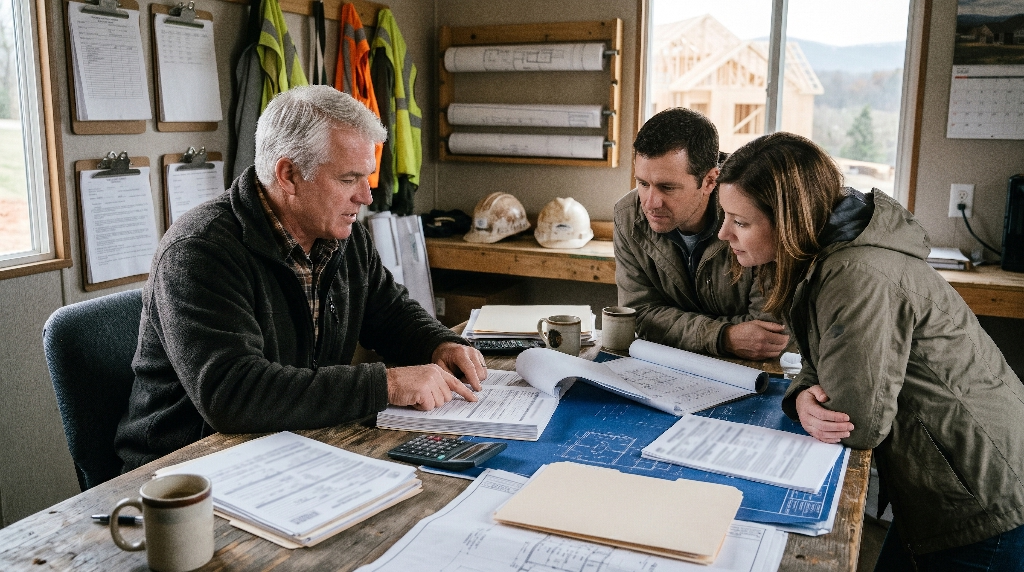
Buying builders risk insurance is only half the job. Setting up the names on the declarations page correctly is just as important. As an engineer by training, I like precision, and nowhere does precision matter more than in how stakeholders are listed on an insurance policy.
Why One Policy Must Cover Everyone
Sometimes a cautious homeowner buys builders risk insurance on their own, while an equally cautious builder adds the job to their master builders risk insurance policy without telling the owner. You might think having two policies gives you double protection. In insurance, it does the exact opposite.
Every standard policy contains an “Other Insurance” clause. If two separate builders risk insurance policies cover the same house at the same time, both insurance companies will freeze claim payments while their lawyers argue over which policy is primary and which is secondary. Meanwhile, your damaged house sits open to the rain. Never buy two policies on the same structure. Pick one buyer in the contract and list everyone else on that single policy.
Decoding Policy Status Labels
When you review the policy paperwork, you will see specific labels next to different names. Each label carries very different legal rights.
First Named Insured
The First Named Insured is the primary policyholder who applied for the coverage and pays the premium. This party has the power to make changes to the policy, increase coverage limits, cancel the policy, and receive claim payout checks.
Additional Named Insured
The non-buying party should always be added as an Additional Named Insured. If the owner buys the policy, the general contractor and key subcontractors should be listed as Additional Named Insureds. If the builder buys the policy, the property owner must be listed as an Additional Named Insured. This status protects each party’s financial stake in the materials and labor on site.
Loss Payee and Mortgagee
If a bank or mortgage company is financing the construction, they must be listed as the Loss Payee or Mortgagee. This label guarantees that if a major loss occurs, the insurance company will include the lender’s name on the claim check so the bank’s loan balance is protected.
Certificate Holder
Be very careful with the term Certificate Holder. Being named as a Certificate Holder on a Certificate of Insurance (COI) only proves that a policy existed on the day the paper was printed. A Certificate Holder has zero legal rights under the policy, receives no claim money, and is not protected if the structure burns down. Always verify that you are listed as a Named Insured or Additional Named Insured, not merely a Certificate Holder.
Waiver of Subrogation
Subrogation is a fancy insurance word for a simple concept: the right of an insurance company to sue whoever caused a loss after paying a claim. Suppose an electrical subcontractor accidentally wires a panel wrong, sparking a fire that burns down half the framing. The builders risk insurance company pays $150,000 to rebuild the framing. Without a waiver of subrogation, the insurer could turn around and sue that electrician to get their $150,000 back, which would trigger a massive legal battle on your jobsite.
To prevent lawsuits among the owner, builder, and subcontractors, almost all standard construction contracts include a mutual waiver of subrogation. This clause states that everyone waives their right to sue each other for damages covered by builders risk insurance, letting the insurance policy absorb the loss so the team can focus on finishing the build.
What Builders Risk Insurance Covers (And Critical Gaps That Require Other Policies)
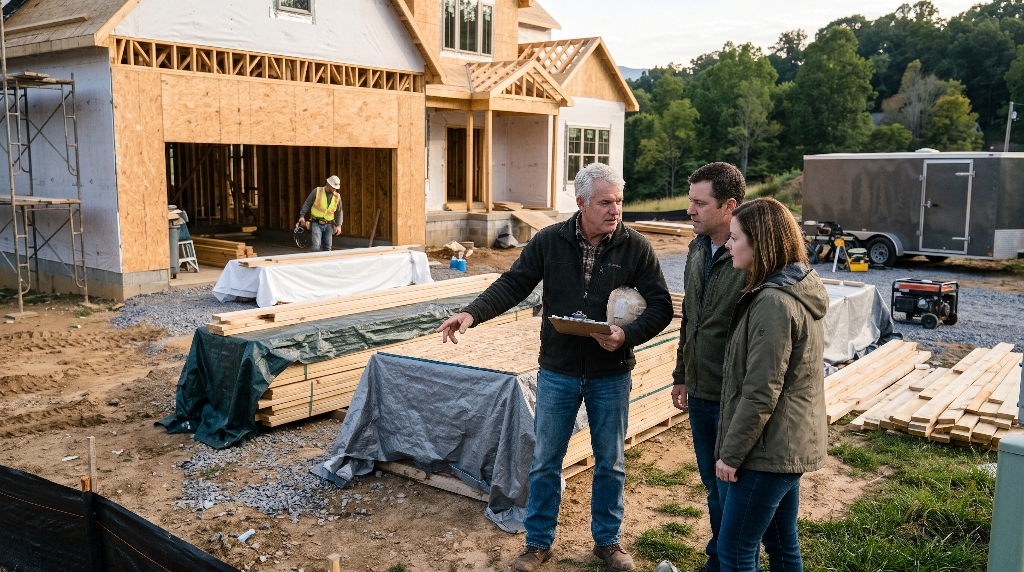
Knowing what builders risk insurance pays for is great, but knowing what it does not cover will save you from expensive surprises. Builders risk insurance is a specialized type of property policy, often written under inland marine insurance rules, designed strictly to protect the building and its materials during construction.
Covered Property and Perils
A well-written builders risk insurance policy covers the physical structure as it rises from the ground. This includes the concrete foundation, framing, roofing, drywall, plumbing, electrical systems, and permanently installed fixtures like cabinets and HVAC units. It also covers temporary structures on the jobsite, such as scaffolding, construction fencing, and temporary forms.
Good policies also extend protection to building materials in transit on delivery trucks heading to your lot, as well as materials stored at an approved off-site warehouse before installation. Standard policies protect against common sudden perils, including:
- Fire and lightning
- Windstorm and hail
- Theft and burglary of installed fixtures or stacked materials
- Vandalism and malicious mischief
- Explosion or vehicle impact on the jobsite
If your lot sits near a river, creek, or steep hillside in East Tennessee, keep in mind that standard policies exclude flood and earth movement (such as landslides or sinkholes). Those perils must be added by special endorsement if your site needs them.
Major Exclusions to Plan Around
Because builders risk insurance only covers physical damage to the project itself, it leaves several major jobsite risks uncovered. Every construction project needs other policies working alongside builders risk insurance to form a complete safety net.
Third-Party Bodily Injury and Property Damage
If a visitor walks onto your lot, trips over a stack of lumber, and breaks their arm, builders risk insurance will not pay a dime. Likewise, if your excavator operator accidentally knocks down your neighbor’s brick mailbox or cracks their driveway, builders risk insurance does not apply. Those third-party accidents are covered by Commercial General Liability (CGL) insurance, which every reputable builder must carry.
Jobsite Worker Injuries
If a framer falls off a ladder or a roofer hurts their back on your site, medical bills and lost wages fall under Workers’ Compensation insurance. Builders risk insurance never covers employee or subcontractor injuries. Before letting any contractor start work on your land, always verify that they carry active Workers’ Compensation and General Liability coverage.
Faulty Workmanship and Design Defects
Builders risk insurance covers sudden, accidental outside damage, not poor craftsmanship. If a concrete crew pours a footing with the wrong mix and it crumbles, or if an architect draws a roof span that sags under normal weight, the insurance company will not pay to tear out and redo the bad work. However, if faulty wiring causes an accidental fire, many policies will cover the resulting fire damage even though they will not pay to replace the defective wire itself.
Contractor Tools and Heavy Equipment
Builders risk insurance covers materials that will become part of your home, not the tools used to build it. If someone breaks into the builder’s job trailer and steals $8,000 worth of nail guns, table saws, and laser levels, builders risk insurance will deny the claim. Builders protect their own tools and machinery using a separate policy called a Contractors Equipment Floater.
The Final Handoff and Certificate of Occupancy
Builders risk insurance is temporary by design. It is built to bridge the gap between raw land and a finished home. Coverage automatically ends as soon as one of four events happens:
- The policy reaches its expiration date.
- The local building inspector issues the Certificate of Occupancy (CO) and the home is accepted by the owner.
- The homeowner moves furniture in or occupies the building.
- The property is sold to a new buyer.
The single most dangerous day for an insurance gap is the final handoff. Do not wait until moving day to shop for permanent insurance. At least two weeks before your final inspection, contact your insurance agent to line up a standard HO-3 Homeowners policy (or a Commercial Property policy for business buildings). Set that permanent policy to start on the exact morning your builders risk insurance ends so your new home never goes a single hour unprotected.
Common Questions Answered About Builders Risk Insurance
Who pays for builders risk insurance, owner or contractor?
The construction contract decides who buys the policy, but the property owner almost always pays for it in the end. If the owner purchases builders risk insurance directly, it is paid as a direct project expense. If the general contractor buys the policy, the premium is factored into the construction bid.
Can both the contractor and property owner be named insureds on a builders risk policy?
Yes, and listing both parties is the best way to structure coverage. Whoever buys the policy is listed as the First Named Insured, while the other party and key subcontractors are added as Additional Named Insureds. This ensures everyone with money tied up in materials or labor is protected under one policy.
Does a lender require builders risk insurance?
Yes, virtually every bank and mortgage lender requires active builders risk insurance before closing a construction loan or releasing draw funds. The lender will also require being listed as the Loss Payee or Mortgagee on the policy declarations page to protect their loan collateral.
What is the difference between builders risk insurance and general liability?
Builders risk insurance is property coverage that pays to repair or replace physical damage to the partially built structure and building materials on site. General liability insurance covers third-party claims if someone gets hurt on the jobsite or if construction activity damages a neighbor’s property.
When does builders risk insurance end?
Builders risk insurance ends when the policy term expires, the home is sold, the Certificate of Occupancy is issued, or the owner moves into the home, whichever happens first. You must activate a permanent homeowners insurance policy on that exact transition date to avoid a coverage gap.
Building a home is one of the biggest financial commitments you will ever make, and getting your insurance right before breaking ground keeps small problems from turning into major setbacks. Sit down with your builder and your insurance agent before you sign your construction contract, confirm in writing who is buying builders risk insurance, and double-check that every stakeholder is properly named on the policy. When everyone knows their role from day one, you can focus on watching your plans take shape with confidence.