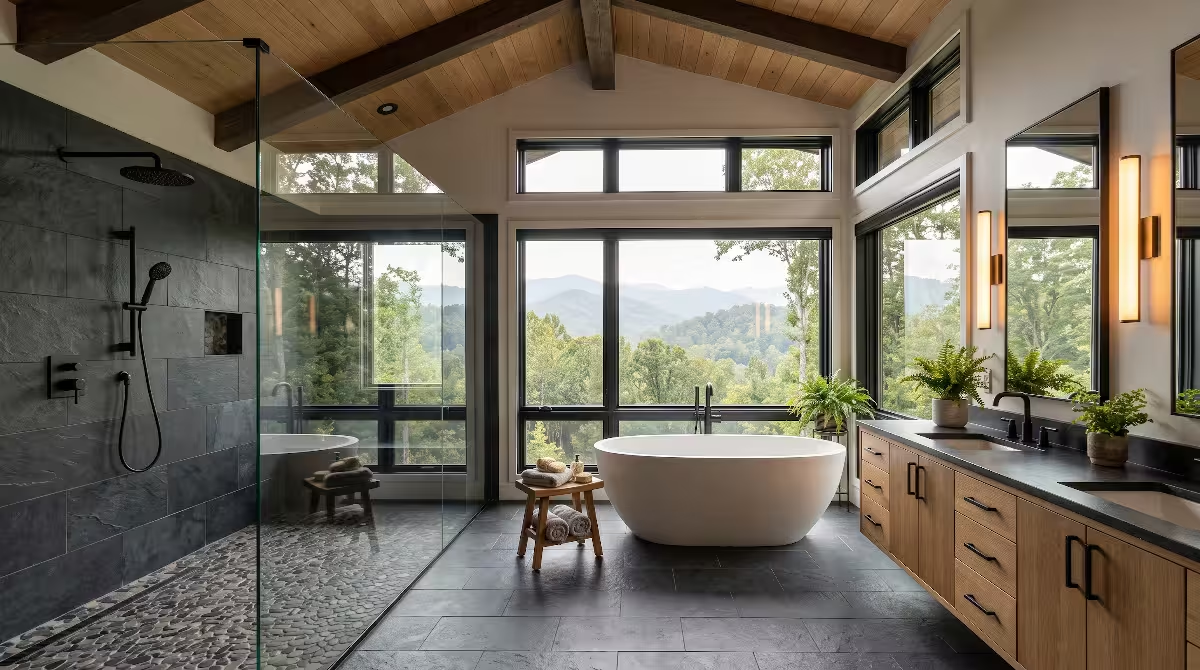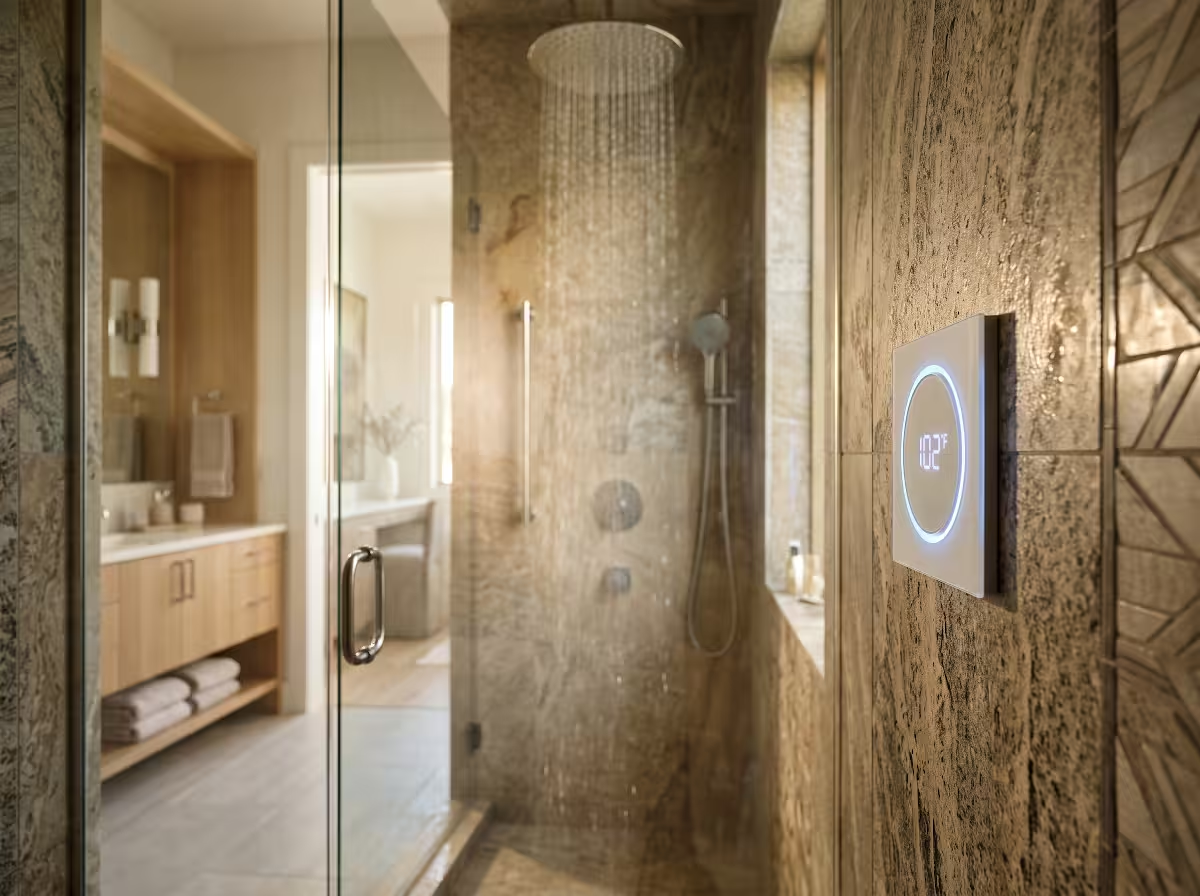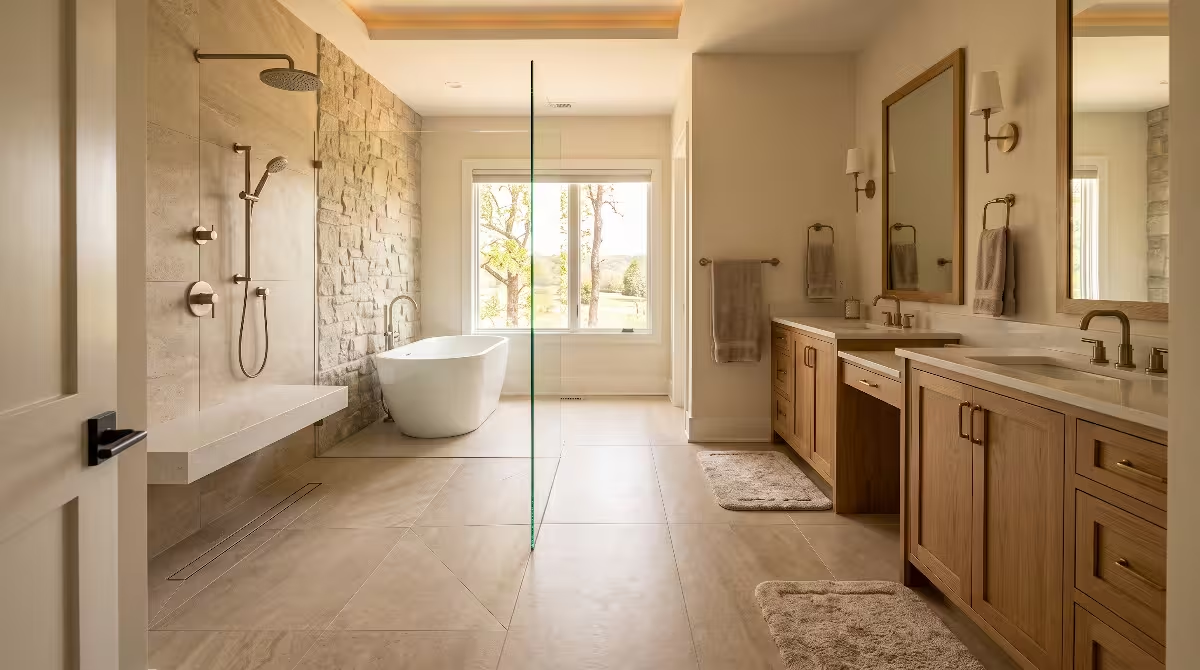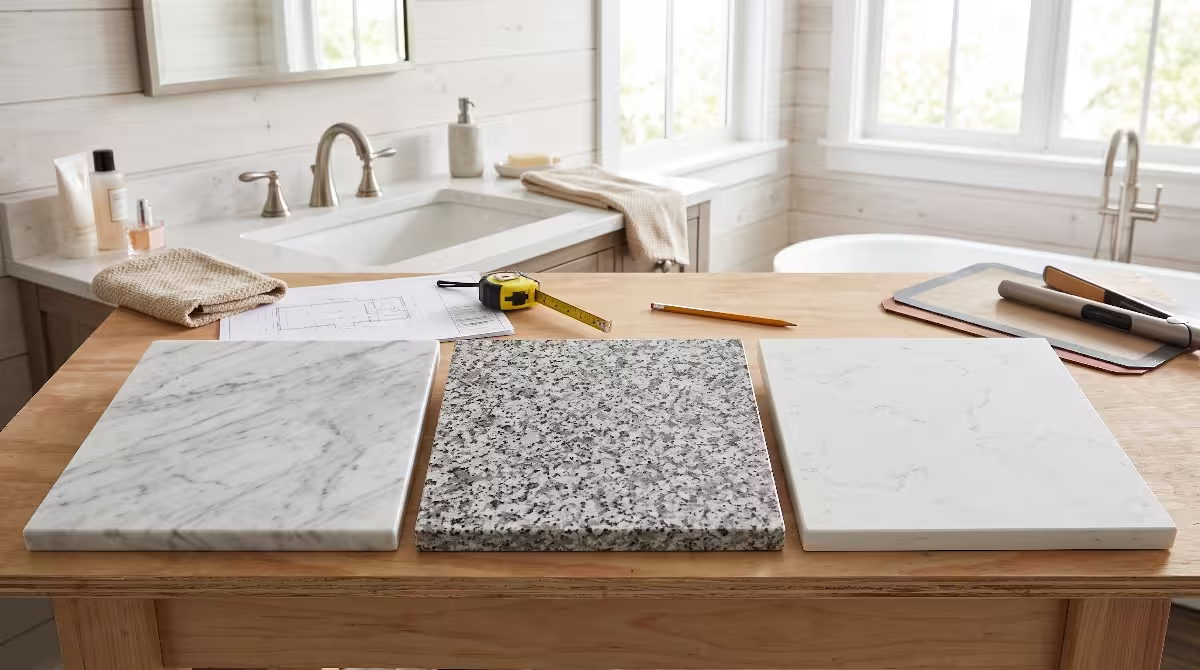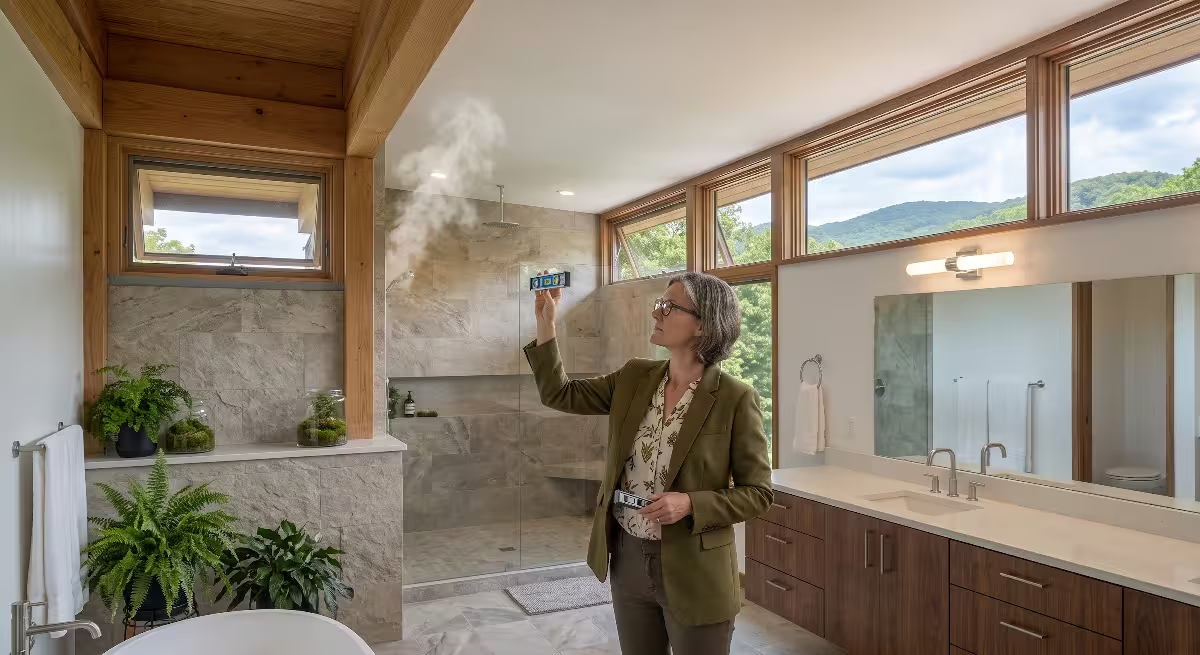

Stepping into a warm morning shower should feel like a quiet retreat, not a tense balancing act on a slick floor. When you plan a bathroom remodel or a new custom home, it is easy to fall in love with photos of bright, spa-inspired showers wrapped in soft white stone. Yet once you picture hot water, steam, shampoo, and conditioner swirling around your bare feet, a very practical question takes over. You want to know how the honed marble vs matte porcelain slip resistance shower floor debate plays out in real daily life, not just in a showroom.
Many builders that help homeowners design bathrooms that work for real families, can tell you that floor safety is never an afterthought. A beautiful shower loses its charm the second you feel your heel slide while reaching for a towel. Whether you are bathing energetic toddlers, planning a forever home where you can age in place comfortably, or simply wanting peace of mind during rushed weekday mornings, choosing the right tile surface matters deeply. Both honed marble and matte porcelain bring gorgeous, low-sheen elegance to a bathroom, yet they handle wet feet in very different ways.
Quick Verdict: Matte porcelain delivers stronger built-in slip resistance right out of the box thanks to tiny surface textures baked into the clay. Honed marble feels silky and luxurious underfoot, yet it relies heavily on small mosaic tile sizes and frequent grout joints to provide safe slip resistance in a wet shower.
How Honed Marble and Matte Porcelain Surfaces Are Made
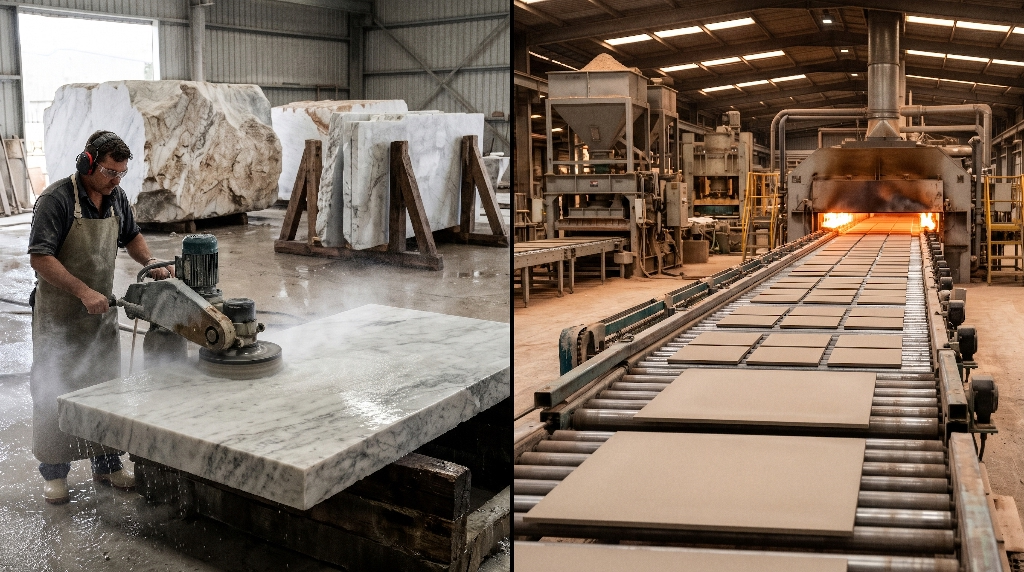
To understand why these two materials behave differently under wet feet, it helps to look at how each tile is created. Even though both options share a soft, non-shiny finish, their internal structures and surface textures come from completely different manufacturing processes.
Honed Natural Marble
Natural marble starts deep underground as limestone that transforms under intense heat and pressure over millions of years. Quarry workers cut giant blocks of stone from the earth and slice them into slabs and tiles. Left in its raw state, marble looks rough and dull. To bring out its famous veins and soft glow, fabricators grind and polish the stone with finer and finer diamond pads.
When a stone shop creates honed marble, they stop the polishing process early. Instead of buffing the stone to a mirror-like shine, they leave it with a smooth, velvety, satin finish. Removing that glassy top coat certainly improves slip resistance compared to polished marble, which feels like wet ice in a shower. However, honed marble is still ground flat. Under a microscope, the surface has very little texture to grab onto your skin when water and soap create a thin film across the stone.
Matte Glazed and Through-Body Porcelain
Porcelain tile is engineered from the ground up for strength and moisture control. Manufacturers blend refined white clay, feldspar, and fine sand, then press that mixture under thousands of tons of force. Next, the tiles travel through kilns heated to over 2,200 degrees Fahrenheit. That extreme heat fuses the ingredients into a dense, rock-hard body.
For matte porcelain, manufacturers apply a low-sheen glaze or press a subtle micro-texture directly into the surface before firing. To the naked eye, the tile looks calm, soft, and modern, much like natural stone or smooth concrete. Yet at a microscopic level, matte porcelain contains thousands of tiny peaks and valleys. Those microscopic ridges break through water films and give your feet reliable slip resistance even when the shower floor is soaked.
Slip Resistance Ratings Compared: DCOF Numbers You Need to Check
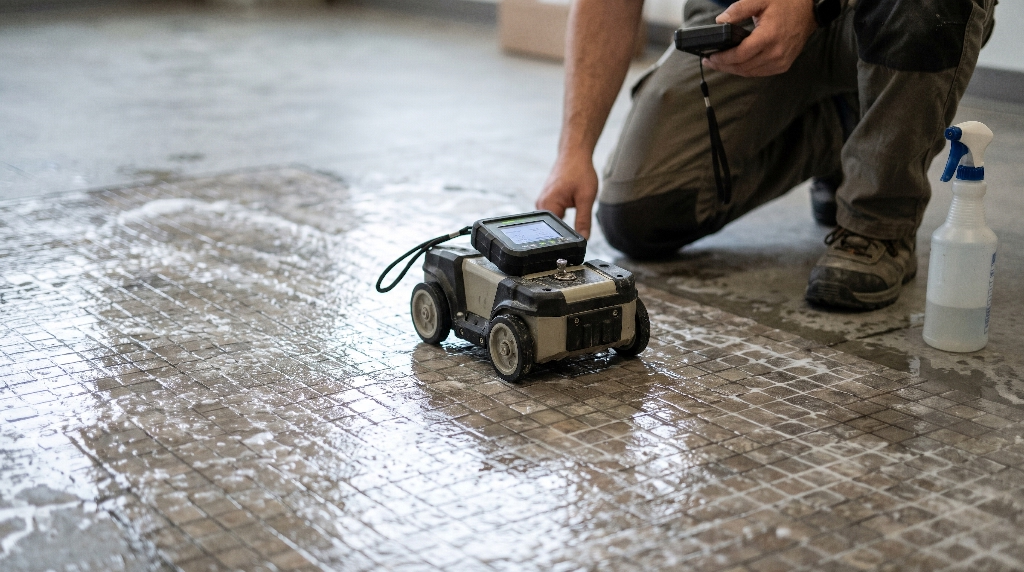
When you shop for tile, touching a dry sample board at the store will not tell you how that floor performs in a wet shower. Dry skin grips almost any dry tile. To make a smart choice, you need to check the technical data sheet for specific slip resistance ratings tested under wet conditions.
Understanding Wet DCOF Testing
In North America, tile experts measure slip resistance using a score called the Dynamic Coefficient of Friction, or DCOF. Unlike older tests that measured how hard it was to start moving from a dead stop, DCOF measures traction while a foot is already in motion. That distinction matters because
Testing labs measure wet DCOF using a specialized rolling machine called the
The 0.42 Minimum vs. 0.50 Shower Target
The Tile Council of North America and the ANSI A137.1 and ANSI A326.3 standards set the official benchmark for interior floors. Under these guidelines, a tile needs a wet DCOF of at least 0.42 to be considered suitable for flat interior spaces that get wet, such as bathroom floors.
However, a shower floor is not flat. Every proper shower pan slopes toward the drain, and shower floors deal with oily body washes, hair conditioners, and warm water all at once. Because of those extra hazards, experienced builders and safety specialists look for a wet DCOF of 0.50 or higher inside a shower stall. Reaching that 0.50 mark gives your family a much wider margin of safety.
Honed Marble vs. Matte Porcelain Scores
Because natural stone varies from quarry to quarry, honed marble rarely carries an official factory DCOF stamp unless a specific brand tests its line. When independent labs test standard honed marble, it typically scores between 0.30 and 0.45 on the wet DCOF scale, which translates roughly to an R9 or R10 ramp rating. Some varieties sit right at the 0.42 threshold, while smoother honed stones fall below it.
Matte porcelain tiles designed for wet areas consistently score higher. Quality matte porcelain shower tiles regularly achieve wet DCOF ratings between 0.42 and 0.55, with many mosaic options reaching R10 or R11 ratings. That predictable performance makes matte porcelain the clear winner for baseline slip resistance.
| Feature | Honed Natural Marble | Matte Porcelain Tile |
| Typical Wet DCOF Range | 0.30 to 0.45 (varies by stone) | 0.42 to 0.55+ (factory verified) |
| European Ramp Rating | R9 to R10 | R10 to R11 |
| Water Absorption Rate | Moderate (requires sealing) | Very low (under 0.5 percent) |
| Sealing Requirements | Every 6 to 12 months | Never needs sealing |
| Cleaning Difficulty | Easy to wipe, needs gentle cleaners | Traps more soap film, takes tough scrubbers |
| Expected Lifespan | 50+ years with proper care | 50+ years with minimal care |
Why Tile Size and Grout Joints Matter More Than Finish Alone
Here is a secret every seasoned tile setter knows: the size of your tile plays just as big a role in shower floor slip resistance as the surface finish itself. Even a tile with a modest DCOF score can feel steady and secure when cut into small pieces, while a grippy tile can feel tricky if installed in huge slabs.
The Grout-Line Traction Rule
Think about what happens when your bare foot presses down on a wet tile. If the tile surface is wide and uninterrupted, water and soap get trapped between your skin and the floor, creating a mini hydroplaning effect. Your foot glides across that thin liquid layer before your toes can catch.
Small mosaic tiles solve this problem instantly. When you install 1-inch or 2-inch hexagon, square, or penny-round tiles, your shower floor gains dozens of grout joints per square foot. Every grout line acts like a tiny drainage channel that lets water escape from under your heel. Those slightly recessed grout joints also give the soles of your feet constant edges to grip, dramatically boosting overall slip resistance.
Shower Pan Slope and Drainage
From a carpentry and waterproofing standpoint, small mosaic tiles are also much easier to install properly on a shower floor. Building codes require a shower pan to slope toward the drain at roughly one-quarter inch per foot so water never sits in stagnant puddles. In a standard shower with a center drain, that slope dips downward from all four walls at once, forming a subtle bowl shape.
Mesh-mounted mosaic sheets flex easily over those multi-directional slopes. A skilled installer can press a 12-by-12-inch sheet of 2-inch honed marble hexagons smoothly into the mortar bed without leaving sharp, uneven edges called lippage. Good drainage keeps standing water off the floor, which naturally improves slip resistance during every shower.
Large-Format Warnings
Many homeowners ask if they can run large 12-by-24-inch honed marble tiles straight from the bathroom floor into the shower pan for a seamless look. Unless you build a specialized single-plane slope leading into a long linear wall drain, large tiles simply will not bend to meet a center drain without jagged edges. Worse yet, large honed marble tiles leave wide expanses of smooth stone with very few grout lines, reducing slip resistance right where you stand most.
How Each Tile Feels Underfoot During Daily Routines
Numbers on a lab chart tell an important story, yet you also live with how a shower floor feels against bare skin every single day. Comfort, warmth, and lighting all shape how safe and relaxing your bathroom feels.
Underfoot Texture vs. Foot Comfort
Honed marble has a soft, organic warmth that synthetic materials work hard to copy. Stepping onto honed Carrara or Volakas marble feels smooth, gentle, and soothing on tired feet. If you kneel on the shower floor to wash a toddler’s hair or bathe a family dog, honed marble never feels harsh against your knees.
Matte porcelain covers a wider spectrum of textures. Standard R10 matte porcelain feels smooth and pleasant, much like fine satin paper. However, some high-traction R11 porcelain tiles use a gritty, sandpaper-like glaze to achieve ultra-high slip resistance. While that extra grit delivers outstanding grip, it can feel rough on sensitive heels or tender skin. Always stand barefoot on a sample tile before buying to make sure the texture feels comfortable to you.
Radiant Heat and Morning Warmth
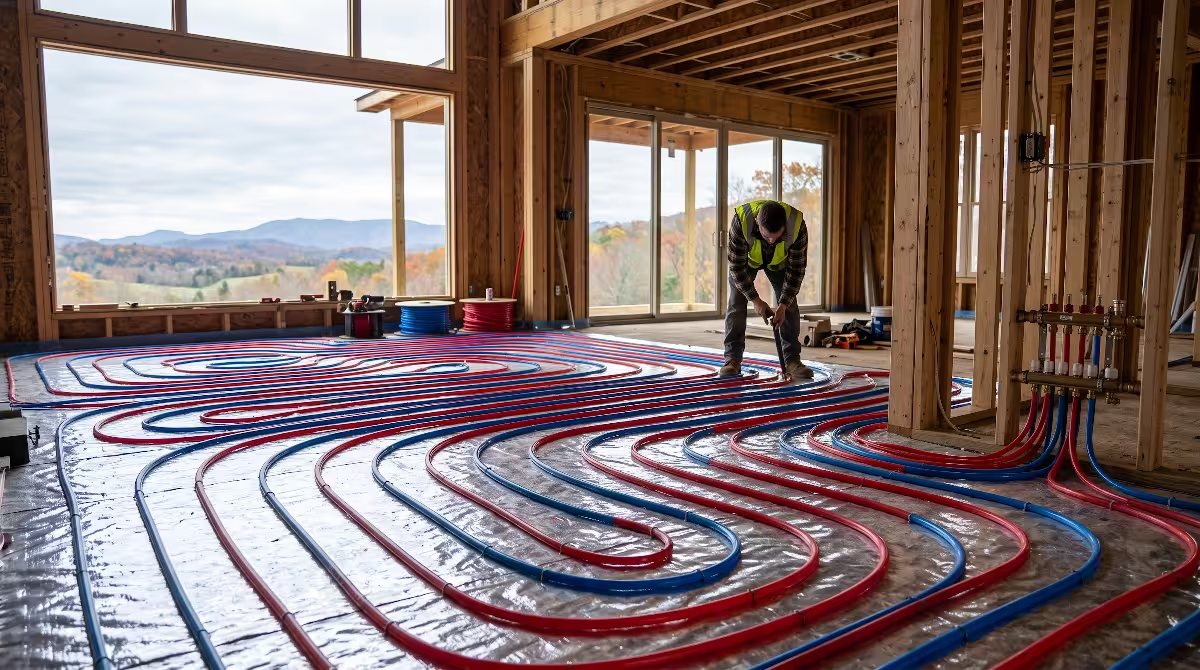
If you live in a climate with chilly winters, you know how jarring it feels to step onto a freezing bathroom floor at six in the morning. Natural marble is a dense stone that conducts and holds heat remarkably well. When paired with electric radiant floor heating mats beneath the tile, honed marble warms up evenly and stays cozy long after the system cycles off. Porcelain also works nicely over radiant heat, though natural marble retains that gentle spa warmth just a little longer.
Overhead Lighting and Glare
Good lighting is an underrated part of bathroom safety. High-gloss tiles bounce overhead vanity and recessed ceiling lights straight back into your eyes, creating blinding white glare across wet puddles. That glare makes it hard to see where water has pooled or where a shower curb begins. Both honed marble and matte porcelain diffuse light softly across the room, cutting glare and helping your eyes judge footing clearly.
Daily Maintenance: Soap Scum, Sealing, and Chemical Etching
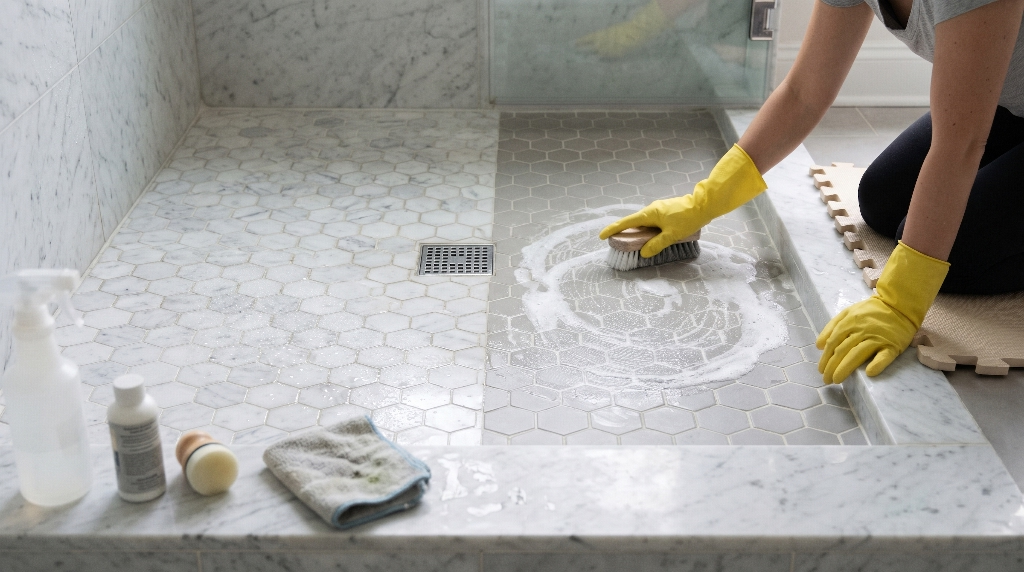
A shower floor only keeps its slip resistance if you keep it clean. Over time, layers of body oil, soap scum, and hard water minerals coat tile surfaces and turn even high-traction floors slick. When comparing honed marble and matte porcelain, you face a classic trade-off between surface toughness and soap buildup.
The Texture-vs.-Cleanability Trade-Off
Ironically, the very micro-texture that gives matte porcelain its superior slip resistance also makes it hold onto soap residue more stubbornly. Microscopic peaks on the tile surface catch skin oils, conditioner films, and mineral deposits from hard water. If you skip weekly scrubbing, that invisible film fills in the tiny valleys and lowers your floor’s wet slip resistance. Fortunately, porcelain is virtually indestructible, so you can scrub it with a stiff nylon brush and standard bathroom cleaners without hurting the tile.
Honed marble has a flatter surface, so soap scum wipes away easily with a soft sponge or microfiber cloth. The catch is that marble is chemically sensitive, which changes how you clean it.
Penetrating Sealers and Acid Etching
Natural marble is made mostly of calcium carbonate, the same mineral found in chalk and antacid tablets. Because marble is porous, homeowners need to apply a penetrating fluoropolymer sealer once or twice a year. A good sealer soaks into the stone’s tiny pores and repels water, body oils, and hair dye stains without changing the matte look or lowering slip resistance.
However, many homeowners mistakenly believe that sealing makes marble stain-proof and acid-proof. Sealer slows down liquid absorption, yet it cannot stop a chemical reaction on the surface. If you spill vinegar, lemon-scented shower spray, or certain acidic shampoos onto honed marble, the acid dissolves a microscopic layer of calcium carbonate. That reaction leaves a dull, pale mark called an etch. While etching does not ruin slip resistance, it can make your floor look blotchy if you use harsh cleaners.
Safe Cleaner Rules
Caring for honed marble is simple once you build the right habit: keep standard grocery-store tub and tile sprays out of that bathroom. Instead, keep a spray bottle of pH-neutral stone cleaner right in the shower caddy and use a simple squeegee after rinsing off. With matte porcelain, you have complete freedom to use vinegar solutions, oxygen bleach, or commercial soap-scum removers whenever needed.
Lifespan, Scratch Resistance, and Custom Home Resale Appeal
Remodeling a shower requires a serious investment in waterproofing, plumbing, and skilled tile labor. Naturally, you want a floor that holds up for decades and adds real value to your home.
Water Absorption and Moisture Stability
Porcelain is vitrified during firing, meaning its clay body fuses into a glass-like density that absorbs less than 0.5 percent of its weight in water. Water simply cannot soak into a porcelain tile. Because moisture stays on the surface and flows down the drain, porcelain resists staining, discoloration, and freeze-thaw cracking.
Natural marble absorbs more moisture than porcelain, especially along natural mineral veins. In a properly built shower with a well-sloped waterproof pan, honed marble lasts for generations. However, if water constantly pools in one low spot due to poor installation, certain iron-rich white marbles like Bianco Carrara can gradually develop faint yellowish rust tones over many years.
Patina vs. Factory Perfection
Choosing between stone and porcelain also comes down to how you feel about signs of aging. Honed marble is a softer stone that develops a lived-in patina over time. Tiny micro-scratches from dropped shampoo bottles or grit on shoes blend into the satin finish, much like wear marks on a hardwood floor or a marble pastry board. Many homeowners love that authentic European character.
Matte porcelain is harder than steel and resists scratching, chipping, and fading almost completely. Ten years after installation, a matte porcelain shower floor looks virtually identical to the day your tile setter finished grouting.
Buyer Perception and Project Budget
From a real estate and budgeting standpoint, porcelain offers serious savings. Quality matte porcelain mosaic tile typically costs between 6 and 15 dollars per square foot, and installers can cut and set it quickly. Natural honed marble mosaics like Calacatta Gold, Thassos, or Italian Carrara often run 15 to 35 dollars or more per square foot, and require extra care during cutting and sealing. Still, in custom and luxury homes, authentic natural marble carries undeniable prestige that discerning homebuyers immediately notice.
Designing a Safe, Spa-Worthy Shower Without Compromising Style
You never have to choose between a safe shower and a gorgeous bathroom. With a few thoughtful layout choices, you can enjoy high slip resistance underfoot while achieving the exact designer look you want.
Mixing Materials Smartly
One of my favorite strategies in custom home design is combining both materials in the same shower. You can install a high-traction 2-inch matte porcelain mosaic on the shower floor where wet slip resistance is critical, and pair it with large, dramatic slabs of honed marble on the shower walls. Because nobody walks on the walls, you get the authentic veining and luxury glow of real marble at eye level, paired with worry-free traction and easy chemical cleaning on the floor. Many stone-look porcelain mosaics match real Carrara and Calacatta marble so closely that guests can barely tell where the porcelain ends and the natural stone begins.
Grout Color and Joint Width
Your choice of grout also shapes both safety and visual calm. Choosing a soft white or warm light-gray grout that blends with your tile background keeps a small mosaic floor from looking busy. For maximum slip resistance and minimal upkeep, ask your installer to use a high-performance sanded grout or a stain-proof epoxy grout. Sanded and epoxy grouts add subtle grit between every tile while resisting mildew, soap absorption, and crumbling in wet zones.
Frequently Asked Questions About Shower Floor Slip Resistance
Is honed marble slippery on a shower floor?
Honed marble is much safer than glossy polished marble, yet it can still feel slick if installed in large slabs. When cut into 1-inch or 2-inch mosaic tiles, the frequent grout lines provide steady slip resistance for bare feet. Always verify that your specific marble mosaic meets at least a 0.42 wet DCOF rating before installing it on a shower pan.
Is matte porcelain tile good for shower floors?
Yes, matte porcelain is widely considered the gold standard for shower floors. Manufacturers engineer matte porcelain with microscopic surface textures that grip wet skin even when soapy water is present. Look for a small mosaic format rated at 0.42 to 0.50 or higher on the wet DCOF scale for dependable everyday slip resistance.
What DCOF rating do you need for a shower floor?
Industry standards set a minimum wet DCOF rating of 0.42 for level interior floors that get wet. Because shower floors slope toward a drain and collect slippery soaps and conditioners, building experts recommend choosing a tile with a wet DCOF of 0.50 or higher for reliable shower floor slip resistance.
Does honed marble in a shower need to be sealed?
Yes, honed marble in a shower should be sealed before grouting and resealed every six to twelve months. A penetrating stone sealer blocks water, body oils, and shampoo dyes from soaking into the porous stone. While sealing protects against stains without hurting slip resistance, you must still use pH-neutral cleaners to prevent acid etching.
Which is easier to clean: honed marble or matte porcelain?
Each material is easier in a different way. Honed marble has a smoother surface that wipes free of soap scum quickly, yet it requires gentle, pH-neutral stone cleaners so acids do not dull the finish. Matte porcelain holds onto soap film a bit more due to its textured surface, yet it tolerates strong bathroom cleaners and stiff scrub brushes without damage.
Can you apply anti-slip treatment to honed marble?
Yes, chemical anti-slip treatments are available for natural stone floors. These solutions create microscopic pores on the marble surface to boost wet slip resistance. However, anti-slip treatments slightly alter the silky feel and soft sheen of honed marble, and they may void stone warranties, so always test a spare tile first.
How to Choose the Right Shower Floor Tile Before You Order
Before you place your final tile order, match your choice to the people who will actually use the shower every day.
- For households with young kids or aging-in-place goals: Choose a 2-inch matte porcelain mosaic with a verified wet DCOF rating of 0.50 or higher. You will get maximum slip resistance, zero sealing chores, and rock-solid durability.
- For busy families who want low-maintenance luxury: Choose a stone-look, color-body matte porcelain mosaic in a balanced R10 finish. You get the soft, bright look of Italian marble with effortless cleaning and reliable slip resistance.
- For custom luxury remodels where real stone is a must: Choose a 2-inch hexagon or square honed Carrara or Volakas marble mosaic, set it with stain-resistant epoxy grout, and commit to an annual penetrating sealer routine.
Before you buy a single box, order one loose sample sheet of your top two choices. Place each sample in your kitchen sink or existing tub, run warm water and a drop of body wash over the surface, and press your bare hand or foot firmly across the wet tile. Pairing that real-world feel test with the manufacturer’s DCOF technical sheet guarantees a shower floor that looks stunning and keeps every step secure.