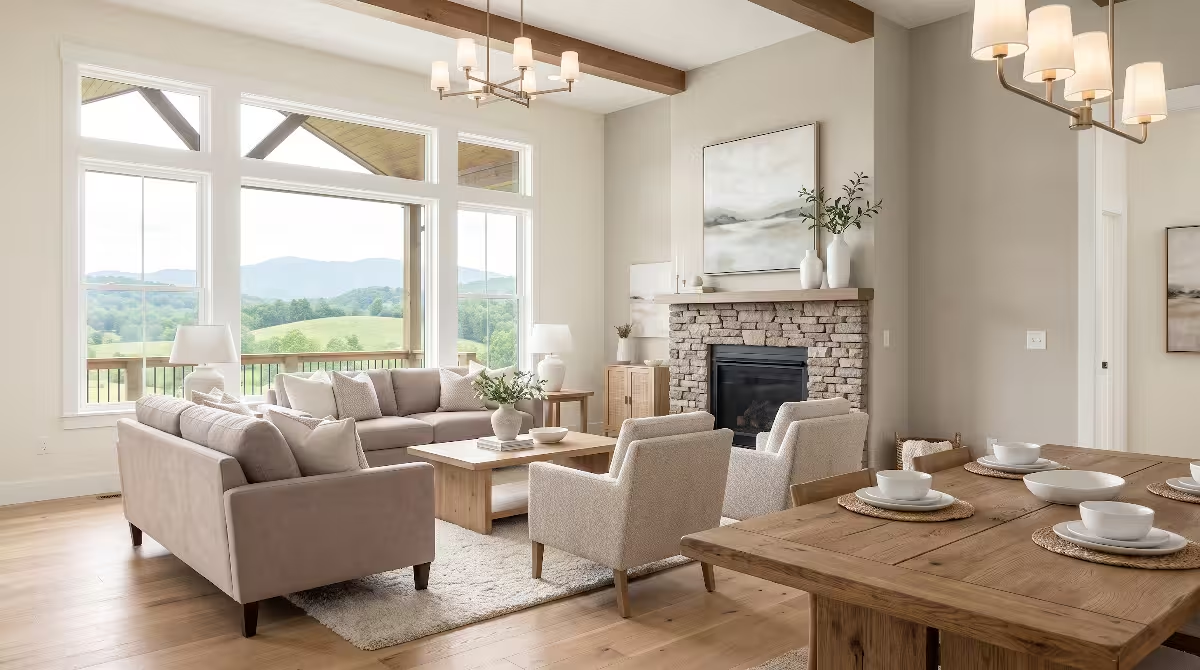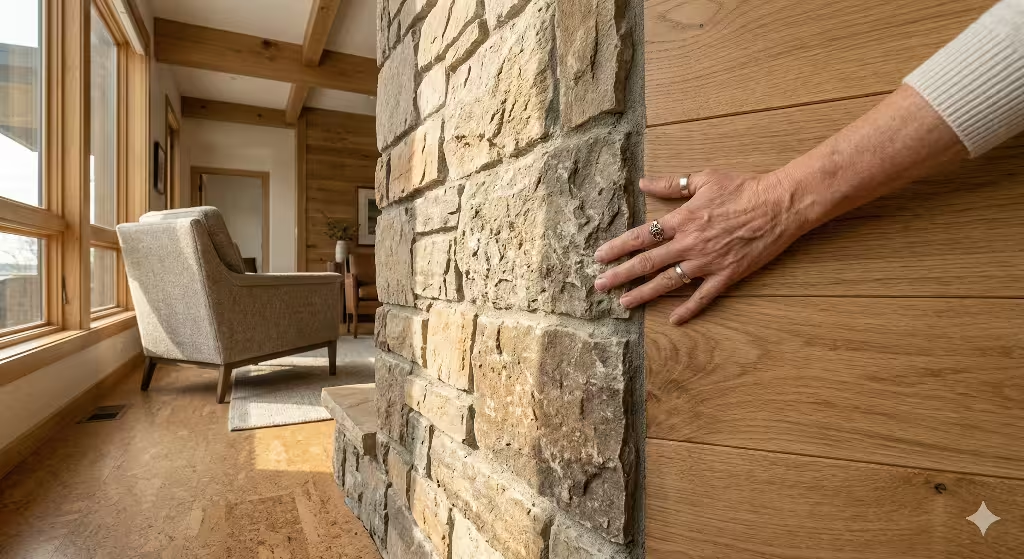


When you walk into a flooring showroom in Johnson City or scroll through custom home photos online, it is easy to feel overwhelmed. Modern manufacturing has gotten so good that two completely different floors can look almost identical on the showroom display. A high quality luxury vinyl tile can mimic the color, grain, and cleft texture of natural slate or white oak so well that you cannot tell what it is from six feet away. Right next to it, a printed porcelain tile might show the exact same visual pattern.
Yet the moment you step out of the showroom and into a real home, the illusion disappears. How those two floors perform over ten, twenty, or fifty years comes down to basic physics and materials science.
Choosing between luxury vinyl tile and porcelain tile is not simply an aesthetic choice. It is a structural decision that impacts your home’s framing, your daily comfort, your cleaning chores, and your pocketbook. To make the right investment for your household, you have to look beneath the pretty surface layer and understand how these two materials live in the real world.
Material Anatomy and Engineering: What Are You Actually Standing On?
To understand how a floor performs, you have to know how it is made. These two materials come from completely different manufacturing worlds, and their internal anatomy explains why they behave so differently under your feet.
The Multi-Layer Composite Build of Luxury Vinyl Tile
Luxury vinyl tile is a modern composite product engineered in multiple distinct layers. It is classified under building codes as resilient flooring. That word resilient means it has give, flexibility, and the physical ability to bounce back when pressed.
A quality luxury vinyl tile typically consists of five engineered layers:
- The Top Polyurethane Coating: This is a microscopic finish cured with ultraviolet light. Many manufacturers embed ceramic beads or aluminum oxide particles into this clear layer to resist minor scuffs, pet scratches, and everyday household stains.
- The Clear Wear Layer: Directly beneath the topcoat sits the wear layer, made of pure transparent polyvinyl chloride (PVC). In the flooring industry, we measure this layer in mils (one mil equals one one-thousandth of an inch, not a millimeter). An entry-level luxury vinyl tile might have an 8-mil or 12-mil wear layer, which is fine for light traffic. For an active family home with children and large dogs, I never specify anything less than a 20-mil commercial-grade wear layer.
- The High-Definition Print Film: This is the visual layer. It is a high-resolution photograph printed onto a thin film, reproducing the look of Carrera marble, river stone, travertine, or weathered wood. In top tier luxury vinyl tile products, this layer is paired with embossed-in-register technology, where physical surface ridges match the visible visual texture perfectly.
- The Rigid Core: The core gives the plank its body, dimensional stability, and strength. Today, most rigid luxury vinyl tile uses Stone Plastic Composite (SPC) or Wood Plastic Composite (WPC). SPC cores blend limestone powder with polymer resins, creating a dense, rigid plank that resists dents and temperature swings. WPC cores blend wood pulp and foaming agents, making the luxury vinyl tile slightly thicker, lighter, and softer underfoot.
- The Attached Acoustic Underlayment: Most modern luxury vinyl tile comes with an integrated backing made of closed-cell IXPE foam or natural cork. This layer absorbs sound, cushions footfalls, and bridges tiny imperfections on your subfloor.
The Mineral Purity of Porcelain Tile
Porcelain starts as a dense mixture of finely ground kaolin clay, feldspar, quartz, and silica. This fine slurry is poured into steel molds, compressed under massive hydraulic presses at thousands of pounds per square inch, and then fired in industrial kilns at temperatures between 2,200 and 2,500 degrees Fahrenheit.
That extreme heat triggers a chemical and physical process called vitrification. The quartz and silica melt into liquid glass, filling all microscopic voids between the clay particles. When the tile cools, it becomes a solid, non-porous slab of artificial stone.
Under the American National Standards Institute (ANSI A137.1) and international testing standards, a tile cannot legally be called porcelain unless it has a certified water absorption rate of 0.5% or less. Standard ceramic tiles are softer and absorb three to seven percent water. Porcelain is practically glass-dense throughout its entire body.
You will encounter two main kinds of porcelain tile:
- Glazed Porcelain: The dense clay body is covered with an impervious liquid glass glaze and digital print before firing. The glaze provides the exact color, pattern, and texture, but if you chip the edge, the underlying clay color might show through.
- Through-Body (Unglazed) Porcelain: The color and mineral pigments run all the way through the tile from top to bottom. If you drop a cast-iron skillet and chip the edge, the exposed chip looks identical to the top surface. This makes it an incredible choice for heavy commercial traffic or outdoor steps.
When you weigh luxury vinyl tile against porcelain tile, you are comparing a high-tech synthetic layered cushion against a monolithic piece of vitrified rock.
Subfloor Requirements and Structural Preparation
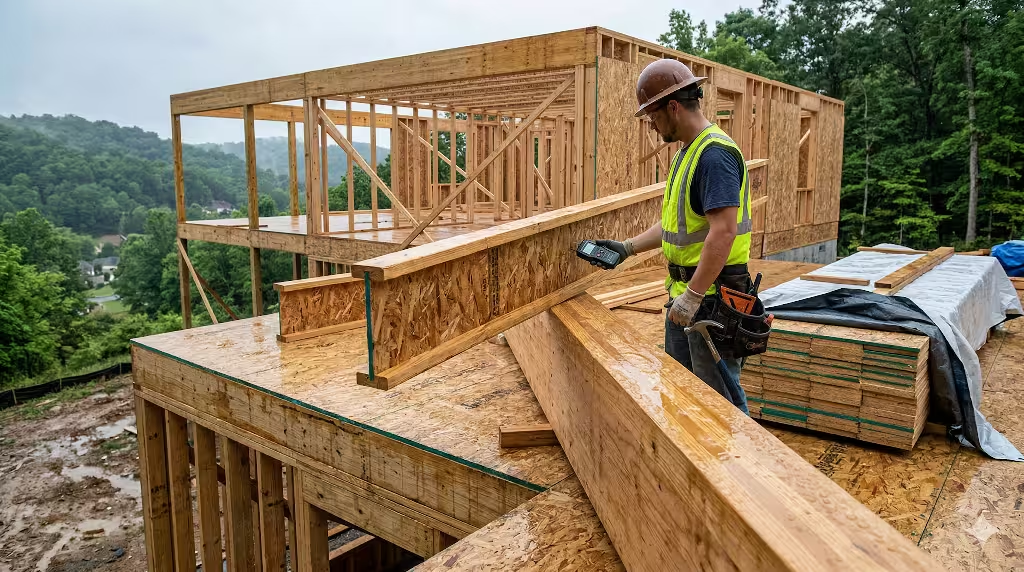
Most homeowners spend weeks picking out surface colors and styles, but they rarely think about what lies beneath the floor. In custom home construction, your subfloor is the foundation of your finish materials. How your subfloor is built will often dictate whether luxury vinyl tile or porcelain tile is the right choice for your space.
Porcelain’s Strict Demands for Subfloor Rigidity
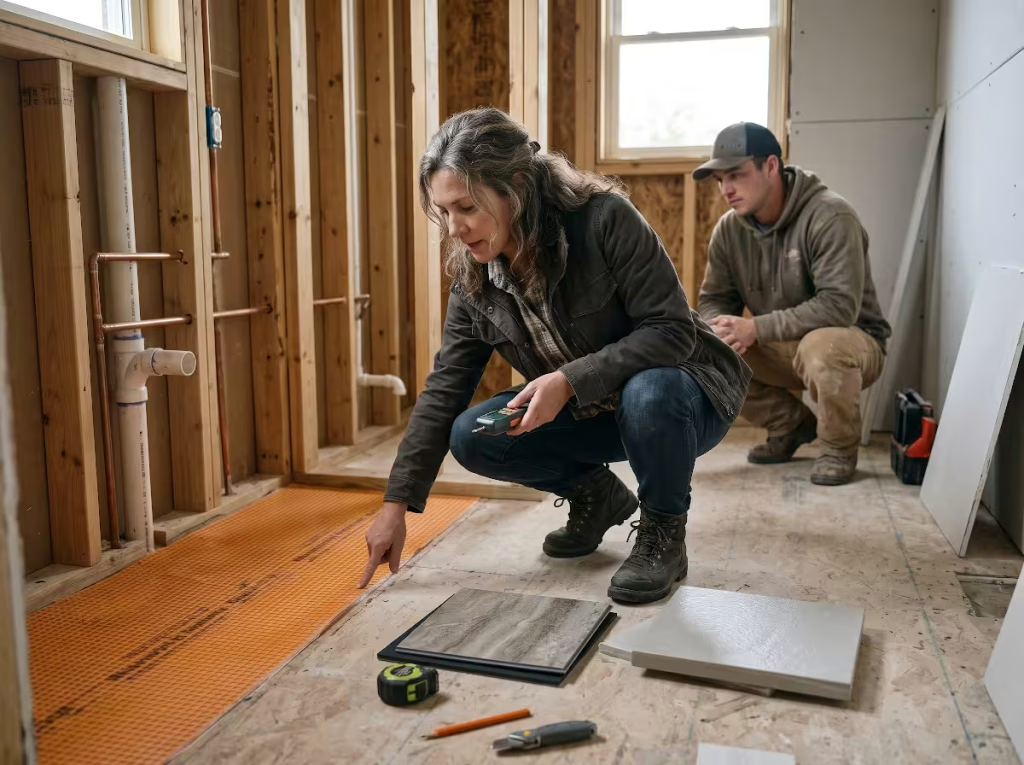
Porcelain tile has zero flexibility. It has immense compressive strength, meaning you can park a truck on it without crushing the tile, but it has almost no tensile flexibility. If the wood structure underneath it bends or bounces even a fraction of an inch, the rigid thinset mortar bond breaks, the grout cracks, and the tile fractures across its face.
In structural engineering, we measure floor bounce as deflection. The Tile Council of North America requires a maximum joist deflection of L/360 for standard ceramic and porcelain tile installations. That formula means the floor joist cannot bend more than the total length of the span (L) divided by 360 when loaded with furniture and people. If you choose modern large-format porcelain tile, where any single side of the tile measures 15 inches or longer, the standard tightens to L/720. That is an extraordinarily stiff requirement.
To install porcelain tile over wood joists successfully, a builder typically needs:
- Sturdy floor joists (often 2×10 or 2×12 lumber spaced 16 inches on center, or engineered I-joists).
- A structural subfloor of 3/4-inch tongue-and-groove plywood or oriented strand board (OSB).
- A second structural underlayment layer (such as an uncoupling membrane like Schluter Ditra, or a 1/2-inch cementitious backer board properly set in wet thinset and screwed down).
If you live in an older home with thin subfloors or bouncy floor joists, bringing that floor up to code for porcelain tile can add thousands of dollars in structural framing and carpentry work before a single tile is laid.
Luxury Vinyl Tile and Subfloor Flatness
Luxury vinyl tile treats subfloors very differently. Because it is a resilient material, luxury vinyl tile does not mind a little structural deflection. It will flex along with your floor joists without snapping in half or breaking a mortar bond.
However, luxury vinyl tile has its own strict requirement: flatness.
Most click-lock floating luxury vinyl tile requires a subfloor that is flat within 3/16 of an inch over a 10-foot span. Notice that I said flat, not level. A floor can be out of level (sloping slightly toward a wall) and still accept luxury vinyl tile, but it cannot have sudden humps, dips, or protruding nails.
If you install a floating luxury vinyl tile over an uneven subfloor, two frustrating problems happen:
- Hollow Spots and Bounce: You will feel the planks flex downward into dips when you walk over them, creating a hollow clicking sound.
- Broken Locking Tongues: Over months of walking on a hollow spot, the tiny milled click-lock edges will flex up and down until they fatigue and snap off. Once that happens, the seams between planks separate, dirt gathers in the gaps, and the floor cannot be snapped back together.
Preparing an existing subfloor for luxury vinyl tile usually involves pulling out screws, grinding down high spots on wood seams, and pouring self-leveling cement into low valleys. While luxury vinyl tile does not require the heavy framing support that porcelain demands, skipping the subfloor prep on a luxury vinyl tile job will ruin the floor just as quickly.
Daily Living and Ergonomics: The Lived Experience
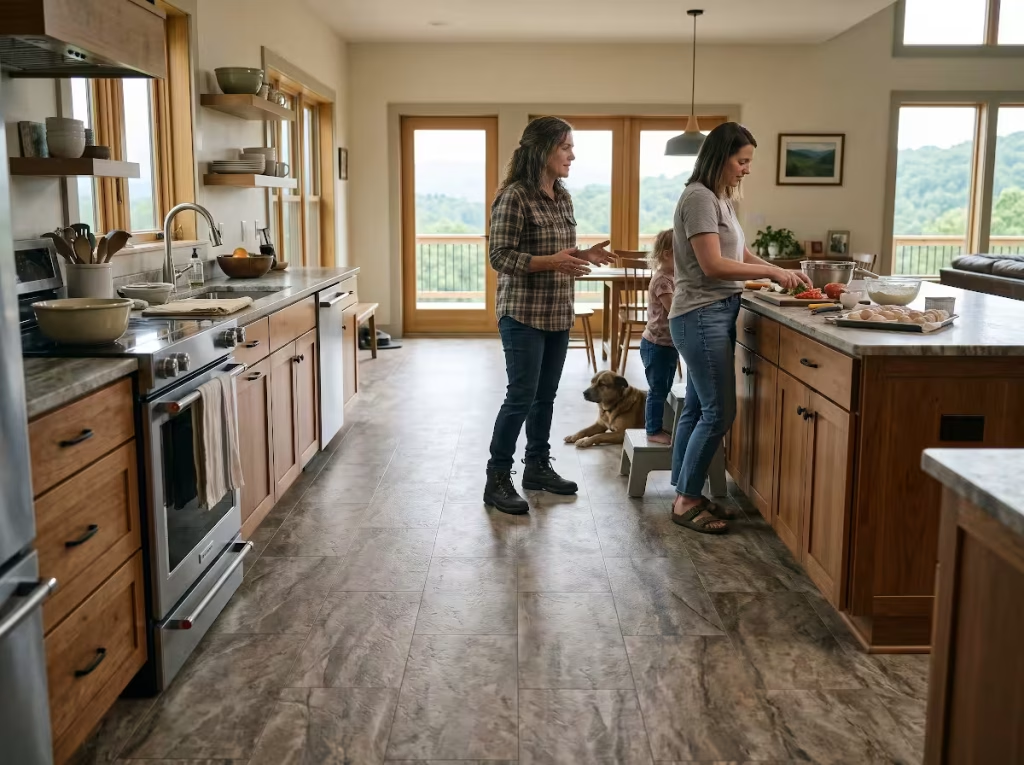
How a floor looks on moving day is exciting, but how it treats your body over the next ten years matters much more. We interact with our floors through touch, sound, temperature, and joint impact every waking hour of the day.
Joint Fatigue in Active Work Zones
If you love cooking weekend family dinners, hosting holiday gatherings, or spending hours canning fresh garden produce, joint ergonomics should be high on your list.
Porcelain tile is an unforgiving surface. Walking or standing on porcelain transfers 100% of the ground reaction force right back into your feet, ankles, knees, and lumbar spine. After standing on a porcelain kitchen floor for two hours while preparing dinner, you will feel real muscle tightness and back fatigue. Most women I build homes for who insist on porcelain in the kitchen end up buying thick gel mats to place in front of the sink, range, and prep island just to survive the holidays.
Luxury vinyl tile, on the other hand, is an ergonomic relief. Thanks to its resilient PVC core and attached foam backing, luxury vinyl tile yields slightly under body weight. It absorbs a measurable portion of that downward impact, which makes standing for long stretches much easier on your joints. You rarely need to scatter unsightly rubber standing mats across a luxury vinyl tile kitchen floor.
Acoustic Comfort in Open-Concept Floorplans
Today’s custom homes almost always feature open floorplans where kitchens, breakfast nooks, and great rooms flow into one large, open space. While that layout is great for family conversation, it can be an acoustic nightmare if you choose hard, reflective finishes.
Porcelain tile acts like an acoustic mirror. Sound waves from clattering dinnerware, running dishwashers, children’s voices, and barking dogs bounce off the vitrified surface and reverberate through the room. Dog nails clicking on porcelain can echo across an entire main level.
Luxury vinyl tile dampens sound. Because of its multi-layered composition and built-in acoustic underlayment, luxury vinyl tile absorbs ambient room noise and reduces impact sound transmission between floors. In the building trades, we look at the Impact Insulation Class (IIC) rating of materials. A high quality luxury vinyl tile floor easily scores an IIC rating in the mid-50s to low-60s on its own, making the home feel calmer, quieter, and more restful.
Thermal Comfort: The Barefoot Factor
Have you ever stepped out of bed on a cold February morning, walked into the bathroom, and flinched because the floor felt like a block of ice? That is the natural reality of porcelain tile.
Porcelain has high thermal conductivity. It draws heat away from warm objects quickly. If your home’s air temperature is 68 degrees, porcelain tile will feel noticeably colder to your bare skin because it pulls the warmth right out of your feet. The only way to make porcelain comfortable in a cold climate is to install electric or hydronic in-floor radiant heating cables underneath it before the mortar is spread. While radiant floor heat under porcelain is one of life’s greatest luxuries, it adds significant electrical and installation costs.
In contrast, luxury vinyl tile has low thermal conductivity. It acts as a mild insulator and quickly equilibrates with room temperature. When you walk across luxury vinyl tile with bare feet in the middle of winter, it feels warm, neutral, and gentle.
Keep in mind that luxury vinyl tile has strict temperature limits. While porcelain loves radiant heating systems and can handle extreme heat, most manufacturers of luxury vinyl tile warn that you should never expose their planks to temperatures above 85 degrees Fahrenheit. Running radiant heating too hot under luxury vinyl tile can soften the vinyl core, causing the planks to warp, cup, or release chemical odors.
Dropped Items and Everyday Accidents
Every busy household has dropped plates, fallen coffee mugs, and tumbling cell phones. What happens when an item hits the floor tells you a lot about the material.
If an everyday ceramic coffee mug slips from your hand onto a porcelain floor, two things usually happen: the mug shatters into a hundred dangerous shards, and the porcelain tile might suffer a chip or white impact crater where the glaze pops off.
If that same coffee mug drops onto a luxury vinyl tile floor, the resilient surface acts like a shock absorber. The mug will often bounce across the floor without breaking at all. Even if it does break, the luxury vinyl tile itself will rarely chip or dent from the drop. For homes with toddlers who drop toys or busy kitchens where cooking utensils take flight, luxury vinyl tile offers much greater forgiveness.
Moisture, Wet Areas, and the Waterproof Marketing Myth
One of the biggest selling points used by sales teams is the claim that luxury vinyl tile is 100% waterproof. While that statement is technically true regarding the planks themselves, it is also one of the most misunderstood concepts in the entire home remodeling industry.
The Truth About Waterproof Luxury Vinyl Tile
The individual planks of luxury vinyl tile are genuinely impervious to water. If you take a plank of stone-plastic composite luxury vinyl tile and submerge it in a swimming pool for three months, it will not swell, curl, rot, or degrade.
The vulnerability of luxury vinyl tile is not the plank; it is the installation system.
A standard floating luxury vinyl tile floor is full of tiny click-together seams. Around the entire room perimeter, the installer must leave a 1/4-inch expansion gap next to the walls so the floor can expand and contract with seasonal humidity swings. That gap is hidden beneath your baseboards and shoe molding.
If a child splashes water out of a bathtub, or your dishwasher leaks a gallon of water onto the floor, that liquid can seep through the perimeter baseboards or work its way through the click-lock seams. Once water slips underneath a luxury vinyl tile floor, it gets trapped between the waterproof vinyl and your subfloor.
Because the luxury vinyl tile acts like a vapor barrier, that trapped water cannot evaporate upward. Over several weeks, the stagnant moisture will soak into your wood subfloor, causing subfloor rot, black mold growth, and musty odors. If you have a major water leak over a floating luxury vinyl tile floor, you usually have to tear up the entire floor, throw it away, dry out the subfloor with commercial fans, and replace everything.
For this exact reason, you should never install luxury vinyl tile inside a walk-in shower, on a shower pan, or in a wet room where water flows across the floor regularly.
Porcelain’s Complete Waterproof System
Porcelain tile does not rely on marketing claims; it relies on comprehensive waterproofing assemblies.
Because porcelain tile has a water absorption rate under 0.5%, the tile itself is practically impervious. More importantly, porcelain is permanently bonded to the floor using cementitious thinset mortar over a bonded waterproof membrane system, such as Schluter Kerdi or liquid-applied membranes like Hydro Ban.
When installed by a qualified tile mechanic, the joints between porcelain tiles are filled with dense, water-resistant grout. When you use modern pre-mixed urethane grouts or two-part epoxy grouts, the grout lines are completely non-porous and will not absorb water or stains.
If your washing machine hose bursts on a properly installed porcelain floor with sealed transitions, the water simply sits on top of the surface like water in a ceramic sink. You can towel it up with a mop, run a dehumidifier, and your floor is completely unharmed. This makes porcelain tile the undisputed champion for primary bathrooms, wet rooms, steam showers, and mudrooms that handle snow and deep mud.
Durability, Wear Patterns, and Maintenance
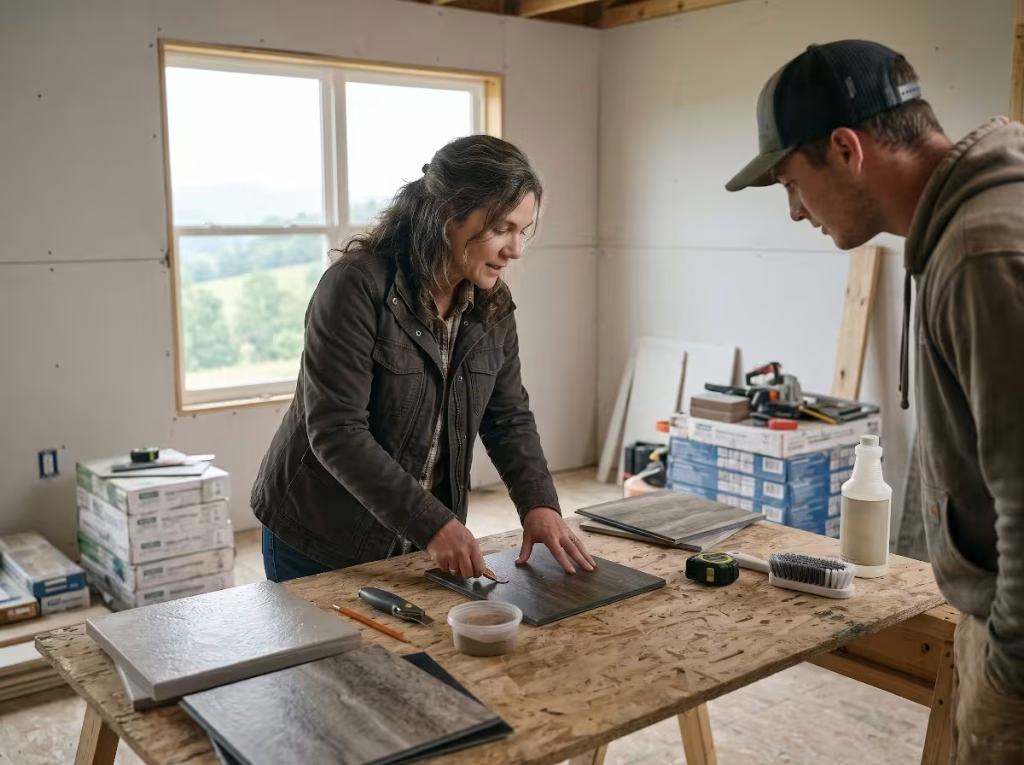
Durability is another word that gets thrown around casually in home design. A floor can be
Porcelain Tile: Generational Durability and Its One Weakness
Porcelain tile is rated by the Porcelain Enamel Institute using the PEI scale, which measures surface wear resistance from Class 1 (lightest) to Class 5 (heavy commercial). Most residential floor tiles carry a PEI Class 3 or 4 rating, which is tough enough to withstand decades of heavy grit, sand, and pet traffic without showing scratches.
If you have two eighty-pound golden retrievers running through your front door after chasing squirrels across mountain gravel, they will never scratch a glazed porcelain tile. You can drag dining room chairs across it, track in dirt, and drop keys without worrying about the surface finish.
The single weakness of porcelain tile is brittle impact. If you drop a heavy cast-iron Dutch oven from counter height, or drop a steel plumber’s wrench during a faucet repair, the focused point impact can shatter the tile or take a deep chunk out of the glaze.
Fixing a damaged porcelain tile is an intensive repair. A contractor has to carefully cut out the surrounding grout with an oscillating diamond blade, chisel the cracked tile into pieces with a hammer and cold chisel, scrape away the rock-hard dried thinset mortar without damaging the underlying subfloor or waterproof membrane, mix fresh mortar, set a new tile from your leftover attic stock, let it cure for twenty-four hours, and regrout the joint. It is messy, noisy, and requires skilled labor.
The daily maintenance for porcelain tile is straightforward, but the long-term upkeep centers on the grout. If your tile was set using traditional cementitious grout, you must seal those grout lines every year or two with a penetrating sealer. If you skip sealing, dirt, grease, and dirty mop water will soak into the porous grout joints, turning light gray or beige grout into a dingy brown that requires scrubbing with specialized chemical cleaners on your hands and knees.
Luxury Vinyl Tile: Surface Resiliency and Sun Sensitivities
Luxury vinyl tile offers fantastic resilience, but its durability profile is completely different from porcelain.
Because luxury vinyl tile is made of flexible polymers, it excels at resisting impacts. You will not crack a luxury vinyl tile by dropping a heavy canned good or a cast-iron skillet.
However, luxury vinyl tile can be scratched and gouged by sharp objects. If a small piece of sharp quartz gravel gets stuck in the tread of a work boot, or if you slide a heavy refrigerator across the kitchen without lifting it, you can slice clean through the 20-mil wear layer and damage the printed photographic film underneath. Once the print layer is gouged, it cannot be sanded down, polished, or refinished. The damaged plank must be replaced.
Replacing a plank of luxury vinyl tile depends on how it was installed:
- Glue-Down Luxury Vinyl Tile: This is common in commercial spaces and high-traffic homes. An installer can heat up the damaged plank with a commercial heat gun to soften the adhesive, lift it with a suction cup or utility blade, scrape the subfloor, apply fresh pressure-sensitive glue, and drop a new plank in place. It takes about fifteen minutes.
- Floating Click-Lock Luxury Vinyl Tile: Replacing a damaged plank in the middle of a room is tricky. You either have to unlock all the planks starting at the nearest wall until you reach the damaged piece, or use a utility knife to cut out the bad plank and glue in a replacement piece with its locking tongues trimmed off.
Another factor with luxury vinyl tile is ultraviolet sunlight. If you install luxury vinyl tile in a sunroom with floor-to-ceiling glass, or in front of an unshaded south-facing patio sliding door, prolonged direct ultraviolet rays can cause two problems:
- The sunlight can fade the pigments in the photographic print layer over time.
- Direct solar radiant heat can cause the vinyl core to expand significantly, causing the floor to dome up or buckle along the walls. If you love lots of open, unshaded sunshine, porcelain tile is the safer choice because it is completely UV-stable and will never fade or expand under the sun.
Cleaning luxury vinyl tile is delightfully simple. Because there are no cement grout lines to absorb dirt, daily maintenance consists of regular sweeping and occasional damp mopping with a simple pH-neutral floor cleaner. You never have to scrub grout, seal seams, or polish the planks.
Cost Architecture: Material vs. Labor Economics
When planning your budget, it is easy to make the mistake of comparing material prices alone. Homeowners often walk through a big box store, see luxury vinyl tile for $3.50 per square foot and porcelain tile on clearance for $2.99 per square foot, and assume porcelain will be cheaper.
As any professional builder will tell you, the tile purchase is only the first chapter of the invoice. The true cost of a floor is its installed turnkey cost, which includes subfloor structural prep, underlayment, adhesives, skilled labor, and finishing accessories.
The Real Cost Breakdown
Let us look at what it actually takes to install 500 square feet of each material in a typical residential home:
| Expense Category | Luxury Vinyl Tile (500 sq. ft.) | Porcelain Tile (500 sq. ft.) |
| Material Cost (per sq. ft.) | $2.50 to $7.00 | $3.00 to $12.00+ |
| Subfloor Prep & Underlayment | $1.00 to $2.50 (skim coating, self-leveling) | $2.50 to $5.50 (cement board, uncoupling membrane, screws) |
| Mortar, Grout & Adhesives | $0.00 (floating click-lock) or $0.75 (glue-down) | $1.50 to $3.00 (polymer thinset, epoxy or urethane grout) |
| Professional Labor (per sq. ft.) | $2.00 to $4.50 | $7.00 to $16.00+ |
| Transitions, Trim & Moldings | $150 to $300 (snap-in PVC/MDF trims) | $350 to $700 (solid marble saddles, metal Schluter profiles) |
| Typical Turnkey Cost (Installed) | $5.50 to $14.00 per sq. ft. | $14.00 to $36.00+ per sq. ft. |
| Total Project Range (500 sq. ft.) | $2,750 to $7,000 | $7,000 to $18,000+ |
Why Is Porcelain Labor So Much Higher?
The massive price difference comes almost entirely down to time, tools, and craftsmanship.
A skilled two-person flooring crew can prep a subfloor and install 500 square feet of floating luxury vinyl tile in a single working day. The planks cut easily with a manual score-and-snap blade or a simple shear, producing zero dust and minimal noise. There is no wet mixing, no drying time, and you can place your heavy furniture back on the luxury vinyl tile the moment the last quarter-round molding is nailed in place.
Installing porcelain tile over that same 500-square-foot room is a four-to-six-day construction project:
- Day 1: Screw down cement backer boards in wet thinset or install an uncoupling membrane with thousands of square fasteners.
- Day 2 and 3: Set the porcelain tiles using a high-grade modified thinset mortar. Each cut requires a diamond wet saw or continuous water-cooled tile cutter. Installers must use tile leveling clips and spacers to prevent lippage (uneven edges between adjacent tiles).
- Day 4: The mortar must cure for a full 24 hours without anyone walking on the floor.
- Day 5: Pull out the leveling clips, scrape out squeeze-out mortar from the joints, mix and pack grout across every seam, and wash the haze off the tile faces with damp sponges multiple times.
- Day 6: Clean the final grout haze and apply penetrating sealer if cement grout was used.
Porcelain tile installation is physically grueling, technically demanding masonry work. You are paying for a certified craftsman’s knees, back, specialized diamond tools, and precision layout.
The Lifespan Equation
To be completely honest about costs, you also have to factor in the lifespan of each material.
A good quality luxury vinyl tile floor will provide 15 to 25 years of faithful service in an active home before the wear layer dulls, traffic patterns emerge, or trends move past that specific print pattern. At that point, you will pull it up and replace it.
Porcelain tile, when installed over a properly stiffened subfloor, is an architectural finish that can easily last 50 to 100 years. Your children and grandchildren could walk on that same porcelain floor without it wearing through. While porcelain costs more upfront, its annualized cost over fifty years can actually be lower than buying two or three generations of luxury vinyl tile.
Resale Value, Appraisal Impact, and Market Perception
If you plan to sell your home within the next five to ten years, you have to think about how future buyers and certified real estate appraisers will judge your floors.
The Appraiser’s Eye
In real estate appraisal standards, porcelain tile is classified as a permanent capital improvement and an upscale architectural finish. It adds tangible, line-item appraised value to custom homes, especially in higher price tiers.
Appraisers view luxury vinyl tile as a high-utility, semi-permanent floor covering. While an appraiser will give your home full credit for having clean, attractive, updated flooring compared to twenty-year-old stained carpet, luxury vinyl tile does not command the same appraised asset value as real stone, hardwood, or porcelain tile.
The Buyer’s Emotional Reaction
Buyer psychology varies depending on the price point of the home and the room they are inspecting:
- Entry-Level and Mid-Market Homes: Buyers in these segments love luxury vinyl tile. They appreciate that it is scratch-proof against dogs, easy to clean, waterproof on the surface, and looks modern and fresh. In this price category, luxury vinyl tile is seen as a huge asset that makes the home move-in ready.
- High-End Custom and Luxury Homes: In homes priced in the top tier of your local market, luxury buyers expect permanent natural materials or vitrified ceramics. Walking into a $900,000 custom primary bathroom suite and seeing luxury vinyl tile instead of heated large-format porcelain can feel like a cost-cutting compromise to a discerning buyer. In luxury spaces, buyers want the permanence, substantial heft, and craftsmanship of authentic tile.
A great rule of thumb is to look at your neighborhood comps. If surrounding homes all feature ceramic or porcelain tile in their primary baths and kitchens, downgrading to luxury vinyl tile might hurt your appraisal ceiling. But if you are finishing a daylight basement, a bonus room, or updating an active family home, luxury vinyl tile will offer an outstanding return on investment without over-improving the space.
Room-by-Room Specification Matrix
Because every room in your home serves a different purpose, the best custom homes rarely use one flooring material everywhere. Instead, smart builders balance their budgets and comfort by specifying the right floor for the right space.
Here is how I recommend breaking down your home:
Primary Bathroom Suite: Winner = Porcelain Tile
Your primary bathroom is a personal retreat where humidity, shower steam, standing puddle water, and barefoot comfort collide.
- Why Porcelain Wins: It integrates seamlessly with walk-in shower waterproof pans, curbless wet rooms, and linear drains. You can run in-floor electric radiant heating wires underneath porcelain, giving you warm toes on frosty mornings. It communicates pure spa luxury that boosts home appraisal.
- When to Consider Luxury Vinyl Tile: If you are doing a rapid, budget-conscious cosmetic refresh on a guest bathroom or hall bath without modifying the shower, luxury vinyl tile is an affordable, attractive option.
The Family Kitchen: A Balanced Choice
The kitchen is the true command center of the home. Here, your decision depends heavily on your daily habits.
- Choose Porcelain Tile If: You want permanent stain defense, have large dogs who spill food and water bowls constantly, or want an unbroken, high-end stone look that matches a formal dining space.
- Choose Luxury Vinyl Tile If: You cook or bake for hours at a time and want to protect your knees, back, and dropped coffee mugs. Luxury vinyl tile provides a comfortable, warm, forgiving kitchen floor that cleans up with a simple microfiber damp mop.
Mudroom and Pet Drop Zones: Winner = Textured Porcelain Tile
Mudrooms handle the worst abuse in the house: muddy work boots, melting snow, gravel, pet leashes, and wet umbrellas.
- Why Porcelain Wins: Wet dirt mixed with sharp gravel can act like sandpaper on a luxury vinyl tile wear layer if dragged repeatedly. A through-body or heavily textured porcelain tile will laugh at mud, snow, and claws without a single mark.
Finished Basements and Slab Foundations: Winner = Luxury Vinyl Tile
Concrete slabs in daylight or walkout basements are prone to cool temperatures and slow vapor emissions.
- Why Luxury Vinyl Tile Wins: Installing porcelain on a cold concrete slab makes the basement feel chilly and cavernous unless you invest heavily in radiant heat. A rigid core luxury vinyl tile installed over a 6-mil poly vapor barrier creates a warmer, much quieter basement family room or home gym. If your basement ever experiences minor plumbing or storm backups, floating luxury vinyl tile is easier to remove and remediate than chisel-bonded tile.
Second-Story Bedrooms and Playrooms: Winner = Luxury Vinyl Tile
Upstairs rooms over open living spaces need sound deadening and impact absorption.
- Why Luxury Vinyl Tile Wins: Porcelain is far too heavy and acoustically live for second-floor family zones. Luxury vinyl tile softens children’s tumbling falls, mutes running footfalls, and does not require beefing up second-story joists to prevent deflection cracking.
Common Questions about Luxury Vinyl Tile and Porcelain
When clients sit down at my design table, they often bring the same common questions and concerns they have researched on Google. Here are direct, clear answers to the most common questions:
Is luxury vinyl tile better than porcelain tile?
Neither flooring is universally better; each excels at solving different home building problems. Luxury vinyl tile is better if you prioritize lower upfront costs, DIY-friendly installation, underfoot joint comfort, quiet acoustics, and a warm barefoot touch. Porcelain tile is better if you want absolute, generational durability that lasts 50 or more years, maximum scratch resistance against large pets, complete waterproof protection inside showers, and higher appraised home resale value.
Which is more expensive to install: luxury vinyl tile or porcelain?
Porcelain tile is substantially more expensive to install. While the raw materials can sometimes be found at similar prices per square foot, porcelain installation labor runs between $7.00 and $16.00 or more per square foot, compared to $2.00 to $4.50 per square foot for luxury vinyl tile. When you add the required cement backer boards, crack-isolation membranes, modified thinset, and grout, a complete turnkey porcelain job often costs two to three times as much as luxury vinyl tile.
Can you tell the difference between luxury vinyl tile and porcelain tile?
From a standing distance of several feet, modern luxury vinyl tile with realistic print films and textured surfaces can look remarkably similar to real porcelain tile. However, the moment you touch the floor, the difference is immediate. Porcelain feels cool, heavy, and completely solid underfoot with real cementitious or epoxy grout lines. Luxury vinyl tile feels warmer, has slight give under your body weight, sounds muted when tapped, and typically features micro-beveled seams rather than genuine masonry grout.
How long does luxury vinyl tile last compared to porcelain?
A quality luxury vinyl tile with a 20-mil commercial wear layer will typically last 15 to 25 years under standard residential living before showing traffic dulling or wear along high-use paths. Porcelain tile, by comparison, is an architectural finish that can easily last 50 to 100 years. As long as the subfloor does not shift and crack the mortar bed, porcelain will practically outlast the house itself.
Is luxury vinyl tile truly 100% waterproof compared to porcelain?
The planks of luxury vinyl tile are 100% waterproof and will not expand, swell, or rot if exposed to water. However, the assembled floor system is not watertight. Standing puddles can seep through click-lock seams and perimeter expansion gaps, getting trapped beneath the vinyl where moisture can cause wood subfloor decay and mold. Porcelain tile, when installed over a certified waterproof membrane and packed with dense grout, creates a fully sealed, watertight assembly suitable for showers and wet rooms.
Does porcelain tile add more resale value to a home than luxury vinyl tile?
Yes, porcelain tile adds more appraised and perceived value, especially in mid-to-high-end homes. Real estate appraisers evaluate porcelain as a permanent structural asset. While buyers appreciate clean, updated luxury vinyl tile in casual rooms, basements, and mid-range homes, luxury buyers still expect real porcelain or stone tile in primary bathrooms and grand entryways.
Which flooring is better for pets: porcelain tile or luxury vinyl tile?
Both floors are very pet-friendly, but they serve different pet needs. Porcelain tile is practically impervious to heavy dog nail scratches and completely immune to pet urine stains, but it can be slick for older dogs struggling with hip dysplasia. Luxury vinyl tile offers better traction, softer landings, and quiet sound dampening when dogs run, but cheaper wear layers can suffer fine scratch hazing from trapped grit under large paws.
Can luxury vinyl tile be installed directly over existing porcelain tile?
Yes, you can install floating luxury vinyl tile over an existing porcelain tile floor, provided the old tile is firmly bonded, structurally sound, and flat. However, you must first skim-coat wide or deep grout lines with a cementitious feather-finish patch. If you leave wide grout trenches beneath a flexible luxury vinyl tile, the vinyl will eventually sink into those low lines under foot traffic, creating visible telegraphing grid patterns across your new floor.
Final Checklist and Decision Framework
Before you sign a contract or swipe your credit card for flooring materials, take a step back and run your project through this practical builder’s checklist.
Step 1: Perform a Subfloor Audit
- Inspect your joist spans and lumber sizing: Do you have a stiff subfloor meeting L/360 or L/720 deflection criteria for porcelain?
- Check the floor for level and flat conditions: Can your subfloor meet the 3/16-inch flatness requirement for floating luxury vinyl tile without extensive leveling?
- Test for moisture emissions: If installing over a concrete slab, perform a calcium chloride or relative humidity probe test before laying either product.
Step 2: Audit Your Daily Household Habits
- Joint sensitivity: Does anyone in your family suffer from chronic lower back pain, knee arthritis, or plantar fasciitis that makes hard floors painful?
- Acoustic goals: Is your home open-concept, or do you have bedrooms located directly beneath the new flooring area?
- Pet traffic: Do you own large pets that track in sand and gravel from outside?
- Cleaning routine: Are you comfortable sealing grout lines every few years, or do you prefer simple damp mopping without grout chores?
Step 3: Align With Your Timeline and Budget
- How long will you live in the home: If you plan to move within five to seven years, luxury vinyl tile offers rapid installation and immediate aesthetic return for less money. If this is your forever dream home, investing in porcelain tile provides generational permanence you will never have to redo.
- Balance the home: You do not have to choose one material for the entire house. Many of the most successful custom homes I build use heated porcelain tile in primary baths and mudrooms, while relying on quiet, comfortable luxury vinyl tile throughout kitchens, family spaces, playrooms, and daylight basements.
Making a thoughtful flooring decision comes down to matching materials with real-world physics and your family’s daily lifestyle. When you honor your home’s structural framing and design for daily comfort, you create a space that looks beautiful and lives comfortably for decades to come.