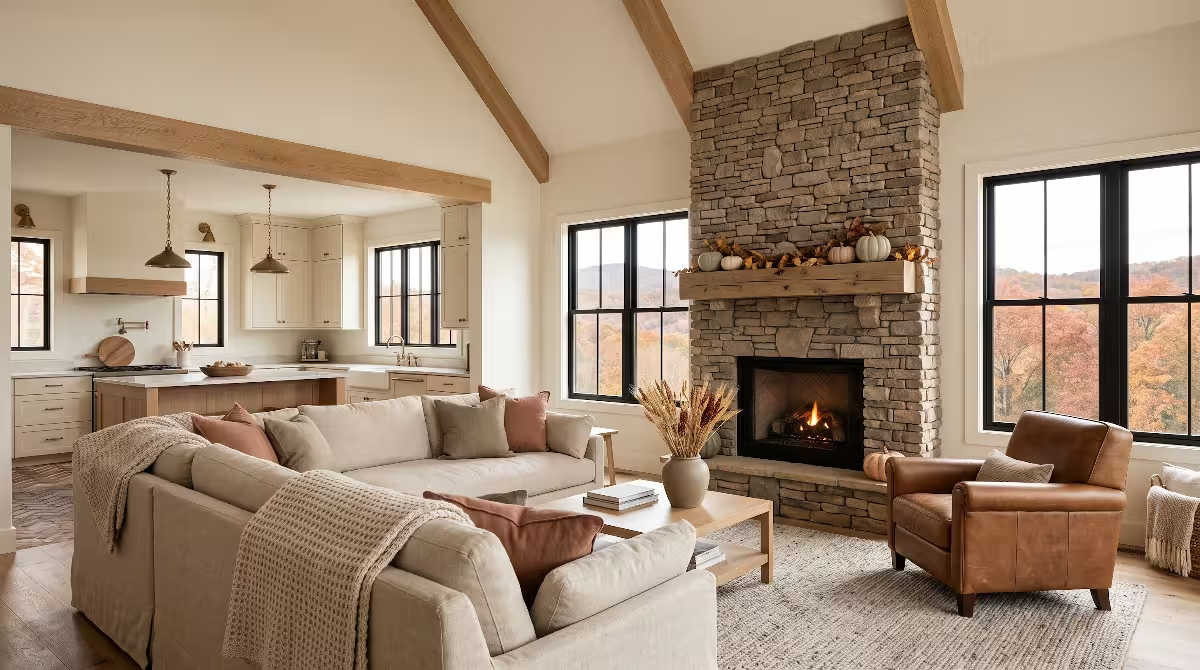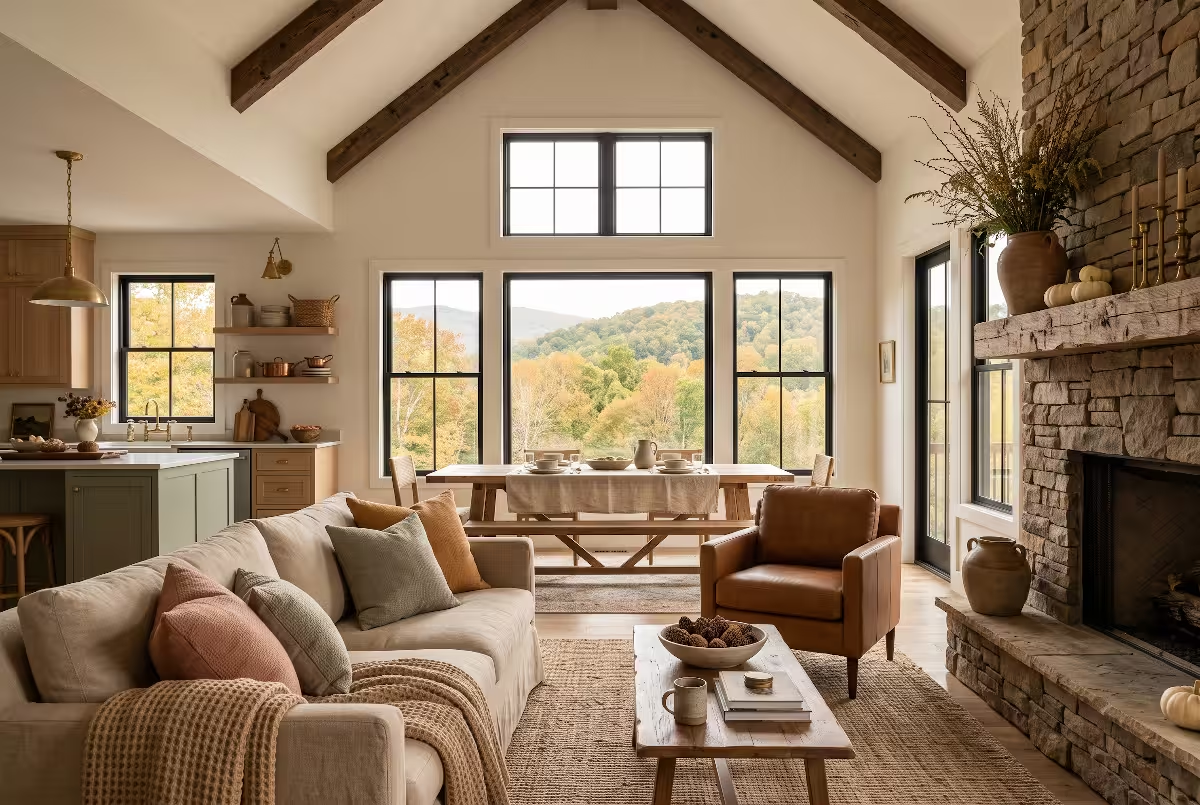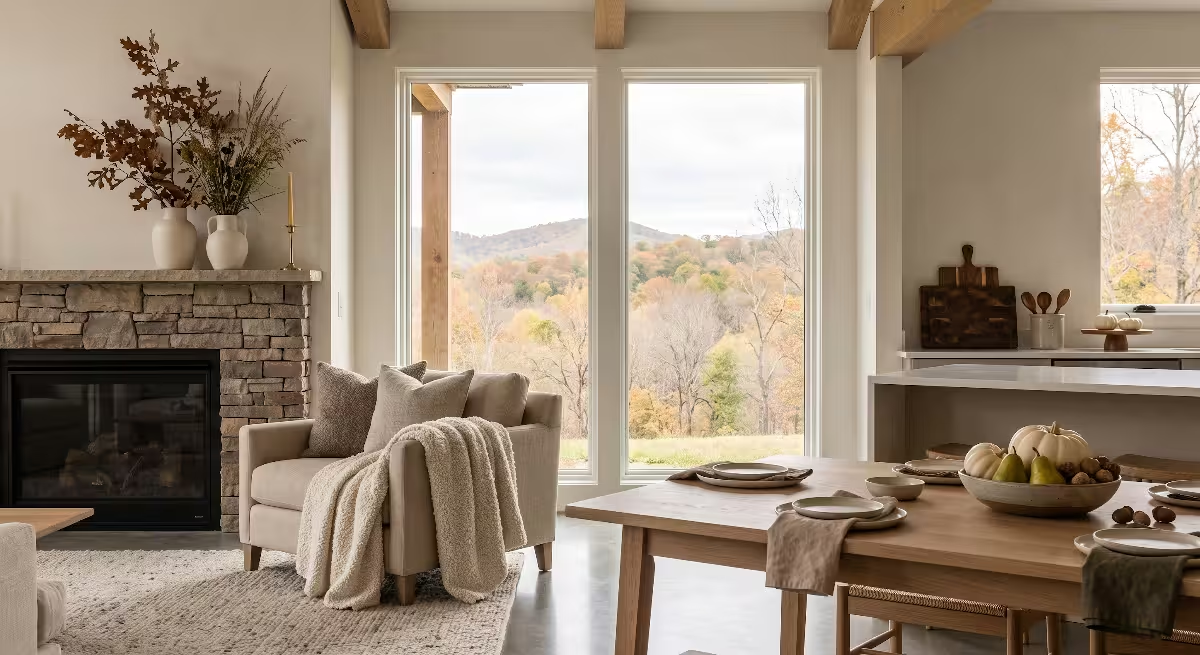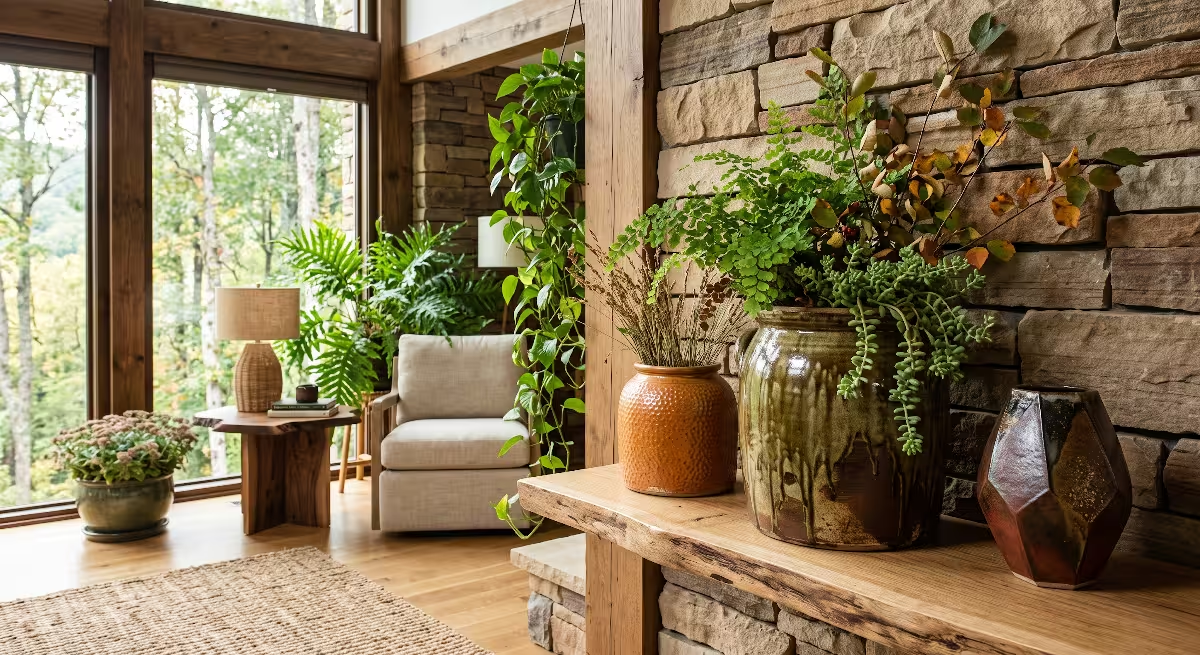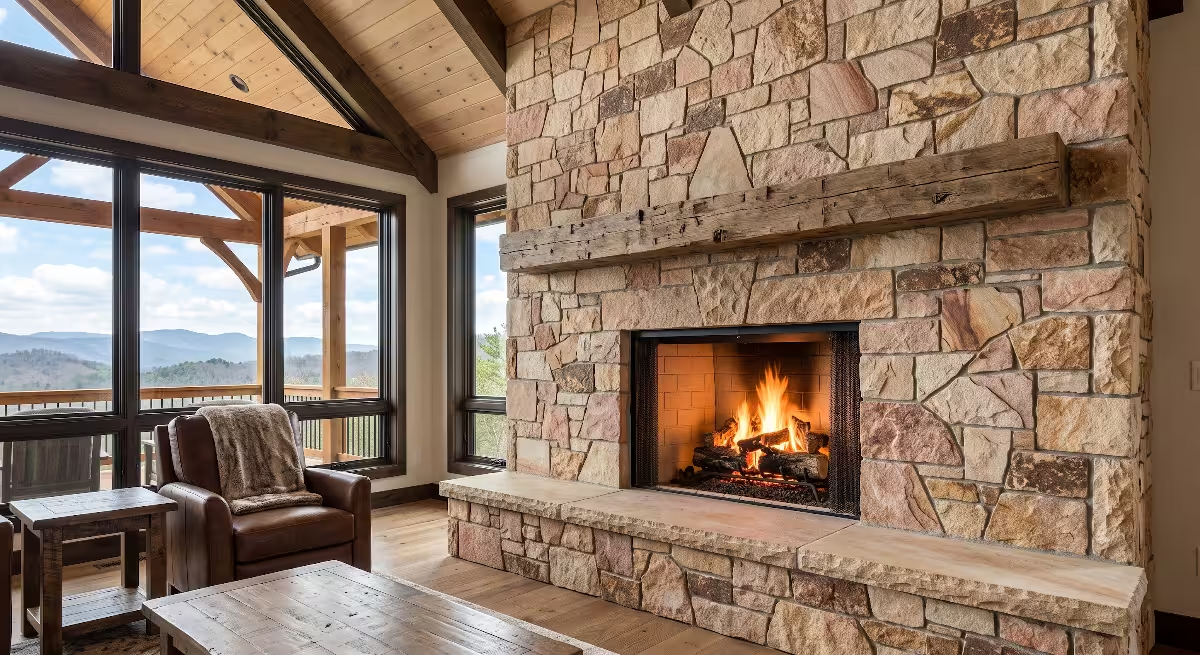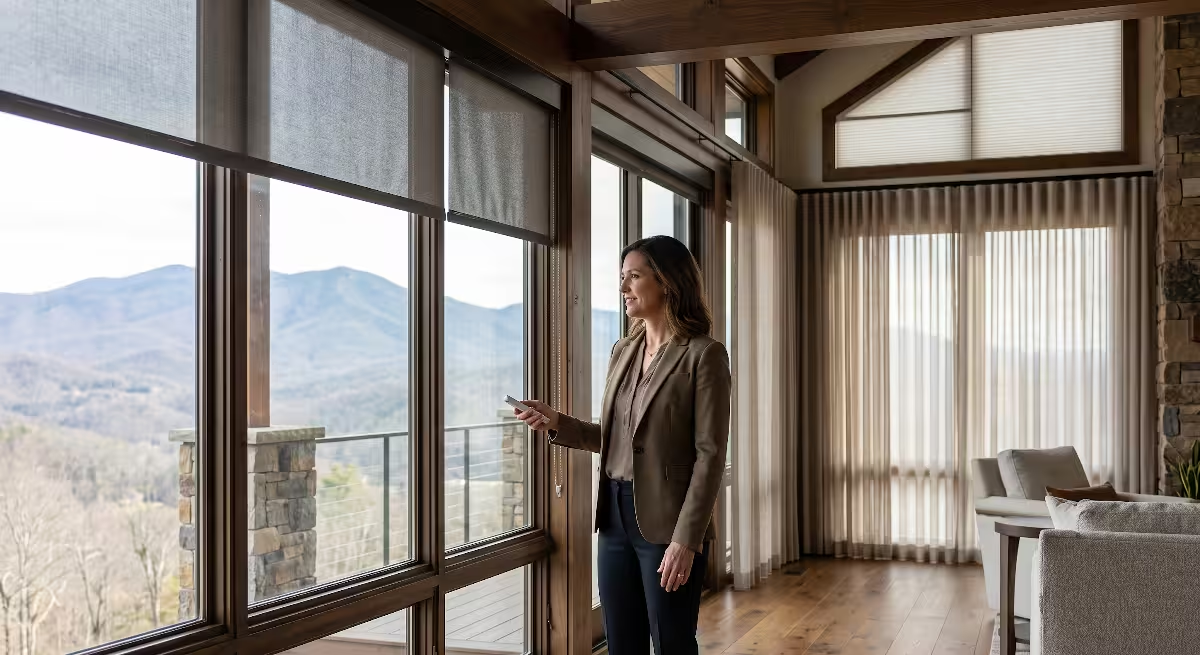


When people think about building a custom home in Bristol, Johnson City, or Kingsport, they often think first about the mountain views. They picture the ridgelines, the autumn colors, and the quiet comfort of a well-built home. However, they need to also look closely at what goes inside the walls. Beautiful finishes are wonderful, but how does the home perform? How does it handle a January cold snap when the wind whips off the mountains? How does it handle a muggy July afternoon along the Holston River?
One of the most effective, durable, and regionally authentic materials you can use in a custom home is East TN limestone. When you bring East TN limestone inside your home, you are not simply adding an attractive rustic accent. You are installing a heavy thermal battery. East TN limestone possesses natural physical traits that can store heat, smooth out indoor temperatures, and lighten the load on your heating and cooling equipment. In this comprehensive guide, we will walk step by step through the building science, geology, engineering, and design strategies behind using East TN limestone in interior residential design.
The Physics of Thermal Mass: How Dense Stone Acts as a Thermal Battery
To understand why East TN limestone belongs inside a high-performance home, we must first look at the basic physics of thermal mass. In simple terms, thermal mass is the ability of a material to absorb heat, store that heat, and release it later when the surrounding air cools down. You can think of thermal mass like a heavy cast iron skillet on a kitchen stove. It takes longer to heat up than a thin aluminum pan, but once it gets hot, it holds that heat for a very long time and radiates it outward.
East TN limestone functions in your living room just like that cast iron skillet. When warmth enters the room, whether from natural sunlight or a home heating system, East TN limestone absorbs those heat calories. Instead of letting the room overheat rapidly, the dense rock soaks up the heat energy. Later, when the sun sets and the room begins to cool, East TN limestone slowly radiates that stored warmth back into the living space. This steady release of warmth stabilizes the indoor climate.
       DAYTIME CHARGING                   NIGHTTIME DISCHARGING
   (Sun / Ambient Heat In)                 (Radiant Heat Out)

      ~~~~~~~~ Solar Rays ~~~~~~~~
             \     |     /                     <-- Heat Waves --
              v    v    v                     <-- Radiates Back --
      +------------------------+             +------------------------+
      |                        |             |                        |
      |   East TN limestone    |             |   East TN limestone    |
      |   (Absorbs & Stores)   |             |    (Releases Heat)     |
      |                        |             |                        |
      +------------------------+             +------------------------+
         Room Stays Moderate                    Room Stays Warm
Defining Thermal Mass vs. Thermal Insulation
One common point of confusion among custom home buyers is the difference between thermal mass and thermal insulation. These two building elements work as partners, but they perform completely opposite jobs in building science.
Thermal insulation is measured by R-value, which stands for thermal resistance. Materials like fiberglass batts, mineral wool, and rigid foam boards are full of tiny pockets of trapped air. Because air is a poor conductor of heat when it cannot move, insulation slows down the speed at which heat travels through a wall or ceiling. Insulation keeps heat from escaping outside in the winter, and it keeps summer heat from creeping inside.
Thermal mass, on the other hand, does not resist the flow of heat. Stone has a very low R-value. A four-inch slab of East TN limestone only provides about R-0.4 to R-0.8 of thermal resistance, which is practically nothing compared to an R-21 insulated wall cavity. Instead of resisting heat, East TN limestone absorbs heat and holds it.
The two key engineering terms here are thermal lag and decrement factor. Thermal lag, also called phase shift, is the delay in time between when heat enters one side of a material and when that heat finally reaches the other side or radiates back into the room. A wall built with East TN limestone can delay heat transfer by six to ten hours. The decrement factor is the reduction in temperature swing. If the temperature outside swings by thirty degrees between day and night, the interior surface of East TN limestone might only vary by five degrees. By combining high R-value insulation in your exterior walls with dense East TN limestone inside the house, you get the ultimate combination: the insulation stops heat from escaping, while East TN limestone keeps the indoor air steady and comfortable.
The Thermodynamic Metrics of Limestone
As an engineer, I always look at the hard numbers. Every building material has specific thermodynamic properties that dictate how it behaves under changing temperatures. When evaluating East TN limestone, three primary metrics tell the story:
- Specific Heat Capacity: This number describes how much heat energy one pound of material can hold before its temperature rises by one degree Fahrenheit. East TN limestone has a specific heat capacity of roughly 0.21 BTU per pound per degree Fahrenheit. In metric terms, that equals roughly 880 Joules per kilogram Kelvin.
- Bulk Density: How heavy a material is for its size directly impacts its ability to store thermal energy. East TN limestone is exceptionally dense, typically weighing between 165 and 172 pounds per cubic foot. That density comes from millions of years of geological compression.
- Volumetric Heat Capacity: This is the most crucial number for interior designers and builders. You find it by multiplying specific heat capacity by density. East TN limestone delivers a volumetric heat capacity of roughly 35 to 36 BTU per cubic foot per degree Fahrenheit. This means that a relatively small volume of East TN limestone can store a substantial amount of heat energy without needing to get uncomfortably hot to the touch.
- Thermal Conductivity: Measured by the k-value, thermal conductivity shows how fast heat travels through a solid material. East TN limestone has a moderate thermal conductivity, usually around 1.3 to 1.8 Watts per meter Kelvin. This moderate rate is ideal for interior applications. If stone conducts heat too quickly, it loses its stored energy before you need it. If it conducts heat too slowly, the interior of the stone never warms up. East TN limestone sits right in the optimal zone, taking in heat steadily throughout the day and releasing it gradually during the night.
Material Comparison Table: Technical Benchmarking
To see how East TN limestone compares to other common materials used in residential construction, let us review the standard engineering benchmarks:
| Material Type | Density (lbs/cu ft) | Specific Heat (BTU/lb·°F) | Volumetric Heat Capacity (BTU/cu ft·°F) | Thermal Conductivity (W/m·K) |
| East TN limestone | 168 | 0.21 | 35.3 | 1.6 |
| Crab Orchard Sandstone | 150 | 0.22 | 33.0 | 1.9 |
| Standard Poured Concrete | 145 | 0.20 | 29.0 | 1.3 |
| Granite | 165 | 0.19 | 31.4 | 2.8 |
| Common Red Clay Brick | 120 | 0.22 | 26.4 | 0.7 |
| Gypsum Drywall Board | 50 | 0.26 | 13.0 | 0.17 |
| Southern Yellow Pine | 35 | 0.42 | 14.7 | 0.12 |
Looking at this comparison, you can immediately spot why standard drywall and wood stud walls feel chilly quickly once the furnace turns off. They simply lack the density to hold thermal energy. East TN limestone holds almost three times as much heat per cubic foot as standard drywall, making East TN limestone a far superior choice for homeowners who want built-in temperature stability.
Regional Geology: Why East Tennessee Limestone Is Structurally and Thermally Unique
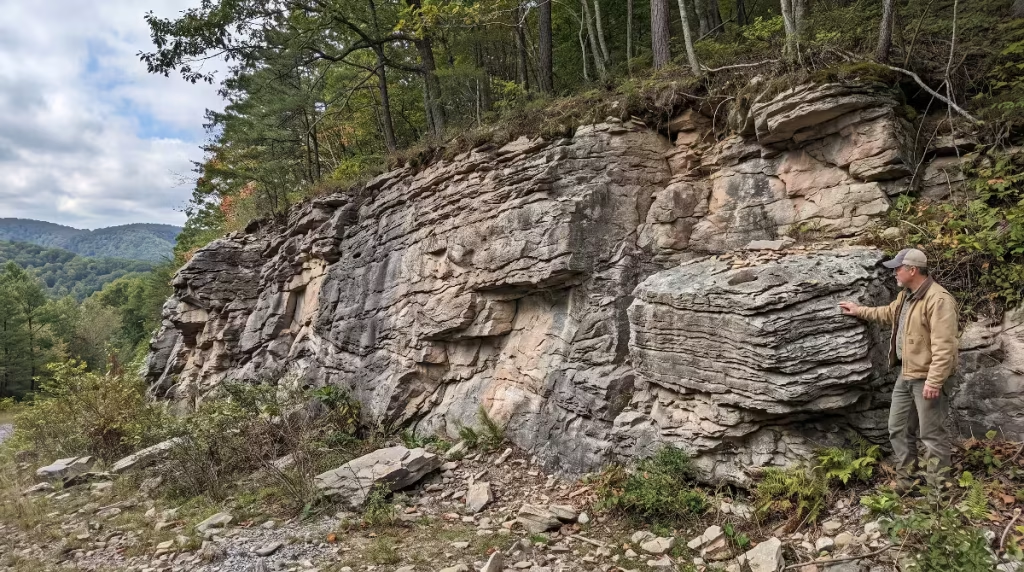
When you drive through Sullivan, Washington, or Carter counties, you see limestone outcrops everywhere. Our highways cut through massive gray and pink stone bluffs. However, not all limestone across the United States is created equal. The limestone found in Indiana or Florida, for instance, is often porous, chalky, and relatively soft. By contrast, East TN limestone is world-renowned for its crystalline density and exceptional structural purity.
       CROSS-SECTION: THE APPALACHIAN FORELAND BASIN

 [ Cumberland Plateau ]        [ Ridge & Valley Province ]         [ Blue Ridge / Unakas ]
     Sandstone Caps            East TN limestone Formations          Granite & Gneiss
        ______                  _/\_        _/\_        _/\_               /\/\
       |      |                /    \      /    \      /    \             /    \
  _____|      |_______________/  /\  \____/  /\  \____/  /\  \___________/      \
                             /  /  \  \     /  /  \  \     /  /  \
      Underground Folding:  |  /    \  |   |  /    \  |   |  /    \  |
                            | /      \ |   | /      \ |   | /      \ |
                       [ Holston Formation & Knox Group Limestone ]
The Holston Formation and Tennessee Marble
The premier variety of East TN limestone comes from the famous Holston Formation, deposited during the Middle Ordovician epoch roughly 450 to 480 million years ago. Back then, what is now East Tennessee was submerged under a warm, shallow marine sea near the equator. Over millions of years, vast beds of bryozoans, crinoids, and marine shells accumulated on the ocean floor.
Later, tectonic collisions formed the Appalachian Mountains, subjecting these marine sediments to tremendous heat and pressure. That geologic squeezing recrystallized the calcite minerals, transforming the sedimentary mud into an ultra-dense, semi-metamorphic stone. In the trade, this stone is often called “Tennessee Marble” because it takes a brilliant, glass-like polish. Geologically, it is a crystalline East TN limestone.
Because the Holston Formation has virtually no internal air voids, with an absorption rate of less than 0.5 percent, it is dense and hard. When you polish or hone this East TN limestone for an interior wall or hearth, you get a solid mass with no trapped air pockets. Heat moves directly through solid calcite crystals, giving this East TN limestone superior thermal storage compared to looser sedimentary stones found in other parts of the country.
Knox Group Dolomite and Valley Limestones
In addition to the Holston Formation, our region contains extensive beds belonging to the Knox Group. This geological group includes thick layers of dolomite and dolomitic East TN limestone. Dolomite contains magnesium in addition to calcium carbonate, giving the stone a slightly different grain and a color palette ranging from soft gray and blue to warm buff and deep charcoal.
Across the Tri-Cities, local quarries extract Knox Group East TN limestone as fieldstone, river rock, and quarried dimension stone. Whether used as a rough-faced structural block or a sawn veneer, this East TN limestone shares the same high density and solid thermal qualities. Its wide variety of natural surface textures allows interior designers to choose between a rustic mountain cabin look or a sleek, contemporary aesthetic while maintaining the exact same thermal performance.
Climate Zone 4A Realities: Why Thermal Mass Works in the Tri-Cities
To make thermal mass work effectively, you must design for your specific local climate. The International Energy Conservation Code classifies the Tri-Cities region of East Tennessee as Climate Zone 4A, which is defined as a mixed-humid climate.
Living in Climate Zone 4A means our homes face contrasting weather conditions throughout the year. We have genuine winter weather with freezing nights and mountain winds, hot and humid summers, and dramatic shoulder seasons in spring and autumn. In October or April in East Tennessee, the morning temperature can easily start around 35 degrees and climb to 72 degrees by mid-afternoon, before plunging back into the 40s after dark.
This 30-degree daily swing makes East TN limestone particularly valuable. Lightweight houses built entirely out of timber framing and sheetrock struggle in these conditions. They heat up too fast when the sun hits the windows, requiring the air conditioner to run in the afternoon, and then they lose all their heat by midnight, forcing the heat pump to kick on. East TN limestone absorbs those swings and keeps the interior climate consistent.
          DIURNAL TEMPERATURE CYCLE IN CLIMATE ZONE 4A
  Temp (°F)
    80 |
       |                  Outdoor Temperature Swing (Wide)
    70 |                     .-''''-.
       |                   .'        '.
    60 |                 .'            '.
       |   -------------'----------------'------------- (Set Point: 68°F)
    50 |               /                  \
       |              /                    \
    40 |             /   Indoor Temp with   \
       |            '-- East TN limestone --' (Buffered)
    30 |___________'________________________'__________
          6:00 AM         12:00 PM         6:00 PM        12:00 AM
Passive Heating Mechanics in Winter
During the winter months in East Tennessee, the sun sits low in the southern sky. At our latitude of roughly 36.3 degrees North, the solar altitude angle at noon on December 21 is only about 30 degrees above the southern horizon.
When an architect designs a custom home with proper passive solar orientation, that low winter sunlight streams deep into the house through south-facing windows. If that sunlight strikes an interior floor or wall built from East TN limestone, the stone begins charging. The dark and neutral tones of East TN limestone absorb the radiant solar rays, storing the heat within its crystalline matrix.
Throughout the day, the surface of the East TN limestone warms up gently, typically reaching between 75 and 80 degrees. Because the stone is absorbing the solar gain, the home does not overheat. Then, when the sun dips behind the ridge in the late afternoon and the indoor air temperature begins to fall, the thermal battery reverses direction. The East TN limestone begins radiating heat directly into the living room through infrared radiation. This radiant warmth heats people and furniture directly, keeping you comfortable without relying exclusively on forced-air heating.
                       WINTER PASSIVE SOLAR HEATING

       Low Winter Sun
          \
           \   Overhang Designed to Let Low Sun Pass
            \__________
            |          |
            |   Window |===================
            |          |                  \
            |          |                   \
            |          |                    v  Sunlight Strikes
            |          |               +-------------------------+
            |          |               |    East TN limestone    |
            |          |               |    (Heats up slowly)    |
            |          |               +-------------------------+
       =================                Radiates Heat at Night
Passive Cooling Mechanics in Summer
Many people understand how thermal mass helps with heating, but they are surprised to learn that East TN limestone is equally helpful for cooling during our humid East Tennessee summers.
In late June, the noon sun climbs to an altitude of over 77 degrees, almost directly overhead. A properly engineered custom home features calculated roof overhangs that completely block that high summer sun from hitting the glass. With the sun blocked, the interior East TN limestone remains shaded and cool.
Inside the home, daily activities generate heat. Cooking, running appliances, lights, and our own bodies produce heat. Instead of allowing that heat to build up rapidly in the air, the cool East TN limestone acts as a heat sink. It absorbs excess heat from the air, keeping the living room noticeably cooler during the hottest afternoon hours.
When nighttime arrives, the outdoor temperature in our mountain valleys often drops into the mid-60s. Homeowners can take advantage of this drop by utilizing night flushing, which involves pulling in fresh, cool night air across the East TN limestone. This cooling air purges the heat stored during the day, resetting the stone battery so it is ready to soak up heat again tomorrow morning. By buffering mid-day heat spikes, East TN limestone reduces peak strain on your air conditioning equipment.
Interior Design Applications: Integrating Stone for Function and Form
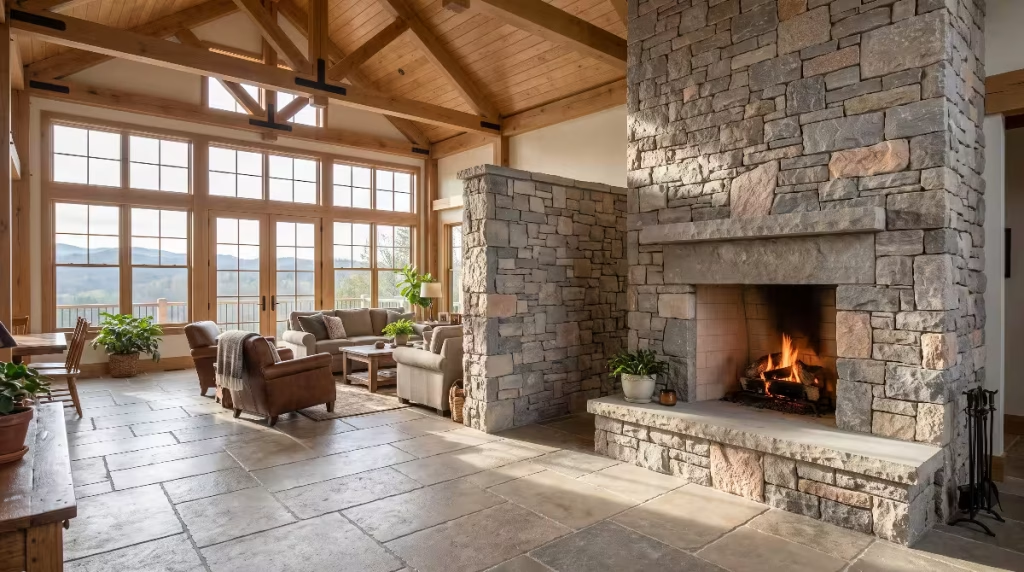
Incorporating East TN limestone into an interior floor plan requires thoughtful planning. You cannot simply place stone randomly and expect great results. To maximize thermal benefits while creating a stunning visual space, the stone must be positioned where it can interact with room air, radiant heating, or natural daylight.
Direct-Gain Interior Partition Walls and Trombe Accents
A direct-gain wall is an interior partition wall constructed with East TN limestone that sits directly in the path of incoming sunlight. Placing an East TN limestone wall opposite a bank of south-facing glass allows the stone to charge directly from the sun every clear winter day.
                      DIRECT-GAIN INTERIOR WALL DESIGN

   Exterior South Wall                    Interior Living Space
   +-------------------+
   |   Double-Glazed   |
   |   Low-E Glass     |~~~~ Winter Sunlight ~~~~>  +---------------------+
   |                   |                            |  East TN limestone  |
   |                   |                            |   Partition Wall    |
   |                   |~~~~~~~~~~~~~~~~~~~~~~~~~>  | (Exposed Both Sides)|
   +-------------------+                            +---------------------+
        Insulated                                       Thermal Storage
        Envelope                                         Between Rooms
By using East TN limestone as a divider between a great room and a primary bedroom or study, both spaces benefit from the stone. The sunny side charges during the day, and heat travels through the stone to warm the adjoining room at night.
To achieve a balanced look, you can blend rough, split-faced East TN limestone blocks with smooth timber posts and exposed wood beams. The natural contrast between the cool gray stone and the warm tones of native oak or walnut creates an inviting living space that feels naturally grounded in the mountains.
Radiant Hydronic Heating Systems in Limestone Flooring
One of the most luxurious and energy-efficient heating systems you can install in a custom home is hydronic radiant floor heating paired with East TN limestone tiles or flags.
In a hydronic system, a high-efficiency boiler or geothermal heat pump circulates warm water through flexible PEX tubing fastened beneath the floor. When you encase that tubing in a mortar bed and top it with East TN limestone, the stone transforms into an expansive, gentle radiator.
               HYDRONIC RADIANT FLOOR CROSS-SECTION

  [ Room Air Receives Warm Radiant Heat ]
  ==============================================================
  [  East TN limestone Floor Finish (Honed or Leathered)       ]  <-- 3/4" - 1"
  --------------------------------------------------------------
  [  Modified Thin-Set Mortar Bed                              ]  <-- 1/8" - 1/4"
  --------------------------------------------------------------
  [  Thermal Mass Screed / Concrete Embedment Layer (PEX-A)   ]  <-- 1.5" Thick
  --------------------------------------------------------------
  [  Subfloor Sheathing (Engineered Plywood)                   ]  <-- 3/4"
  --------------------------------------------------------------
  [  Rigid Insulation / Joist Space Batts (Direct Heat Upward) ]
  ==============================================================
Wood flooring expands and contracts with changes in humidity, and thick carpets act like insulators that trap heat beneath the floor. East TN limestone, however, transfers that heat into the room without warping. Because East TN limestone distributes heat evenly across its entire surface, the heating system can operate at lower water temperatures, usually between 85 and 100 degrees, compared to traditional radiators that require 140 to 180 degrees. This lower operating temperature saves substantial energy.
For floor finishes, I typically advise clients to choose a honed, tumbled, or leathered surface rather than a high-gloss polish. A honed or leathered finish preserves the natural texture of East TN limestone, provides reliable traction underfoot, and hides everyday dust.
Massive Fireplace Hearths, Surrounds, and Thermal Breasts
A fireplace is the traditional centerpiece of an East Tennessee home, but most modern fireplaces are terribly inefficient. Standard metal fireboxes with thin stone veneers heat the room quickly while the fire is roaring, but they stop producing warmth the moment the wood burns down to ash.
When you build a full-mass fireplace surround and chimney breast out of East TN limestone, you turn that fireplace into a long-lasting masonry heater. As the fire burns, the dense East TN limestone absorbs heat from the firebox and the rising flue gas. Long after the embers fade, the East TN limestone surround continues to radiate comfortable heat into the room.
                    FULL-MASS LIMESTONE FIREPLACE

                           [ Flue Liner ]
                                 ||
                   +-------------||-------------+
                   |     East TN limestone      |
                   |       Chimney Breast       |  <-- Absorbs rising heat
                   |                            |
                   |   +--------------------+   |
                   |   | Firebrick Firebox  |   |
                   |   |                    |   |
                   |   +--------------------+   |
                   |                            |
          +--------+----------------------------+--------+
          |         Raised East TN limestone             |  <-- Warm bench seating
          |             Hearth Bench                     |
          +----------------------------------------------+
Building a raised hearth bench out of thick slabs of East TN limestone creates a welcoming spot to sit on a cold winter evening. The stone beneath you warms up gently from the fire, providing a cozy seat after a day spent outdoors.
Sunrooms, Conservatories, and Solarium Walkways
Sunrooms are popular across the Tri-Cities, offering a place to enjoy views of the surrounding hills during cool mornings. However, poorly planned sunrooms often suffer from extreme temperature shifts. They become baking hot by noon and freezing cold at night.
Using East TN limestone across the floors and rear walls of a sunroom solves this issue. The large surface area of East TN limestone absorbs the abundant daylight coming through the windows, keeping the daytime room temperature comfortable. At night, that stored warmth keeps the sunroom cozy, protecting delicate plants and allowing you to enjoy the space year-round without constantly adjusting the thermostat.
Engineering and Structural Specifications for Custom Home Builders
Integrating large volumes of East TN limestone into a residential interior is an engineering task that requires careful calculation. You cannot simply stack thousands of pounds of stone onto a standard wood-framed floor without reinforcing the structure. In this section, we will review the specific engineering steps required to safely support East TN limestone.
Dead Load Deflection and Structural Framing
In residential framing, structural loads are divided into two main categories: live loads, which include people, furniture, and movable objects, and dead loads, which represent the permanent weight of the building materials themselves.
Standard residential building codes, such as the International Residential Code, typically design wood floor joists for a maximum deflection of $L/360$. This means that under full design load, the floor is allowed to bend downward by an amount equal to the span length divided by 360. For a fifteen-foot span, that permits one-half inch of downward deflection. While half an inch of sag is safe for flexible wood floors or carpet, it will quickly crack rigid stone tiles and break mortar joints.
                  STRUCTURAL DEFLECTION BENCHMARKS

   Span Length (L) = 15 Feet (180 Inches)
   -------------------------------------------------------------------------
   Code Standard (L/360):
   Allowable Deflection = 180 / 360 = 0.50 Inches (Permits cracking in stone)

   Recommended Stone Standard (L/720):
   Allowable Deflection = 180 / 720 = 0.25 Inches (Stiff; protects stone and mortar)
   -------------------------------------------------------------------------
   Result: Framing under East TN limestone must be twice as stiff as standard floors.
When installing East TN limestone flooring or full-bed stone walls, framing members must meet a much stiffer deflection limit of at least $L/720$. To achieve this level of rigidity, your builder must take several specific steps:
- Reduce Joist Spacing: Instead of standard 16-inch on-center spacing, place floor joists 12 inches on-center beneath areas supporting East TN limestone.
- Upgrade to Engineered Lumber: Replace standard dimensional lumber joists with deep I-joists or laminated veneer lumber (LVL) beams that resist bending.
- Use Thicker Subflooring: Install a minimum of three-quarter-inch tongue-and-groove plywood, glued and screwed to the joists, followed by an additional underlayment panel to eliminate bounce.
- Add Foundation Piers and Footings: For full-height interior walls made from East TN limestone, do not support the weight on wood joists alone. Carry the load straight down to the earth by installing thickened concrete slab footings or dedicated masonry piers in the crawlspace or basement. A four-inch thick veneer of East TN limestone weighs roughly 55 to 60 pounds per square foot of wall area. A ten-foot tall by twenty-foot wide feature wall adds 12,000 pounds of dead weight to your foundation. Planning for that weight early in the design phase ensures your home remains structurally sound.
Proper Thermal Envelope Placement: The Golden Rule
There is one fundamental rule in building science that every architect and builder must follow: your thermal mass must always remain completely inside the home’s continuous insulation envelope.
                   CORRECT VS. INCORRECT PLACEMENT

          CORRECT (Thermal Battery)            INCORRECT (Thermal Bridge)

             OUTSIDE      INSIDE                  OUTSIDE       INSIDE
                |           |                        |            |
                |  R-21+    |                        |            |
                |  Wall     |                        |  Cold      |
          Cold  |  Cavity   |   East TN              |  Stone     |  East TN
          Air   | +-------+ |  limestone             |  Outside   | limestone
                | | Insul | |    Mass                |            |   Inside
                | +-------+ |   (Holds               |   \___Continuous__/
                |           |    Heat)               |      Stone Slab
                |           |                        |   (Leaks heat out!)
If you make the mistake of extending an interior East TN limestone wall directly through the exterior wall to the outside without a thermal break, you create a major thermal bridge. Because East TN limestone conducts heat, that stone wall will act like a giant radiator fin, drawing expensive heat out of your living room and dumping it into the cold winter air.
To maintain efficiency, the continuous layer of wall and floor insulation must wrap completely around the outside of the East TN limestone. The stone should interact only with conditioned indoor air, protecting its stored energy.
Optimal Thickness for Thermal Charging
More is not always better when it comes to the thickness of thermal mass. A common mistake is building an interior stone wall eight to twelve inches thick, assuming it will store twice as much daily heat as a four-inch wall.
Building science demonstrates that stone operates on a 24-hour diurnal cycle. In typical residential settings, heat only penetrates into East TN limestone to a depth of roughly two to three inches during a normal six-hour daytime charging period.
               HEAT PENETRATION IN A 24-HOUR CYCLE

       Exposed Surface
        |
        v      0 to 2 Inches: Active Thermal Storage
       [====]  (Charges and discharges fully every 24 hours)
       |    |
       |    |  2 to 4 Inches: Moderate Thermal Storage
       |====|  (Charges during multi-day temperature swings)
       |    |
       |    |  Deeper than 6 Inches: Inactive Mass
       |====|  (Remains static; adds weight without extra daily benefit)
If your interior East TN limestone wall is four inches thick and exposed to the room on both sides, it can charge from both surfaces, making that four-inch thickness ideal. Any stone deeper than three or four inches from an exposed surface remains thermally inactive on a daily basis. It adds dead weight to your foundation without providing additional day-to-night temperature regulation. Designing your interior East TN limestone features between two and four inches in thickness delivers maximum thermal performance at an efficient material cost.
Moisture Management and Indoor Air Quality in Humid Appalachia
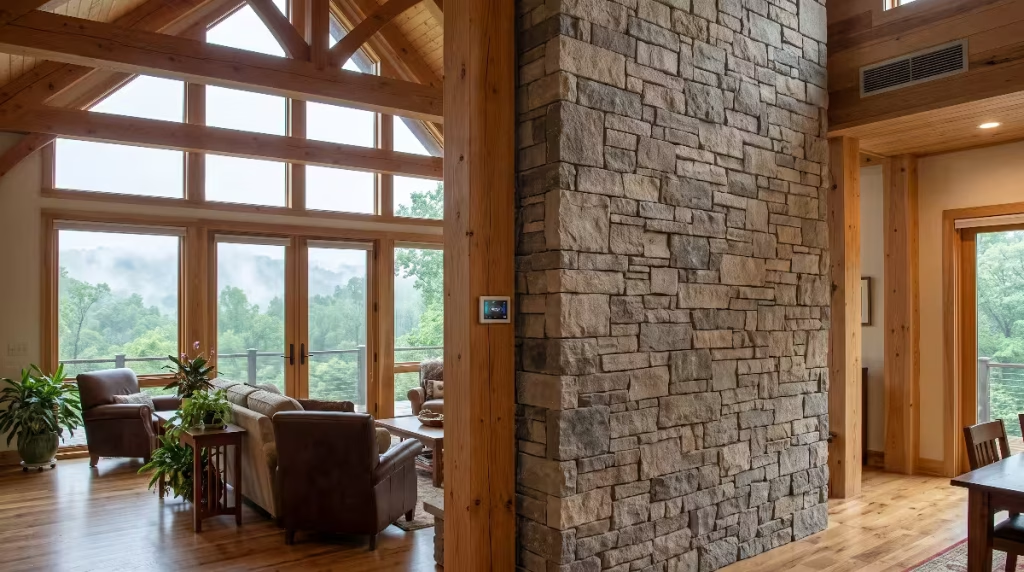
East Tennessee is famous for its misty mornings and lush greenery, but that beauty comes with high outdoor humidity from May through September. When incorporating a large volume of natural stone inside a home in Climate Zone 4A, managing indoor moisture and maintaining good air quality are essential considerations.
Condensation Control in East Tennessee Summers
Condensation occurs whenever warm, humid air comes into contact with a surface that is colder than the dew point temperature of that air. You see this happen on a cold glass of sweet tea sitting on a porch table in July.
Because East TN limestone stays cool during the summer, you must prevent humid air from coming into contact with it. If outdoor air with a 70-degree dew point leaks into the house and touches a piece of East TN limestone sitting at 66 degrees, moisture will condense directly onto the face of the stone. This phenomenon, known as sweating stone, can damage nearby drywall, stain mortar joints, and encourage mold growth.
                  PREVENTING CONDENSATION ON STONE

     Unconditioned Outdoor Air             Conditioned Indoor Air
     (Humid: 85°F, 70% RH)                 (Controlled: 72°F, 45% RH)
     Dew Point = 74°F                      Dew Point = 49°F
             |                                     |
             x  [ Air-Tight House Envelope ]       |
                (Blocks Humid Air Leaks)           v
                                          East TN limestone at 66°F
                                          (Stays completely dry because
                                           stone temp is ABOVE dew point)
Preventing this issue requires a two-part approach:
- Build an Airtight Building Envelope: Ensure the home exterior is thoroughly air-sealed. Stopping outdoor air infiltration prevents humid air from reaching your interior East TN limestone.
- Install Dedicated Dehumidification: Standard central air conditioners cool the air, but they do not always run long enough to pull out heavy moisture during mild, humid days. Installing a whole-house dehumidifier, integrated directly into your central ductwork, maintains indoor relative humidity between 45 and 50 percent all summer long. At 50 percent relative humidity, the indoor dew point stays well below 55 degrees, ensuring your interior East TN limestone surfaces stay completely dry and clean.
Vapor Permeability and Sealing Considerations
Homeowners often ask what type of sealer they should apply to interior East TN limestone. The key here is choosing a sealer that protects against spills without trapping water vapor inside the stone.
Natural stone needs to breathe. Moisture must be able to escape gradually as humidity levels shift with the seasons. For interior East TN limestone, avoid thick, film-forming sealers like glossy acrylics or urethanes. These surface coatings create a plastic-like sheen, trap moisture beneath the surface, and can turn milky or peel over time.
Instead, select a breathable, penetrating sealer based on silane or siloxane chemistry. These sealers penetrate deep into the pores of the East TN limestone, coating the internal crystalline structure without clogging the microscopic pathways. Liquid water from accidental spills beads up on the surface, but water vapor passes through freely. Furthermore, a penetrating sealer preserves the natural color and matte texture of East TN limestone, maintaining its authentic regional look.
Finally, pay attention to the mortar and adhesives used during installation. Always specify zero-VOC setting mortars and non-toxic additives to protect your indoor air quality. Natural hydraulic lime mortars are an excellent, traditional choice that complements the historic character and vapor permeability of East TN limestone.
Frequently Asked Questions About East TN Limestone Thermal Mass
To provide complete guidance for homeowners and designers, let us address the most common practical questions regarding East TN limestone in custom residential projects.
Does limestone have good thermal mass?
Yes, East TN limestone has exceptional thermal mass properties. Thanks to its fine crystalline structure and high density, it holds approximately 35 BTU of heat energy per cubic foot for every degree Fahrenheit of temperature change. This makes East TN limestone superior to red clay brick, dimensional lumber, and standard drywall, and fully equal to commercial-grade poured concrete. It absorbs substantial heat without experiencing rapid changes in surface temperature.
How does thermal mass work in interior design for energy efficiency?
In interior design, thermal mass functions as a passive heat sponge. When properly placed inside the home, exposed East TN limestone absorbs excess heat energy generated during the day by sunlight, cooking, lighting, and heating equipment. When the room cools down at night, the East TN limestone radiates that stored heat back into the living space. This process flattens daily temperature swings, allowing your heating and air conditioning systems to run more consistently and use less energy.
How thick should an interior limestone thermal mass wall be?
For standard daily temperature regulation, an interior East TN limestone wall should be between two and four inches thick. Building science research shows that in a typical home, heat only travels two to three inches into the stone during a six-hour daytime charging window. A four-inch thick wall of East TN limestone exposed to indoor air on both sides charges from both directions, providing ideal daily thermal storage without placing excessive dead weight on your floor joists and foundation.
Is limestone a good insulator or a thermal mass?
East TN limestone is a thermal mass, not an insulator. It conducts heat rather than resisting it, offering a low thermal resistance of only R-0.1 to R-0.2 per inch of thickness. While insulation resists the flow of heat, East TN limestone stores and releases it. Because of this, East TN limestone must always be installed inside a well-insulated exterior building envelope to function effectively.
Can limestone thermal mass help with summer cooling in East Tennessee?
Yes, East TN limestone provides valuable cooling benefits during our hot, humid summers. When shaded from direct summer sunlight by proper roof overhangs, interior East TN limestone absorbs heat generated inside the home during the day, keeping the living space comfortable. Homeowners can then utilize cool nighttime mountain breezes to flush out that stored heat, resetting the stone to absorb more warmth the following afternoon.
What structural modifications are needed to install an interior limestone wall?
Because full-bed East TN limestone weighs between 50 and 60 pounds per square foot, standard wood floors require structural reinforcement. Your builder must upgrade floor framing to meet an $L/720$ deflection rating, which is twice as stiff as standard residential code minimums. This is typically accomplished by spacing joists 12 inches on-center, using engineered lumber, and adding direct foundation support piers beneath the stone wall. For renovations where adding structural support is difficult, sawn thin veneers of East TN limestone can be applied over reinforced cement board to provide beautiful texture with reduced weight.
Sourcing and Execution: Working with Local Quarries and Trades in the Tri-Cities
Building a custom home with authentic regional materials connects your living space to the land around you. Sourcing your stone locally supports our regional economy, reduces transportation emissions, and ensures your home reflects the natural character of East Tennessee.
                 LOCAL SOURCING LOGISTICS ADVANTAGE

     IMPORTED STONE (Overseas)              EAST TN LIMESTONE (Local)

     [ Quarry in Europe / Asia ]            [ Regional Quarry / Tri-Cities ]
                |                                          |
        Flatbed to Seaport                         Flatbed Truck Direct
                |                                   (15 to 60 Miles)
        Container Ship Crossing                            |
        (Thousands of Miles)                               v
                |                                  [ Your Home Site ]
        Port Offloading & Rail                             .
                |                                  Minimal Fuel Use,
        Long-Distance Trucking                     Low Carbon Footprint,
                v                                  Authentic Provenance
        [ High Freight Costs & Delay ]
Local Quarries and Provenance
When selecting East TN limestone, we have an exceptional selection of local quarries right here in the region. Operations throughout Sullivan County, Washington County, and neighboring areas provide a wide array of options, including river rock, fieldstone, and sawn dimension stone.
When you order East TN limestone from a local supplier, you can visit the quarry yard to hand-select the exact pallets and color variations that will go into your home. You can choose from the soft grays of local valley limestone, the warm tan tones of weathered fieldstone, or the delicate pinks and whites of authentic Tennessee Marble from the Holston Formation.
Sourcing your East TN limestone locally also offers a distinct environmental advantage. Shipping heavy stone across oceans from Europe or South America consumes enormous amounts of fossil fuel. Choosing East TN limestone quarried within an hour’s drive of your building site minimizes transportation emissions and ensures your material investment stays directly within our local community.
Collaborating with Masonry Craftsmen
Designing with East TN limestone is only half the equation; the other half is quality craftsmanship. Working with full-bed stone requires seasoned stone masons who understand regional materials and proper structural tie-in techniques.
                    MASONRY VENEER TIE-IN DETAIL

    Wood Stud Wall Cavity
    |   |  2x6 Framing Members
    |   |
    |   +-- 1/2" Plywood Sheathing
    |   |
    |   +-- Corrugated Stainless Steel Masonry Tie (Screwed to Stud)
    |   |     \
    |   |      \ Embedded in Mortar Joint
    |   |       v
    +---+====+-------------------------+
    | 1" Air |    East TN limestone    |  <-- Natural Split Face
    | Space  |    4" Full Bed Veneer   |
    +---+====+-------------------------+
When interviewing trade partners for your custom home build, look for masons who have extensive portfolios of local work. Discuss specific installation details with them before construction begins:
- Mortar Joint Style: Decide whether you prefer a clean, tight dry-stack look, a traditional raked joint, or a smooth flush joint. Each style dramatically changes how light hits the surface of the East TN limestone.
- Mechanical Ties: Ensure your mason uses corrosion-resistant stainless steel or galvanized wall ties fastened directly into your wall studs to secure the stone veneer.
- Expansion Joints: Large expanses of stone require properly placed vertical expansion joints to accommodate building movement without cracking the mortar.
- Stone Blending: A skilled mason will mix stone from several different pallets as they work. This ensures that colors, textures, and sizes are distributed evenly across the entire surface of the East TN limestone wall, avoiding clumping of dark or light tones.
Summary of Best Practices for Builders and Homeowners
To wrap up our technical look at East TN limestone in interior design, let us review the foundational rules that lead to a successful, durable project:
- Place Mass Inside the Envelope: Always keep your East TN limestone fully within the home’s continuous thermal insulation layer to avoid thermal bridging.
- Aim for Two to Four Inches of Thickness: Designing stone elements between two and four inches thick maximizes heat absorption and release during daily 24-hour cycles.
- Orient for the Seasons: Place interior East TN limestone walls and floors where they can absorb low winter sun while remaining fully shaded from high summer sun.
- Engineer Framing for Low Deflection: Specify an $L/720$ floor deflection limit and add direct foundation supports to carry the heavy dead load of East TN limestone.
- Control Indoor Humidity: Keep indoor relative humidity between 45 and 50 percent all summer long with dedicated dehumidification to eliminate the risk of sweating stone.
- Use Breathable Sealers: Protect your stone surfaces using penetrating silane/siloxane sealers that maintain vapor permeability and preserve natural color.
- Source Locally: Choose your East TN limestone from regional quarries across the Tri-Cities to lower transportation costs and secure authentic Appalachian character.
Building a custom home in East Tennessee is an opportunity to craft a structure that lasts for generations. By pairing modern building science with the natural thermal mass of East TN limestone, you can create an interior space that is naturally quiet, thermally stable, and deeply rooted in the history of our mountains.