

White LED vs. Cool White Light
When homeowners across Kingsport, Bristol, and Johnson City invest in custom black walnut cabinetry, they are bringing one of our region’s most magnificent native hardwoods into the center of their living space. Eastern Black Walnut, known botanically as Juglans nigra, grows abundantly throughout the Ridge-and-Valley and Blue Ridge provinces of East Tennessee. Its heartwood contains complex organic compounds that give the wood its world-famous rich brown colors, subtle purple undertones, and shimmering grain patterns.
However, even the most exquisite custom woodwork can look dull, gray, or lifeless if you pair it with the wrong light bulbs. The debate between Warm LED vs. Cool White for local Black Walnut cabinetry comes down to the fundamental physics of how light waves interact with wood cells. In this comprehensive guide, we will break down the science of light spectrums, color temperature, and biophilic interior planning. You will learn how to choose the exact light fixtures that make your black walnut cabinetry glow with warmth, depth, and three-dimensional beauty while supporting your daily energy and evening rest.
+-------------------------------------------------------------------------+
|                  THE SPECTRUM OF BLACK WALNUT ILLUMINATION              |
|                                                                         |
|  2200K - 2700K        3000K (Sweet Spot)      3500K - 4000K      5000K+ |
|  [ Ultra-Warm ]       [ Warm Architectural ]  [ Neutral Task ]   [ Cool]|
|  Deepens umbers       Maximizes grain depth   Clean prep work    Avoid  |
|  and amber oils.      and red tannins.        on work surfaces.  Washes |
|  Ideal for dusk.      Best for cabinetry.     Use for counters.  out.   |
+-------------------------------------------------------------------------+
The Optical and Biological Complexity of Black Walnut
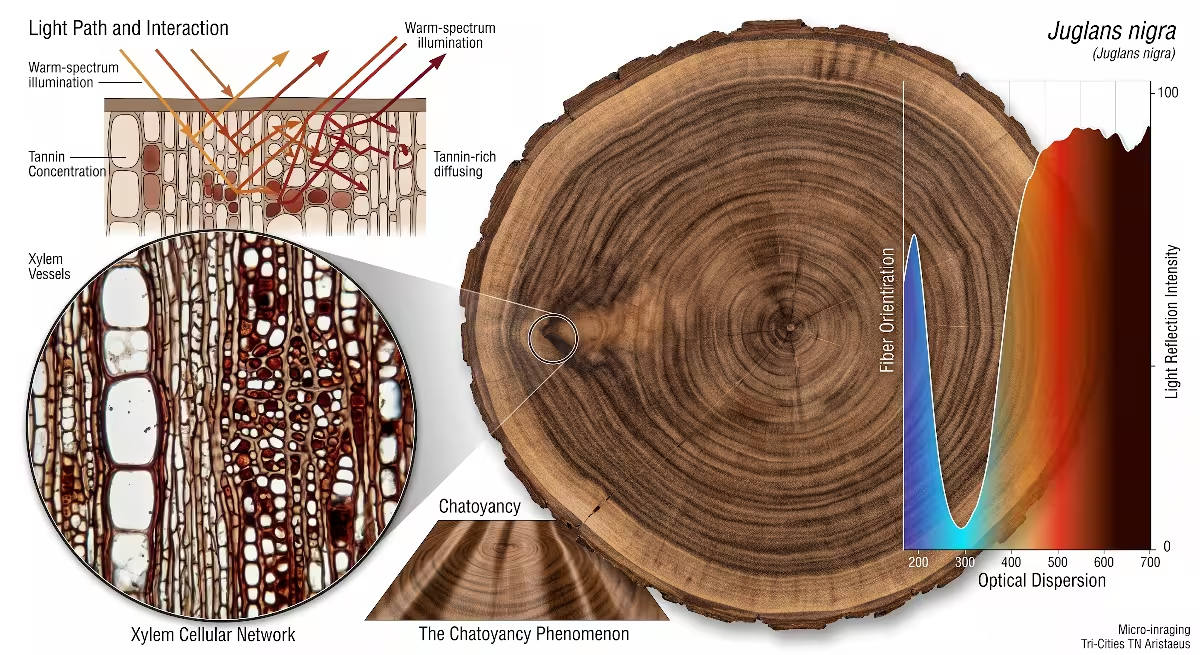
To understand why lighting choice matters so much, we must first look at the biological makeup of the tree itself. Eastern Black Walnut is a hardwood that thrives in the rich, limestone-based soils of our East Tennessee valleys. As the tree grows, its heartwood collects dense concentrations of natural chemicals called polyphenols and tannins. These organic molecules are responsible for the wood’s deep chocolate brown color, its subtle charcoal shadows, and the faint violet undertones that skilled woodworkers prize.
Near the outer edges of the log sits the sapwood. In local trees, this sapwood displays a light golden-amber or creamy straw hue. When a local wood shop builds custom black walnut cabinetry, they often preserve subtle traces of this lighter sapwood alongside the dark heartwood to create visual contrast.
The cellular structure of walnut creates distinct grain figures. Depending on how the log is sawn, you might see straight grain, wavy fiddleback patterns, or swirl-like crotch wood figures from tree branch junctions. These wood cells act like microscopic mirrors and light channels. When light hits the surface of black walnut cabinetry, some light waves bounce off the top finish, while other light waves enter the top layers of wood cells and bounce out from deep inside the grain. This natural phenomenon gives high-quality black walnut cabinetry its optical depth, also known as chatoyancy.
If you shine a light source that lacks the correct colors on this complex cellular structure, the wood cannot reflect those missing colors back to your eyes. The wrong light literally erases the natural beauty of the tree. Choosing the right light for your black walnut cabinetry is therefore an act of biological and optical preservation.
The Spectral Breakdown: Warm LED (2700K to 3000K) on Black Walnut
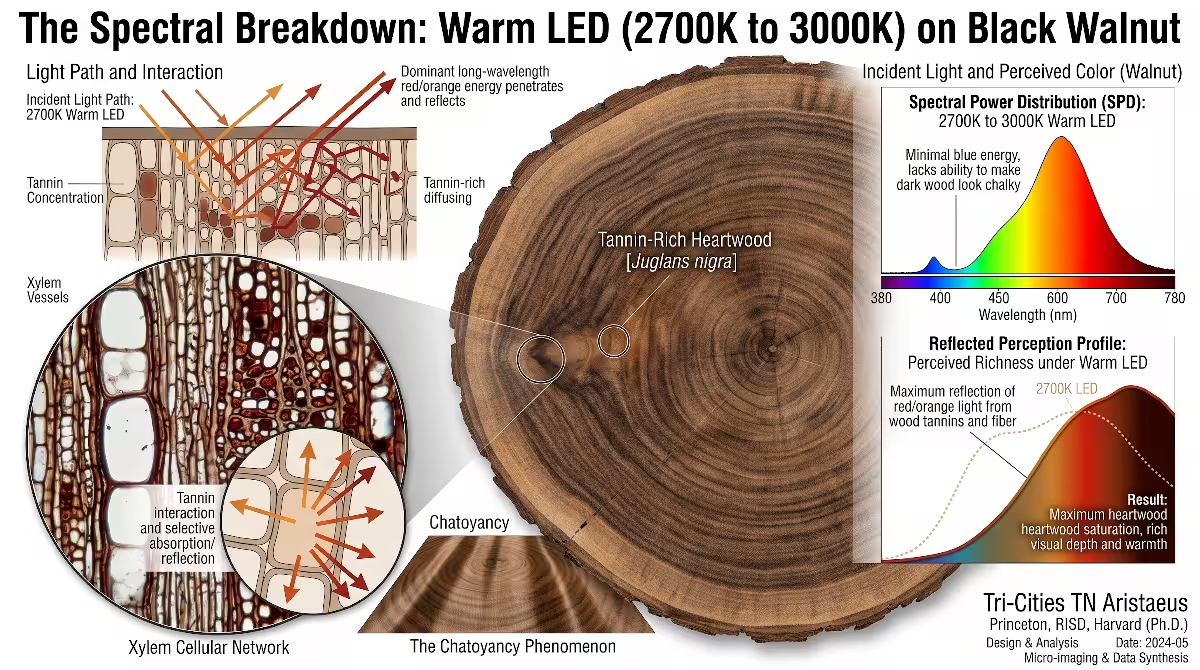
Color temperature is measured on the Kelvin scale, written with a capital K. Lower numbers like 2700K represent warm light that looks golden or amber, similar to a sunset or an old incandescent bulb.Higher numbers like 5000K represent cool white light that looks crisp, white, or slightly blue, like the midday sky.
+-------------------------------------------------------------------------+
|                  SPECTRAL POWER OF WARM LED (2700K-3000K)               |
|                                                                         |
|  Energy                                                                 |
|   High |                                       * * * * *                |
|        |                                 * * *           * *            |
|        |                           * * *                     *          |
|        |                     * * *                                      |
|    Low |         * * * * * *                                            |
|        +-------------------------------------------------------         |
|         400nm (Violet)   500nm (Green)   600nm (Amber)  700nm (Red)     |
|                                                                         |
|  Result: High red and amber output matches walnut tannins perfectly.    |
+-------------------------------------------------------------------------+
Warm LED light fixtures in the 2700K to 3000K range produce a light spectrum dominated by long-wavelength photons in the 580 to 700 nanometer range. These are the amber, orange, and deep red wavelengths of the visual spectrum.
When you install 2700K to 3000K warm LED lighting above and below your black walnut cabinetry, several wonderful physical interactions happen:
- Tannin Activation: The red and amber light waves match the exact reflection profile of the wood’s polyphenols, making the brown heartwood look rich, warm, and inviting.
- Finish Enhancement: Many fine homes in our region use natural oil finishes, such as hand-rubbed tung oil or hardwax oils, on their black walnut cabinetry. Warm light brings out the natural amber sheen of these organic finishes without creating harsh white reflection spots.
- Highlighting Natural Color Contrast: The warm spectrum allows the creamy tones of the walnut sapwood to glow with a soft honey color, creating a pleasant contrast against the darker heartwood sections.
- Soft Glare Reduction: Warm light scatters less inside the human eye than short blue waves, which reduces eye fatigue when you relax in a kitchen or living room filled with custom black walnut cabinetry.
For residential spaces in Johnson City, Kingsport, and Bristol where open-concept kitchens flow directly into dining and family living areas, warm LED illumination in the 2700K to 3000K range creates a cozy, welcoming atmosphere that makes your black walnut cabinetry the stunning focal point of your home.
The Cool White Paradigm (4000K to 5000K+): Functional Task Lighting vs. Chromatic Washing
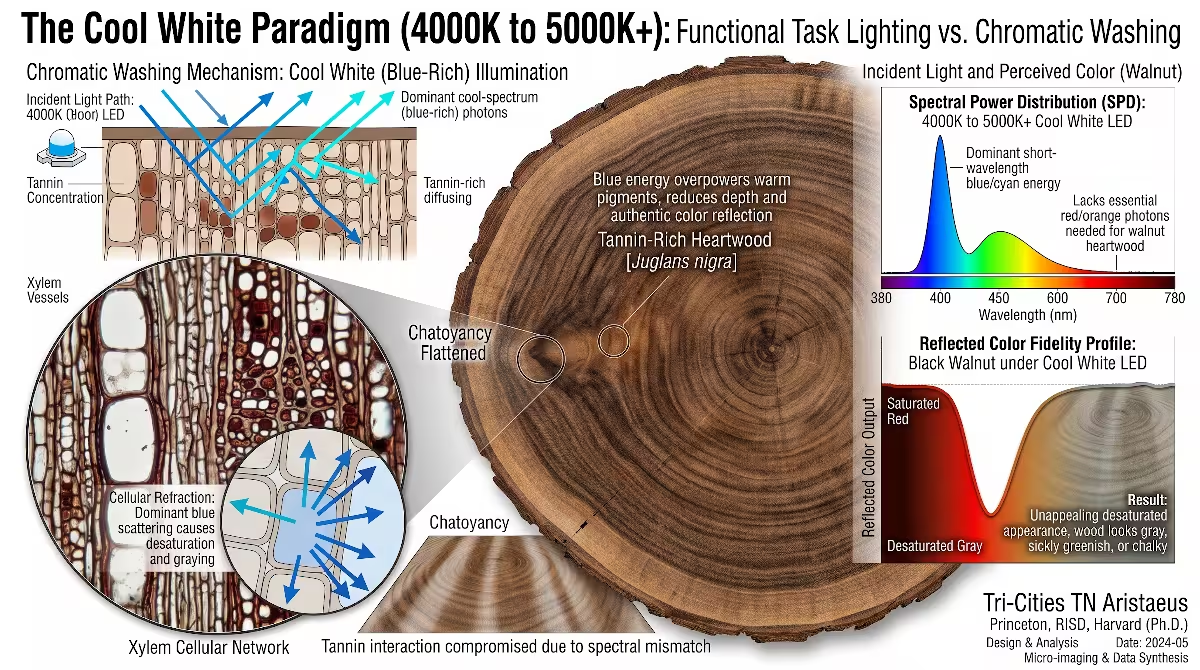
Cool white LED lighting, spanning from 4000K up to 5000K and beyond, operates on a very different part of the light spectrum. These fixtures emit large amounts of short-wavelength blue and cyan light between 450 and 480 nanometers. While this crisp, high-energy light is useful in commercial workshops, surgical suites, or factory assembly lines, it creates severe optical problems when placed directly against rich hardwood.
+-------------------------------------------------------------------------+
|                  SPECTRAL POWER OF COOL WHITE (5000K+)                  |
|                                                                         |
|  Energy                                                                 |
|   High |           * * *                                                |
|        |         *       *                                              |
|        |       *           * *                                          |
|        |     *                 * * * * * * * * * *                      |
|    Low |   *                                       * * * * *            |
|        +-------------------------------------------------------         |
|         400nm (Blue Peak) 500nm (Green)  600nm (Yellow) 700nm (Red)     |
|                                                                         |
|  Result: Massive blue spike with very little red energy.               |
|  Causes dark woods to appear flat, chalky, and greenish-gray.          |
+-------------------------------------------------------------------------+
When cool white light floods over black walnut cabinetry, the physics of color reflection work against you:
- Chromatic Desaturation: Because cool white LEDs produce very little red or amber light, the dark wood tannins have almost no warm light waves to reflect. The rich dark brown color of your black walnut cabinetry is stripped away, leaving the wood looking washed out, chalky, or cold.
- The Sickly Greenish-Gray Cast: The high spike of blue and cyan light bouncing off dark wood finishes often tricks the human eye into seeing an unattractive greenish or muddy gray tone on your black walnut cabinetry.
- Loss of Three-Dimensional Grain: Walnut wood cells rely on warm light penetration to show off their internal shimmer. Cool white light scatters violently across the top surface of the wood finish, creating flat glare that hides the fiddleback curls and crotch grain patterns of your black walnut cabinetry.
There is, however, one specific exception where neutral light between 3500K and 4000K has a legitimate purpose: dedicated under-cabinet task lighting aimed straight down at food preparation countertops. If you are chopping dark leafy vegetables, slicing meats, or reading recipes, a 3500K neutral light pointed strictly at a quartz countertop provides high visual clarity. But this task light must be carefully shielded inside angled aluminum channels so its cool beam does not spill onto the vertical door faces of your black walnut cabinetry.
Beyond Kelvin: Technical Metrics That Dictate Wood Appearance
Many people assume that choosing the right Kelvin number is all it takes to get great lighting. As an architectural biologist, I can tell you that Kelvin is only half the equation. The quality of the light spectrum itself is just as critical for illuminating black walnut cabinetry. To make sure your wood looks vibrant and true to life, you must look at three advanced lighting metrics: CRI, R9, and TM-30-20.
+-------------------------------------------------------------------------+
|                  CRITICAL LIGHTING SPECIFICATIONS FOR WALNUT            |
|                                                                         |
|  Metric                   Minimum Standard      Optimal Goal            |
|  ---------------------------------------------------------------------  |
|  Color Temperature (CCT)  2700K - 3000K         2800K - 3000K           |
|  General CRI (Ra)         90+                   95+ to 98               |
|  Saturated Red (R9)       50+                   80+ to 95               |
|  Fidelity Index (Rf)      90+                   93+                     |
|  Gamut Index (Rg)         98                    100 - 102               |
+-------------------------------------------------------------------------+
Color Rendering Index (CRI or Ra)
The Color Rendering Index is a scale from 0 to 100 that measures how accurately a light bulb shows colors compared to natural sunlight or an open flame.Standard, cheap builder-grade LED bulbs often have a CRI rating of 80. Under an 80 CRI bulb, subtle wood tones disappear, and everything looks slightly artificial.
For custom black walnut cabinetry, you should accept nothing less than a CRI rating of 90, with a rating of 95 or higher being the ideal target. A high-CRI light fixture produces a smooth, balanced spectrum that allows every subtle shade of brown, umber, and gold in your black walnut cabinetry to be seen clearly.
The Critical R9 Value (Saturated Red)
Standard CRI testing only measures eight pastel color samples, numbered R1 through R8. None of those first eight test samples contain saturated red. Because red LEDs are more expensive to manufacture, many light bulb makers produce bulbs with a high overall CRI score while completely skimping on red light output.
The measurement for saturated red is called R9.
+-------------------------------------------------------------------------+
|                    WHY THE R9 VALUE IS CRITICAL                         |
|                                                                         |
|  Standard LED (R9 = 10)         High-Fidelity LED (R9 = 90+)            |
|  +---------------------------+  +------------------------------------+  |
|  | Wood appears flat, brown, |  | Saturated reds bring out deep      |  |
|  | dull, and slightly lifeless|  | amber undertones, highlighting the |  |
|  | with no cellular warmth.  |  | natural wood cell structure.       |  |
|  +---------------------------+  +------------------------------------+  |
+-------------------------------------------------------------------------+
This R9 number is the single most important technical metric for black walnut cabinetry. The deep undertones of Juglans nigra rely entirely on saturated red light to come alive. If you install an LED fixture with an R9 value below 50, your black walnut cabinetry will look flat and lifeless. When shopping for fixtures, demand an R9 value of 80 or higher. When an LED with a 90+ R9 rating shines on your black walnut cabinetry, the rich cellular structure of the wood practically vibrates with warmth and organic depth.
TM-30-20 Metrics: Fidelity Index (Rf) and Gamut Index (Rg)
The Illuminating Engineering Society developed a modern testing standard known as TM-30-20 to provide an even more accurate picture of light quality. Instead of only 8 or 15 color samples, TM-30-20 evaluates 99 distinct color evaluation samples across the entire spectrum.
- Fidelity Index (Rf): This measures how closely 99 colors match their appearance under natural light on a 0 to 100 scale. Look for an Rf value of 90 or higher for your black walnut cabinetry.
- Gamut Index (Rg): This measures color saturation on a scale where 100 represents neutral saturation. An Rg score between 100 and 102 means colors will appear rich and vibrant without looking artificially cartoonish on your black walnut cabinetry.
Biophilic Design Principles and Circadian Lighting in Appalachian Homes
Biophilic design is the architectural practice of connecting people with the natural world inside our built living spaces. Living among authentic, solid hardwood surfaces like black walnut cabinetry has been shown to lower heart rates, reduce physiological stress, and create feelings of security and grounded comfort. But these psychological benefits only happen when the lighting inside your home respects your natural biological clock, also known as your circadian rhythm.
+-------------------------------------------------------------------------+
|                  CIRCADIAN LIGHTING CYCLE FOR WALNUT HOMES              |
|                                                                         |
|  Morning (Sunrise - 10 AM)  2700K - 3000K  Gentle waking, soft warmth   |
|  Midday (11 AM - 3 PM)      3500K - 4000K  High focus, bright clarity   |
|  Late Afternoon (4 - 6 PM)  3000K          Transitional ambient comfort |
|  Evening (7 PM - Bedtime)   2200K - 2700K  Melatonin release, rich glow |
+-------------------------------------------------------------------------+
Our human biology evolved under natural sunlight. For millions of years, our brains relied on the changing color of the sky to tell our bodies when to be alert and when to rest.
- Morning and Midday Sunlight: Crisp daylight with strong blue spectrums tells the brain to suppress melatonin, increase cortisol, and focus on physical work.
- Evening Firelight and Sunset: As the sun dips behind the Unaka Mountains or Holston Mountain here in East Tennessee, the sky shifts into warm golden, orange, and red tones. This low-Kelvin, long-wavelength light signals the pineal gland to produce melatonin, allowing us to wind down and prepare for restorative sleep.
If you leave bright 4000K or 5000K cool white LED lights running in your kitchen at 8:00 PM, your brain interprets that light as midday sun. This disrupts your sleep patterns and raises stress levels. At the same time, that cool light turns your black walnut cabinetry into a stark, cold visual wall.
The ultimate biophilic solution is to install a Dynamic Tunable White lighting system. Tunable white LED fixtures contain both warm and cool LED diodes inside the same strip or bulb. An automated smart controller shifts the color temperature throughout the day:
- At 12:00 noon, your kitchen lighting operates at a crisp 3500K to 4000K, giving you bright, functional task light for preparing lunch and cleaning.
- As the sun sets across the Tri-Cities, the controller automatically dims the lights and slides the temperature down to 2700K.
- By 9:00 PM, the system settles into a warm 2200K candlelight glow.
This dynamic cycle supports your body’s natural hormone production while making your black walnut cabinetry look breathtakingly rich and soothing every evening.
Optical Glare, Extrusions, and Light Distribution on Custom Millwork
Even if you choose the perfect 2700K, 95 CRI, high-R9 LED light, poor physical installation can ruin the visual appeal of your black walnut cabinetry. Direct light points, unshielded LED diodes, and improper mounting angles create harsh glare and reflection hotspots.
+-------------------------------------------------------------------------+
|                  UNDER-CABINET LIGHTING MOUNTING GEOMETRY               |
|                                                                         |
|  [ Custom Black Walnut Cabinet ]                                        |
|  |                                                                      |
|  |  +-------------------------------------------------------------+     |
|  +--| Front Valance Lip                                           |     |
|     +--------+                                                    |     |
|              |  [\ 45-Degree Angled Channel                       |     |
|              |   \  with Frosted Diffuser Lens                    |     |
|              |    \  Points light diagonally toward backsplash    |     |
|              +-----+ and center of countertop                     |     |
|                     \                                             |     |
|                      \  (Light Beam Path)                         |     |
|                       \                                           |     |
|                        v                                          |     |
|        ====================================================       |     |
|        [ Countertop Surface: No direct diode glare on wood ]      |     |
+-------------------------------------------------------------------------+
When designing the lighting layout for custom black walnut cabinetry, follow these architectural rules:
- Always Use Aluminum Extrusions with Frosted Diffusers: Bare LED tape light should never be glued directly to raw wood. An aluminum extrusion acts as a heat sink that cools the LED chips, extending their lifespan. A milky, frosted acrylic diffuser lens snaps over the channel to blend individual LED diodes into a smooth, seamless ribbon of solid light. This prevents “diode dot reflections” from bouncing off semi-gloss clear coats on your black walnut cabinetry.
- Specify High-Density LED Strips: Look for LED tape with at least 120 diodes per meter, or choose Chip-on-Board (COB) LED strips. COB strips provide completely continuous light without any visible dots, ensuring a uniform wash across your black walnut cabinetry.
- Use 45-Degree Angled Channels for Under-Cabinet Tasks: Mount your under-cabinet lighting channels near the front lip of the upper cabinet, angled back at 45 degrees toward the backsplash. This geometry pushes task light directly across your working counter while shielding your eyes from glare when seated across the room from your black walnut cabinetry.
- Toe-Kick and Over-Cabinet Accent Illumination: Installing soft 2400K to 2700K accent strips beneath the lower toe-kicks and on top of upper crown molding creates a floating architectural effect. The upward light washes your ceiling with soft bounce light, while the toe-kick light gently highlights the bottom base trim of your black walnut cabinetry without shining into anyone’s eyes.
Direct Answer Matrix: Warm LED vs. Cool White for Black Walnut Cabinetry
To help you compare your options at a glance, here is a detailed breakdown of how different lighting specifications interact with custom black walnut cabinetry:
| Specification Metric | Warm LED (2700K to 3000K) | Neutral White (3500K to 4000K) | Cool White / Daylight (5000K+) |
| Visual Effect on Wood | Deepens dark chocolate tones; brings out golden sapwood and red tannins | Crisp, balanced presentation; preserves natural wood color with clean contrast | Flattens wood figure; creates an unappealing gray or greenish-blue cast |
| Grain Depth & Chatoyancy | Maximum 3D depth; penetrates cell walls to illuminate wavy curls and fiddleback figures | Moderate depth; clean surface visibility with minimal cellular penetration | Poor depth; light scatters on surface finish, masking inner grain patterns |
| Recommended CRI (Ra) | 95 or higher (demands high color accuracy) | 90 or higher | Not recommended for residential wood living spaces |
| Required R9 Saturated Red | 80 to 95 (essential for rich brown wood tones) | 70 to 85 | Typically below 20 (causes dark timber to look dull and lifeless) |
| Biophilic & Mood Impact | Calming, relaxing, stress-reducing; supports evening melatonin production | Alert, active, clean; ideal for morning prep and focused daytime tasks | High-stress, clinical feel; disrupts evening sleep cycles if left on after dark |
| Best Room Application | Dining areas, island pendants, ambient ceiling fill, accent toe-kicks | Directed under-cabinet countertop task strips, utility prep kitchens | Enclosed garage storage, commercial paint booths, precision workshops |
| Interaction with Walnut Finishes | Enhances warm glow of hand-rubbed tung oil, linseed oil, and hardwax oils | Works well with ultra-matte acrylic conversion varnishes and waterborne clears | Highlights surface dust and clear-coat imperfections while stripping wood warmth |
Answers to Common Questions About Black Walnut Cabinetry Lighting
Homeowners and builders throughout the Tri-Cities frequently ask technical questions when remodeling or building custom homes. Here are direct, clear answers to the most common questions regarding black walnut cabinetry lighting:
Does warm or cool LED look better on dark walnut cabinets?
Warm LED lighting in the 2700K to 3000K range looks significantly better on dark walnut cabinets than cool LED lighting. Warm light contains abundant red, orange, and amber wavelengths. These wavelengths match the natural tannins and polyphenols found inside the heartwood cells of Eastern Black Walnut. Cool LED lighting (above 4000K) is dominated by blue wavelengths that dark wood cannot reflect. When cool light hits dark wood, the surface looks dull, gray, or slightly green. For the richest wood depth, always pair your black walnut cabinetry with warm LED fixtures rated at 95 CRI or higher.
What is the best Kelvin rating for kitchen cabinet lighting?
For general ambient lighting and cabinetry illumination, 3000K is the industry gold standard. It provides a clean, modern white light that feels crisp without shifting into cold blue tones. A 3000K light source keeps food looking fresh on the counter while allowing your black walnut cabinetry to maintain its natural warmth and rich brown color.If you desire an extra-cozy, intimate evening environment, 2700K is ideal for open-concept living rooms and dining spaces.If your kitchen requires intense task lighting for culinary prep, you can use 3500K strips strictly under the upper cabinets, as long as they are directed downward onto the countertop and away from the face of your black walnut cabinetry.
+-------------------------------------------------------------------------+
|                  KELVIN SELECTION SPECTRUM FOR KITCHENS                 |
|                                                                         |
|  2700K               3000K               3500K               4000K+     |
|  [ Intimate Warm ]   [ Perfect Balance ] [ Functional Prep ] [ Cold ]   |
|  Best for open-plan  #1 Choice for all   Good for cutting    Avoid on   |
|  living and dining   black walnut        surfaces; shield    fine wood  |
|  cabinet zones.      cabinetry areas.    from cabinet faces. cabinetry. |
+-------------------------------------------------------------------------+
Can you mix warm ambient lighting with cooler under-cabinet lights?
Yes, you can mix different color temperatures within the same room, but you must follow two strict design rules to prevent visual clash:
- Keep the Delta Within 800 Kelvin: Never pair extreme opposites like a 2700K ceiling pendant with a 5000K task light. The human eye will perceive the 5000K light as harsh blue and the 2700K light as dirty orange. A safe pairing is 2700K ambient room lighting with 3500K under-cabinet task lighting.
- Put Different Zones on Separate Dimmers:Always wire under-cabinet task lighting, overhead recessed ceiling lights, and decorative island pendants to independent dimmer switches. This allows you to turn on the brighter 3500K task lights while actively cooking, and then switch over to relaxing 2700K ambient illumination when entertaining guests around your black walnut cabinetry.
Why do my dark wood cabinets look green or washed out under LED light?
When dark wood cabinets appear greenish, faded, or washed out under LED lights, the problem is caused by two factors: low R9 red color rendering and an excessively high Kelvin temperature. Standard commercial LED bulbs rely on a blue diode coated with yellow phosphor. This creates a large spike of blue and green light with almost no deep red light (a low R9 score, often under 20).
Because black walnut heartwood requires red light to display its natural brown tones, the wood absorbs the missing red spectrum and reflects back only the excess blue and green light. This optical mismatch gives your black walnut cabinetry an unnatural greenish-gray appearance. Replacing those bulbs with 2700K to 3000K LED fixtures featuring a CRI of 95+ and an R9 of 80+ will instantly restore the deep, warm colors of your black walnut cabinetry.
Regional Sourcing, Finish Chemistry, and Tri-Cities Architecture
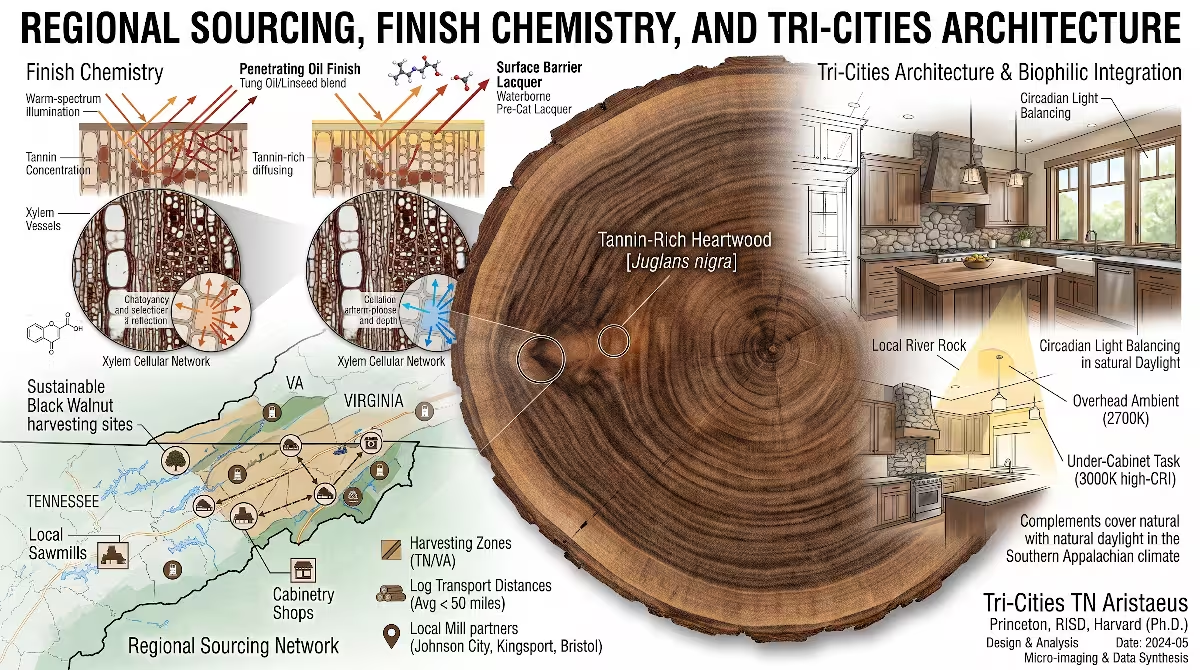
Building a luxury home in East Tennessee gives you access to some of the finest native timber in North America. Sustainable logging mills located throughout Sullivan, Washington, Carter, and Unicoi counties harvest Eastern Black Walnut logs from mature valley forests. When local millwork shops craft custom black walnut cabinetry from regional logs, the timber reflects our local climate, rainfall patterns, and mineral-rich soil.
+-------------------------------------------------------------------------+
|                  EAST TENNESSEE ARCHITECTURAL INTEGRATION               |
|                                                                         |
|  Natural Daylight Profile              Architectural Complement         |
|  ---------------------------------------------------------------------  |
|  Morning East Sun (Valley Light):      Pair with 3000K recessed fill    |
|  Crisp 4500K-5500K mountain skylight   to maintain wood warmth.         |
|                                                                         |
|  Afternoon West Sun (Ridge Shadow):    Pair with 2700K high-R9 dimming  |
|  Golden 2500K-3200K amber glow         to accentuate natural oil finish.|
+-------------------------------------------------------------------------+
The way natural light enters an Appalachian home changes dramatically depending on whether your house is nestled in a low river valley along the Watauga River or perched on a high ridge overlooking Boone Lake:
- North-Facing Rooms: North light coming off the mountains carries a cool, bluish-gray color (6500K). If you place custom black walnut cabinetry in a north-facing kitchen, the wood will naturally look cooler during the daytime. You must compensate for this by installing high-output 2700K to 3000K ambient lighting with exceptional R9 red rendering to keep the room feeling warm and inviting.
- South- and West-Facing Rooms: These spaces receive strong, golden afternoon sunlight that naturally emphasizes the amber tones of your black walnut cabinetry. Here, 3000K neutral-warm fixtures provide a balanced fill that prevents the space from feeling overly orange during bright summer afternoons.
The choice of clear topcoat finish also dictates how light interacts with the wood cells of your black walnut cabinetry:
- Natural Hardwax and Penetrating Oils: Finishes like Rubio Monocoat, Osmo, or pure tung oil penetrate directly into the wood pores without forming a thick plastic sheet on top. They leave the wood with a natural matte texture. This open pore structure absorbs warm light deeply, making 2700K to 3000K high-CRI light look rich and organic on black walnut cabinetry.
- Post-Catalyzed Conversion Varnishes: High-durability clear varnishes build a protective film over the timber. If you choose a satin or semi-gloss sheen, you must ensure that all ceiling downlights and under-cabinet extrusions feature heavy diffusion lenses. Without proper diffusion, sharp light beams reflect off the glossy surface, creating blinding white glare that ruins the view of your black walnut cabinetry.
+-------------------------------------------------------------------------+
|                  FINISH TYPE VS. LIGHTING STRATEGY                      |
|                                                                         |
|  Penetrating Natural Oils              Conversion Varnishes (Satin)     |
|  +----------------------------------+  +------------------------------+ |
|  | Open wood pores absorb light.    |  | Solid film creates reflection| |
|  | Best with 2700K - 3000K warm     |  | Requires deep frosted lenses | |
|  | illumination to highlight grain. |  | to eliminate surface glare.  | |
|  +----------------------------------+  +------------------------------+ |
+-------------------------------------------------------------------------+
Step-by-Step Lighting Design and Specification Checklist
When you are ready to design, purchase, and install fixtures for your custom kitchen or living room, use this technical checklist to ensure your black walnut cabinetry looks stunning for decades to come:
- [ ] Specify Color Temperature (CCT): Standardize on 2800K to 3000K for general ambient room lighting and decorative pendants. Reserve 3500K strictly for downward-aimed countertop task channels. Avoid any fixtures rated at 4000K or 5000K for ambient residential spaces.
- [ ] Verify Color Rendering Metrics: Require manufacturer cut-sheets confirming a minimum CRI (Ra) of 90 (preferably 95+) and an explicit R9 saturated red score of 80 or higher. Reject any fixture that does not disclose its R9 rating.
- [ ] Select High-Fidelity Drivers and Dimmers: Choose electronic low-voltage (ELV) or 0 to 10 volt dimming drivers capable of smooth, flicker-free dimming down to 1% light output. This allows you to tune your lighting levels perfectly as evening approaches.
- [ ] Install Aluminum Extrusions: House all LED tape strips inside rigid aluminum channels with deep-recessed frosted acrylic diffuser covers. Never leave raw LED tape exposed under your black walnut cabinetry.
- [ ] Angle Under-Cabinet Channels at 45 Degrees: Mount under-cabinet task lighting near the front cabinet frame, pointing diagonally backward toward the counter and backsplash. This directs working light where your hands need it while keeping direct glare away from the vertical faces of your black walnut cabinetry.
- [ ] Incorporate Layered Lighting Zones:Separate your lighting layout into at least three independently controlled circuits: (1) overhead recessed ceiling fill, (2) under-cabinet working task light, and (3) accent toe-kick and crown molding glow.
- [ ] Coordinate with Natural Window Openings: Position your primary kitchen prep islands and black walnut cabinetry so they receive balanced side daylight from Appalachian sunrises and sunsets, using your high-CRI warm artificial lighting as a complementary fill.
+-------------------------------------------------------------------------+
|                  FINAL LIGHTING SPECIFICATION SUMMARY                   |
|                                                                         |
|  Color Temperature:  2700K - 3000K (Ambient) | 3500K (Counter Task)     |
|  CRI Rating:         95+ Ra                                             |
|  R9 Saturated Red:   80+ to 95                                          |
|  Dimming Protocol:   0-10V or Phase-Cut down to 1%                      |
|  Extrusions:         45-Degree Aluminum with Milky Acrylic Diffusers    |
|  Target Wood:        Locally Sourced Appalachian Eastern Black Walnut   |
+-------------------------------------------------------------------------+
By understanding the optical connection between natural wood biology and modern LED spectral physics, you can transform your home into a healthy, biophilic sanctuary. Investing in proper warm, high-CRI lighting ensures that your custom black walnut cabinetry will display all of its natural elegance, dramatic grain depth, and Appalachian heritage every single day.