Native Landscaping and Pollinators
Welcome to this comprehensive guide on ecological property design in our region. In the Tri-Cities area, our built environment sits at a remarkable ecological crossroads. We live within the transitional boundary between the Ridge and Valley terrain and the Southern Blue Ridge mountains. This geography gives Sullivan, Washington, and Carter counties a rich variety of microclimates, limestone outcroppings, and distinctive soils.
When we develop properties across Johnson City, Kingsport, and Bristol, we often alter these natural landscapes. Traditional subdivisions tend to replace complex plant communities with vast expanses of non-native turfgrass and imported ornamentals. This development pattern creates fragmented islands of green space that isolate local wildlife. By adopting native landscaping, homeowners and builders can turn private yards into functional biological bridges. Practical native landscaping reconnects these broken habitat corridors, providing critical fuel and shelter for our local insects.
Throughout this guide, we will examine the science and mechanics behind native landscaping for regional pollinators. We will look at the chemical relationships between local plants and insects, three-season bloom schedules, soil biology in heavy clay, and structural design methods that keep residential properties looking clean, organized, and beautiful. Embracing native landscaping allows us to build outdoor environments that require fewer chemical inputs, conserve water, and restore the biological heritage of East Tennessee.
                                  =======================================
                                  EAST TENNESSEE NATIVE POLLINATOR MATRIX
                                  =======================================

   EARLY SPRING (Mar - Apr)           MID SUMMER (Jun - Aug)             LATE AUTUMN (Sep - Nov)
   ------------------------           ----------------------             -----------------------
   * Cercis canadensis (Redbud)       * Pycnanthemum muticum (Mint)      * Symphyotrichum spp. (Asters)
   * Lindera benzoin (Spicebush)      * Monarda fistulosa (Bergamot)     * Solidago spp. (Goldenrods)
   * Mertensia virginica (Bluebell)   * Asclepias tuberosa (Milkweed)    * Helianthus mollis (Sunflower)
             |                                  |                                  |
             v                                  v                                  v
   [Queen Bumblebee Awakening]       [Peak Specialist Brood Rearing]     [Overwintering & Migration Prep]
Co-Evolutionary and Biochemical Superiority of Native Flora
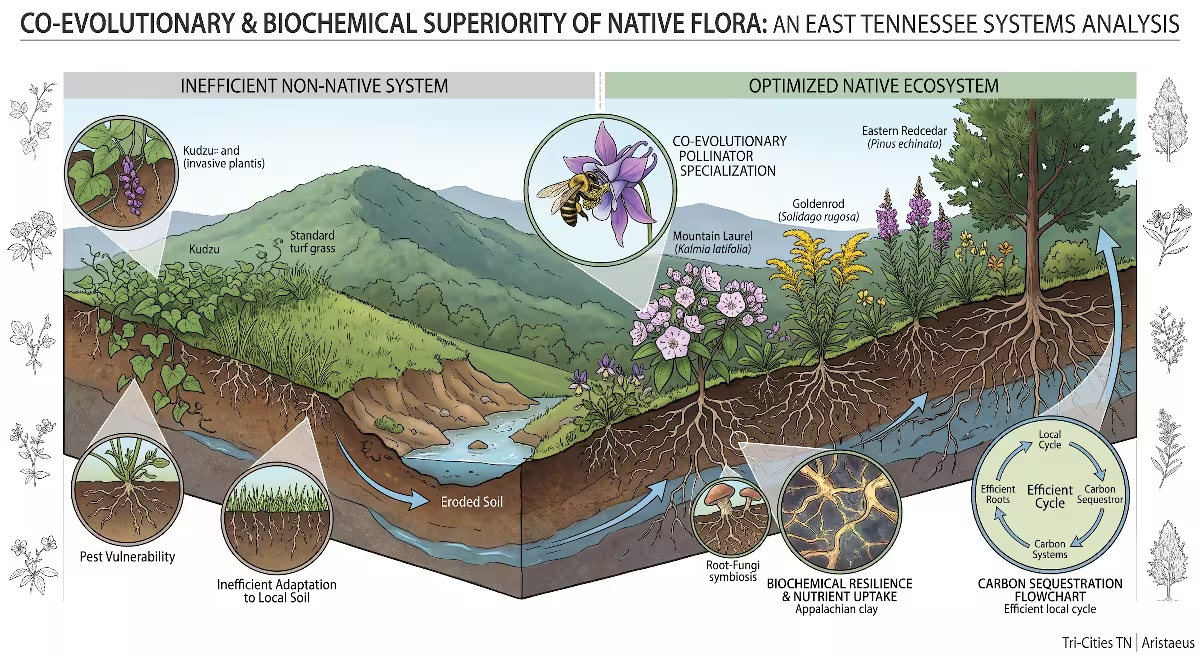
To understand why native landscaping matters, we must examine the biochemical bond between plants and insects. Over thousands of years, native flowering plants and native pollinators developed together in the Southern Appalachian region. This process of co-evolution created precise chemical matches. Native bees, moths, butterflies, and beetles adapted their digestive systems, mouthparts, and life cycles to the exact nutritional chemistry of local flora.
When you install exotic ornamentals from other continents, that biological link breaks. Common nursery plants like Japanese spiraea, Bradford pears, English ivy, and periwinkle might look lush, but they function as nutritional deserts for our regional insect populations. The pollen produced by non-native ornamentals often contains the wrong balance of amino acids, proteins, and lipids. Specialist native bees cannot digest or raise their larvae on these foreign pollen grains. Through native landscaping, we reintroduce the precise nutritional profiles that our native pollinator guilds require to survive and reproduce.
Our region is home to roughly four hundred species of native bees. A substantial portion of these species are oligolectic, meaning they are dietary specialists. These bees collect pollen from only a single plant family or genus. For example, mining bees in the genus Andrena emerge in early spring and depend exclusively on specific native woodland plants. If a suburban yard contains only turfgrass and non-native boxwoods, those specialist bees cannot feed their young. Practicing native landscaping ensures that these specialist bees find the exact pollen chemistry they need within easy flying distance of their nests.
+---------------------------------------------------------------------------------------------------+
|                                  THE BIOCHEMICAL SPECIALIST PATHWAY                               |
+------------------------------------+--------------------------------+-----------------------------+
| Insect Species                     | Obligate Native Host Plant     | Chemical Dependency         |
+------------------------------------+--------------------------------+-----------------------------+
| Monarch (*Danaus plexippus*)       | *Asclepias* (Milkweeds)        | Cardenolides (defense)      |
| Zebra Swallowtail (*E. marcellus*) | *Asimina triloba* (Pawpaw)     | Annonaceous acetogenins     |
| Pipevine Swallowtail (*B. philenor*)| *Isotrema macrophyllum* (Pipe) | Aristolochic acids          |
+------------------------------------+--------------------------------+-----------------------------+
Lepidoptera species, which include our butterflies and moths, show an even stricter biochemical dependence on native host plants. Female butterflies do not lay eggs randomly. They identify host plants by sampling the plant surface using chemical sensors on their feet. The caterpillars of the Zebra Swallowtail (Eurytides marcellus) feed only on the leaves of the native Pawpaw tree (Asimina triloba), absorbing acetogenins that protect them from predators. The Pipevine Swallowtail (Battus philenor) depends entirely on Dutchman’s Pipe (Aristolochia macrophylla) to ingest protective aristolochic acids. Monarch butterflies (Danaus plexippus) require native milkweeds (Asclepias) to absorb toxic cardenolides. When property owners choose native landscaping, they provide the actual host plants required to sustain these specialized life cycles.
Traditional landscaping often prioritizes pest-free plants, but in an ecological context, a plant that nothing can eat is an ecological dead end. By incorporating native landscaping, we invite the base of the food web back into our yards. The caterpillars supported by native plants become the primary food source for nesting songbirds across East Tennessee. Choosing native landscaping directly fuels the broader local ecosystem, supporting birds, beneficial predatory insects, amphibians, and mammals throughout our communities.
Phenological Synchronization: Three-Season Nectar and Pollen Delivery
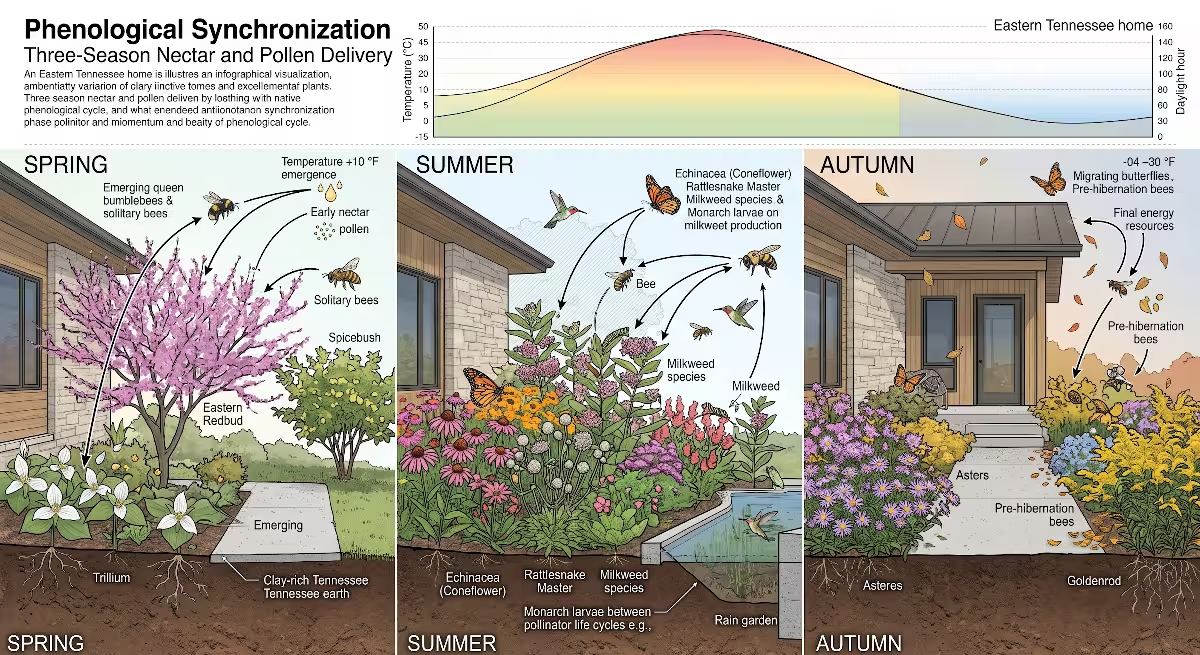
Phenology is the study of natural timing, such as when plants bloom and when insects emerge from dormancy. In East Tennessee, the spring warmup begins in late February or March in the lower valleys, while freezing temperatures can persist longer in the higher elevations. Native insects synchronize their emergence with the blooming periods of local plants. A successful garden relies on native landscaping to deliver continuous nectar and pollen from early spring through the late autumn freeze.
Early spring represents a vulnerable period for local pollinators. Queen bumblebees (Bombus) wake up from underground winter hibernation with depleted fat reserves. They must find immediate sources of nectar for energy and pollen to begin building their first brood cells. Early solitary bees, such as cellophane bees and mining bees, emerge simultaneously. Incorporating early-flowering trees and woodland perennials into your native landscaping creates a reliable feeding station during these cool, variable spring months.
====================================================================================================
                            EAST TENNESSEE THREE-SEASON PHENOLOGY SCHEDULE
====================================================================================================

SEASON          MONTHS          TARGET POLLINATOR GROUPS          KEYSTONE FLORAL GENERA
----------------------------------------------------------------------------------------------------
Early Spring    March - April   Queen Bumblebees, Mining Bees,    Cercis, Lindera, Amelanchier,
                                Early Ephemeral Solitary Bees     Mertensia, Aquilegia, Packera

Early Summer    May - June      Leafcutter Bees, Sweat Bees,      Baptisia, Penstemon, Zizia,
                                Early Butterflies, Syrphid Flies  Itea, Coreopsis, Phlox

High Summer     July - August   Long-Tongued Bees, Wasps,         Pycnanthemum, Monarda, Asclepias,
                                Monarchs, Clearwing Moths         Echinacea, Liatris, Eryngium

Late Autumn     Sept - November Overwintering Queens, Migrating   Symphyotrichum, Solidago,
                                Monarchs, Pre-Diapause Solitaries Helianthus, Vernonia, Eupatorium
====================================================================================================
As the season shifts into May and June, insect activity expands dramatically. Leafcutter bees (Megachile), green sweat bees (Agapostemon), and various pollinating beetles take flight. During this early summer phase, native landscaping should feature robust perennials like Wild Indigo (Baptisia australis), Foxglove Beardtongue (Penstemon digitalis), and Golden Alexanders (Zizia aurea). Golden Alexanders are especially valuable because their open, umbrella-like flower clusters provide easily accessible nectar for tiny beneficial wasps, hoverflies, and the larvae of the Black Swallowtail butterfly.
Mid to late summer brings high heat, intense sunshine, and occasional dry spells to the Ridge and Valley terrain. During July and August, native landscaping shines by relying on deep-rooted prairie and meadow species that produce heavy nectar flows despite high temperatures. Clustered Mountain Mint (Pycnanthemum muticum), Wild Bergamot (Monarda fistulosa), Purple Coneflower (Echinacea purpurea), and Butterfly Weed (Asclepias tuberosa) anchor this high-summer phase. Mountain mint in particular produces copious nectar with high sugar concentrations, attracting dozens of insect species simultaneously to a single plant cluster.
Late autumn is the final feeding window of the year, running from September until hard frosts arrive in November. Mated bumblebee queens must feed heavily to build up the lipid reserves that allow them to survive underground all winter. At the same time, migrating Monarch butterflies require dense energy sources as they journey south through the Appalachian mountain corridors. During this critical window, native landscaping should feature native Asters (Symphyotrichum) and Goldenrods (Solidago). These two plant groups provide high-protein pollen and rich late-season nectar, ensuring local pollinators can enter winter diapause successfully.
Keystone Plant Genera for Tri-Cities Pollinator Guilds
Not all plants provide the same ecological value. Research in insect ecology shows that a small percentage of keystone plant genera support the vast majority of local insect biodiversity. If a landscape lacks these specific keystone plants, the local food web loses substantial strength. Implementing native landscaping built around keystone species ensures maximum ecological return for every square foot of your property.
                              KEYSTONE GENERA IMPACT IN EAST TENNESSEE

             WOODY OVERSTORY                                     HERBACEOUS LAYER
      +-----------------------------+                     +-----------------------------+
      | Quercus (Oaks)              |                     | Solidago (Goldenrods)       |
      | 500+ Caterpillars Supported |                     | 100+ Pollinators / 40+ Moths|
      +-----------------------------+                     +-----------------------------+
      | Prunus (Native Cherries)    |                     | Symphyotrichum (Asters)     |
      | 450+ Caterpillars Supported |                     | Critical Late-Season Energy |
      +-----------------------------+                     +-----------------------------+
      | Cercis (Eastern Redbud)     |                     | Pycnanthemum (Mtn Mints)    |
      | Early Bee Emergence Anchor  |                     | Highest Insect Density Rate |
      +-----------------------------+                     +-----------------------------+
Woody trees and shrubs form the top layer of keystone productivity. In the Tri-Cities region, native oaks (Quercus alba, Quercus rubra, Quercus velutina) serve as the most productive plants in our entire ecosystem. A single mature oak tree can support over five hundred species of native caterpillars without showing noticeable leaf damage. These caterpillars provide critical nourishment for birds and predatory beneficial insects. Including native woody species within your native landscaping establishes a strong structural and ecological anchor for your property.
Downy Serviceberry (Amelanchier arborea) and Eastern Redbud (Cercis canadensis) are outstanding smaller trees for residential yards. Serviceberry produces delicate white flowers in early spring that feed native bees just as they emerge, followed by vitamin-rich berries for local wildlife. Eastern Redbud flowers open directly along its branches in early April, offering specialized pea-like blossoms that require the strong flight muscles of native bumblebees and digger bees to access. Adding these small native trees through native landscaping brings both spring color and high ecological value to residential properties.
+---------------------------------------------------------------------------------------------------+
|                             KEYSTONE PLANT SELECTION FOR TRI-CITIES YARDS                         |
+--------------------------+-----------------------+-----------------------+------------------------+
| Botanical Name           | Common Name           | Growth Form / Height  | Primary Ecological Role|
+--------------------------+-----------------------+-----------------------+------------------------+
| *Quercus alba*           | White Oak             | Canopy Tree (60-80 ft)| 500+ Lepidoptera host  |
| *Cercis canadensis*      | Eastern Redbud        | Understory (20-30 ft) | Early bee energy hub   |
| *Lindera benzoin*        | Spicebush             | Shrub (8-12 ft)       | Swallowtail host plant |
| *Pycnanthemum muticum*   | Clustered Mtn Mint    | Perennial (2-3 ft)    | Multi-guild nectar hub |
| *Symphyotrichum novae*   | New England Aster     | Perennial (3-5 ft)    | Late fall winter prep  |
| *Solidago speciosa*      | Showy Goldenrod       | Perennial (2-4 ft)    | Oligolectic bee pollen |
| *Eutrochium fistulosum*  | Hollow Joe-Pye Weed   | Perennial (5-7 ft)    | Swallowtail feeding hub|
+--------------------------+-----------------------+-----------------------+------------------------+
In the shrub layer, Spicebush (Lindera benzoin) thrives in shaded and partially shaded yards, especially in moist soils along slopes or near downspouts. It produces early yellow blooms for solitary bees and serves as the obligate host plant for the Spicebush Swallowtail butterfly (Papilio troilus). In sunny areas, Oakleaf Hydrangea (Hydrangea quercifolia) and Black Chokeberry (Aronia melanocarpa) deliver dependable floral resources followed by rich autumn foliage, proving that native landscaping delivers strong visual appeal alongside ecological function.
For sunny perennial garden beds, herbaceous keystone genera take center stage. Clustered Mountain Mint (Pycnanthemum muticum) consistently records some of the highest insect visitation rates of any native perennial in regional trials. Its aromatic foliage also naturally repels deer and rabbits. Surrounding mountain mint with New England Aster (Symphyotrichum novae-angliae), Showy Goldenrod (Solidago speciosa), and Hollow Joe-Pye Weed (Eutrochium fistulosum) builds a durable, dynamic planting matrix. By committing to native landscaping focused on these high-performing genera, your garden will provide abundant pollen and nectar across the entire growing season.
Microhabitat Architecture and Nesting Substrates
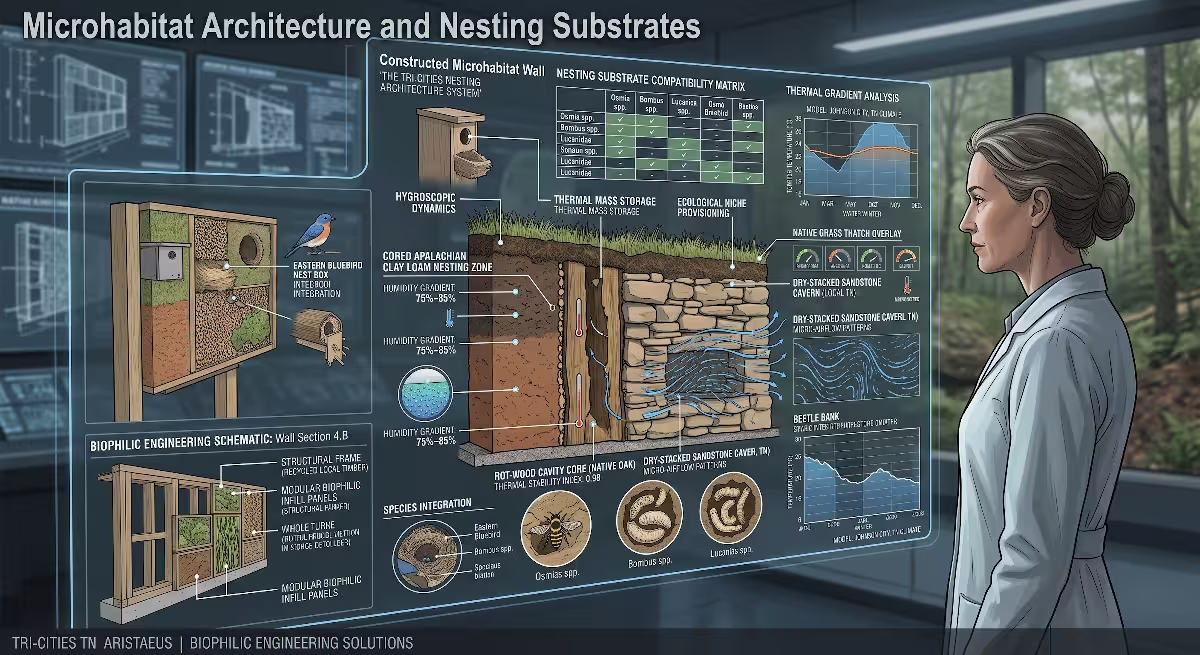
Providing pollen and nectar satisfies only half of what pollinators need to thrive. Pollinators also require safe, undisturbed places to nest, lay eggs, and spend the winter. A common mistake in residential yards is planting flowers while maintaining an overly sterile ground environment. Effective native landscaping intentionally includes nesting habitats and structural microclimates directly into the garden plan.
Roughly seventy percent of our native bee species build their nests underground. These ground-nesting bees, including mining bees, sweat bees, and digger bees, are gentle, non-aggressive solitary insects that do not defend large social hives. They tunnel several inches into the earth to construct individual brood chambers for their offspring. When yards are covered with synthetic weed barriers, thick layers of plastic landscape fabric, or deep wood bark mulch, these bees cannot reach the soil. Purposeful native landscaping leaves designated patches of well-drained, unmulched soil open and accessible so ground-nesting bees can excavate their tunnels.
                               NATIVE BEE NESTING DISTRIBUTIONS

                   70% GROUND NESTERS                  30% STEM/CAVITY NESTERS
              +--------------------------+          +--------------------------+
              | * Unmulched bare ground  |          | * Hollow plant stems     |
              | * Well-drained sandy/clay|          | * Pithy twig interiors   |
              | * Zero plastic barriers  |          | * Dead wood / beetle holes|
              | * Undisturbed dry banks  |          | * Standing winter stalks |
              +--------------------------+          +--------------------------+
The remaining thirty percent of native bees nest in cavities, using hollow plant stems, pithy twigs, or abandoned tunnels in dead wood. Solitary leafcutter bees and mason bees cut circular leaf fragments or gather mud to partition their egg cells inside hollow stalks. If a gardener cuts down all perennial stalks and removes every dead twig each autumn, entire generations of cavity-nesting bees are hauled away to the landfill. Thoughtful native landscaping includes a winter stem management routine that preserves these vital reproductive structures.
To maintain cavity nesting sites, leave your perennial flower stalks standing through the winter months. In late winter, cut the old stems back at varying heights between eight and eighteen inches from the ground. Leave the lower stem segments standing upright in place. As new spring growth emerges, it will hide these old cut stems from view. Solitary bees will discover the open hollow stalks and use them for nesting throughout the spring and summer. Combining this stem retention practice with native landscaping ensures complete reproductive support for local solitary bees.
                             PERENNIAL STEM MANAGEMENT PROTOCOL

     OCTOBER - FEBRUARY               LATE WINTER CUTBACK               SUMMER GROWTH
     ------------------               -------------------               -------------
    [Full Standing Stems]      -->    [Cut at 8 - 18 Inches]     -->   [New Green Foliage]
    Provides winter shelter           Hollow tubes open for             Hides old stubble;
    and structural bird seed.         nesting female bees.              larvae mature inside.
Overwintering habitat is equally vital for butterflies, moths, and mated queen bumblebees. Many silk moths spin cocoons among fallen leaves, while swallowtail chrysalises attach to the lower stems of shrubs. Queen bumblebees hibernate just beneath the leaf litter or an inch under loose topsoil. Maintaining a three-inch layer of natural fallen leaves in garden beds provides critical insulation against freezing winter winds. Using native landscaping to create healthy soil and protective leaf layers keeps these beneficial insects safe throughout the cold months.
Edaphic Performance: Solving East Tennessee Red Clay and Microclimates
East Tennessee soils are predominantly Ultisols and Alfisols, often known colloquially as our classic red clay. These soils are formed from weathered limestone, dolomite, and shale parent rock. They contain fine-textured clay particles that hold nutrients well but can become heavily compacted, poorly drained when saturated, and rock-hard during summer dry spells. Non-native turfgrass and imported shrubs often struggle in these dense soils without continuous watering, chemical fertilizers, and heavy soil amendments. In contrast, native landscaping excels in our native soils because local plants evolved specifically in these conditions.
Native plants feature robust root architectures that naturally adapt to dense clay soils. Many prairie and meadow species send down deep taproots or extensive, fibrous networks that penetrate compacted subsoil layers. For example, False Blue Indigo (Baptisia australis) develops a deep, woody root system that drills through dense clay, while Little Bluestem (Schizachyrium scoparium) forms dense, fibrous root nets reaching five to eight feet deep. These deep roots create channels in the subsoil that improve water infiltration and break up compaction naturally over time. Embracing native landscaping allows your soil to loosen and breathe without the need for intensive mechanical tilling.
====================================================================================================
                        ROOT DEPTH COMPARISON & SOIL DRAINAGE MECHANICS
====================================================================================================

DEPTH (FT)    NON-NATIVE TURFGRASS               NATIVE PERENNIALS (*Baptisia*, *Liatris*, *Schizachyrium*)
----------------------------------------------------------------------------------------------------
  Surface     [### Turf Mat (2-4 in) ###]        [### Organic Top Layer ###]
  1 Foot      [ Dense Compacted Clay    ]        |   |   | Fibrous Root Channels
  2 Feet      [ Impermeable Subsoil     ]        |   |   | Deep Taproots Penetrating Clay
  3 Feet      [ Zero Water Movement     ]        |   |   | Biological Aeration Channels
  4 Feet      [ Standing Water Perched  ]        |   |   | Active Mycorrhizal Fungal Network
  5+ Feet     [ Dry, Unusable Subsoil   ]        |   |   | Drawing Deep Moisture During Drought
====================================================================================================
Our regional landscape also presents varied moisture conditions and dramatic microclimates. Exposed ridges with shallow limestone outcroppings, known locally as cedar glades or limestone barrens, experience thin soils, intense sun, and high drought stress. Lower valleys, drainage swales, and the bases of rolling hills often collect seasonal runoff, creating moist or poorly drained conditions. Choosing native landscaping allows you to match specific plant communities to each unique microclimate on your property.
+---------------------------------------------------------------------------------------------------+
|                            EAST TENNESSEE EDAPHIC SOIL MATRIX MATCHING                            |
+--------------------------+-----------------------+-----------------------+------------------------+
| Site Microclimate        | Soil Moisture Regime  | Drainage Profile      | Recommended Natives    |
+--------------------------+-----------------------+-----------------------+------------------------+
| Exposed Ridge / Slope    | Dry to Xeric          | Rapid / Thin over rock| *Liatris squarrosa*    |
|                          |                       |                       | *Echinacea pallida*    |
|                          |                       |                       | *Schizachyrium scop.*  |
+--------------------------+-----------------------+-----------------------+------------------------+
| Level Residential Bed    | Mesic (Average)       | Moderate Red Clay     | *Monarda fistulosa*    |
|                          |                       |                       | *Rudbeckia fulgida*    |
|                          |                       |                       | *Asclepias tuberosa*   |
+--------------------------+-----------------------+-----------------------+------------------------+
| Swale / Rain Garden Base | Hydric to Wet Mesic   | Periodic Standing Water| *Lobelia cardinalis*  |
|                          |                       |                       | *Iris versicolor*      |
|                          |                       |                       | *Carex vulpinoidea*    |
+--------------------------+-----------------------+-----------------------+------------------------+
For hot, dry, rocky slopes, species like Pale Purple Coneflower (Echinacea pallida), Scaly Blazing Star (Liatris squarrosa), and Aromatic Aster (Symphyotrichum oblongifolium) thrive with zero supplemental irrigation once established. In low, wet areas or residential rain gardens designed to manage stormwater runoff, species like Cardinal Flower (Lobelia cardinalis), Blue Flag Iris (Iris versicolor), and Fox Sedge (Carex vulpinoidea) absorb heavy downpours effortlessly. Using native landscaping to solve stormwater drainage challenges keeps yards beautiful while filtering runoff before it reaches regional waterways like the Watauga, Holston, and Nolichucky rivers.
A major advantage of native landscaping is the complete elimination of synthetic fertilizers and chemical pesticides. Non-native lawns and exotic shrubs frequently require routine applications of nitrogen-heavy fertilizers to stay green in our clay soils. This excess fertilizer washes into local storm drains and degrades local stream health. Furthermore, chemical insecticides and systemic pesticides, such as neonicotinoids, poison the nectar and pollen of treated plants, harming the very bees and butterflies we want to help. With native landscaping, plants thrive without artificial chemicals, keeping the soil and visiting insects healthy.
Biophilic Integration and Structural Design Strategies
Biophilic design is the practice of connecting people with natural living systems inside and around the built environment. In residential architecture, outdoor landscapes should not be treated as passive green carpets. Instead, they can function as engaging, dynamic extensions of the home. However, transitioning to native plants can sometimes look untidy if beds are not designed thoughtfully. Applying clear biophilic and architectural principles to native landscaping creates an intentional, stunning garden that delights homeowners, pleases neighbors, and supports wildlife.
A proven concept in landscape architecture is incorporating visible cues to care, a design framework pioneered by landscape scholar Joan Nassauer. When native perennials are allowed to grow in completely wild, unstructured patterns, neighbors might misinterpret the garden as an unkempt or abandoned weed patch. By using clean structural frames, native landscaping looks orderly and intentional. These design cues include crisp mown turf borders, dry-stacked limestone edging, neat flagstone walking paths, and well-placed garden benches or bird baths.
                              THE FOUR-TIER BIOPHILIC MATRIX

        [ TIER 1: OVERSTORY CANOPY ]    --> Quercus alba, Acer saccharum (Cooling / Shelter)
                     |
        [ TIER 2: UNDERSTORY SHRUBS]    --> Cercis, Hydrangea quercifolia (Human Scale / Framing)
                     |
        [ TIER 3: HERBACEOUS DRIFTS]    --> Monarda, Echinacea, Asclepias (Color / High Pollen)
                     |
        [ TIER 4: LIVING GREEN MULCH]   --> Carex pensylvanica, Chrysogonum (Weed Suppression)
To achieve visual harmony, structure your plant selections using vertical stratification. This design approach mimics the natural layers of an Appalachian forest edge across four distinct tiers:
- Overstory Canopy Layer: Large native shade trees such as White Oak (Quercus alba), Sugar Maple (Acer saccharum), or Tulip Poplar (Liriodendron tulipifera) provide cooling shade, reduce roof heat gain, and form the upper ecological shelter.
- Understory and Shrub Layer: Small trees and shrubs like Eastern Redbud (Cercis canadensis), Oakleaf Hydrangea (Hydrangea quercifolia), and Sweetspire (Itea virginica) bring the eye down to human scale, creating comfortable spatial enclosure around patios and walkways.
- Herbaceous Structural Layer: Tall native perennials grouped in bold, repeated drifts of five, seven, or nine plants of the same species. Massing plants like Purple Coneflower, Wild Bergamot, and Orange Coneflower creates clean blocks of color that draw the human eye and help flying pollinators spot foraging areas quickly.
- Living Groundcover Layer: Instead of relying on dyed wood mulch that breaks down every year, carpet the soil with a green living mulch of native sedges and low groundcovers. Species like Pennsylvania Sedge (Carex pensylvanica), Golden Ragwort (Packera aurea), and Green and Gold (Chrysogonum virginianum) form a dense, weed-suppressing carpet that keeps roots cool and soil moist.
+---------------------------------------------------------------------------------------------------+
|                                  THE RESIDENTIAL DESIGN LAYOUT GUIDE                              |
+--------------------------+-----------------------+-----------------------+------------------------+
| Design Layer             | Spatial Positioning   | Recommended Species   | Visual & Biophilic Goal|
+--------------------------+-----------------------+-----------------------+------------------------+
| Structural Frame         | Bed perimeters, walks | Limestone, Mown Turf  | Defines cues to care   |
| Midstory Backdrop        | Property boundaries   | *Hydrangea querc.*    | Year-round screening   |
| Floral Drifts (Massings) | Center of garden beds | *Echinacea*, *Monarda*| Concentrated color hits|
| Living Base Groundcover  | Front edges / Base    | *Carex*, *Packera*    | Seamless weed barrier  |
+--------------------------+-----------------------+-----------------------+------------------------+
Thermal microclimates can also be built directly into your native landscaping. Pollinators are cold-blooded creatures that need external heat to warm their flight muscles on crisp spring and autumn mornings. Placing native flowering beds against south-facing limestone retaining walls or sunny stone patios creates warm microclimates. The stone absorbs radiant heat during the day and releases it steadily, allowing bees and butterflies to begin foraging earlier in the morning and remain active later into the evening. By blending biological function with architectural structure, native landscaping elevates both the ecological performance and the everyday enjoyment of your property.
Frequently Asked Questions About East Tennessee Native Landscaping and Pollinator Gardens
+---------------------------------------------------------------------------------------------------+
|                                  FREQUENTLY ASKED QUESTIONS SUMMARY                               |
+---------------------------------------------------------------------------------------------------+
| Q: Which native plants attract the highest diversity of pollinators in East Tennessee?           |
| A: Clustered Mountain Mint, Wild Bergamot, Purple Coneflower, New England Aster, and Goldenrods. |
+---------------------------------------------------------------------------------------------------+
| Q: Will native plants actually grow in our dense East Tennessee red clay without soil amendments? |
| A: Yes. Species like Baptisia, Liatris, and Little Bluestem have deep roots adapted to clay.      |
+---------------------------------------------------------------------------------------------------+
| Q: How does native landscaping reduce ongoing yard maintenance and landscape costs?              |
| A: Once established, it eliminates routine mowing, synthetic fertilizers, and supplemental water. |
+---------------------------------------------------------------------------------------------------+
| Q: When is the best time of year to plant native perennials in the Tri-Cities region?             |
| A: Autumn (late September through November) is optimal for root establishment before dormancy.   |
+---------------------------------------------------------------------------------------------------+
| Q: How do I keep my native garden looking attractive and tidy to satisfy HOA neighborhood rules?  |
| A: Use structural cues to care: neat stone borders, mown turf edges, and repeated plant drifts.   |
+---------------------------------------------------------------------------------------------------+
Which native plants attract the highest diversity of pollinators in East Tennessee?
The top-performing herbaceous plant for total pollinator diversity across our region is Clustered Mountain Mint (Pycnanthemum muticum). In field studies and residential installations, mountain mint consistently attracts the broadest mix of native bees, predatory wasps, hoverflies, and butterflies. For late-season support, native Asters (Symphyotrichum) and Goldenrods (Solidago) provide essential nectar and pollen. For early to midsummer color, Wild Bergamot (Monarda fistulosa) and Purple Coneflower (Echinacea purpurea) deliver dependable blooms. Building your native landscaping around these core genera guarantees broad pollinator activity across the full growing season.
Will native plants actually grow in our dense East Tennessee red clay without soil amendments?
Yes, regional native plants thrive in heavy clay soils. Unlike non-native ornamentals, which often suffer from root rot or fail to penetrate dense clay, indigenous Southern Appalachian plants evolved in these exact soil types. Plants like Wild Indigo (Baptisia australis), Dense Blazing Star (Liatris spicata), and Orange Coneflower (Rudbeckia fulgida) produce strong taproots and fibrous root systems that easily navigate unamended clay. When installing native landscaping, you do not need to haul in bags of topsoil or peat moss. Plant directly into the native soil, apply a light top dressing of leaf compost, and let the natural root systems loosen the clay.
How does native landscaping reduce ongoing yard maintenance and landscape costs?
Traditional non-native turf lawns require continuous mowing, seasonal aeration, chemical herbicides, synthetic fertilizers, and weekly summer watering. By converting high-maintenance turf into native landscaping, property owners cut both maintenance labor and input costs significantly. Once established, native perennial plantings need no synthetic chemical treatments and survive on natural rainfall patterns alone. Maintenance shifts from weekly mowing chores to simple seasonal tasks, such as a late-winter stem trim and managing autumn leaves. Over several seasons, native landscaping delivers substantial savings in water bills, fuel, and landscape service contracts.
When is the best time of year to plant native perennials in the Tri-Cities region?
The ideal planting window across the Tri-Cities is autumn, running from late September through mid-November. During these fall weeks, air temperatures cool down while the soil remains warm from summer sunshine. This combination allows newly installed perennials, shrubs, and trees to focus energy on root growth without the stress of hot summer air and high water evaporation. Autumn plantings settle in through winter freeze-thaw cycles and emerge in spring with established root systems. Spring planting is also effective, but it requires closer attention to regular watering as summer heat arrives. Planning your native landscaping for fall installation maximizes early plant establishment and long-term vitality.
How do I keep my native garden looking attractive and tidy to satisfy HOA neighborhood rules?
The key to neighborhood-friendly native gardening is intentional design using clear cues to care. Many homeowner associations object to native plants only when they appear unruly, tangled, or unmanaged. To ensure your native landscaping looks crisp and deliberate:
- Install a neat structural border, such as a three-foot strip of cleanly mown turfgrass, a low brick course, or a dry-stacked fieldstone wall around the planting beds.
- Plant perennials in distinct drifts of five to nine plants rather than scattering single plants randomly.
- Keep tall species like Joe-Pye Weed and Ironweed toward the back of borders or the center of island beds.
- Add decorative focal elements like a bird bath, clean stepping stones, or a wooden arbor to signal an intentional, cared-for landscape design.
Site Preparation, Installation, and Long-Term Management

Transforming an existing lawn into a vibrant native ecosystem requires careful site preparation. Rushing the installation without properly clearing existing turfgrass and weeds can lead to persistent weed competition. Taking a methodical, step-by-step approach ensures your native landscaping gets off to a healthy, successful start.
====================================================================================================
                        STEP-BY-STEP LAWN CONVERSION TIMELINE
====================================================================================================

PHASE 1: SITE PREP (Spring / Summer)
   [Mow Turf Low] ---> [Apply Cardboard Barrier] ---> [Add 3-4 Inches Compost] ---> [Moisturize & Smother]

PHASE 2: INSTALLATION (September - November)
   [Cut Holes in Mulch] ---> [Install Potted Plugs] ---> [Water Deeply at Root Zone]

PHASE 3: ESTABLISHMENT (Year 1 Spring - Summer)
   [Roots Expand into Clay] ---> [Targeted Hand Weeding] ---> [Minimal Supplemental Irrigation]

PHASE 4: ANNUAL MAINTENANCE (Late Winter)
   [Trim Stems to 8-18 Inches] ---> [Leave Base Leaves as Living Mulch] ---> [Enjoy Early Spring Blooms]
====================================================================================================
Site Preparation: The Sheet Mulching Method
The most sustainable way to remove turfgrass without using synthetic herbicides is sheet mulching, often called the lasagna method. This approach smothers existing sod while feeding beneficial soil microbes beneath:
- Scalp the Lawn: Set your lawn mower to its lowest cutting height and scalp the turf in the target area. Leave the fine clippings in place to provide organic matter.
- Lay Down a Carbon Barrier: Cover the entire area with thick, unprinted corrugated cardboard or four to six layers of plain newsprint. Overlap all edges by at least six to eight inches to ensure creeping grasses cannot find light.
- Add Organic Material: Spread three to four inches of shredded leaves, untreated wood chips, or compost directly over the cardboard layer.
- Water Thoroughly: Soak the entire area with water to jumpstart the natural decomposition process. Over six to ten weeks of warm weather, the turf beneath dies and breaks down, leaving behind soft, worm-rich topsoil ready for native landscaping installations.
+---------------------------------------------------------------------------------------------------+
|                              ANNUAL ECOLOGICAL MANAGEMENT CALENDAR                                |
+--------------------------+-----------------------+------------------------------------------------+
| Season                   | Key Management Tasks  | Primary Ecological Objective                   |
+--------------------------+-----------------------+------------------------------------------------+
| Late Winter (Feb - Mar)  | Cut stems at 8-18 in  | Opens nesting cavities for emerging bees       |
|                          | Keep base leaves      | Preserves hibernating queen bumblebees         |
+--------------------------+-----------------------+------------------------------------------------+
| Spring (Apr - May)       | Edge structural beds  | Maintains clean visual cues to care            |
|                          | Spot weed cool grasses| Reduces early competition for native shoots    |
+--------------------------+-----------------------+------------------------------------------------+
| Summer (Jun - Aug)       | Monitor new plantings | Provides occasional water only during droughts |
|                          | Enjoy floral display  | Document pollinator visits and bloom records   |
+--------------------------+-----------------------+------------------------------------------------+
| Autumn (Sept - Nov)      | Leave standing stalks | Provides high-protein bird seed and shelter    |
|                          | Allow leaves to rest  | Insulates soil and overwintering pupae         |
+--------------------------+-----------------------+------------------------------------------------+
Installation Best Practices
When planting native perennials, use landscape plugs or container-grown plants rather than scattering seed directly into existing turf areas. Plugs establish quickly and compete effectively against surrounding weed pressure:
- Dig Planting Holes: Cut an opening directly through the decomposing cardboard layer. Dig a small hole only as deep as the root plug to prevent the plant from settling too deeply.
- Firm the Native Soil: Place the plug into the native red clay, backfilling with the original excavated soil. Firm the soil gently around the crown to remove air pockets without over-compacting the clay.
- Initial Watering Routine: Water each new planting thoroughly immediately after installation. Provide roughly one inch of water per week during the first four to six weeks if natural rainfall is lacking. Once roots grow deep into the subsoil, your native landscaping will thrive on natural rainfall alone.
Long-Term Management Protocols
Managing native plantings differs fundamentally from traditional lawn care. The goal is gentle stewardship that supports natural ecological cycles:
- Eliminate Routine Chemical Use: Do not apply synthetic fertilizers, non-selective weed killers, or systemic pesticides. Native plants do not need chemical boosts, and synthetic sprays disrupt the soil microbiome while harming pollinator health.
- Follow the Late-Winter Cleanup Schedule: Resist the urge to clear away dead vegetation in October and November. Leave all flower stalks, seed heads, and foliage intact throughout the winter. Goldfinches and native sparrows will feed on coneflower and aster seeds, while beneficial insects shelter in the foliage.
- Execute the Spring Trim: In late winter, cut the old stems back to staggered heights between eight and eighteen inches. Leave the cuttings on the ground to decompose into natural mulch. Wait until average daily temperatures reliably exceed fifty degrees before gently tidying any high-visibility path edges.
Adopting native landscaping across the Tri-Cities is an investment in the ecological health, beauty, and resilience of our home region. By honoring the ancient biological links between native Appalachian plants and native pollinators, our residential yards transform into living sanctuaries. Whether you manage a small suburban plot in Johnson City, a rolling acre in Kingsport, or a hillside retreat in Bristol, your commitment to native landscaping builds a cleaner, greener, and more vibrant East Tennessee.