Building an indoor living wall with native Tennessee plants is one of the best ways to bring natural ecosystems into modern homes. A native indoor living wall connects your home to the local mountain landscape while improving indoor air quality. However, growing native flora vertically indoors requires careful planning. You must match the light, water, and air conditions of an indoor living wall to the natural habitat of each plant. In this guide, I will walk you through the technical steps to design, build, and maintain a native indoor living wall that thrives year-round.
The Microclimate Challenge: Adapting Appalachian Flora to Indoor Vertical Systems
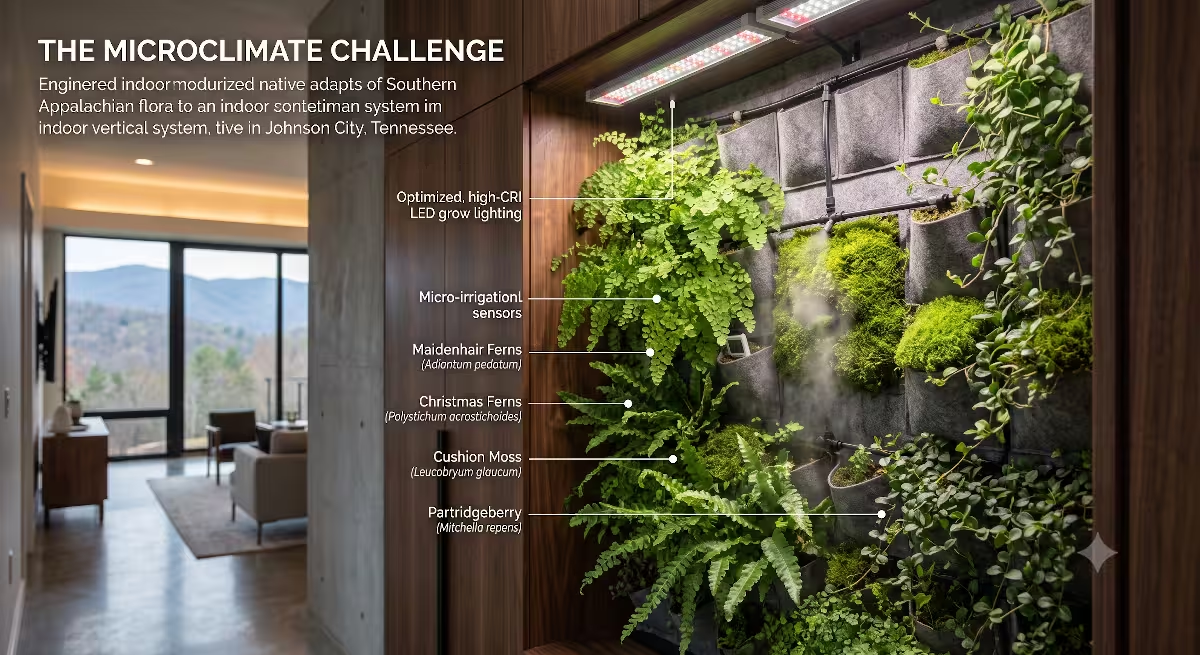
Growing wild Appalachian plants inside a modern house requires careful control of light, water, and air flow. Outdoor plants depend on seasonal changes, natural rain, and open wind. When you place these plants on an indoor living wall, you must supply these conditions artificially. If you build an indoor living wall without managing its microclimate, the plants will stress and decay.
Microclimatic Zonation in Living Wall Modules
Light drops quickly as you move away from a window or light fixture. In an indoor living wall, the top section receives the highest amount of light, while the bottom section receives much less. You must measure light using Photosynthetically Active Radiation, also known as PAR. PAR measures the exact light spectrum that plants use for photosynthesis. We measure PAR in micromoles per square meter per second (μmol}/m²/s).
For a native indoor living wall, target these three distinct light zones:
Top Zone (High Light): 250 – 350 μmol/m²/s (roughly 800 – 1,200 foot-candles). This zone suits rock outcrop plants that grow on sun-exposed mountain ledges.
Middle Zone (Medium Light): 150 – 250 μmol/m²/s (roughly 500 – 800 foot-candles). This zone suits woodland edge species and medium ferns.
Bottom Zone (Low Light): 75 – 150 μmol/m²/s (roughly 250 – 500 foot-candles). This zone suits floor-dwelling mosses and shade ferns.
Full-spectrum LED fixtures should run for 12 to 14 hours per day over the indoor living wall. This light schedule keeps the plants active and prevents them from dropping their leaves during the winter months.
Relative humidity is another crucial variable for an indoor living wall. Southern Appalachian forests maintain a natural relative humidity between 60% and 80%. Most climate-controlled homes in East Tennessee drop to 30% relative humidity during the winter heat cycle. Low humidity strips moisture from green leaf tissue. You can calculate the Vapor Pressure Deficit (VPD), which measures the drying power of the air:
Where VPsat is the saturation vapor pressure of water at room temperature, and RH is the relative humidity percentage. To protect your indoor living wall, keep the indoor VPD between 0.8 kPa and 1.2 kPa. You can achieve this by pairing the indoor living wall with a dedicated ultrasonic misting nozzle or a continuous room humidifier.
Active vs. Passive Living Wall Substrates
An indoor living wall relies on two main structural system designs: active systems and passive systems.
Active systems use a synthetic felt matrix or non-woven fabric layer attached to a waterproof backing board. Roots grow directly inside or between these moist fabric layers. A pump circulates water and dissolved minerals from a bottom basin to the top of the indoor living wall. The water flows down through the felt by gravity. Active felt systems offer superior air flow to root zones. They work exceptionally well for rock-dwelling native plants like ferns and alumroot, which prefer loose, uncompressed root zones.
Passive systems use modular plastic panels or structural fabric pockets filled with a light potting mixture. The soil mix usually contains coconut coir, coarse perlite, pine bark nuggets, and expanded clay granules. Passive pocket systems hold more water than felt systems. They provide a stable root buffer if an irrigation pump temporarily fails. However, you must ensure the soil mix stays loose. Compacted soil inside an indoor living wall starves roots of oxygen, causing root rot.
+-----------------------------------------------------------------------------------+
|                        INDOOR LIVING WALL SUBSTRATE COMPARISON                     |
+-----------------------------------------------------------------------------------+
| Feature                    | Active Felt Systems         | Passive Pocket Systems |
+----------------------------+-----------------------------+------------------------+
| Root Aeration              | Very High                   | Moderate               |
| Water Retention            | Low (Requires frequent drip)| High (Holds moisture)  |
| Weight when wet            | Light (3 to 5 lbs/sq ft)    | Heavy (10 to 15 lbs)   |
| System Complexity          | Higher (Continuous pump)    | Lower (Intermittent)   |
| Native Plant Compatibility | Ferns, Mosses, Crevice types| Deep-rooted Perennials |
+-----------------------------------------------------------------------------------+
Top Native Tennessee Botanical Species for Indoor Living Walls
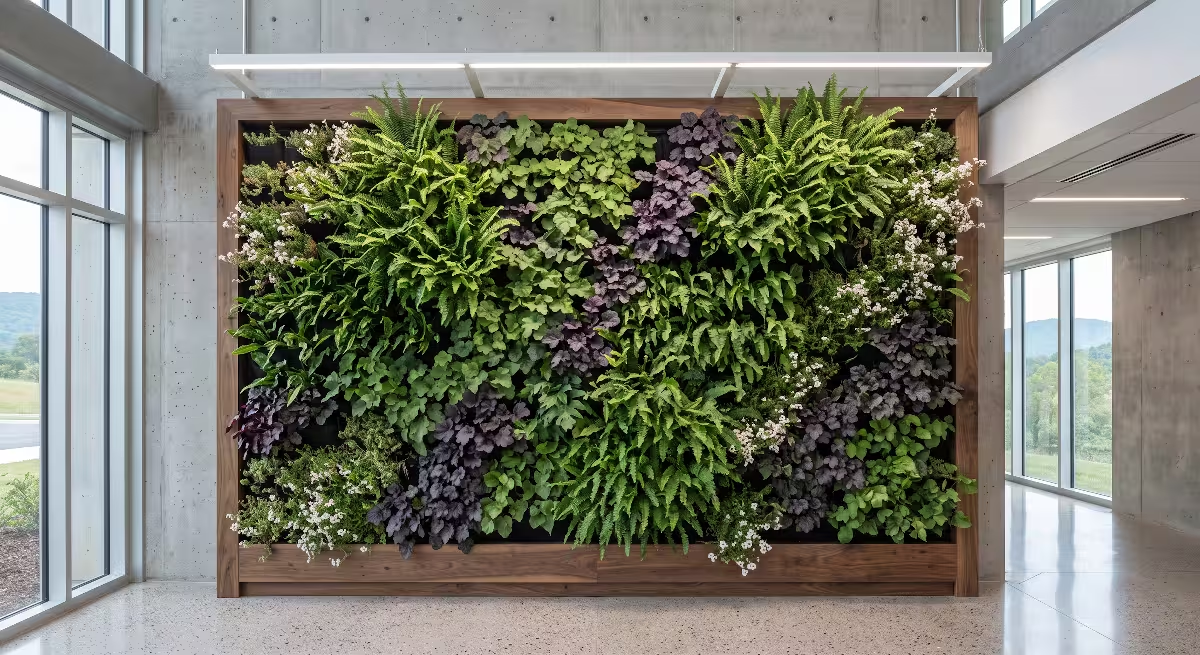
Not every native plant can survive inside a building. Sun-loving prairie plants like Coneflowers or Black-Eyed Susans fail on an indoor living wall because indoor light levels are too low. The best species for an indoor living wall come from the cool, shaded forest floors and damp limestone ravines of East Tennessee.
Low-Light & Moisture-Loving Understory Tier (Lower/Middle Wall)
The lower section of an indoor living wall stays damper and receives less direct light. Plants placed here must tolerate high moisture around their roots and low light levels.
Southern Maidenhair Fern (Adiantum capillus-veneris)
The Southern Maidenhair Fern grows naturally on wet limestone cliffs and near waterfalls across East Tennessee. Its bright green, fan-shaped leaflets grow on dark, wiry stems. This plant thrives on an indoor living wall when placed in the lower or middle zones.
Light Requirement: 100 – 200 μmol/m²/s (300 – 600 foot-candles).
Substrate Preference: Synthetic felt or fine moss pockets with constant moisture.
Wall Placement: Bottom third of the indoor living wall.
Design Role: Adds a soft, delicate texture that flows outward from the wall face.
Walking Fern (Asplenium rhizophyllum)
The Walking Fern is a unique native species found on shaded, mossy limestone rocks in the Appalachian Mountains. It features long, narrow, evergreen fronds that taper to fine tips. When the tips touch a moist surface, tiny new plantlets sprout. This plant is a fantastic natural fit for an indoor living wall.
Light Requirement: 75 – 150 μmol/m²/s (250 – 500 foot-candles).
Substrate Preference: Moist active felt or mineral-rich rock wool.
Wall Placement: Lower edge or shaded side pockets of the indoor living wall.
Design Role: Creates an interesting visual pattern as it creeps across the surface of an indoor living wall.
Christmas Fern (Polystichum acrostichoides)
The Christmas Fern is one of the most reliable plants in East Tennessee forests. It holds its deep green, leather-like fronds all year long. On an indoor living wall, it acts as a bold anchor plant that creates visual density.
Light Requirement: 100 – 250 μmol/m²/s (300 – 700 foot-candles).
Substrate Preference: Soil-filled structural pockets with organic matter and bark.
Wall Placement: Center modules of the indoor living wall.
Design Role: Provides solid green structure and year-round cover.
Creeping & Trailing Groundcovers (Lower Canopy / Wall Edges)
Creeping plants cover exposed felt or plastic edges on an indoor living wall. They soften the frame and give the structure a natural appearance.
Partridgeberry (Mitchella repens)
Partridgeberry is a tiny, creeping evergreen vine that carpets forest floors across the Great Smoky Mountains. It features small, shiny, paired leaves with white veins. Under good indoor grow lights, it produces small red berries. Partridgeberry grows slowly, making it easy to manage on an indoor living wall.
Light Requirement: 75 – 175 μmol/m²/s (200 – 500 foot-candles).
Substrate Preference: Damp felt or acidic peat-based pocket media.
Wall Placement: Bottom rim and side borders of the indoor living wall.
Design Role: Forms a dense, fine-textured green groundcover along the base.
Evergreen Wild Ginger / Little Brown Jug (Hexastylis arifolia)
This native perennial features arrow-shaped, leathery leaves with silver mottled patterns. It grows naturally in acidic forest soils throughout East Tennessee. On an indoor living wall, its broad leaves break up the fine textures of ferns.
Light Requirement: 100 – 200 μmol/m²/s (300 – 600 foot-candles).
Substrate Preference: Humus-rich soil pockets with fast drainage.
Wall Placement: Lower-middle sections of the indoor living wall.
Design Role: Provides broad, patterned foliage contrast.
      +-------------------------------------------------------------+
      |       VERTICAL TIERING FOR NATIVE TENNESSEE PLANTS          |
      +-------------------------------------------------------------+
      | TOP TIER (High Light, Drier)                                |
      | - Heuchera villosa (Appalachian Alumroot)                   |
      | - Sedum ternatum (Mountain Stonecrop)                       |
      +-------------------------------------------------------------+
      | MIDDLE TIER (Medium Light, Moderate Moisture)               |
      | - Polystichum acrostichoides (Christmas Fern)               |
      | - Hexastylis arifolia (Evergreen Wild Ginger)              |
      +-------------------------------------------------------------+
      | BOTTOM TIER (Low Light, High Moisture)                      |
      | - Adiantum capillus-veneris (Southern Maidenhair Fern)      |
      | - Asplenium rhizophyllum (Walking Fern)                     |
      | - Mitchella repens (Partridgeberry)                         |
      +-------------------------------------------------------------+
2.3 Crevice Specialists & Accent Species (Middle/Upper Tiers)
The upper pockets of an indoor living wall dry out faster and sit closer to top-mounted grow lamps. Plants selected for this top space must tolerate brighter light and occasional surface drying.
Appalachian Alumroot (Heuchera villosa)
Appalachian Alumroot grows on exposed mountain cliffs throughout the Appalachian chain. It features large, hairy, maple-like leaves that spread out in broad clumps. Cultivated native selections offer rich foliage colors ranging from deep bronze to lime green. This plant is a top performer on an indoor living wall.
Light Requirement: 200 – 350 μmol/m²/s (600 – 1,200 foot-candles).
Substrate Preference: Highly porous, well-draining soil mixes or active felt.
Wall Placement: Upper third of the indoor living wall.
Design Role: Delivers dramatic leaf color and broad structural form.
Mountain Stonecrop (Sedum ternatum)
Unlike invasive non-native sedums, Mountain Stonecrop is native to shaded, damp rock ledges in Tennessee. It features round, succulent leaves arranged in neat stars. It produces clusters of white star-shaped flowers in spring. On an indoor living wall, it thrives in upper pockets where light levels are highest.
Light Requirement: 250 – 400 μmol/m²/s (700 – 1,500 foot-candles).
Substrate Preference: Coarse mineral mix containing perlite, pumice, and crushed gravel.
Wall Placement: Top edge and upper corners of the indoor living wall.
Design Role: Adds succulent texture and trailing accent shoots.
Living Wall Plant Selection Matrix for East Tennessee Homes
The matrix below organizes each native species by its environmental needs and optimal position within an indoor living wall. Use this reference when planning your layout.
| Botanical Name | Common Name | Native Tennessee Habitat | Light Level Needed | Ideal Wall Position | Target Moisture Level |
| Asplenium rhizophyllum | Walking Fern | Moist Limestone Cliffs | 75-150 μmol/m²/s | Lower Tier / Edges | Continuously Moist |
| Adiantum capillus-veneris | Southern Maidenhair Fern | Wet Ravines & Seeps | 100-200 μmol/m²/s | Lower Tier | High Moisture / Wet |
| Polystichum acrostichoides | Christmas Fern | Shaded Forest Floor | 100-250 μmol/m²/s | Middle Tier | Moderate Moisture |
| Mitchella repens | Partridgeberry | Acidic Woodland Floor | 75-175 μmol/m²/s | Bottom Edge | Damp / Even Moisture |
| Hexastylis arifolia | Evergreen Wild Ginger | Rich Woodland Slopes | 100-200 μmol/m²/s | Middle Tier | Moderate / Well-Drained |
| Heuchera villosa | Appalachian Alumroot | Rocky Cliffs & Bluffs | 200-350 μmol/m²/s | Upper Tier | Moderately Moist |
| Sedum ternatum | Mountain Stonecrop | Shaded Rock Ledges | 250-400 μmol/m²/s | Top Edge | Dries Between Waterings |
Engineering & Maintenance Protocols for Regional Indoor Walls
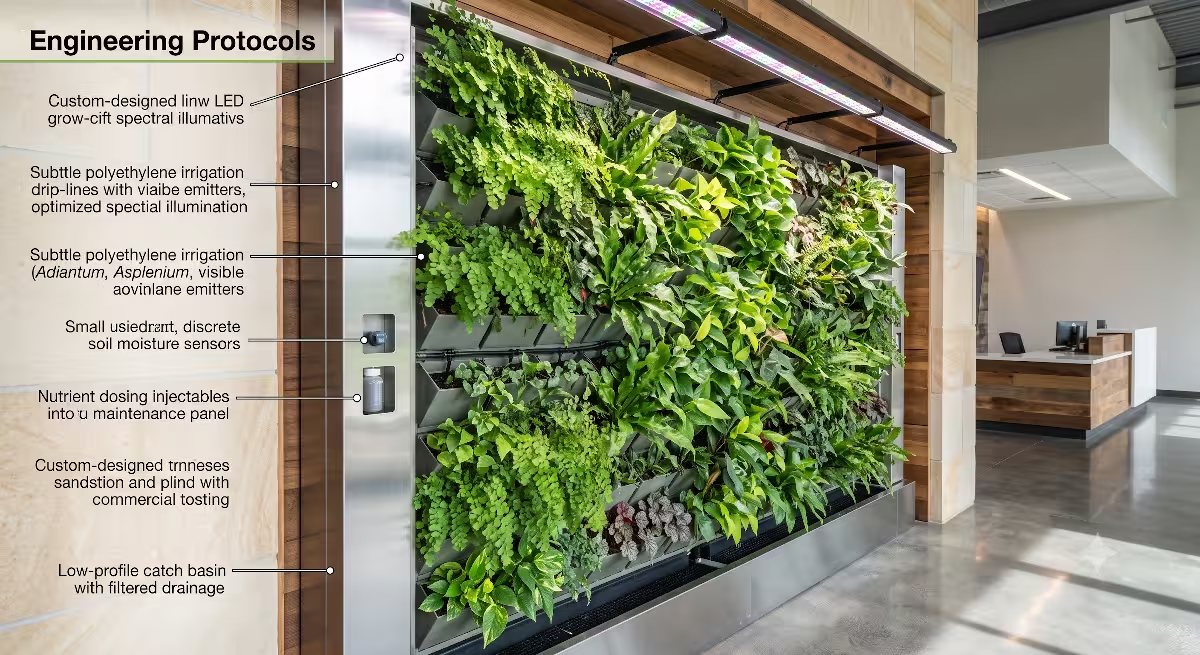
An indoor living wall requires routine maintenance to remain healthy over time. Mechanical pumps, drip lines, filters, and grow lights must work together smoothly.
Irrigation and Fertigation Regimes
Watering an indoor living wall requires automated control. Manual hand watering causes uneven moisture levels, root loss, and water leaks inside your home.
Automated irrigation relies on a digital timer connected to a submersion pump inside a bottom water reservoir. For an active felt indoor living wall, run short irrigation cycles several times per day. For example, run the system for 2 minutes, 4 to 6 times daily. For a passive pocket indoor living wall, run the pump for 5 minutes once every 2 to 3 days, depending on home humidity.
Fertigation involves adding liquid nutrients directly to the irrigation water. Native forest plants require much lower fertilizer levels than standard tropical houseplants. High fertilizer levels burn native roots and leave white salt deposits on your indoor living wall.
Keep these chemical water parameters within safe ranges:
pH Level: Maintain water pH between 5.5 and 6.5. Native forest species prefer slightly acidic conditions. If your city water in Johnson City or Kingsport is alkaline (pH above 7.5), add small amounts of organic citric acid to lower the pH.
Electrical Conductivity (EC): Keep EC between 0.6 mS/cm and 1.0 mS/cm.
Nutrient Ratio: Use a balanced, organic liquid fertilizer with a 3-1-2 or 4-1-2 Nitrogen-Phosphorus-Potassium (N-P-K) ratio containing micronutrients like iron, magnesium, and calcium.
      +-------------------------------------------------------------+
      |             AUTOMATED IRRIGATION FLOW CONTROL               |
      +-------------------------------------------------------------+
      |  Digital Timer -> Submersible Pump -> Main Supply Line      |
      |                                              |              |
      |                                              v              |
      |  Drain Basin <- Gravity Flow <- Vertical Drippers           |
      +-------------------------------------------------------------+
Managing East Tennessee Winter Indoor Humidity Crises
Winter in the Tri-Cities region creates a challenging environment for an indoor living wall. Home heating systems pull cold outdoor air inside and dry it out as it warms up. Relative humidity inside homes in Johnson City often drops below 25% in January.
Low humidity causes leaf tips on your indoor living wall to turn brown and crisp. To protect your investment:
Install an Automated Ultrasonic Humidifier: Position a humidifier near the base of the indoor living wall to keep local humidity above 50%.
Mount Low-Velocity Circulation Fans: Stagnant, moist air around an indoor living wall creates ideal conditions for fungal diseases like gray mold (Botrytis cinerea). Mount small 12V computer-style fans near the wall to keep gentle air moving across leaf surfaces.
Monitor Water Temperature: Water stored in floor reservoirs can drop to 55°F during cold snaps. Cold water shocks plant roots. Use a low-wattage aquarium heater to keep irrigation water between 65°F and 70°F.
Frequently Asked Questions about Indoor Living Walls
Below are answers to common questions homeowners ask when building a native indoor living wall system.
Can native Tennessee plants grow indoors on a wall year-round?
Yes, native Tennessee plants can grow successfully on an indoor living wall year-round. The key is simulating their natural forest environment inside your home. You must supply continuous full-spectrum lighting for 12 to 14 hours each day, maintain relative humidity above 50%, and prevent cold drafts. Native woodland ferns, groundcovers, and rock outcrop plants adjust well to indoor conditions when supplied with correct lighting and automated irrigation.
What are the best low-light native Tennessee plants for vertical systems?
The top low-light native Tennessee plants for vertical systems are Southern Maidenhair Fern (Adiantum capillus-veneris), Walking Fern (Asplenium rhizophyllum), and Christmas Fern (Polystichum acrostichoides). These species grow naturally in shaded forest ravines and on damp limestone cliffs across the Appalachian Mountains. They thrive in lower light levels (100 – 200 μmol/m²/s) near the bottom of an indoor living wall.
How do you prevent native outdoor plants from entering winter dormancy indoors?
Native plants enter winter dormancy when days grow short and temperatures drop. To prevent dormancy on an indoor living wall, maintain steady summer growing conditions year-round:
Keep indoor temperatures stable between 65°F and 72°F.
Run full-spectrum grow lights on an automated timer for 13 hours every day.
Maintain steady moisture levels and light fertigation without seasonal pauses.
Consistent light and warm temperatures signal to the plants that it is still summer, keeping them active year-round.
Do indoor living walls with native plants require specialized grow lights?
Yes, an indoor living wall planted with native species requires specialized full-spectrum LED grow lamps. Standard household lights do not provide enough light intensity or the correct color spectrum for long-term plant growth. Native plants require high levels of blue (450 nm) and red (660 nm) light wavelengths to power photosynthesis. Position grow lights 18 to 36 inches away from the surface of your indoor living wall to maintain healthy foliage.
Biophilic Impact: Bringing the Southern Appalachian Understory Indoors
Building an indoor living wall brings clear biological and psychological benefits into homes across Johnson City, Kingsport, and Bristol. Modern building materials reflect sound waves, creating noisy living areas. A fully planted indoor living wall acts as a natural acoustic absorber.
The sound absorption coefficient (α) measures how well a surface absorbs sound. Hard drywall has a low sound absorption coefficient of roughly α = 0.05, meaning it reflects 95% of incoming sound waves. A dense indoor living wall filled with foliage and moist soil matrix achieves a high sound absorption coefficient between α = 0.60 and α = 0.85. This high rating dampens indoor echoes and creates a quieter living environment.
An indoor living wall also improves indoor air quality. Plants remove volatile organic compounds (VOCs) like formaldehyde and benzene from indoor air through their leaf pores. Root microbes living inside the moist substrate of an indoor living wall break down these pollutants into harmless organic compounds.
      +-------------------------------------------------------------+
      |         SOUND ABSORPTION COMPARISON (Hz Frequencies)         |
      +-------------------------------------------------------------+
      | Bare Drywall:      [==                        ] (a = 0.05)  |
      | Plywood Panel:     [====                      ] (a = 0.10)  |
      | Indoor Living Wall:[========================  ] (a = 0.75)  |
      +-------------------------------------------------------------+
Beyond physical health benefits, an indoor living wall featuring native Appalachian flora creates a meaningful visual connection to nature. Looking at native plants like Maidenhair Ferns and Alumroot reduces stress levels, lowers blood pressure, and improves daily focus. By selecting plants native to East Tennessee, your indoor living wall honors our regional landscape while turning your home into a healthy, living sanctuary.