

When custom home buyers sit down to plan a custom home on forty, eighty, or two hundred acres, they often have the same thing in mind. They want to wake up, walk out on the back deck with a hot cup of coffee, and look out over the mountains without seeing a crowded subdivision creeping up the mountain ridge directly in front of them. That is where a legal tool known as a
A viewshed conservation easement can be a powerful legal tool. It allows a property owner to protect natural scenery forever, maintain personal ownership of their land, capture substantial tax savings, and secure their privacy. However, creating a viewshed conservation easement is not a casual handshake agreement. It involves state statutes, federal tax codes, complex appraisals, and detailed site planning. In this comprehensive guide, we will walk through every step, legal standard, and construction consideration you need to understand before signing an agreement.
The Strategic Value of Scenery in the Tri-Cities
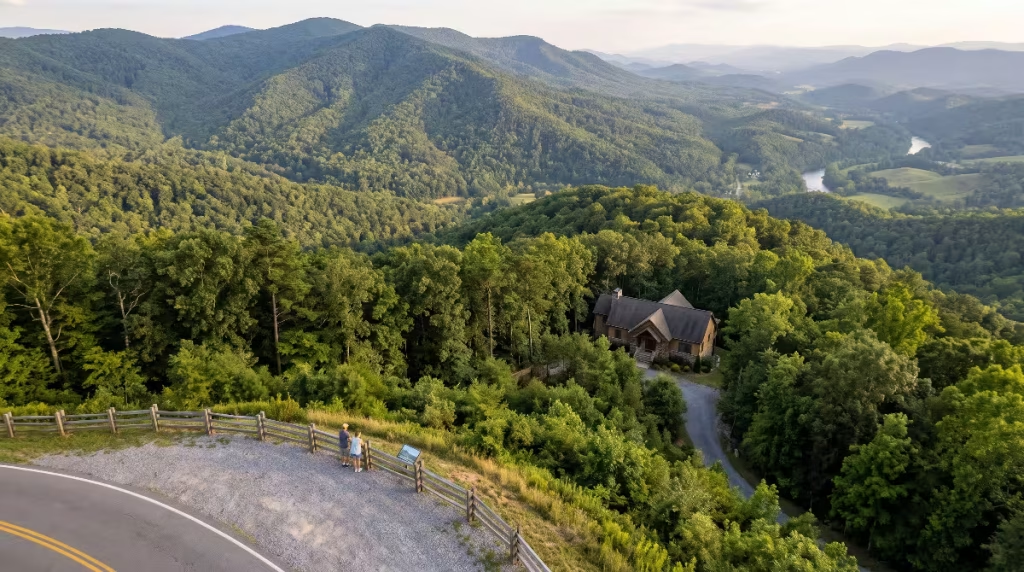
Our region is blessed with some of the most striking geography in North America. When you look across the horizon from Johnson City, Kingsport, or Bristol, your eyes rest on landmarks like Holston Mountain, Buffalo Mountain, Bays Mountain, and the crest of Roan Mountain. For generations, these mountains served as quiet backdrops to farm valleys and timber operations. Today, however, our area is experiencing steady growth. People from across the United States are discovering the quality of life, favorable tax climate, and outdoor recreation our region provides.
Growth brings economic vitality, but it also creates intense development pressure on open mountain slopes. A developer can purchase a scenic hillside, clear the mature hardwood forest, cut steep switchback roads, and build dense clusters of rooftops right on the crest. When this happens, two things take place. First, the community loses a piece of the natural landscape that gives our region its identity. Second, the visual quality of the surrounding land changes overnight.
If you own a large parcel of property, the visual character of your surroundings directly drives the long-term market value and enjoyment of your home. Protecting that scenery is an investment. By setting up a viewshed conservation easement, you ensure that the scenic backdrop remains intact. You protect the view from your front porch, and you protect the view that your neighbors and travelers enjoy from valley roads, public parks, and scenic riverways.
Raw land is not just dirt and trees. Raw land is a system of views, natural water drainage, soil layers, and visual sightlines. When you preserve a viewshed conservation easement over fragile mountain ground, you prevent excessive soil erosion, protect regional water runoff, and keep our Appalachian ridges looking clean and majestic for the next generation.
Defining a Viewshed Conservation Easement
To understand how this works, we must clarify what a viewshed conservation easement actually is. At its foundation, a conservation easement is a voluntary, legally binding agreement between a landowner and a qualified holding organization, such as a charitable land trust or a government agency.
When you own real estate, property law treats your ownership like a bundle of sticks. Each stick represents a distinct right. You have the right to walk on the ground, the right to farm it, the right to cut timber, the right to lease it, the right to sub-divide it, and the right to build houses, billboards, or commercial towers on it.
When you sign a viewshed conservation easement, you voluntarily remove a few specific sticks from your bundle and hand them to the land trust. Most often, the sticks you give away are the right to carve the land into dense sub-divisions, the right to construct tall commercial buildings, the right to erect large signs, and the right to clear-cut visible tree lines along high ridges.
Crucially, you keep the rest of the sticks. You still own the land in fee simple. You hold the deed. You pay the property taxes. You retain the right to live on the land, hunt, fish, farm, manage private timber, build an approved custom home within an agreed area, and pass the property along to your children or sell it to a new buyer. The land trust does not own your land. The land trust holds a legal deed restriction that gives them the authority to step in and stop any activity that violates the terms of the viewshed conservation easement.
Traditional conservation easements often focus strictly on saving fertile farm soil, protecting endangered wildlife habitats, or preserving wetlands. A viewshed conservation easement includes many of those environmental goals, but its primary, defining goal is visual. It protects the scenic character of the land as seen from public vantage points. It ensures that the mountain slope, meadow, or ridgeline remains visually natural, uninterrupted by inappropriate industrial or residential density.
Why Custom Home Builders and Large-Acreage Buyers Care
Often the happiest buyers are the ones who planned their building site with complete clarity about their surroundings twenty, thirty, or fifty years into the future.
When a homebuyer purchases a fifty-acre tract on a high shoulder in Sullivan or Washington County, they are making a major personal and financial investment. They plan to spend significant funds designing a custom residence, clearing a house seat, running underground utilities, and creating architectural details that celebrate the setting. Nothing destroys that vision faster than having an adjoining hillside clear-cut for a strip commercial lot or a high-density cluster development five years later.
By utilizing a viewshed conservation easement, acreage owners and estate buyers gain total control over the future of their environment. They can place a viewshed conservation easement over forty acres of their property while reserving a five-acre building envelope where their custom home, guest cottage, pool, and workshop will sit.
This approach offers multiple practical benefits:
- Guaranteed Privacy and Views: You never have to worry about a future owner of an adjoining parcel, or even a future owner of your own acreage, ruining the ridgeline. The viewshed conservation easement permanently locks in the open, natural character of the surrounding landscape.
- Substantial Tax Advantages: Placing a viewshed conservation easement on valuable acreage permanently lowers the commercial development potential of that land. Under federal and state rules, that loss in speculative commercial value can be claimed as a charitable donation, creating major federal income tax deductions and local property tax relief.
- Appreciation of the Estate Home: While the raw land restricted by a viewshed conservation easement cannot be subdivided into fifty small lots, the custom home and estate lot that remain often become far more desirable. Discerning buyers gladly pay a premium for a private mountain retreat surrounded by permanently protected woods and rolling pasture.
Planning a custom home alongside a viewshed conservation easement requires patience, engineering precision, and a cooperative attitude between your architect, builder, attorney, and the land trust. When done properly, the result is an enduring family property that looks pristine forever.
Tennessee Conservation Easement Act of 1981 (T.C.A. § 66-9-301 et seq.)
To establish a valid viewshed conservation easement in our state, everything must align with state law. In Tennessee, conservation restrictions are governed directly by the Tennessee Conservation Easement Act of 1981, found in Title 66, Chapter 9, Part 3 of the Tennessee Code Annotated (T.C.A.).
Prior to this statute, old common law rules made it difficult to enforce negative covenants that bound future property owners, especially when the party enforcing the restriction did not own neighboring land. The 1981 Act solved that problem. The statute explicitly recognizes that preserving scenic beauty, natural resources, open space, and historical characteristics of real property is an essential public policy of the State of Tennessee.
Under T.C.A. § 66-9-303, the law formally defines a conservation easement as a non-possessory interest in real property. This interest imposes limitations or affirmative obligations on the property to preserve its natural, scenic, open, or agricultural condition. The statute makes it clear that a viewshed conservation easement can be granted to either a governmental body or a private non-profit charitable corporation that has the legal power and purpose to hold such interests.
One of the most important elements of the Tennessee Act is that the easement automatically runs with the land. That means once you execute the deed for a viewshed conservation easement and record it with the local county Register of Deeds, the legal restrictions bind you, the next person who buys the property, their children, and all future owners forever.
Furthermore, the statute provides clear legal standing for enforcement. Under T.C.A. § 66-9-305, an action affecting a conservation easement can be brought to court by the owner of the property, the holder of the easement, a person who holds third-party rights of enforcement, or the state attorney general. This ensures that the terms of your viewshed conservation easement cannot simply be ignored by a developer fifty years from now. If someone brings a bulldozer onto the protected ground to carve out an unpermitted access road, the easement holder has clear statutory authority in a Tennessee chancery court to stop the violation immediately.
Tennessee Recreational Use and Liability Protections (T.C.A. § 11-10-105)
A major concern of landowners across the Tri-Cities involves public access and personal liability. When people first hear the phrase viewshed conservation easement, they often ask: “If I put an easement on my land to protect the view, does the public have the right to hike across my ridge?”
The simple, direct answer is no. A viewshed conservation easement does not grant the public any right to enter your property. The public receives a visual benefit, not a physical access pass. You retain full legal ownership, which means you keep the legal right to exclude trespassers. You can put up boundary markers, install gates, and post private property signs to keep uninvited visitors off your acreage.
However, some property owners choose to allow certain activities, or their land sits next to public trails such as the Appalachian Trail, public wildlife management areas, or community parks. In those situations, Tennessee law provides robust statutory protection under the Tennessee Recreational Use Statute, found in T.C.A. § 11-10-101 through § 11-10-105.
This law was created to encourage landowners to make land and water areas available to the public for recreational purposes by limiting their liability toward people who enter. Under T.C.A. § 11-10-105, if a landowner allows persons on their property for recreational activities like hunting, fishing, hiking, camping, or sightseeing without charging a fee, the landowner does not owe that person a duty of care to keep the premises safe. The landowner is not legally liable for ordinary accidents or injuries that occur on the property, unless the owner acts with gross negligence or willful and malicious intent to cause harm.
When you draft your viewshed conservation easement, your attorney will make sure the document explicitly separates physical access from visual protection. You can have complete peace of mind knowing that protecting your scenic view does not expose your family to premises liability or turn your private mountain acreage into a public park.
The Scenic Enjoyment Conservation Purpose Test
If you plan to donate a viewshed conservation easement and claim a federal charitable income tax deduction, your easement must meet strict federal standards. The governing authority is found in Section 170(h) of the Internal Revenue Code (IRC) and the accompanying Treasury Regulations under 26 C.F.R. § 1.170A-14.
Under the federal tax code, a donation of a partial interest in real estate is generally not deductible. However, Congress created a specific exception for what it defines as a “qualified conservation contribution.” To qualify, the contribution must satisfy three core requirements:
- It must be a qualified real property interest.
- It must be granted to a qualified organization (such as an accredited land trust).
- It must be donated exclusively for conservation purposes.
The federal regulations outline four acceptable conservation purposes: preserving land for public outdoor recreation or education; protecting significant natural plant or wildlife habitats; preserving historic structures or battlefields; and preserving open space, including farmland, forest land, and scenic vistas.
When pursuing a viewshed conservation easement, you are relying primarily on the open space and scenic enjoyment test set forth in Treasury Regulation § 1.170A-14(d)(4). The IRS states that the preservation of open space qualifies as a valid charitable purpose if the preservation is for the “scenic enjoyment of the general public” or pursuant to a clearly delineated federal, state, or local governmental conservation policy.
What does scenic enjoyment mean under federal law? The regulations state that visual access to the land is a key factor. The property does not need to be physically open to foot traffic, but the general public must be able to see and enjoy the natural scenic features from a public road, a public park, an adjacent highway, a public overlook, or a navigable river.
In our region, meeting this test is often straightforward because of our dramatic topography. If your timbered mountain slope is clearly visible from Highway 11E, Interstate 26, the Blue Ridge Parkway, or the Appalachian Trail, the visual access threshold is satisfied. The visual impact of preserving that open space must contribute significantly to the scenic beauty of the local landscape and prevent visual blight. Your land trust will document these sightlines thoroughly to satisfy the IRS requirements.
The Perpetuity Mandate
The word “perpetuity” carries immense weight in property law. Under IRC § 170(h)(2)(C) and Treasury Regulation § 1.170A-14(g), the conservation purpose of your viewshed conservation easement must be protected in perpetuity. That means forever. There are no temporary or thirty-year conservation easements that qualify for federal tax deductions.
This perpetuity requirement creates several legal rules that must be addressed when drafting your deed:
- Strict Extinguishment Provisions: The deed must state that the viewshed conservation easement can only be terminated or extinguished through a formal judicial proceeding in a court of law. Extinguishment is only permitted if unexpected changes in the conditions surrounding the property make it impossible or impractical to continue using the land for its original conservation purpose. Furthermore, if the property is ever condemned by the government through eminent domain, the easement holder must receive a proportional share of the condemnation proceeds, based on the original fair market value of the easement.
- Prohibition on Inconsistent Uses: The deed cannot permit any use of the land that would destroy significant conservation values. For example, you cannot place a viewshed conservation easement over a hillside and reserve the right to operate an open rock quarry, strip mine for minerals, or set up a commercial gravel extraction plant.
- Subordination of Mortgages: This is a vital procedural step that catches many property owners off guard. If you have a mortgage, deed of trust, or home equity line on your property, the lender holds a superior financial claim against the land. Under Treasury Regulation § 1.170A-14(g)(2), the lender must formally agree to subordinate its rights in the property to the right of the land trust to enforce the conservation purposes in perpetuity.
If your bank refuses to sign a subordination agreement, and you record the viewshed conservation easement anyway, the IRS will completely disallow your federal tax deduction. Why? Because if you defaulted on your mortgage, the bank could foreclose on the property, wipe out the junior easement, and leave the land completely unprotected. In my work with property owners, we always approach the lender early in the design process to ensure the bank’s legal counsel understands and approves the subordination terms.
The Qualified Appraisal Requirement
Placing a viewshed conservation easement on your acreage often represents a substantial charitable gift. Because the tax deduction directly offsets your taxable income, the IRS looks closely at how the easement is valued. You cannot simply estimate the value of your view. You must secure a formal qualified appraisal completed by a qualified appraiser under Treasury Regulation § 1.170A-17.
Because there is rarely an active open market where people buy and sell standalone conservation easements, appraisers determine value using the “Before and After” method. Here is how the math works:
- Before Valuation: The appraiser assesses the highest and best legal use of your property immediately before the viewshed conservation easement is granted. For instance, if you own one hundred acres of gently sloping ridge land in Washington County with good road frontage, the highest and best use might be subdividing the tract into fifty two-acre residential building lots. The appraiser analyzes comparable development land sales in the area and determines your property is worth $2,000,000 on the open market.
- After Valuation: The appraiser then assesses the fair market value of the property immediately after the viewshed conservation easement is recorded. Under the easement restrictions, the land can no longer be split into fifty lots. It can only support one single-family custom home site with reserved agricultural and recreational uses. The appraiser finds sales of large, restricted single-estate acreage parcels and determines the post-easement value is $800,000.
- The Easement Value: The difference between the before value and the after value represents the fair market value of your charitable gift. In this example, $2,000,000 minus $800,000 equals a charitable contribution value of $1,200,000.
To survive an IRS review, your appraisal must be conducted no earlier than sixty days before the date of the gift and no later than the due date of your tax return. The appraiser must have recognized credentials and specific experience valuing conservation easements. As the donor, you must attach IRS Form 8283 (Noncash Charitable Contributions) to your tax return, signed by both the appraiser and an authorized representative of the land trust holding your viewshed conservation easement. Cutting corners on this appraisal is the fastest way to invite an audit.
Step 1: Partnering with a Qualified Land Trust or Public Entity
You cannot execute a viewshed conservation easement by yourself. You must partner with an eligible organization willing to accept the perpetual responsibility of holding and monitoring the easement.
In our region, landowners typically partner with accredited non-profit land trusts. Two primary organizations serve our area with distinction:
- The Land Trust for Tennessee: A statewide non-profit organization that has conserved hundreds of thousands of acres of open space, working farms, and historic landscapes across Tennessee.
- Southern Appalachian Highlands Conservancy (SAHC): Based in Johnson City and Asheville, SAHC focuses specifically on protecting the high peaks, cold-water streams, farmland, and scenic mountain views of the Southern Blue Ridge, including the Roan Highlands, Unaka Mountain, and the Nolichucky River watershed.
When you contact a land trust about a potential viewshed conservation easement, they will conduct a site visit to evaluate your property. They will assess whether your tract meets their organizational criteria and whether it satisfies the state and federal legal definitions of scenic open space.
You should understand that accepting an easement represents a perpetual legal and financial obligation for the land trust. The land trust is legally bound to inspect your property at least once a year to ensure that no violations have occurred. If a future owner builds an unpermitted commercial warehouse on the protected ground, the land trust must be prepared to hire attorneys and go to court to enforce the deed.
To fund this eternal obligation, land trusts almost always request a stewardship endowment contribution from the landowner. This is a one-time, tax-deductible contribution paid to the land trust when the easement closes. It goes into a dedicated legal defense and monitoring fund that supports the perpetual care of your viewshed conservation easement.
Step 2: Developing the Baseline Documentation Report (BDR)
Before you sign the final deed of easement, you must document the condition of the property. Under Treasury Regulation § 1.170A-14(g)(5), the donor must provide the land trust with documentation that accurately depicts the condition of the property at the time of the gift. This document is known as the Baseline Documentation Report, or BDR.
Think of the BDR as an objective snapshot in time. It creates an undeniable factual record of what is present on the land the day the viewshed conservation easement takes effect. If a legal dispute arises twenty years from now regarding whether a clearing was natural or an unauthorized cut, the BDR provides the definitive answer.
A comprehensive BDR typically includes:
- High-Resolution Aerial Photography: Showing forest canopy cover, open meadows, access roads, and existing structures.
- Topographical and Boundary Surveys: Mapping the ridgelines, creeks, steep slope areas, and property boundaries.
- GPS-Mapped Ground Photos: Detailed photographs taken from designated photo points throughout the property, recording current timber conditions, fence lines, rock outcroppings, and panoramic views.
- On-Site Natural Resource Inventory: An overview of forest types, soil characteristics, native vegetation, wildlife habitats, and any known historical features.
- Visual Sightline Maps: Demonstrating exactly where the property can be seen from public highways, state parks, or scenic rivers, establishing the core justification for the viewshed conservation easement.
Both the landowner and the land trust director must sign a formal statement confirming that the Baseline Documentation Report is an accurate representation of the property at the date the viewshed conservation easement is executed.
Step 3: Drafting the Deed of Conservation Easement
Drafting the deed is where your builder experience, architectural desires, and legal protections meet. The Deed of Conservation Easement is the formal legal contract that will govern the land forever. It requires close collaboration between your real estate attorney, the land trust’s legal counsel, and your custom home team.
The deed is divided into restrictions and reserved rights. The restrictions define what cannot be done on the land to protect the viewshed conservation easement. Typical restrictions include:
- Limiting or prohibiting any future commercial or industrial operations.
- Restricting the land from being divided into multiple smaller building parcels.
- Setting strict limitations on outdoor commercial signage, telecommunication towers, and tall wind turbines that would ruin the natural horizon.
- Setting guidelines on exterior building materials, maximum roofline heights, and exterior paint colors to ensure that any permitted structure blends into the natural mountain foliage rather than reflecting glaring light across the valley.
Just as important are your reserved rights. As a landowner, you must make sure the deed clearly states what you are allowed to do. If you plan to build a custom home, you must negotiate those rights directly into the document. You should clearly define your right to build an approved residence, construct personal agricultural barns, maintain private walking or riding trails, harvest firewood for personal use, clear fallen trees after a windstorm, and install modern underground utilities.
Every sentence in this document must be drafted with precise language. Ambiguity is the enemy of perpetuity. If a restriction is vague, it invites conflict later. A well-drafted viewshed conservation easement protects the scenery while giving your family full freedom to enjoy your private mountain retreat.
Step 4: Formal Recording
Once the deed of easement is drafted, the baseline report is signed, the mortgage subordination is obtained, and the board of the land trust formally votes to accept the gift, the transaction moves to closing.
The execution of a viewshed conservation easement follows the same strict formalities as any high-stakes real estate transfer. The deed must be signed by all title holders of the property, signed by authorized officers of the land trust, and properly notarized.
Immediately following the closing, the original executed deed is delivered to the county courthouse and recorded in the official property records of the Register of Deeds in the county where the land is located, such as the Washington County Courthouse in Jonesborough or the Sullivan County Courthouse in Blountville.
Once the deed is stamped, indexed, and recorded in the permanent deed books, your viewshed conservation easement is legally locked into place. It officially clouds the title in a positive way, providing public notice to any future title searcher, surveyor, or potential buyer that the land is perpetually protected under the laws of the State of Tennessee.
Local Property Tax Revaluation (T.C.A. § 66-9-308)
While the federal income tax deduction often gets the most attention, the local property tax implications of a viewshed conservation easement are equally important for long-term estate management.
In Tennessee, real property is assessed for county and city taxes based on its fair market value. When a property owner voluntarily strips away commercial development and subdivision rights by granting a viewshed conservation easement, the taxable market value of that encumbered land drops.
The Tennessee General Assembly recognized this economic reality. Under T.C.A. § 66-9-308, county tax assessors are explicitly directed to take conservation easements into account when determining the taxable value of real property. The statute states that the presence of a conservation easement must be reflected in the assessment of the property, recognizing the limitation placed upon the development potential of the land.
Furthermore, many large acreage properties in Northeast Tennessee are enrolled in the state’s Agricultural, Forest, and Open Space Land Act of 1976, commonly known as the Greenbelt Act (T.C.A. § 67-5-1001 et seq.). Greenbelt enrollment allows land devoted to agricultural or forestry production to be assessed at its current use value rather than its speculative market value.
A properly designed viewshed conservation easement works hand in hand with Greenbelt status. In fact, placing a permanent viewshed conservation easement on your property provides the county property assessor with clear proof that the land is permanently dedicated to open space, forestry, or agriculture. This helps insulate the property from sudden assessment spikes driven by nearby suburban development, keeping your ongoing carrying costs manageable for decades.
Building a Custom Home on Encumbered Land
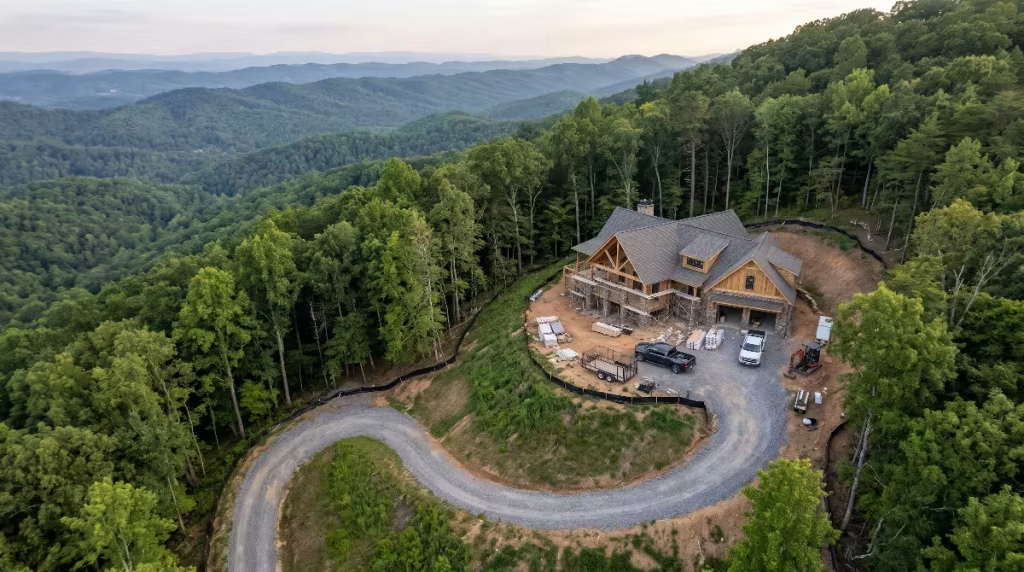
Now, let us examine the practical construction side. This is where the dirt meets the blueprint. Can you build an exceptional, high-end custom home on property that is protected by a viewshed conservation easement?
Absolutely. But you must design the project correctly from day one. You achieve this through the careful creation of a designated building envelope.
When we survey a large tract for a viewshed conservation easement, we divide the property into two distinct zones:
- The Conservation Area: This is the protected acreage, covering the steep slopes, visible ridgelines, creeks, and outer meadows. Within this zone, ground disturbance is strictly limited, commercial logging is restricted, and residential construction is prohibited.
- The Building Envelope: This is a defined, surveyed area, often ranging from two to ten acres, where your residential improvements are concentrated. Within this envelope, you retain the right to construct your primary residence, a detached garage, a guest house, a swimming pool, an outdoor living pavilion, garden sheds, septic systems, and private water wells.
+-----------------------------------------------------------------+
|                                                                 |
|                  THE CONSERVATION AREA                          |
|             (Protected by Viewshed Easement)                    |
|                                                                 |
|      - High mountain ridgeline protected forever               |
|      - Mature hardwood forest canopy undisturbed                |
|      - Natural creeks and water drainage corridors             |
|      - Strictly no commercial subdivision or dense building     |
|                                                                 |
|             +----------------------------------+                |
|             |     RESERVED BUILDING ENVELOPE   |                |
|             |         (2 to 5 Acres)           |                |
|             |                                  |                |
|             |  - Custom Primary Residence      |                |
|             |  - Guest Cottage & Garage        |                |
|             |  - Native Stone & Timber Work    |                |
|             |  - Septic Field & Water Well     |                |
|             |  - Driveway Access Cut           |                |
|             +----------------------------------+                |
|                                                                 |
|      - Valley slopes visible from scenic highway                |
|      - Agricultural meadows and wildlife corridors              |
|                                                                 |
+-----------------------------------------------------------------+
When building inside an envelope on land protected by a viewshed conservation easement, your builder must pay special attention to several engineering and architectural details:
- Topography and Slope Management: Building on an East Tennessee ridge requires competent grading plans. We must cut driveways along natural contours to avoid excessive cut-and-fill banks that create visual scars on the hillside. Proper erosion control, such as silt fencing and sediment traps, prevents washouts during heavy seasonal rainstorms.
- Architectural Integration: To honor the purpose of a viewshed conservation easement, the home should sit naturally in the landscape. We utilize low-profile rooflines, wide overhangs, non-reflective glass, and earth-tone exterior palettes, such as natural stone, heavy timbers, cedar siding, and muted slate or bronze metal roofs. The objective is to make the home look as though it grew out of the mountain rather than being dropped onto it.
- Utility Routing: Overhead power lines and tall poles can quickly ruin a pristine mountain view. Within a viewshed conservation easement property, utilities should be routed underground from the main road up to the building envelope. This preserves clean sightlines and protects power reliability from falling branches during winter ice storms.
Common Questions Answered about Viewshed Conservation Easements
When property owners research this topic online, several common questions arise. Here are direct, clear answers to the most frequent inquiries regarding viewshed conservation easements.
Can a landowner build any structures on a conservation easement in Tennessee?
Yes, provided those structures are specifically permitted and located within the reserved building envelope defined in the deed of easement.
If you place your entire property under a viewshed conservation easement without reserving building rights, you cannot build a home or barn later. That is why working with an experienced team is critical. When we establish an easement, we identify and survey the exact footprint where you, or a future buyer, may build. You can build your primary home, barns, and storage outbuildings inside that envelope. Outside the envelope, in the protected conservation zone, structural construction is restricted to small, low-impact amenities like hunting blinds, rustic foot bridges, or pump houses.
Does a scenic viewshed conservation easement require me to let people on my land?
No. A viewshed conservation easement protects visual access, not physical access. The public benefits by looking at the natural beauty of your mountain ridge from public roads, parks, or rivers.
You do not have to allow anyone onto your property. You maintain full private ownership rights. You can lock your gates, install security systems, post no trespassing signs, and legally remove anyone who enters your property without your permission.
Can a conservation easement ever be revoked or terminated in Tennessee?
It is extremely difficult to revoke or terminate a viewshed conservation easement. In the eyes of the law, a conservation easement is granted in perpetuity.
Under the Tennessee Conservation Easement Act and federal tax law, an easement can only be terminated through a formal court order in a chancery court. To terminate the easement, you must prove that surrounding conditions have changed so drastically that it has become completely impossible or impractical to achieve the original conservation purpose.
For instance, if the state constructed an interstate directly through the parcel, an easement might be modified or extinguished through eminent domain. Outside of those extreme, rare situations, you cannot change your mind ten years later, cancel the deed, and build a subdivision. Once recorded, the viewshed conservation easement is permanent.
How does a viewshed easement affect resale value?
The impact on resale value depends entirely on who is buying the property.
If you evaluate the land strictly from the viewpoint of a speculative residential developer who wants to divide a farm into one hundred quarter-acre tract home lots, the viewshed conservation easement lowers the raw commercial land value. That reduction in speculative value is the exact financial loss that creates your federal income tax deduction.
However, when selling to high-end estate buyers, luxury custom home clients, or outdoor enthusiasts, a viewshed conservation easement can make the property highly attractive. Discerning buyers want guaranteed privacy. They are eager to pay top dollar for a completed custom home surrounded by protected, undisturbed woods, knowing that a commercial strip mall or crowded housing project will never be built across their fence line.
A Detailed Look at Federal Tax Benefits
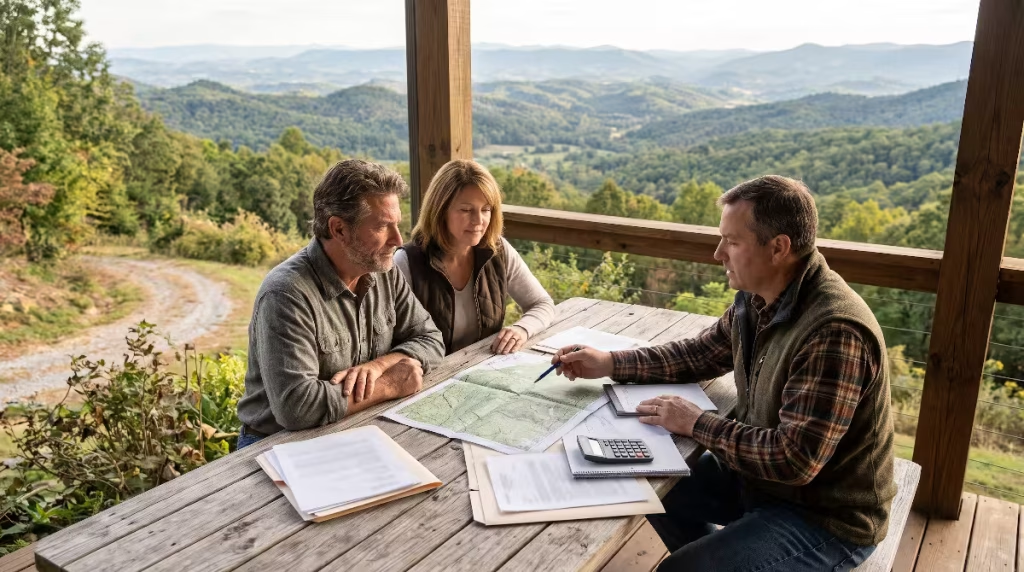
To understand the full financial scope of donating a viewshed conservation easement, we should examine the tax deduction mechanics governed by Internal Revenue Code Section 170(b).
When you donate a viewshed conservation easement on real estate that you have owned for more than one year, the IRS treats the gift as a non-cash charitable contribution of capital gain property. Under current federal tax law:
- 50 Percent AGI Limitation: You can deduct the appraised value of your viewshed conservation easement up to fifty percent of your Adjusted Gross Income (AGI) each year.
- 15-Year Carryforward: If the value of your easement donation exceeds fifty percent of your income in the year of the gift, you do not lose the remaining deduction. You can carry the unused balance forward for up to fifteen additional tax years, deducting up to fifty percent of your AGI each year until the full amount is used.
- 100 Percent AGI for Qualified Farmers: If you qualify as a bona fide farmer or rancher, meaning you earn more than fifty percent of your gross income from agricultural production, you can deduct the value of the easement up to one hundred percent of your AGI, with the same fifteen-year carryforward period.
Let us look at a practical, hypothetical example. Suppose a business owner in Johnson City earns an AGI of $400,000 per year. She owns a two-hundred-acre mountain tract along the face of a scenic ridge. She decides to preserve the mountain face by donating a viewshed conservation easement, while keeping a five-acre building envelope for a future custom home.
A qualified appraiser completes a comprehensive before-and-after valuation. The appraiser finds the property was worth $3,000,000 before the easement due to high-density subdivision potential, and $1,500,000 after the easement is recorded. The resulting charitable contribution value of the viewshed conservation easement is $1,500,000.
Here is how the landowner applies the deduction over time:
- Year 1: Her AGI is $400,000. The fifty percent limitation allows her to deduct $200,000 against her income in the first year. That leaves an unused easement deduction of $1,300,000.
- Years 2 through 7: Assuming her income remains steady at $400,000 per year, she continues to deduct $200,000 each year against her federal taxable income.
- Year 8: She deducts the remaining $100,000 balance, completely utilizing the $1,500,000 charitable deduction within eight years.
Depending on her overall tax bracket, this deduction can save hundreds of thousands of dollars in federal income taxes. These tax savings can be reinvested into constructing her custom residence, financing land stewardship projects, or funding family estate goals.
Comparison: Traditional Conservation vs. Viewshed Conservation
To help you decide which conservation approach matches your acreage, consider the structural differences between traditional and viewshed-focused agreements:
| Consideration | Traditional Conservation Easement | Viewshed Conservation Easement |
| Primary Goal | Protecting prime farm soils, rare habitats, wetlands, or waterways | Preserving scenic sightlines, ridgelines, and visual landscapes from public vantage points |
| Public Visibility | Land can be remote and entirely hidden from public roads | Land must be visually observable from public roads, parks, rivers, or overlooks |
| Forestry & Timber | Highly regulated to protect canopy, understory ecology, and endangered species | Focused on preventing ridgeline scarring, clear-cutting, and visual tree line destruction |
| Permitted Structures | Agricultural barns, equipment sheds, and working livestock facilities | Carefully placed custom home envelopes hidden by topography and native trees |
| Architectural Rules | Focuses on ground permeability and operational runoff controls | Focuses on structure height, non-reflective glass, and natural earth-tone colors |
| Typical Acreage | Large working farms, commercial timber tracts, and river bottoms | Prominent hillsides, ridgelines, and mountain faces framing regional valleys |
As the comparison shows, a viewshed conservation easement is specifically designed for properties whose scenic character provides widespread community and aesthetic value.
Common Pitfalls and How to Avoid Them
Over the years, I have seen property owners run into costly hurdles because they rushed the easement process or hired the wrong advisors. Creating a viewshed conservation easement is a serious undertaking. Here are the most common pitfalls you must avoid:
1. Failing to Involve an Experienced Real Estate Attorney
Do not hire an attorney who handles only simple residential house closings or basic traffic tickets. You need a real estate attorney who understands conservation law, land trust agreements, and Title 66 of the Tennessee Code. Your attorney must ensure that the language in the deed defends your family’s future property rights while meeting state and federal standards.
2. Hiring an Inexperienced Appraiser
The IRS watches conservation easement appraisals closely. If you use an appraiser who has never completed a conservation easement before-and-after appraisal, you are inviting regulatory trouble. The appraiser must understand how to gather defensible comparable market data for both unrestricted development ground and conservation-restricted parcels. Make sure your appraiser can demonstrate a track record of appraisals that have passed IRS review.
3. Overlooking Mortgage Subordination Early On
If you have a mortgage, do not wait until two weeks before year-end closing to ask your bank for a subordination agreement. National banks often route these requests through regional legal departments that move slowly. If December 31 passes and your lender has not signed the subordination document, you cannot claim the federal tax deduction for that calendar year. Begin talking with your lender the moment you begin drafting the viewshed conservation easement.
4. Making the Building Envelope Too Small
When designing the residential building envelope, landowners often pick a small one-acre circle to maximize the protected land area. While well-intentioned, an envelope that is too tight can cause major headaches during construction. A luxury custom home requires space for heavy equipment staging, material storage, excavation cut-and-fill slopes, a designated septic drain field, an alternate repair drain field, underground propane tanks, and utility trenches. Make sure your building envelope is large enough, typically three to five acres, to accommodate construction activity without encroaching on the protected conservation area.
5. Ignoring Forest Health in the Deed
Mountain forests in East Tennessee face natural challenges, including pine beetle outbreaks, emerald ash borers, severe ice storms, and wildfires. When drafting your viewshed conservation easement, make sure you reserve the clear right to perform active forest health management. You must be allowed to cut firebreaks, remove dead or diseased timber, thin hazardous fuel loads, and maintain emergency access lanes without needing prior administrative approval from the land trust for every single fallen limb.
Strategic Takeaways & Professional Advisory Notice
Preserving the mountain ridges and scenic horizons of Northeast Tennessee is one of the most rewarding legacies a landowner can create. When you protect land with a viewshed conservation easement, you accomplish something rare: you protect the visual heritage of our Appalachian home, preserve your family’s privacy, and capture significant financial and tax benefits.
However, success requires engineering precision, legal competence, and careful architectural planning. You should never attempt to execute a viewshed conservation easement based on casual assumptions.
To achieve the best outcome, assemble an advisory team early in your process:
- A Qualified Land Trust: Partner with an established organization like The Land Trust for Tennessee or the Southern Appalachian Highlands Conservancy to ensure your land qualifies and your vision is supported.
- A Real Estate Attorney Experienced in Conservation Law: To draft a deed that protects your reserved building rights, complies with T.C.A. § 66-9-301, and meets federal perpetuity rules.
- A Qualified Conservation Appraiser: To perform a rigorous before-and-after appraisal that defends your charitable deduction under IRC § 170(h).
- An Experienced Custom Home Builder and Engineer: To walk the ground with you, survey ideal home sites, map out realistic building envelopes, and design an estate residence that honors the natural beauty of the mountain setting.
When these professionals work in unison, you can step out onto your porch in Johnson City, Kingsport, or anywhere across the Tri-Cities, look out over our ancient mountain ridges, and know that the view before you will remain untouched for centuries to come.