
Relative Harm Reduction vs. Deep Regenerative Ecology
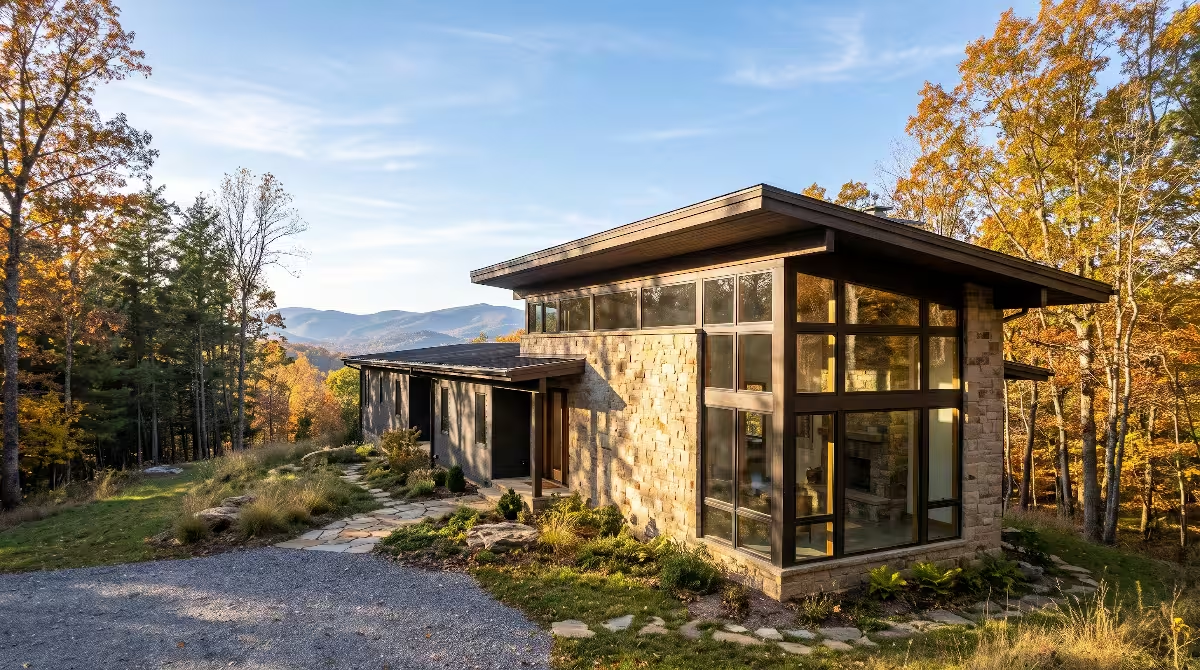
Building a home in the ancient Appalachian Mountains requires a thoughtful look at how buildings interact with the natural world. For generations, traditional home construction in this region focused simply on putting up shelter against the weather. Today, modern building science gives us tools to build homes that protect both our families and the mountain ecosystems around us. When planning a sustainable mountain home, two major green building standards lead the conversation: LEED residential and the Living Building Challenge. Both programs share a deep respect for environmental quality, but they look at the very purpose of a house through two completely different lenses.
Understanding the difference begins with the concept of relative harm reduction compared to deep regenerative ecology. The LEED residential rating system, created by the U.S. Green Building Council, is built on the idea of harm reduction. In simple terms, harm reduction asks a practical question: How can we design a house that uses less energy, wastes less water, and produces less pollution than a standard code-built house? A LEED residential project achieves this goal through a flexible, points-based credit framework. Builders choose from a menu of proven green strategies to earn points toward certification. Because of this flexible design, a LEED residential home is widely recognized, practical to build, and adaptable to many different budgets and sites.
The
Under this standard, a house is not treated as an efficient industrial machine. Instead, the building is designed to function metaphorically and metabolically like an indigenous mountain flower, such as the native mountain laurel or trillium. A flower collects all the water it needs from the sky, gathers all its energy from the sun, produces no toxic waste, and gives nutrients back to the soil when its life cycle ends. A Living Building must do the exact same thing by producing more clean energy than it uses and treating all water on site.
This difference in philosophy leads to very different rules for verification. In a LEED residential project, certification is awarded largely based on theoretical design and computer energy modeling before or right at the time the family moves in. Independent inspectors verify that insulation was installed correctly, air barriers are tight, and efficient equipment is in place. If the math and construction check out, the LEED residential certificate is granted.
In contrast, the Living Building Challenge requires a mandatory twelve-month post-occupancy audit. You cannot receive full certification on moving day. You must live in the home for a full year while continuous utility meters prove that the building actually produced more energy than it consumed and stayed completely water-independent across all four mountain seasons.
Homeowners often ask two key questions when comparing these paths:
What is the difference between LEED and LBC?
The core difference is that LEED residential focuses on reducing environmental damage through a flexible point system verified during construction, while the Living Building Challenge requires a building to give back more than it takes, verified by twelve months of real-world meter data. While a LEED residential home aims to be substantially better than standard construction, a Living Building aims to create a net-positive impact on nature.
Is Living Building Challenge harder than LEED?
Yes, the Living Building Challenge is widely considered much harder to achieve than any level of LEED residential certification. Every single rule in the Living Building Challenge is mandatory, with zero optional points or trade-offs. Finding materials that are completely free of toxic chemicals and creating a home that operates without any fossil fuels or city water connections in rural mountain terrain makes it the most demanding green building standard in the world.
Microclimate & Topography: The Southern Appalachian Context (Zone 4A)
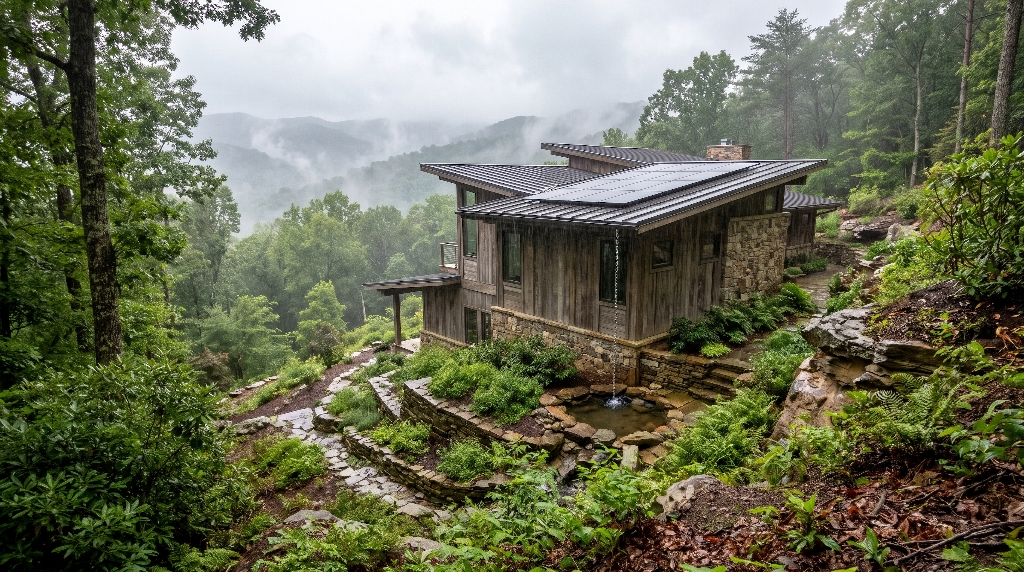
Designing any high-performance home requires paying close attention to local geography. In Eastern Tennessee, Western North Carolina, and Southwest Virginia, the climate brings unique natural challenges. The Southern Appalachian region sits in Climate Zone 4A, which building scientists describe as a mixed-humid climate. This means local homes must handle two extreme seasons: hot, muggy summers with heavy moisture in the air, and freezing winter nights where mountain winds drive temperatures below freezing.
Rainfall in this region is intense. Because the high peaks push incoming air upward, orographic rain dumps between 45 and over 60 inches of precipitation every year across the hills. At the same time, rapid freeze and thaw cycles test every roof seam, window joint, and foundation wall. In a standard house, that constant moisture easily leads to rot, mold, and ruined insulation. When planning a LEED residential home, your building envelope must be engineered to resist this moisture drive. A LEED residential design uses balanced air barriers and continuous exterior insulation to make sure damp summer air stays outside while winter warmth stays inside.
       Appalachian Mountain Microclimate (Zone 4A)

       Summer: High Humidity & Heat  ───┐
                                        ├──► Extreme Moisture Drive
       Winter: Freezing Winds & Frost ──┘
                          │
                          ▼
            Vulnerable Building Envelope
                          │
  ┌───────────────────────┴───────────────────────┐
  ▼                                               ▼
LEED Residential Approach               Living Building Challenge Approach
• Continuous air barrier               • Zero-carbon, Red List-free materials
• Vapor-permeable exterior insulation   • Native microclimate solar tuning
• Advanced ERV balanced ventilation    • 100% natural water-cycle integration
Topography adds another layer of complexity. The Appalachian landscape is famous for its steep ridges, deep hollows, and fragile karst geology. Karst terrain is made of soft limestone that dissolves over thousands of years, creating hidden sinkholes, underground caves, and direct pathways to underground aquifers. If a builder disturbs the soil carelessly, sediment and polluted runoff can rush straight into local drinking water supplies.
Both green standards take site protection seriously, but they address it differently:
- A LEED residential project awards points for limiting site disturbance, protecting native trees, controlling erosion during grading, and reducing the footprint of driveways and lawns.
- The Living Building Challenge goes further by prohibiting construction on greenfield sites, prime farmland, or sensitive wetland buffers, requiring that the home actively restore the ecology of previously damaged land.
Biophilic site orientation is essential for mountain building. In our mountain valleys, the winter sun hangs low in the southern sky, while summer sun beats down directly overhead. A well-designed LEED residential project uses passive solar orientation.
By facing the longest side of the house within fifteen degrees of true south, you can welcome free winter sunshine through carefully shaded glass windows. In the summer, deep roof overhangs and native deciduous trees, such as white oaks and tulip poplars, block the scorching heat. In winter, those same trees drop their leaves, letting the warm sunlight flood into the living spaces. Designing a LEED residential structure with nature in mind reduces the workload on mechanical heating and cooling systems before the equipment is even turned on.
Net Positive Energy: TVA Grid Realities vs. Off-Grid Mountain Resilience
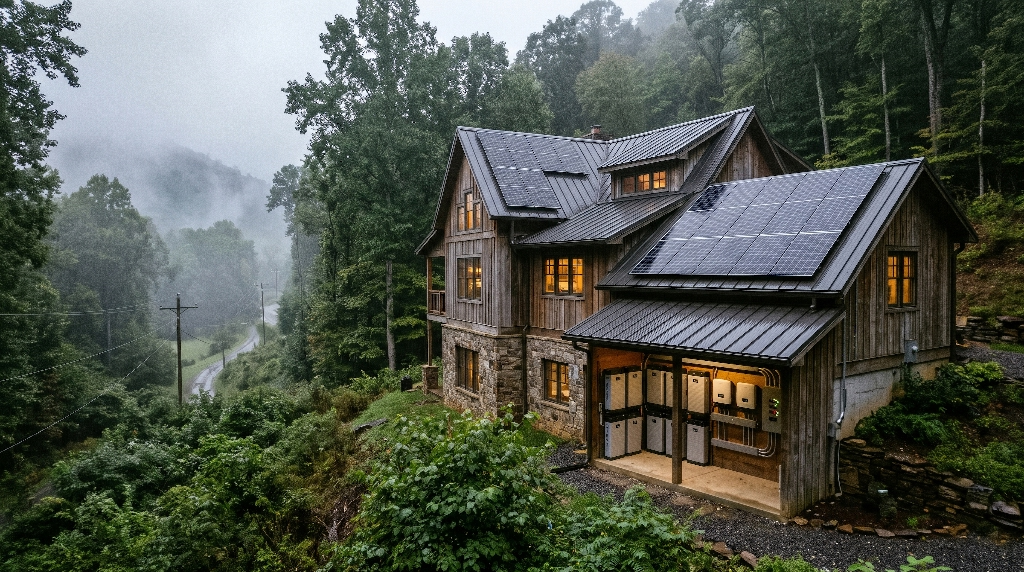
Energy generation and consumption represent one of the clearest divides between standard construction, LEED residential certification, and the Living Building Challenge. In the Southern Appalachians, electrical power is managed primarily by the Tennessee Valley Authority (TVA) along with local rural electric cooperatives. While TVA power has become cleaner over time, much of the grid still relies on regional nuclear, natural gas, and legacy power plants. For homeowners seeking energy freedom, the regional power grid presents unique rules.
In a LEED residential project, the focus is placed on energy conservation through high-performance equipment and tight construction. Builders use the Home Energy Rating System, known as the HERS Index, to measure how efficient the house will be compared to a standard home. A standard new house scores 100 on the HERS scale, while a lower score means higher efficiency. A certified LEED residential home often achieves a HERS score in the 50s, 40s, or even lower by using:
- Cold-climate variable-speed heat pumps that provide steady warmth even when mountain temperatures drop below zero degrees.
- Heat pump water heaters that extract heat from indoor air to warm domestic water at one-third the electricity of standard tanks.
- Triple-pane windows with low-emissivity coatings to stop radiant heat loss.
- High-density spray foam or dense-pack cellulose insulation to eliminate air leaks.
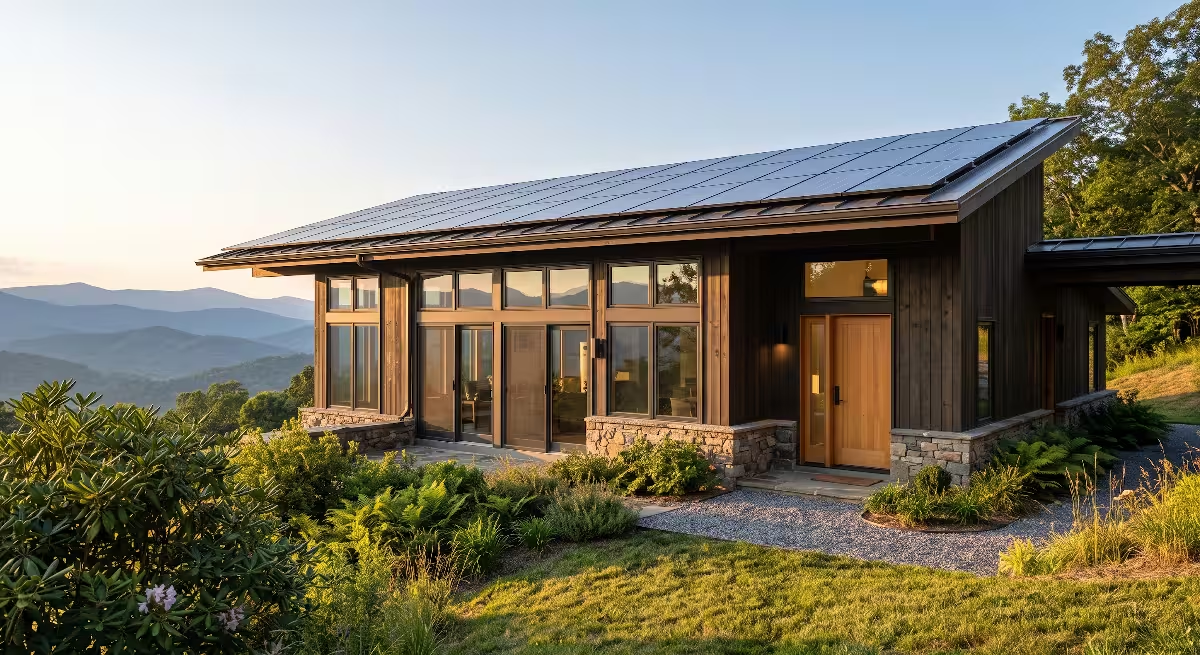
While a LEED residential home encourages rooftop solar panels by awarding substantial points for renewable energy, on-site solar is not an absolute requirement. A home can achieve LEED residential status by having an ultra-efficient shell and buying clean power credits.
+------------------------------------+------------------------------------+
| LEED Residential Energy Framework  | Living Building Challenge Framework|
+------------------------------------+------------------------------------+
| Flexible HERS Index target scores  | Mandatory 105% net positive energy |
| High efficiency heat pump reliance | Complete ban on fossil combustion  |
| Grid-tied with optional solar      | Required on-site solar and battery |
| Off-site green power credits valid | 12 months continuous meter proof   |
+------------------------------------+------------------------------------+
The Living Building Challenge sets an uncompromising bar through its Energy Petal. A Living Building must generate at least 105% of its total annual energy needs right on its own site using clean renewables. Off-site power credits are not allowed. Furthermore, the Living Building Challenge strictly bans any combustion of fossil fuels on the property. That means no propane backup generators, no natural gas cooking ranges, and no traditional wood-burning stoves. Everything must run on clean electricity generated by on-site solar panels or small micro-hydro systems connected to mountain streams.
This strict rule brings forward the reality of mountain power outages. Appalachian winters regularly bring heavy ice storms that weigh down tree branches and snap power lines along mountain roads. Rural homes can easily lose power for days or even weeks. For both green standards, energy resilience is critical:
- A LEED residential home can incorporate a battery storage bank or an efficient generator to keep critical medical devices and refrigerators running during a storm.
- An LBC home must rely entirely on a properly sized solar and battery storage system, typically using safe Lithium Iron Phosphate batteries.
Because net metering policies across many rural electric cooperatives offer low credit rates for selling solar power back to the grid, designing a solar system for a LEED residential or LBC home requires smart energy management. Modern homes use smart electrical subpanels that automatically direct available solar power to where it is needed most, storing excess electricity in batteries or in the thermal mass of water heaters rather than giving it away to the grid for pennies.
Hydrologic Systems: Closed-Loop Mountain Water vs. Municipal Baselines
Water is one of the greatest natural blessings in the Appalachian Mountains, but managing it requires careful engineering. With dozens of mountain streams, pristine headwaters, and abundant annual rain, the region seems to have endless water. However, protecting that water from contamination and keeping a steady supply during late-summer dry spells is a serious challenge.
In a LEED residential home, water efficiency focuses on reducing indoor and outdoor demand. The program relies on proven benchmarks like the EPA WaterSense standard. To earn points in a LEED residential build, plumbing teams install:
- Ultra-low-flow aerators on bathroom and kitchen sink faucets.
- Dual-flush toilets that use as little as 1.1 gallons per flush.
- High-efficiency showerheads that provide good water pressure while using less than 1.75 gallons per minute.
- Drip irrigation systems paired with moisture sensors to stop wasteful lawn watering.
These upgrades allow a LEED residential home to cut indoor water use by 30% to 50% compared to standard homes. Best of all, a LEED residential home can remain connected to a municipal city water line or a standard mountain well without needing complex experimental permits.
The Living Building Challenge treats water through the Water Petal, demanding a completely closed-loop hydrologic cycle known as Net Positive Water. Under this standard, 100% of the water used by the home must be captured from rainwater or natural closed-loop sources on site. No city water connection is permitted. Every drop of water that falls on the roof must be filtered and purified for drinking, washing, and cooking.
Even more demanding is the requirement for wastewater. A Living Building cannot simply flush sewage into a city sewer or a basic underground septic tank. All greywater from sinks and showers and blackwater from toilets must be treated right on the property using biological systems. These systems often include indoor or outdoor constructed wetlands, where native plants, beneficial bacteria, and sand filters clean the water naturally before returning it safely to the local soil.
       Closed-Loop Mountain Water Cycle (LBC vs LEED)

              Precipitation (Rain / Snow)
                          │
                          ▼
               Rooftop Rain Harvesting
                          │
        ┌─────────────────┴─────────────────┐
        ▼                                   ▼
LEED Residential Option              LBC Mandatory Closed-Loop
• Supplemental garden irrigation    • Multi-stage micro-filtration
• Basic non-potable storage         • UV sterilization for drinking
• City or deep-well primary source  • 100% household reliance
        │                                   │
        ▼                                   ▼
Conventional Drain Line             On-Site Biological Processing
• Municipal sewer or septic tank    • Constructed wetland reed beds
• Standard drainfield dispersal     • Purified release to aquifer
This brings up an important regulatory question that every mountain builder must face:
How do Appalachian building codes affect off-grid water and net-positive certification?
Local building departments and public health agencies across Eastern Tennessee and Western North Carolina follow plumbing codes that are often unfamiliar with net-positive water designs. The Tennessee Department of Environment and Conservation (TDEC) and county health boards enforce strict rules to protect public health. In many rural counties, local codes require any home within reach of a public water line to connect to it. Furthermore, using harvested rainwater for indoor drinking water or using composting toilets and outdoor wetland filters often requires custom engineering stamps, extensive soil testing, and special state-level variances.
While building a LEED residential home is straightforward because it uses standard plumbing fixtures that inspectors approve every day, an LBC home requires months of legal coordination and custom engineering to get off-grid water systems approved.
Material Health & Supply Chains: Navigating the Red List in Appalachia
The materials we use to frame, insulate, and finish our homes have a direct impact on our personal health and the wider environment. A typical home contains hundreds of chemicals that off-gas invisible fumes into the living room for years. When looking at building materials, both green frameworks demand better options, but their rules differ dramatically.
A LEED residential project evaluates materials through transparency and responsible sourcing. The program awards credits for using products that carry Environmental Product Declarations (EPDs) and Health Product Declarations (HPDs). These documents act like nutrition labels for building materials, showing what the product is made of and how much energy was used to produce it. A LEED residential builder earns points by choosing:
- Lumber certified by the Forest Stewardship Council (FSC), ensuring it was harvested from responsibly managed forests.
- Drywall and insulation made with high percentages of recycled content.
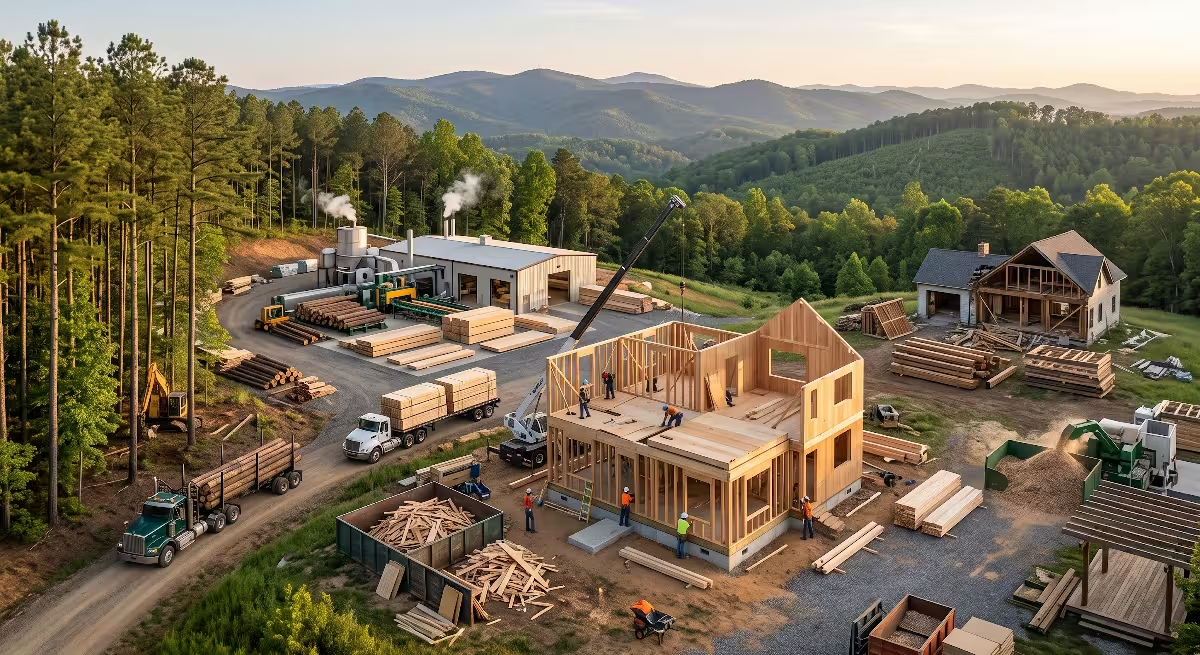
- Building materials extracted, processed, and manufactured within a 100-mile radius of the job site to reduce transportation emissions.
- Paints, caulks, and adhesives that carry low or zero volatile organic compound (VOC) ratings.
The Living Building Challenge approaches materials with an absolute ban on hazardous substances through its famous Materials Petal and the Red List. The Red List is a comprehensive registry of toxic chemicals that are strictly forbidden from entering a Living Building project. Some of the most common prohibited chemicals include:
- Polyvinyl Chloride (PVC), which is found in almost all standard plumbing drain pipes, electrical wire coatings, and vinyl siding.
- Per- and polyfluoroalkyl substances (PFAS), often called forever chemicals, used in stain-resistant carpets and waterproof coatings.
- Halogenated flame retardants, commonly added to foam insulation and furniture fabrics.
- Phthalates, used to make plastics flexible.
- Added formaldehyde, found in standard particleboard, cabinets, and subfloor plywood glues.
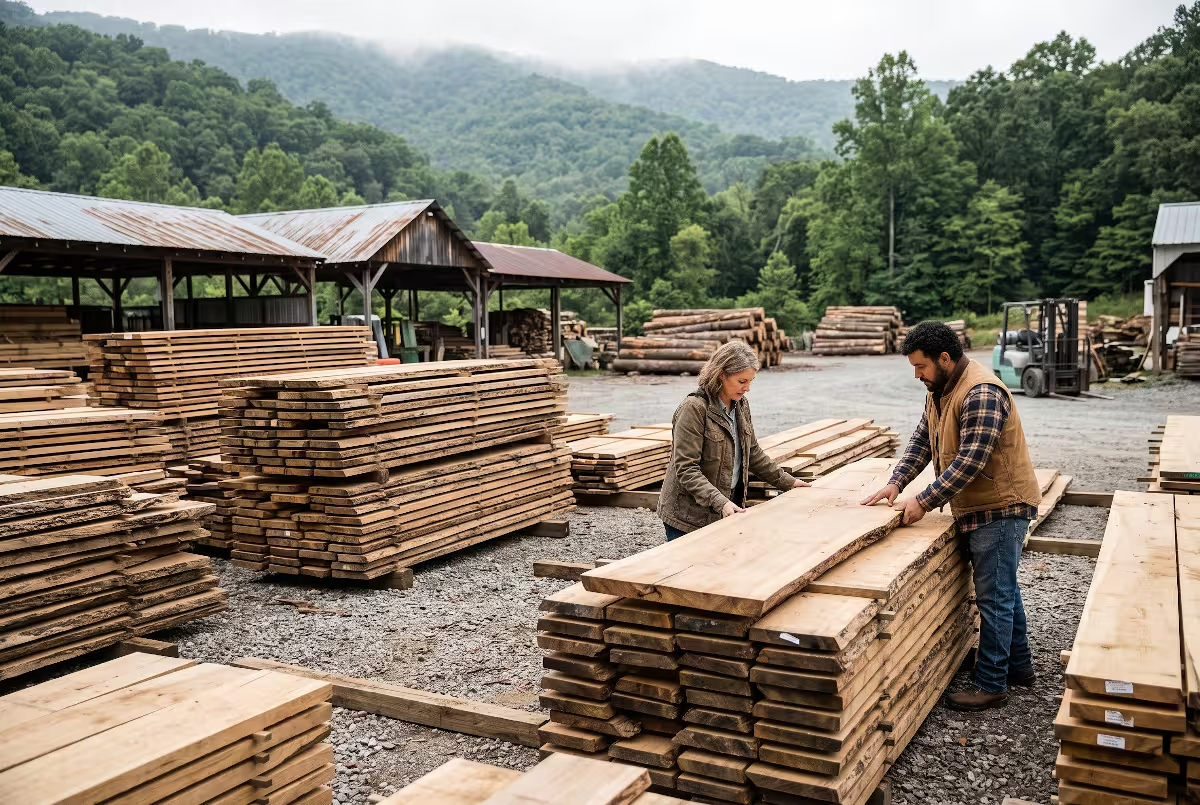
Navigating the Red List in the Southern Appalachian mountains is a monumental task. The majority of rural lumber yards, plumbing supply counters, and paint stores stock standard products filled with Red List chemicals. For example, instead of using cheap PVC drain pipes, a builder must source cast iron or high-density polyethylene (HDPE) pipes. Instead of using standard OSB subflooring that contains formaldehyde, a builder must track down specialized no-added-formaldehyde plywood. Every single nail, wire, sealant, and screw must be checked against the Declare database or investigated directly with the manufacturer.
Fortunately, the Appalachian region offers incredible natural resources that fit both green building standards beautifully. The Southern Appalachian mixed mesophytic forest contains some of the greatest
Indoor Environmental Quality & Health: Defending the Mountain Sanctuary
We spend up to 90% of our lives indoors, and the quality of the air we breathe inside our homes directly shapes our long-term health. In the mountain hollows of Appalachia, indoor air quality faces hidden enemies that many homeowners overlook. High humidity in the summer creates a breeding ground for dust mites and toxic mold inside damp crawlspaces and wall cavities. In the spring, the explosion of mountain wildflowers and tree pollen triggers severe allergies. In addition, the deep geology of the region holds a silent, invisible hazard: radon gas.
Radon is a naturally occurring radioactive gas released by the decay of uranium found in the granite and limestone formations of the Appalachian chain. Many counties across East Tennessee and Western North Carolina are classified by the EPA as Zone 1 areas, meaning they have the highest potential for elevated indoor radon levels. If a house is built without proper radon barriers, the gas seeps up through foundation cracks, basements, and slab joints, becoming trapped in the living spaces. Over time, breathing radon is the leading cause of lung cancer among non-smokers.
       Mountain Air Quality & Radon Mitigation Pathway

      Limestone / Granite Geology ──► Radioactive Radon Gas
      Humid Mountain Forest       ──► Mold Spores & High Pollen
                          │
                          ▼
           Living Space Air Quality Challenge
                          │
  ┌───────────────────────┴───────────────────────┐
  ▼                                               ▼
LEED Residential Protocol               LBC Health & Happiness Petal
• Sub-slab radon suction piping        • Monitored sub-slab air depressurization
• MERV 13 to 16 mechanical filtration  • Continuous 100% fresh air displacement
• Sealed vapor barriers in crawlspaces • Complete avoidance of all toxic VOCs
• Balanced ERV humidity management     • Deep biophilic daylighting & views
Both green building frameworks place human health at the center of their designs. A LEED residential home handles indoor air quality through a series of mandatory measures and optional credits:
- An active radon mitigation system with perforated pipes under the slab and an inline exhaust fan that safely pulls radon gas out of the ground and vents it above the roofline.
- A balanced Energy Recovery Ventilator (ERV) that continuously exhausts stale indoor air and brings in fresh outdoor air, exchanging heat and moisture along with it so the house stays fresh without losing energy.
- High-efficiency air filtration rated at MERV 13 or higher to trap pollen, fine dust particles, and wood smoke before air circulates to bedrooms.
- Strict compartmentalization and testing to ensure that garages and mechanical rooms never leak carbon monoxide or fumes into living areas.
The Living Building Challenge elevates healthy indoor living through its Health and Happiness Petal. In addition to eliminating all Red List chemicals so the air has zero toxic off-gassing, the standard requires that every occupied room have operable windows that provide direct access to natural fresh air and daylight.
Biophilic design is a fundamental requirement of the Living Building Challenge and plays a major role in advanced LEED residential designs. Biophilia is our innate biological connection to nature. In a mountain home, biophilic design means framing living spaces to celebrate changing sunlight throughout the day, providing sweeping visual connections to ridgelines, and using natural wood grain and stone textures that calm the human nervous system. Studies consistently show that living in a home with clean air, balanced humidity, and views of nature lowers blood pressure, improves sleep quality, and speeds recovery from illness. Whether you choose a LEED residential path or a Living Building, designing for indoor health turns your mountain home into a genuine sanctuary.
Cost Analysis, Verification Audits, and Soft Costs
Building any custom home in the mountains requires a significant financial investment, and pursuing green certification adds distinct upfront and long-term costs. When planning your budget, it is essential to understand the difference between hard costs (the physical lumber, windows, solar panels, and labor) and soft costs (the engineering fees, consulting fees, energy modeling, and official certification dues).
For a LEED residential project, the cost premium over a standard code-built custom home typically ranges between 3% and 8%. Much of that cost goes into higher-quality insulation, better windows, more efficient heat pumps, and a blower door test to prove the building envelope is airtight. The soft costs for a LEED residential home are relatively modest and predictable:
- Registration and certification fees paid to the U.S. Green Building Council and Green Business Certification Inc. (GBCI), which usually total between $500 and $1,500 depending on home size.
- Hiring a qualified Green Rater and Energy Modeler, which typically costs between $2,500 and $6,000 for site inspections, HERS ratings, and administrative paperwork.
In return for this investment, a LEED residential home delivers immediate financial benefits. High-efficiency systems cut monthly electric and water bills by 30% to 60%. Furthermore, homes with verified green certifications consistently hold higher appraisal values and sell faster on the real estate market than standard homes.
+------------------------------------+------------------------------------+
| Financial & Audit Category         | Typical LEED Residential Home      |
+------------------------------------+------------------------------------+
| Construction Cost Premium          | 3% to 8% over standard custom      |
| Verification & Consultant Soft Fee | $3,000 to $7,500 total             |
| Material Procurement Premium       | Low to moderate (widely available) |
| Certification Timeline             | Awarded at time of completion      |
| Typical Energy Bill Reduction      | 30% to 60% lower than code         |
+------------------------------------+------------------------------------+
| Financial & Audit Category         | Typical Living Building Challenge  |
+------------------------------------+------------------------------------+
| Construction Cost Premium          | 15% to 30%+ over standard custom   |
| Verification & Consultant Soft Fee | $15,000 to $40,000+ total          |
| Material Procurement Premium       | High (custom tracking & vetting)   |
| Certification Timeline             | Awarded after 12 months operation  |
| Typical Energy Bill Reduction      | 100% elimination (net positive)    |
+------------------------------------+------------------------------------+
The Living Building Challenge carries a much higher upfront cost premium, often ranging from 15% to 30% or more above standard custom home construction. This higher cost is driven by several unique factors:
- The soft costs of vetting hundreds of building materials to ensure they are 100% free of Red List chemicals requires dozens of hours of research by architects and sustainability consultants.
- On-site renewable energy systems and battery storage banks must be sized large enough to achieve 105% net positive energy across overcast winter weeks.
- Custom on-site water purification, rainwater cisterns, and biological wastewater treatment systems require specialized engineering stamps and municipal variance applications.
- The certification fees paid to the International Living Future Institute, combined with the comprehensive 12-month post-occupancy performance audit, range from $5,000 to over $15,000 in direct administrative fees alone.
To help evaluate these numbers, consider two frequent homeowner questions:
How much does it cost to certify a Living Building?
Certifying a Living Building typically adds tens of thousands of dollars in soft costs for consulting, material tracking, and official audits, along with a 15% to 30% premium on physical construction. While the home eliminates utility bills entirely and provides complete self-reliance, it represents an investment made out of deep environmental values rather than simple short-term financial return.
Is LEED certification worth it for a residential home?
Yes, LEED residential certification offers an excellent return on investment for most homeowners. The 3% to 8% upfront construction premium is quickly offset by lower monthly energy and water bills, reduced maintenance costs, and stronger resale value, all while ensuring your home is verified by an independent third party to be healthier and more comfortable than standard houses.
Structural Feasibility: Full Living Certification vs. Petal Certification vs. LEED Levels
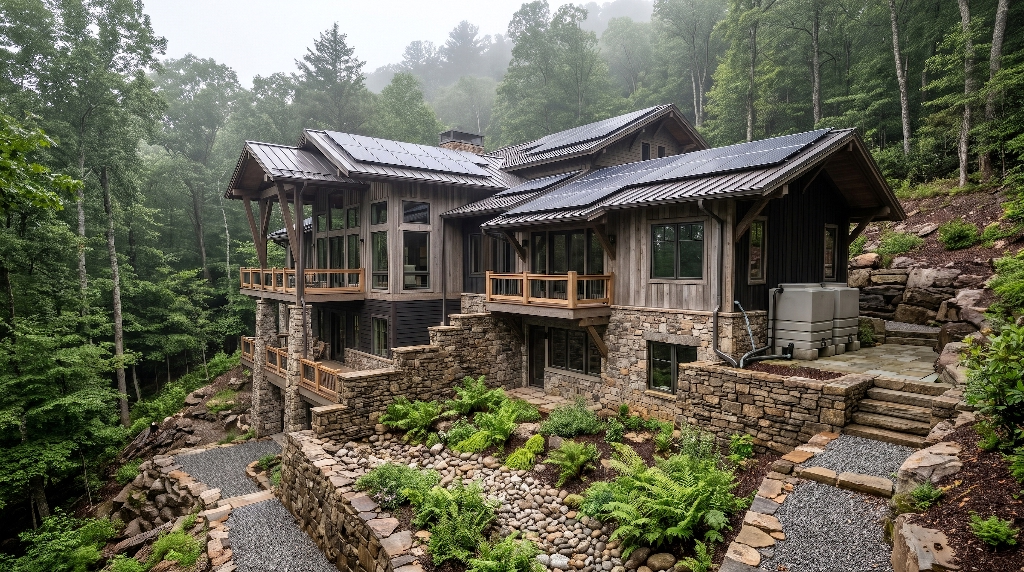
Choosing a green building standard is not an all-or-nothing decision. Both programs offer tiered structures that let homeowners choose the exact level of rigor that matches their property, budget, and long-term goals.
The LEED residential program uses a tiered point system based on 110 total available points:
- LEED Certified (40–49 points): The entry level, representing a solid home that meets fundamental energy, water, and indoor environmental standards beyond standard building codes.
- LEED Silver (50–59 points): Demonstrates strong commitment across energy efficiency, water savings, and responsible construction waste management.
- LEED Gold (60–79 points): A high-performance standard incorporating advanced HVAC systems, exceptional insulation levels, and high-performance building envelopes.
- LEED Platinum (80+ points): The absolute peak of the LEED residential framework, achieved only by homes with near-zero energy consumption, advanced renewable power, and superior indoor air quality.
Because a builder can choose which points to pursue, a LEED residential project can easily adapt to site-specific challenges. For example, if a steep mountain slope makes extensive rainwater collection impractical, the builder can focus on earning points through extra solar panels, superior insulation, and locally harvested timber instead.
       Comparative Certification Tier Structures

  ┌──────────────────────────────────────────────────────────────┐
  │                 LEED Residential Tier Ladder                 │
  │  Certified (40-49 pts)  ──► Silver (50-59 pts)              │
  │  ──► Gold (60-79 pts)   ──► Platinum (80+ pts)               │
  └──────────────────────────────────────────────────────────────┘
                               ▲
                               │ Flexibility vs Rigor
                               ▼
  ┌──────────────────────────────────────────────────────────────┐
  │             Living Building Challenge Pathways               │
  │  Core Certification (Foundational ecological performance)    │
  │  Petal Certification (3 Petals: Water, Energy, or Materials) │
  │  Full Living Certification (All 7 Petals & 20 Imperatives)   │
  └──────────────────────────────────────────────────────────────┘
The Living Building Challenge is organized into seven performance areas called Petals: Place, Water, Energy, Health and Happiness, Materials, Equity, and Beauty. Within these seven Petals sit twenty mandatory requirements called Imperatives. To make this demanding standard achievable for real-world projects, ILFI offers three distinct certification pathways:
- Core Green Building Certification: Requires meeting ten foundational imperatives that establish a high-performing, healthy baseline without requiring complete off-grid independence.
- Petal Certification: Requires achieving at least three of the seven Petals, with at least one being Water, Energy, or Materials. This pathway allows a mountain builder to focus intensely on what matters most on their specific site, such as achieving the Energy Petal with 105% net positive solar power while using standard plumbing for county code compliance.
- Full Living Certification: The ultimate green building achievement, requiring complete, uncompromising compliance with all seven Petals and all twenty Imperatives, verified after twelve months of continuous operation.
This tiered flexibility leads directly to two common industry questions:
Can you certify a single-family home under the Living Building Challenge?
Yes, single-family homes can be certified under the Living Building Challenge. ILFI provides dedicated project handbooks and tailored compliance paths specifically designed for single-family residential projects across all three pathways, whether pursuing Core, Petal, or Full Living certification.
Why is LBC certification rarer than LEED for residential projects?
LBC certification is much rarer than LEED residential certification because of its strict, uncompromising rules. The complete ban on Red List materials requires tracking down every chemical in every product, while the requirement for net-positive water and on-site biological waste treatment often clashes with local health department regulations. Because every single rule is mandatory, only a small number of dedicated homeowners and builders have the resources and patience to complete a Full Living home.
Regional Case Studies & Appalachian Precedents
Seeing how these standards perform in the real world helps bring building science to life. Across the Southern Appalachian mountains, pioneering architects and builders have applied both frameworks to create stunning, durable homes that honor their natural surroundings.
Near Johnson City in East Tennessee, a family built a certified LEED residential Gold home nestled against the rolling foothills of the Blue Ridge. The site presented steep slopes and heavy karst limestone just below the topsoil. Rather than blasting the rock, the design team stepped the foundation along the natural contours of the hill, minimizing site grading and preserving a stand of mature sugar maples.
The home features:
- A slab-on-grade foundation with two inches of continuous sub-slab insulation and an active radon mitigation fan.
- Double-stud exterior walls packed with dense cellulose insulation, achieving an airtightness rating of 1.2 air changes per hour at 50 Pascals (ACH50).
- A variable-refrigerant cold-climate heat pump paired with a whole-house ERV that provides continuous fresh air filtered through MERV 16 media.
- A 9-kilowatt rooftop solar array tied to the local power cooperative, reducing monthly electric bills to the basic grid connection fee.
By choosing the LEED residential framework, the owners worked comfortably with local subcontractors who had never built an off-grid house before. The clear point system allowed the general contractor to follow familiar building practices while elevating the insulation and ventilation details. The resulting home offers quiet comfort, pristine indoor air, and exceptional energy savings while staying well within the family budget.
In Western North Carolina, another project took on the rigorous journey of Living Building Challenge Petal Certification, targeting the Place, Health and Happiness, and Beauty Petals. Sited on a southern-facing mountain ridge, the home was constructed entirely from local, non-toxic materials:
- The timber frame was crafted from locally harvested white pine and red oak milled within twenty miles of the site.
- Interior walls were finished with natural lime plaster tinted with local clay pigments, completely eliminating the need for synthetic paints, primers, or drywall joint compounds.
- Exterior siding was treated using the traditional Japanese Shou Sugi Ban method, where the wood surface is lightly charred to create natural resistance to fire, rot, and insects without using chemical sealers.
- Rainwater harvesting supplies all exterior landscape irrigation and garden beds, supporting native fruit trees and perennial pollinator gardens.
While the project required extensive material vetting and custom documentation for every tube of caulking and electrical wire, the finished home stands as a breathtaking example of regenerative design that looks and feels like a natural extension of the Appalachian forest.
Deciding between LEED residential certification and the Living Building Challenge ultimately comes down to your personal values, your project budget, your property constraints, and your tolerance for construction complexity. Both systems create homes that are dramatically healthier, more durable, and more energy-efficient than standard code-built houses. However, they serve different goals.
       Decision Matrix: Which Mountain Path Is Right for You?

                 Define Primary Project Priorities
                                │
        ┌───────────────────────┴───────────────────────┐
        ▼                                               ▼
High Performance & Practicality         Absolute Ecological Independence
• Budget-conscious investment           • Mission-driven regenerative design
• Standard contractor familiarity       • Willingness to vet all chemicals
• Streamlined municipal permitting      • Deep commitment to off-grid systems
• Clear market resale value             • Desire for net-positive impact
        │                                               │
        ▼                                               ▼
Select LEED Residential Framework       Select Living Building Challenge
• Choose Certified, Silver, Gold,       • Choose Core, Petal, or Full Living
  or Platinum tier based on goals         pathway based on site feasibility
To help choose the right path for your mountain home, consider this side-by-side comparison:
- Choose LEED residential if: You want an internationally recognized green certification that fits within standard residential construction budgets. You want a flexible framework that allows you to prioritize energy savings, indoor air quality, and local materials without forcing you to go completely off the electrical grid or battle local health departments over experimental waste treatment permits. A LEED residential home provides an accessible, proven roadmap to building a top-tier mountain home that local builders can execute with confidence.
- Choose the Living Building Challenge if: You are driven by a deep mission to create a completely self-sufficient home that leaves the planet better than you found it. If you have the patience and budget to track down chemical-free materials, the dedication to produce all your own energy on site without fossil fuels, and the passion to pioneer closed-loop water systems in your region, an LBC home represents the most inspiring standard in modern architecture.
- Consider a Hybrid Approach: For many mountain homeowners, the most practical solution is a hybrid strategy. You can register your project under the LEED residential Platinum standard to establish a clear, structured rating for your builder, while actively borrowing principles from the Living Building Challenge. You can adopt the LBC Red List to eliminate toxic PVC pipes and formaldehyde from your bedrooms, incorporate biophilic design principles to frame views of the Appalachian ridges, and install a resilient battery backup system to survive mountain ice storms.
Before breaking ground on your Appalachian build, ask prospective architects and contractors three vital questions:
- Have you worked with high-performance building envelopes, balanced ERV ventilation, and blower door testing in Climate Zone 4A?
- Are you familiar with the verification documentation required for a LEED residential project or the material tracking needed for the Declare database?
- How do you plan to handle the unique site conditions of our property, including slope stability, sun exposure, and karst aquifer protection?
Building a home in the ancient Appalachian Mountains is an honor and a long-term responsibility. By choosing the right green framework, whether through the balanced practicality of LEED residential or the regenerative ambition of the Living Building Challenge, you ensure that your home stands as a quiet, durable, and healthy sanctuary that honors the mountain landscape for generations to come.