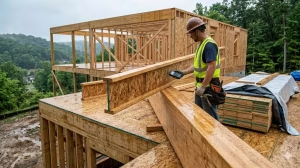
Whether you are building your forever home in the rolling hills of Johnson City or trying to keep your basement dry in a classic Kingsport neighborhood, you have probably realized that water is a powerful force. In our beautiful corner of Northeast Tennessee, we deal with a lot of rain and heavy clay soil. This combination can lead to a very soggy situation for your house.
Women know that your home is more than just a structure. It is your sanctuary, your biggest investment, and the place where your family feels safe. Dealing with a wet basement or a damp crawlspace is stressful, but I am here to help you navigate the technical side of water management with a calm and steady hand.
Today, we are going to dive deep into the world of the french drain. We will look at the differences between installing one on the outside versus the inside of your home. Our goal is to give you the clarity and confidence you need to make the best decision for your property, your budget, and your peace of mind.
The Tri-Cities Drainage Challenge
If you have lived in the Tri-Cities for any length of time, you know that our landscape is stunning. We have the mountains, the ridges, and the valleys. But those same features mean that water is always on the move. When it rains in East Tennessee, the water follows the path of least resistance. Often, that path leads right toward your home’s foundation.
Our soil is another big part of the story. Most of us are dealing with heavy clay. Clay is very different from sandy soil. It holds onto water like a sponge. When clay gets wet, it expands. When it dries out, it shrinks. This constant movement puts a lot of pressure on your basement walls or your crawlspace. This pressure is called hydrostatic pressure. Think of it like a giant weight pushing against your house from the outside. If that water has nowhere to go, it will eventually find a tiny crack or a weak spot in your foundation.
This is where a french drain comes into play. A french drain is basically a trench filled with gravel and a special pipe. The pipe has holes in it. Its job is to give water an easy place to go so it doesn’t push against your house. We often call it a subsurface workhorse because it does all its best work underground where you can’t see it. In the Tri-Cities, choosing the right kind of french drain can be the difference between a dry, healthy home and a moldy, expensive mess.
Exterior French Drains: The Perimeter Defense
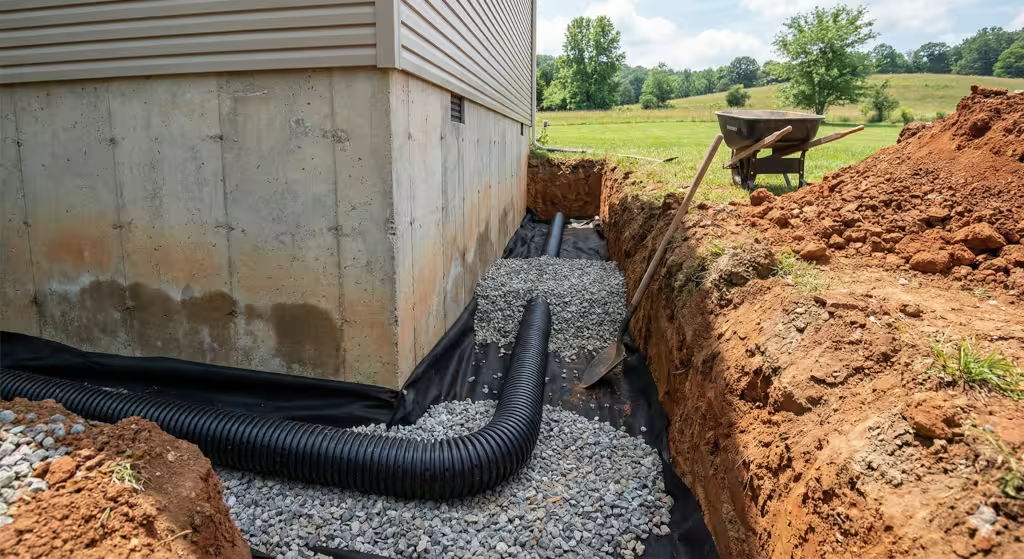
An exterior french drain is often seen as the gold standard for protecting a home. This is because it stops the problem before it even starts. The idea is to catch the water while it is still outside in the yard. We install this system by digging a deep trench all the way around the outside of your foundation. We go all the way down to the “footing,” which is the very bottom part of your house that sits on the ground.
Once the trench is dug, we line it with a special fabric. Then we put in a layer of clean gravel and a perforated pipe. The water in the ground naturally flows into the gravel and then into the pipe. The pipe then carries that water away from your house to a safe spot, like a storm drain or a lower part of your yard.
The Benefits of Staying Outside
The biggest plus of an exterior french drain is that it provides true waterproofing. It keeps the outside of your foundation dry. When the walls stay dry, the materials last longer. You don’t have to worry about the concrete soaking up moisture or the sealant wearing away as fast.
Another great thing about an exterior french drain in our hilly area is that we can often use gravity. If your house is on a slope, we can run the pipe downhill. The water just flows away on its own without needing any electricity or mechanical parts. This makes it very reliable. You don’t have to worry about a pump failing during a big thunderstorm.
The Downsides of the Exterior Approach
While an exterior french drain is very effective, it is a big job. If you are building a new home, it is easy to put one in. But if you already live in your home, it can be very disruptive. We have to bring in big machines to dig up the dirt around your house. This means your beautiful landscaping, your flower beds, and maybe even your deck or driveway might have to be removed or moved.
Because of all that digging and the labor involved, an exterior french drain is usually more expensive. It also takes longer to finish. And since we are working outside, we are at the mercy of the weather. If it rains for a week straight in the middle of winter, the project has to stop. Also, over many years, dirt or tree roots can sometimes get into the pipe. If an exterior french drain gets clogged, you have to dig it all up again to fix it, which is a major headache.
Interior French Drains: The Under-Slab Solution
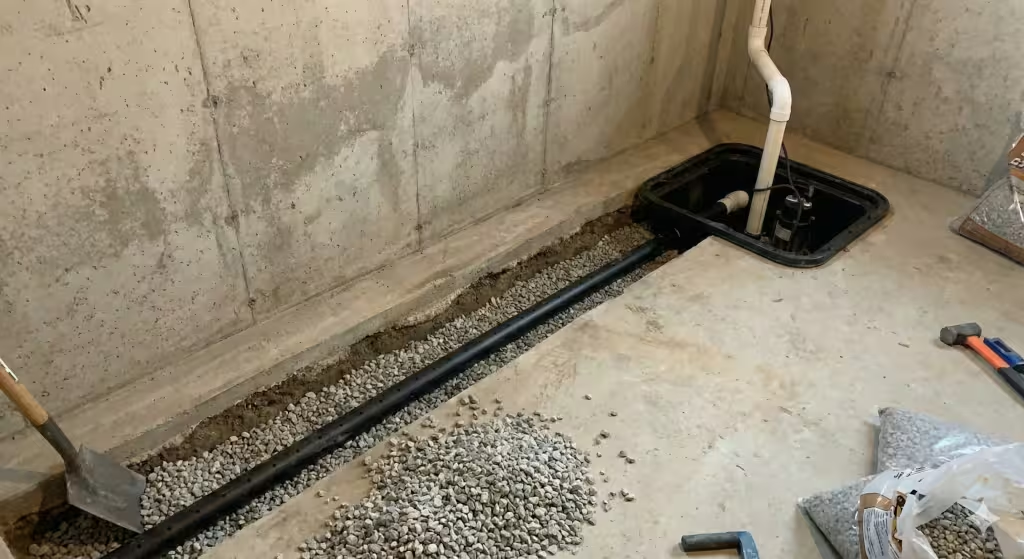
Sometimes, it just isn’t practical to dig up the outside of your home. Maybe you have a beautiful stone patio or a sunroom that would be destroyed by the digging. In those cases, we look at an interior french drain. This system is installed inside your basement or crawlspace.
To do this, we have to cut a channel into the concrete floor around the edge of the room. We remove the concrete, dig a small trench, and put in the gravel and pipe just like we do outside. We then cover it back up with new concrete, leaving a small gap at the wall. This gap allows any water that seeps through the walls to drop down into the pipe.
Why Many Homeowners Choose the Interior Path
One of the main reasons people go with an interior french drain is the cost. It is usually much cheaper than the exterior version because we don’t have to move tons of dirt or fix your landscaping afterward. It is also a lot faster. A crew can often finish an interior french drain in just a day or two.
Another big benefit is that we can do this work any time of the year. It doesn’t matter if it is snowing or pouring rain outside; we are inside where it is dry and warm. Also, if something ever goes wrong with the system, it is much easier to get to. We can service the pump or check the lines without needing a backhoe.
The Trade-Offs of Indoor Systems
The main thing to remember is that an interior french drain is a water management system, not a waterproofing system. This means the water actually enters your foundation before the drain catches it. It doesn’t stop the water from touching your walls. Over a very long time, that moisture can still affect the concrete.
Most interior systems also rely on a sump pump. Since the pipe is under your floor, we usually can’t use gravity to move the water out. We have to collect the water in a pit and then pump it out and away from the house. This means if the power goes out, the pump stops. In the Tri-Cities, where we get some good storms, I always tell my clients they must have a battery backup for their pump. You don’t want your french drain to stop working right when you need it most.
Comparison of Exterior vs. Interior Systems
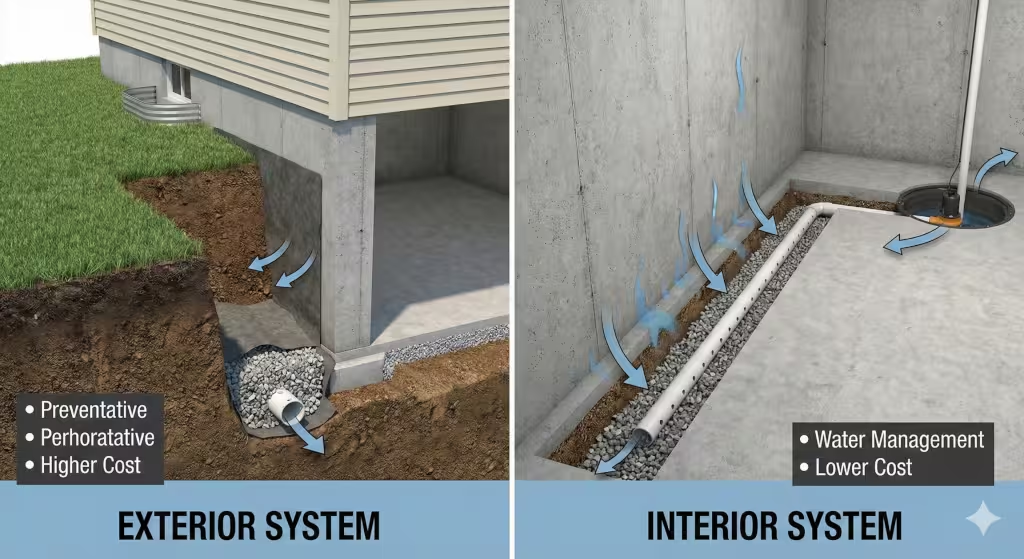
When we look at the two options, it helps to see them side-by-side. Here is a simple breakdown to help you compare.
Purpose and Goal
An exterior french drain is all about prevention. It wants to stop the water from ever reaching your home. An interior french drain is about management. It accepts that water is coming in and gives it a controlled path to leave.
Cost and Value
For an existing home, an interior french drain is almost always the more budget-friendly choice. However, if you are building a new custom home, an exterior french drain is a smart investment that adds a lot of value because it protects the structure from the very beginning.
Lifespan and Maintenance
Both systems can last for decades if they are installed correctly. An interior french drain is easier to maintain because you can see the pump and the discharge lines. An exterior french drain is “out of sight, out of mind” until there is a problem, and then the fix is much more involved.
Common Questions Answered About French Drains
There are often a lot of questions from homeowners who are worried about their foundations. Here are some of the things people ask most often.
Is an interior french drain better than an exterior one?
There is no single “right” answer. It depends on your specific situation. If you are building a new house, the exterior french drain is better. If you have an old house with a wet basement and you don’t want to destroy your yard, the interior french drain is often the better choice. Both do a great job of keeping your living space dry.
Do french drains really work in clay soil?
Yes, they do! But you have to be careful with the details. In our Tri-Cities clay, you must use a high-quality fabric filter around the gravel. This keeps the tiny clay particles from washing into the pipe and clogging it up. You also need to use “clean stone” (gravel without a lot of dust) so the water can move quickly through the system.
How much does a french drain cost in Tennessee?
Prices can vary based on the size of your home and how deep we have to dig. Generally, an interior system might cost a few thousand dollars, while an exterior system on an existing home could cost twice that or more. It is always best to get a few quotes from local experts who know our local soil and conditions.
Professional Recommendation: The Tri-Cities Verdict
If you are in the middle of building a new home, please do not skip the exterior french drain. It is the best time to do it, and it will save you so much stress in the future. It is like putting a good roof on your house; you just have to do it.
If you already have a home and you are dealing with a damp basement, start by looking at your gutters and the slope of your yard. Sometimes, just moving your downspouts further away can solve the problem. But if that doesn’t work, an interior french drain is a fantastic and reliable solution. It is what we often recommend for my neighbors in Johnson City because it is effective and doesn’t break the bank.
One final tip: whatever system you choose, make sure the person installing it uses high-quality materials. Don’t use the cheap, thin, flexible black pipe you find at the big box stores. It can crush easily under the weight of the dirt. Ask for heavy-duty perforated PVC pipe. It will last as long as your house does.
Deep Dive into the French Drain Components
To really understand why a french drain works so well, we should look at the parts that make it up. It is not just a pipe in the ground. It is a system where every part has a job to do. When I talk to my clients, I like to explain these details because it helps them see the value in a professional installation.
The Trench
The trench is the foundation of the system. Its depth and width are very important. For an exterior french drain, we want the trench to be deep enough to sit next to the footing. For an interior french drain, we need it to be deep enough to accommodate the pipe and plenty of gravel under the floor level. The slope of the trench is also key. Even a small slope helps the water move along toward the exit point.
The Filter Fabric
This might be the most overlooked part of a french drain. In our area, we use a non-woven geotextile fabric. Think of it like a very strong landscape fabric. We line the trench with this before we put anything else in. It acts like a coffee filter. It lets the water through but keeps the dirt and clay out. Without this, your french drain would fill up with mud in just a few years and stop working.
The Aggregate (Gravel)
We don’t just use any rocks. We use “clean, washed stone.” This means the rocks have been cleaned of any sand or dust. We want large gaps between the rocks so the water can flow through them very quickly. The gravel also helps support the pipe and keeps it from shifting over time.
The Pipe
The heart of the french drain is the perforated pipe. “Perforated” just means it has small holes or slits in it. We usually install the pipe with the holes facing down. This might sound strange, but it works better. As the water level rises in the trench, it enters the holes from the bottom and then flows away through the pipe. This keeps the water level in the ground as low as possible.
Dealing with Hydrostatic Pressure
We mentioned hydrostatic pressure earlier, but it is worth talking more about. This is the main reason people need a french drain. Imagine you are at the bottom of a swimming pool. You can feel the weight of the water pushing on your ears. That is hydrostatic pressure.
When the ground around your home gets saturated with rain, that same pressure is pushing against your foundation walls. Concrete is strong, but it is also porous. It has tiny, microscopic holes. Over time, that pressure can push water right through the concrete, making your walls feel damp or “sweaty.” If the pressure gets too high, it can even cause the walls to bow or crack.
A french drain is like a pressure relief valve. By giving that water an easy way to escape, you take the pressure off your walls. This keeps your foundation strong and helps prevent structural problems that can be very expensive to fix later on. In our Tri-Cities region, where we have many older homes built on hillsides, managing this pressure is one of the most important things you can do for your home’s health.
The Importance of the Sump Pump
If you go with an interior french drain, the sump pump is your best friend. It is the engine that keeps the system running. The pipe brings the water to a pit, which is basically a large bucket buried in the floor. When the water in the pit reaches a certain level, a float switch turns the pump on. The pump then pushes the water up and out of your house through a discharge line.
Choosing the Right Pump
We always recommend a high-quality cast iron pump. They handle heat better and last longer than the cheaper plastic ones. You also want to make sure the pump has enough horsepower to lift the water out of your basement and push it far away from the house.
The Battery Backup
We cannot stress this enough: you need a backup system. Many of our big storms in Tennessee come with wind that can knock out the power. If the power goes out, your main pump stops. A battery backup system has a second, smaller pump that runs on a large battery. It will kick in automatically if the main pump fails or if the power goes off. It gives you that extra layer of protection so you can sleep soundly during a midnight thunderstorm.
Crawlspace Considerations
Not every home in the Tri-Cities has a basement. Many of our homes are built on crawlspaces. If you have a damp crawlspace, a french drain is still a great solution. In fact, it is often part of a larger process called “encapsulation.”
In a crawlspace, we often see water pooling on the dirt floor after a heavy rain. This moisture can lead to wood rot in your floor joists and provide a perfect home for mold. By installing a french drain around the inside perimeter of the crawlspace, we can collect that water and pump it out.
When we combine a french drain with a heavy plastic vapor barrier on the floor and walls, we create a dry, clean space under your home. This not only protects your structure but also improves the air quality inside your living area. Since about half of the air you breathe in your house comes from the crawlspace, keeping it dry is very important for your family’s health.
Soil and Grading: The First Line of Defense
Before you spend money on a french drain, I always tell people to look at their yard. Sometimes, the solution is much simpler. Your yard should slope away from your house. This is called grading. If the ground slopes toward your foundation, you are basically inviting water to come visit.
You should also check your gutters. If your gutters are clogged, the water overflows and drops right next to your foundation. Make sure your downspouts have extensions that carry the water at least six to ten feet away from the house.
However, in the Tri-Cities, sometimes grading and gutters aren’t enough. Our clay soil can hold water even on a slope, and some lots are just naturally wet. In those cases, a french drain is the only way to truly solve the problem. It works where surface solutions fail because it handles the water that is already underground.
Working with Professionals
Building or fixing a home can be overwhelming. There are so many choices to make and so many people to talk to. When it comes to drainage, I always suggest working with someone who has a lot of experience in our local area. A contractor who understands the specific challenges of East Tennessee soil will do a much better job than someone who doesn’t.
Don’t be afraid to ask questions. A good professional will be happy to explain how the system works and why they are recommending a specific type of french drain. Ask about the materials they use, the slope they plan to create, and what kind of warranty they offer. Integrity and competence are very important in this industry, and you deserve to work with someone you trust.
The Financial Impact of a Dry Home
Many buyers and homeowners look at houses as investments. A wet basement or crawlspace can significantly lower the value of your home. If you ever decide to sell, a savvy buyer will look for signs of water damage. If they see mold or feel dampness, they will likely ask for a big discount or walk away from the deal.
By installing a high-quality french drain, you are protecting your investment. You are showing future buyers that you have taken care of the home and that the foundation is solid and dry. It is one of those home improvements that doesn’t look as flashy as a new kitchen, but it is often much more important for the long-term value of the property.
Maintenance of Your Drainage System
Even though a french drain is designed to be low maintenance, it isn’t “no maintenance.” For an interior system, you should check your sump pump at least once a year. Pour a bucket of water into the pit to make sure the pump turns on and moves the water out quickly. Check the battery on your backup system too.
For an exterior french drain, keep an eye on the exit point. Make sure it isn’t blocked by leaves, mulch, or dirt. If you see water pooling in the yard where it used to be dry, it might mean the pipe is clogged. You can sometimes have a professional “snake” the line to clear out any roots or debris, which is much cheaper than replacing the whole thing.
Final Thoughts on French Drains
We have covered a lot of ground today. From the heavy clay of Kingsport to the basement floors of Johnson City, water management is a vital part of owning a home in our region. Whether you choose an exterior or an interior french drain, you are taking a big step toward a healthier, more stable home.
Remember, every house is unique. What worked for your neighbor might not be the perfect fit for you. Take the time to look at your property, understand where the water is coming from, and think about your long-term goals. With a calm mind and the right information, you can handle any drainage challenge that comes your way.
We hope this guide has helped you understand the pros and cons of these systems. My passion is helping people in the Tri-Cities create homes they love and can depend on. A dry home is a happy home, and a well-installed french drain is often the key to making that happen.