
For the women out there who are the heart of the home, I know what you’re looking for. You want a kitchen that works, a porch that’s peaceful, and a home that keeps everyone connected without a headache. You’re the one making sure the kids can do their schoolwork, that you can hop on your work calls without the screen freezing, and that the security cameras keep the family safe at night. When you move into a beautiful new cabin or a lake house, the last thing you want to fight with is a slow connection. You need the right internet solutions to make that dream home actually livable.
I’m here to walk you through how to get the best signal out in the woods or by the water. I’ll keep it simple, just like I do when we’re walking a job site. We’ll talk about what works in 2026 and how to make sure your home is ready for the future.
Why Good Internet Matters for Your Rural Retreat
When you’re looking at a piece of land in East Tennessee, you see the view. You see the sunset over the lake or the mist on the mountains. But as a builder, I see the infrastructure. I see where the power lines stop and where the dirt road begins. In the past, living in a rural area meant you were cut off from the world. You had to drive to a coffee shop just to send a big email.
In 2026, that has changed. The world has moved forward, and the way we look for internet solutions has changed too. We don’t just want a signal; we want a connection that feels like it belongs in the city, even if we’re miles from the nearest stoplight.
Think about your daily life. Maybe you’re starting a small business from your kitchen table. Or maybe you just want to be able to watch a movie with the family on a rainy Saturday without that annoying spinning circle on the screen. For the moms and the family leaders, a solid connection is a tool. It’s like having a good set of tires on your truck or a reliable stove in your kitchen. It’s a necessity.
When we talk about internet solutions, we’re talking about freedom. We’re talking about the freedom to live where you want without giving up the things you need. Whether you are on a ridge in Sullivan County or down by the water in Carter County, you deserve a home that works for you.
Understanding Your Options in 2026
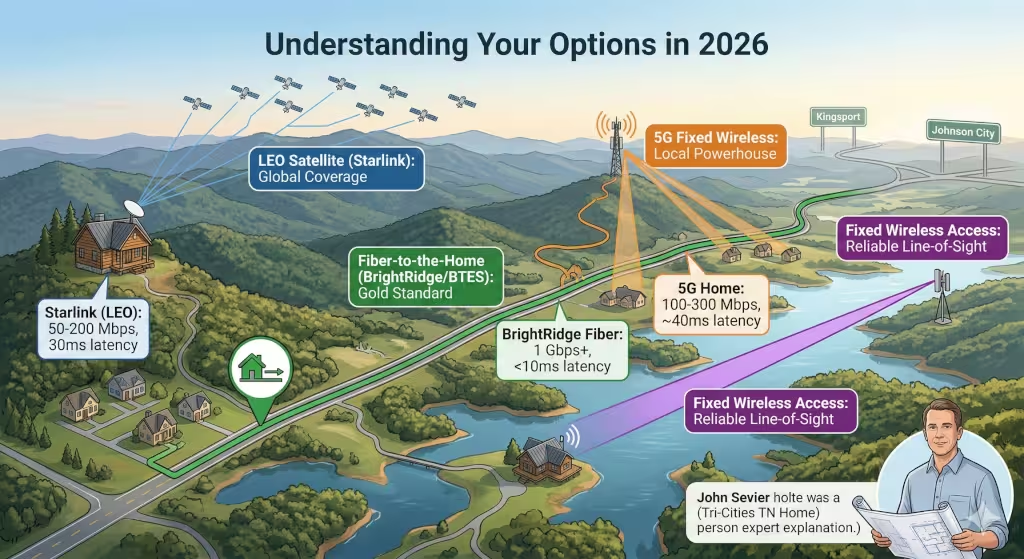
The first thing we have to do is look at what is available. Not every spot is the same. Just like I wouldn’t use the same foundation for a house on a swamp that I’d use for a house on a rock, I wouldn’t suggest the same internet solutions for every property.
There are four main ways we get people online out here today. First, there is Fiber. This is the gold standard. If you can get it, you get it. Second, there is Satellite. This has changed a lot lately. It’s not the slow, laggy mess it used to be. Third, we have 5G Home Internet. This uses the same towers as your phone. Finally, we have Fixed Wireless. This is a local option where an antenna on your roof talks to a tower nearby.
Each of these has its own pros and cons. Our job today is to help you figure out which one fits your life and your specific piece of land.
The Magic of Fiber: If You Can Get It, Take It
If you are lucky enough to live where a local company has run fiber optic lines, your search for internet solutions is over. Fiber is the fastest and most reliable thing out there. It uses light to send data through glass strands. It doesn’t matter if it’s raining or if every neighbor on the road is online at the same time.
In our area, many of our local electric co-ops have been hard at work. They know that rural families need this. If your power company offers it, sign up immediately. It’s a “set it and forget it” type of thing. It’s precise, it’s fast, and it adds value to your home. If you are selling your house and you can tell the buyer it has fiber, that house sells faster.
But I know many of you are building in places where the fiber hasn’t reached yet. You’re at the end of a long gravel driveway where the big companies don’t want to go. That’s okay. We have other internet solutions that are just as good for what you need.
The New Age of Satellite Internet
For a long time, it was frustrating to suggest satellite to buyers. You’d click a button, and you’d have to wait three seconds for anything to happen. That was because the satellites were way out in space, thousands of miles away.
But now, companies like Starlink have changed the game. They use satellites that are much closer to the earth. Because they are closer, the signal doesn’t have to travel as far. This means when you click a link, things happen fast.
For a rural cabin, this is one of the best internet solutions available. You can be in the middle of nowhere, and as long as you have a clear view of the sky, you can have high-speed service. I’ve seen families move into cabins that were totally off the grid and be up and running with Starlink in twenty minutes.
The main thing to watch out for with satellite is trees. We love our trees in Tennessee, but they can block that signal. If you have a lot of tall oaks or pines around your house, you might need to mount the dish on the roof or even on a tall pole. We advise buyers to think about this during the framing stage. We can run the wires through the walls before the drywall goes up, so you don’t have a messy cord hanging off your porch.
5G Home Internet: The Easy Choice
If you have a cell phone that gets a good signal at your house, you might be able to use 5G Home Internet. This is one of the most popular internet solutions for lake houses right now. Companies like T-Mobile and Verizon send you a little box that you just plug into a wall outlet near a window.
It’s very easy to set up. You don’t need a technician to come out and drill holes. You just find the spot in your house where the signal is strongest and leave the box there.
The downside is that cell signals can be tricky in the mountains. A hill can block the signal completely. If your cabin is down in a valley, also known as a “holler,” this might not work for you. But if you’re up on a hill or near a main road, it’s one of the most affordable internet solutions you can find. It usually costs about the same as a few bags of groceries every month, and there are no big equipment fees.
Fixed Wireless: The Local Secret
Sometimes, the big national companies don’t have the best answer. That’s where local “Fixed Wireless” comes in. This is when a local company puts a big antenna on a ridge and then puts a small antenna on your house.
We like this because it’s run by people who live right here in the Tri-Cities. They know the geography. They know which ridges block signals and which ones don’t. They can often get a signal to a house that the big companies say is “unreachable.”
When you’re looking for internet solutions, don’t be afraid to ask around at the local hardware store or the diner. The locals will tell you who the best provider is in that specific area. This kind of local knowledge is worth its weight in gold when you’re building a home.
How to Test Your Signal Before You Buy
Before you commit to any of these internet solutions, you should do a little homework. If you’re at your land, take your phone out. See how many bars you have. Try to load a video. If it works on your phone, 5G Home Internet is likely a good bet.
If your phone says “No Service,” you know you’re going to need something that looks to the sky, like Starlink. There are even apps you can download that show you where the satellites are. You can stand on your porch, point your phone at the sky, and the app will tell you if the trees are in the way.
Taking these steps early saves you from a lot of frustration later. I’ve seen people buy expensive equipment only to find out they can’t get a signal because of a giant cliff behind their house. A little bit of precision in the planning stage goes a long way.
Making the Internet Work Inside Your Home
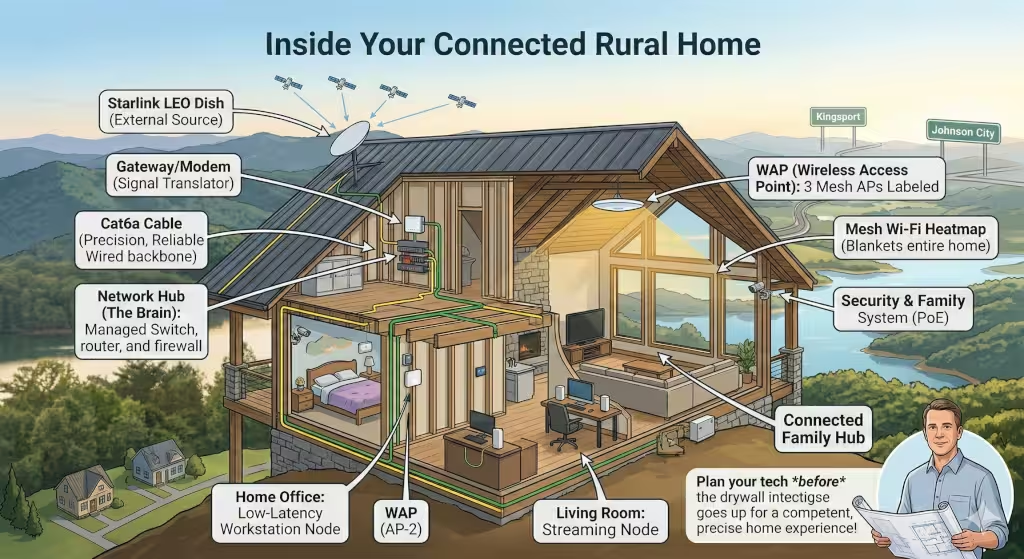
Once you’ve picked one of the internet solutions for your cabin, the work isn’t done. Getting the signal to the house is one thing. Getting it through the house is another.
If you’re building a cabin with a lot of heavy wood or stone, those materials can block Wi-Fi signals. A router in the basement might not reach the bedrooms upstairs. This is a common problem in many homes.
To fix this, we recommend using something called a “Mesh Network.” This is a fancy name for a system of small boxes you put around the house. They all talk to each other and create a “blanket” of internet. This way, you can have a strong signal in the kitchen, on the back porch, and in the garage.
When we talk about total internet solutions, we have to talk about the inside of the house too. It is advised to put your main router in a central spot. Don’t hide it in a closet or behind a metal cabinet. Give it some room to breathe, and it will work much better.
Boosting Your Signal in the Woods
If you’ve decided on a cellular-based option but the signal is a little weak, don’t worry. There are ways to make it stronger. You can buy something called a “Cell Signal Booster.”
Think of this like a megaphone for your internet. You put an antenna outside, usually on the roof, that “grabs” the weak signal from the air. It sends that signal down a wire to a box inside your house that makes the signal louder and stronger.
This is one of the best internet solutions for homes that are just on the edge of a coverage area. It can turn a frustrating, slow connection into one that’s fast enough for everyone to use. It takes a little more work to install, but for a cabin in the woods, it can be a lifesaver.
Common Questions About Rural Internet Solutions
There are a lot of questions from folks who are nervous about moving to the country. They worry they won’t be able to stay in touch with their grandkids or do their banking. Here are the most common things we hear.
Can I get high-speed internet with no cable lines?
Yes, absolutely. In 2026, we have moved past the need for physical wires for many of our internet solutions. Between high-speed satellites and 5G towers, you can get very fast speeds without a single cable coming down your street.
Is satellite internet still slow and laggy?
It used to be, but the new systems like Starlink are very fast. They are fast enough for video calls and even online games. If you choose the right provider, you won’t even notice it’s coming from space.
What is the most affordable way to get online?
Usually, 5G Home Internet is the cheapest. It often has no hidden fees and doesn’t require you to buy expensive dishes or antennas. If you have a good cell signal, it’s one of the best value internet solutions out there.
Will bad weather ruin my connection?
In the old days, a heavy rain could knock out your satellite. Today’s dishes are much better. They can even heat themselves up to melt snow. While a very bad storm might slow things down a little, you won’t lose your connection every time a cloud passes by.
Planning for the Future: Why Upload Speed Matters
Most people only look at “download speed.” That’s how fast you can get things from the internet, like watching a movie. But “upload speed” is just as important, especially for the women who are managing a busy household.
Upload speed is how fast you can send things to the internet. This is what makes your video calls look clear instead of blurry. It’s what lets you back up your family photos to the cloud. When you’re comparing different internet solutions, make sure to look at both numbers.
Fiber gives you the best upload speeds. Satellite and 5G are okay, but they aren’t as fast as fiber. If you do a lot of work from home, you’ll want to prioritize a connection that has a strong upload speed. It makes a huge difference in how professional you look on a call and how fast you can get your work done.
The Importance of Security in a Rural Home
When you’re out in the country, you want to feel safe. Many of my clients install smart security cameras and doorbells. These are great, but they need the right internet solutions to work properly.
A security camera is always sending video to the cloud. This uses a lot of data. If your internet is slow or has a “data cap” (meaning you can only use a certain amount each month), your cameras might stop working halfway through the month.
We always suggest looking for internet solutions that offer “unlimited data.” This means you don’t have to worry about how many movies you watch or how many cameras you have running. It gives you peace of mind, and in a home, that is the most important thing of all.
How Internet Affects Your Home’s Resale Value
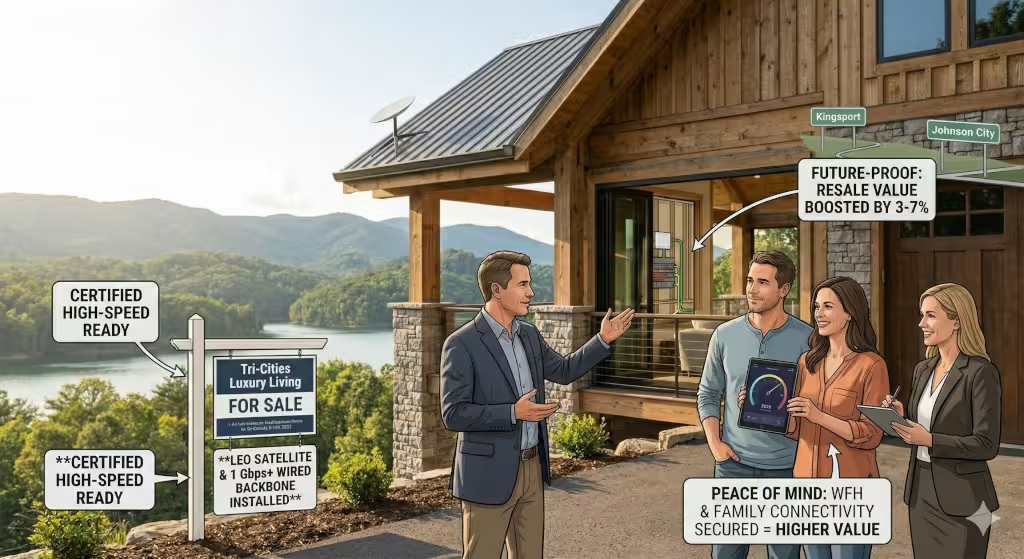
In today’s connected society, people care about the internet more than ever. If you build a beautiful home but it has terrible internet, it’s going to be harder to sell later.
Buyers in 2026 expect to be able to work and play online. When you invest in good internet solutions now, you’re not just making your life easier today. You’re making your home more valuable for tomorrow.
Even if you don’t need the fastest speeds yourself, it’s a good idea to set the house up so it can handle them. Run the wires, install the mounts, and know who the providers are. It’s a smart move that pays off in the long run.
Tips for the DIY Homeowner
If you’re the type who likes to handle things yourself, setting up some of these internet solutions can be a fun project. Most of the 5G and satellite options are designed to be “plug and play.”
But remember what I said about precision. Read the instructions carefully. Use a level when you’re mounting an antenna. Make sure your wires are tucked away so they don’t get chewed on by a squirrel or caught in a lawnmower.
If you’re not comfortable climbing on a roof, call a pro. There are plenty of local folks in Kingsport and Johnson City who do this for a living. It’s better to pay a little bit for a professional install than to fall off a ladder or end up with a leaky roof.
Creating a Connected “Family Hub”
Once you have one of the best internet solutions in place, you can start to enjoy the fun stuff. You can set up a “Family Hub” in your kitchen, a tablet or screen where everyone can see the calendar, leave notes, and check the weather.
For the moms out there, this is a lifesaver. It keeps the family organized and makes sure no one misses a practice or a doctor’s appointment. It only works if the internet is steady, though.
Some builders like to create a dedicated spot for this. A little nook with an outlet and a strong Wi-Fi signal. It becomes the brain of the house. It’s a small detail, but it’s one that makes a huge difference in how the home feels.
Working with Your Builder on Tech Needs
If you are currently building a home, talk to your builder about your internet solutions early on. Don’t wait until the house is finished.
We can do things during construction that are much harder to do later. We can run “Cat6” cables to every room. These are wires that carry internet signals. Even if you plan on using Wi-Fi, having a few hard-wired spots for your TV or your office computer is a great idea. It’s more reliable than Wi-Fi and leaves more “room” in the air for your phones and tablets.
A good builder will be happy to work with you on this. We want the house to be perfect for you, and in 2026, that means making sure the tech is just as solid as the foundation.
The Role of Local Electric Co-ops
We want to take a moment to talk about our local power companies again. In Tennessee, we are very lucky. Our co-ops are often owned by the members—that’s you and me. They aren’t just big faceless corporations.
Because they care about our community, they have been leaders in bringing internet solutions to rural areas. They see that without high-speed access, our small towns will fall behind.
If you’re moving to a new area, call the local electric co-op first. Ask them what their plans are. Even if they don’t have fiber in your spot yet, they might have it coming soon. Being on their list can help you get connected faster when the time comes.
Final Thoughts on Your Rural Connection
Living in a cabin or a lake house is a dream for many people. It’s about slowing down, enjoying nature, and spending time with the people you love. It shouldn’t be about fighting with technology.
By choosing the right internet solutions, you take the stress out of rural living. You get the best of both worlds. You get the quiet of the country and the connection of the city.
We hope this guide has helped you understand your options a little better. Remember to look at what’s available at your specific spot, think about the future, and don’t be afraid to ask for help from the locals.
The Tri-Cities area is a wonderful place to call home. With a little bit of planning and the right tools, your rural retreat will be everything you ever wanted it to be.