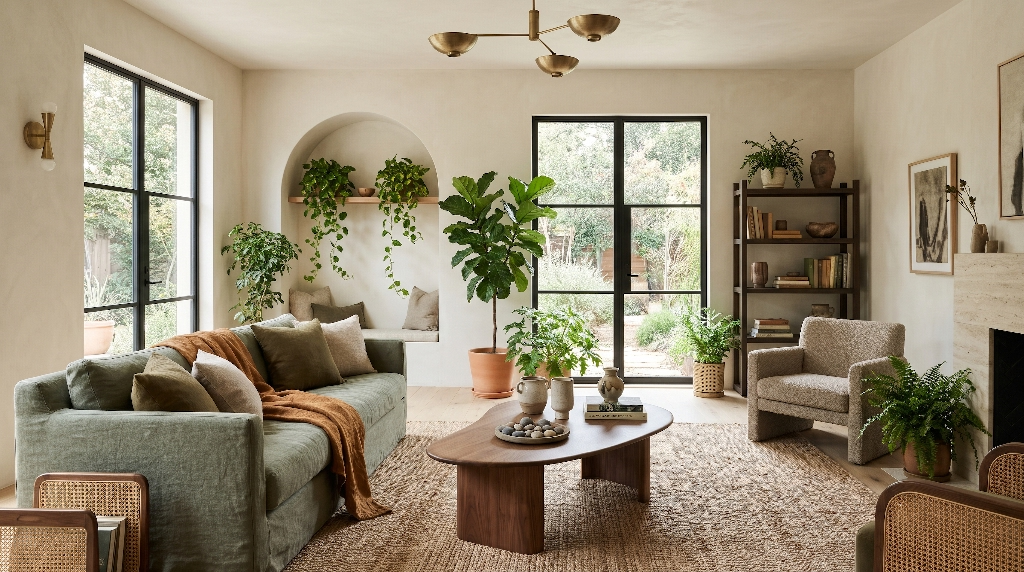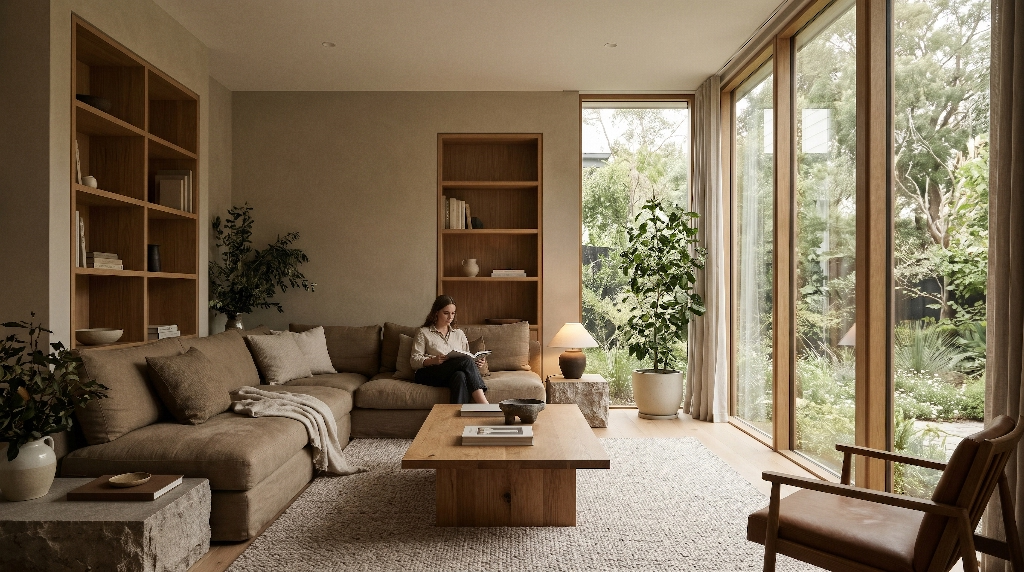

There is a very specific quiet that settles over a house during the first week of January. The holiday boxes are taped shut and carried back to the attic, the red ribbons and twinkling ornaments are packed away, and suddenly your living room feels a little empty. When you walk into the room with your morning coffee, your eyes go straight to that blank wooden ledge above the hearth.
Throughout the chilly winter months here in East Tennessee, from frosty mornings in Johnson City to misty evenings in Kingsport and Bristol, the fireplace is the true heart of the home. It is where families gather to warm up, read a book, or unwind after a long day. Leaving that shelf bare until spring makes the whole room feel cold and unfinished. Fortunately, learning a few cozy winter fireplace mantel decorating ideas will help you bridge the gap between December festivities and spring blooms with ease.
A great display is never just about buying pretty trinkets and lining them up in a row. It is about understanding weight, depth, light, and the natural materials that make a house feel grounded. If you have ever wondered what to put on a mantel after Christmas, the secret lies in shifting away from bright holiday sparkle and leaning into quiet, restorative comfort. Think of the Scandinavian concept of hygge, which celebrates warmth, soft textures, and simple everyday pleasures. By combining evergreen branches, warm metals, flickering candlelight, and natural wood or stone accents, your fireplace mantel becomes a calm anchor that carries your home gracefully all the way into March.
Structural Proportions, Shelf Depth, and Sightline Engineering
Before you pull a single candleholder or picture frame out of your hallway closet, grab a standard tape measure and inspect the physical bones of your fireplace mantel. One of the biggest reasons homeowners feel frustrated when decorating is that they buy pieces that do not fit the actual depth or height of their shelf. In custom home construction, mantels generally fall into two categories: shallow decorative ledges that measure around five inches deep, and substantial timber beams or boxed crown shelves that measure eight to ten inches deep. Knowing which type you have immediately tells you what kind of decor will sit safely and look balanced.
Many readers ask a very practical structural question when planning a winter refresh: how deep should a fireplace mantel shelf be for layering decor? Generally, seven inches is the sweet spot for true visual layering. A shelf that is at least seven inches deep gives you enough room to place a large framed mirror or piece of artwork flat against the wall while still leaving four or five inches of clearance in front of it. That extra front space lets you overlap smaller frames, brass candlesticks, or a trailing garland without anything teetering dangerously close to the edge.
If your current fireplace mantel is a narrower five-inch ledge, you can still create a gorgeous winter look, but you will want to hang your central mirror directly on the wall rather than leaning it, keeping the shelf free for slender taper holders and low greenery.
Sightlines and visual weight also play a major role in whether a room feels restful or cluttered. When you sit down on your sofa across the room, look at the triangle formed between your hearth floor and the ceiling peak.
Your tallest item should sit near the center or slightly off to one side to draw the eye upward, while medium and low pieces step down gradually toward the outer edges of the fireplace mantel. Dividing the horizontal length of your shelf into thirds helps you avoid crowding everything into the dead center. Leaving a few inches of open breathing room at both ends of the wood beam lets the craftsmanship of the millwork shine through and keeps the entire wall from feeling top-heavy.
Selecting the Anchor Focal Point: Mirrors, Art, and Televisions
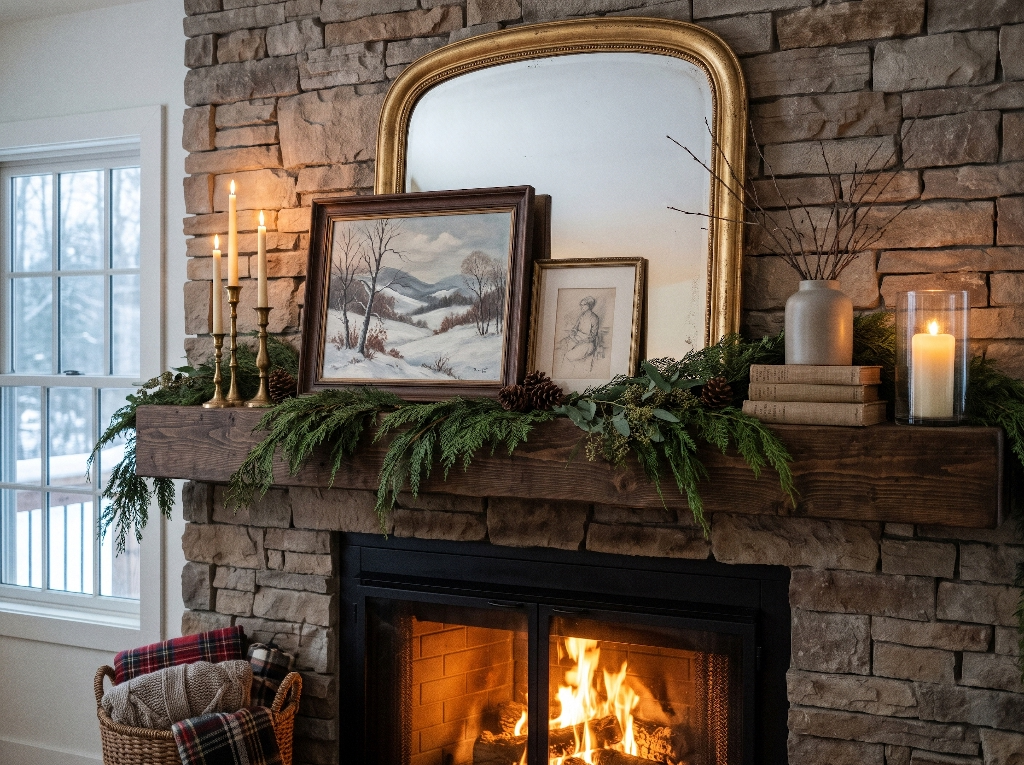
Every well-styled fireplace mantel needs one clear anchor piece that sets the tone for the rest of the room. During January and February, natural daylight is scarce, and the afternoon sun sits low in the sky. Hanging or leaning a large mirror above your hearth is one of the smartest ways to brighten a dark living room without adding a single extra light fixture. An antique gilt-framed mirror or a simple arched mirror with a warm wood border catches the grey winter light from your windows and bounces it deeper into the space. In the evening, that same glass reflects the warm glow of your fire and candles, instantly doubling the cozy atmosphere.
If you prefer artwork over a mirror, winter is the ideal season to display moody landscape oil paintings, quiet charcoal sketches, or simple botanical prints. You do not even need to drive a new nail into your drywall or drill into stone to make this work. If your shelf is deep enough, try leaning one medium-sized framed winter landscape slightly off-center, then overlapping a smaller, vintage-style frame right in front of its lower corner. This casual, layered approach looks collected over time rather than stiff or overly staged.
Of course, in many modern homes across the Tri-Cities, the space above the hearth is already claimed by a wall-mounted television. Homeowners often ask how to decorate a mantel with a TV or mirror above it without creating visual chaos. When a television sits over your fireplace mantel, the screen itself is already a heavy dark rectangle, so you never want to place tall vases or bulky objects directly in front of the glass where they block your view.
Instead, keep your winter styling low and horizontal. Run a slim bed of evergreen sprigs along the center of the shelf, and build small, low-profile clusters on the far left and far right ends where they sit clear of the screen’s lower corners. If you own a smart display television with an art mode setting, switching the screen to a subtle winter oil painting when you are not watching a show turns an everyday electronic screen into a seamless seasonal focal point.
Layering Non-Holiday Winter Greenery and Foraged Elements
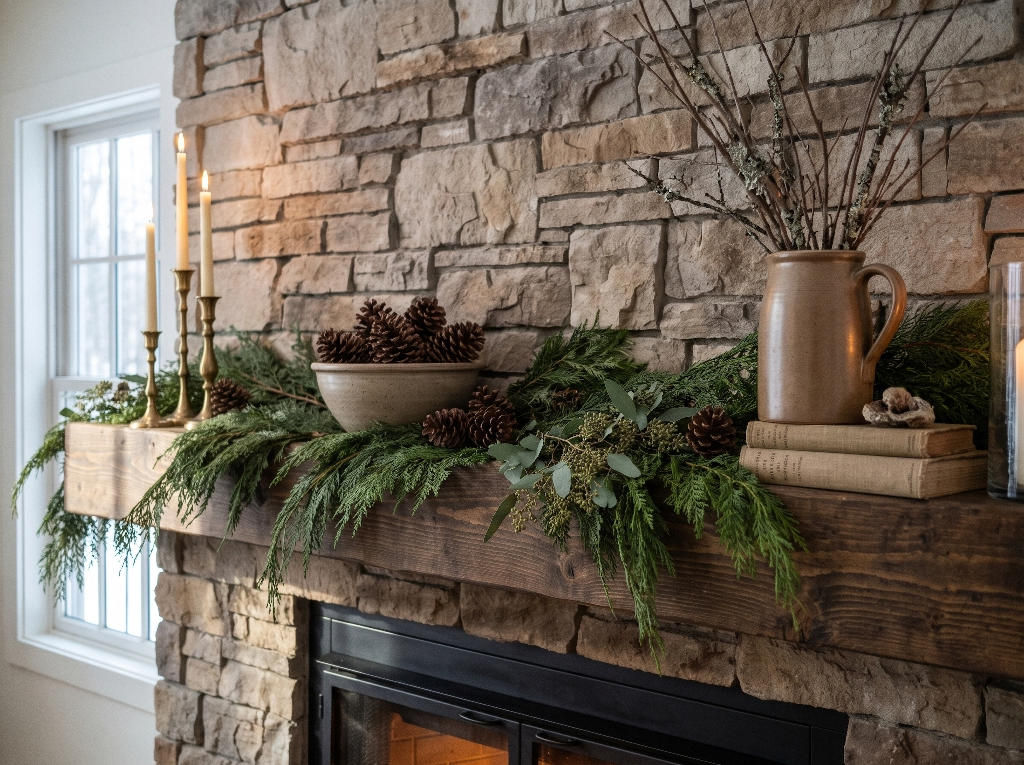
Once your main anchor is in place, the next step is bringing life and organic texture back to the shelf. Many people worry about how to decorate a mantel in winter without it feeling bare once the bright red berries, holly leaves, and glittery ribbons are gone. The answer is to keep using winter greenery, just in a softer, more natural way that celebrates the woods rather than a specific holiday. Real-touch faux Norfolk pine garlands are wonderful for this because their soft, drooping needles look graceful and relaxed rather than stiff and spiky.
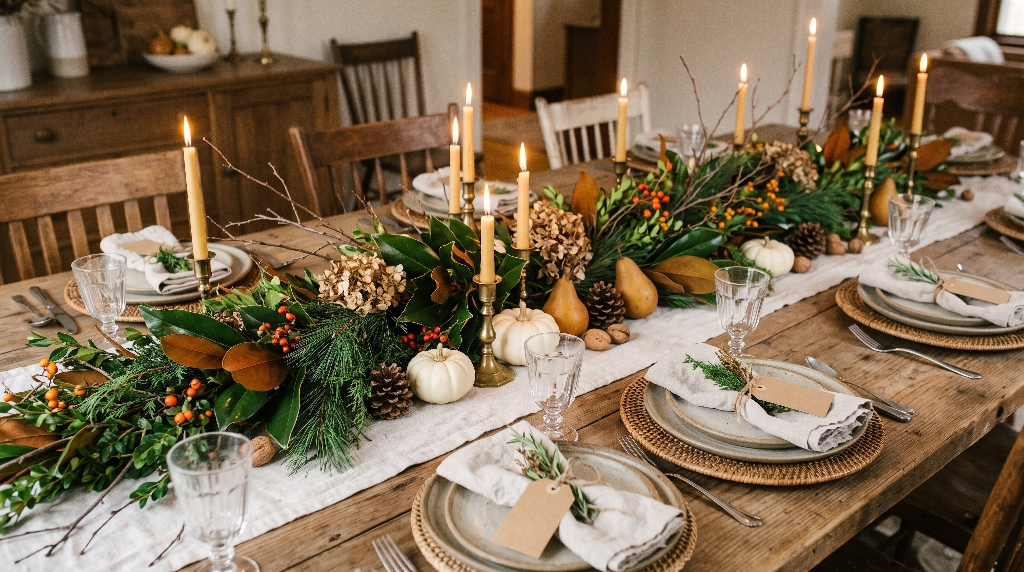
To keep your fireplace mantel from looking like leftover Christmas decor, blend at least two or three different types of foliage together. Start with a base runner of Norfolk pine or cedar boughs, then tuck stems of silvery-green seeded eucalyptus or soft white pine sprigs into the gaps. Mixing different shades of green and varying the leaf shapes adds real depth that catches your eye from across the room. Even better, you do not have to spend a fortune at a craft store to achieve this look. Stepping out into your own backyard or taking a quiet winter walk along a wooded trail in East Tennessee offers plenty of free, authentic materials.
Look for fallen branches covered in pale green lichen, clusters of dried tallow berries, or sturdy twigs with interesting bends. Gather a handful of clean pinecones and pile them loosely into a matte stoneware bowl on one end of the fireplace mantel. You can also place three or four tall, bare branches inside a heavy ceramic pitcher to add striking height without blocking light. Because these foraged elements come straight from the winter landscape outside your window, they feel completely natural inside your home from New Year’s Day right through late February.
Designing Multi-Level Ambient Lighting and Candlelight
When the sun drops behind the mountains before six o’clock, thoughtful lighting is what turns a cold house into a welcoming sanctuary. Overhead ceiling fans and bright recessed cans often cast harsh shadows that work against a relaxing evening mood. Instead, treat your fireplace mantel as a stage for warm, layered candlelight at three distinct heights: high, medium, and low. Combining different elevations keeps the eye moving gently across the shelf and creates soft pockets of light against the wall behind it.
Start your high layer with a pair or trio of slender vintage brass candlesticks holding tall beeswax or cream-colored taper candles. Natural beeswax gives off a subtle honey scent and burns with a rich, golden flame that feels far warmer than bright white paraffin. For your medium layer, bring in glass hurricane lanterns or matte ceramic pillar holders. Clear glass cylinders protect candle flames from drafts while letting the light bounce cleanly off the glass surface. For your low layer, place small votive cups or tea lights tucked safely into clear glass holders near the front edge of the shelf.
If you have young children, curious pets, or simply prefer not to light open flames every night, modern battery-operated LED pillar candles with real wax exteriors and built-in timers are a wonderful alternative. Set them to turn on automatically at dusk so your fireplace mantel greets you with a gentle flicker every single evening.
You can also weave a strand of tiny copper micro-fairy lights deep inside your pine and eucalyptus greenery, hiding the small battery pack behind a stack of books or a ceramic vase. If your room feels dim in the upper corners and you do not have an electrical outlet recessed into the mantel wall, consider placing a small rechargeable cordless accent lamp on one end of the shelf. These compact lamps charge via a simple cable and cast a warm, downward pool of light over your books and greenery without any messy cords hanging down the stonework.
Mastering Symmetrical vs. Asymmetrical Mantel Balance
One of the most common questions I hear from homeowners standing in front of an empty hearth is whether a winter mantel should be symmetrical or asymmetrical. Both layouts work beautifully, and choosing the right one comes down to the architecture of your room and the personality of your home. Understanding how each layout balances visual weight takes all the guesswork out of arranging your decor.
Formal symmetry is a classic choice that brings immediate calm and order to a room. In a symmetrical layout, whatever you place on the left side of the fireplace mantel is mirrored on the right side. This approach shines in traditional homes with painted wood surrounds, classic red brick, or honed marble fireplaces. You might hang a round mirror in the exact center, place matching pairs of brass sconces or tall ceramic urns at either end, and run an even garland straight across the middle. Because both sides carry the exact same visual weight, symmetry feels structured, timeless, and deeply restful to the eye.
Weighted asymmetry, on the other hand, feels relaxed, collected, and natural. This style is a wonderful match for rustic reclaimed oak timber beams, stacked stone fireplaces, and modern farmhouse living rooms. Instead of matching pairs, you balance one tall, substantial grouping on one side against a wider, lower grouping on the other side.
For example, on the left third of your fireplace mantel, you could place a tall stoneware vase filled with white pine branches and a single medium lantern. To balance that height on the right third without copying it, you could stack three vintage linen-bound books horizontally, top them with an antique shelf clock, and group three staggered brass candlesticks beside them. Even though the objects are completely different, the total visual weight on the left equals the visual weight on the right, giving your shelf an effortless, lived-in charm.
Tailoring Palette and Texture to Your Fireplace Surround Material
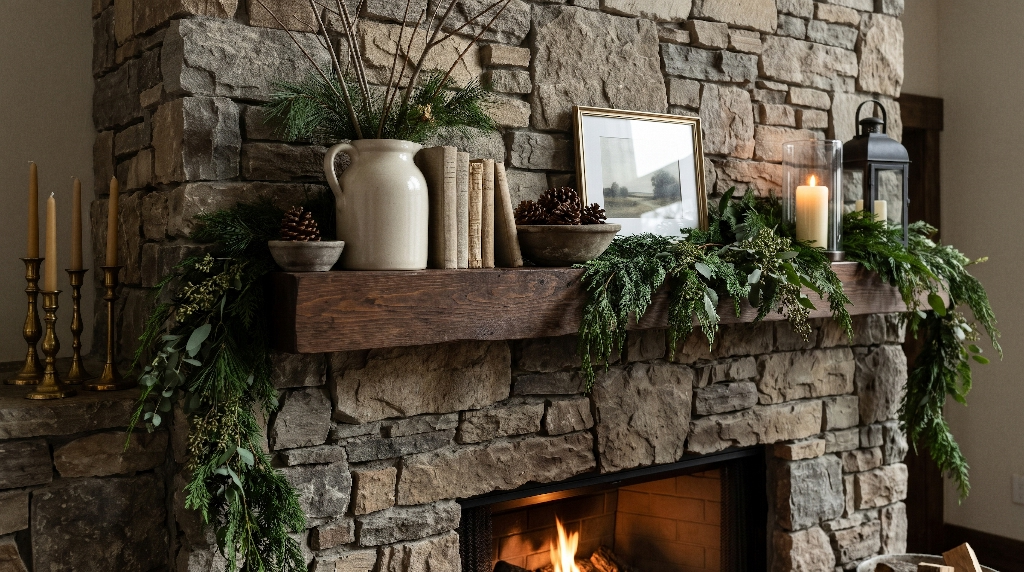
Your fireplace mantel does not float in midair; it sits directly against a major architectural surface like stone, brick, marble, or wood paneling. The secret to a cohesive winter look is choosing colors and textures that work alongside your existing surround rather than fighting against it. When you pay attention to the undertones and surface roughness of your masonry or millwork, every piece you set on the shelf looks like it belongs there.
If your living room features stacked Appalachian fieldstone or rough river rock, you already have plenty of rugged texture and earthy variation in gray, tan, and brown tones. Putting rough wicker or heavily distressed wood directly against bumpy stone can make the area feel overly busy. Instead, soften that stone by choosing smooth, clean finishes for your fireplace mantel. Matte cream stoneware vases, smooth aged brass candlesticks, clear glass hurricanes, and soft ivory taper candles create a calm, refined contrast against rough rock.
Red brick and whitewashed brick surrounds call for a slightly different approach. Traditional red brick carries strong warm orange and terracotta undertones. Cool grays and stark whites can sometimes look harsh next to red brick, so lean into warm woods, deep evergreen foliage, and matte black iron accents. A wooden tray or riser warms up the brick, while black iron lanterns provide crisp definition. If your brick has been whitewashed or painted a soft cream, you have a bright, textured backdrop where earthy browns, sage green eucalyptus, and tarnished silver or pewter stand out gracefully.
For homes with smooth honed marble surrounds or painted shiplap overmantels, the surface itself is sleek and uniform. Here, you can play with rich layers of monochrome neutrals to create quiet sophistication. Mix smoked glass vessels, warm alabaster candleholders, taupe linen book covers, and weathered driftwood or birch bark. Because the background is clean and smooth, these subtle shifts in texture give the eye plenty of gentle detail to enjoy without overwhelming the room.
Extending Coziness from the Mantel Shelf Down to the Hearth
When people plan cozy winter fireplace mantel decorating ideas, they often stop at the edge of the wooden shelf and forget the four feet of space right below it. Treating your fireplace as a complete floor-to-ceiling zone connects the upper mantel to the rest of your living room seating area. Grounding the lower hearth gives your eye a comfortable place to rest and adds practical winter comfort that your whole family can enjoy.
If you have a non-working firebox, or if you rarely light a fire during the week, an empty black firebox can feel like a dark hole in the center of the room. Filling that space with a neat stack of split white birch logs immediately brings bright, natural texture into the hearth. The pale, papery bark of white birch reflects room light and looks crisp against dark soot-stained firebrick. Another simple option is placing a heavy black iron candelabra inside the clean firebox loaded with five or seven ivory LED pillar candles of varying heights. When those candles click on at twilight, you get all the warm, comforting ambiance of a hearth fire with zero smoke, ash, or cleanup.
Out on the raised hearth extension or the floor flanking the firebox, bring in soft, tactile elements that invite people to linger. Place a sturdy woven seagrass or coiled rope basket on one side of the hearth and fill it with chunky knit throw blankets and a few extra plaid or wool pillows. Not only does this soften the hard edges of brick or stone masonry, but it also keeps warm blankets within arm’s reach on cold January nights.
On the opposite side of the hearth, anchor the floor with a pair of oversized black metal or aged bronze lanterns holding thick pillar candles. Placing heavier items down on the hearth visually supports the decorations sitting on the fireplace mantel above, tying the entire wall together into one unified focal point.
Carpentry and Fire Safety Standards for a Working Fireplace
It is important to remember that beauty should never come at the expense of fire safety. A working wood-burning or gas fireplace generates intense radiant heat that rises straight up the face of the surround. Before you drape any garland or light a single wick on your fireplace mantel, take a few minutes to check your clearances and secure your heavier decor pieces.
Building codes across the country, guided by the National Fire Protection Association standard known as NFPA 211, set strict rules for how close combustible wood trim can sit to a firebox opening. In most standard installations, any combustible trim or wooden shelf that projects out from the wall must sit at least six to twelve inches above the top of the firebox opening, depending on how far the shelf sticks out. When you add seasonal decor to that fireplace mantel, those same heat rules apply to everything you place on top of it.
Never let real or faux pine garlands, trailing ribbons, or dried eucalyptus stems hang down below the bottom edge of your mantel shelf while a fire is burning. Rising heat and stray sparks can quickly dry out natural pine boughs, turning decorative greenery into a serious fire hazard. Keep all foliage tucked securely on top of the flat shelf surface, well away from the upward path of firebox heat.
Similarly, if you use real wax taper candles on your mantel while a fire is lit below, keep a close eye on them. Ambient heat rising off the surround can soften wax tapers, causing them to lean or drip unevenly. Using sturdy metal drip catchers or switching to high-quality flameless candles when the firebox is active protects both your wooden shelf and your home. Finally, if you lean a heavy mirror or solid wood frame on your fireplace mantel, always attach a discrete furniture safety strap or picture wire anchor into a wall stud or masonry anchor behind the glass so vibrations from closing doors or playful pets can never tip it forward.
Budget-Friendly “Shop Your Home” Checklist and Seasonal Longevity
Creating a warm, inviting winter display does not require a weekend shopping trip or a big decorating budget. Some of the most charming, personal rooms are styled almost entirely with everyday household items moved from one room to another. When you strip away visual clutter and reuse honest, well-made objects you already own, your fireplace mantel feels authentic to your family rather than copied from a store catalog.
Before you spend a dime, walk through your kitchen, dining room, and bookshelves with a fresh eye. Hardcover books with their glossy paper dust jackets removed reveal beautiful cloth bindings in muted shades of navy, forest green, oatmeal, and burgundy. Stacking two or three of these books flat gives you instant height risers for smaller candleholders or ceramic bowls. A round wooden breadboard or vintage cutting board from your kitchen leans effortlessly behind a ceramic pitcher to add warm wood grain against painted drywall. Even a tarnished silver or brass serving tray from a dining hutch can be stood upright at the back of the shelf to reflect warm candlelight.
To pull everything together without feeling overwhelmed, follow this simple 30-minute reset routine:
- Clear the entire shelf completely. Remove every holiday item, wipe down the wood or stone surface with a damp microfiber cloth, and let your eyes adjust to the clean blank slate.
- Position your largest anchor first. Hang or lean your central mirror, framed winter landscape, or artwork slightly off-center or dead center depending on your chosen layout.
- Lay down your base greenery. Drape a simple runner of winter pine or cedar across the shelf, keeping all stems safely on top of the ledge and clear of the firebox opening below.
- Add three levels of warm light. Place your tall taper candlesticks, medium hurricane lanterns, and low votives or fairy lights to create gentle evening glow.
- Tuck in two or three personal textures. Finish with a stack of linen books, a stoneware bowl of pinecones, or a small ceramic vessel holding foraged branches, aiming for five to seven core groupings total.
- Step back across the room and edit. Sit down on your sofa, look at the fireplace mantel from your normal seating height, and remove one small item if any spot feels crowded.
Best of all, this calm winter foundation makes transitioning into spring effortless when March arrives. Because you built your display around timeless neutrals, brass candlesticks, glass lanterns, and ceramic vessels, you do not have to pack everything away again. Simply swap out the pine boughs and pinecones for fresh-cut flowering forsythia or dogwood branches from your yard, trade your heavy wool hearth blankets for lighter cotton throws, and your living room is ready for a brand-new season.