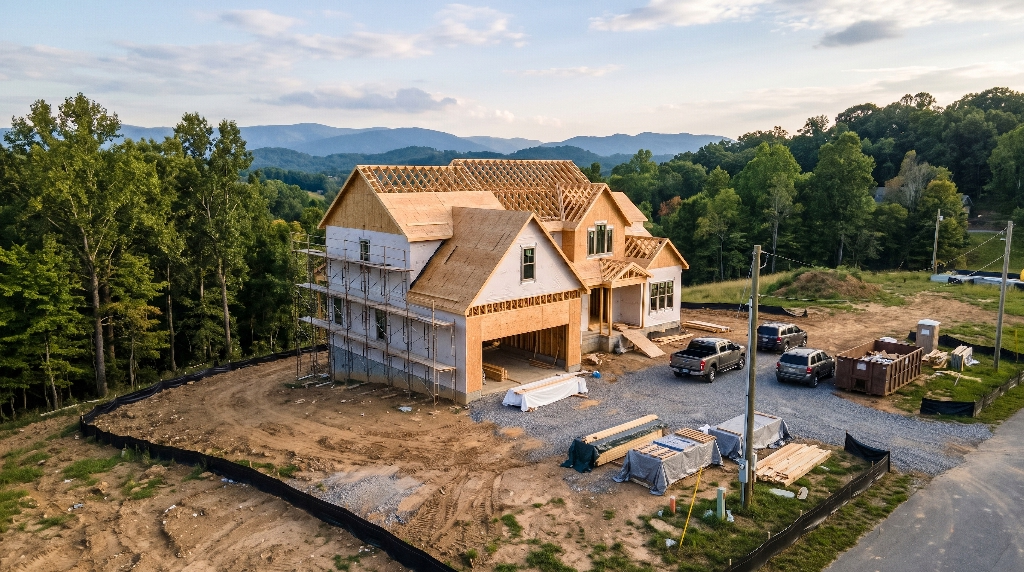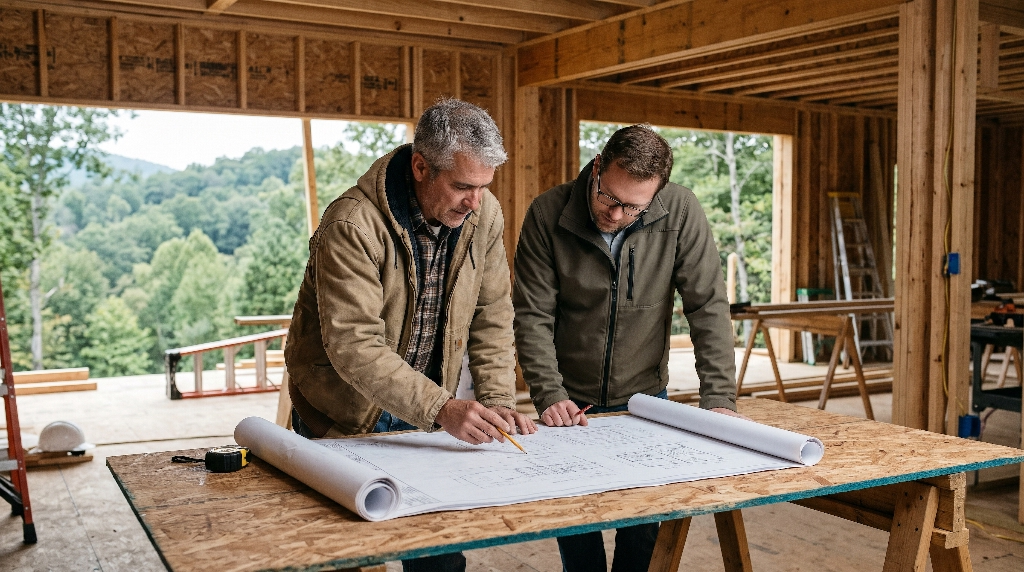

Walk onto almost any active jobsite, and you can see where the money goes. Stacks of framing lumber, bundles of shingles, electrical panels, and poured concrete foundations all represent real, physical progress. When a fire, severe windstorm, or burst pipe damages a project mid-build, a standard builders risk policy steps in to pay for replacing those damaged materials and hiring crews to put them back together. However, the quiet budget-killer on a damaged jobsite is rarely the cost of new lumber. The real financial trap is the schedule slip that happens while building inspectors, structural engineers, and subcontractors reset the clock.
To understand what are soft costs in builders risk insurance, think about every bill that keeps ticking when physical work stops. Soft costs are the indirect, non-physical expenses tied to a construction project that continue piling up when a covered physical loss delays completion. These expenses include extra construction loan interest, ongoing property taxes, architectural redesign fees, and municipal permit renewals. Even though you cannot touch or see these expenses on the jobsite, they drain your cash reserves every single day your schedule is pushed back.
Industry data and real-world project accounting show that soft costs routinely make up 10% to 30% of a total construction budget. On a custom home or commercial build, even a six-to-eight-week delay can completely wipe out a builder’s profit margin or force a home buyer to pay thousands of dollars out of pocket. Understanding how this coverage works before you break ground is one of the smartest ways to keep a bad storm or jobsite accident from turning into a financial disaster.
Hard Costs vs. Soft Costs in Builders Risk: What Is the Difference?
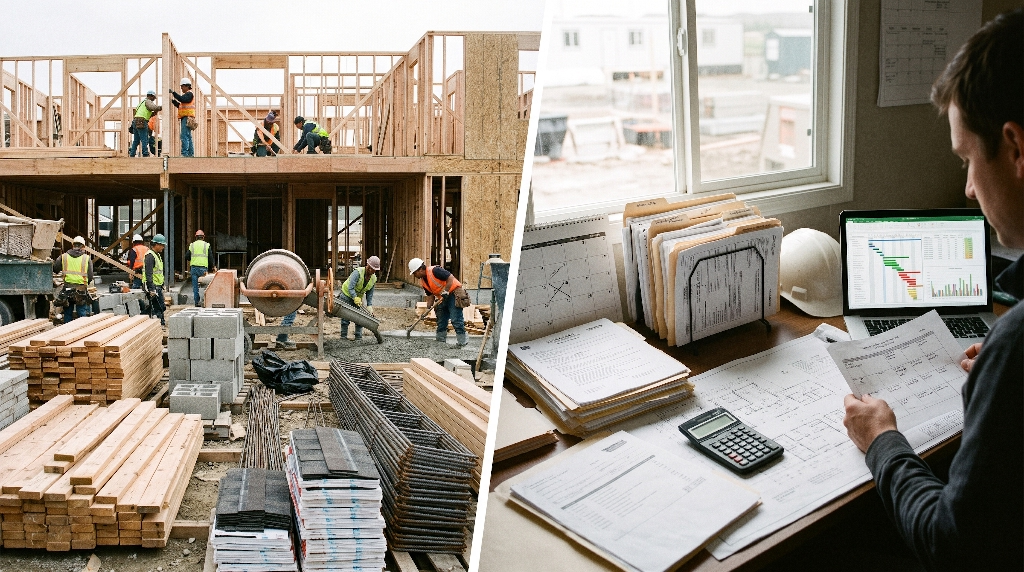
Every construction budget splits into two distinct buckets: hard costs and soft costs. Knowing how insurance companies separate these two categories helps you see where a basic policy protects you and where it leaves your wallet exposed.
Defining Hard Costs (Tangible Structure and Materials)
Hard costs are the direct, physical expenses required to construct the building itself. If you can load it onto a flatbed truck, install it with a hammer or wrench, or point to it during a walkthrough, it is almost certainly a hard cost. Common examples include concrete, framing lumber, trusses, roofing materials, windows, drywall, flooring, plumbing fixtures, HVAC equipment, and the direct wages paid to the carpenters and subcontractors installing them.
When you buy a standard builders risk policy, the insurance company calculates your coverage limit and your premium based almost entirely on these hard costs. If a windstorm tears the roof off a half-built house and rain ruins the subfloor, the insurer pays to replace the ruined wood, shingles, and labor. That payout restores the physical structure to the exact condition it was in right before the storm hit.
Defining Soft Costs (Indirect Carrying and Administrative Overhead)
Soft costs are the behind-the-scenes financial, legal, and administrative expenses needed to plan, finance, permit, and manage the build. These expenses do not add a single board foot of lumber or square foot of drywall to the structure, yet the project cannot move forward without them. Examples include interest on your construction loan, architectural drawings, engineering reviews, land surveys, municipal building permits, legal contracts, and insurance premiums.
Unlike hard costs, soft costs are driven by time rather than physical damage. When a covered fire or storm halts construction for three months, your framing crew moves on to another job and stops billing you until repairs begin. Your bank, your county tax assessor, and your local permit office do not pause their clocks. Without special protection on your policy, every extra month of carrying costs comes straight out of your own pocket.
| Feature | Hard Costs | Soft Costs |
| Core Definition | Direct physical materials and on-site construction labor | Indirect financial, legal, administrative, and design expenses |
| Common Examples | Lumber, concrete, roofing, wiring, plumbing, subcontractor labor | Construction loan interest, permit renewals, engineering fees, property taxes |
| Default Policy Status | Automatically covered under a standard builders risk policy | Excluded by default unless added via a specific endorsement |
| How Claims Are Calculated | Based on the actual cost to repair or replace damaged physical property | Based on documented extra expenses incurred during a covered delay period |
What Expenses Qualify as Soft Costs Under a Builders Risk Endorsement?
Insurance carriers group covered soft costs into clear categories inside a policy endorsement. While exact wording varies from one insurance company to another, most comprehensive endorsements cover five major groups of expenses when a covered physical loss pushes back your completion date.
Financing and Loan Carrying Costs
For most custom home buyers and commercial developers, financing is the single largest time-sensitive expense on a build. Construction loans carry higher interest rates than permanent mortgages, and interest accrues every month on the money already drawn to pay for site work and framing. If a fire delays your closing by 90 days, you must continue paying monthly interest on that loan balance while the damaged structure is torn down and rebuilt. A strong endorsement reimburses this extra construction loan interest, along with loan extension fees or administrative charges your lender requires to keep the credit line open past its original maturity date.
Architectural, Engineering, and Consulting Fees
When a major loss hits an unfinished structure, you rarely just nail new boards over the old ones. A severe fire, structural collapse, or major water intrusion often forces an architect or structural engineer to inspect the remaining foundation and framing. You may need fresh blueprints, revised load calculations, or updated mechanical drawings to satisfy local building codes before repairs can start. Soft costs coverage pays for these extra architectural, engineering, and specialty consulting fees that would not have existed if the loss had never happened.
Permits, Re-Inspections, and Legal or Accounting Fees
Local building departments issue permits with strict expiration windows and require sequential inspections at every phase of construction. A lengthy delay caused by property damage can cause building permits to expire, forcing you to pay municipal renewal fees and schedule extra inspections with city or county officials. On larger builds, delays also trigger legal and accounting work, such as renegotiating subcontractor agreements, updating lender draw schedules, or paying a certified public accountant to audit delay expenses for your insurance claim.
Real Estate Taxes and Extended Insurance Premiums
County and municipal tax assessors calculate property taxes based on calendar dates, not your construction schedule. If your project sits idle for four extra months while waiting on custom trusses to replace storm-damaged ones, you still owe real estate taxes during that extended window. In addition, your original builders risk policy has a set expiration date. When repairs push your completion past that date, you have to pay extra premiums to extend your policy term. Qualifying soft costs include both the additional real estate taxes accrued during the delay and the pro-rata cost of extending your builders risk insurance.
Marketing, Leasing, and Extended General Conditions
Commercial builders, spec home builders, and multi-family developers often spend money marketing a property months before completion. If a covered loss delays your grand opening or move-in date, you may have to pay for new advertising campaigns, updated signage, or real estate leasing commissions to replace tenants who walked away due to the wait. Some endorsements also cover extended general conditions, which are ongoing jobsite overhead costs such as renting temporary perimeter fencing, portable toilets, storage containers, and site security cameras during the rebuild window.
Are Soft Costs Automatically Included in a Standard Builders Risk Policy?
No, soft costs are almost never included automatically in a standard builders risk policy. A basic course-of-construction policy is designed strictly to cover direct physical loss or damage to the building materials and structure. If you buy an off-the-shelf policy without asking your agent about delay protection, your coverage stops at bricks, mortar, and labor.
To get protection for soft costs, you must specifically request a soft cost endorsement (sometimes labeled as a Delay in Completion endorsement) before construction begins. This endorsement attaches to your main builders risk policy and adds a separate dollar limit dedicated to time-related expenses. Because insurance carriers treat this as an optional add-on, underwriters will review your construction timeline, loan structure, and total project budget before quoting the extra premium.
Reading the exact wording on that endorsement is critical because insurance companies do not use one universal definition for soft costs. Some carriers use broad manuscript forms that cover a wide range of administrative and financing bills, while other insurers use strict forms that only reimburse four or five named items. Courts enforce insurance contracts strictly according to what is written on the page. If an expense category is not listed in your endorsement schedule, the insurance company will not pay for it after a claim.
Many property owners and builders also confuse builders risk coverage with surety bonds. A performance bond or payment bond protects a project owner if a general contractor goes bankrupt or walks off the job without finishing the work. Surety bonds do not cover physical damage from storms or fires, and they will never reimburse your soft costs when an insured peril delays your schedule.
When Does Soft Cost Coverage Pay? Triggers, Waiting Periods, and Exclusions
Having a soft cost endorsement on your policy does not mean the insurance company writes a check every time your project falls behind schedule. To prevent builders from using insurance to cover poor project management, carriers enforce strict rules around when coverage applies.
The Two-Part Trigger Rule
Before an insurer pays a single dollar for soft costs, your claim must satisfy a strict two-part trigger rule:
- Direct Physical Loss from a Covered Peril: There must be actual, physical damage to the insured project caused by a peril listed in your policy, such as fire, lightning, windstorm, hail, theft, vandalism, or accidental water discharge.
- A Proven Delay in Completion: That specific physical damage must directly push back your scheduled completion date.
If a windstorm blows down newly framed walls and sets your framing crew back by five weeks, both parts of the trigger are met. On the other hand, if you decide mid-build to change your kitchen layout and wait six weeks for custom cabinets, there is no physical damage from a covered peril, so no coverage applies.
Common Delay Exclusions That Catch Builders Off Guard
Many costly delays happen on jobsites without any physical damage occurring at all. Standard endorsements specifically exclude soft costs caused by the following non-physical issues:
- Supply Chain Backorders: If your windows, electrical switchgear, or appliances sit on a factory backlog for three months, your extra loan interest is not covered unless a covered peril damaged those items in transit or on site.
- Routine Bad Weather: Rain, snow, or freezing temperatures that simply stop crews from pouring concrete or framing roofs do not trigger coverage unless the weather physically damages existing work.
- Labor Strikes or Subcontractor Shortages: Walkouts, union disputes, or a framing crew failing to show up on time are treated as business risks rather than insurable losses.
- Slow Municipal Permitting or Permit Lapses: Delays caused by a backed-up city building department or a builder forgetting to renew a license are excluded.
- Faulty Workmanship or Design Errors: If a subcontractor installs a foundation incorrectly and has to tear it out, the cost and delay of fixing bad work are excluded unless that mistake causes a separate covered peril, such as an electrical fire.
Waiting Periods, Monthly Aggregates, and Indemnity Windows
Even when a valid claim triggers your coverage, three policy mechanics control how much money you actually collect.
First, nearly every endorsement includes a waiting period, which works like a time deductible. Common waiting periods range from 3 days to 30 days. If your policy has a 14-day waiting period and a fire delays your project by 44 days, the insurance company will only reimburse soft costs for the remaining 30 days. You absorb the expenses during the first two weeks yourself.
Second, insurers cap payouts using either a flat occurrence limit or a monthly aggregate limit. A monthly aggregate divides your total coverage into 30-day buckets. For example, if you buy $60,000 in coverage with a $15,000 monthly aggregate, the insurer will pay up to $15,000 per month for four months. If your expenses spike to $22,000 in month one, you still only collect $15,000 for that 30-day period.
Third, coverage only lasts during the indemnity period. The clock starts on the date the project would have been finished had no loss occurred, and it stops as soon as the repairs are finished and the building reaches substantial completion or receives its Certificate of Occupancy. You cannot stretch out repairs to keep collecting loan interest.
How Soft Costs Add Up After a Loss: Real-World Project Examples
Looking at actual numbers makes it easy to see why experienced builders treat soft costs with the same respect as foundation concrete. Below are two realistic examples showing how quickly indirect bills stack up after a mid-build loss.
Scenario A: Custom Residential Home Build ($750,000 Value)
Imagine a custom home buyer building a $750,000 residence using a construction-to-permanent loan. Eight months into the build, right after the rough electrical, plumbing, and drywall are finished, a faulty temporary heater sparks an overnight fire. The fire guts the second floor and causes heavy smoke and water damage downstairs.
The standard builders risk policy pays $185,000 to tear out the charred framing, remediate smoke damage, and rebuild the interior. However, waiting for fire investigators, structural engineers, new lumber deliveries, and municipal re-inspections pushes the closing date back by eight weeks (two full months).
Without a soft cost endorsement, the home buyer faces an unexpected out-of-pocket bill:
- Extra Construction Loan Interest: On a $600,000 drawn loan balance at 7.5% annual interest, two extra months cost $7,500.
- Loan Extension and Rate-Lock Fees: The lender charges $2,200 to extend the construction loan maturity date and preserve the permanent mortgage interest rate lock.
- Architectural and Structural Engineering Review: A structural engineer charges $3,800 to inspect the fire-exposed trusses and stamp revised plans for the county building inspector.
- Permit Renewals and Re-Inspection Fees: Updating expired mechanical and building permits costs $950.
- Builders Risk Policy Extension: Extending the insurance policy for 60 additional days costs $1,150.
- Additional Storage and Temporary Living Expenses: Extending furniture storage and temporary rental housing adds $6,900 (note that temporary living expenses require specific additional living expense wording on residential policies).
In total, that eight-week delay creates $22,500 in extra expenses. The physical house gets rebuilt by the base policy, yet the home buyer has to drain $22,500 from personal savings just to make it to the closing table.
Scenario B: Commercial or Multi-Unit Development ($2,000,000+ Value)
Now consider a developer constructing a $2,400,000 retail and office building in a growing suburban corridor. Three months before scheduled completion, a severe windstorm rips off a large section of the roof membrane, allowing heavy rain to soak the interior framing, insulation, and electrical gear.
Hard cost repairs total $420,000, and the schedule slips by four months while specialized commercial roofing materials are reordered and wet assemblies are dried and rebuilt. On a project of this scale, soft costs escalate rapidly:
- Construction Loan Interest: At $11,500 per month on the active credit line, four months add $46,000.
- County Real Estate Taxes: Four extra months of commercial property tax assessments add $6,400.
- Engineering, Environmental, and Code Recertification: Moisture testing, mold clearance certifications, and revised engineering stamps cost $12,500.
- Builders Risk Policy Extension: Extending a $2.4 million commercial policy for four months costs $4,800.
- Marketing and Re-Leasing Costs: Re-advertising delayed retail suites and renegotiating tenant build-out timelines add $9,300.
Here, a four-month delay generates $79,000 in soft costs. For a commercial developer, an uninsured $79,000 hit can turn a profitable development into a break-even or money-losing venture.
How Much Soft Cost Coverage Do You Need? A 4-Step Calculation Method
Guessing at a random coverage number often leaves you either underinsured during a major claim or paying for soft costs coverage you cannot actually collect. Follow these four practical steps to calculate an accurate limit for your project.
Step 1: Audit Your Monthly Carrying Burn Rate
Start by listing every recurring monthly bill tied to the project once construction reaches peak spending. Look at your construction loan agreement to find the maximum projected loan balance and multiply it by your interest rate, then divide by 12 to get your peak monthly interest charge. Next, add your monthly share of annual property taxes, the monthly cost of extending your builders risk insurance, and any standing monthly retainers paid to architects, project managers, or security vendors. This total gives you your monthly burn rate.
Step 2: Estimate One-Time Re-Work Expenses
Next, add up the one-time administrative and professional fees that would occur if a serious fire or storm damaged the structure. Talk to your architect and structural engineer to estimate what a post-loss site evaluation and plan re-stamping would cost, typically between $3,000 and $15,000 depending on project complexity. Add estimated municipal permit renewal fees, lender modification fees, and legal or accounting expenses for documenting a claim.
Step 3: Model a Realistic Worst-Case Rebuild Timeline
Many builders size their coverage for a minor two-week hiccup, which is a mistake because waiting periods often eat up the first two to four weeks anyway. Instead, model a realistic worst-case scenario, such as a major fire or wind loss at 75% completion that requires three to six months to clear debris, re-permit, reorder materials, and rebuild. Multiply your monthly burn rate from Step 1 by that number of months, add your one-time re-work fees from Step 2, and make sure your chosen monthly aggregate limit is high enough to cover your peak monthly interest bill.
Step 4: Align with Lender Requirements and Total Insurable Value (TIV)
Before finalizing your quote, check your construction loan commitment letter. Many commercial banks and residential construction lenders require borrowers to carry a specific minimum limit for soft costs alongside an interest reserve account. At the same time, verify that your overall builders risk policy reflects the true Total Insurable Value (TIV) of the project, including any mid-build change orders. If you underreport your total project value, a coinsurance penalty could reduce your payout on both physical repairs and delay claims.
Soft Costs vs. Delay in Completion, Loss of Rents, and Business Income
When shopping for coverage for soft costs, you will hear insurance agents use several overlapping terms that sound similar but protect completely different parts of your balance sheet. Understanding how these coverages fit together prevents costly gaps.
- Soft Costs Coverage: Reimburses the extra ongoing expenses you must pay during the extended construction period, such as loan interest, property taxes, and permit renewals. It covers money going out of your pocket.
- Loss of Rents or Business Income (Delay in Startup): Reimburses the income you lose because the building cannot open on time. If an apartment developer loses three months of tenant rent or a retail owner loses three months of store revenue due to a covered construction delay, Loss of Rents or Business Income pays for that lost revenue. It covers money failing to come into your pocket.
- Liquidated Damages Coverage: Many commercial construction contracts include a penalty clause requiring the general contractor to pay the owner a set dollar amount (such as $1,000 per day) for every day the project finishes late. Standard soft costs endorsements exclude liquidated damages. Contractors who sign contracts with strict penalty clauses must ask for a specialized liquidated damages endorsement.
| Coverage Type | What It Protects | Custom Home Buyer | Spec Home Builder | Commercial Developer | Commercial Landlord |
| Soft Costs Endorsement | Extra loan interest, taxes, permits, and design fees during a delay | Essential | Essential | Essential | Essential |
| Loss of Rents | Lost rental income when tenants cannot move in on schedule | Not Needed | Rarely Needed | Essential (if leasing) | Essential |
| Business Income (Delay in Startup) | Lost operating profits for an owner-occupied commercial building | Not Needed | Not Needed | Essential (if owner-user) | Rarely Needed |
| Liquidated Damages | Contractual daily late penalties owed by a builder to an owner | Not Needed | Rarely Needed | Optional (for GCs) | Not Needed |
6 Questions to Ask Your Insurance Agent Before Breaking Ground
Before you sign your soft costs builders risk application or pay your initial premium, sit down with your insurance agent and ask these six direct questions. Getting clear answers upfront ensures there are no surprises if a storm hits your jobsite.
- Is soft cost coverage explicitly scheduled on the declarations page? Never rely on verbal assurances that a policy includes full protection. Ask to see the exact endorsement form number and dollar sublimit printed on the declarations page.
- Which specific soft cost categories are named in the endorsement definition? Request a copy of the endorsement wording and verify that construction loan interest, real estate taxes, architectural and engineering fees, permit renewals, and insurance extensions are all listed in writing.
- What is the waiting period before reimbursement starts? Find out whether your policy carries a 3-day, 7-day, 14-day, or 30-day waiting period, and make sure you have enough cash in your contingency fund to cover expenses during that deductible window.
- Is the limit structured as a flat occurrence sublimit or a capped monthly aggregate? A flat limit gives you maximum flexibility if your expenses spike in the first month after a loss, whereas a monthly aggregate restricts how much you can collect in any 30-day stretch.
- Does the policy include a coinsurance clause if our budget increases mid-build? Custom homes and commercial builds frequently grow in cost due to material upgrades or change orders. Ask how mid-project budget increases affect your coverage limits so you do not get penalized at claim time.
- Are both the property owner and general contractor listed properly as named insureds? Depending on who holds the construction loan and who pays the municipal fees, both the owner and the builder may incur soft costs during a delay. Make sure both parties are properly listed so the insurer cannot deny a claim over who actually paid the bill.
Frequently Asked Questions About Builders Risk Soft Costs
Can you add soft cost coverage after construction starts?
Most insurance carriers will not add soft costs coverage once a project is already underway, especially if framing has started or a storm is already in the forecast. Underwriters view mid-build requests as a sign of existing schedule trouble. Always bind your builders risk policy and any delay endorsements before the first shovel hits the dirt.
Does soft cost insurance cover liquidated damages?
No, standard soft costs endorsements exclude contractual penalties and liquidated damages owed to a property owner or future tenant. If your construction contract penalizes your company for every day you miss the substantial completion deadline, you must ask your broker for a specific liquidated damages endorsement, which requires separate underwriting approval.
How do you document a soft cost claim?
To get paid quickly after a covered delay, keep meticulous project records from day one. You will need your original baseline construction schedule, updated critical-path schedules showing the exact delay caused by the physical damage, monthly construction loan interest statements, invoices from architects and engineers, municipal permit receipts, and property tax bills.
How long does soft cost coverage last after a loss?
Coverage continues only for the reasonable period of time required to repair or rebuild the damaged property with due diligence and dispatch. Once the repairs are completed and the project reaches the stage of readiness it would have achieved without the loss, the indemnity period ends, even if you have unused dollars left under your policy limit.
Does soft cost coverage pay for temporary housing if my custom home is delayed?
Standard commercial and residential soft costs endorsements focus on project financing, taxes, and professional fees rather than personal living costs. However, if you are building a custom home for yourself, your agent can often add an Additional Living Expense (ALE) endorsement to cover hotel stays, short-term apartment rent, and furniture storage while your home is being repaired.
Who collects the payout on a soft cost claim, the builder or the property owner?
The insurance company pays whichever named insured actually suffered the documented financial loss. If the property owner holds the construction loan and pays the property taxes, the reimbursement for extra interest and taxes goes to the owner (or directly to the construction lender if listed as a loss payee). If the general contractor paid for permit renewals and extended site security, the contractor collects reimbursement for those specific bills.
Taking an afternoon before construction starts to audit your carrying costs and attach the right endorsement costs a fraction of what a single month of delayed loan interest will run you. When your hard costs and soft costs are both protected, a jobsite setback stays a temporary schedule headache instead of becoming a permanent financial loss.