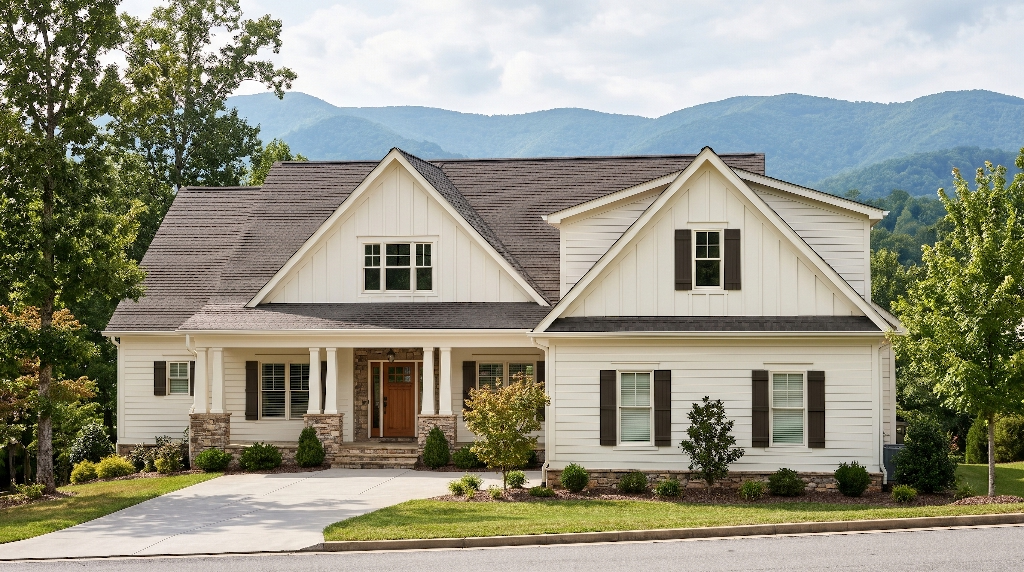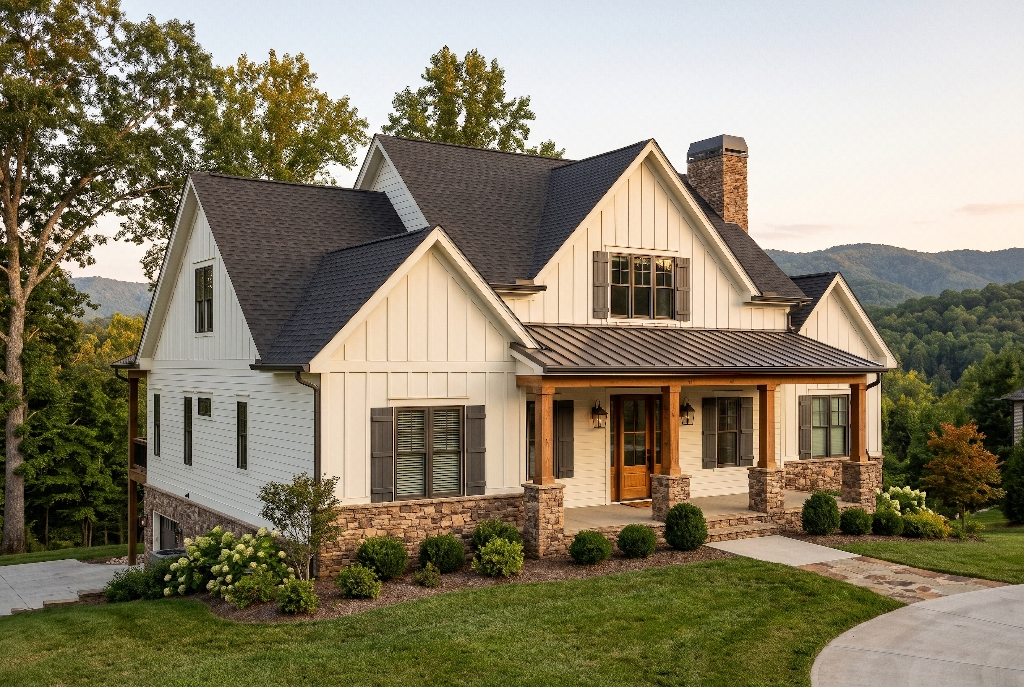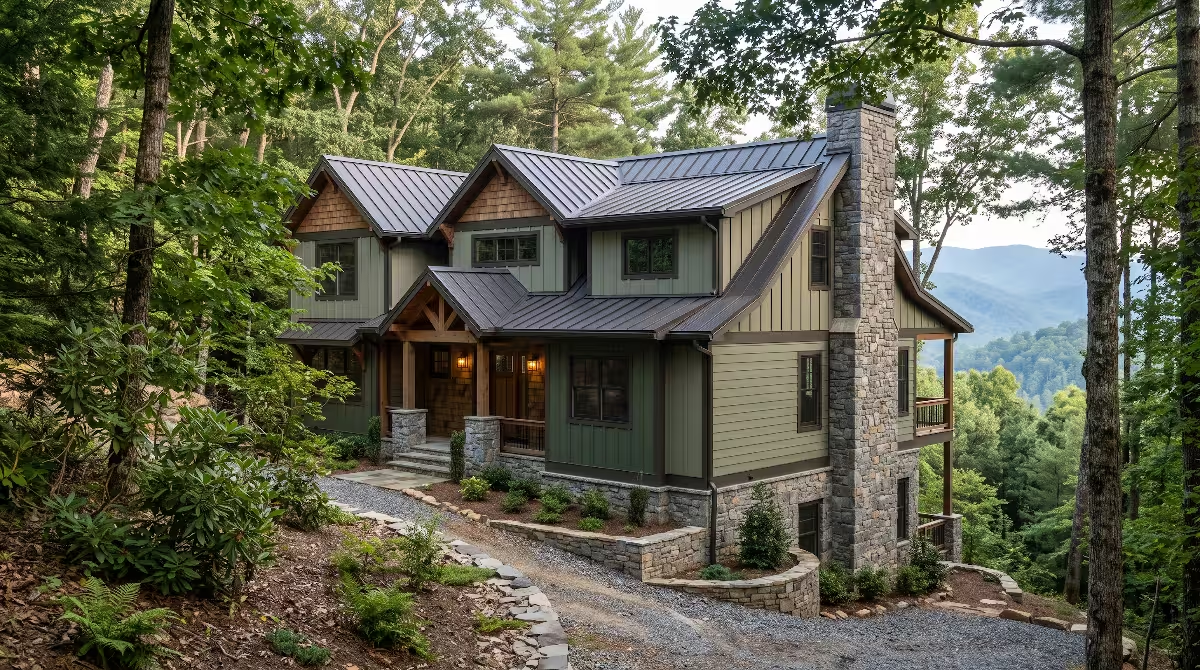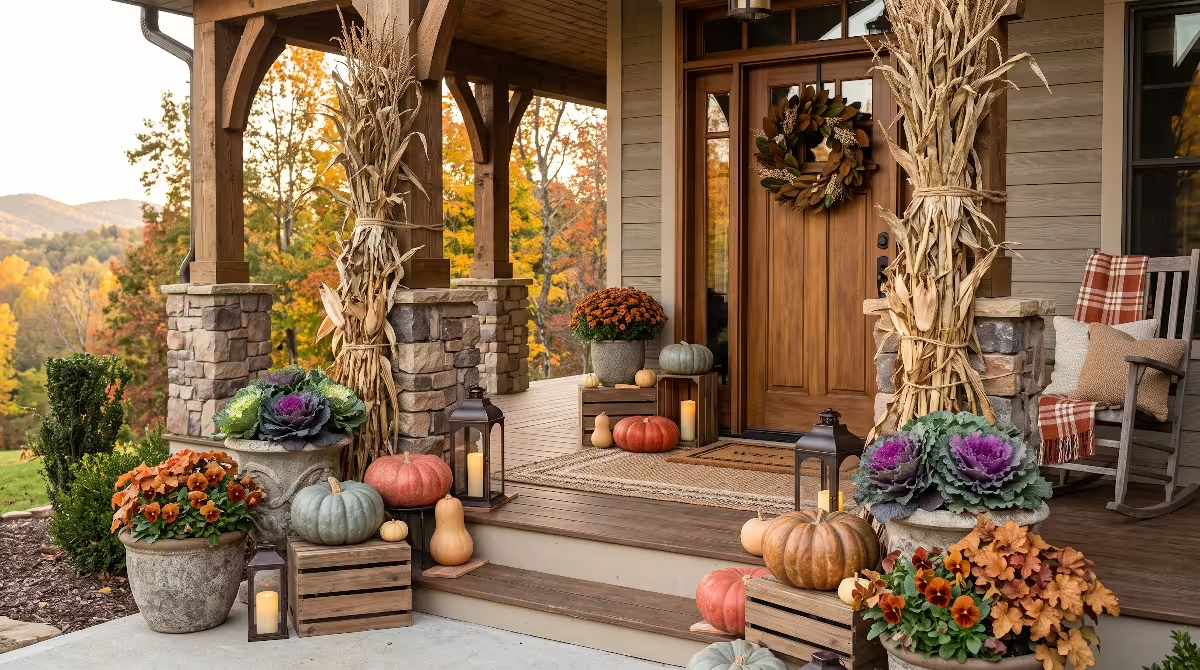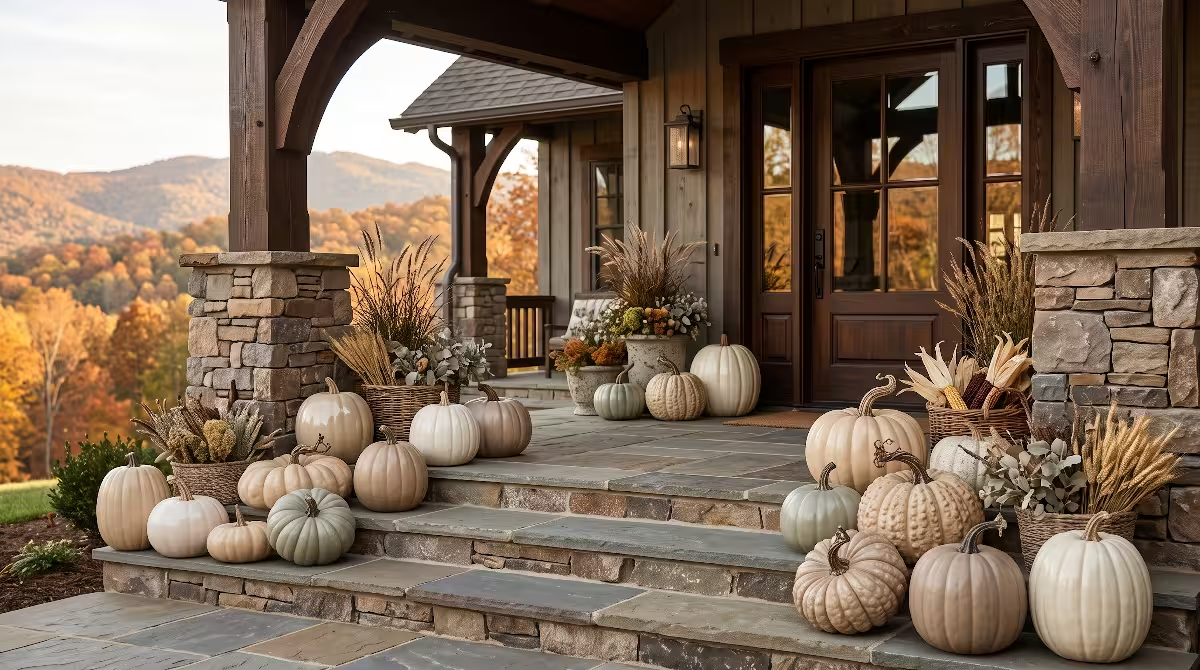


For the past decade, modern farmhouse design leaned heavily on stark, bright white siding that looked crisp in photos but often felt harsh in real life. Today, homeowners and builders are moving away from clinical, blinding whites and choosing softer, warmer neutrals that sit in harmony with nature. That shift makes Pantone’s 2026 Color of the Year, Cloud Dancer (PANTONE 11-4201), an ideal choice for modern farmhouse architecture.
Cloud Dancer is a billowy, balanced off-white that brings quiet clarity to a busy world. Unlike flat hospital whites that bounce harsh glare across a yard, this gentle shade softens bright sunlight and connects a home to surrounding trees, grass, and stone. When you select exterior paint for a modern farmhouse, your goal is to create a welcoming facade that feels grounded in its landscape rather than fighting against it.
Of course, picking a trending color is only the first step in a successful exterior project. A great paint job depends on the science of how light hits your walls, how coatings bond to your siding, and how finishes stand up to rain and heat. In this guide, we will explore how Cloud Dancer works on real homes, share the closest paint matches from top brands, and build five complete color palettes. You will also learn practical field rules for Light Reflectance Value (LRV), siding substrates, sheen selection, and long-term weather durability so your exterior paint looks fresh for years to come.
Understanding Pantone’s 2026 Color of the Year: Cloud Dancer (PANTONE 11-4201)
Every December, the Pantone Color Institute selects a shade that captures the mood of the coming year across fashion, product design, and architecture. For 2026, Executive Director Leatrice Eiseman and her team introduced Cloud Dancer (PANTONE 11-4201), a whisper-soft off-white meant to bring calm and focus to our daily spaces. While many people think of white as a blank slate, architectural designers know that white is actually one of the hardest colors to get right outdoors.
Color Profile, Undertones, and Light Reflectance Value (LRV)
To understand why Cloud Dancer works so well as an exterior paint color, you need to look at its technical profile. Cloud Dancer sits at HEX #F0EEE9, which gives it a gentle, airy balance between warm and cool tones. It carries a very subtle gray-taupe whisper with just a hint of organic warmth, meaning it avoids turning creamy yellow in afternoon sun or icy blue on cloudy mornings.
In the paint industry, experts measure brightness using Light Reflectance Value, or LRV, on a scale from 0 (pure black) to 100 (pure white). Cloud Dancer has an approximate LRV of 85. That number hits a sweet spot for exterior paint on large residential facades. Colors with an LRV above 90 act like mirrors in direct sunlight, washing out architectural details and straining the eyes of anyone looking at the house. At an LRV of 85, Cloud Dancer reflects enough light to keep your farmhouse looking bright and airy while holding enough pigment to show off the crisp shadows of your siding and trim.
How Cloud Dancer Evolves Past Classic Farmhouse Whites
Early modern farmhouses often used pure, untinted base whites that looked sharp in magazine spreads but felt sterile in suburban neighborhoods or wooded rural lots. Over time, builders noticed that ultra-bright whites also highlighted every tiny wave in wood siding and showed dust within months. Cloud Dancer solves both problems by introducing a softer, organic edge that feels lived-in from day one.
This move toward softer neutrals builds on recent color trends that favor earthy comfort. For example, Pantone’s 2025 Color of the Year, Mocha Mousse (PANTONE 17-1230), reminded homeowners how rich and inviting warm brown tones can be. Instead of replacing those earthy hues, Cloud Dancer gives you a calm, light foundation that pairs naturally with warm browns, weathered woods, and natural stone. It respects traditional farmhouse roots while updating the look for modern living.
Closest Architectural Paint Matches for Cloud Dancer
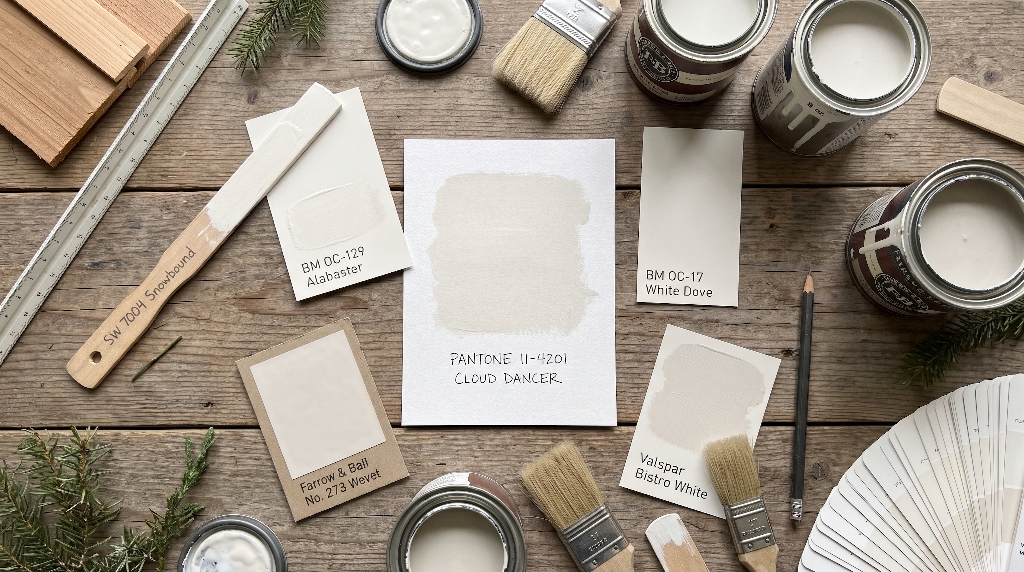
Pantone sets color standards for designers, but you cannot walk into a hardware store and buy a gallon of official Pantone house paint. Instead, you need to match Cloud Dancer to trusted exterior paint formulas made by major architectural coatings manufacturers. Each brand offers a close cousin to PANTONE 11-4201, with slight differences in undertone and depth.
Sherwin-Williams Snowbound (SW 7004)
Sherwin-Williams Snowbound (SW 7004) is one of the closest architectural matches to Cloud Dancer you can buy. With an LRV of 83, Snowbound shares Cloud Dancer’s soft, balanced character and subtle gray-taupe undertone. On a modern farmhouse exterior, Snowbound never looks stark or chalky, even under bright summer sun. It works especially well on homes with cool gray stonework, dark charcoal roofs, or black window frames because its gentle gray base ties those darker elements together without feeling cold.
Benjamin Moore Alabaster (OC-129) and White Dove (OC-17)
If you prefer Benjamin Moore exterior paint, two classic shades capture the spirit of Cloud Dancer depending on how much warmth your site needs. Benjamin Moore Alabaster (OC-129) sits right at an LRV of 85, matching Cloud Dancer’s brightness while leaning a touch warmer. It is a top choice for homes surrounded by green lawns and warm cedar accents, where a hint of warmth keeps the siding from looking sterile.
Benjamin Moore White Dove (OC-17) is slightly softer, with an LRV of 83 and a creamy, muted undertone that has made it a favorite among custom home builders for decades. White Dove absorbs a bit more glare than Alabaster, making it an easy, forgiving exterior paint for large two-story farmhouses that sit in open, sunny fields without shade trees.
Valspar Bistro White and Farrow & Ball Wevet (No. 273)
Homeowners shopping at big-box home improvement stores or boutique paint shops also have strong options. Valspar Bistro White mirrors Cloud Dancer’s clean, approachable off-white profile and holds its tone well across large expanses of horizontal lap siding. For homeowners seeking a designer finish with deep pigment complexity, Farrow & Ball Wevet (No. 273) offers a delicate, translucent off-white with a faint gray undertone. Wevet shifts gracefully as daylight changes from morning to evening, giving historic or high-end custom farmhouses a refined, chalky elegance.
Five High-Impact Modern Farmhouse Exterior Color Palettes

A great exterior paint color rarely works alone. To create true curb appeal, you need a complete palette that balances your main siding, trim boards, window sashes, and front door. Below are five builder-tested palettes built around Cloud Dancer and its closest architectural matches.
Palette 1: Soft Monochrome Contrast (Cloud Dancer and Espresso Trim)
For years, black-and-white was the only formula people used on modern farmhouses. Today, pairing Cloud Dancer siding with deep espresso brown trim creates a softer, more organic contrast that feels fresh and sophisticated. Benjamin Moore Silhouette (AF-655), Benjamin Moore’s 2026 Color of the Year, is a rich, velvety brown-charcoal that works wonderfully on window frames, fascia boards, and porch posts. This combination reduces harsh visual contrast while keeping strong architectural lines, making the house look deeply connected to surrounding soil, bark, and trees.
Palette 2: Classic Crisp Contrast (Cloud Dancer and Tricorn Black)
If you love the timeless look of a white farmhouse with dark windows, you can still use that classic formula with a 2026 update. Coat your main siding in a Cloud Dancer match like Snowbound, then use Sherwin-Williams Tricorn Black (SW 6258) on your window sashes, gable vents, and exterior light fixtures. Because Cloud Dancer is softer than pure white, Tricorn Black looks rich and tailored rather than overly harsh. Adding warm brass sconce lights or a natural wood front door keeps the palette from feeling too stark.
Palette 3: Earthy Transitional (Cloud Dancer Trim and Universal Khaki Body)
You do not have to use Cloud Dancer as your main siding color. Flipping the palette puts a fresh spin on modern farmhouse style. Try painting your main body siding in Sherwin-Williams Universal Khaki (SW 6150), Sherwin-Williams’ 2026 Color of the Year, which is a grounded, warm tan-khaki. Then use Cloud Dancer on your window trim, corner boards, fascia, and board-and-batten gable peaks. This reversed exterior paint scheme hides dust near the ground while highlighting the crisp white trim up high.
Palette 4: Woodland Farmhouse (Cloud Dancer and Smoky Jade Accents)
Modern farmhouses built on wooded lots or near rolling hills look wonderful when their exterior paint echoes the surrounding foliage. Pair a Cloud Dancer main body with Behr Hidden Gem (N430-6A), Behr’s 2026 smoky jade Color of the Year, or Sherwin-Williams Evergreen Fog (SW 9130) on your front door, board-and-batten shutters, and porch ceiling. These muted blue-green shades bring biophilic calm to the entryway and bridge the gap between crisp white walls and green trees.
Palette 5: Heritage Warmth (Cloud Dancer, Iron Ore, and Cedar)
For a farmhouse that blends traditional country charm with modern durability, combine three complementary tones. Paint your upper siding in Cloud Dancer, use Sherwin-Williams Iron Ore (SW 7069)—a soft charcoal-black—on lower brick skirts or garage doors, and leave your front porch columns in natural stained Western red cedar. Iron Ore grounds the base of the home visually, Cloud Dancer lifts the upper story toward the sky, and the cedar beams add warm, natural grain right at eye level.
Coordinating Paint with Modern Farmhouse Architectural Materials
In biophilic and architectural design, color and texture always work together. A flat sheet of drywall painted Cloud Dancer looks very different from textured wood, stone, or metal coated in the exact same exterior paint. Understanding how modern farmhouse materials catch light and cast shadows helps you design a richer exterior.
Vertical Board-and-Batten vs. Horizontal Lap Siding
Modern farmhouses rely heavily on mixed siding profiles to create visual interest without cluttered decoration. Vertical board-and-batten siding uses wide boards covered by narrow vertical strips, or battens, spaced every 12 to 16 inches. When painted Cloud Dancer, those vertical battens cast crisp, narrow shadows that travel across the wall as the sun moves. Those shadows keep an off-white facade from ever looking flat or boring.
Horizontal lap siding, often installed with a 6-inch or 7-inch reveal, creates long horizontal shadow lines that make a house look wider and more grounded. Many builders use horizontal lap siding on the first floor and vertical board-and-batten on the second floor or front gables. Using the same Cloud Dancer exterior paint across both textures unifies the house while letting the changing shadow patterns do the decorative work.
Standing-Seam Metal Roofs and Architectural Shingles
Your roof makes up nearly a third of what people see from the street, so your exterior paint must match its undertones. Standing-seam metal roofs in matte black, dark bronze, or charcoal gray are a hallmark of modern farmhouse style. Cloud Dancer pairs cleanly with all three metal finishes because its neutral gray-taupe undertone neither clashes with cool charcoal nor looks washed out next to warm bronze.
If you choose architectural asphalt shingles instead of metal, look for multi-tone blends like weathered wood, driftwood, or charcoal slate. Avoid shingles with strong red or orange granules, as those warm tones can make Cloud Dancer’s subtle gray undertone look slightly cool by comparison.
Natural Stone Skirts, Brick, and Stained Wood Beams
Natural materials bring warmth and authenticity to a modern farmhouse, and Cloud Dancer acts as a quiet backdrop that lets those textures shine. Around the foundation or lower porch walls, dry-stacked fieldstone, limestone veneer, or tumbled brick adds rugged weight. Because Cloud Dancer sits right in the middle of the warm-cool spectrum, it complements both cool gray limestone and warm buff sandstone.
Stained wood elements, such as rough-sawn cedar porch posts, timber gable trusses, and tongue-and-groove porch ceilings, bring organic life to the front entry. Clear or light honey-toned wood stains look especially vibrant against Cloud Dancer exterior paint, creating a welcoming focal point that draws guests toward the front door.
Choosing the Right Exterior Paint Sheen by Surface
Picking the right color is only half of the specification process. The sheen, or gloss level, of your exterior paint controls how much light bounces off the wall, how easily dirt washes off, and how well the coating hides surface bumps. Using different sheens in the exact same Cloud Dancer color can even create subtle visual separation between your walls and trim.
Siding Body (Flat vs. Satin Finishes)
For the main siding body of your farmhouse, builders almost always choose between a flat (matte) finish and a low-sheen satin (or eggshell) finish. Flat exterior paint reflects almost no light, which makes it the best choice for hiding small waves, nail heads, or seams in older wood siding or stucco. It gives off-white colors like Cloud Dancer a soft, velvety, historic look.
However, flat paint has a slightly porous surface that holds onto pollen and dust longer than glossier coatings. For newer fiber cement or engineered wood siding, a low-sheen satin finish is often the better all-around choice. Satin exterior paint offers just enough sheen to shed rainwater and resist dirt buildup while keeping glare low enough to look refined on a modern farmhouse.
Trim, Fascia, and Porch Ceilings (Satin vs. Semi-Gloss)
Window casings, corner boards, fascia, and soffits take a beating from rain, snow, and wind-driven dust. These architectural trim pieces benefit from a satin or semi-gloss exterior paint. The higher resin content in semi-gloss coatings creates a harder, smoother film that repels moisture and wipes clean easily with a garden hose.
Even if you paint your trim the exact same Cloud Dancer shade as your siding, stepping up from a flat body to a satin or semi-gloss trim creates a clean, tailored highlight. On covered porch ceilings, a satin finish also bounces soft daylight back onto the porch, making the outdoor sitting area feel brighter and more open.
Front Doors and Shutters (Enamel Durability)
Your front door and shutters are high-touch focal points that deserve a specialized coating. Standard house paint can feel soft or sticky on doors during hot summer days, leading to scuff marks and peeling around the handle. Instead, specify a waterborne urethane-modified alkyd enamel or a dedicated exterior door and trim enamel in a satin or semi-gloss sheen.
These enamels level out smoothly as they dry, hiding brush marks so your front door looks factory-finished. They also cure to a tough, chip-resistant shell that handles daily hand contact, pet scratches, and harsh afternoon sun without fading.
Substrate Engineering: Fiber Cement, Engineered Wood, and Masonry
Modern farmhouses rarely use just one exterior building material. A single home might combine fiber cement lap siding, engineered wood gables, brick chimneys, and stone porch piers. Each material expands, contracts, and breathes differently, so your exterior paint system must match the chemistry of the surface underneath.
Painting James Hardie Fiber Cement Siding
Fiber cement siding, such as James Hardie plank and vertical panel products, is a top choice for modern farmhouses because it resists rot, fire, and insect damage. However, fiber cement is naturally alkaline, meaning its high pH level can break down cheap paint films and cause peeling if you skip proper prep.
If you buy pre-primed fiber cement boards, make sure you apply two topcoats of 100% acrylic exterior paint within the manufacturer’s recommended window, usually within 180 days of installation. If you are painting raw fiber cement or patching cut edges, apply an alkali-resistant masonry or fiber-cement primer first. Always seal every cut edge with primer before nailing boards up, as unsealed edges wick rainwater into the cement board and cause paint to blister later.
Painting LP SmartSide Engineered Wood
Engineered wood siding, such as LP SmartSide, combines wood strands with waxes and resins for impact resistance and easy installation. Most engineered wood arrives from the factory with a baked-on primer designed to hold acrylic latex exterior paint.
The most critical rule for engineered wood is moisture management at the joints and cuts. Every field-cut end, window trim joint, and bottom edge must be sealed with a high-grade primer and flexible, paintable polyurethane or siliconized acrylic caulk. Leave a proper 3/8-inch gap where siding meets flashing or horizontal trim so water can drain freely instead of soaking into the wood fibers behind your Cloud Dancer paint.
Breathable Coatings for Exterior Brick and Stone
Many modern farmhouses feature painted brick foundations, chimneys, or accent walls to soften dark red clay brick. Never apply standard latex house paint over exterior brick or natural stone. Masonry materials absorb ground moisture and water vapor from inside the house, and that vapor needs to escape through the outer face of the brick. Standard acrylic paint traps moisture inside the masonry, which leads to ugly bubbling, peeling, and spalling when winter freeze-thaw cycles hit.
Instead, use a mineral silicate masonry paint, a limewash, or a dedicated elastomeric-free breathable masonry coating. These specialized products chemically bond with the minerals in brick and stone while leaving microscopic pores open so water vapor can pass safely out of the wall.
Regional Climate and Sun-Exposure Testing Tips
A paint swatch held indoors under warm LED bulbs will never look the same once it goes on the outside of your house. Natural daylight is much brighter and cooler than indoor lighting, and local weather patterns change how light colors age over time. Taking time to test your exterior paint on-site prevents costly repaints.
How Sunlight Direction Changes Undertones
The compass direction your home faces has a massive effect on how Cloud Dancer looks throughout the day:
- South-facing walls receive intense, direct sunlight for most of the day. Harsh UV light washes out subtle undertones, making Cloud Dancer appear brighter and whiter than it looks on a color card.
- North-facing walls sit in open shade all day and reflect cool blue light from the sky. On a north-facing facade, Cloud Dancer’s gray-taupe undertone becomes more noticeable, giving the siding a calm, muted off-white tone.
- East-facing walls catch warm, golden morning light and sit in cool afternoon shade, while west-facing walls take on a warm, amber glow late in the afternoon.
Humidity, Mildew Resistance, and Maintenance on Light Exteriors
Homeowners in humid regions, such as the Southeast, the Gulf Coast, or wooded valleys, often worry about algae and mildew growing on light exterior paint. Mold spores thrive on shaded, damp walls where morning dew takes hours to evaporate.
To keep Cloud Dancer siding clean in humid climates, choose a premium 100% acrylic exterior paint formulated with built-in mildewcides and dirt-pickup resistance. Make sure trees and shrubs are trimmed at least 18 to 24 inches away from your siding so air can circulate freely and dry the walls after rain. Once a year, give your siding a gentle low-pressure rinse with a garden hose and a mild house-wash solution to remove pollen before it stains the paint film.
The 4×4 Sample Board Rule
Never test exterior paint by brushing a tiny 6-inch square directly onto your siding. Seeing a tiny patch surrounded by your old house color tricks your eyes and makes any white look starker than it really is.
Instead, follow the builder’s 4×4 sample board rule. Buy a quart of your top Cloud Dancer paint match and paint two full coats onto a 4-foot by 4-foot piece of scrap siding or primed cement board. Move that board around all four sides of your house over two days. Look at it at 8:00 AM, noon, and 5:00 PM, and hold it right next to your roofing sample, stone veneer, and window frame color. Seeing a large section of color in real outdoor light will confirm whether the undertone feels right for your lot.
Common Exterior Paint Mistakes on Modern Farmhouses (And How to Avoid Them)
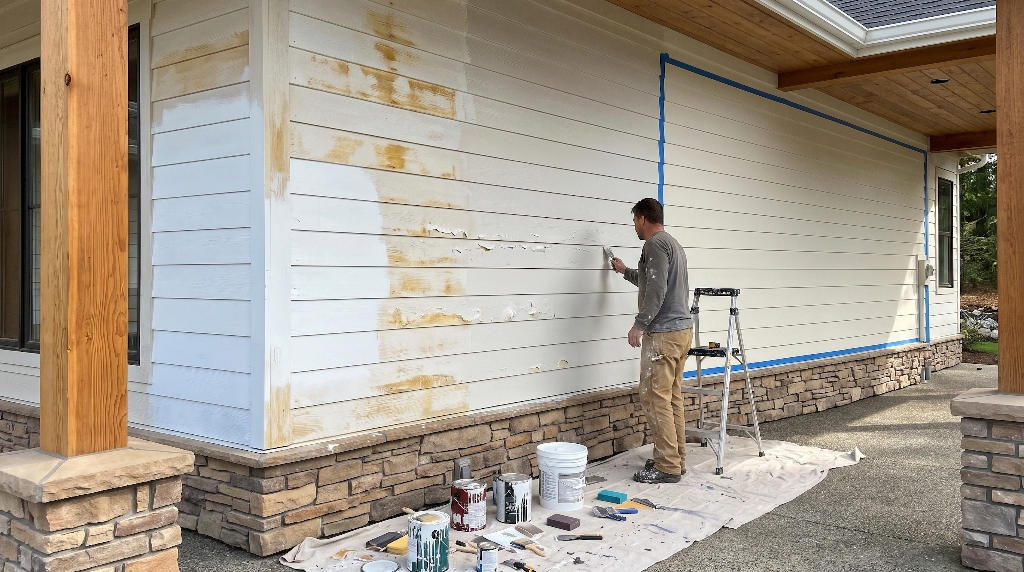
Even with a trending color like Cloud Dancer, small missteps during planning or prep can hurt the finished look of your home. Watching out for three common mistakes will save you money and frustration.
Mistake 1: Pairing Cool Blue-Whites with Warm Natural Wood or Stone
One of the most frequent design errors on modern farmhouses is pairing a cool, blue-undertone white with warm honey cedar beams or tan fieldstone. Cool whites clash with warm orange and yellow wood tones, making the wood look overly brassy while making the white siding look dingy or gray. Cloud Dancer avoids this trap because its balanced gray-taupe base bridges warm and cool elements. Always compare your paint sample directly against your wood stain and stone samples in natural shade before buying paint.
Mistake 2: Skipping Primer Over Dark Factory Finishes or Raw Cedar
If you are repainting an older dark-colored farmhouse in Cloud Dancer, do not rely on “paint-and-primer-in-one” cans to cover dark navy, forest green, or charcoal in two coats. Dark pigments bleed through light off-white topcoats, forcing you to buy extra gallons of expensive finish paint. Apply a dedicated high-hide bonding primer first to block the old color and give your Cloud Dancer topcoat a clean, uniform base.
Similarly, if your farmhouse uses raw Western red cedar or redwood trim, natural tannins in the wood will seep through water-based paint and leave rusty brown stains. Always seal raw cedar with an oil-based or shellac-based stain-blocking primer before applying light exterior paint.
Mistake 3: Overlooking HOA and Architectural Review Guidelines
Before ordering 25 gallons of exterior paint, check your neighborhood covenants or Homeowners Association (HOA) architectural guidelines. Many planned communities enforce strict rules on exterior Light Reflectance Value, sometimes capping maximum LRV at 75 or 80 to prevent glare across neighboring lots. While Cloud Dancer sits at an LRV of 85, an HOA board might ask you to step down to a slightly deeper warm off-white or greige, or limit Cloud Dancer to trim and gable accents. Getting written approval from your architectural review board before the painters arrive prevents fines and forced repaints.
Modern Farmhouse Exterior Paint FAQs
Homeowners planning an exterior refresh often search for quick answers to specific questions. Here are clear, builder-backed answers to the most common queries about modern farmhouse exterior paint.
What is the Pantone Color of the Year for 2026, and does it work on house exteriors?
Pantone’s 2026 Color of the Year is Cloud Dancer (PANTONE 11-4201), a calm, balanced off-white with subtle gray-taupe warmth. Yes, it works wonderfully on house exteriors, especially on modern farmhouses, coastal cottages, and transitional homes. Its LRV of roughly 85 softens harsh sunlight better than stark pure white while highlighting architectural details like board-and-batten siding and black window frames.
What is the best white exterior paint color for a modern farmhouse?
The best white exterior paint colors for a modern farmhouse are soft, balanced off-whites with an LRV between 82 and 86. Top choices include Sherwin-Williams Snowbound (SW 7004) and Benjamin Moore Alabaster (OC-129) for a Cloud Dancer look, along with Benjamin Moore White Dove (OC-17) for softer, sun-drenched lots. These shades look crisp and clean without causing blinding glare.
Should modern farmhouse trim be the same color as the siding?
Both options work well, depending on the style you want. Painting your trim and siding the exact same off-white shade creates a seamless, modern monochrome look, especially when you use flat paint on the siding and satin or semi-gloss paint on the trim. If you prefer classic farmhouse definition, pair Cloud Dancer siding with dark trim in Sherwin-Williams Tricorn Black (SW 6258) or Benjamin Moore Silhouette (AF-655).
What color front door looks best on a white modern farmhouse?
Natural stained wood, such as Western red cedar or white oak, is the most popular front door choice because it warms up off-white siding. If you want a painted door, rich earthy colors work best against Cloud Dancer. Top options include deep espresso brown (Benjamin Moore Silhouette), smoky jade (Behr Hidden Gem), muted sage (Sherwin-Williams Evergreen Fog), and soft charcoal (Sherwin-Williams Iron Ore).
Does off-white exterior paint get dirty faster than gray or greige?
Off-white exterior paint shows red clay splash-back near the ground and dark mildew spots in damp shade slightly sooner than mid-tone gray or greige. However, modern 100% acrylic paints with dirt-pickup resistance and a satin finish shed dust and pollen very well. Proper roof overhangs, clean gutters, and a quick annual rinse with a garden hose keep a Cloud Dancer exterior looking bright for 10 to 15 years.
Builder’s Pre-Paint Checklist and Final Recommendations
Choosing the right exterior paint for a modern farmhouse comes down to following a clear, logical order of decisions. Always pick your fixed, permanent materials first, because roof shingles, stone skirts, and window frames are much harder to change than paint.
- Lock in your fixed elements first: Gather physical samples of your roofing, stone or brick veneer, and window frame colors.
- Select your Cloud Dancer paint match: Test large 4×4 sample boards of Sherwin-Williams Snowbound or Benjamin Moore Alabaster alongside your fixed materials in morning, midday, and evening light.
- Choose your accent color and sheens: Decide between monochrome white-on-white trim or high-contrast dark accents like Benjamin Moore Silhouette or Tricorn Black, then assign flat or low-sheen satin to the body and satin or semi-gloss to the trim.
Before your painting crew opens a single can of finish paint, walk the perimeter of your home with this pre-paint inspection checklist:
- Surface Cleaning: Wash all siding, trim, and soffits to remove dirt, chalky oxidation, pollen, and mildew spores, then allow 48 hours for surfaces to dry completely.
- Moisture Testing: Check wood and engineered siding with a pin-type moisture meter to verify moisture levels sit below 15% before priming or painting.
- Scraping and Sanding: Scrape away any loose, flaking paint and feather-sand rough edges smooth so new coatings bond tightly.
- Caulking and Flashing: Seal vertical trim joints, window casings, and utility penetrations with high-grade paintable exterior caulk, leaving horizontal flashing gaps open for drainage.
- Spot Priming: Apply alkali-resistant primer to bare fiber cement, stain-blocking primer to raw cedar knots, and rust-inhibitive primer to any exposed metal fasteners.
- Weather Window Check: Confirm that daytime temperatures will stay between 50°F and 85°F with low humidity and no rain expected for at least 24 hours after application.
By pairing Pantone’s Cloud Dancer with smart substrate preparation, balanced natural textures, and durable architectural coatings, you will give your modern farmhouse a timeless exterior that looks calm, intentional, and built to last.