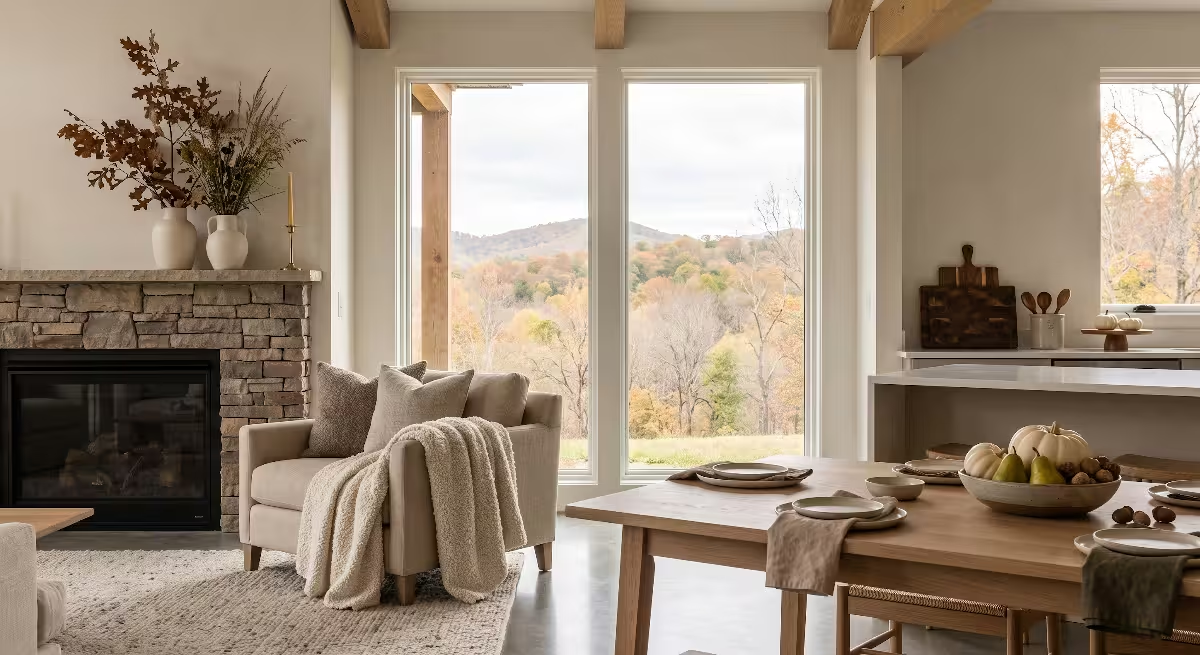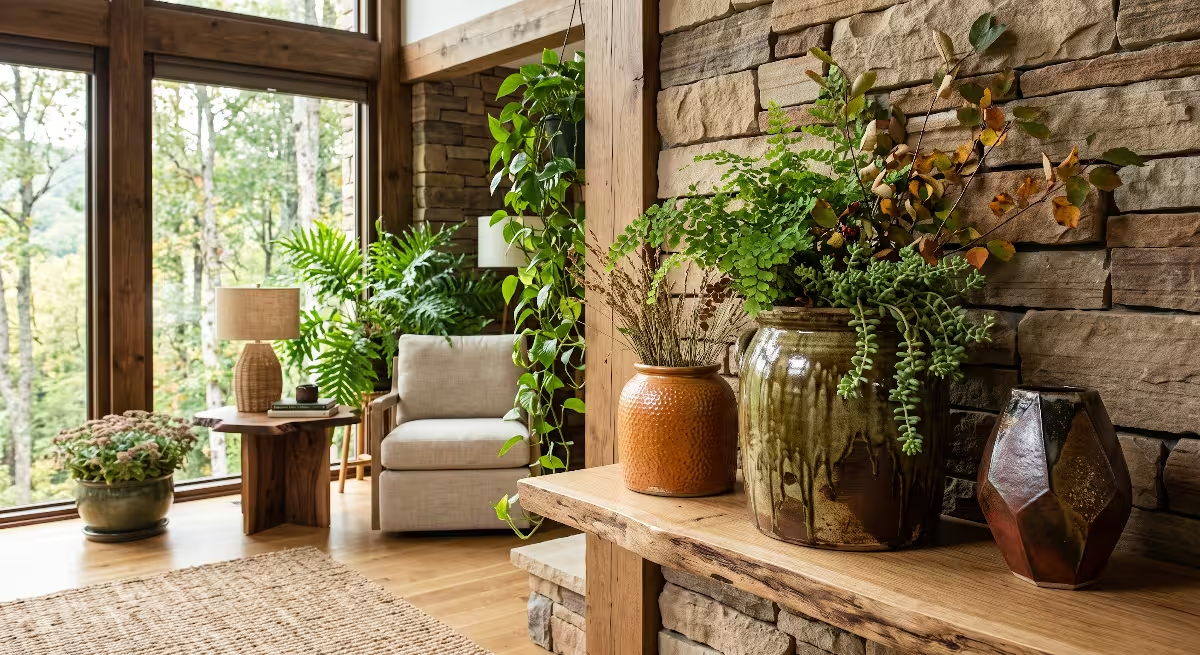


When you walk through the front door of a house, your body reacts before your conscious mind even has time to think. Your shoulders might drop as you let out a long breath, or your neck muscles might tighten without you realizing why. For generations, we have been told that making a house feel like a home is simply a matter of good decorating. We are told to pick the right paint swatches, buy matching pillows, and hang stylish curtains. Yet so many people find themselves sitting in beautifully decorated living rooms while feeling restless, overwhelmed, or subtly drained.
This disconnect happens because visual styling only scratches the surface of how our living spaces work. When we look at our homes through the lens of environmental psychology, we begin to understand that a house is not just an art gallery or a collection of pretty furniture. It is an active biological habitat. The science of environmental psychology explores the deep, two-way relationship between human beings and the spaces they occupy. By applying environmental psychology to the way we design and build our homes, we can move far beyond the limits of traditional decorating. We can create living spaces that actively calm our nervous systems, restore our mental energy, and support the real rhythms of daily family life.
Beyond the Color Swatch: Defining Environmental Psychology Interior Design vs Traditional Decorating
To understand why so many homes fail to bring us true peace, we have to look closely at the fundamental difference between traditional decorating and environmental psychology. Traditional decorating focuses almost entirely on how a room looks to the eye. It is an outside-in approach. A decorator looks at current design trends, selects a color palette, balances patterns, and arranges furniture to create a visually pleasing scene. This approach treats the room as a static picture. It asks questions like: Does this rug match the sofa? Does this chandelier make a dramatic statement? Is this room ready to be photographed for a magazine or shared on social media?
There is nothing wrong with beauty, but traditional decorating often stops at the surface. It assumes that if a room looks balanced and stylish, the people living inside it will automatically feel happy and relaxed. Unfortunately, human biology does not work that way. A room can look spotless and picture-perfect while quietly sending subtle stress signals to your brain all day long. Fast furniture, trendy synthetic fabrics, and artificial layouts often prioritize visual drama over physical comfort and emotional grounding.
This is where environmental psychology steps in to completely transform our approach to home building and design. Instead of working from the outside in, environmental psychology works from the inside out. It starts with the human nervous system, the human brain, and basic human behavior. Environmental psychology asks: How does the height of this ceiling affect creative thinking? How does the path of travel through this kitchen impact a mother’s stress levels at dinner time? How does the morning sunlight in this breakfast nook influence the sleep cycle of the family?
Environmental psychology is an evidence-based science. It draws upon decades of research in neuroscience, cognitive biology, anthropology, and architecture. When we use environmental psychology to design a living space, our primary goal is not simply to impress guests or follow a short-lived fad. Our goal is to create an environment that supports human wellness, reduces mental fatigue, and fosters genuine connection. In environmental psychology, beauty is not treated as a shallow cosmetic layer. Beauty is recognized as a vital sensory signal that tells the human body it is safe, supported, and free to rest.
+---------------------------------------------------------------------------------------+
| TRADITIONAL DECORATING                                                                |
| Aesthetic Assembly -> Visual Styling -> Trend Cycles -> Ephemeral Satisfaction        |
+---------------------------------------------------------------------------------------+
| ENVIRONMENTAL PSYCHOLOGY                                                              |
| Biological Baseline -> Spatial Neurology -> Behavioral Habitats -> Enduring Wellness  |
+---------------------------------------------------------------------------------------+
Evolutionary Spatial Drivers: Why Floor Plans Dictate Anxiety or Ease
Long before humans lived in framed houses with drywall and shingled roofs, our ancestors survived in the wild. Over hundreds of thousands of years, our brains evolved to constantly scan our surroundings for safety, resources, and potential threats. When you step into any room, those ancient survival instincts are still running quietly in the background of your mind. Environmental psychology teaches us that our modern homes must satisfy these deep evolutionary instincts if we want to feel truly at ease.
One of the most powerful concepts within environmental psychology is Prospect-Refuge Theory, originally developed by geographer
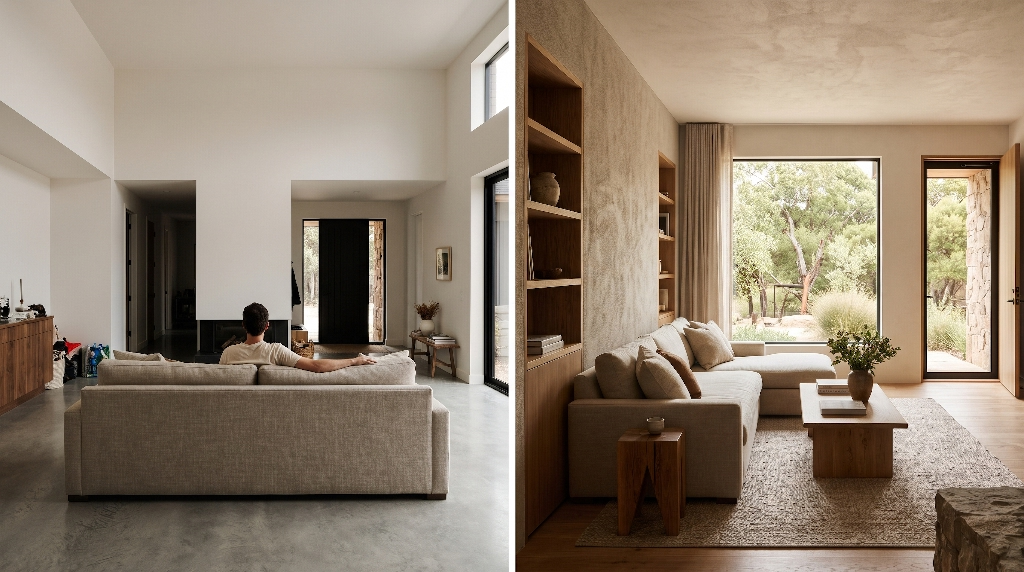
In modern custom home design, environmental psychology uses this principle to fix major flaws in popular open-concept floor plans. Many modern open layouts place sofas right in the middle of a massive room, leaving your back exposed to open hallways, dark entryways, or heavy foot traffic. Even if you do not notice it consciously, your brain registers this exposed back as a vulnerability. Your autonomic nervous system stays on low-level alert, making it difficult to fully unwind with a book or enjoy a conversation.
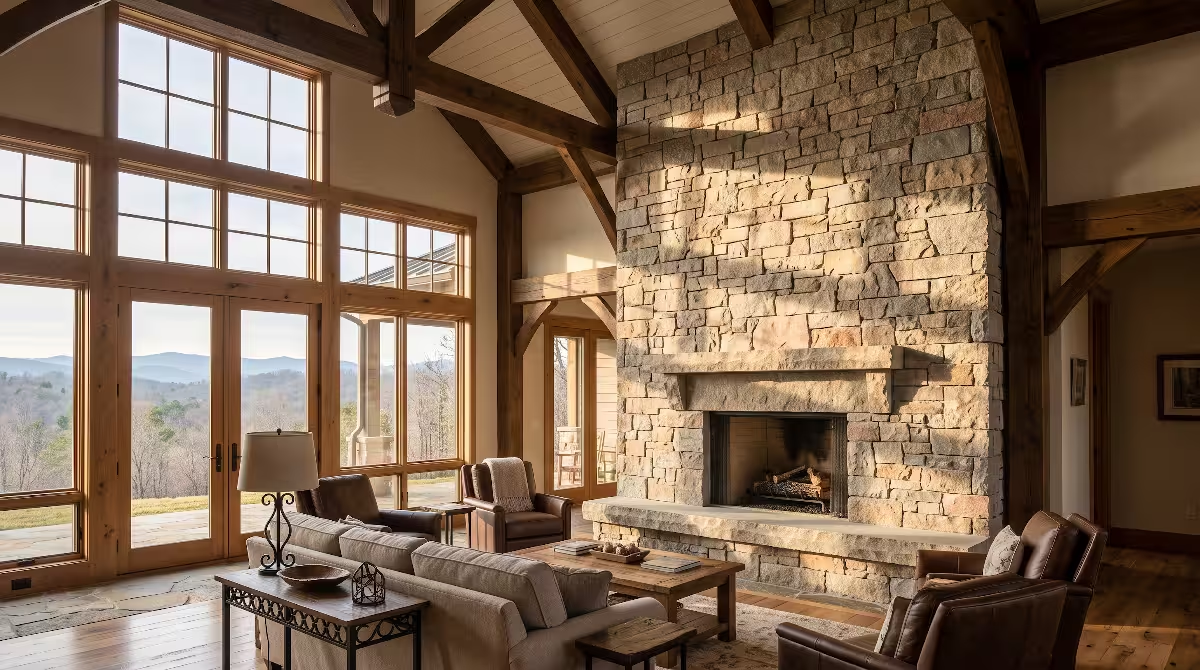
By applying environmental psychology, we anchor seating areas against solid architectural walls, half-walls, or substantial built-in cabinetry. This gives you a secure refuge. At the same time, we ensure that your seat offers open sightlines toward natural daylight, garden views, or the main entrance of the room. This combination satisfies your evolutionary craving for prospect and refuge, allowing your body to finally switch from high alert into deep relaxation.
[ Open Sightlines to Daylight & Greenery: PROSPECT ]
                      ^
                      |
           +---------------------+
           |    Grounded Seat    |
           +---------------------+
                      |
                      v
      [ Solid Structural Wall: REFUGE ]
Environmental psychology also relies heavily on the study of proxemics, a field pioneered by anthropologist Edward T. Hall. Proxemics explores how humans use personal space and how interpersonal distance affects our emotions. Hall identified four distinct spatial zones that all humans maintain: intimate space, personal space, social space, and public space.
Traditional decorating often scatters furniture across an oversized great room just to fill up empty floor space. This spreads chairs so far apart that family members must raise their voices to speak, which pushes normal conversation into an uncomfortable public distance. Environmental psychology solves this problem by creating intentional, human-scaled zones within a larger room. By grouping seating within a comfortable personal or social radius of six to eight feet, environmental psychology creates natural pockets of intimacy. Family members can sit near one another without feeling crowded, fostering effortless connection and mutual comfort.
Cognitive Ergonomics: How Layouts Drain or Restore Mental Focus
Our modern lives are filled with constant mental demands. We manage work emails, handle family schedules, run errands, and process an endless stream of digital notifications. By the time we sit down at home in the evening, our mental energy is often completely drained. Environmental psychology focuses closely on cognitive ergonomics, which is the study of how physical surroundings either exhaust our brains or help us recover our mental sharpness.
A cornerstone of environmental psychology is Attention Restoration Theory, developed by psychologists Rachel and Stephen Kaplan. The Kaplans discovered that human attention comes in two distinct forms: directed attention and involuntary attention. Directed attention requires conscious, active mental effort. You use directed attention when you balance a household budget, help a child with complex math homework, or drive through heavy traffic. Because directed attention takes hard mental work, the neural circuits that power it eventually get fatigued. When you experience directed attention fatigue, you become irritable, impatient, easily distracted, and mentally exhausted.
Traditional decorating often makes directed attention fatigue worse without realizing it. When a room is filled with busy wallpaper patterns, high-contrast geometric prints, open shelves packed with knickknacks, and shiny synthetic finishes, the brain must work overtime. Your visual cortex has to actively filter out all that visual noise so you can focus on the task at hand.
Environmental psychology counters this mental exhaustion by introducing elements that trigger involuntary attention, also known as soft fascination. Soft fascination occurs when your mind is gently captured by soothing, natural movements and organic textures that require zero mental effort to process. The gentle motion of tree leaves outside a tall window, the slow flickering of a warm fire, the rich, non-repeating grain of natural white oak, or the soft ripples across a garden birdbath are classic examples of soft fascination. Environmental psychology deliberately weaves these calming elements into living spaces. When you rest your eyes on these organic features, your directed attention circuits take a well-deserved break, allowing your mind to naturally recharge.
+---------------------------------------------------------------------------------------+
| DIRECTED ATTENTION FATIGUE                                                            |
| Visual Clutter + Synthetic Contrasts -> Constant Filtering -> Mental Exhaustion       |
+---------------------------------------------------------------------------------------+
| ATTENTION RESTORATION (SOFT FASCINATION)                                              |
| Natural Grain + Moving Sunlight + Organic Motion -> Effortless Gaze -> Deep Recovery  |
+---------------------------------------------------------------------------------------+
Even when you think you are ignoring background noise, your brain has to work constantly to tune it out. This continuous acoustic strain triggers low-level stress responses in the body. Environmental psychology treats acoustics as an invisible architectural foundation. By incorporating sound-absorbing ceiling treatments, thick wool rugs, natural wood wall paneling, and strategic floor plan buffers between lively kitchens and quiet living rooms, environmental psychology keeps background noise at a soothing, manageable level.
Biophilic Architecture & Natural Calibration
Humans spent millions of years living in direct, unbroken contact with the natural world. Our bodies, our eyes, and our daily biological rhythms were shaped by natural daylight, fresh breezes, seasonal temperature shifts, and organic living materials. The Biophilia Hypothesis, popularized by biologist Edward O. Wilson and expanded by social ecologist Stephen Kellert, states that humans have an innate, biological need to connect with nature. Environmental psychology embraces biophilia not as a passing decorative style, but as an essential requirement for mental and physical health.
Traditional decorating often tries to satisfy this biological need with superficial touches, like setting a plastic faux plant on a side table or hanging a mass-produced landscape print on the wall. While well-intentioned, these superficial items do not provide the genuine biological feedback our bodies crave. Environmental psychology takes a much deeper, multi-sensory approach to biophilic design.
One of the most important applications of environmental psychology is circadian rhythm lighting. In nature, the color and intensity of daylight change continuously throughout the day. The bright, blue-toned light of the morning sun triggers the release of cortisol, helping us wake up, feel alert, and start our daily activities. As the sun sets, the light softens into warm, low-angle golden tones, signaling the brain to produce melatonin so we can fall into deep, restorative sleep.
Traditional decorating tends to treat lighting as decorative jewelry, focusing on ornate brass fixtures and high-wattage recessed downlights that flood the room with harsh, unchanging light. Environmental psychology, by contrast, designs lighting around human biology. It incorporates large, carefully placed windows that flood main living areas with natural morning sun. For evening hours, environmental psychology utilizes layered lighting systems that shift down to warm, diffuse light placed at or below eye level. This gradual transition supports your body’s natural circadian rhythm, making it easier to wind down in the evening and wake up refreshed the next morning.
Natural Circadian Progression:
Dawn (Soft Warm) -> Midday (Bright Cool 5000K) -> Dusk (Golden Amber) -> Night (Dim Warm 2200K)
Materiality and touch are equally vital in environmental psychology. Our hands and skin contain millions of sensory receptors that constantly send information about our environment back to the brain. When you touch cold, hollow laminate or synthetic plastic composites, your brain registers the surface as artificial and inert. When you touch genuine, living materials, such as solid site-finished hardwood, hand-chiseled stone, pure linen, unlacquered brass, or smooth clay plaster, your body experiences what environmental psychology calls haptic grounding.
Studies in environmental psychology and neuroarchitecture reveal that touching authentic natural materials actually lowers your heart rate and reduces stress hormones. By surrounding yourself with materials that carry the subtle, beautiful variations of nature, environmental psychology turns your home into a grounding sensory sanctuary.
Behavioral Flow: Choreographing Everyday Movement Pathways
A home should never feel like an obstacle course. Yet, in many traditionally decorated homes, walking through a room feels awkward and frustrating. You might have to turn your body sideways to squeeze past an oversized coffee table, maneuver around an awkwardly placed accent chair, or bump into an open cabinet door in a cramped hallway. Traditional decorating often arranges furniture to look balanced when viewed from the doorway, completely ignoring how real human bodies move through the room during a busy Tuesday morning.
Environmental psychology places supreme importance on functional circulation and human movement pathways. In environmental psychology, a home is understood as a dynamic, living system where people are constantly moving between tasks, routines, and rest. When movement through a home is smooth and unobstructed, your mind feels calm, clear, and unburdened. When your path of travel is constantly pinched or blocked, your brain experiences micro-frustrations that accumulate over the course of a day, adding to your overall stress load.
Environmental psychology establishes generous, intuitive circulation pathways that mirror natural human movement. Instead of squeezing walkways down to the bare minimum, environmental psychology designs main travel corridors to be thirty-six to forty-eight inches wide. This allows two family members to pass each other comfortably without having to turn sideways or step awkwardly out of the way.
+---------------------------------------------------------------------------------------+
| OBSTRUCTED DECORATIVE CIRCULATION                                                     |
| Cluttered Pathways (<30") -> Physical Pinch Points -> Daily Micro-Frustrations        |
+---------------------------------------------------------------------------------------+
| ENVIRONMENTAL PSYCHOLOGY CLEARANCE                                                    |
| Generous Corridors (36"-48") -> Intuitive Travel Lines -> Effortless Daily Motion     |
+---------------------------------------------------------------------------------------+
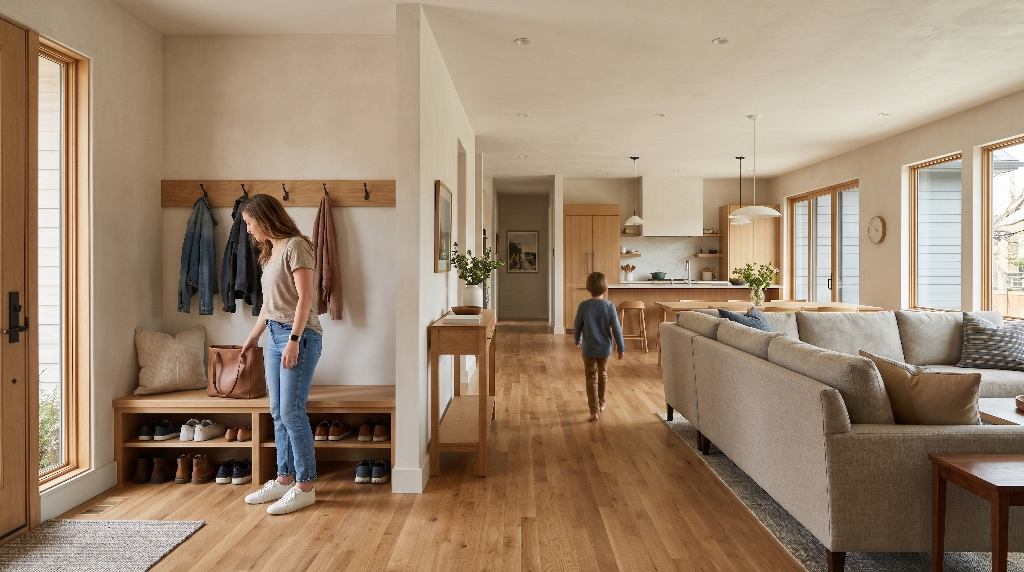
Environmental psychology also pays close attention to what happens when you transition from one area of the home to another. Consider the entryway where you enter the house after a long day at work or running errands. In traditional decorating, an entryway is often treated as a visual showcase with an ornate console table, a delicate mirror, and a decorative vase. But when a mother walks through that door carrying groceries, a heavy handbag, and a child’s backpack, that decorative table offers zero practical help. Keys get tossed onto the floor, mail piles up on the nearest counter, and clutter immediately begins to cause stress.
Environmental psychology designs entryways as intentional decompression zones. It provides immediate, intuitive drop zones that fit real human habits: sturdy coat hooks set at accessible heights, built-in shoe storage that keeps walkways clear, and a dedicated surface for mail and bags. By solving the functional and emotional needs of arrival, environmental psychology ensures that entering your home feels like an immediate, comforting release of tension.
The Psychology of Color and Chromatic Reality
Color is one of the most powerful tools in home design, but it is also one of the most misunderstood. Traditional decorating often treats color as a trendy fashion statement. One year the design world demands all-white interiors; the next year it pushes dark moody jewel tones, followed by earthy terracottas. Homeowners rush to paint their walls in whatever color is currently dominating magazine covers, only to wonder why the room feels cold, sterile, or suffocating once they actually move in.
Environmental psychology looks at color not as a temporary style trend, but as physical wavelengths of light that trigger measurable neurological and physiological reactions. When light strikes the retina in your eye, the visual signal travels to the hypothalamus, the part of the brain that controls your hormones, body temperature, sleep cycles, and heart rate. Different colors stimulate the brain in vastly different ways, and environmental psychology uses this scientific reality to choose wall colors with precision and care.
Short-wavelength colors, such as soft sky blues, gentle sage greens, and muted earth tones, have been shown in environmental psychology research to activate the parasympathetic nervous system. This branch of your nervous system is responsible for resting, digesting, and recovering. These colors lower blood pressure, slow your breathing rate, and create a calm, steady mental state. They are ideal for spaces where you want to unwind, such as bedrooms, reading rooms, and home offices.
Long-wavelength colors, like bright fire-engine reds and intense, vibrant yellows, stimulate the sympathetic nervous system, triggering alertness, energy, and elevated heart rates. While these high-energy colors can add fun and excitement when used thoughtfully in a creative playroom or an active dining space, covering an entire living room in high-saturation colors can lead to restlessness, agitation, and sensory overload.
Short Wavelengths (Soft Blues, Sage Greens, Warm Earth)  -> Parasympathetic Rest & Calm
Long Wavelengths  (High-Chroma Reds, Vibrant Yellows)    -> Sympathetic Energy & Alertness
Environmental psychology also looks closely at Light Reflectance Value, often referred to simply as LRV. LRV measures the percentage of usable light that a paint color reflects into a room. Traditional decorating often makes the mistake of painting a dark, north-facing room in a stark, bright white paint, hoping to make the space look brighter and larger. But because that room lacks strong natural sunlight, the white paint cannot reflect warm light. Instead, it turns a cold, dull, institutional gray.
Environmental psychology studies the angle, quality, and intensity of natural sunlight entering each room throughout the day. By selecting colors with the right LRV and subtle warm undertones, environmental psychology ensures that the room feels welcoming, warm, and emotionally comforting in every season.
Designing the Sanctuary: A Female-Centric Perspective on Living Spaces
For many women, a home is far more than just a place to sleep and store belongings. It is the central command center for the entire family. In addition to their professional careers, women often carry the primary weight of running a household: managing family schedules, preparing meals, restocking supplies, organizing belongings, and caring for the emotional needs of everyone under the roof. Sociologists call this the invisible mental load.
Traditional decorating often makes this invisible mental load much heavier without realizing it. Beautiful open shelving in a kitchen might look stunning in a staged photo, but in daily life, open shelves gather grease and dust, requiring constant washing, dusting, and meticulous visual rearranging. Delicate furniture fabrics that stain easily create constant anxiety during family meals. Beautiful glass dining tables show every fingerprint, turning simple daily upkeep into a never-ending chore.
Environmental psychology addresses these real-life realities head-on by designing living spaces that actively lift the mental load rather than adding to it. When an engineer or home builder uses environmental psychology through a female-centric lens, every square foot of the floor plan is evaluated for practical daily flow, functional resilience, and emotional ease.
+---------------------------------------------------------------------------------------+
| TRADITIONAL DECORATIVE PITFALLS                                                       |
| Open Shelving Dust + Delicate Fabrics + No Storage -> Heavy Invisible Mental Load     |
+---------------------------------------------------------------------------------------+
| ENVIRONMENTAL PSYCHOLOGY SANCTUARY                                                    |
| Concealed Prep Kitchens + Durable Surfaces + Acoustic Retreats -> Emotional Relief    |
+---------------------------------------------------------------------------------------+
One practical way environmental psychology relieves household stress is through smart spatial zoning in the kitchen and living areas. In a custom home, this means building a functional secondary work area, often called a scullery or mess kitchen, right behind the main kitchen island. The secondary pantry holds the noisy small appliances, the coffee maker, the drying racks, and the lunch prep supplies behind closed doors. The main kitchen island remains clean, open, and welcoming, allowing family members and guests to gather without staring at a pile of dirty breakfast dishes or food wrappers.
Environmental psychology also recognizes the critical need for a true decompression sanctuary within the home. In many houses, every single room is shared, noisy, and active. A mother or working professional may go through an entire week without having a single quiet spot to sit, breathe, and reset her nervous system.
Environmental psychology prioritizes the creation of dedicated retreat spaces. This does not have to be a massive room. A small, cozy window seat tucked into an alcove, a quiet reading nook lined with books, or a primary bathroom designed with acoustic insulation, soft natural materials, and a deep soaking tub can serve as an emotional lifeline. By building dedicated quiet spaces into the bones of the house, environmental psychology ensures that the home gives energy back to the people who give so much to care for it.
The Basic Comparison: Environmental Psychology vs. Traditional Decorating
To see the stark differences between these two approaches clearly, it helps to compare them side by side across the most important areas of residential home design. When you look at how each discipline approaches everyday living spaces, the difference between surface-level decorating and deep, human-centered science becomes immediately obvious.
| Core Dimension | Traditional Interior Decorating | Environmental Psychology Interior Design |
| Primary Objective | Visual beauty, stylistic balance, following design fads, and creating photo-ready scenes. | Regulating the human nervous system, reducing daily stress, and supporting mental well-being. |
| Driving Motivation | Showroom trends, historical styling periods, matched catalog sets, and visual status display. | Human biology, neuroscience, evolutionary instincts, and behavioral patterns. |
| Lighting Strategy | Decorative hanging fixtures, visual scale, high-intensity downlights, and static color output. | Circadian biological alignment, natural daylight capture, melanopic lux, and dim evening light. |
| Spatial Planning | Symmetrical furniture layouts, filling empty floor space, and staging formal conversational groups. | Balancing prospect and refuge, intuitive circulation flow, and comfortable human proxemics. |
| Material Selection | Trend-driven textures, synthetic laminates, shiny plastics, and short-lived fast furniture. | Authentic natural stone, solid timber, textured wool, non-toxic finishes, and haptic grounding. |
| Acoustic Focus | Visible fabrics, matching window drapes, and decorative throw rugs chosen for color alone. | Sound dampening, NRC ratings, absorbing harsh echoes, and creating peaceful acoustic buffers. |
| Daily Impact | Looks pretty in photographs, but can feel tiring, chaotic, and functionally frustrating to live in. | Lowers baseline cortisol, restores focus, supports deep sleep, and makes daily chores effortless. |
| Long-Term Value | Requires expensive updates every few years as decorating trends inevitably change and fade. | Enduring, timeless comfort that supports the physical and emotional health of the family for decades. |
This comparison shows why traditional decorating so often leaves homeowners feeling unsatisfied over time. When you only change the paint color or buy new throw pillows, you are putting a temporary bandage on deeper architectural problems. Environmental psychology fixes those problems at the root, shaping the floor plan, the lighting, the acoustics, and the materials around the real biological needs of the people living inside.
Room-by-Room Execution: Transforming Blueprint Plans into Therapeutic Habitats
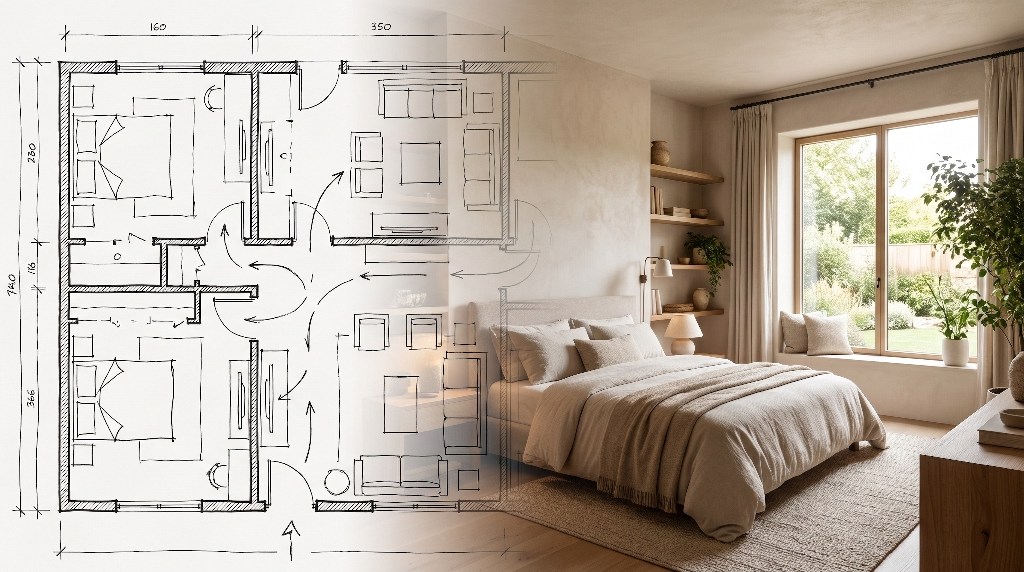
Understanding the principles of environmental psychology is inspiring, but how do these ideas translate into real, physical rooms when you are building or remodeling a home? Let us walk through the most critical living spaces in the house to see how environmental psychology shapes everyday rooms into healing, supportive habitats.
The Primary Bedroom: Sleep Engineering and Sensory Recovery
The bedroom is the single most important room in the house for physical and mental recovery. This is where your body repairs its cells, your brain clears out metabolic waste, and your nervous system resets for the coming day. Yet traditional decorating often fills bedrooms with large televisions, shiny mirrors facing the bed, bright overhead lights, and decorative clutter on bedside tables.
Environmental psychology designs the primary bedroom as a deeply restful sleep envelope. First, we position the bed in a secure refuge location. The headboard is placed firmly against a solid, exterior-grade or sound-insulated wall, well away from the door swing, but positioned so that you can easily see the entryway and the bedroom windows without turning around. This layout satisfies your evolutionary need for safety, allowing your brain to let down its guard completely.
+------------------------------------------------------+
| PRIMARY BEDROOM HEALING ENVELOPE                     |
| +--------------------------------------------------+ |
| | Solid Insulated Anchor Wall                      | |
| |                 [ Bed & Padded Headboard ]       | |
| +--------------------------------------------------+ |
|        |                                    |        |
|        v Clear Sightlines (Refuge)          v        |
|  [ Window to Nature ]             [ Main Room Entry ]|
+------------------------------------------------------+
Next, environmental psychology eliminates sensory clutter. Closet doors are solid rather than open or mirrored, keeping clothing visual clutter out of sight when you are trying to sleep. Lighting is kept soft, warm, and low to the floor, using gentle bedside fixtures that do not emit blue-wavelength light. Acoustic insulation is added to the interior bedroom walls to block sounds from nearby bathrooms, laundry rooms, or living areas. The result is a quiet, cocoon-like space where your body can fall into deep, uninterrupted sleep every night.
The Central Kitchen and Family Hub: Social Gathering and Movement Resilience
The kitchen has always been the true heart of the home, but modern kitchen design often creates unnecessary stress. Islands are sometimes built so wide that you cannot reach across them to clean, pathways between the refrigerator and the sink become crowded pinch points, and harsh overhead spotlights glare down on shiny quartz countertops.
Environmental psychology designs the kitchen as a resilient social hub. The central island is oriented so that the cook can look out toward the family room, dining space, or backyard garden while preparing food. In environmental psychology, maintaining open visual contact with loved ones while cooking releases oxytocin, the hormone responsible for feelings of bonding and trust. It prevents the person cooking from feeling isolated or cut off from family life.
       [ Family Gathering Space & Garden Views ]
                          ^
                          | Open Eye Contact & Connection
            +---------------------------+
            |  Central Kitchen Island   |
            +---------------------------+
                          ^
                          | Wide 48" Prep Pathway
            +---------------------------+
            | Primary Counter & Sink    |
            +---------------------------+
Travel pathways in the kitchen are kept to a generous forty-two to forty-eight inches. This allows one person to empty the dishwasher while another person opens the refrigerator door, eliminating the frustrating physical bottlenecks that cause tempers to flare during busy dinner hours. Lighting is layered into three distinct zones: bright, glare-free task lighting under the cabinets for safe food prep, warm ambient lighting over the island for casual conversation, and soft accent lighting to provide a warm, gentle glow when the kitchen is closed for the night.
The Dedicated Home Workspace: Cognitive Focus and Directed Attention
With so many people working from home either full-time or part-time, the home office has become an essential living space. Traditional decorating often pushes a desk flat against a blank interior wall, sticking a chair in the middle of the room and setting up a lamp on the corner of the desk. Sitting for hours staring directly at a blank drywall partition is a guaranteed recipe for directed attention fatigue, eye strain, and mental burnout.
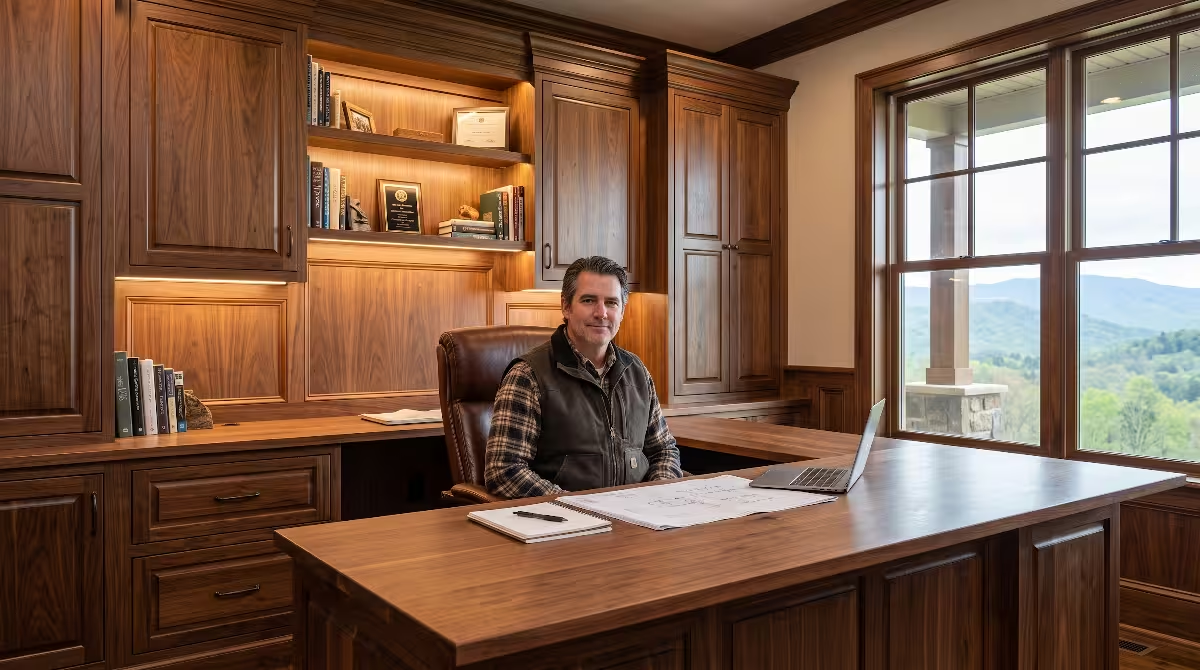
Environmental psychology approaches the home office through the science of cognitive restoration. The desk is positioned in an executive command layout. Your back is supported by a solid wall or a heavy bank of bookshelves, while your desk faces forward into the room, giving you an open view of the door and a clear sightline out a nearby window.
+------------------------------------------------------+
| HOME WORKSPACE COGNITIVE LAYOUT                      |
| +--------------------------------------------------+ |
| | Solid Backing Wall / Bookshelves (Refuge)        | |
| |               [ Ergonomic Desk Chair ]           | |
| |               [ Spacious Work Desk   ]           | |
| +--------------------------------------------------+ |
|                           |                          |
|                           v Open Sightline           |
|            [ Window View to Natural Foliage ]        |
+------------------------------------------------------+
Looking out at natural outdoor foliage through a window every twenty minutes relaxes the focusing muscles in your eyes and provides a quick burst of soft fascination for your brain. Natural daylight is positioned to wash across your work surface from the side rather than directly behind or in front of your computer screen, eliminating blinding glare and digital eye fatigue. By working with your brain’s natural cognitive processing habits, environmental psychology helps you stay focused, creative, and productive throughout the workday without feeling completely depleted by evening.
The True Cost of Design: How Designing for Well-Being Delivers Lifelong Dividends
When families prepare to build or renovate a home, they often spend a great deal of time looking at cost per square foot. They compare tile prices, countertop upgrades, and custom cabinet finishes. But very few people sit down to calculate the hidden emotional, physical, and financial costs of living in a poorly designed home.
Traditional decorating often locks homeowners into an expensive, unending cycle of dissatisfaction. When a room does not feel good to live in, people assume they just picked the wrong wall color or bought the wrong coffee table. So, two or three years later, they spend thousands of dollars buying new furniture, repainting walls, and replacing decor. Yet, because the underlying layout, acoustics, and lighting flaws remain untouched, the new decor fails to solve the problem. The room still feels stressful, restless, and uncomfortable.
Environmental psychology breaks this expensive cycle once and for all. When you build or design a home based on solid biological science, you create spaces that never go out of style. The human brain’s need for prospect, refuge, natural daylight, quiet acoustics, and authentic materials does not change with the seasons. A home built on the principles of environmental psychology feels just as comforting, supportive, and grounding thirty years from now as it does the day you move in.
+---------------------------------------------------------------------------------------+
| THE TRADITIONAL DECORATING CYCLE                                                      |
| Trendy Styling -> Surface Dissatisfaction -> Costly Redecorating (Every 3-5 Years)    |
+---------------------------------------------------------------------------------------+
| THE ENVIRONMENTAL PSYCHOLOGY LIFETIME DIVIDEND                                        |
| Biological Baseline -> Enduring Spatial Harmony -> Lifelong Health & Family Stability |
+---------------------------------------------------------------------------------------+
The true return on investment of environmental psychology shows up in the quality of your daily life. It is measured in deeper, uninterrupted sleep every night. It is measured in lower baseline cortisol levels and fewer stress-related headaches. It is measured in children who can sit and concentrate on their schoolwork without getting constantly distracted by household noise. It is measured in the peaceful ease of a kitchen where the whole family can cook together on Sunday afternoon without stepping on each other’s toes.
If you want to bring the healing power of environmental psychology into your own home, you do not have to tear down your house or start over from scratch. You can begin right now by conducting a simple residential sensory audit of your living space:
- Acoustic Check: Sit silently in your main living room for five minutes. Listen carefully to the sounds around you. Do voices echo off hard walls? Does the hum of the refrigerator or the air conditioner make it hard to relax? If so, look for ways to add soft, sound-absorbing materials like thick wool rugs, lined fabric drapes, or natural wood paneling to soften the acoustic reflections.
- Prospect and Refuge Audit: Look at where you sit to relax or work. Is your back exposed to an open hallway or an active doorway? Try turning your favorite chair or moving your desk so your back is anchored against a solid wall while your eyes look forward toward a window or the main room entry. Notice how quickly your body relaxes once your back is protected.
- Lighting Assessment: Turn off harsh overhead recessed lights after the sun goes down. Replace cool-white lightbulbs with warm, low-kelvin bulbs (2700K or lower). Add low-level table lamps with fabric shades that cast a gentle, diffuse glow at eye level, helping your body prepare for natural sleep.
- Circulation Clear-Out: Walk your normal daily pathways through the kitchen, entryway, and bedroom. Notice where you have to dodge furniture or squeeze through narrow openings. Move or remove accent pieces until you have at least three full feet of open, unobstructed walking space.
- Haptic Reset: Run your hands across the everyday surfaces you touch most often. Swap out cold, cheap synthetic items for authentic, organic materials like solid wood cutting boards, pure linen blankets, woven natural baskets, and clay ceramic mugs.
Your home should never be a stage set designed to impress strangers on a screen. It should be your sanctuary, your safe harbor, and your family’s personal ecosystem. By moving past the shallow surface of traditional decorating and embracing the deep, scientific wisdom of environmental psychology, you can create a custom living space that nurtures your body, calms your mind, and shelters your spirit for a lifetime.