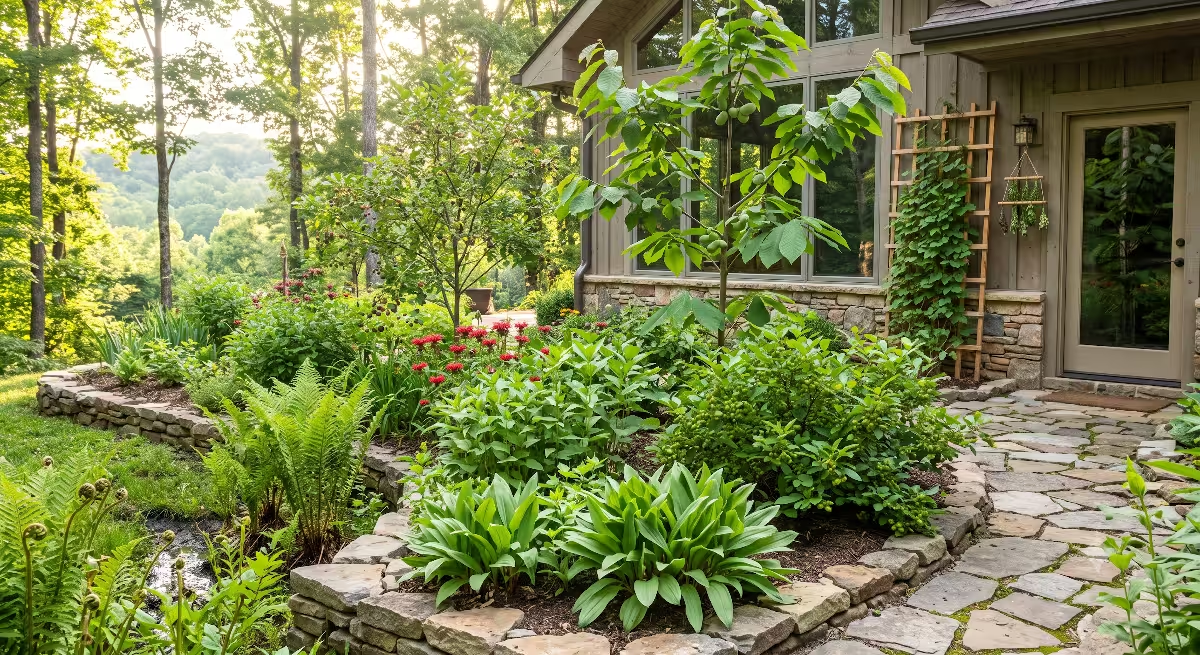

Introduction to Hugelkultur Raised Beds
Anyone who has tried to dig a garden in the Tri-Cities area of East Tennessee knows the frustration of our native red clay. Shovels bounce off the ground in the summer, and spring rains turn the yard into sticky, slick mud. Traditional gardens often struggle in this ground because the dirt packs down so tightly that water cannot drain and plant roots cannot breathe. At the same time, clearing a residential building lot or cleaning up a wooded yard leaves homeowners with piles of fallen logs, branches, and brush. Hauling this woody material away is expensive, and burning it wastes valuable organic matter. There is a much better way to handle both challenges at once. By building hugelkultur raised beds, you can recycle site timber, improve your outdoor living space, and create a highly productive garden that thrives on top of dense red clay.
Biophilic design focuses on connecting our everyday living environments with the natural world. Building hugelkultur raised beds right outside your living spaces creates an immediate bridge between your home and the landscape. Instead of battling our regional soil, hugelkultur raised beds work in harmony with natural ecological systems. They turn wood waste into living soil, eliminate the physical strain of ground-level gardening, and establish a resilient, self-watering ecosystem. This comprehensive guide covers everything you need to know to design, build, and maintain hugelkultur raised beds on East Tennessee clay soil.
The East Tennessee Soil Challenge: Why Red Clay Fails Standard Beds

To understand why hugelkultur
The Physics of Appalachian Ultisol Clay
Clay is made up of microscopic mineral particles that are flat, like tiny sheets of paper. Because these particles are microscopic, they pack together with very little space between them. In technical terms, clay lacks macropores, which are the larger air channels that allow water to drain downward and fresh oxygen to reach plant roots.
When winter and spring rains hit the Tri-Cities, clay absorbs water very slowly. Once it finally becomes saturated, it holds onto that moisture with extreme tenacity. The tiny pore spaces fill completely with water, driving out all the air. In this waterlogged state, vegetable roots suffocate because root tissue requires oxygen to survive and take up nutrients.
When July and August arrive, the opposite problem occurs. The summer sun bakes the red clay, evaporating surface moisture. As the clay dries, the tiny mineral plates lock together tightly. The ground shrinks, cracks open, and hardens into something resembling concrete. A homeowner attempting to push a garden trowel into dry August clay will find it nearly impossible. Plant roots become trapped in the hardened mass, unable to expand or reach deep moisture. This severe cycle of soaking and baking causes traditional in-ground gardens to fail.
The Dangerous Bathtub Effect of Digging in Clay
When people first hear about hugelkultur, their first instinct is often to dig a trench two or three feet deep into the ground and pack the logs into the hole. On sandy or loamy ground, that method works fine. On East Tennessee clay, digging a deep trench is a recipe for disaster.
When you dig a deep hole into dense clay, you create what engineers and soil scientists call the bathtub effect. The undisturbed clay walls and floor of the trench act like a solid porcelain tub. When you fill that hole with loose wood, branches, and compost, you create a loose, porous pocket that collects water like a drain. Rainwater runs across your yard and pours into the loose trench, but it cannot penetrate the dense clay walls at the bottom or sides.
The trench fills with water and stays full for weeks. The buried wood becomes completely submerged in stagnant, oxygen-starved water. Instead of breaking down through healthy aerobic decomposition led by beneficial fungi and earthworms, the wood undergoes anaerobic decomposition. Anaerobic bacteria produce methane and hydrogen sulfide, which creates a sour, swampy smell and turns the soil toxic to plant roots. Roots rot, plants turn yellow and die, and the entire garden fails.
Why Hugelkultur Raised Beds Solve the Drainage Puzzle
Building hugelkultur raised beds above the native grade solves the bathtub effect completely. Instead of burying logs in an underground hole, you build hugelkultur raised beds directly on top of the soil surface or inside an elevated wooden frame.
By raising the entire system above the native ground, gravity works in your favor. Excess water from heavy Appalachian spring downpours drains freely out through the bottom edges of the frame rather than pooling around the wood. The base logs still make contact with the native earth, drawing earthworms and native soil biology upward, but the roots of your vegetables stay up in the aerated root zone. Hugelkultur raised beds provide the moisture-storing benefits of buried wood while protecting your plants from the poor drainage of native clay.
Biophilic Design and Site Planning: Integrating Raised Beds with Your Home
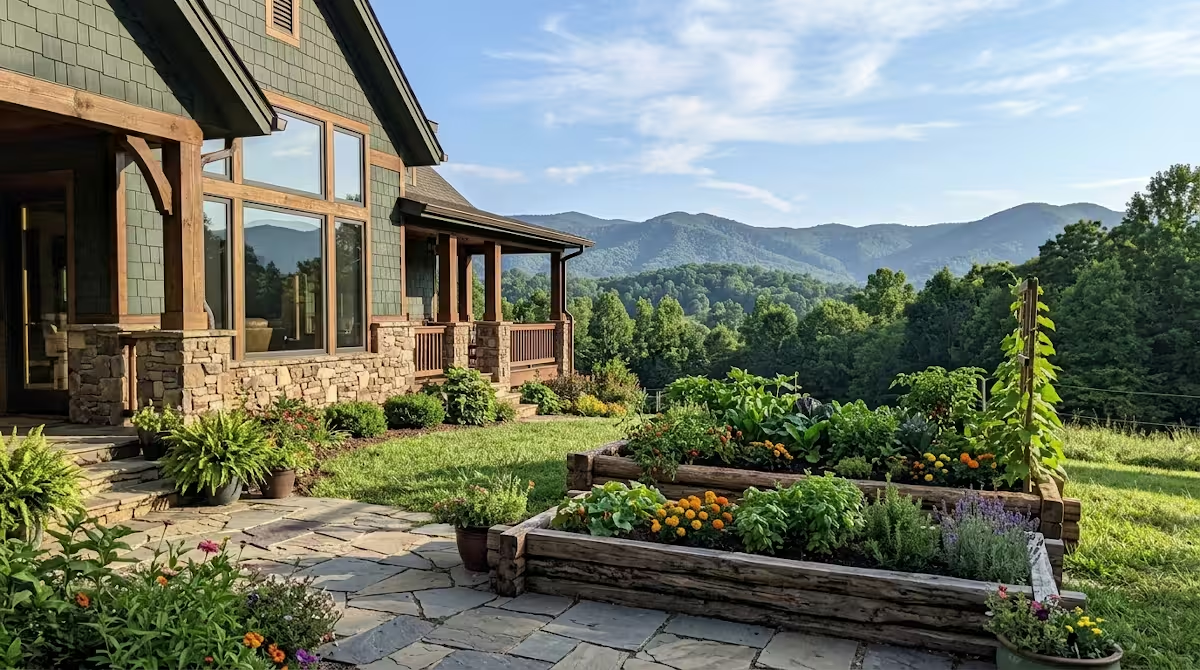
A successful home landscape is not just an outdoor collection of plants. It is an intentional extension of your indoor living space. Biophilic design teaches us that humans feel calmer, healthier, and more focused when their living spaces connect directly with living nature. When planning hugelkultur raised beds, you should consider site layout, daily human flow, visual sightlines, and structural home safety.
Ergonomics and Human Movement
Gardening should be a restful, rewarding activity, but standard ground-level gardening often causes back, knee, and hip strain. Bending over to weed, prune, and harvest in heavy red clay requires awkward posture and heavy lifting. That physical strain discourages many homeowners, especially busy professionals, parents, and older adults, from growing their own food.
Hugelkultur raised beds solve this physical barrier through smart ergonomic design. By framing hugelkultur raised beds to a height of twenty-four to thirty-two inches, you bring the soil surface up to a comfortable working level. You can tend your plants while standing straight or sitting on the edge of the bed. Adding a wide, flat top rail, made from a smooth two-by-six or two-by-eight board, creates a built-in bench. You can sit comfortably with a cup of coffee while harvesting fresh herbs for dinner.
Designing hugelkultur raised beds with ergonomic heights transforms gardening from a chore into a restorative daily ritual. It allows family members of all ages and physical abilities to participate in growing fresh, wholesome produce.
Solar Exposure and Mountain Ridge Alignment
Placing your garden beds requires careful attention to the path of the sun. East Tennessee features rolling hills, mountain ridges, and hollows that can cast long shadows across a property. Vegetables like
When laying out hugelkultur raised beds, orient the long side of the boxes along an east-to-west axis whenever possible. In our northern hemisphere location, an east-to-west layout ensures that the broad side of the bed faces directly south. This southern exposure maximizes the amount of sunlight hitting the soil and foliage throughout the day.
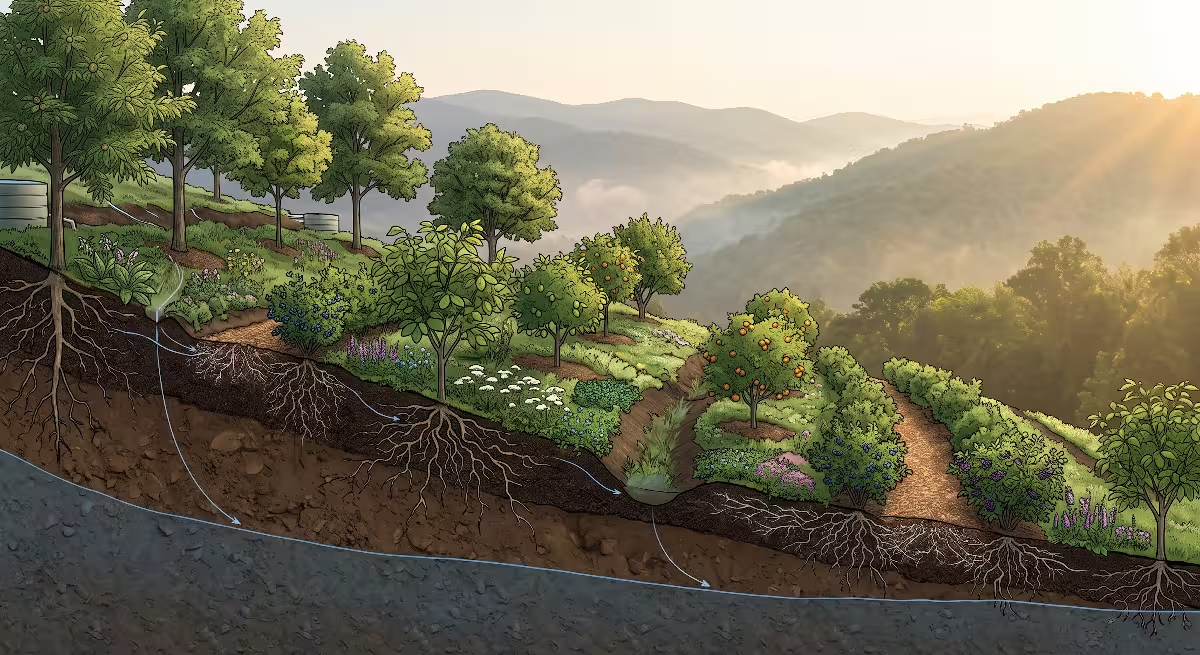
If your property sits on a slope, which is common in Sullivan and Washington counties, place hugelkultur raised beds across the face of the slope on the contour. Positioning hugelkultur raised beds along contour lines helps slow down rainwater as it flows downhill. The beds catch surface runoff, filter the water through the soil layers, and prevent slope erosion without creating washouts.
Building Science, Foundation Safety, and Termites
While hugelkultur raised beds bring nature closer to your daily life, you must protect the structural integrity of your house. One of the most common questions homeowners ask is whether burying wood near a house will attract termites.
The short answer is that wood-decaying insects exist naturally throughout East Tennessee forests. The Eastern subterranean termite lives underground in our soil, feeding on fallen dead wood. If you place hugelkultur raised beds right against your home foundation, you create a direct moisture bridge and a potential food path for termites to reach the wooden framing of your house. Damp soil piled against brick veneer, siding, or concrete foundation blocks can also cause structural rot and moisture problems in your crawlspace or basement.
To eliminate this risk, follow strict residential building guidelines:
- Maintain a buffer zone of at least twenty to thirty feet between any house foundation and your hugelkultur raised beds.
- Never build hugelkultur raised beds against exterior walls, wooden decks, or detached garages.
- Keep the ground around your home foundation clean, well-drained, and clearly visible for annual pest inspections.
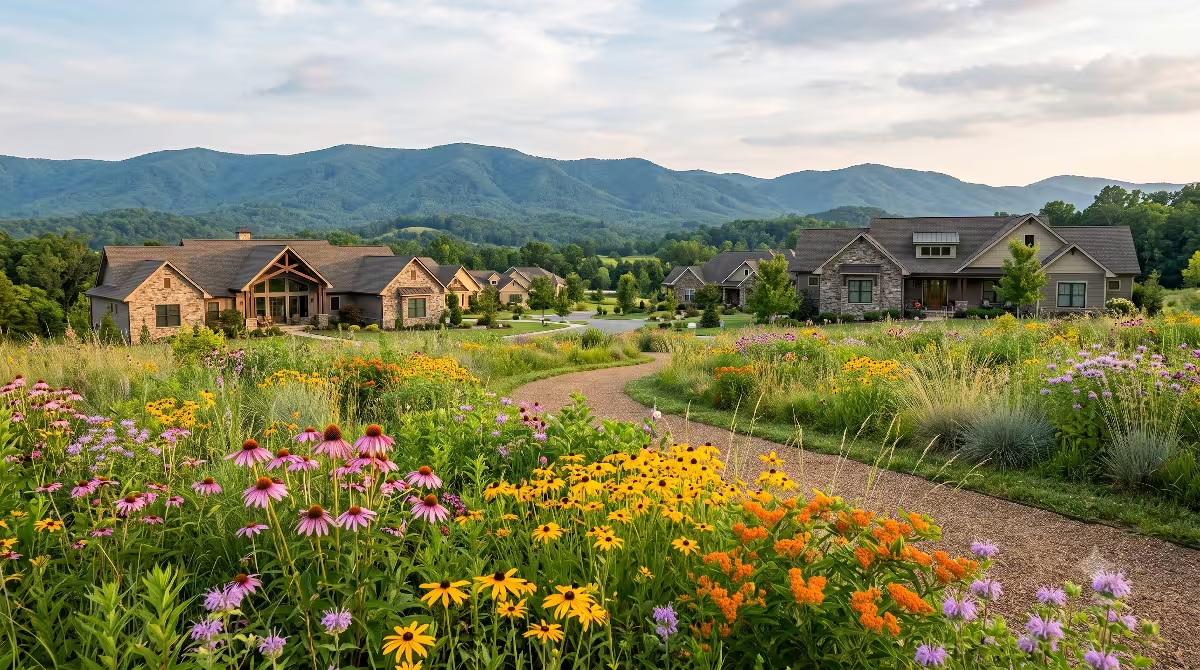
Placing hugelkultur raised beds twenty to thirty feet away from the home gives you the best of both worlds. You keep your foundation safe and dry, while positioning your hugelkultur raised beds close enough to enjoy pleasant views from your kitchen windows, back deck, or outdoor patio.
Material Selection: Appalachian Hardwoods vs. Woods to Avoid
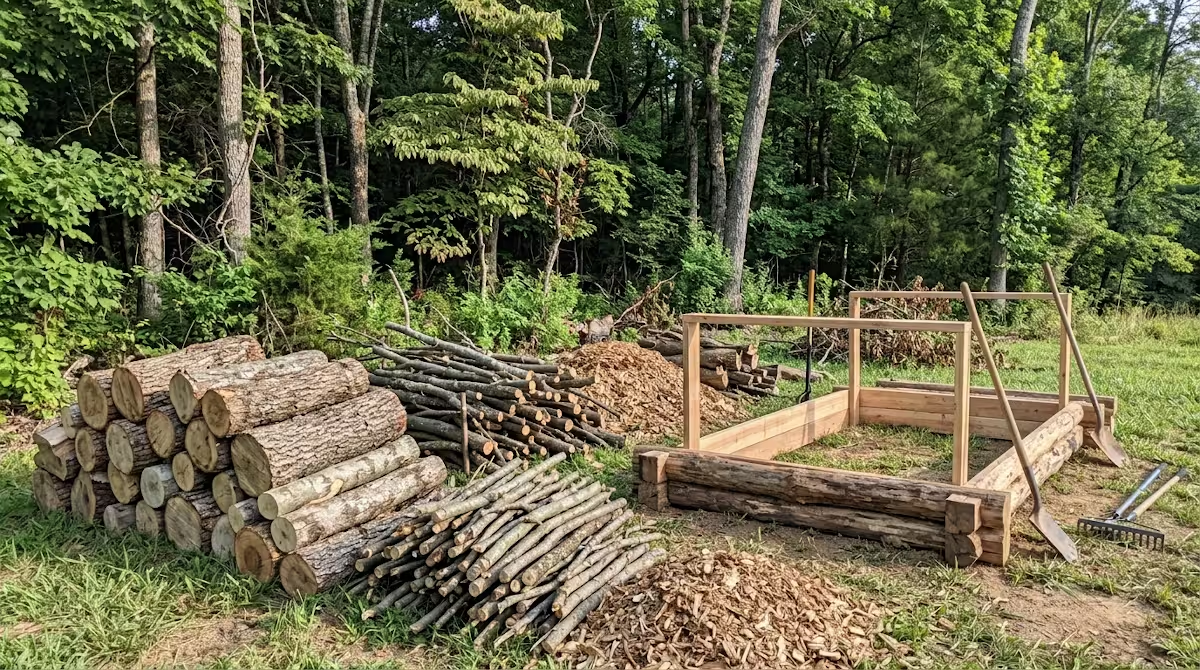
The secret to building durable, high-yielding hugelkultur raised beds lies in the wood you place inside the core. The wood acts as the biological foundation of the entire system. Southern Appalachia has some of the most diverse hardwood forests in North America, giving Tri-Cities homeowners access to excellent materials. However, choosing the wrong wood can ruin plant growth or cause your beds to fail.
+-----------------------------------------------------------------------------------+
|                           WOOD SELECTION MATRIX                                   |
+----------------------+--------------------+---------------------------------------+
| Category             | Species            | Role in Hugelkultur Raised Beds       |
+----------------------+--------------------+---------------------------------------+
| Premier Sponges      | Tulip Poplar       | Fast decay, holds massive water       |
| (Core Layer)         | Soft Maple, Birch  | Balanced breakdown, great mycelium    |
+----------------------+--------------------+---------------------------------------+
| Long-Term Anchors    | White Oak, Red Oak | Slow decay, 10-15 year mineral base   |
| (Core Layer)         | Hard Maple, Beech  | Structural volume, steady carbon      |
+----------------------+--------------------+---------------------------------------+
| Frame Lumber Only    | Black Locust       | Extremely rot-resistant exterior      |
| (Do NOT put in core) | Eastern Red Cedar  | Antimicrobial, will not break down    |
+----------------------+--------------------+---------------------------------------+
| Strictly Banned      | Black Walnut       | Leaches juglone; stunts nightshades   |
| (Keep off site)      | Treated Lumber     | Toxic chemicals (arsenic, copper)     |
+----------------------+--------------------+---------------------------------------+
The Best Foundation Woods for Long-Term Sponges
You want a mixture of soft hardwoods and dense hardwoods inside your hugelkultur raised beds. Soft hardwoods break down quickly to establish the water-absorbing sponge during the first two years, while dense hardwoods break down slowly, feeding the soil for over a decade.
- Tulip Poplar: Tulip poplar is the official state tree of Tennessee, and it is abundant across Kingsport, Johnson City, and Bristol. Poplar wood has a relatively soft grain. When buried, it breaks down quickly, soaking up moisture like a cellular sponge within twelve to eighteen months. It is the premier base material for hugelkultur raised beds in our region.
- Oak (White Oak and Red Oak): Oaks are dense, heavy hardwoods full of complex lignin. While poplar decays quickly, oak logs break down at a slow, steady rate. Oak provides structural support for the lower core of hugelkultur raised beds, preventing the beds from collapsing too quickly and releasing micro-nutrients for ten to fifteen years.
- Sugar Maple and Red Maple: Maples offer an ideal middle ground. They decay faster than oak but last longer than poplar, providing a steady habitat for beneficial fungal networks inside hugelkultur raised beds.
- Fruit Woods (Apple, Pear, Cherry): If you are pruning local orchards or backyard fruit trees, these branches make outstanding filler layers. They are dense, non-toxic, and host rich microbial colonies.
Woods to Strictly Exclude
Some wood species contain natural chemicals that inhibit plant growth, while others resist decay so strongly that they defeat the entire purpose of a water-absorbing bed.
- Black Walnut: You must never use black walnut logs, branches, bark, or sawdust in hugelkultur raised beds. Black walnut trees produce an allelopathic biochemical called juglone. Juglone is a natural herbicide that the tree uses to stop competing plants from growing nearby. When juglone leaches into garden soil, it stunts or kills plants in the nightshade family, including tomatoes, peppers, eggplants, and potatoes. It can also harm squashes and leafy greens. Keep black walnut far away from your garden.
- Eastern Red Cedar: Eastern red cedar grows widely along limestone outcrops in East Tennessee. While cedar is a wonderful tree, its wood is loaded with natural aromatic oils that resist moisture absorption and fungal decay. If you place cedar logs in the bottom of hugelkultur raised beds, they will sit there for decades without rotting or holding water. Cedar is great for fence posts, but it makes a poor sponge.
- Black Locust: Like cedar, black locust contains powerful natural compounds that prevent rot. Black locust can remain buried in damp ground for thirty years without decaying. Do not put black locust inside the bed. However, black locust makes the best exterior framing lumber you can buy for constructing the outer walls of hugelkultur raised beds.
- Chemically Treated Lumber: Never use railroad ties, telephone poles, old pallets of unknown origin, or pressure-treated construction lumber inside or around hugelkultur raised beds. Older treated wood contains chromated copper arsenate, while newer treated wood contains high concentrations of copper and chemical fungicides. These synthetic compounds leach into the soil, harm beneficial soil microbes, and can be absorbed by the vegetables you intend to eat.
The Advantage of Punky Wood
Whenever possible, look for punky wood to build the base of your hugelkultur raised beds. Punky wood refers to fallen logs that have already spent a year or two on the forest floor. The bark has started to slough off, the wood feels soft when poked with a stick, and white fungal threads are visible inside the grain.
Using punky wood gives hugelkultur raised beds a huge head start. The wood is already pre-inoculated with native woodland fungi, which means it will begin soaking up rainwater and feeding soil microbes the very first season you plant.
Step-by-Step Construction Guide: Engineering the Bed on Clay Subsoil
Building long-lasting hugelkultur raised beds requires following a clear structural plan. By assembling the layers correctly, you ensure that the bed drains well, settles evenly, and provides balanced nutrition for years to come.
+-----------------------------------------------------------------------------------+
|                        CROSS-SECTION PROFILE OF BED LAYERS                        |
+-----------------------------------------------------------------------------------+
| [Layer 6] 2 to 3 Inches Clean Straw or Hardwood Bark Mulch                       |
+-----------------------------------------------------------------------------------+
| [Layer 5] 8 to 10 Inches Screened Topsoil and Finished Compost (50/50 Mix)        |
+-----------------------------------------------------------------------------------+
| [Layer 4] Inverted Turf Sod + High-Nitrogen Green Manure Layer                   |
+-----------------------------------------------------------------------------------+
| [Layer 3] Small Branches, Twigs, and Yard Prunings (2 to 4 Inches)                |
+-----------------------------------------------------------------------------------+
| [Layer 2] Medium Wood Limbs, Wood Chips, and Bark Chinking (Packed Tight)         |
+-----------------------------------------------------------------------------------+
| [Layer 1] Heavy Base Hardwood Logs (Poplar, Oak, Maple: 6 to 12 Inches Thick)     |
+===================================================================================+
| [Hardware Cloth] 1/4-inch Galvanized Wire Mesh (Vole and Mole Barrier)            |
+===================================================================================+
| [Native Ground] Scarified Red Clay Subsoil (Punctured 4 to 6 Inches Deep)         |
+-----------------------------------------------------------------------------------+
1. Preparing the Ground and Pest Barrier
Begin by marking the perimeter of your bed using stakes and string. Rather than digging out a deep trench that could create a water collection basin, work from the native surface:
- Use a string trimmer to scalp the existing grass and weeds down to the dirt line.
- Take a broadfork or a sturdy four-tine garden fork and push the tines deep into the red clay every six inches across the entire footprint. Rock the fork back and forth to crack and fracture the clay four to six inches deep. This loosens surface compaction without flipping the subsoil, creating natural pathways for drainage and earthworms.
- Roll out one-quarter-inch galvanized hardware cloth over the fractured ground. Cut the mesh to fit the entire footprint of the bed. In East Tennessee, pine voles and moles live throughout residential lawns and pastures. Voles love to tunnel beneath soft garden soil to eat the roots of sweet potatoes, carrots, and tomatoes. Installing hardware cloth at the bottom of your hugelkultur raised beds creates an impenetrable barrier that keeps burrowing pests out permanently.
2. Framing the Box with Structural Strength
While traditional permaculture beds are uncontained dirt mounds, suburban and rural residential yards benefit greatly from a rigid timber frame. A solid frame keeps your yard looking neat, holds the soil in place during heavy rainstorms, and provides seating.
Construct your outer frame using rough-sawn lumber. True two-inch-thick rough-sawn boards made from native hemlock, white oak, or Eastern red cedar work best. Build the frame to a finished height of twenty-four to thirty-two inches:
- Place four-by-four wooden posts on the inside corners of the frame.
- Fasten the horizontal wall boards to the corner posts using three-inch or three-and-a-half-inch exterior structural timber screws. Do not use drywall screws or standard framing nails, as the outward pressure of wet soil will snap them.
- If your bed is longer than eight feet, install an intermediate post halfway down each long side. Connect the opposite middle posts using a threaded stainless-steel rod or a horizontal brace across the center of the bed near the bottom. This cross-tie prevents the long walls of your hugelkultur raised beds from bowing outward under the heavy weight of saturated soil.
- Cap the top edge of the frame with smooth, flat two-by-six or two-by-eight boards to create comfortable benches.
3. Layer 1: Placing the Heavy Anchor Logs
The bottom layer of your hugelkultur raised beds consists of large hardwood logs. Use logs that are six to twelve inches in diameter, cut to fit snugly inside your frame.
Lay these heavy logs directly on top of the wire hardware cloth. Pack them tightly together across the entire floor of the bed. As established, prioritize tulip poplar, oak, and maple. If some of the logs are already punky and soft, place them along the outer edges where they can begin soaking up moisture right away. This heavy timber layer acts as the primary moisture reservoir and long-term mineral base for your hugelkultur raised beds.
4. Layer 2: Chinking Air Gaps with Medium Biomass
If you dump garden soil directly over large logs, huge air pockets remain between the rounds. Over time, as the logs rot and rain falls, the topsoil will wash down into these empty spaces. This causes sudden surface collapses and sinkholes that can tear plant roots apart.
To prevent this issue, you must chink the bed just like Appalachian pioneers chinked the gaps between log cabin walls:
- Take medium-sized branches, tree limbs, split firewood scraps, and coarse wood chips.
- Jam this smaller woody material firmly into every open void between the large bottom logs.
- Walk directly on top of the wood layer in your work boots to stomp the branches down tight.
- Spray the wood thoroughly with a garden hose to settle fine particles into the gaps.
Taking time to chink your hugelkultur raised beds creates a solid, interlocked base that settles evenly over several years.
5. Layer 3: Branch and Twig Layer
Above the chinked logs, add a three-to-four-inch layer of smaller garden prunings, dry twigs, and small sticks. This layer creates a graduated transition between the heavy timber below and the softer organic layers above. It supports good internal airflow, which keeps the lower sections of hugelkultur raised beds supplied with the oxygen needed for healthy fungal breakdown.
6. Layer 4: The High-Nitrogen Buffer Layer
One of the most important rules of building hugelkultur raised beds is managing the balance between carbon and nitrogen. Raw wood is almost pure carbon. When wood decomposes, soil microbes consume massive amounts of nitrogen to break down that carbon. If you do not supply that nitrogen, the microbes will pull it out of the surrounding soil, starving your vegetables.
To prevent this nitrogen lockup, apply a generous layer of nitrogen-rich green materials directly on top of the twigs:
- Manure: Composted horse manure, aged dairy cow manure, or poultry litter from local East Tennessee farms makes an outstanding nitrogen booster. Apply a two-to-three-inch layer over the wood.
- Inverted Turf Sod: If you removed grass turf to build a patio or walkway, place those sod pieces grass-side-down over the branches. The decaying grass and green roots provide an immediate burst of nitrogen and organic matter.
- Fresh Grass Clippings: Layers of fresh green lawn clippings, gathered from yards that have not been treated with synthetic weed killers, work wonderfully.
- Organic Meals: Scatter several pounds of blood meal, alfalfa meal, or feather meal across the branches to feed soil microbes.
This nitrogen layer acts as a biological starter engine for your hugelkultur raised beds, fueling the decomposition of the wood without robbing nutrients from your growing vegetables.
7. Layer 5: The Growing Soil Horizon
Now add the soil layer where your vegetables will spend their first few seasons. You need a clean, fertile root zone that is eight to ten inches deep:
- Blend fifty percent high-quality screened topsoil with fifty percent well-aged compost, such as leaf mold or mushroom compost.
- Do not use pure native red clay in this top layer, as it will pack down and form a hard crust.
- Shovel this compost and topsoil blend into the frame until it reaches about two inches below the top cap rail.
This loose, humus-rich soil horizon gives young plants the aeration and nutrition they need immediately, while the deeper wood layers of your hugelkultur raised beds mature beneath them.
8. Layer 6: The Protective Mulch Cap
Never leave bare soil exposed to the East Tennessee sun and rain. Finish your hugelkultur raised beds by spreading a two-to-three-inch layer of mulch across the surface.
Clean wheat straw, shredded hardwood bark, or chopped leaves make excellent mulch choices. Mulch acts as a protective blanket. It keeps the topsoil cool during hot summer afternoons, prevents weed seeds from sprouting, stops heavy rains from washing away loose soil, and preserves moisture inside your hugelkultur raised beds.
Managing Soil Biology: Preventing Year-One Nitrogen Lockup
Understanding the biology of wood decomposition helps you keep your garden productive from the very first season. Many gardeners who try hugelkultur without proper guidance experience yellowing leaves and slow plant growth during their first year. This problem is entirely preventable when you understand the balance between carbon and nitrogen.
The Carbon to Nitrogen Ratio Explained
Soil microorganisms, including bacteria and fungi, require two primary elements to survive: carbon for energy and nitrogen to build proteins. Scientists describe this balance as the Carbon-to-Nitrogen ratio, written as C:N.
- Ideal finished garden compost has a balanced C:N ratio of about twenty-five or thirty to one.
- Fresh vegetable scraps and green grass clippings have a low C:N ratio of roughly fifteen or twenty to one, making them rich in nitrogen.
- Raw hardwood logs, however, have a huge C:N ratio ranging from three hundred to one up to five hundred to one. They are packed with carbon and contain almost no nitrogen.
When you assemble hugelkultur raised beds, soil microbes discover an enormous buffet of carbon. Bacteria and fungi begin reproducing rapidly to digest the wood. To do that work, they need nitrogen. If there is not enough nitrogen around the wood, the microbes pull every available scrap of dissolved nitrogen out of the upper soil horizon.
This process is called nitrogen immobilization. The nitrogen is not lost from the garden permanently; it is simply locked up inside the bodies of billions of tiny microbes.
However, your vegetable roots cannot access locked nitrogen. As a result, plants show clear signs of nitrogen deficiency: their lower leaves turn pale yellow, their growth stalls, and fruit production drops.
+-----------------------------------------------------------------------------------+
|                     NITROGEN MANAGEMENT IN FIRST-YEAR BEDS                        |
+-----------------------------------+-----------------------------------------------+
| Potential Problem                 | Prevention and Correction Strategy            |
+-----------------------------------+-----------------------------------------------+
| Microbes lock up soil nitrogen    | Apply thick layer of aged manure or blood     |
| to break down high-carbon logs    | meal directly over foundation wood layers     |
+-----------------------------------+-----------------------------------------------+
| Pale yellow lower leaves on       | Drench soil with liquid organic fish emulsion |
| young vegetable plants            | or kelp meal every 10 to 14 days              |
+-----------------------------------+-----------------------------------------------+
| Slow biological breakdown of      | Inoculate wood layers with wine cap mushroom  |
| dense hardwood base logs          | mycelium to accelerate fungal decomposition   |
+-----------------------------------+-----------------------------------------------+
Proactive Nutrition and Inoculation
To prevent nitrogen lockup in new hugelkultur raised beds, follow three proven organic steps:
- Front-Load the Core with Nitrogen: As outlined in the construction steps, never skip the heavy green layer directly over the logs. Adding aged manures, green clippings, and organic nitrogen meals satisfies the appetite of the wood-decaying microbes so they do not steal nutrients from the topsoil.
- Use Liquid Organic Feeds in Year One: During the first growing season, feed your vegetables every two weeks with a diluted drench of liquid fish emulsion or kelp meal. Liquid fish emulsion delivers soluble, easily absorbed nitrogen directly to plant leaves and root zones, bypassing any temporary microbial lockup in the lower layers of your hugelkultur raised beds.
- Inoculate with Beneficial Fungi: Fungi are the true champions of wood decomposition. Unlike bacteria, wood-decay fungi produce specialized enzymes that break down tough lignin and cellulose. You can introduce edible wine cap mushroom spawn, also known as the garden giant mushroom, into the branch layers of your hugelkultur raised beds. The wine cap mycelium spreads quickly through the wood, speeding up the creation of the water-holding sponge while producing delicious, edible mushrooms right along the edges of your garden bed.
What to Plant: First-Year Crops for Southern Appalachian Climates
A newly built garden bed behaves differently than a mature one. In its first twelve months, the organic materials inside hugelkultur raised beds are actively settling, compressing, and beginning their initial decomposition. Choosing the right crops during this first year ensures a bountiful harvest while the system finds its balance.
+-----------------------------------------------------------------------------------+
|                     FIRST-YEAR PLANTING RECOMMENDATIONS                           |
+----------------------+--------------------+---------------------------------------+
| Plant Category       | Recommended Crops  | Why They Succeed in New Beds          |
+----------------------+--------------------+---------------------------------------+
| Nitrogen Fixers      | Bush Beans,        | Legumes produce their own nitrogen;   |
|                      | Pole Beans, Peas   | enrich upper soil horizons naturally  |
+----------------------+--------------------+---------------------------------------+
| Surface Shaders      | Summer Squash,     | Broad leaves act as living mulch;     |
|                      | Zucchini, Melons   | keep soil cool; love rich compost     |
+----------------------+--------------------+---------------------------------------+
| Aerators & Tubers    | Sweet Potatoes,    | Tuber development loosens soil;       |
|                      | Irish Potatoes     | vines provide complete ground cover   |
+----------------------+--------------------+---------------------------------------+
| Crops to Avoid       | Long Carrots,      | Shifting branches and wood pieces     |
| (Year One Only)      | Parsnips           | cause taproots to fork and bend       |
+----------------------+--------------------+---------------------------------------+
Heavy Feeders and Nitrogen Fixers for Year One
During the first season, focus on plants that either produce their own nitrogen or thrive in rich, settling organic matter:
- Legumes (Beans and Peas): Green beans, pole beans, snap peas, and cowpeas are ideal for new hugelkultur raised beds. Legumes form a symbiotic relationship with beneficial rhizobia bacteria in the soil. These bacteria take nitrogen gas from the air and convert it into plant-available nitrogen right at the root zone. Beans feed themselves while adding natural nitrogen back into your new hugelkultur raised beds.
- Cucurbits (Squash, Zucchini, and Melons): Squash and zucchini grow vigorously in the loose, compost-rich surface layer of hugelkultur raised beds. Their broad, umbrella-like leaves spread out across the soil, acting as a living mulch that shades the surface, retains moisture, and suppresses weed seeds.
- Sweet Potatoes: Sweet potatoes thrive in warm East Tennessee summers. Their running vines quickly cover the entire surface of hugelkultur raised beds, while their tubers swell easily in the loose, well-draining topsoil without being misshapen by dense clay.
- Tomatoes and Peppers: Nightshades do exceptionally well in hugelkultur raised beds if you supply adequate compost and liquid fish fertilizer. The elevated beds warm up faster in early May than native clay, giving tomatoes and peppers an early growth spurt that leads to earlier summer harvests.
Crops to Avoid During Season One
Hold off on planting long, straight taproot vegetables during the first year:
- Avoid competition-grade heirloom carrots, long parsnips, and daikon radishes in year one.
- Because the underlying branches and wood chunks are still solid, a deep taproot will hit a buried limb, causing the carrot to fork, twist, or split.
- Save long taproot crops for the second and third seasons. By then, the interior branches of your hugelkultur raised beds will have softened into crumbly, uniform humus, allowing taproots to grow straight and deep.
Regional Planting Calendar for East Tennessee (Zones 7a and 7b)
The Tri-Cities area features a generous growing season that typically runs from late April through mid-October. Use these regional planting windows to schedule your hugelkultur raised beds:
- Early Spring (March 15 to April 15): Plant cool-season crops like sugar snap peas, spinach, kale, radishes, and loose-leaf lettuce directly into your hugelkultur raised beds. These crops thrive in crisp spring weather and tolerate light frosts.
- Late Spring (May 5 to May 20): Our average last spring frost in Johnson City and Kingsport occurs around late April or early May. Wait until the soil warms before transplanting warm-season crops like tomatoes, peppers, eggplants, squash, and bush beans into your hugelkultur raised beds.
- Mid-Summer (July 15 to August 10): Direct-seed your second harvest crops. Plant fall bush beans, cucumbers, and summer squashes, or start seeds for fall brassicas like broccoli, cabbage, and collards.
- Late Summer to Autumn (August 15 to September 15): Plant your fall greens, including spinach, turnips, arugula, and winter lettuce. Hugelkultur raised beds retain warmth later into the autumn than flat clay ground, extending your fresh vegetable harvests well into November.
Long-Term Maintenance: Settling, Mulching, and Moisture Cycling
One of the greatest advantages of hugelkultur raised beds is that they require less maintenance as they age. Rather than needing constant tilling and heavy synthetic fertilizing, a mature bed becomes a self-sustaining biological engine. However, understanding how the bed changes over time allows you to keep it operating at peak performance.
Accounting for Natural Settling and Subsidence
As the buried logs absorb water and fungi break down the wood fibers, internal air spaces compress. This causes the soil level inside hugelkultur raised beds to drop.
- Expect the soil level to drop by three to six inches per year during the first three years.
- This settling is not a sign of structural failure; it is proof that the internal wood is successfully decomposing into rich, living humus.
- Every autumn or early spring, top-dress your hugelkultur raised beds with two inches of fresh, screened compost and leaf mold.
- This seasonal top-dressing restores the growing height, delivers fresh nutrients to the root zone, and keeps your hugelkultur raised beds looking full and tidy inside their timber frames.
+-----------------------------------------------------------------------------------+
|                        THE THREE-YEAR EVOLUTION CYCLE                             |
+-----------------------------------------------------------------------------------+
| Year 1: Active Settling Phase                                                     |
| * Wood begins absorbing water; initial fungal colonies establish.                 |
| * Requires regular monitoring of surface moisture and supplemental nitrogen.      |
| * Bed settles 15% to 20% as branches compress.                                    |
+-----------------------------------------------------------------------------------+
| Year 2: Stabilization Phase                                                       |
| * Tulip poplar core becomes fully spongy; wood holds significant moisture.        |
| * Earthworm populations multiply; nitrogen lockup risk disappears.                |
| * Bed requires 50% less watering than standard garden plots.                      |
+-----------------------------------------------------------------------------------+
| Year 3 and Beyond: Biological Maturity                                            |
| * Hardwoods soften into rich, black, moisture-retentive humus.                    |
| * Subterranean reservoir supplies capillary moisture through July dry spells.     |
| * Bed becomes a self-sustaining system requiring only annual compost top-dressing. |
+-----------------------------------------------------------------------------------+
The Three-Year Irrigation Milestone
The water dynamics inside hugelkultur raised beds change dramatically over their first few years:
- Year One: The buried logs are just starting to absorb moisture. You will need to water your plants during dry summer weeks, much like a conventional garden bed.
- Year Two: The softer hardwoods, especially tulip poplar, have softened into water sponges. The bed holds moisture noticeably longer between rains, reducing your watering needs by half.
- Year Three and Beyond: The lower wood core reaches full biological saturation. The spongy wood absorbs gallons of water during spring storms and holds it deep within the bed. During hot July and August dry spells, plant roots grow downward into this damp core, drawing moisture upward through natural capillary action.
Gardeners across the Tri-Cities often find that mature hugelkultur raised beds can go three to four weeks without a drop of rain or hose water, even while neighboring in-ground gardens wilt and dry out.
Winter Care and Cover Cropping
East Tennessee winters bring frequent freeze-thaw cycles that can heave unprotected soil and disrupt beneficial fungal networks. Protecting your hugelkultur raised beds during the winter ensures a fast start the following spring:
- After clearing away frost-killed summer crops in late October, never leave the soil bare.
- Plant a cold-hardy cover crop such as crimson clover or winter rye. Crimson clover fixes atmospheric nitrogen during winter thaws, and its roots hold the soil in place. In early spring, cut the clover down at the soil line and let it lay on the surface as green mulch.
- If you prefer not to grow a cover crop, cover your hugelkultur raised beds with a four-inch blanket of shredded autumn leaves gathered from your yard. The leaves protect the soil from winter rains, feed earthworms, and break down into rich leaf mold by planting time in May.
Frequently Asked Questions About Hugelkultur Raised Beds in East Tennessee
Will building hugelkultur raised beds attract termites to my home?
Building hugelkultur raised beds will not attract termites to your house as long as you follow basic setback safety rules. Termites live naturally in our regional soils, feeding on decaying forest timber. To keep your home safe, maintain a twenty-to-thirty-foot buffer between your house foundation and any hugelkultur raised beds. Never place beds against exterior walls, crawlspace vents, or wooden porches. Keeping this distance ensures that your home foundation remains completely safe while your garden thrives.
What is the best time of year to build a hugelkultur bed?
Late autumn through mid-winter, from November through February, is the ideal window to build hugelkultur raised beds in the Tri-Cities. During the winter, fallen logs and branches are easy to find after seasonal windstorms, and trees are dormant. Building in the winter gives your hugelkultur raised beds several months to absorb winter rain and snow, allowing the soil layers to settle naturally before you plant your spring garden in April or May.
Can I build hugelkultur beds directly on sloped ground?
Yes, you can build hugelkultur raised beds on hillsides, which is very common across our Appalachian ridges. When building on a slope, align the long side of the bed along the contour of the hill rather than pointing it straight up and down the slope. On steeper ground, cut a level terrace into the hillside for the frame base, or step the wooden frame down the hill using custom corner posts. Positioning hugelkultur raised beds along the contour helps catch surface runoff and prevents hillside erosion.
How long will hugelkultur raised beds last before the wood disappears?
Depending on the size and species of wood you select, the organic core of hugelkultur raised beds will remain active and productive for ten to twenty years. Soft hardwoods like tulip poplar break down into rich sponge material within two to three years, while dense hardwoods like oak and hard maple decay slowly over a decade or more. Long after the logs have completely broken down, the space they occupied remains an exceptionally deep, fertile zone of dark, crumbly living soil.
Can I put East Tennessee red clay inside the bed?
You should not use pure red clay for the top eight to ten inches of growing soil because it will compact, crack, and limit root development. However, you can mix modest amounts of native clay into the intermediate layers between the branches and sod. When mixed with coarse compost, manure, and rotting wood, the mineral particles in clay bind with organic humus, slowly converting that stubborn clay into rich, fertile loam.
Transforming Property Challenges into Enduring Garden Sanctuaries
Living in the Tri-Cities offers a wonderful balance of mountain scenery, distinct seasons, and rich natural heritage. Yet, the reality of landscaping on East Tennessee red clay has discouraged countless homeowners from creating the outdoor gardens of their dreams. Traditional gardening methods that work on Midwestern loam or sandy coastal soils simply do not work in our heavy Appalachian Ultisols.
Hugelkultur raised beds offer an elegant, permanent solution to this regional challenge. By combining the natural mechanics of woodland decomposition with the structural discipline of raised timber framing, hugelkultur raised beds turn our biggest property obstacles into our greatest gardening assets. Fallen site trees, cleared branches, and yard clippings are no longer waste materials to be hauled away; they become the long-term water reservoirs and mineral engines that power your garden.
Furthermore, integrating well-crafted hugelkultur raised beds into your home landscape embraces the best principles of biophilic design. These beds elevate gardening to an ergonomic height that protects your body, provide beautiful green views from your indoor living spaces, and establish a thriving, resilient ecosystem right in your backyard. Whether you are building a new custom home in Johnson City, tending a family property in Kingsport, or settling into the rolling hills of Bristol, hugelkultur raised beds allow you to heal damaged ground, conserve water, and grow healthy, vibrant food for decades to come. With careful planning, sound construction, and respect for the land, you can build an outdoor sanctuary that enhances your home and nourishes your family through every season.