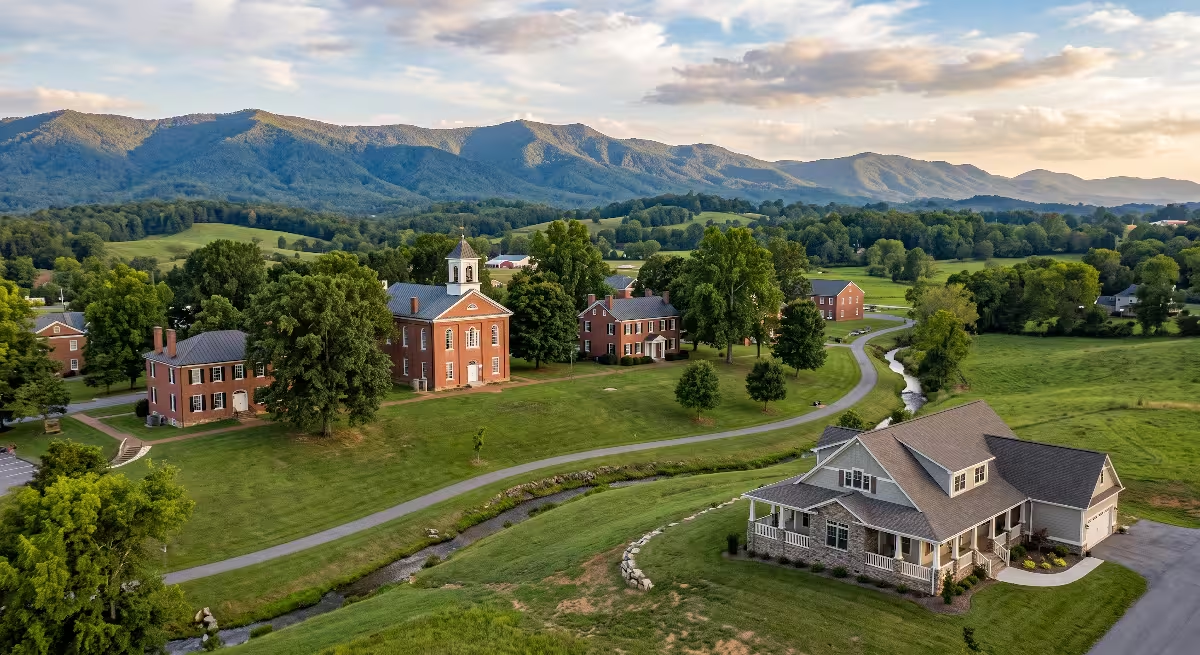


The Strategic Crossroads of Southern Appalachia
Understanding Kingsport, TN History is essential for anyone who lives here, plans to relocate to Sullivan County, or wants to build a custom home in East Tennessee. The story of Kingsport is not just a collection of dates. It is a masterclass in geography, human grit, and urban planning. The natural layout of the land determined where early travelers walked, where flatboats floated, and where modern neighborhoods now stand.
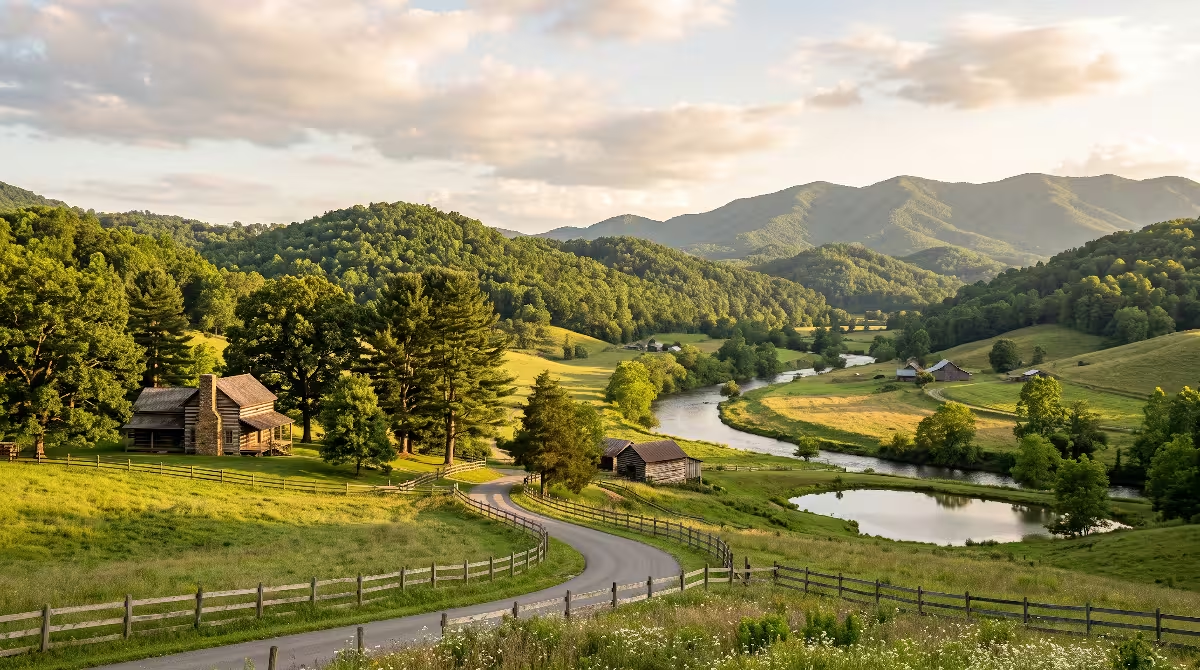
The geographic foundation of Kingsport, TN History rests at Island Flats, where the North Fork and South Fork of the Holston River come together. Long before modern roads existed, rivers were the primary highways of North America. The confluence of these two river branches created a wide, fertile river valley bordered by protective ridges like Bays Mountain. This unique setting provided clean water, abundant timber, rich bottomland for farming, and open river channels for travel.
In pre-Revolutionary times, this specific location held deep spiritual and political value. Long Island of the Holston, a large island in the river, served as a sacred neutral ground for Cherokee gatherings and regional trade. Major treaties that shaped early American boundaries were negotiated right on this ground, including the Treaty of Lochaber in 1770. When studying Kingsport, TN History, you discover that this river crossing was the gateway to the western frontier.
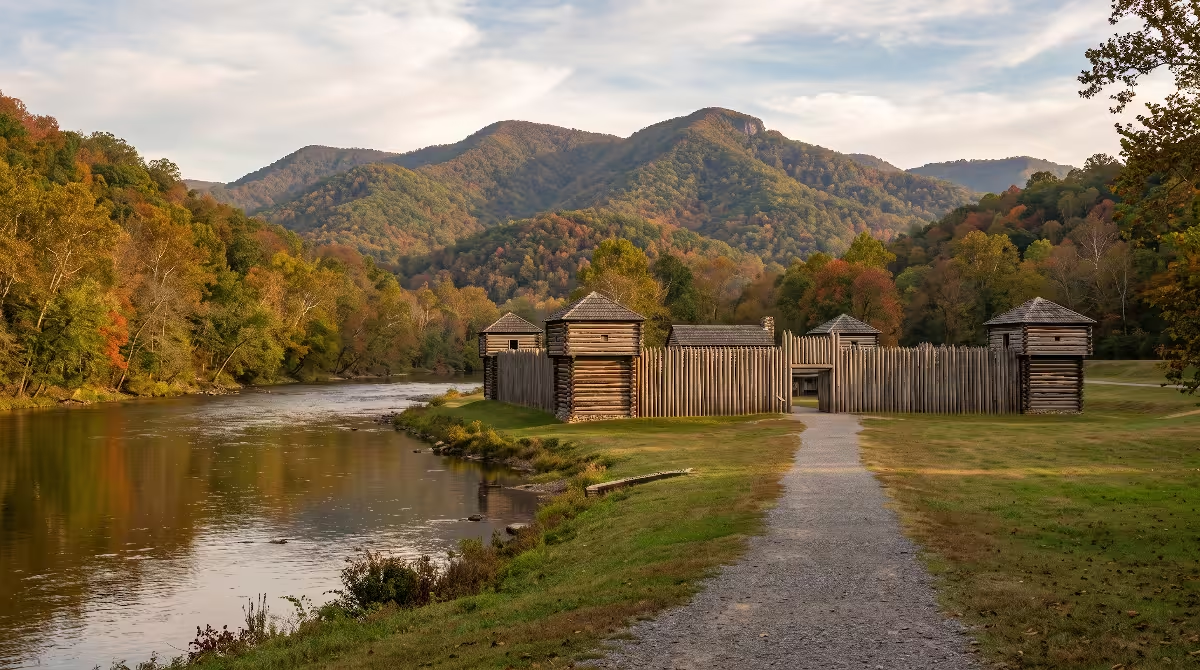
In 1776, early settlers constructed Fort Patrick Henry adjacent to the Long Island shallows. This fort served as a vital muster point and defensive outpost during the Revolutionary War era. It was also the staging ground where pioneers met before venturing into the wilderness. Famous frontiersman Daniel Boone used this exact area as a launching point when cutting the Wilderness Road through the Cumberland Gap into Kentucky. Every time a builder breaks ground near the Holston River today, they are working on land that once witnessed the earliest footpaths of American westward expansion. The early frontier era established the initial chapter of Kingsport, TN History, proving that this valley was destined to remain a hub of movement, trade, and community growth.
River Freight, Salt Mines, and King’s Port (1770s to 1850s)
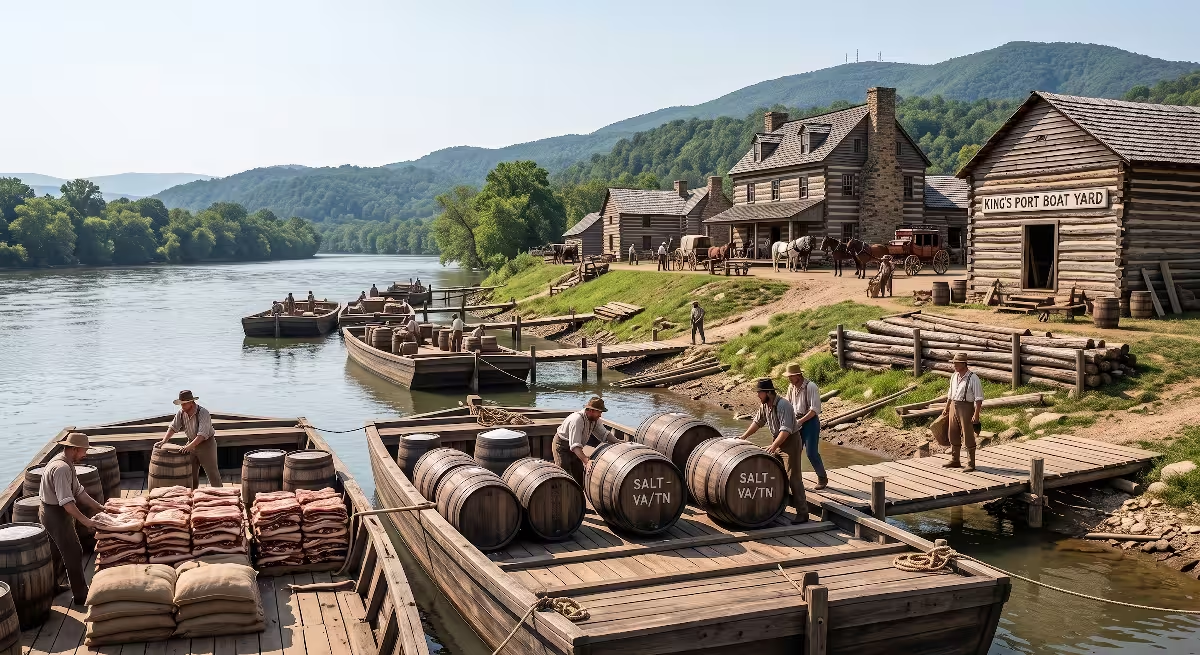
The second major phase of Kingsport, TN History begins with the river trade that gave the town its permanent name. During the late eighteenth century, moving goods across the rugged Appalachian Mountains by wagon was slow, expensive, and dangerous. Waterways offered the only practical route for bulk freight.
Colonel James King, an enterprising industrialist, recognized the commercial value of the riverbanks near the mouth of Reedy Creek. He built a mill and ironworks in the region. Around the same time, William King established a major distribution hub to move salt extracted from the salt works in Saltville, Virginia. To transport this salt, along with iron, cured pork, corn, and timber, they built flatboats along the riverbanks. This shipping point became known across the region as King’s Boat Yard or simply King’s Port.
Studying Kingsport, TN History reveals that King’s Boat Yard quickly turned into the busiest inland shipping port in Upper East Tennessee. During seasonal high water, workers loaded massive wooden flatboats with tens of thousands of pounds of freight. These boats traveled down the Holston River into the Tennessee River, floating goods all the way to Knoxville, Chattanooga, and even as far south as New Orleans. The men who navigated these waters were skilled river pilots who understood river depth, shoals, and currents.
As river traffic expanded, permanent settlements formed along the banks. Two distinct early communities developed side by side: Christianville, founded by Gilbert Christian in 1802, and Rossville, established by David Ross around his local mercantile operations. In 1822, these communities merged and officially incorporated under a state charter as the town of Kingsport. This official charter was a landmark moment in Kingsport, TN History.
Two historic structures from this era still stand today as tangible links to our frontier past:
Netherland Inn : Built right along the riverbank and the Great Stage Road, this establishment served as both a boat landing and a premier stagecoach stop. Notable American presidents, including Andrew Jackson, James K. Polk, and Andrew Johnson, stayed here while traveling through East Tennessee.- Rotherwood Mansion: Situated on a high hill overlooking the Holston River, this grand estate was established by the Reverend Frederick Augustus Ross. It represents early nineteenth century plantation architecture and remains a prominent landmark in the story of Kingsport, TN History.
From a building and engineering viewpoint, this era showed how early settlers adapted their construction techniques to local materials. They used heavy oak framing, hand hewn poplar logs, and native limestone footings. These early builders placed homes and warehouses on natural terraces just above seasonal flood levels, setting a baseline for modern site grading in Sullivan County.
Civil War Strife and The Economic Reset (1860 to 1900)
The middle to late nineteenth century brought severe hardship to the region, creating a challenging period in Kingsport, TN History. East Tennessee was deeply divided during the American Civil War, with neighbors holding opposing loyalties between the Union and the Confederacy. The strategic river crossings and mountain gaps around Kingsport made the area a target for military movement and tactical raids.
In December 1864, the region became the scene of the Battle of Kingsport. Confederate forces under Colonel Richard Morgan attempted to delay advancing Union cavalry commanded by Major General George Stoneman. The battle took place along the icy waters of the Holston River near the historic boat landing. The Confederate troops were outnumbered and outflanked, resulting in a Union victory that allowed Federal forces to advance deeper into Southwest Virginia to destroy the critical salt mines at Saltville.
The Civil War left the local economy in ruins. The conflict destroyed bridges, damaged mills, scattered livestock, and disrupted river trade. When studying Kingsport, TN History during the post war decades, you see a period of economic dormancy. As the nation moved toward steam railroads, river flatboat shipping rapidly declined. Kingsport lacked direct rail access during the 1870s and 1880s, causing the town to fall behind neighboring cities that had functioning rail depots.
Because of this prolonged economic downturn, Kingsport was unable to maintain its municipal operations, and its original 1822 town charter eventually lapsed. For nearly three decades, Kingsport existed primarily as a quiet agricultural village centered around Old Kingsport and the Netherland Inn area.
However, this quiet period laid the groundwork for what would become the most remarkable transformation in Kingsport, TN History. Because large tracts of flat agricultural land remained undivided and undeveloped along the river bends, the canvas was clear for future industrial planners. Where other cities grew in random, crowded patterns, Kingsport had open acreage waiting for modern civil engineering, rail lines, and intentional zoning.
The Steel Rails of Progress: CC&O Railroad and The Model City Vision
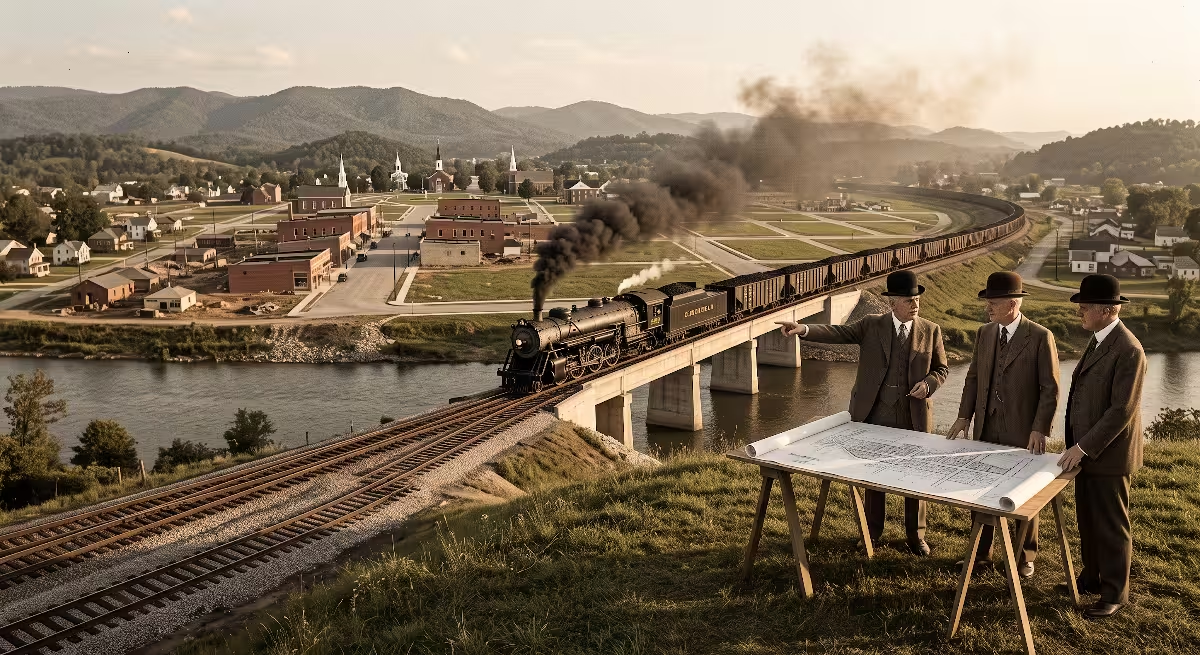
The modern revival in Kingsport, TN History began in the early 1900s with the vision of railroad entrepreneur George L. Carter. Carter recognized that the massive coalfields of Southwest Virginia and Eastern Kentucky needed a direct rail route to reach the growing industrial markets and seaports of the Carolinas. He engineered and built the Carolina, Clinchfield, and Ohio (CC&O) Railway, driving steel tracks through the rugged Blue Ridge Mountains.
When the CC&O Railway reached the Holston River valley, Carter recognized that this broad plain was the perfect geographic location for a major industrial center. To turn this vision into reality, Carter partnered with prominent New York financier John B. Dennis of Blair and Company, along with a visionary local leader named J. Fred Johnson. Together, they formed a development syndicate that changed the trajectory of Kingsport, TN History forever.
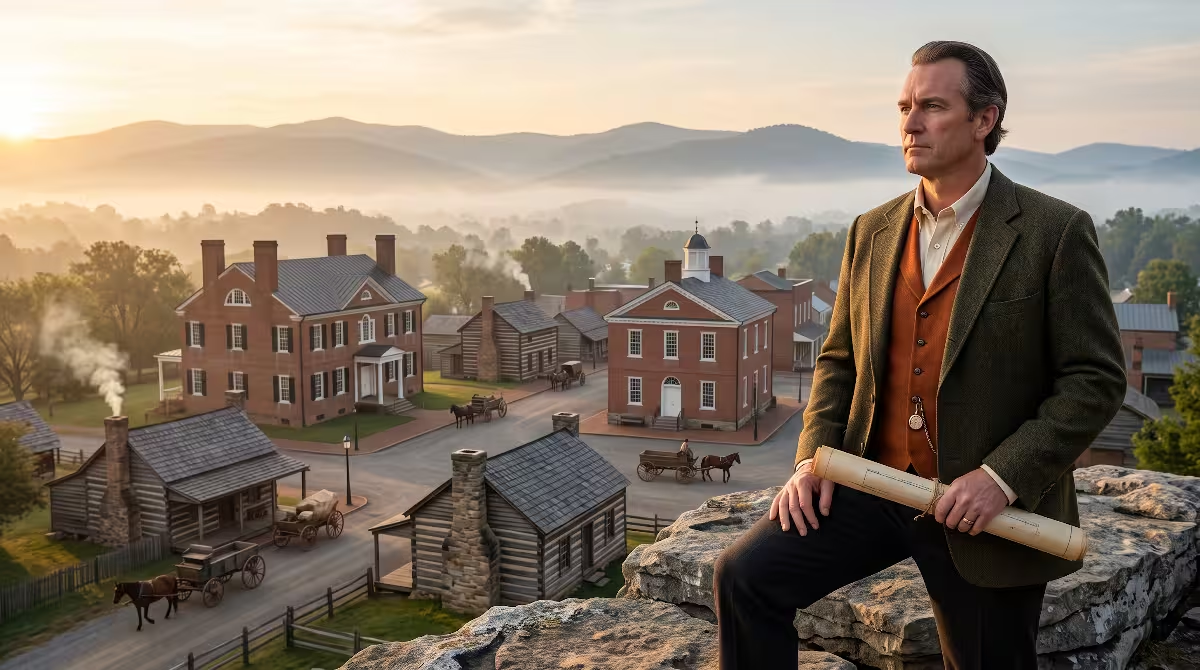
Rather than letting the town expand chaotically like typical boomtowns of the industrial era, Dennis and Johnson decided to build a scientifically planned community from the ground up. They hired John Nolen, one of America’s foremost landscape architects and city planners, to design a complete master plan. Nolen was a pioneer of the Garden City movement, which emphasized clean living spaces, abundant parks, dedicated civic areas, and strict separation between residential neighborhoods and heavy industry.
The resulting urban design became the cornerstone of modern Kingsport, TN History:
- Church Circle: Nolen designed a prominent circular green space at the top of Broad Street, setting aside parcels specifically for major religious denominations. This created an iconic architectural focal point with classic church spires framing the downtown view.
- Radial Street Grid: Broad, tree lined avenues radiated outward from the commercial core, allowing traffic to flow smoothly without creating congested bottlenecks.
- Functional Zoning: Heavy manufacturing facilities were strategically placed downwind along the river, while residential neighborhoods were positioned on higher ground and rolling hills.
- Architectural Integrity: Renowned architect Clinton MacKenzie designed classic municipal buildings, schools, and employee housing, while landscape designer Lola Anderson created extensive tree plantings and parklands.
In 1917, the Tennessee General Assembly granted a new municipal charter to Kingsport. It became the first city in Tennessee to adopt the modern council-manager form of government, ensuring professional administration over city infrastructure and services. The city also worked with Columbia University to design a progressive public school curriculum. Because of this comprehensive, forward thinking approach, Kingsport earned national acclaim as America’s “Model City,” a title that remains central to Kingsport, TN History today.
The Industrial Juggernaut and Global Impact (1920 to 1950s)
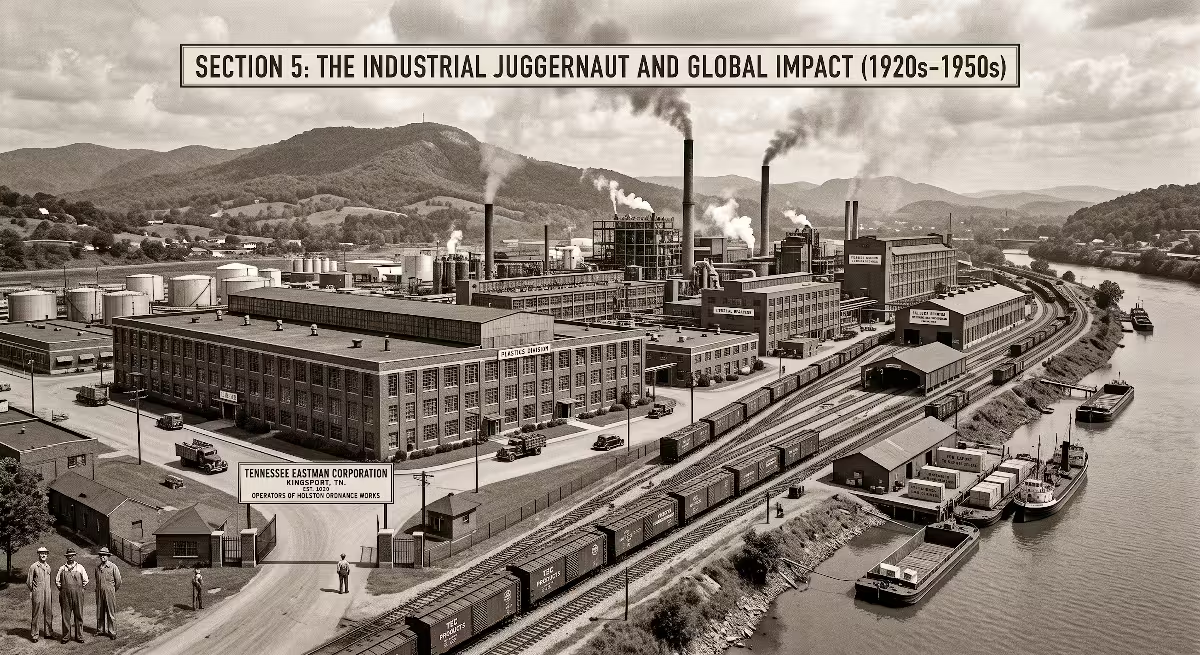
With rail infrastructure and master planned zoning in place, the next era of Kingsport, TN History saw rapid industrial growth. J. Fred Johnson worked tirelessly to recruit diverse, non-competing industries that could share resources and provide stable employment.
The most transformative corporate arrival occurred in 1920, when inventor and entrepreneur George Eastman founded Tennessee Eastman Corporation. During World War I, Eastman Kodak had experienced severe shortages of essential photographic chemicals and wood alcohol, which had previously been imported from Europe. Eastman purchased local timber acreage and established a chemical plant in Kingsport to produce methanol, cellulose acetate, and safety film base.
Tennessee Eastman quickly grew into a global chemical leader. The company developed innovative synthetic fibers like acetate yarn, plastics like Tenite, and advanced industrial chemicals. The presence of Eastman shaped the economic fabric of Kingsport, TN History, bringing thousands of engineers, chemists, and skilled tradesmen to the valley.
During this era, other major industrial operations established roots in Kingsport, creating a balanced manufacturing ecosystem:
- Mead Corporation (now Domtar): Built large pulp and paper manufacturing facilities, utilizing local timber resources and regional water supplies.
- Kingsport Press: Established in the 1920s, it grew into one of the largest book printing and binding operations in the world, producing millions of textbooks, encyclopedias, and bestsellers.
- Borden Mills: A massive textile manufacturing complex that produced cotton fabrics and provided steady employment for generations of local families.
- Blue Ridge Glass: A major producer of rolled, patterned, and specialty glass for industrial and commercial construction across the country.
- Holston Valley Community Hospital: Founded through community collaboration to provide modern healthcare infrastructure for the growing workforce.
During World War II, Kingsport, TN History intersected directly with global military operations. In 1942, the United States government established the Holston Ordnance Works (now the Holston Army Ammunition Plant). Operating under the management of Tennessee Eastman, the facility developed the “Bachmann Process” to mass-produce RDX, a powerful military high explosive. Holston Ordnance Works produced Composition B explosive mixtures that filled artillery shells, aerial bombs, and underwater torpedoes, playing a decisive role in the Allied war effort.
Furthermore, Kingsport industries provided specialized materials and technical support to the secret Manhattan Project facilities in nearby Oak Ridge, Tennessee. The technical expertise, industrial discipline, and manufacturing power developed during this era cemented the international significance of Kingsport, TN History.
Modern Growth, Civil Infrastructure, and Neighborhood Evolution
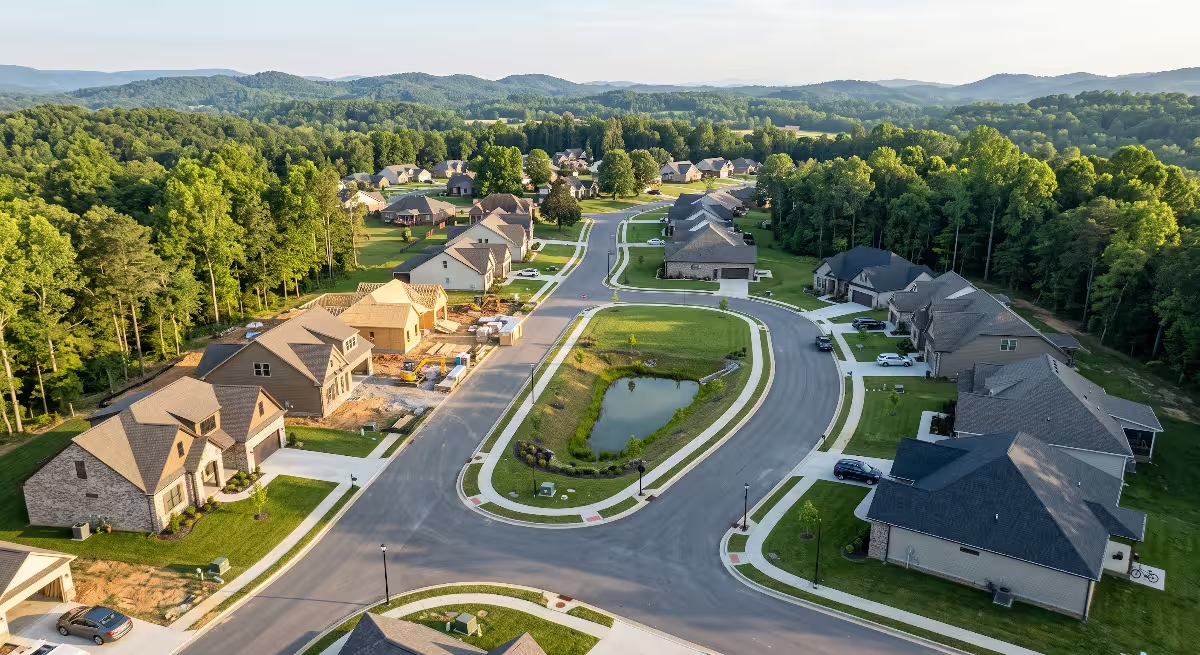
Following the industrial intensity of the war years, Kingsport entered an era of municipal maturation and residential expansion. Managing river water levels had always been a priority, and the mid twentieth century brought massive hydrological engineering projects to the region through the Tennessee Valley Authority (TVA).
The construction of Boone Dam in 1952 and Fort Patrick Henry Dam in 1953 forever altered the landscape in Kingsport, TN History. These dams provided reliable hydroelectric power, regulated seasonal flooding, and created expansive recreational reservoirs. For local builders, stable water tables along the South Fork of the Holston River opened up new areas for residential and commercial development that had previously been vulnerable to river flooding.
In 1963, the city took a major step toward structural unity by officially annexing the historic Old Kingsport settlement. This action brought the original river landing, the Netherland Inn district, and the modern planned city core under a single municipal boundary, reconciling the two foundational eras of Kingsport, TN History.
During the post-war decades, the housing market in Kingsport evolved rapidly. As engineers, corporate executives, and skilled industrial workers sought quality housing, master planned residential communities took shape across the city:
- Ridgefields: Developed along a scenic bend of the Holston River, this neighborhood introduced classic mid-century ranch homes, brick colonials, and country club amenities, designed to harmonize with the riverfront topography.
- Highland Park and Borden Park: Established neighborhoods that offered well built craftsman bungalows and brick cottages on walkable, sidewalk lined avenues.
- Bays Mountain Park and Planetarium: Established in 1971, this 3,750 acre nature preserve became the largest city owned park in the state, protecting the ridgeline watershed and offering outdoor recreation for generations of residents.
- Modern Ridge Developments: Recent decades have seen residential expansion climb into the rolling foothills surrounding the city, where custom homes are engineered to capture sweeping views of the Appalachian Mountains.
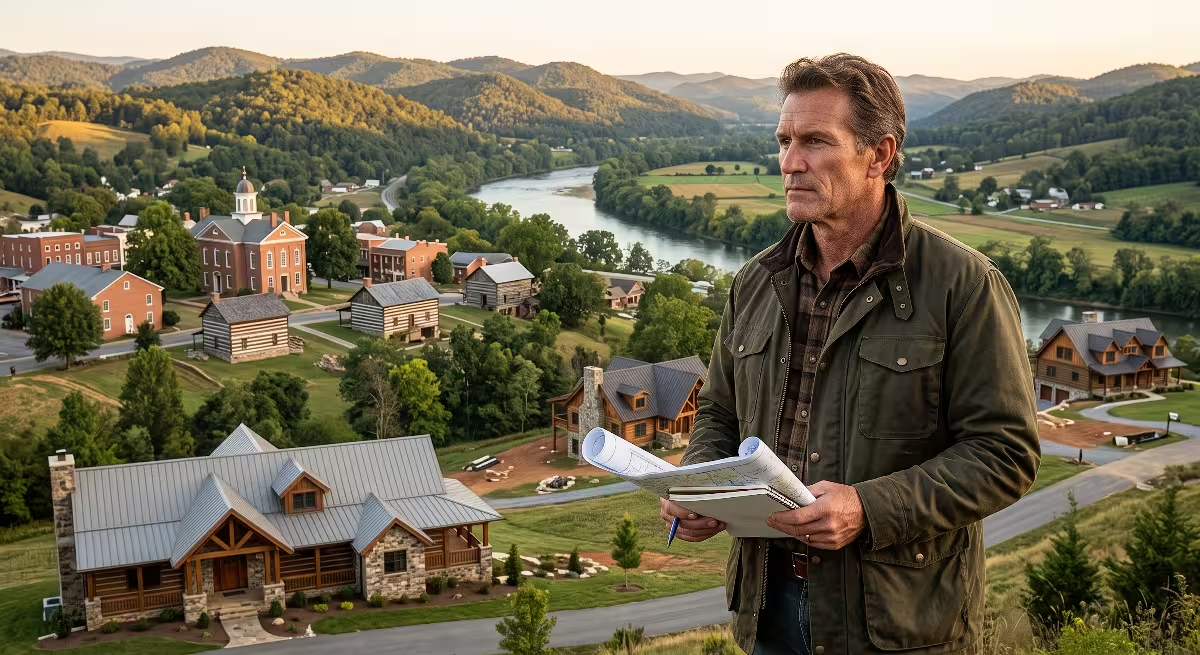
As a custom home builder, I see the legacy of John Nolen and the Model City planners every day. The original planning standards established deep utility easements, wide street right-of-ways, and consistent lot setbacks. When we grade a lot or pour concrete footings in Kingsport today, we are benefiting from more than a century of deliberate, professional civil engineering. That structural foundation makes building custom homes here a rewarding experience for both builders and homeowners.
Timeline of Major Milestones
| Year | Milestone in Kingsport, TN History | Historical Significance |
| 1770 | Treaty of Lochaber | Long Island of the Holston recognized as a vital treaty and trade hub. |
| 1775 | Wilderness Road Blazed | Daniel Boone uses the area as a launching point for westward migration. |
| 1776 | Fort Patrick Henry Built | Settlers construct a major defensive garrison near the Long Island shallows. |
| 1802 | Gilbert Christian Founds Christianville | Early settlement platted near the confluence of the Holston River forks. |
| 1822 | First Town Charter Granted | Christianville and Rossville merge to form the incorporated town of Kingsport. |
| 1864 | Battle of Kingsport | Civil War cavalry engagement along the frozen waters of the Holston River. |
| 1908 | CC&O Railway Arrives | George L. Carter connects Kingsport to regional coalfields and Atlantic ports. |
| 1917 | Second Charter & “Model City” Plan | John Nolen’s master plan adopted; city becomes first in TN with a city manager. |
| 1920 | Tennessee Eastman Founded | George Eastman builds chemical facility, establishing modern industrial base. |
| 1942 | Holston Ordnance Works Opens | Large-scale continuous RDX explosive manufacturing supports Allied WWII efforts. |
| 1953 | TVA Dams Completed | Boone Dam and Fort Patrick Henry Dam provide flood control and energy. |
| 1963 | Annexation of Old Kingsport | The original historic river settlement joins the modern municipal city. |
| 1971 | Bays Mountain Park Established | 3,750-acre nature preserve created, protecting city watershed and ridgelines. |
The Architectural Heritage of Kingsport Neighborhoods
The physical buildings in Kingsport tell a direct visual story of the city’s growth. When walking through downtown or driving through established neighborhoods, you see specific architectural styles that correspond to distinct economic eras in Kingsport, TN History.
During the frontier and river trade period, construction focused strictly on function and durability. The Netherland Inn exemplifies heavy timber post and beam framing, mortise and tenon joinery, and broad covered porches designed to handle riverfront traffic. The foundation walls were built using native limestone blocks gathered directly from local creek beds and mortared with lime sand mixtures. These building methods were designed to withstand damp river valley conditions and heavy structural loads from freight storage.
When the Model City plan took effect after 1917, architectural standards shifted toward classical revival and
MacKenzie introduced several signature styles that define historic Kingsport homes:
- Colonial Revival: Characterized by symmetrical brick facades, centered front doors with decorative pediments, multi-pane double-hung windows, and formal entry foyers. These homes were built with solid brick masonry walls and slate roofs that have lasted over a century.
- Craftsman and American Foursquare: Featuring deep front porches with tapered square columns, exposed roof rafters, low-pitched gable roofs, and built-in interior cabinetry. These homes provided practical, attractive living spaces for plant supervisors, educators, and downtown shopkeepers.
- Tudor Revival: Incorporating steep roof pitches, decorative half-timbering, prominent exterior stone chimneys, and arched front entryways. These custom homes added visual variety and architectural charm to neighborhoods like Church Circle and along Watauga Street.
For modern custom home buyers, these architectural traditions provide timeless design inspiration. Many clients building custom homes in the Tri-Cities today choose to incorporate classical elements from Kingsport, TN History, such as wide rocking-chair front porches, handmade brick veneer, detailed interior millwork, and stone foundations. Integrating these historic features with modern energy efficient framing, spray foam insulation, and open concept floor plans allows homeowners to celebrate local heritage while enjoying modern comfort and low utility costs.
Engineering and Topography: Building on East Tennessee Soil
Local history is written into the dirt and rock beneath our feet. The physical development of Kingsport has always been shaped by the karst topography, limestone bedrock, and alluvial river plains of the Appalachian Valley and Ridge province.
Building safely and durably in Kingsport requires an understanding of how historical land use interacts with native soil conditions:
- Alluvial River Lowlands: Areas adjacent to the Holston River and Reedy Creek feature deep, fertile soils deposited by centuries of river movement. While these soils are easy to excavate, custom home builders must verify soil load-bearing capacity and ensure proper foundation drainage systems are installed to prevent moisture intrusion in basements and crawlspaces.
- Limestone Bedrock and Karst Geology: The rolling hills and ridges surrounding Kingsport feature shallow limestone bedrock. In some areas, underground water flow has created karst features, such as sinkholes and natural underground drainage fissures. Performing a geotechnical site evaluation before pouring concrete foundations is a critical step in modern Kingsport home construction.
- Ridge Grading and Erosion Control: As custom home construction expands toward the higher elevations near Bays Mountain and along surrounding ridges, managing storm water runoff is essential. Proper benching, engineered retaining walls, and hydroseeded slope stabilization protect custom home foundations from soil movement and preserve the natural mountain landscape.
The early planners who shaped Kingsport, TN History understood these natural conditions. They intentionally placed heavy industrial facilities on the flat alluvial soils near the river where water access was abundant, while reserving the well-drained, rolling limestone ridges for residential neighborhoods and parks. When we design and build custom homes today, we follow those same sound engineering principles.
Frequently Asked Questions About Kingsport, TN History
Why is Kingsport, Tennessee called the “Model City”?
Kingsport is known as the “Model City” because it was one of the first fully planned, privately financed industrial garden cities in the United States. Following the completion of the CC&O Railway in the early 1900s, city leaders hired renowned city planner John Nolen to design a master plan. The plan separated industrial, commercial, and residential areas, incorporated green spaces like Church Circle, and established a council-manager government with a strong public school system.
How did Kingsport, TN get its name?
The name originated in the late 1700s when Colonel James King operated a mill and William King established a riverfront salt distribution depot near the mouth of Reedy Creek. The location became known as King’s Boat Yard or King’s Port because flatboats were built and loaded with salt, iron, and agricultural freight to float down the Holston River to regional markets.
What is the history of the Long Island of the Holston?
Long Island of the Holston is a historic island located in the Holston River in Kingsport. For centuries, it served as a sacred neutral gathering place and treaty ground for the Cherokee and other Native American tribes. In 1775, Daniel Boone used the area near Long Island as the starting point to blaze the Wilderness Road through the Cumberland Gap, making it a critical hub for early American westward migration.
What role did Kingsport play in World War II and the Manhattan Project?
During World War II, Kingsport was home to the Holston Ordnance Works, operated by Tennessee Eastman. The plant developed an efficient continuous-flow method to manufacture RDX, a powerful military high explosive used in aerial bombs, torpedoes, and artillery shells. Kingsport industries also manufactured specialized chemicals and materials that directly supported the secret atomic research facilities at Oak Ridge, Tennessee.
When was Kingsport, TN founded and chartered?
The earliest river settlements of Christianville (1802) and Rossville merged to receive the first town charter in 1822. After an economic decline following the Civil War caused the original charter to lapse, the modern city of Kingsport was rechartered by the Tennessee General Assembly in 1917 under its master-planned council-manager municipal structure.
How does the master plan of Kingsport benefit custom home buyers today?
John Nolen’s original 1917 master plan established wide street rights-of-way, dedicated parklands, and logical zoning separations that protect residential neighborhood values. Because neighborhoods were mapped with generous lot setbacks and thoughtful road alignment, modern custom home buyers in Kingsport enjoy mature tree canopies, stable utility infrastructure, and neighborhoods with lasting architectural character.
Preserving the Heritage for Future Generations
The story of Kingsport, TN History is an ongoing narrative of transformation, innovation, and community pride. From Cherokee treaty councils on the Holston River to frontier flatboats, from the rumble of Clinchfield steam locomotives to the precision of John Nolen’s drafting table, this city has consistently turned geographic advantages into enduring community strength.
Building a home in Kingsport is not just about framing lumber and laying brick; it is about becoming part of a community that was designed with care, purpose, and respect for the land. Whether you are walking through the historic halls of the Netherland Inn, admiring the architecture of Church Circle, or planning your dream home overlooking Bays Mountain, the deep roots of Kingsport, TN History provide a solid foundation for the future.