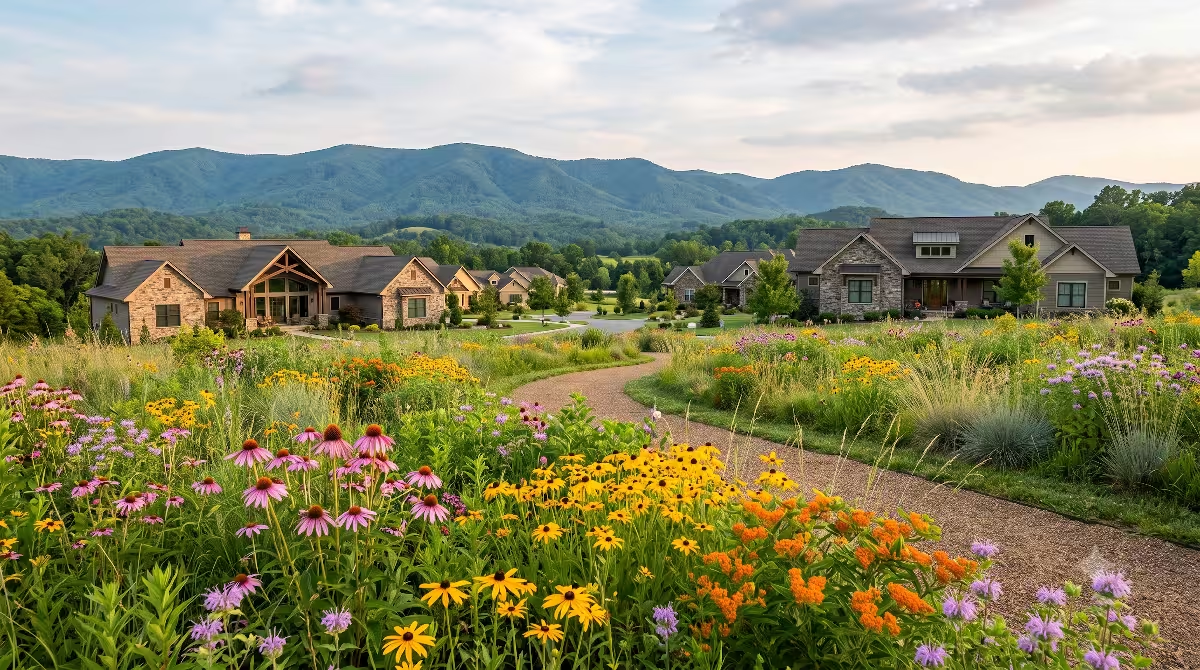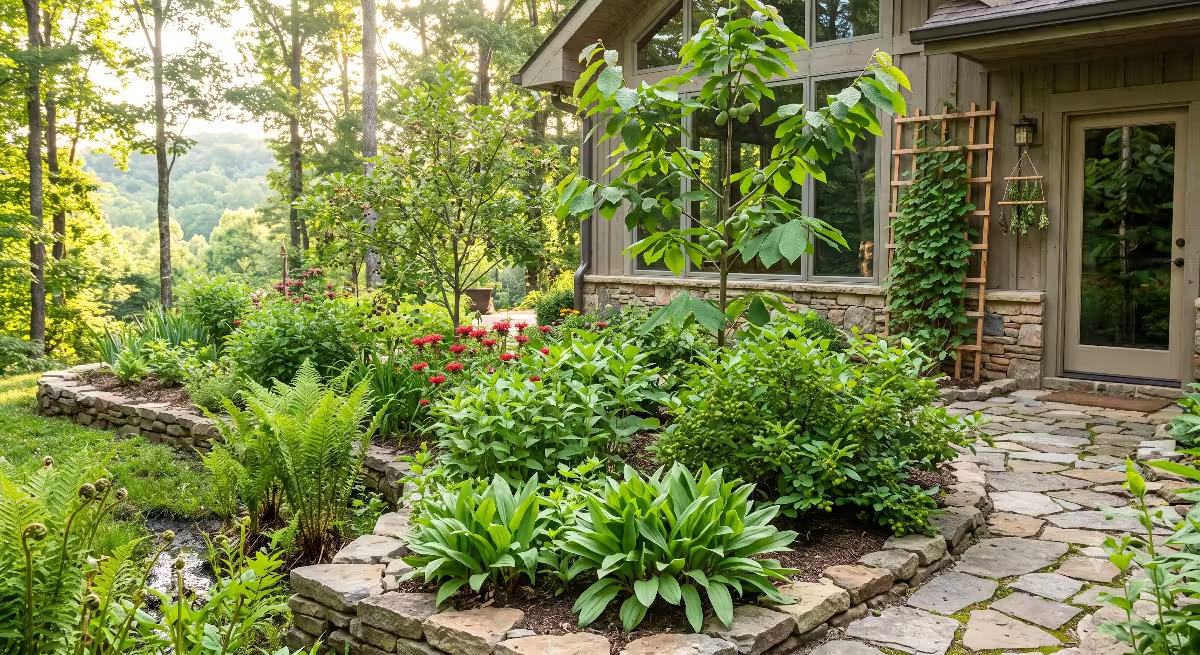

In today’s article we will discuss designing spaces that bring the outdoors inside and transform outdoor landscapes into healing natural sanctuaries. When we look at designing effective zen garden water features, we are doing much more than putting moving water in a yard. We are using science, art, and local geology to create spaces that reduce stress, lower heart rates, and restore mental focus.
Using local Appalachian river rock for zen garden water features gives homeowners in East Tennessee an incredible advantage. Traditional Japanese garden design, known as Karesansui, relies on raw, natural elements to reflect the wider mountain landscape. Appalachian river rock offers millions of years of natural water shaping right from our regional watersheds. When we combine local river stones with modern water pump engineering, we build zen garden water features that feel completely authentic to our local mountains while providing real health benefits. In this guide, I will walk you through every aspect of choosing, building, and maintaining zen garden water features using local Appalachian stone.
Geological Profile: Selecting the Right Appalachian Rock
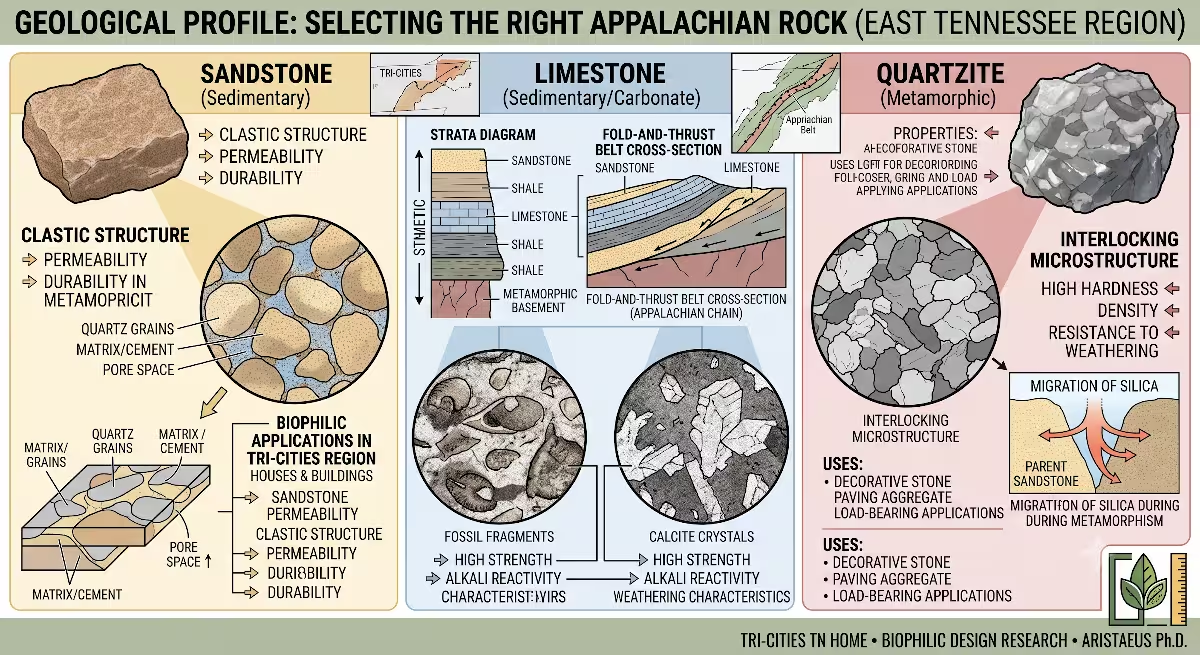
To build lasting zen garden water features, you must start by understanding the science of the rock itself. Not all stones perform well when constantly exposed to flowing water. Fortunately, the Appalachian mountain range is one of the oldest geological formations on Earth. This means our regional river rocks have been tested by weather and flowing water for millions of years.
APPALACHIAN ROCK SELECTION FOR WATER FEATURES:
├── Metamorphic Quartzite (Ideal for Emitters & Spillways)
│   ├── High density, zero water absorption
│   └── Resists cracking and mineral leaching
├── Fine-Grained Sandstone (Ideal for Edging & Accents)
│   ├── Smooth texture, earth-tone colors
│   └── Provides steady surface for moss growth
└── River-Smoothed Siltstone (Ideal for Splash Beds)
    ├── Rounded edges, dampens water noise
    └── Soft grey and tan visual spectrum
When sourcing stone for zen garden water features in East Tennessee, you will mostly find three types of rock in regional riverbeds and commercial stone yards: quartzite, sandstone, and siltstone.
Understanding Petrological Composition
Metamorphic quartzite is the strongest stone you can choose for zen garden water features. Quartzite formed under intense heat and pressure deep within the earth. Because of this, it is extremely dense and does not absorb water easily. Water glides across quartzite smoothly, creating a glass-like sheet of light. It also resists freeze and thaw cycles better than almost any other material.
Fine-grained sandstone is another wonderful option for zen garden water features. Sandstone from the Appalachian region often carries warm tan, gold, and soft red tones. It has a slightly rougher surface than quartzite. This texture allows water to slow down slightly as it trickles over the surface, creating a gentle and rhythmic splashing sound. Sandstone is also excellent if you want native mosses to grow along the edges of your zen garden water features over time.
River-smoothed siltstone provides smooth, rounded cobbles that work exceptionally well in splash basins. These rounded river stones have spent centuries tumbling through local rivers like the Watauga, Nolichucky, and Holston. Their rounded edges create soft, pleasant sounds when water droplets hit them, making them vital for well-balanced zen garden water features.
Mineral Safety and Water Chemistry in Zen Garden Water Features
Before placing any stone into zen garden water features, you must consider water chemistry. Rocks contain natural minerals, and flowing water can leach those minerals into your circulating water system.
First, test your river rocks for high iron content. Rocks with heavy iron deposits will develop dark orange rust stains when exposed to continuous water and oxygen. While a little iron rust can look rustic, excess iron rust can discolor your stone bed and create uneven water paths across your spillways. You can check for iron by placing a sample stone in a bucket of water for two weeks. If reddish rust bleeds heavily onto the surface, choose a different rock pile for your zen garden water features.
Second, check the rock for pH neutrality. Some soft limestone rocks release calcium carbonate into the water. Calcium carbonate raises the pH level of your water system. High pH levels create white crusty mineral deposits on your stone faces and make algae harder to control. Quartzite and hard Appalachian river cobble are naturally pH neutral, which makes them the safest choice for clean, low-maintenance zen garden water features.
Gradation and Sizing Strategy
A mistake many people make when building zen garden water features is buying stones that are all the same size. Nature does not sort rocks into uniform piles, and neither should you if you want an authentic design. You need a mix of rock sizes to build depth, direct water flow, and tune the sound of your feature.
Base Aggregate (1 inch to 3 inches): These small river pebbles cover the hidden water reservoir at the bottom. They cushion splashing water and hide the mechanical equipment below.
Structural Cobble (4 inches to 8 inches): These medium river stones surround the main water flow. You use them to build small channel walls, direct water currents, and adjust the acoustic pitch of falling water.
Anchor Boulders (12 inches and larger): These large Appalachian boulders act as the vertical focal points of your zen garden water features. In traditional Zen design, these main stones represent static mountain peaks standing strong against moving rivers.
Aesthetic Integration: Zen Principles Meets Mountain Geology
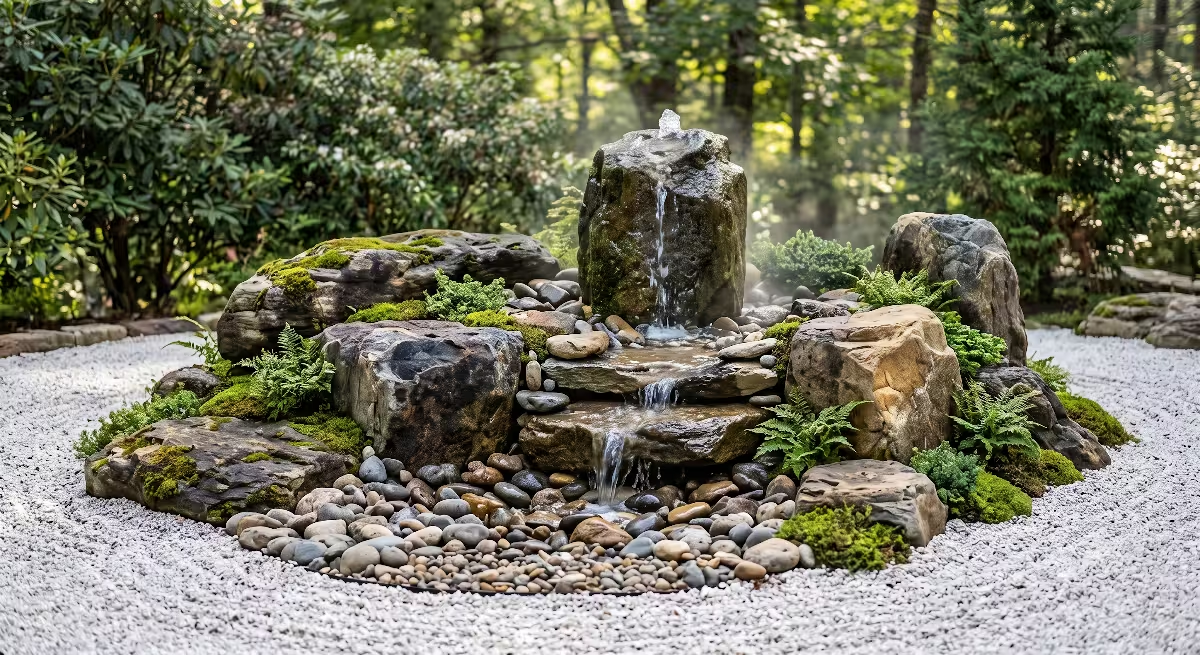
Building effective zen garden water features requires balancing time-tested Japanese landscape art with our native mountain scenery. In Japan, dry landscape gardens use raked gravel to represent moving water. However, when we build active zen garden water features, we use real moving water flowing over real mountain stone.
VISUAL BALANCE IN ZEN WATER FEATURES:
├── Asymmetry & Triads (Sanzon Seiseki Arrangement)
│   ├── Main Vertical Boulder (Tallest, represents mountain peak)
│   ├── Secondary Medium Stone (Supports vertical weight)
│   └── Flat Base Stone (Anchors flow to the ground)
└── Acoustic Pitch Tuning
    ├── High-Pitch Drops (Thin streams onto hard quartzite)
    └── Low-Frequency Cascades (Broad flows onto deep stone beds)
Asymmetry and the Rule of Odd Numbers
One of the main rules in Japanese design is avoiding perfect symmetry. Straight lines and balanced pairs rarely occur in wild natural spaces. When placing river rocks in zen garden water features, always arrange your major stones in groups of odd numbers, such as three, five, or seven.
The traditional Japanese triad stone arrangement, known as Sanzon Seiseki, uses three distinct stones:
The Tall Vertical Stone: This is your main accent boulder. It stands upright to give your water feature height and dignity.
The Supporting Stone: This medium boulder sits next to the vertical stone to balance its weight and break up rigid vertical lines.
The Flat Base Stone: This low stone lies flat on the ground. It guides the water away from the main boulder and anchors the entire grouping to the surrounding soil.
By placing Appalachian river rocks in this asymmetrical pattern, your zen garden water features will look like they were formed naturally by mountain streams over hundreds of years.
Texture and Color Palette in Zen Garden Water Features
East Tennessee has a rich, earthy color palette. Appalachian river rocks naturally display shades of slate grey, soft brown, charcoal, and warm tan. These muted colors work perfectly in zen garden water features because they do not distract the eye or create visual stress.
When wet, Appalachian river stones change their appearance dramatically. Dark grey slate turns into a deep mirror-like black, while tan sandstone takes on a rich golden tone. When planning zen garden water features, test how your rocks look both completely dry and fully wet. This ensures your water feature looks beautiful even when the pump is turned off for seasonal maintenance.
To complement these stone colors, plant native East Tennessee mosses, small ferns, and dwarf evergreen shrubs around the edges of your zen garden water features. The contrast between bright green foliage and dark wet river rock is a classic biophilic pattern that promotes deep mental relaxation.
Acoustic Engineering: Tuning Your Water Soundscape
The sound of your water feature is just as important as its visual appearance. In biophilic design, gentle water sounds act as sound masking tools. They block out annoying background noises like road traffic, lawnmowers, and neighborhood chatter. At the same time, listening to natural water movement lowers human cortisol levels and improves focus.
You can tune the sound of zen garden water features by changing how far the water falls and what type of stone it lands on:
High-Pitch Trickles: To create a light, delicate sound that aids quiet meditation, direct a thin stream of water over a steep quartzite stone so it falls a short distance onto a smooth river stone.
Low-Frequency Cascades: To block out heavy traffic noise, direct a wider flow of water over a flat sandstone ledge so it drops 8 to 12 inches into a deep bed of rounded river cobbles.
By moving stones around the splash zone, you can customize the acoustic signature of your zen garden water features until it matches your exact preference.
System Selection: Pondless Basins vs. Standing Basins
When choosing the underlying mechanical structure for zen garden water features, you generally have two choices: a pondless subsurface basin or a traditional open water basin. For most residential properties in the Tri-Cities region, a pondless system is by far the superior choice.
SYSTEM COMPARISON: PONDLESS VS. STANDING BASIN
┌───────────────────────────────┬───────────────────────────────┐
│ Pondless Subsurface Basin     │ Traditional Standing Basin    │
├───────────────────────────────┼───────────────────────────────┤
│ • Zero open water hazard      │ • Open water safety risk      │
│ • Minimal summer evaporation  │ • High summer water loss      │
│ • No mosquito breeding space  │ • Requires mosquito treatment │
│ • Low seasonal maintenance    │ • Frequent sludge cleanout    │
└───────────────────────────────┴───────────────────────────────┘
Understanding Pondless Water Features
A pondless water feature recirculates water without holding a body of standing open water above ground. Instead of a deep pond, the water falls over your Appalachian river rocks, disappears through a gravel bed, and collects in a buried storage vault filled with heavy plastic matrix blocks.
A submersible pump sitting inside a protective vault pushes the water from the underground matrix back up to the top spillway rock through hidden flexible tubing. This continuous loop keeps water moving smoothly without ever creating stagnant puddles.
Key Benefits of Pondless Zen Garden Water Features
Pondless zen garden water features offer several practical advantages for homeowners in Johnson City, Kingsport, and Bristol:
Safety: Because there is no open standing water, pondless systems pose no safety hazard for young children or pets.
Mosquito Prevention: Mosquitoes require standing, still water to lay their eggs. Because the water in a pondless system stays underground when the feature is off and moves constantly when it is on, mosquitoes cannot breed in it.
Low Maintenance: Open ponds collect falling autumn leaves, twigs, and dust, which quickly turn into foul bottom sludge. Pondless zen garden water features catch debris on top of the river rock layer where it can be quickly swept or rinsed away.
Evaporation Control: During hot East Tennessee summer afternoons, open ponds lose dozens of gallons of water to evaporation every week. Underground storage vaults protect the water supply from direct sun and wind, cutting water loss significantly.
Core-Drilled Fountain Boulders (Tsukubai Style)
Another popular design for pondless zen garden water features uses a single, large Appalachian river boulder with a hole drilled directly through its center. This design is inspired by Japanese Tsukubai washbasins.
A flexible pipe runs up through the drilled hole in the center of the boulder. Water gently wells up out of the top of the rock, flows smoothly over its curved sides, and runs down through a bed of rounded river stones back into the subsurface basin. This core-drilled stone approach creates a minimalist design that fits easily into small urban yards or patio corners.
Step-by-Step Installation Protocol
Building long-lasting zen garden water features requires proper site preparation, solid structural support, and careful stone placement. Skipping structural steps will cause ground settling, water leaks, and pump failures over time. Follow this step-by-step building protocol to install a professional pondless water feature using Appalachian river rock.
INSTALLATION SEQUENCE:
1. Site Excavation & Base Preparation
   └── Dig basin, level base, lay 8 oz geotextile fabric & EPDM liner
2. Reservoir Assembly & Vault Placement
   └── Install aqua blocks, set pump vault, connect plumbing lines
3. Heavy Rock Placement & Matrix Layering
   └── Position structural boulders, layer cobble, cover top grate
4. Hydraulic Calibration & Sound Tuning
   └── Fill reservoir, turn on pump, adjust flow valve & splash rocks
Step 1: Excavation and Base Preparation
Start by selecting a flat or gently sloping site that can be seen easily from your indoor living spaces, such as a patio door or living room window. This visual connection maximizes the biophilic benefit of your water feature throughout the day.
Dig a pit that is roughly 12 inches wider and deeper than your planned underground matrix blocks. The bottom of the pit must be completely flat and level. Compact the soil firmly to prevent future settling.
Spread a 2-inch layer of crushed stone or coarse sand across the bottom of the excavation and pack it flat. Next, lay down a layer of heavy-duty 8-ounce non-woven geotextile fabric. This fabric protects the waterproof liner from sharp roots or rocks in the native soil. Place a durable 45-mil EPDM rubber liner over the geotextile fabric, smoothing out major wrinkles while leaving plenty of slack along the outer edges.
Step 2: Reservoir Assembly and Matrix Installation
Place your plastic matrix blocks, often called AquaBlox, directly onto the lined basin floor. These hollow plastic structures hold water underground while supporting thousands of pounds of heavy river rock on top.
Set your rigid pump vault at one end of the basin next to the matrix blocks. The pump vault protects your submersible pump from debris and allows you to access the pump easily for seasonal maintenance. Connect your flexible PVC pipe to the pump, run the pipe out of the vault, and carry it under the liner edge to the spot where your top spillway rock will sit.
Fold the extra EPDM liner over the top edges of the pit and backfill soil around the outside edges to lock everything firmly in place.
Step 3: Placing Structural Boulders and River Rock
Now you are ready to place your Appalachian stone. Place your largest anchor boulders first. Because large river rocks are extremely heavy, use proper lifting techniques, strap systems, or mechanical machinery to move them safely without damaging your EPDM liner.
Position your primary vertical boulder near the back edge of the basin. Set supporting boulders around its base to create a stable, natural stone cluster. Always ensure structural boulders sit firmly on the ground or directly on reinforced basin edges rather than resting loosely on soft gravel.
Once your primary anchor boulders are locked in position, place your water emitter rock or core-drilled boulder at the top of the water line. Connect the flexible water pipe to the back or bottom of the emitter stone.
Next, spread medium Appalachian river cobble (4 inches to 8 inches) around the main stone cluster to hide the liner edges and define the water flow path. Finally, cover the plastic reservoir top with a 3-inch layer of rounded 2-inch river rock. This top rock layer creates a seamless transition between your water feature and the surrounding garden soil.
Step 4: Hydraulic Calibration and Sound Tuning
Fill the subsurface reservoir with clean water until the pump vault is fully submerged. Before turning on the pump, inspect all visible fittings to ensure your connections are tight.
Plug in the pump and watch how the water flows over your emitter rock. Adjust the pump discharge valve to control the water volume. You want enough water flow to create a smooth, continuous sheet across the face of the stone, but not so much that water shoots past the basin footprint and wastes water into the garden soil.
Listen carefully to the sound of the falling water. If the splashing sounds too loud or harsh, adjust the small river stones directly under the water drop. Tilting a flat river rock at a slight angle softens the impact of falling water, producing a smoother and more soothing sound across your garden.
Commonly Asked Questions about Zen Garden Water Features
When homeowners consider building zen garden water features, they frequently ask specific technical questions about sizing, cleaning, sealing, and material choices. Below are clear, direct answers to the most common questions regarding Appalachian stone and water feature installation.
What size river rock is best for a zen garden water feature?
A mixed gradient of rock sizes gives you the best visual appearance and structural stability for zen garden water features. Using only one size of rock looks unnatural and causes mechanical issues.
RECOMMENDED ROCK GRADIENT RATIOS:
┌─────────────────────────┬──────────────┬──────────────────────────────┐
│ Rock Category           │ Size Range   │ Primary Function             │
├─────────────────────────┼──────────────┼──────────────────────────────┤
│ Splash Bed Aggregate    │ 1" to 3"     │ Reservoir cover & dampening  │
│ Flow Control Cobble     │ 4" to 8"     │ Directs water & tunes pitch  │
│ Structural Anchor Stone │ 12" to 24"+  │ Focal points & stability     │
└─────────────────────────┴──────────────┴──────────────────────────────┘
For the subsurface splash bed, use 1-inch to 3-inch rounded river cobble. This size covers the underground matrix effectively while allowing falling water to pass down into the reservoir quickly without splashing out.
For structural channel edges and flow control, use 4-inch to 8-inch river rocks. Rocks in this size range are heavy enough to stay in place against moving water currents, yet light enough to move by hand when fine-tuning your soundscape.
For accent focal points, select two or three large Appalachian boulders ranging from 12 inches to 24 inches or larger. These large rocks anchor your overall design and make your water feature look like a real piece of mountain topography.
How do you keep river rocks clean in a water feature?
Keeping river rocks clean in zen garden water features requires a mix of good mechanical filtration, biological treatment, and simple maintenance routines. Avoid using harsh chemical bleaches or pool chlorine. Chlorine damages natural river rocks, strips away rich mineral tones, and harms birds or beneficial garden insects that drink from your water feature.
Instead, follow these natural cleaning methods:
Use Beneficial Bacteria: Add liquid beneficial bacteria to your underground vault once a month during spring and summer. These natural microbes eat organic waste, falling leaves, and excess nutrients before algae can feed on them.
Add Barley Straw Extract: Barley straw extract is a safe, natural liquid that prevents green string algae from clinging to wet river rock surfaces.
Keep Water Moving: Ensure your pump runs continuously during warm weather. Stagnant water warms up quickly under the sun, triggering rapid algae growth.
Rinse Debris Seasonally: Twice a year, use a garden hose to spray down the top river rock bed. The fine dirt will wash down into the basin vault, where you can easily remove it using a simple wet-dry shop vacuum.
Do you need to seal river rock before putting it in a fountain?
No, natural Appalachian river rock does not need to be sealed before installing it in zen garden water features. Chemical stone sealers are unnecessary and often cause long-term problems in outdoor water installations.
Chemical sealers create a plastic-like coating on top of the stone. Over time, constant exposure to flowing water, sunshine, and winter freezing causes these clear coatings to cloud, crack, and peel off in unsightly white flakes. Peeling sealer is almost impossible to remove from rough river stones.
Appalachian quartzite, dense sandstone, and river cobbles naturally look their best when wet. Water naturally deepens the color saturation of natural stone without needing artificial gloss coatings. Furthermore, unsealed stone allows beneficial natural mosses to attach to the damp rock faces over time, giving your zen garden water features an aged, timeless feel.
Is river rock better than mulch around water features?
Yes, river rock is far superior to wood mulch for landscaping around zen garden water features.
MATERIAL COMPARISON: RIVER ROCK VS. WOOD MULCH
┌───────────────────────────────┬───────────────────────────────┐
│ Appalachian River Rock        │ Shredded Wood Mulch           │
├───────────────────────────────┼───────────────────────────────┤
│ • Permanent, never decays     │ • Decays, needs yearly replacement│
│ • Stays in place during heavy rain│ • Washes into pump & clogs filter │
│ • High thermal mass reduces evaporation│ • Traps heat, dries surrounding soil│
│ • Clean, zero dust or floating debris│ • Adds floating organic sludge │
└───────────────────────────────┴───────────────────────────────┘
Wood mulch presents severe problems near moving water systems. Heavy rainstorms wash light shredded bark directly into water spillways and gravel beds. As mulch rots inside your water reservoir, it creates fine organic sludge that clogs submersible pumps and turns clear water brown.
Appalachian river rock stays permanently in place during heavy East Tennessee downpours. It does not decay, shift easily, or pollute your water system with organic debris. Additionally, river rock provides strong soil stabilization along water feature borders, preventing soil erosion around your pump vaults and reservoir liners.
Regional Maintenance and Winterization
The East Tennessee climate experiences noticeable seasonal shifts. Summertimes bring hot, humid days with occasional heavy downpours, while winters bring freezing temperatures and snow snaps. Properly managing your zen garden water features throughout the year protects your equipment and keeps your stone looking pristine.
SEASONAL MAINTENANCE TIMELINE:
├── Spring: Recommissioning & Startup
│   └── Flush basin, check electrical lines, reinstall pump, treat water
├── Summer: Operational Efficiency
│   └── Check water levels, add beneficial bacteria, clear top debris
├── Autumn: Leaf Management
│   └── Lay temporary protective netting, trim dying garden foliage
└── Winter: Freeze Protection
    └── Drain lines, remove pump, cap pipes or install thermal basin heater
Freeze-Thaw Resilience of Appalachian Stone
One reason local Appalachian stone works so well in zen garden water features is its natural ability to endure winter weather. High-density metamorphic quartzite and hard river cobbles have very low water absorption rates.
When porous soft stones absorb water and freeze, the ice inside expands, causing the stone to crack, split, or flake apart. This process is called spalling. Because dense Appalachian river rock resists internal water absorption, it handles intense freezing snaps without cracking.
Winter Protocol for East Tennessee Water Features
When winter temperatures drop below freezing in Johnson City, Kingsport, and Bristol, follow these steps to protect your water feature setup:
Disconnect and Remove the Pump: Turn off the power supply, disconnect the pump from your water line, and lift it out of the underground vault. Store the pump indoors in a bucket of clean water so its rubber seals do not dry out over the winter.
Drain Exposed Plumbing Lines: Drain all standing water out of exposed flexible water pipes. If water freezes inside a rigid plastic pipe, it can expand and burst the line.
Keep the Reservoir Full: Leave the subsurface matrix vault filled with water below the frost line. The surrounding soil pressure needs to be balanced by the weight of the water inside the vault to prevent the ground from shifting.
Protect the Basin Top: Place a durable cover or thermal tarp over the top stone bed if heavy snow falls are expected. This keeps falling winter debris out of your rock bed and makes spring startup much easier.
Sourcing and Environmental Ethics
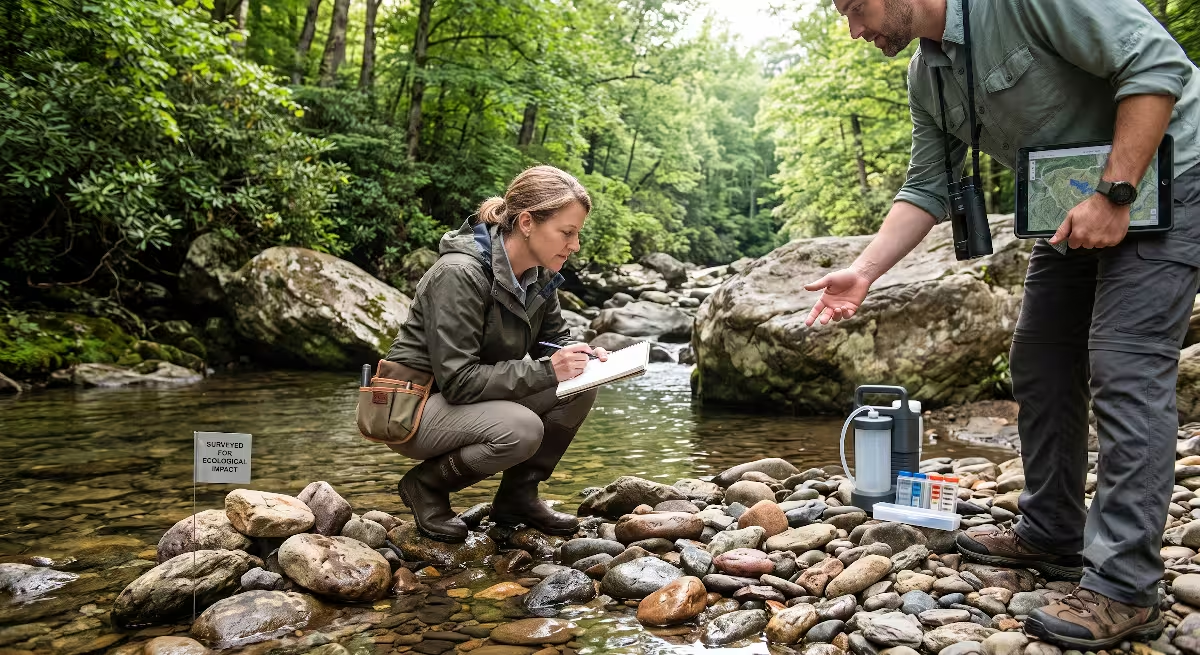
As biophilic designers and homeowners who appreciate nature, we must protect the real mountain streams that inspire our work. How and where you source your Appalachian river rock matters greatly for local conservation efforts.
STONE SOURCING ETHICS:
┌───────────────────────────────┬───────────────────────────────┐
│ Sustainable Sourcing          │ Illegal Stream Harvesting     │
├───────────────────────────────┼───────────────────────────────┤
│ • Purchased from licensed quarries│ • Taken directly from public rivers│
│ • Protects native fish spawning sites│ • Destroys aquatic habitat structures│
│ • Supports local regional businesses│ • Causes bank erosion & silt runoff │
│ • Fully legal with consistent supply│ • Subject to heavy state fines │
└───────────────────────────────┴───────────────────────────────┘
The Dangers of Illegal Stream Harvesting
It can be tempting to collect rocks directly from local rivers like the Watauga, Nolichucky, or Holston. However, removing rocks directly from public riverbeds and stream channels is illegal across Tennessee and causes severe damage to aquatic ecosystems.
Stream rocks provide critical breeding habitat for native fish, salamanders, and aquatic insects like Mayflies and Caddisflies. Disturbing these stones destroys spawning nests, loosens riverbanks, and creates heavy mud runoff that smothers downstream aquatic life. Always leave rocks in natural public waterways intact so our regional ecosystems remain healthy.
Sustainable Commercial Sourcing
To build your zen garden water features ethically, buy your stone from licensed commercial landscape suppliers or rock quarries in East Tennessee. These suppliers source stone legally from approved land development sites, agricultural clearings, or regulated commercial quarries.
Sourcing your stone from local suppliers within 50 miles of the Tri-Cities offers strong environmental benefits:
Lower Carbon Footprint: Transporting heavy stone over long distances burns large amounts of fossil fuel. Buying local stone cuts transportation energy dramatically compared to importing polished pebbles from overseas.
Regional Harmony: Local stone matches the native soil, local rock ledges, and surrounding plants in your yard seamlessly, creating an authentic biophilic connection to the place you live.
Supporting Local Business: Sourcing your hardscape supplies locally keeps your investment dollars working within our East Tennessee regional economy.
Visual and Spatial Layout Guidelines
Creating effective zen garden water features requires careful spatial planning. How your water feature sits in relation to nearby plants, hardscapes, and indoor views dictates how much enjoyment you will get from the space every day. Use the spatial guidelines below to plan a clean, well-proportioned water feature layout.
SPATIAL LAYOUT ARCHITECTURE:
┌─────────────────────────────────────────────────────────────┐
│                      BACKGROUND ZONE                        │
│   Native Evergreen Canopy (Dwarf Conifers, Mountain Laurel) │
├─────────────────────────────────────────────────────────────┤
│                       FEATURE ZONE                          │
│   Primary Anchor Boulder (Quartzite, 18"+)                 │
│   Flow Emitter Stone & Hidden Pump Line                     │
│   Secondary Support Cobble & Accent Triad                   │
├─────────────────────────────────────────────────────────────┤
│                      FOREGROUND ZONE                        │
│   Subsurface Splash Bed (1"-3" Rounded River Pebbles)       │
│   Low Groundcovers (Native Mosses, Fine Creeping Sedum)     │
└─────────────────────────────────────────────────────────────┘
Integrating Native East Tennessee Foliage
A zen garden water feature should never look like an island isolated in the middle of a grass lawn. It needs to blend naturally into the surrounding landscape. You can achieve this transition by planting native foliage that softened the hard stone edges.
Native Mosses (Thuidium delicatulum): Sheet moss thrives in damp conditions around splash zones. Press wild moss patches into wet sandstone crevices around your water feature to build an aged look quickly.
Native Ferns (Christmas Fern & Maidenhair Fern): These soft ferns produce delicate green fronds that curve gracefully over dark river rocks, breaking up hard stone outlines.
Dwarf Evergreens & Maples: Small Japanese Maples, native Serviceberry trees, or dwarf conifers placed behind your main anchor boulder provide rich seasonal color and create vertical framing.
Layout Reference Guide
To ensure every component of your water feature performs its intended biophilic and mechanical function, refer to this material placement guide:
| Water Feature Element | Recommended Material | Function in Water Feature | Biophilic Benefit |
| Central Emitter Stone | Core-Drilled Appalachian Quartzite | Provides vertical anchor point and continuous water release | Creates visual focal point that draws eyes outdoor |
| Flow Control Channel | 4″ to 8″ Smooth River Cobble | Directs water flow path and prevents unwanted side splashing | Modulates water movement into relaxing visual rhythms |
| Subsurface Splash Bed | 1″ to 3″ Alluvial River Pebbles | Covers underground vault and absorbs falling water impact | Generates soft, calming water drop acoustics |
| Transition Edge | Fine Gravel or Decomposed Granite | Creates raked visual transition into surrounding yard | Mimics natural stream banks and dry Japanese garden beds |
| Planting Accents | Native Mosses, Ferns, and Dwarf Maples | Softens hard stone edges and anchors feature into soil | Connects hardscape structures to living mountain ecosystems |
Final Thoughts
Building zen garden water features with local Appalachian river rock is one of the most rewarding improvements you can make to your East Tennessee home. By blending the ancient principles of Japanese garden art with the raw geological beauty of our local mountains, you create an enduring sanctuary right in your back yard.
Using dense, pH-neutral river rock ensures your feature stays clean, beautiful, and structurally sound through hot summer afternoons and icy winter snaps. Choosing a modern pondless subsurface system keeps maintenance simple, saves water, and keeps your space safe for family and pets. Most importantly, the gentle sound of water moving smoothly over native Appalachian stone provides a daily refuge from modern stress, lowering heart rates and reconnecting your daily life with the healing patterns of the natural world.
If you are ready to transform your outdoor living space with custom biophilic design, our expert team at Tri-Cities TN Home is here to help. Contact us today to schedule an on-site design consultation across Johnson City, Kingsport, and Bristol. Together, we can design and build a breathtaking, custom water feature using authentic Appalachian stone tailored specifically to your home and landscape.