

Your outdoor living space is an extension of your home, and everything you put outside takes a daily beating from Mother Nature. The chairs, tables, and loungers on your back deck face the same harsh ultraviolet rays, driving rain, thick summer humidity, and sudden temperature swings as your exterior siding and deck boards. If you choose the wrong building materials for the outside of a house, you end up paying for costly repairs just a few years down the road. The exact same rule applies when you shop for patio furniture.
Choosing between teak vs marine grade aluminum patio furniture comes down to a classic home-building decision. On one side, you have a dense, living hardwood packed with natural protective oils. On the other side, you have an engineered, corrosion-proof metal built to survive saltwater and rough weather. Both materials sit at the very top of the outdoor market, and both will outlast cheap plastic, rusting steel, or brittle wicker by decades.
Still, wood and metal behave very differently once they are sitting out on your pavers, concrete slab, or composite deck. Understanding how each material handles heat, wind, moisture, and everyday wear will save you thousands of dollars and plenty of frustration.
Quick Builder’s Verdict:
- Choose Grade-A Teak if you want heavy patio furniture that stays planted in strong winds, feels cool to the touch in direct afternoon sun, and brings natural warmth to traditional, Craftsman, or rustic homes.
- Choose Marine-Grade Aluminum if you want lightweight patio furniture that is effortless to move around the pool, requires almost zero seasonal maintenance, and matches clean modern or coastal architecture.
- Consider Your Climate: Both materials thrive in high humidity and coastal salt air, though aluminum handles rapid freeze-thaw cycles without seasonal wood movement.
- Think About Upkeep: Teak turns a handsome silver-gray unless you seal it once a year, while powder-coated aluminum only needs a quick rinse with mild soap and water.
Material Anatomy: What Separates True Grade-A Teak from Marine-Grade Aluminum?
Before comparing how these two materials perform in your backyard, it helps to look at what exactly makes them special. Not all wood labeled as teak is built the same, and not all metal frames earn the marine-grade title. Knowing how to spot the real deal will keep you from wasting money on lookalikes.
Inside Grade-A Teak (Tectona grandis)
True teak comes from a tropical hardwood tree called Tectona grandis. When carpenters and furniture makers talk about the best outdoor wood, they specifically mean Grade-A teak. To understand why Grade-A matters, picture a cross-section of a freshly cut tree trunk. The outer rings just beneath the bark are pale, soft, and full of moisture. Builders call this sapwood, and it rots quickly when left out in the rain.
At the very center of a mature tree sits the heartwood. Grade-A teak is cut strictly from the dense heartwood of trees that are at least 30 to 40 years old. This heartwood has a tight, straight grain and rich golden-brown color. Even more importantly, it is packed with natural rubbery oils and a mineral called silica. Together, those natural ingredients act like built-in waterproofing and bug repellent. Carpenter ants, termites, and wood-rotting fungi simply cannot break down dense teak heartwood.
Lower grades of teak, often sold as Grade-B or Grade-C, come from younger trees or include pale streaks of sapwood and dark knots. Manufacturers sometimes stain lower-grade wood to hide the color differences, then seal it with heavy varnish. Once that varnish peels in the sun, the cheaper wood warps, cracks, and rots. Genuine kiln-dried Indonesian plantation teak needs no chemical pressure treatments or thick paint to survive outdoors. Kiln drying slowly lowers the wood’s moisture content to around 8 to 10 percent before the boards are cut, which prevents twisting and splitting after the patio furniture arrives at your home.
What “Marine-Grade” Actually Means in Aluminum
Walk into a big-box discount store and lift up a cheap metal patio chair. It feels flimsy because it is made from thin, low-grade aluminum tubing that dents easily and bends under heavy weight. Marine-grade aluminum is a completely different animal. It uses specialized metal alloys, most commonly 5052 or 6061 aluminum, which are the exact same metals engineers use to build boat hulls, yacht railings, and saltwater docks.
These alloys blend pure aluminum with small amounts of magnesium and silicon. That recipe gives the metal remarkable strength without making it heavy. In quality marine-grade patio furniture, the aluminum tubes also feature thick walls, often measuring 1.5 to 2 millimeters thick. Thicker walls keep chair legs from bending when someone leans back and give dining tables a solid, wobble-free feel.
The magic of marine-grade aluminum also relies on its finish. Raw aluminum reacts with oxygen to form a dull gray surface layer. To give the metal color and extra protection, top builders put the frames through a multi-stage chemical wash and etching bath. This step cleans away oils and creates microscopic pores on the metal surface. Next, workers spray on dry architectural-grade powder coating, often rated to AAMA 2604 or 2605 commercial building standards, and bake the frames in a high-heat oven. The powder melts and fuses directly into the etched metal, creating a hard, flexible shell that resists chipping, fading, and salt corrosion far better than liquid spray paint ever could.
Climate and Weather Performance: Humidity, Salt Air, UV Rays, and Freeze-Thaw Cycles
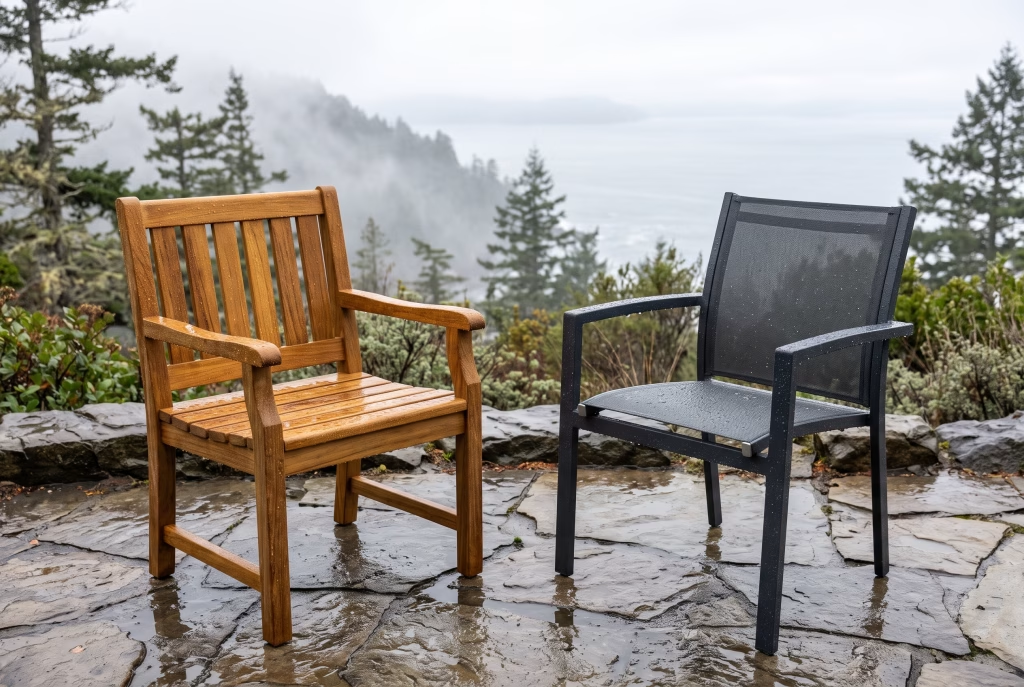
It is helpful to judge a material by how it handles the worst weather in the region. Sunshine, rain, and cold snaps test every joint and surface on your back porch. Both teak and marine-grade aluminum rank among the most weather-resistant options available, yet each handles harsh climates in its own way.
Coastal Salt Spray and High Humidity
Salt air is brutal on outdoor living spaces. Blowing sea mist carries tiny salt crystals that settle onto every surface, draw moisture out of the air, and eat through standard steel and wrought iron in a single summer. Both teak and marine-grade aluminum pass the coastal test with flying colors, which is why you see both materials on luxury oceanfront resorts and private yachts.
Marine-grade aluminum contains zero iron, so it can never rust into flaky red dust. Its baked-on powder coat acts like a raincoat against salty mist, and the 5052 alloy underneath resists saltwater pitting even in harsh oceanfront air. Teak takes a different approach to coastal weather. Because its natural oils repel water from the inside out, salt spray beads up on the surface rather than soaking into the wood fibers. In muggy, humid climates where morning dew lingers until noon, teak refuses to swell or grow soft, while properly drained aluminum dries off within minutes of sunrise.
Mountain and Four-Season Weather Swings
Here in the Appalachian foothills of East Tennessee, our weather keeps builders on their toes. A bright, sunny 65-degree afternoon in February can drop down to 20 degrees after sunset, followed by sleet, wet snow, or driving rain. Those rapid freeze-thaw cycles punish outdoor materials through thermal expansion and contraction.
Metal expands slightly when it gets warm and shrinks slightly when it gets cold. High-quality marine-grade aluminum patio furniture handles these daily temperature swings effortlessly because the metal flexes evenly across its welded frame. As long as the manufacturer drilled small drainage holes in the bottom of hollow legs, rainwater cannot get trapped inside, freeze, and split the tubing.
Wood also reacts to changing weather, though it responds more to moisture levels than temperature alone. Most woods swell up like a sponge during wet spring weeks and shrink during dry winter air, which pulls joints apart over time. Grade-A teak has one of the lowest shrinkage rates of any hardwood on earth. Its dense, oily grain blocks water from soaking deep into the boards, allowing teak patio furniture to sit outside through snowstorms, summer downpours, and scorching August afternoons without cracking or warping.
Weight, Wind Resistance, and Everyday Mobility
Think about how you actually use your outdoor space from week to week. Do you leave your dining table in one spot all year on an open deck, or do you constantly drag loungers around the pool to chase the sun? Weight is one of the biggest practical differences between wood and aluminum.
High-Wind Decks and Exposed Patios
If your patio sits on a windy hillside, overlooks a lake, or sits high off the ground on a second-story deck, lightweight furniture can turn into a safety hazard. During a sudden summer thunderstorm with 40-mile-per-hour gusts, hollow tubular aluminum chairs can slide across smooth composite decking, tip over into glass tables, or blow right into your swimming pool.
Teak solves the wind problem through sheer mass. Solid hardwood is heavy and dense. A well-built teak armchair easily weighs 35 to 45 pounds, and a six-person teak dining table can tip the scales at over 150 pounds. Once you set heavy teak patio furniture in place, it stays planted through storms and blustery autumn days without needing bungee cords or sandbags. If you love the look of metal but live in a windy area, look for cast aluminum rather than hollow tubular aluminum. Cast aluminum is poured into molds as solid metal shapes, giving it extra heft that holds up much better against gusts.
Reconfiguring Small Balconies and Pool Decks
Heavy weight becomes a drawback when you need to move things around. Pushing a 160-pound teak table across rough flagstone pavers takes two strong adults, and dragging heavy wooden legs across a soft cedar deck can leave gouges in your floorboards.
Marine-grade tubular aluminum shines whenever mobility matters. Most aluminum dining chairs weigh between 12 and 18 pounds, meaning almost anyone can pick one up with one hand. That light weight makes aluminum patio furniture a dream for pool decks where kids and guests constantly pull chairs closer to the water. It is also the clear winner for small apartment balconies, tight courtyard patios, and homeowners who like to stack their chairs and tuck them into a garage or shed during the coldest months of winter.
Thermal Comfort: Which Material Stays Cooler in Direct Sun?
Nothing ruins a relaxing summer afternoon faster than sitting down on a chair that feels like a hot frying pan. Before you buy outdoor seating for an uncovered patio or pool deck, you need to think about how the frame handles direct sunlight.
Heat Conductivity in Wood vs. Metal
In physics and home building, we measure how fast a material moves heat using a property called thermal conductivity. Metals are high conductors, meaning they absorb solar energy quickly and pass that heat straight to your skin the moment your bare arm touches an armrest. Wood is a natural insulator. Its cellular structure traps tiny pockets of air, which slows down heat transfer.
Because wood insulates naturally, bare teak patio furniture stays remarkably comfortable to the touch even in the middle of a sunny July afternoon. You can rest your elbows on a teak dining table or sit on a wooden bench without feeling burned. That natural thermal comfort makes teak a favorite for sunny decks without roof overhangs or shade sails.
How Finish Color and Slings Affect Aluminum
Aluminum absorbs heat fast, though smart design choices can minimize the issue. The single biggest factor in aluminum heat retention is the color of the powder coat. Dark finishes like matte black, charcoal gray, and deep espresso absorb the vast majority of sunlight that hits them. In full afternoon sun, dark aluminum frames get too hot for bare skin. Choosing lighter powder-coat colors like crisp white, warm sand, light gray, or brushed silver reflects much of the sun’s rays and keeps the metal noticeably cooler.
Designers also solve the metal heat problem by pairing aluminum frames with breathable mesh slings or thick outdoor cushions. Instead of sitting directly on painted metal, your body rests on high-tech woven fabric that stays cool and lets air circulate behind your back. Even better, aluminum releases heat just as fast as it absorbs it. The moment a cloud passes overhead or evening shade covers your patio, aluminum frames cool down to air temperature within a few minutes.
Structural Craftsmanship, Joinery, and Hardware Standards
A great material still fails if a factory puts it together poorly. Whenever I inspect custom cabinetry or outdoor sets, I look straight at the joints and fasteners. Those hidden connection points tell you whether a piece of patio furniture will last three years or thirty years.
Wood Joinery vs. Welded Frames
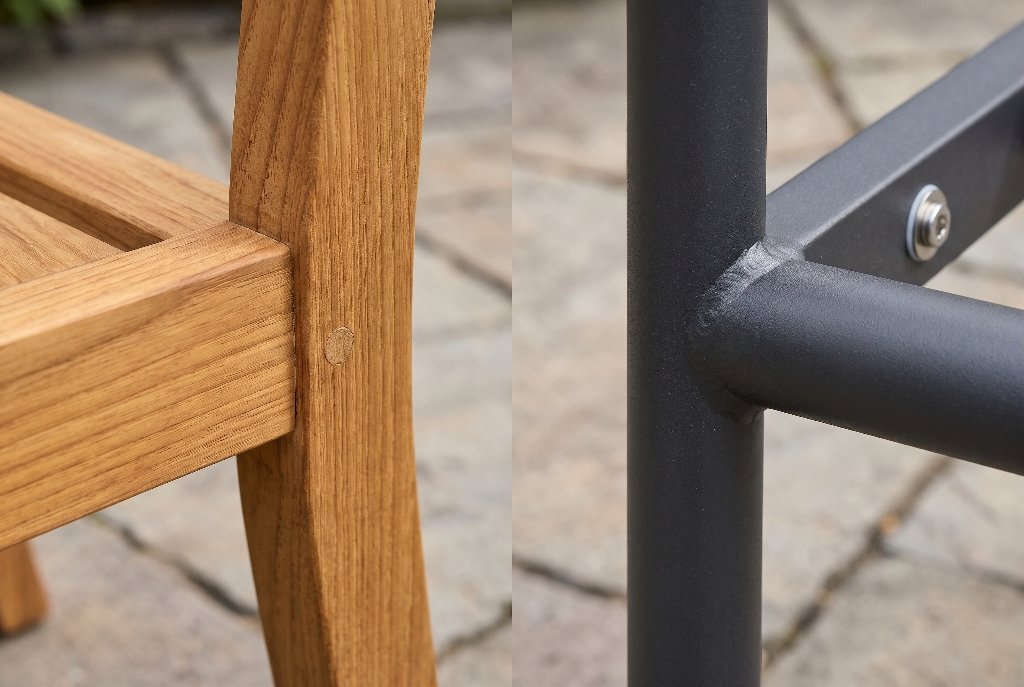
In fine woodworking, craftsmen join pieces of solid teak using traditional mortise-and-tenon joinery. A carpenter cuts a rectangular pocket (the mortise) into one board and shapes a matching tongue (the tenon) on the end of the connecting board. The two pieces slide together tightly, reinforced with waterproof marine glue and locked in place with solid teak dowels driven straight through the joint. Because wood expands and contracts slightly across seasons, mortise-and-tenon joints stay tight for decades without working loose. Avoid wooden sets held together with visible staples, brad nails, or cheap metal brackets, which rust and fail quickly outdoors.
When inspecting marine-grade aluminum patio furniture, look closely at where the metal tubes meet. Top-tier manufacturers use full-circumference TIG welding, running a smooth, continuous bead of melted metal all the way around every joint. Cheap brands cut corners with spot welds, leaving tiny gaps where rainwater sneaks inside the frame. Also check the undersides of chair legs and table frames for small weep holes. Builders drill these tiny drainage holes at the lowest points of hollow metal frames so any condensation or rainwater escapes immediately instead of pooling inside.
Fasteners and Galvanic Corrosion
Hardware is the Achilles’ heel of most outdoor sets. Even if you buy the finest Grade-A teak or heavy-gauge aluminum, cheap steel bolts will ruin the whole piece. Standard zinc-plated or carbon-steel screws rust within months, staining your patio stones and weakening structural joints.
Quality teak and marine-grade aluminum patio furniture both require 316 marine-grade stainless steel fasteners. Unlike standard 304 indoor stainless steel, 316 stainless steel contains an added element called molybdenum that blocks chloride and salt corrosion. Look for smooth, flush-mounted bolts and brass or stainless inserts that allow you to tighten folding mechanisms or reclining backrests smoothly year after year.
Here is a pro builder’s tip that many buyers miss: when stainless steel hardware touches an aluminum frame in a damp outdoor setting, a chemical reaction called galvanic corrosion can slowly take place. Over several years, the two dissimilar metals react in the presence of moisture, causing the powder coat around the bolt hole to bubble and flake. The best aluminum furniture builders prevent this by placing thin nylon or silicone washers between every stainless steel bolt and the aluminum frame, keeping the two metals safely separated.
Maintenance Routines for Patio Furniture and How Each Material Ages
Every homeowner has a different tolerance for weekend chores. Some people enjoy spending a sunny Saturday morning caring for natural wood, while others want to spend every free minute relaxing with a cold drink. Both materials offer simple upkeep, though they age in very different ways.
Teak’s Living Finish: Silver Patina vs. Honey Gold
Teak is a natural material with a living finish. When brand-new Grade-A teak arrives at your home, it glows with a warm, honey-gold color. Once you place it outside in direct sunlight and rain, ultraviolet rays begin breaking down the natural oils right on the outer surface of the wood. Within six to twelve months, untreated teak gradually shifts from warm golden brown to a soft, distinguished silver-gray patina.
Many homeowners worry that turning gray means the wood is drying out or rotting. In reality, that silver patina is purely cosmetic. Just below that paper-thin gray surface layer, the dense heartwood remains rich with golden oils and completely protected from decay. If you love the classic weathered coastal look, your maintenance routine is effortless: wash your teak patio furniture twice a year with a soft bristle brush, warm water, and mild dish soap to remove pollen and dust.
If you prefer the rich honey-brown color of new teak, you can preserve it with minimal effort. Once a year, clean the wood thoroughly, let it dry in the sun for two days, and brush on a coat of water-based UV teak sealer. Avoid applying sticky tung oil or linseed oil to outdoor teak, because extra oil sits on the damp surface and feeds dark mildew spots in humid weather. One huge bonus of solid teak is its repairability. If someone drops a hot burger, spills red wine, or scratches a tabletop, a few light passes with 120-grit sandpaper erases the blemish completely and reveals fresh wood underneath.
Aluminum’s Wipe-and-Go Upkeep
Marine-grade aluminum is the undisputed king of low-maintenance outdoor living. Because the frame is sealed inside an architectural powder coat, it never changes color, never splinters, and never needs sanding or sealing. Routine care takes less than fifteen minutes every couple of months. Simply spray the frames down with a garden hose, wipe away bird droppings, tree sap, or pollen with a soft microfiber cloth and mild dish soap, and rinse clean.
Over many years of intense summer sun, any painted surface can develop slight dullness or chalking. Applying a thin coat of non-abrasive automotive wax once a year keeps the powder coat glossy and helps rainwater bead right off. The only real maintenance concern with aluminum happens if a sharp object chips the powder coat all the way down to bare metal.
When bare aluminum meets air and moisture, it forms a chalky white powder called aluminum oxide. Unlike red iron rust, white aluminum oxide actually seals the metal and stops deep corrosion, though it can creep sideways under the edges of surrounding paint. Keeping a small bottle of matching touch-up paint on hand lets you seal any deep nicks in seconds so the finish stays spotless for decades.
Architectural Style and Mixing Both Materials on One Patio
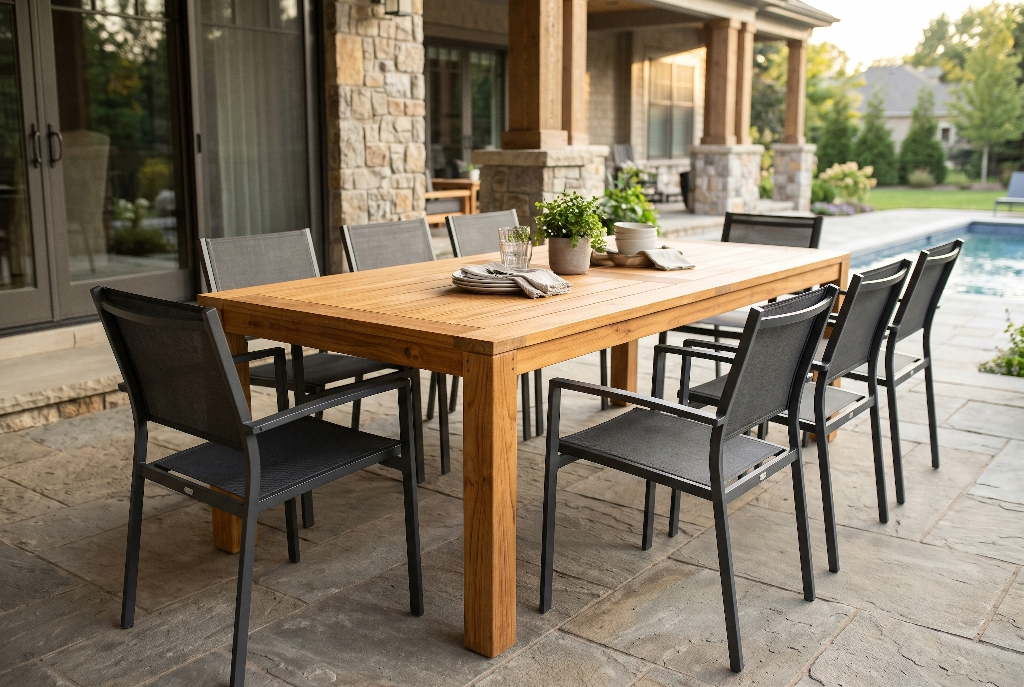
Good outdoor design ties your patio furniture directly into the architecture of your house. When the lines, textures, and colors on your back porch echo your home’s siding, trim, and stonework, the entire property feels cohesive and intentional.
Matching Your Home’s Exterior Design
Grade-A teak brings organic warmth, rich grain texture, and timeless craft to an outdoor space. Because real wood softens hard surfaces like poured concrete and brick pavers, teak patio furniture pairs naturally with Craftsman homes, traditional brick exteriors, rustic mountain cabins, cedar-shake cottages, and patios framed by natural stacked stone. As teak weathers to silver-gray, it also blends seamlessly into lush backyard gardens and wooded lots.
Marine-grade aluminum offers crisp edges, slender profiles, and clean architectural geometry. Because metal can be bent and welded into sleek modern shapes without needing thick, bulky legs for strength, aluminum patio furniture shines alongside modern farmhouses, contemporary stucco homes, mid-century designs, and clean-lined pool decks. Powder-coated frames also give you complete color freedom, letting you match your patio chairs to black window frames, bronze gutters, or light gray siding.
How to Combine Teak and Aluminum
You do not have to lock your entire backyard into a single material. In fact, custom home designers frequently mix wood and metal on the same patio to create visual balance and solve practical problems at the same time.
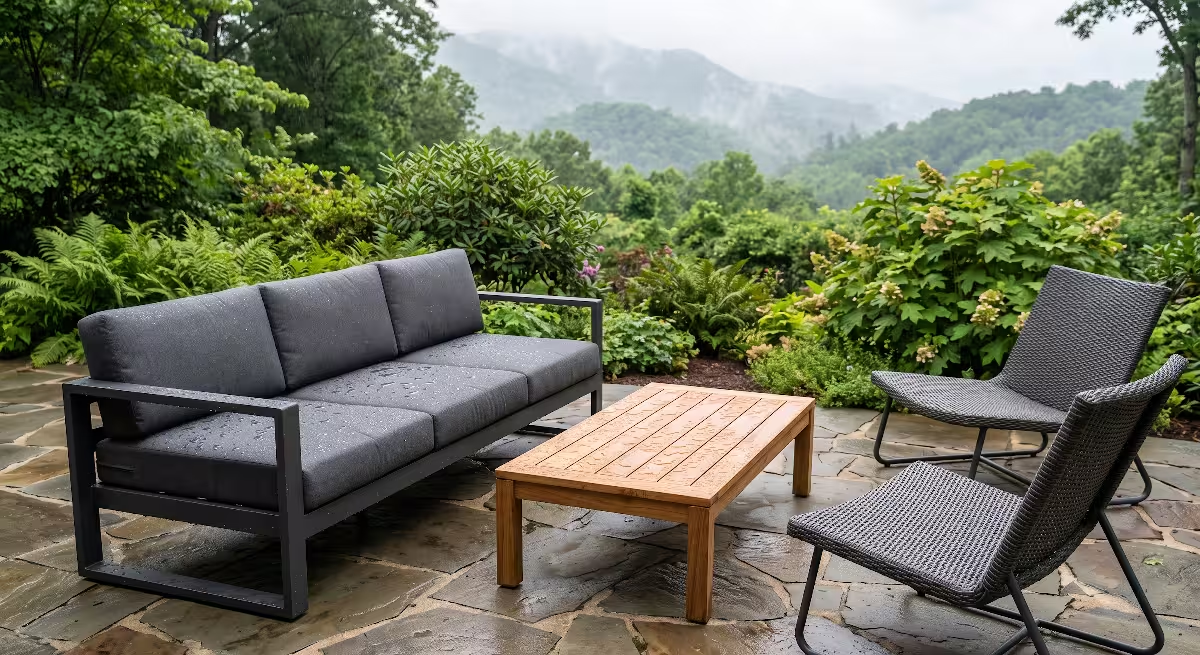
One of the smartest combinations is pairing a heavy solid teak dining table with lightweight marine-grade aluminum chairs. You get a rock-solid, heavy table that will never tip in the wind and stays cool under bare forearms during outdoor dinners, paired with sleek, stackable chairs that guests can slide back effortlessly. Another popular setup places deep-seating aluminum lounge chairs around a low teak coffee table, blending modern silhouettes with a warm wooden centerpiece.
If you mix both materials on your patio, keep one simple care rule in mind. Whenever you wash your teak with specialized wood cleaners or apply a UV sealer, move your aluminum chairs away or cover them with a drop cloth. Strong wood brighteners contain mild acids that can dull or spot powder-coated metal if splashes sit on the finish.
Upfront Price, 25-Year Lifecycle Value, and Sustainability
Building a lasting outdoor space is an investment, and smart homeowners look beyond the initial price tag to calculate what a set actually costs per year of use.
True Cost Per Year
Grade-A teak patio furniture carries one of the highest upfront prices on the market. Growing mature plantation teak takes three to four decades, and cutting mortise-and-tenon joinery requires skilled craftspeople. A quality teak dining set or deep-seating conversation group often costs 25 to 50 percent more on day one than a comparable aluminum set. However, genuine teak easily lasts 25 to 40 years or longer, often outliving the deck boards beneath it and gaining character every season. When you divide that initial cost across thirty years of service, teak delivers outstanding long-term value.
Marine-grade aluminum patio furniture generally requires a lower upfront investment than top-tier teak while offering nearly the same multi-decade lifespan. A well-built, thick-walled aluminum set with 316 stainless steel hardware routinely lasts 20 to 30 years. Better yet, aluminum requires almost zero spending on annual sealers, sandpaper, or specialty cleaners, keeping your lifetime ownership costs remarkably low.
Environmental Impact
Both materials offer strong eco-friendly credentials when you buy from reputable manufacturers. For teak, always look for Forest Stewardship Council (FSC) certification. An FSC label proves that the timber was harvested from responsibly managed, sustainable plantations—primarily in Indonesia—rather than illegally logged from endangered old-growth rainforests. Plantation teak trees actively absorb carbon dioxide as they grow and are replanted in regulated cycles.
Marine-grade aluminum also ranks high in green building standards. Aluminum is infinitely recyclable without losing its structural strength, and recycling aluminum uses roughly 95 percent less energy than refining raw bauxite ore. Many leading outdoor brands build their marine-grade frames using high percentages of post-consumer recycled aluminum, and at the end of its multi-decade life, the entire metal frame can be melted down and reused again.
Common Questions Answered about Patio Furniture
Homeowners ask me the same practical questions whenever we plan a new covered porch or backyard patio. Here are straightforward answers to the most common questions about these two materials, followed by a quick comparison chart to help you make your final call.
Is teak or marine-grade aluminum better for outdoor patio furniture?
Neither material wins in every single category, because the better choice depends on your backyard conditions and lifestyle. Grade-A teak is better if you have a windy deck, want frames that stay cool in direct sunlight, and love natural wood craftsmanship. Marine-grade aluminum is better if you want lightweight patio furniture that is easy to rearrange, zero seasonal wood care, and crisp modern lines.
Does marine-grade aluminum patio furniture rust?
No, marine-grade aluminum patio furniture cannot rust because aluminum contains no iron. If a sharp object scratches deeply through the baked-on powder coat, the exposed aluminum reacts with oxygen to form a thin, chalky white layer called aluminum oxide. This natural oxide layer actually seals the metal against further decay, and a quick dab of matching touch-up paint restores the smooth finish.
Do you have to oil teak outdoor furniture?
No, you do not need to oil Grade-A teak patio furniture. Mature teak heartwood already contains high levels of natural internal oils that protect it from rain, rot, and insects. Adding extra teak oil outdoors often traps moisture on the surface and encourages dark mildew spots in humid weather. Simply wash untreated teak with mild soap and water, or apply a breathable water-based UV sealer once a year if you want to keep its warm golden-brown color.
Which lasts longer in rain and humidity: teak or aluminum?
Both materials can easily last 25 years or more in rainy, humid climates when built to high standards. For teak, longevity depends on buying solid Grade-A heartwood with traditional mortise-and-tenon joinery. For aluminum, longevity depends on thick-walled 5052 or 6061 tubing, full-circumference welds, proper drainage weep holes, and 316 marine-grade stainless steel hardware.
Final Side-by-Side Comparison Matrix
| Feature | Grade-A Teak | Marine-Grade Aluminum |
| Weight and Wind Stability | Heavy and planted; resists strong gusts | Lightweight and easy to move (cast aluminum is heavier) |
| Heat Retention in Sun | Stays cool to the touch naturally | Absorbs heat in dark colors; light finishes and slings stay cool |
| Maintenance Routine | Low (soap wash; optional annual UV sealer) | Minimal (hose rinse and mild dish soap) |
| Coastal and Humidity Rating | Excellent; natural oils repel salt and moisture | Excellent; rust-proof alloy with sealed powder coat |
| Expected Lifespan | 25 to 40+ years | 20 to 30+ years |
| Architectural Style | Traditional, Craftsman, rustic, coastal | Modern, contemporary, transitional, poolside |
| Upfront Cost | Higher initial investment | Moderate to high initial investment |
Building a great outdoor living space comes down to matching the right material to the job. Take a quick walk out onto your patio this afternoon, pay attention to how much direct sun hits the floor, notice how strongly the wind blows across your yard, and think honestly about how much upkeep you want on your weekend to-do list. Whether you choose the rich, solid permanence of Grade-A teak or the effortless, weatherproof versatility of marine-grade aluminum, investing in quality patio furniture ensures your backyard remains comfortable, sturdy, and inviting for decades to come.