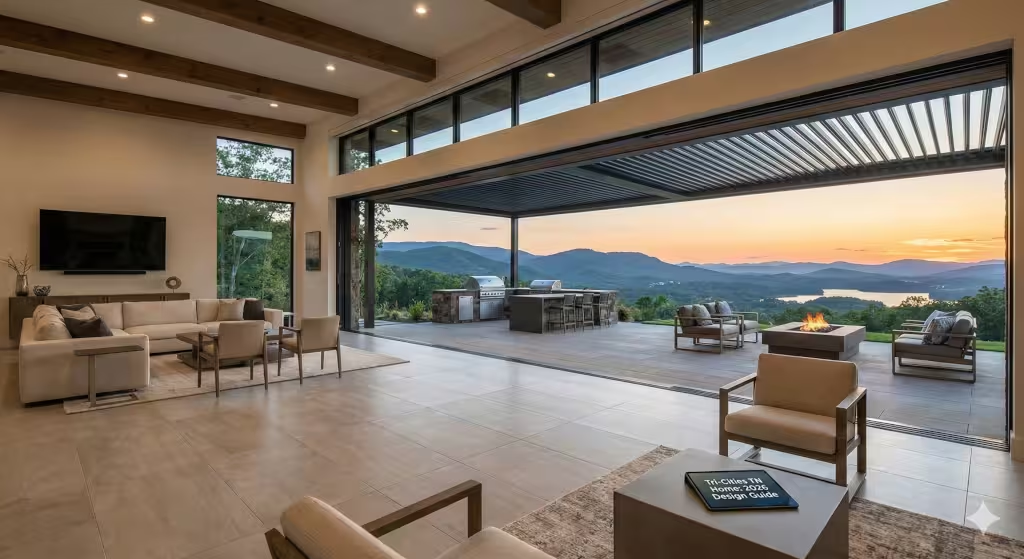


The Great Outdoor Flooring Debate
Building a custom home in the rolling hills of East Tennessee teaches you to respect the elements. Between the humid summer afternoons in Kingsport and the freezing winter nights up near Roan Mountain, exterior building materials take a beating.
Homeowners today invest serious money into their backyards. They want an outdoor living room that looks incredible on day one and stays rock solid for decades. That brings us to one of the most common debates from clients: should you build with black locust decking or choose modern capped composite boards?
Both options promise long-lasting performance, but they get there through completely different paths. One is an Appalachian hardwood grown by nature, while the other is an engineered product made in a factory. To make the right call for your property, you need to understand how each material behaves under real weather conditions.
The Decking Durability Dilemma
When we talk about outdoor living today, the conversation is very different than it was thirty years ago. A deck is no longer just a flat wooden platform where you set a charcoal grill. It is an extension of your home kitchen, a spot for heavy hot tubs, and a stage for family gatherings.
Because people spend more time outside, the demand for high-performance materials has exploded. Builders and homeowners are searching for boards that will not rot, warp, or split after five years of summer sun and winter rain. This search has created a fierce debate between traditional timber lovers and fans of modern synthetic technology. Choosing between black locust decking and composite decking requires looking past marketing brochures and studying how these products hold up over time.
The Modern Outdoor Living Standard
Custom homes now feature
At the same time, homeowners want low maintenance. Nobody wants to spend their entire spring power washing, sanding, and staining deck boards. We want surfaces that resist spills from barbecue sauce, stand up to dog claws, and feel comfortable under bare feet. Meeting this modern standard requires materials that can handle physical stress, high foot traffic, and changing weather without losing their structural integrity.
The Material Contenders
In this comparison, we have two very strong contenders.
On one side, we have black locust decking. Black locust is a native hardwood tree that grows throughout the Appalachian mountain range. Farmers here in East Tennessee have used black locust fence posts for well over a century because the wood simply refuses to rot in the soil. When milled into premium exterior lumber, black locust decking delivers incredible natural durability without any chemical treatment.
On the other side, we have capped composite decking. This engineered product blends recycled wood flour with plastic polymers, wrapped inside a tough synthetic shell. High-end brands have refined these formulas to mimic the look of natural wood grain while offering resistance to stains and fading. Both products aim to solve the same problem, but their mechanical properties are worlds apart.
Redefining Durability
To judge these two options fairly, we have to rethink what durability actually means. Many people assume durability just means a board does not rot. But true outdoor durability is much broader than that.
True durability includes mechanical strength, which is how well the board resists scratches, dents, and heavy loads. It includes dimensional stability, which means how much the board expands or contracts when the temperature changes. It covers surface durability, such as how the material handles sunlight and foot traffic. Finally, it involves biological resistance against fungi and insects. As we examine black locust decking against composite boards, we will measure both options across every one of these practical categories.
Mechanical Strength and Structural Integrity
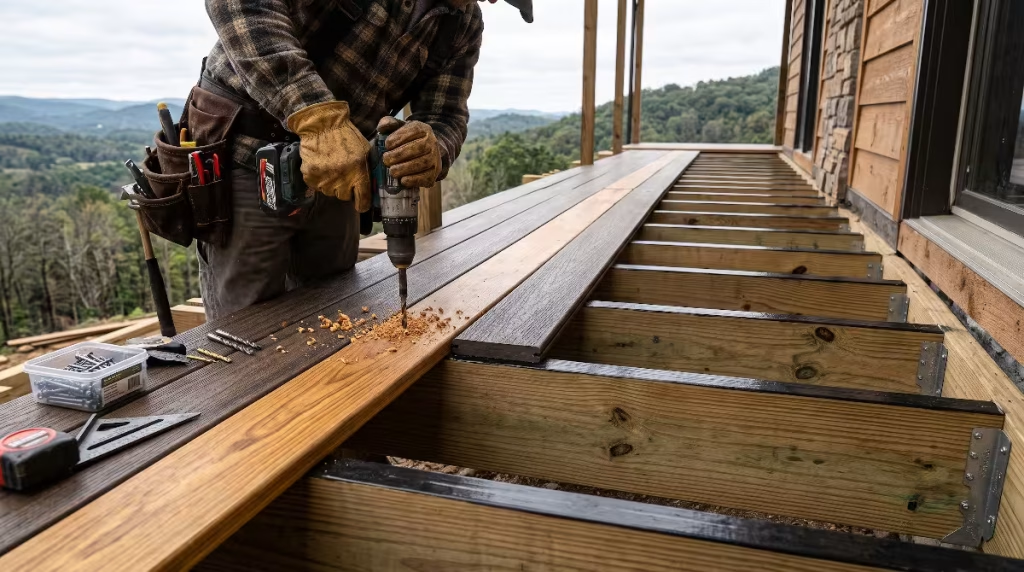
The first thing to look at is structural performance. A deck board must be stiff enough to support heavy loads without sagging between the framing joists. When you walk across a deck, you want it to feel solid under your boots, not spongy like an indoor trampoline.
Hardness and Impact Resistance
One of the best ways to measure the hardness of any decking material is the
Black locust sits near the top of the hardness charts with a Janka rating of around 1,700 pounds of force. That makes black locust decking harder than white oak, hard maple, and even standard teak. When you drag a metal patio chair across black locust decking, the dense wood fibers resist gouging. Composite boards, by comparison, have a protective plastic shell, but the inner core is softer. If you drop a heavy cast-iron skillet or drag a heavy planter on a hot summer day, composite decking can suffer deep dents that are permanent.
Spanning Capacity and Structural Deflection
When we design a deck frame, we talk about spanning capacity. This is the distance between your supporting joists. Natural black locust decking has tremendous bending strength, known in engineering terms as a high modulus of rupture.
Because of this natural stiffness, black locust decking easily spans standard framing spaced sixteen inches on center without noticeable bounce. Even when laid on a forty-five-degree angle, black locust decking maintains its rigidity. Capped composite boards are much more flexible, especially when the summer heat softens the plastic inside them. For composite boards installed on a diagonal, or for heavy commercial loads, builders often have to space joists twelve inches on center to prevent a spongy feel underfoot. That extra framing adds lumber and labor costs to your project.
Creep and Dimensional Stability
In structural engineering, creep describes what happens when a material slowly deforms over time under a continuous load. Think of a bookshelf loaded with heavy encyclopedias that gradually sags in the middle over several years.
Composite decking is prone to thermal plastic creep. When heavy planters or outdoor sofas sit on composite boards in direct sunlight, the plastic polymers relax and can develop a permanent bow between the joists. In contrast, black locust decking has a rigid cellular structure bound by natural lignin. It resists long-term creep, meaning your deck surface remains flat and true year after year, even under substantial loads.
Environmental Fatigue: Moisture, Rot, and Thermal Cycling
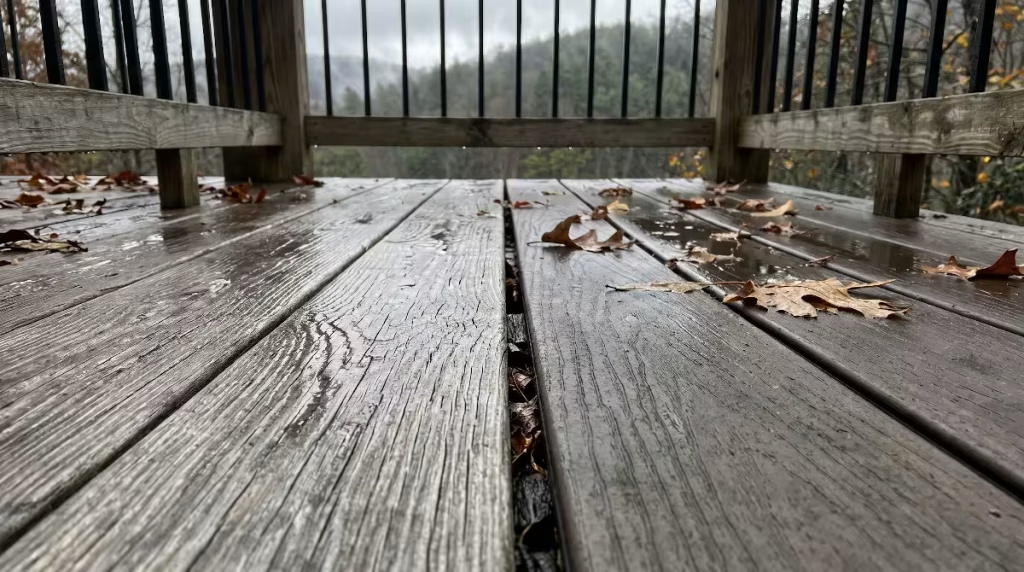
Outdoor materials live in a harsh environment. Rain soaks the boards, winter ice freezes in the joints, and the summer sun bakes the surface. How a material responds to this constant cycle of moisture and temperature changes tells you everything about its true lifespan.
Rot, Decay, and Insect Resistance
The reason black locust decking lasts so long in outdoor environments comes down to natural tree biology. As a black locust tree matures, it converts its inner sapwood into dense heartwood. During this change, the tree produces natural chemical compounds called flavonoids, specifically robinetin and dihydrorobinetin.
These natural compounds act as powerful natural preservatives that are toxic to wood-decaying fungi and wood-boring insects. Furthermore, black locust decking features tyloses, which are balloon-like growths that plug up the water-conducting vessels inside the wood. This structure makes it nearly impossible for water and fungal spores to penetrate deeply into the heartwood. Composite boards also resist rot because the plastic shell keeps moisture away from the inner wood fibers. However, if that outer cap gets punctured or scratched deeply, moisture can reach the internal wood flour core, which can trigger swelling and localized decay.
Moisture Movement and Freeze-Thaw Performance
Here in the Tri-Cities, our winter weather frequently crosses the freezing mark back and forth. Moisture enters tiny pores during a rainy afternoon, and then turns to ice when the temperature drops overnight. When water freezes, it expands by about nine percent, creating pressure that can break materials apart.
Natural black locust decking handles freeze-thaw cycles well because its closed cellular pores restrict deep water absorption. The wood does expand and contract slightly across its width as humidity shifts between summer and winter, but movement along its length is almost zero. Composite decking does the opposite. Because plastic responds strongly to temperature, composite boards expand and contract along their entire length. A sixteen-foot composite board can grow or shrink by more than a quarter of an inch between winter cold and summer heat. Builders must leave large expansion gaps at the board ends, which can collect dirt and leaves over time.
UV Exposure and Color Fastness
Ultraviolet rays from the sun break down the molecular bonds in both natural wood and synthetic plastics. How each material weathers under sunlight is one of the biggest visual differences between them.
Composite decking manufacturers add chemical UV inhibitors into the outer plastic cap. High-end composites hold their factory color well for ten to twenty-five years, showing only slight lightening over time. On the other hand, black locust decking begins its life with a rich golden-brown to warm honey tone, often showing subtle olive undertones. Over twelve to twenty-four months of direct sun exposure, black locust decking gradually weathers into a classic silver-gray patina. This color shift is purely visual. The silver patina does not mean the wood is breaking down; the dense cellular structure underneath remains rock solid.
Ergonomics and Surface Temperature: The Barefoot Test
A deck should be comfortable to use. During the peak of summer, many homeowners enjoy walking out onto their deck in bare feet to watch their children or pets play in the yard. The physical comfort of the surface material matters just as much as its strength.
Thermodynamic Conductivity
Have you ever stepped onto an asphalt driveway in the middle of a July afternoon? The heat can burn your feet within seconds. Composite decking often behaves in a very similar way because dense plastics have high thermal conductivity and store heat.
On a sunny ninety-degree day, dark composite boards can easily reach surface temperatures of one hundred forty to one hundred sixty degrees Fahrenheit. That is hot enough to burn bare feet and paws. By comparison, black locust decking stays significantly cooler in direct sunlight. While any surface warms up under the midday sun, black locust decking does not store radiant heat the same way dense plastic does, making it safer for children and pets.
Wood Fiber Dissipation
The reason black locust decking stays cooler comes down to the micro-porosity of natural wood fibers. Wood is a natural thermal insulator. Its cellular structure is filled with tiny pockets that slow down heat transfer and allow surface heat to dissipate into the surrounding breeze.
Even on the brightest southern exposures, black locust decking allows you to walk comfortably without burning your feet. If you are building an open deck around a swimming pool or a south-facing outdoor lounge without shade sails, this difference in heat dissipation is a massive practical benefit.
Traction and Slip Resistance
A wet deck can quickly become a serious slip hazard, especially around stairs and pool edges. How a board grips the soles of your shoes or bare feet in wet conditions is an essential safety factor.
Composite boards feature molded textures pressed into their plastic outer cap to create traction. These embossed grain patterns work well when clean, but they can become surprisingly slick if a thin layer of morning dew, pollen, or frost forms on the plastic surface. Because black locust decking has natural wood grain with microscopic surface textures, it provides reliable traction in wet conditions. Even when rain soaks the surface, properly milled black locust decking offers a secure grip underfoot.
Long-Term Maintenance, Refinishability, and Repairs
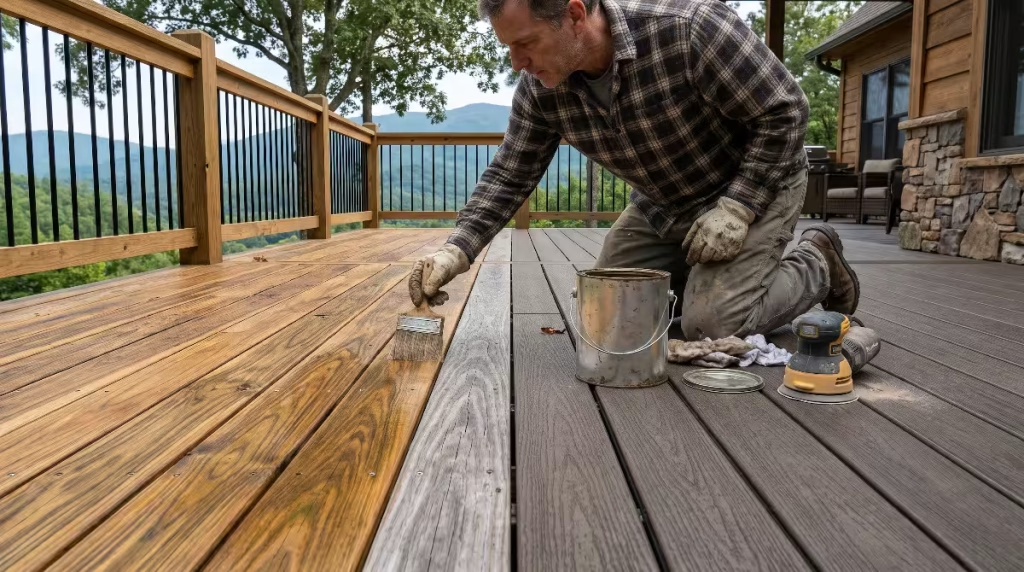
Every exterior product requires some level of care. The true cost of owning a deck includes the hours and dollars you spend keeping it clean, safe, and attractive over several decades.
Checking Versus Splintering
Homeowners often worry about wood splinters, especially when raising young kids. It helps to understand the engineering difference between checking and splintering. Checking refers to small, shallow surface cracks that appear along the grain of the wood as it dries and adjusts to changes in outdoor humidity.
Because black locust decking is exceptionally dense and strong, it exhibits very few splintering issues when milled and seasoned properly. You may see small surface checks develop over time as the timber weathers, but these tiny checks do not compromise the board’s structural strength or cause large splinters to lift. The tight interlocking fibers of black locust decking stay firmly knit together.
To Seal or Not to Seal
One of the greatest advantages of black locust decking is that you do not have to seal it to preserve its structural lifespan. You can install black locust decking, wash it once a year, and let nature turn it a handsome silver-gray. It will remain rot-free for decades without a drop of chemical stain.
However, if you want to keep the original golden-brown tones, you can apply a high-quality penetrating exterior oil once every two to three years. The choice is entirely up to your personal style. You are sealing for color preference, not for structural survival.
Composite Maintenance Realities
Capped composite decking is often sold as a zero-maintenance product, but that claim is not entirely accurate. In my experience, composite decks still require regular upkeep.
While you never have to stain composite boards, you must wash them frequently. In shaded or damp areas, pollen, tree sap, and dirt settle into the artificial grain patterns, creating a food source for surface mold and mildew. If you spill grease from a grill onto composite decking, you must clean it up quickly before it leaves an oily ring on the plastic shell.
The Unfixable Scratch
Here is an issue that catches many composite deck owners off guard: composite decking cannot be sanded or refinished. If someone drags a sharp metal chair across your composite deck and carves a deep gouge into the plastic shell, that damage is permanent. You cannot fill it, plane it down, or sand it smooth without ruining the embossed wood grain and exposing the core. Your only repair option is to unscrew the entire board, remove it, and install a brand new piece, which often looks mismatched against the weathered boards around it.
With black locust decking, a deep gouge or burn is an easy fix. You can take out an orbital sander, buff the damaged spot down, apply a little oil, and watch it blend naturally back into the surrounding wood. A hardwood deck can be sanded and renewed multiple times throughout its life.
Field Installation and Craftsmanship Requirements
Installing an exterior floor requires careful planning and experienced craftsmanship. The tools, fasteners, and framing details you use will determine whether the finished deck lasts for decades or fails early.
Tooling and Fastener Dynamics
Because black locust decking is extraordinarily hard, it demands respect on the job site. You cannot simply grab a standard framing hammer or drive screws into it without preparation.
When cutting black locust decking, carpenters need sharp carbide-tipped saw blades. Every single screw hole must be pre-drilled and countersunk. If you try to drive a standard exterior screw directly into black locust decking, the dense wood will snap the hardened steel screw head off almost every single time. We recommend high-grade stainless steel screws to prevent rust stains. You can install black locust decking using specialized hidden edge clip systems, or face-screw the boards and install smooth wooden plugs for a clean architectural finish. Composite decking can also be installed with hidden clips, but carpenters must use sharp blades to prevent mushrooming, where soft plastic pushes up around screw heads.
Sub-Frame Ventilation and Ground Clearance
No deck board will perform properly if the sub-frame underneath it is poorly built. Because black locust decking is a natural timber product, it requires adequate cross-ventilation beneath the floor frame to balance moisture levels between the top and bottom of the boards.
If you are building a deck low to the ground over bare soil, you must plan for drainage and airflow. Standing water beneath any wood deck will cause the underside of the boards to absorb moisture while the tops bake dry in the sun, leading to board cupping. For low-clearance decks, composite boards tolerate ground moisture better than most woods, but both products benefit immensely from joist protection tape and proper sub-frame drainage.
Lifecycle Cost and Environmental Sustainability
When evaluating materials for your home, you have to look at the total lifecycle cost rather than just the initial price tag. You also have to consider the environmental impact of manufacturing, maintaining, and disposing of those materials.
Upfront Costs Versus Thirty to Fifty Year Cost of Ownership
High-end building materials require an upfront investment. Premium capped composite decking can cost anywhere from four to eight dollars per linear foot for the boards alone, with commercial-grade composites costing even more. Black locust decking sits in a very similar premium price tier, running comparable to imported hardwoods like Ipe.
However, the installation labor for black locust decking is often slightly higher due to the need for mandatory pre-drilling and specialized handling. The financial payoff comes over thirty to fifty years. A black locust deck can easily last forty to fifty years or more with basic cleaning. Because it never requires expensive board replacements from surface scratches and can be renewed at any time, its cost per year of ownership is remarkably low. Composite boards typically carry twenty-five to thirty-year warranties, after which the plastic components often need full replacement.
Regional Sourcing and Availability
For those of us living in the Southeast and the Mid-Atlantic regions, black locust decking has a massive logistical advantage. The tree is native to our local forests. Choosing black locust decking supports local sawmills and regional forestry workers.
Furthermore, regional sourcing keeps freight costs down compared to tropical hardwoods that must be shipped across oceans from South America. Capped composites, while made in part from recycled milk jugs and shopping bags, still require energy-intensive manufacturing facilities to melt plastics, formulate chemical resins, and extrude boards.
Frequently Asked Questions about Black Locust Decking
Homeowners ask great questions when planning their outdoor living spaces. Here are straightforward answers to the most common questions people ask about these two decking materials.
How Long Does Black Locust Decking Really Last?
When installed above ground with proper drainage and ventilation, black locust decking can easily last forty to fifty years, and often much longer.
In historical agricultural settings, split black locust fence posts regularly survive in direct soil contact for sixty to eighty years without rotting. When milled into deck boards, kept off the ground, and fastened with stainless steel hardware, black locust decking outlasts almost every domestic timber species in North America.
Is Composite Decking Better for Moisture and Mold Resistance?
Composite decking resists internal rot very well as long as its protective outer cap remains undamaged. However, it is not completely immune to surface moisture issues.
Because the textured surface collects environmental debris, mold and mildew can grow on top of the plastic shell in damp, shaded environments. Black locust decking naturally resists wood-rotting fungi throughout the entire thickness of the board, not just on an outer shell. A simple annual wash with mild soap and water keeps both materials clean and mold-free.
Why Do Custom Builders Choose Black Locust Over Imported Tropical Hardwoods Like Ipe?
Many custom builders prefer black locust decking over tropical hardwoods like Ipe for three clear reasons: performance, ethics, and local availability.
Black locust provides comparable hardness, rot resistance, and fire resistance ratings to Ipe. However, black locust is grown and harvested sustainably right here in North America. Homeowners do not have to worry about illegal rainforest logging or supply chain disruptions. You get world-class hardwood performance from a domestic tree species.
Can You Power-Wash Black Locust and Composite Boards?
You can power-wash both materials, but you must be careful with your water pressure settings. High water pressure can cause serious, irreversible surface damage to both products.
For black locust decking, use a wide fan tip nozzle and keep the pressure under 1,200 PSI to avoid raising the grain or tearing wood fibers. For composite decking, you must be even gentler, keeping pressure under 1,000 PSI to avoid scarring the soft plastic cap. In most cases, a garden hose, a stiff bristle brush, and an eco-friendly deck cleaner do a safer and better job than a high-pressure washer.
The Recommendation: Choosing the Right Surface
After looking at the engineering data, maintenance routines, and environmental factors, how do you make the final choice for your home? Both products have earned a place in modern architecture, but they cater to different homeowner priorities.
When Composite Wins
Capped composite decking is the ideal choice for homeowners who want their deck to look identical on year ten as it did on day one. If you want a specific modern color, such as charcoal gray or warm walnut, and you never want to think about timber oils or natural color weathering, composite is hard to beat. It is also an excellent option for low-clearance decks close to damp ground where sub-frame ventilation is limited. For busy families who want a uniform surface and do not mind higher summer surface temperatures, premium composite delivers reliable service.
When Black Locust Wins
For homeowners who appreciate authentic natural materials, unmatched strength, and architectural character, black locust decking is the clear winner.
Nothing engineered in a factory can match the organic beauty of real hardwood under your feet. With black locust decking, you get a cool surface on hot summer days, incredible resistance to heavy furniture wear, and a timber that weathers into an elegant silver patina over time. It is a domestic, sustainable hardwood that will outlast the mortgage on your home. If you want an outdoor space with true craftsmanship and generational durability, building with black locust decking is an investment you will never regret.