

Right now, one of the most important topics in custom home construction is smart home energy management. Utility costs are rising, and homes are using more electricity than ever before. Between all-electric heat pumps, electric vehicle chargers, and home solar setups, the way a house handles power has changed completely. In this guide, we will discuss everything you need to know about smart home energy management, whether you are building a new custom home or upgrading the house you live in today.
The Evolution of Modern Home Power
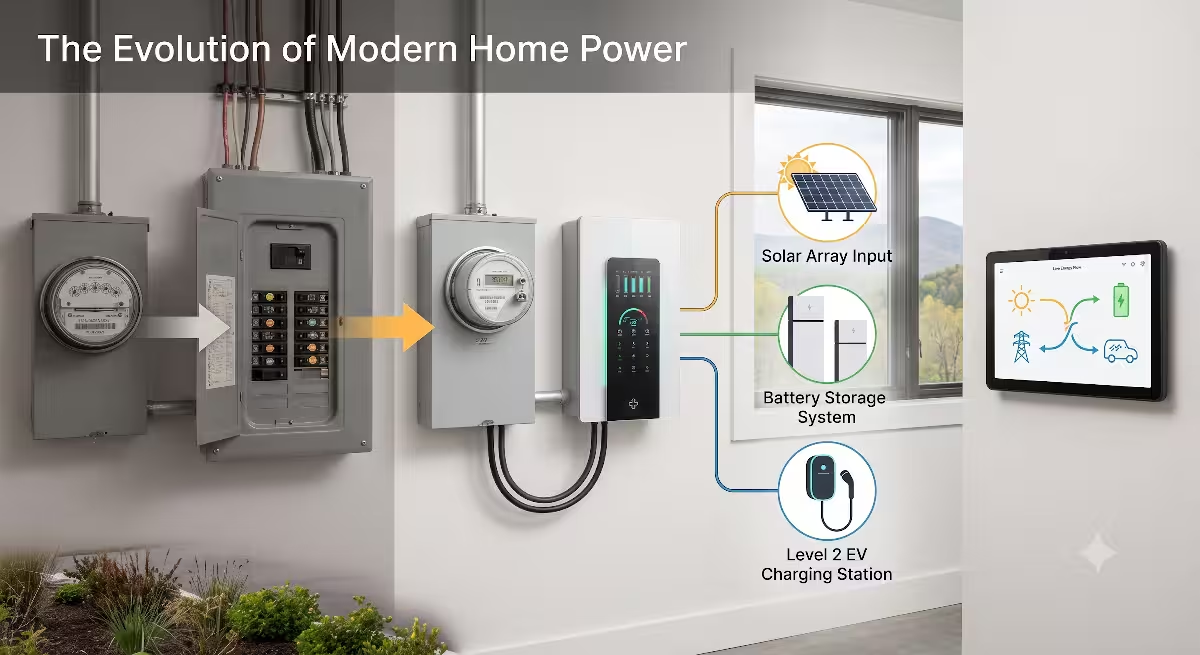
Years ago in residential construction, electric panels were fairly simple. You had a standard 100-amp or 200-amp breaker box in the garage or basement. You flipped a switch, power came on, and at the end of the month, the electric utility sent you a paper bill. You paid for whatever kilowatt-hours you used, and nobody thought much about real time energy control.
That plain setup does not work as well for modern houses. Today, custom homes in East Tennessee rely heavily on electricity. We use high-efficiency heat pumps for heating and cooling, electric water heaters, induction cooktops, and high-powered home charging stations for electric cars. Many homeowners are also adding rooftop solar panels and battery storage banks to their property.
Because a modern home uses so much power, treating electricity as a passive monthly utility leads to high power bills. That is where smart home energy management becomes critical. Instead of letting your home pull power from the grid whenever an appliance demands it, smart home energy management gives you complete sight and control over every circuit. It moves your home from a passive user of power to an active system that thinks ahead.
What is a Smart Home Energy Management System?
A smart home energy management system is a combination of hardware and software that tracks, measures, and controls how electricity moves through your house in real time. It acts as the central brain for your electrical setup. It connects your heavy electrical appliances, heating system, solar panels, and storage batteries into one easy-to-use digital network.
Definition Box:
A smart home energy management system is an integrated setup of hardware sensors and smart software. It monitors electricity use across individual home circuits, automates heavy power draws based on utility rates or solar production, and lets homeowners control their overall energy footprint from a smartphone or wall panel.
By using smart home energy management, you no longer have to guess what appliance is driving up your power bill. The system gives you clear data, showing you exactly how many watts your central air conditioner, clothes dryer, or garage refrigerator draws at any moment. More importantly, smart home energy management takes action automatically based on rules you set.
The Central Hub or Controller
Every solid smart home energy management setup relies on a central controller or hub. Think of this hub as the conductor of an orchestra. Without a central hub, you just have a collection of separate smart gadgets that do not talk to each other.
The central controller gathers data from your power panel, your weather forecast, and your smart devices. It then decides when to turn devices on or off, or when to switch power sources. For example, during a hot July afternoon in Johnson City, the hub can tell your thermostat to pre-cool the house early in the morning when power is cheap. Then, during peak demand hours, the hub turns down the air conditioner slightly so you avoid heavy utility charges.
Modern central hubs for smart home energy management support modern wireless standards like Matter, Thread, Wi-Fi, and Zigbee. This allows your central hub to link smoothly with smart plugs, smart thermostats, and main power panels regardless of who made the individual devices.
Electrical Panel Monitoring and Smart Breakers
To manage energy accurately, you need to know where every watt goes. That requires circuit-level monitoring at your main electrical panel. There are two main ways smart home energy management tracks this data.
The first way is by installing current transformer clamps, often called CT clamps, inside your standard breaker panel. These clamps loop around individual circuit wires. They measure the magnetic field created by the electric current to calculate exact power use. The data feeds straight into your smart home energy management app, showing you live power draw for every room or major appliance.
The second, more modern way is installing a dedicated smart electrical panel. Smart panels replace traditional breaker boxes with digitally controlled circuit breakers. With a smart panel, your smart home energy management system can turn individual circuits on or off remotely. If power goes out, a smart panel can automatically cut power to non-essential loads like your hot tub or double oven, saving your battery power for the refrigerator, well pump, and lights.
Connected Loads and Smart Devices
Circuit tracking gives you good data, but connected devices give you control. A complete smart home energy management system links to the high-draw loads in your home.
Here are the main connected loads you will find in a well-planned home:
Smart Thermostats: Heating and cooling make up nearly half of a home energy bill. Smart thermostats adjust room temperatures based on whether you are home or away.
Smart Electric Vehicle Chargers: EV chargers pull a massive amount of power. Linking your charger to a smart home energy management platform ensures your car charges during off-peak night hours when electricity rates are lowest.
Smart Plugs and Switched Outlets: Many electronics draw power even when turned off. This is called vampire load or standby power. Smart plugs cut off power completely to entertainment centers and home offices when they are not being used.
Heat Pump Water Heaters: Water heaters store heat in a insulated tank. A smart home energy management system can heat your water during cheap power windows and turn off during peak rate periods.
When all these devices work together under one system, smart home energy management eliminates wasted power without changing your daily routine.
Distributed Energy Resources and Storage
Distributed energy resources are on-site power tools like rooftop solar PV systems, residential battery banks, and backup generators. Combining these energy generation tools with smart home energy management is where you see the biggest savings and security.
Rooftop solar panels produce power during the daytime. However, many families use the most power in the early morning and late evening. Without battery storage and smart home energy management, your excess daytime solar power goes back to the utility power grid, often for a lower credit value than what you pay to buy it back later.
When you link solar panels and batteries to smart home energy management, the system directs free daytime solar power into your home battery bank or your electric car. Then, when the sun goes down, your smart home energy management system runs your home on battery power instead of pulling expensive power from the utility grid.
Data Collection and Real Time Monitoring
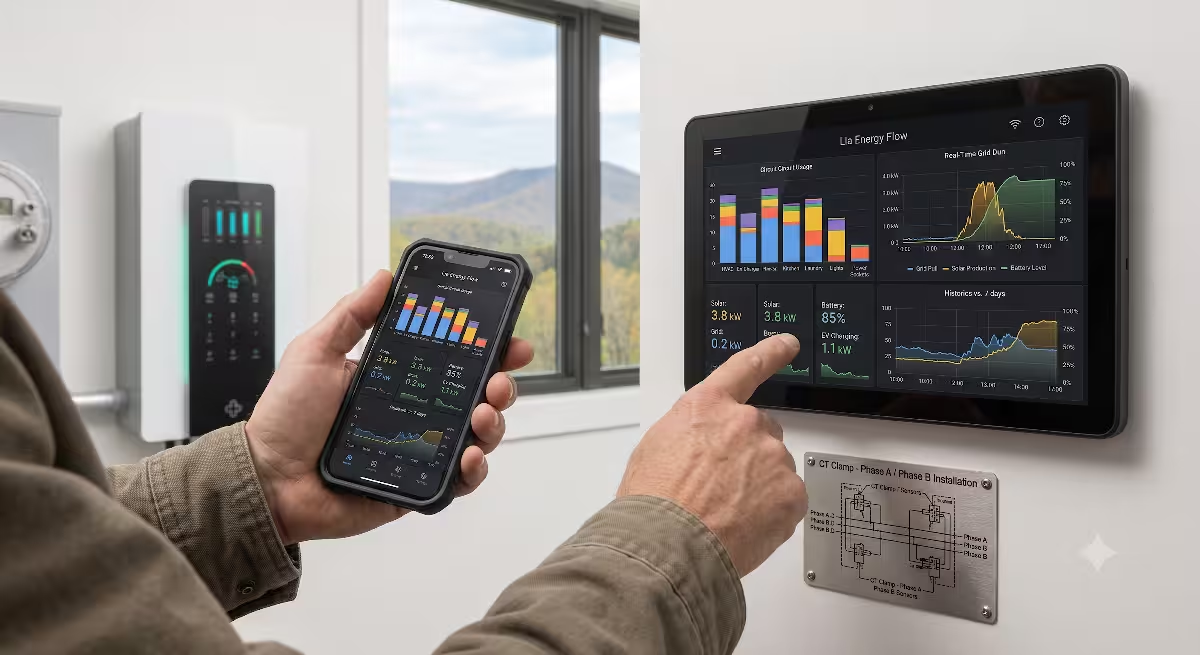
One major reason homeowners end up with high utility bills is that traditional electric meters only show a single number at the end of the month. That makes it hard to know what habits or broken appliances caused a high bill.
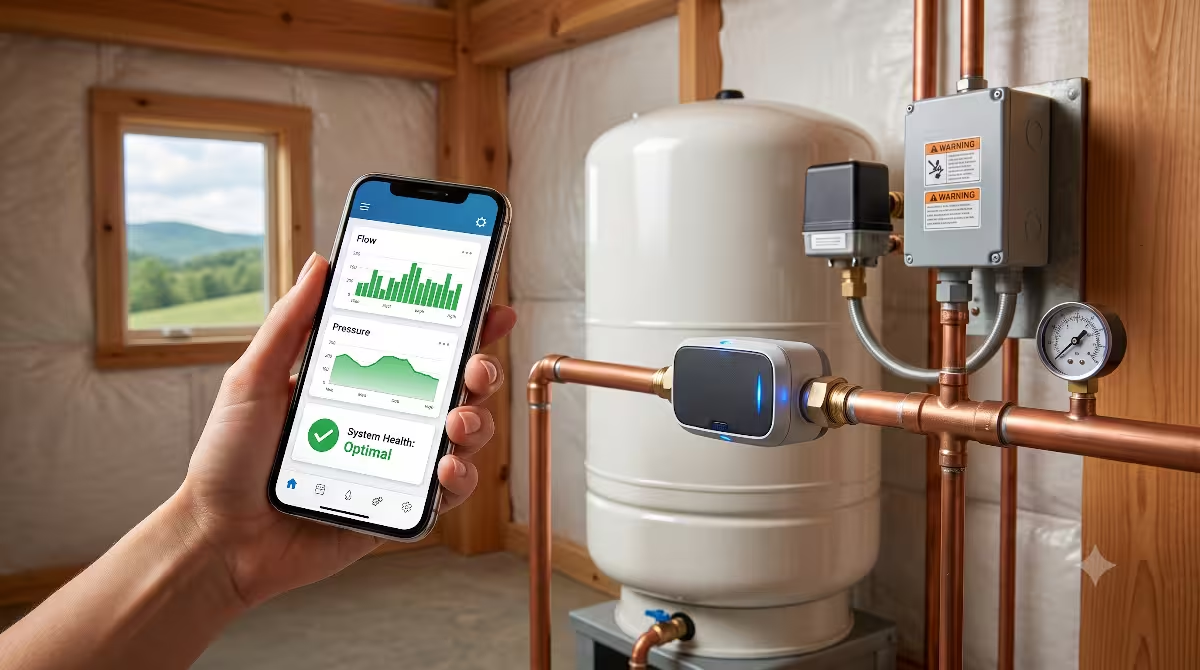
Smart home energy management changes this by delivering live, real time data straight to your phone, tablet, or wall controller. You can open an app and see a live stream of your home power usage measured in real time watts and kilowatt-hours.
This real time feedback makes energy waste obvious right away. For example, if you see your home pulling 1,500 watts while everyone is asleep, you know something big is running in the background. You can check your smart home energy management dashboard to see if a basement heater was left on or if a pump is stuck. Having quick access to clear data helps you fix problems before they turn into costly electric bill surprises.
Intelligent Automation and Smart Algorithms
The best part of modern smart home energy management is that you do not have to spend your day flipping switches or checking graphs. Once the system is installed, smart software algorithms handle the work automatically.
These smart home energy management platforms learn your daily routine over time. The system notices when you leave for work, when you get back home, and how fast your home warms up or cools down based on outside temperatures.
Using this information, smart home energy management combines weather forecasts, utility rate schedules, and your household habits to make split-second choices. If the forecast predicts a hot afternoon in Kingsport, your system can pre-cool your living spaces during cool morning hours. That allows your heating and cooling system to rest during peak afternoon hours, saving you money automatically while keeping your home comfortable.
Utility Demand Response Programs
Electric utility companies face massive power demands on extremely hot summer afternoons and freezing winter mornings. To keep the power grid stable, many utilities offer demand response programs that reward homeowners for reducing power during these peak periods.
When you enroll in a demand response program, your smart home energy management system works directly with your local utility provider. During a grid emergency or peak stress hour, the utility sends a digital signal to your smart home energy management software.
The system responds by making small, temporary adjustments. It might raise your thermostat setting by two degrees or pause your electric vehicle charger for an hour. In return for letting your smart home energy management system help ease grid demand, the utility company gives you bill credits, cash rebates, or lower overall power rates. You help keep the regional grid stable while earning direct savings on your home bill.
Cost Reduction and Bill Optimization
The clearest reason to invest in smart home energy management is saving money on your monthly bills. Most households see a total energy bill reduction between 10% and 25% after setting up a complete management system.
These financial savings come from three distinct features:
Eliminating Standby Power: Turning off background vampire power on inactive electronics and appliances.
Time-of-Use Rate Arbitrage: Shifting heavy electricity consumption away from expensive peak utility hours to low-cost off-peak hours.
HVAC Optimization: Running heating and cooling units efficiently based on real room occupancy rather than fixed schedules.
Over time, those monthly savings add up. On a custom house in Johnson City or Bristol with monthly electric bills averaging $250, a 20% reduction saves around $600 every year. Over the life of your home, smart home energy management pays for its installation cost many times over.
Maximizing Clean Energy Return on Investment
If you plan to install solar panels on your new home, smart home energy management is essential to getting the best financial return on your investment. Solar panel setups cost thousands of dollars upfront, so you want every kilowatt-hour generated to work hard for your wallet.
In many regions, utility rules for selling solar power back to the grid have changed. Utilities often pay homeowners much less for exported solar power than what they charge to buy grid power. This means sending solar energy back to the power grid is no longer as profitable as it used to be.
By using smart home energy management, you can adopt a self-consumption strategy. Your smart home energy management system keeps track of solar production. When solar production spikes at midday, the system turns on your pool pump, runs your dishwasher, or charges your home battery bank. By using your clean solar energy right on your property, smart home energy management helps you avoid buying expensive grid power later, speeding up your solar payback timeline.
Grid Resilience and Emergency Backup Power
Living in East Tennessee means enjoying beautiful seasons, but it also means dealing with severe summer storms and winter ice. Power outages happen, and staying safe and comfortable during a blackout is a high priority for custom home buyers.
Smart home energy management plays a crucial role during power emergencies. If utility power drops out, a home battery system or generator kicks in. However, battery power is limited. If you try to run your whole house normally on battery power during an outage, the battery can drain in just a few hours.
This is where smart home energy management keeps your home powered longer. The system instantly detects the outage and switches into emergency management mode. It automatically sheds non-essential electrical loads, turning off things like clothes dryers, hot tubs, and extra display lighting. It directs remaining battery power only to critical systems like your medical equipment, refrigerator, primary lights, and well pump. By managing your available power wisely, smart home energy management can stretch a single day of battery storage to last through several days of grid outages.
Appliance Longevity and Predictive Maintenance
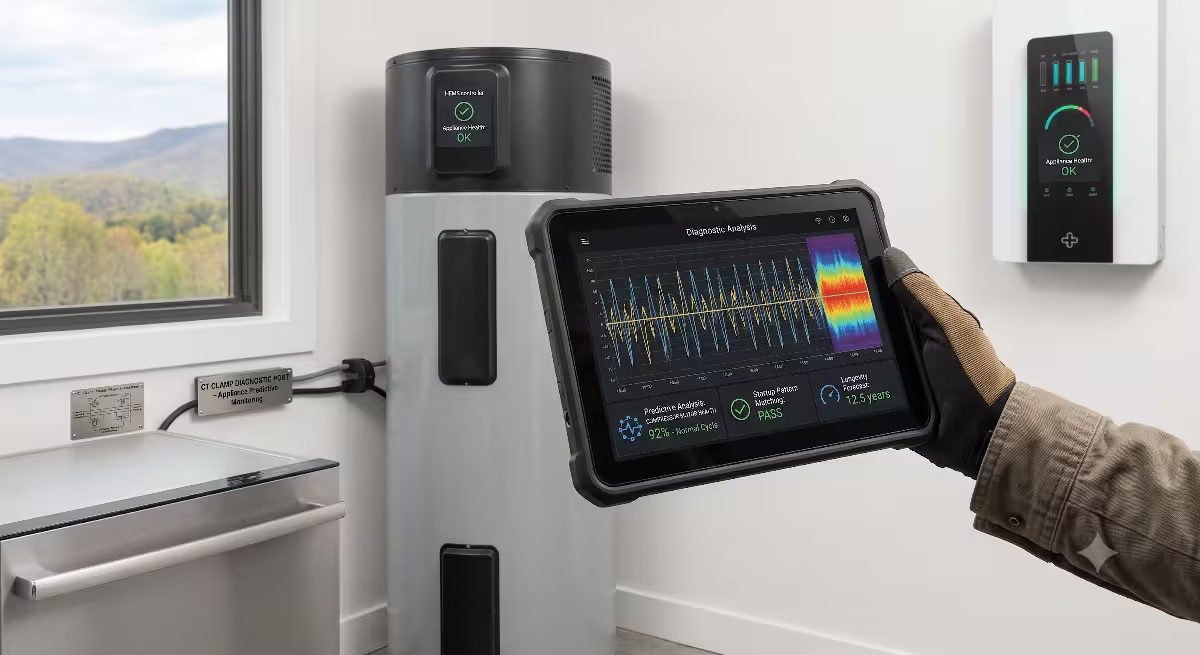
A lesser-known benefit of smart home energy management is protecting your expensive home appliances and extending their working life. Major household equipment like heat pump compressors, well pumps, and air handlers use electric motors that wear down over time.
When a motor or compressor begins to fail, its electrical pattern changes. It often pulls far more starting current or shows erratic power spikes. Standard electric panels cannot spot these warning signs, so the appliance runs until it breaks down completely.
Because smart home energy management monitors your electrical circuits continuously, it notices these abnormal power spikes right away. Your smart home energy management app can send you an alert saying your air conditioner compressor is pulling excess current. This early warning lets you call a repair technician to fix a simple relay or capacitor before the entire unit breaks down. Catching small equipment issues early saves thousands of dollars in full appliance replacements.
How Much Money Can a Smart Home Energy Management System Save?
When home buyers ask about smart home energy management, their first question is usually about the bottom line: “How much actual money will this save me on my utility bill?”
The exact amount depends on your home size, your family habits, and your local utility rates. However, real-world field tests show that a proper smart home energy management setup yields consistent savings across three main categories:
| Energy Management Strategy | Typical Monthly Bill Reduction | Primary Source of Savings |
| Smart HVAC & Occupancy Control | 8% to 15% | Automated temperature set-backs and pre-cooling |
| Vampire Load & Plug Management | 3% to 5% | Cutting power to idle electronics and appliances |
| Time-of-Use Shift & Solar Matching | 5% to 12% | Moving high draws to off-peak hours and using solar on-site |
| Combined System Total | 10% to 25% | Comprehensive smart home energy management |
For a standard 2,800-square-foot custom home in the Tri-Cities area, a 15% to 20% savings on electricity often equals $40 to $70 back in your pocket every month. If you combine smart home energy management with solar panels and home battery storage, your savings can be much higher, cutting your overall electric utility bills by 50% or more.
What is the Difference Between a Smart Thermostat and Full System?
A common point of confusion for home buyers is mixing up a smart thermostat with a complete smart home energy management setup. While a smart thermostat is a great tool, it is only one piece of a much larger picture.
A smart thermostat controls a single building system: your heating and cooling equipment. It reads room temperature, tracks your schedule, and turns your heat pump or furnace on or off. However, a smart thermostat has no idea how much power your electric water heater is drawing, whether your electric car is plugged in, or how much power your solar panels are producing.
In contrast, a complete smart home energy management system oversees your whole electrical infrastructure. It connects to your smart thermostat, but it also monitors your main breaker panel, tracks solar production, manages battery storage, and controls smart outlets. A smart thermostat operates in a silo, but smart home energy management coordinates every electrical load in your home to work as a unified team.
What are ENERGY STAR SHEMS Certified Packages?
To help consumers identify high-quality energy systems, the U.S. Environmental Protection Agency created the ENERGY STAR Smart Home Energy Management Systems specification, commonly called SHEMS.
An ENERGY STAR SHEMS certified package is a tested combination of smart hardware and service software that meets strict energy efficiency guidelines. To earn this certification, a smart home energy management package must include at least:
An ENERGY STAR certified smart thermostat.
Smart lighting controls.
At least one smart plug or load monitoring device.
Occupancy-based management software that automatically reduces device energy use when rooms are empty.
Choosing an ENERGY STAR SHEMS certified package gives homeowners confidence that their smart home energy management system has been tested by independent experts. It ensures the system will deliver real energy savings without requiring constant manual adjustments.
Can You Retrofit or Is This Strictly for New Builds?
Many homeowners ask if smart home energy management requires building a brand-new custom home from scratch. The short answer is no; you can add smart home energy management to almost any existing home, though doing it during new construction offers clear advantages.
If you want to retrofit an existing home with smart home energy management, you have great options available:
Wireless CT Sensor Kits: You can hire an electrician to install wireless monitor kits (like Sense or Emporia) inside your existing breaker panel in about an hour.
Smart Plugs and Switches: You can swap out standard wall switches and outlets for smart versions without running new wiring behind your drywall.
Smart Thermostats: Most existing homes can accept a smart thermostat retrofit easily using existing low-voltage wiring.
However, if you are building a new custom home in Johnson City, Kingsport, or Bristol, planning for smart home energy management from the start allows you to install smart main electrical panels, dedicated wiring conduits, and built-in battery storage backbones seamlessly. Building smart home energy management into your original construction blueprints saves labor costs and produces a cleaner, fully hidden installation.
Service Panel Sizing
Electrical planning generally starts at the main service panel. If you size your panel incorrectly during construction, upgrading it later becomes expensive.
Traditionally, standard homes featured a 200-amp main electrical panel. While 200 amps used to be plenty, modern homes with heat pumps, fast electric vehicle chargers, induction cooktops, and electric water heaters can max out a 200-amp panel quickly during peak winter morning usage.
When planning a modern custom build with smart home energy management, consider upgrading to a 300-amp or 400-amp service, or installing a dedicated smart panel like Span or Leviton Smart Mains. A smart panel manages load balancing digitally. If total home power draw approaches your main service limit, the smart home energy management system briefly pauses your electric vehicle charger or water heater for a few minutes. This active load management prevents tripped main breakers while letting you power a modern, all-electric home safely.
Pre-Wiring and Neutral Wires
If you are building a new home or completing a major remodel, proper rough-in pre-wiring is essential for smooth smart home energy management installation down the road.
Here are three key electrical rules every builder and homeowner should follow:
Require Neutral Wires at Every Switch Box: Smart light switches and smart controls need a continuous power supply to stay connected to your Wi-Fi or Matter network. That requires a neutral wire in every electrical box. Older building codes allowed electricians to run switch loops without neutral wires, which breaks compatibility with many smart devices. Always require neutral wires throughout the house.
Use Deep Electrical Boxes: Smart switches, smart outlets, and monitoring relays are physically larger than traditional mechanical switches. Standard shallow wall boxes get overcrowded with wires quickly. Specifying deep, plastic or metal switch boxes gives your electrician plenty of room to tuck smart components away safely.
Run Extra Low-Voltage Conduits: Run empty PVC conduits from your main electrical panel room to your attic, garage, and outdoor solar installation locations. These empty conduits make it easy to pull new data cables or solar wires later without tearing open finished drywall.
Following these pre-wiring steps during rough-in ensures your home remains ready for future smart home energy management upgrades as technology evolves.
Interoperability Standards
One of the worst mistakes a home buyer or builder can make is installing proprietary, “walled garden” smart devices that only work with one specific brand. If that company goes out of business or stops updating its mobile app, your system becomes useless.
To prevent this issue, build your smart home energy management strategy around open, industry-standard communication protocols. The most important standard to look for today is Matter.
Matter is a universal smart home protocol developed jointly by major technology companies, including Apple, Google, Amazon, and Samsung. Matter allows devices from different brands to communicate directly over your local home network without relying on remote cloud servers. When you pick Matter-compatible smart thermostats, smart plugs, and smart home energy management controllers, you ensure your equipment will work together smoothly for years to come, regardless of what smartphone or voice control assistant you prefer to use.
Actionable Next Steps for Homeowners
Managing electricity in a modern home does not have to be confusing or expensive. By shifting from old, passive breaker panels to active smart home energy management, you take full control of your power bills, protect your equipment from unexpected outages, and make the most of clean energy generation.
Whether you are planning a new custom build in Johnson City or upgrading an existing house in Kingsport, taking a planned, step-by-step approach to smart home energy management yields the best long-term results.
Here is a practical, four-step action plan to get started:
Perform an Energy Audit: Review your utility bills from the past 12 months to identify your peak usage seasons and baseline power draws.
Inspect Your Electrical Panel: Have a licensed electrician check your main electrical box to see if you have open breaker space, neutral wires, and adequate service capacity.
Start with Core Smart Components: Install an ENERGY STAR certified smart thermostat and a main circuit monitor to begin gathering real-time energy data.
Expand Your Automation: As your budget allows, connect your EV charger, solar panels, battery storage, and smart plugs into one central smart home energy management platform.
Taking these steps helps build a comfortable, efficient, and resilient home that stands the test of time. If you have questions about custom home plans, local building codes, or structural details in the Tri-Cities region, keep following our updates here at Tri-Cities Tn Home. Building a house is a big journey, and having clear, direct, and precise guidance makes all the difference.