A house is more than just wood and nails. It is a place where families grow old together. As we get older, our needs change. One of the most important things we can do to stay safe in our homes is to think about how we light up our spaces. When I talk to folks around here about building their forever homes, I always bring up the best lighting strategies to keep them safe.
Falls are a big deal as we get older. A simple trip can change your life in a second. I have seen it happen to good people. It often happens because they just could not see where they were going. In our area, we have many beautiful older homes. While they have a lot of charm, they often have dark hallways and dim corners. That is why we want to talk to you about lighting strategies today.
We are going to look at how your eyes change as you age. We will talk about new tech for 2026 that can help you. We will also look at how to light up every room in your house so you can walk around with confidence. Our goal is to help you understand these lighting strategies so you can stay in the home you love for a long time.
Why Your Eyes Need Better Lighting Strategies
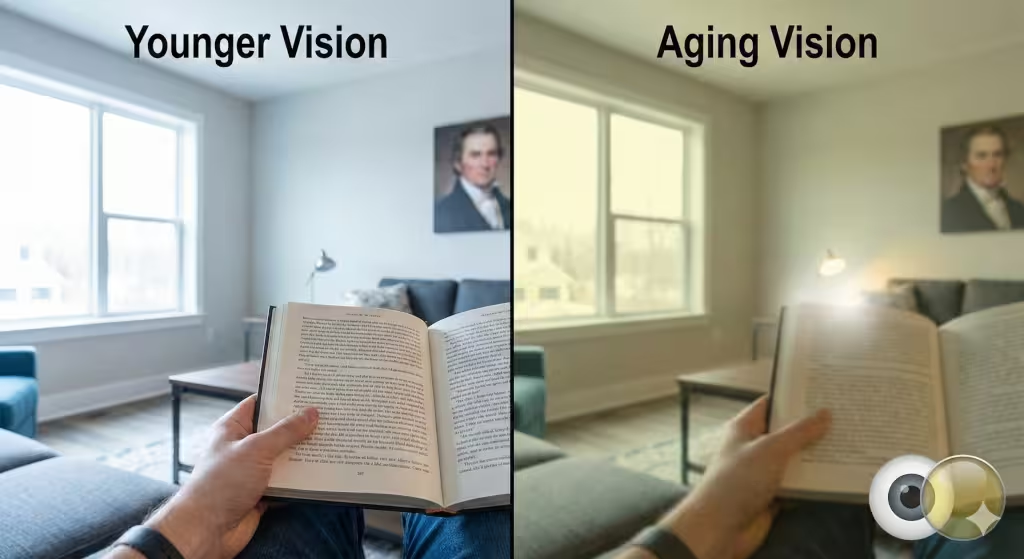
It is a known fact is that a 60-year-old person needs about three times more light to see as well as a 20-year-old does. This is because our eyes change. The pupils in our eyes get smaller. This means less light gets in. The lens inside your eye also starts to turn yellow. This makes it harder to see colors clearly. It can even make the world look a bit like an old photograph.
When your eyes do not get enough light, your brain has to work harder to figure out what is in front of you. This can make you feel tired. It also makes you more likely to trip. If you cannot see a rug on the floor or the edge of a step, you might fall. That is why using the right lighting strategies is so important. It is not just about making a room brighter. It is about making the light work for you. We need to reduce glare and make sure there are no scary shadows.
The Three Pillars of Good Lighting Strategies
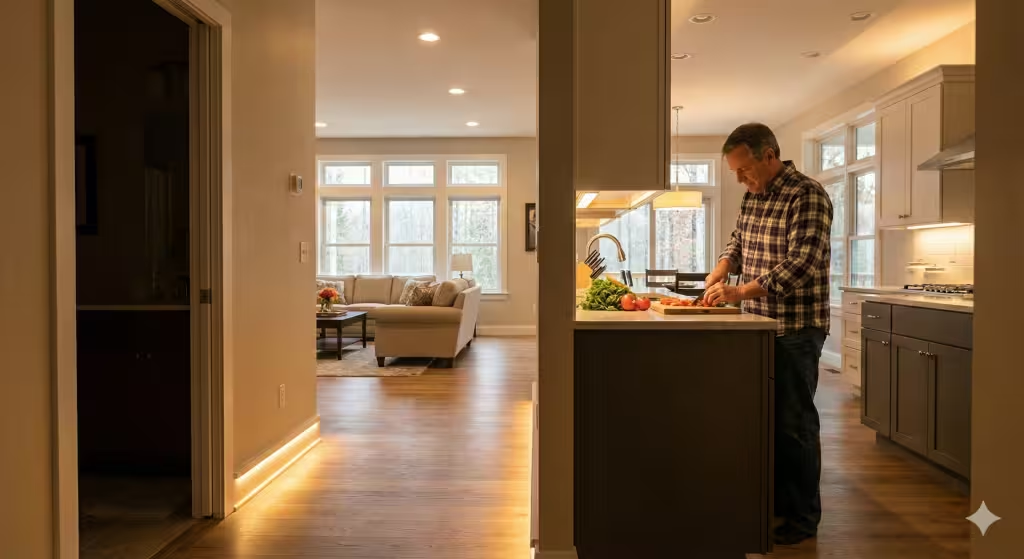
When a builder plans a home, they think about light in three different ways. We call these the three pillars. If you use all three, you will have a much safer home.
The first pillar is ambient lighting. This is the general light that fills a room. You get this from ceiling lights or big windows. For seniors, we want this light to be very even. You do not want bright spots and dark spots. Sudden changes in brightness can be hard on older eyes. It takes more time for your eyes to adjust when you move from a bright room to a dim one. Good lighting strategies for ambient light include using frosted bulbs. These help spread the light out so it does not hurt your eyes.
The second pillar is task lighting. This is light for a specific job. Think about reading a book, cutting vegetables in the kitchen, or taking your medicine. These jobs need a lot of bright, focused light. I often suggest putting LED strips under kitchen cabinets. This shines light right on the counter where you are working. It keeps your fingers safe and helps you see what you are doing. Using these lighting strategies for tasks makes daily life much easier.
The third pillar is accent and wayfinding lighting. This is light that shows you the way. This is very important at night. You might need to get up to go to the bathroom. You do not want to fumble for a switch in the dark. Wayfinding lighting strategies include putting small lights along the baseboards or under the edge of the bed. These lights turn on when they sense you moving. They show you a clear path so you do not trip over the cat or a pair of shoes.
Smart Technology for 2026
We are living in 2026 now, and the tech we have is amazing. Going back a couple of decades, we just had standard switches. Now, we have smart homes that can actually help prevent falls. One of the best lighting strategies for modern homes is using motion sensors. You do not even have to think about turning on the light. As soon as you walk into a room, the lights come on at just the right level.
We also have voice-controlled lights. If you are sitting in your chair and feel like the room is getting too dark, you can just say, “Turn on the living room lights.” This is great for people with arthritis who might find it hard to flip a switch. Another new thing in 2026 is AI fall detection. Some smart lighting systems have sensors that can tell if someone has fallen. If the system thinks you are on the floor, it can turn all the lights to full brightness and even call for help. Integrating these into your lighting strategies adds a huge layer of safety.
Lighting Strategies for Your Circadian Rhythm
Did you know that light affects how you sleep? Your body has an internal clock called a circadian rhythm. It tells you when to be awake and when to go to sleep. Light is the main thing that sets this clock. As we get older, our internal clocks can get a bit messy. This leads to poor sleep, which makes us more likely to fall during the day because we are tired.
Using the right lighting strategies can fix this. During the day, you want “cool” light. This is light that has a bit of blue in it, like the sun at noon. It tells your brain to stay alert and move around. In the evening, you want “warm” light. This is amber or orange-toned light. It tells your brain that it is time to wind down. Modern LED bulbs can change color throughout the day. They stay bright and blue during the day and turn soft and warm at night. This is one of the smartest lighting strategies for staying healthy and safe.
Reducing Weight Transfer Time with Lighting Strategies
Scientists have studied something called Weight Transfer Time or WTT. This is the time it takes for you to shift your weight when you stand up from a chair. If your WTT is long, it means you are a bit shaky. Studies show that good lighting can actually make your WTT shorter. When you can see the floor and your furniture clearly, your body feels more confident. You can stand up faster and more safely. By using better lighting strategies, you are literally giving your body the information it needs to stay balanced. This is why I always tell my clients that light is like a tool for your balance.
Kitchen Lighting Strategies for Safety
The kitchen is the heart of the home, but it can be a dangerous place. There are sharp knives, hot stoves, and wet floors. To stay safe, you need very specific lighting strategies here. First, make sure you have no shadows on your workspace. If the light is behind you, your body will cast a shadow on the counter. This makes it hard to see what you are cutting. Under-cabinet lighting is the best fix for this.
Also, think about the floor. Shiny tile floors can create a lot of glare. Glare is like a bright flash that hides things from your eyes. It can hide a puddle of water or a dropped grape. Both can cause a fall. Use light fixtures that diffuse the light. This means the light is softened before it hits the floor. Using these lighting strategies will make your kitchen a much safer place to cook your favorite Southern meals.
Bathroom Lighting Strategies for the #1 Fall Zone
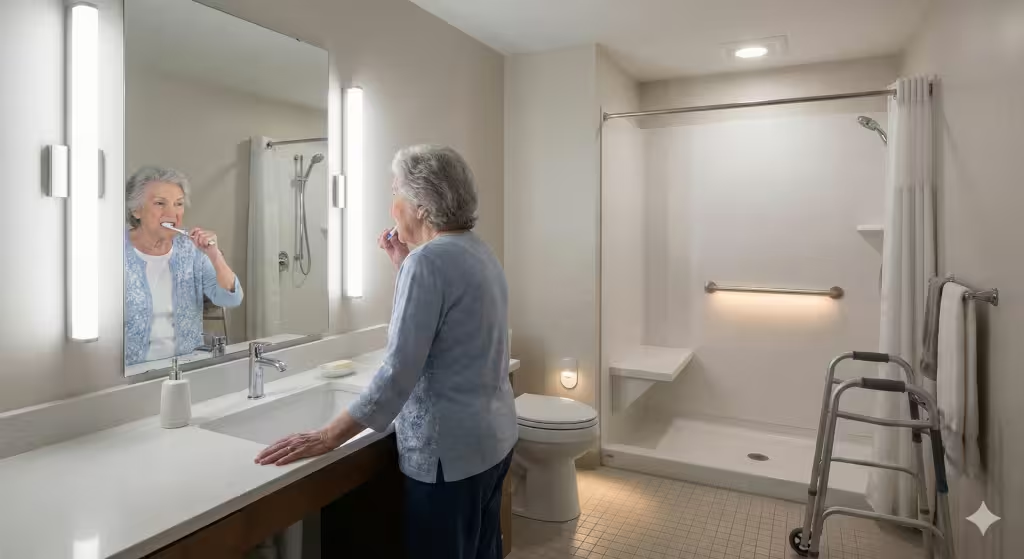
More falls happen in the bathroom than anywhere else in the house. It is often small, wet, and full of hard surfaces. We need to be very careful with our lighting strategies here. You want the bathroom to be bright, but not blinding. I like to put lights on both sides of the mirror. This gets rid of shadows on your face. It helps you see clearly when you are brushing your teeth or shaving.
Another great idea is to use an LED-integrated grab bar. These are sturdy bars you can hold onto that also have a soft glow. They show you exactly where to grab if you feel unsteady. Also, make sure the shower is well lit. Many people forget to put a light inside the shower stall. A waterproof light in the shower is one of the most effective lighting strategies for preventing slips.
Stairway and Hallway Lighting Strategies
Stairs are very scary for many seniors. A fall on the stairs is almost always serious. Your lighting strategies for stairs must be perfect. Each step needs to be clearly visible. I often suggest using high-contrast colors on the edge of each step. Then, shine a light directly on those edges. You can also install lights right into the handrails. This puts the light exactly where your feet and hands need it.
In hallways, the goal is to have no dark spots. If a hallway is long, use several lights instead of just one in the middle. This keeps the light level even from one end to the other. These lighting strategies make sure you can see any obstacles in your path, like a rug that has moved or a toy left by a grandchild.
Bedroom Lighting Strategies for Nighttime Safety
The bedroom should be a place of rest, but it needs to be safe for those middle-of-the-night trips to the kitchen or bathroom. One of my favorite lighting strategies is called “toe-kick” lighting. We hide LED strips under the edge of your bed or nightstand. These lights are connected to a motion sensor. When your feet hit the floor at night, a soft, dim light turns on. It is not bright enough to wake you up fully, but it is bright enough to show you the floor.
Make sure you have a light switch right next to your bed. You should never have to walk across a dark room to turn on the light. If your home is older, we can use smart bulbs that you can control with a remote on your nightstand. These simple lighting strategies can prevent a lot of bumps and bruises.
Understanding Lumens and Kelvin in Your Lighting Strategies
When you go to the store to buy bulbs, it can be confusing. You will see words like “Lumens” and “Kelvin.” To have good lighting strategies, you need to know what these mean. Lumens tell you how bright a bulb is. In the past, we looked at Watts, but that only tells you how much power a bulb uses. For a senior’s living room, you want a total of about 5,000 to 8,000 lumens spread across the room.
Kelvin tells you the color of the light. A lower number, like 2,700K, is a warm, yellow light. A higher number, like 5,000K, is a cool, blue-white light. For your daytime lighting strategies, aim for 4,000K to 5,000K. For the evening, look for 2,700K. This helps your eyes and your sleep cycle stay on track.
Common Questions About Lighting Strategies to Prevent Falls for the Elderly
A lot of folks ask, “What is the best light for someone with cataracts?” Cataracts make the lens of the eye cloudy. This causes a lot of glare. The best lighting strategies for cataracts involve using lots of light but keeping it very diffused. You want to avoid any “bare” bulbs. Always use shades or covers to soften the light.
Another common question is, “How can I save money while upgrading my lights?” The answer is LEDs. They use very little power and last for years. You won’t have to climb a ladder to change a bulb nearly as often. This in itself is a safety feature! Using LEDs is one of the most cost-effective lighting strategies you can choose.
Summary Checklist for Your Lighting Strategies
To make things easy, I have put together a quick checklist. You can use this to walk through your home and see where you can improve.
Are all hallways brightly and evenly lit?
Do you have a light switch within reach of your bed?
Are there lights under your kitchen cabinets?
Does your bathroom have a motion-sensor night light?
Are the edges of your stairs easy to see?
Have you replaced old, dim bulbs with bright LEDs?
Do you have lamps for tasks like reading?
If you can answer “yes” to all of these, your lighting strategies are in great shape.
Final Thoughts from Your Tri-Cities Expert
Building and maintaining a safe home is a job that requires precision and integrity. We hope this guide helps you feel more competent in choosing the right lighting strategies for your home. Remember, you don’t have to do everything at once. Start with the most dangerous areas, like the stairs and the bathroom. Then, work your way through the rest of the house.
If you live here in the Tri-Cities area, there are many local experts who can help you install these systems. Whether you are in Bristol, Kingsport, or Johnson City, keeping our seniors safe is a community effort. Good lighting is not a luxury. It is a necessity for a long, happy life in the home you love.
Bonus Section: A Lighting Plan for a Kitchen
To make a kitchen truly safe, we have to look at every corner. We cannot just put one big light in the middle of the ceiling and call it a day. That old-fashioned way of thinking is why so many people have accidents. When you have only one light source, you are almost always working in your own shadow. This is why we use layered lighting strategies.
Here is a detailed, step-by-step plan for a safe and bright kitchen.
1. General Ceiling Light (Ambient Layer)
This is the “big” light that makes the whole room feel bright when you walk in.
The Plan: Use recessed “can” lights or large LED panels. These should be spaced out about 4 to 6 feet apart.
The Goal: You want a brightness level of about 30 to 50 foot-candles on the floor. In simple terms, it should feel like a clear, sunny day inside your kitchen.
Pro Tip: Use “frosted” or “diffused” covers on these lights. This keeps the light from being a sharp, tiny point that hurts your eyes. Instead, it spreads the light out like a soft blanket.
2. Under-Cabinet Lights (The Critical Task Layer)
If you only take one thing away from my lighting strategies, let it be this: you must have lights under your upper cabinets.
The Plan: Install LED tape lights or thin “puck” lights along the bottom of your upper cabinets.
Why it Matters: This light shines directly on your hands while you are using a knife or reading a recipe. It gets rid of the shadow your head and shoulders cast from the ceiling lights.
Technical Detail: Look for a “High CRI” (Color Rendering Index) of 90 or more. This makes colors look real. It helps you tell if meat is cooked properly or if a piece of fruit has a soft spot you should avoid.
3. Dedicated Sink and Stove Lighting
These are the two most dangerous spots in the kitchen. Water makes things slippery, and stoves are hot.
The Sink: Place a dedicated pendant or a recessed light directly over the sink basin. This helps you see if there is a soapy spot on the floor or a glass that is about to break.
The Stove: Most range hoods have a small light. Often, it is a weak, old bulb. Swap it for a bright LED. You need to see clearly when you are moving a heavy pot of boiling water. These lighting strategies for the stove area can prevent serious burns.
4. Toe-Kick Lighting for Nighttime Safety
This is one of the most clever lighting strategies I have seen in new homes in Johnson City.
The Plan: Hide LED strips in the small space under your bottom cabinets (where your toes go).
The Benefit: Connect these to a motion sensor. If you come into the kitchen at 2:00 AM for a glass of water, these lights turn on and glow softly across the floor. They show you exactly where the path is without blinding you and waking you up too much.
5. Managing Glare and Surfaces
Even the best lighting strategies can fail if your kitchen is too shiny.
The Problem: High-gloss granite or shiny tile can act like a mirror. This creates “hot spots” of light that can hide a spill or trip hazard.
The Solution: If you are picking new materials, go with “honed” or “matte” finishes. These surfaces soak up the light instead of bouncing it back at your eyes. If your counters are already shiny, use “diffused” light fixtures to soften the blow.
6. Switches and Technology
In 2026, we don’t have to settle for tiny switches that are hard to find in the dark.
Rocker Switches: Use large, flat switches that you can push with your elbow if your hands are full.
Smart Dimmers: I recommend dimmable lighting strategies for every room. During the day, you want 100% power. In the evening, you can dim the lights to 30% to help your body get ready for sleep.
Voice Control: “Alexa, turn on the kitchen lights” is more than just a fancy trick. It is a safety feature for anyone who might be feeling a bit unsteady on their feet.
A Checklist for Your Kitchen Audit
To make sure your lighting strategies are working, try this test tonight:
The Shadow Test: Stand at your counter as if you are making a sandwich. Is your shadow falling on the food? (If yes, you need under-cabinet lights).
The Glare Test: Do you see any bright “sun spots” on your floor or counter that make it hard to see the surface? (If yes, you need to add diffusers to your bulbs).
The Entry Test: Can you reach a light switch the very second you step into the room? (If no, you might need a motion sensor).
Summary Table: Recommended Kitchen Light Levels
| Type of Light | Purpose | Recommended Brightness (Lumens) | Color Temperature (Kelvin) |
| Ambient | General Walking | 5,000+ per room | 3500K – 4000K |
| Task | Cutting/Cooking | 1,000+ per work area | 4000K (Neutral White) |
| Night Path | Safety/Wayfinding | 100 – 300 (Soft) | 2700K (Warm/Amber) |
Using these lighting strategies makes your kitchen more than just a place to eat. it makes it a safe zone where you can feel confident and independent.