The most significant shift we have witnessed in recent years is not just about the materials we use, but about how we think regarding the space between our walls. Today, the true mark of a luxury build in East Tennessee is the ability to live without borders. We are moving away from the old way of building, where a home was a box designed to keep the world out. Instead, we are embracing a philosophy where the home and the landscape are one. This guide will walk you through the essential elements of creating a home that breathes with the mountains, ensuring your next build is not just a structure, but a seamless sanctuary.
Architectural Keys to Uninterrupted Transitions
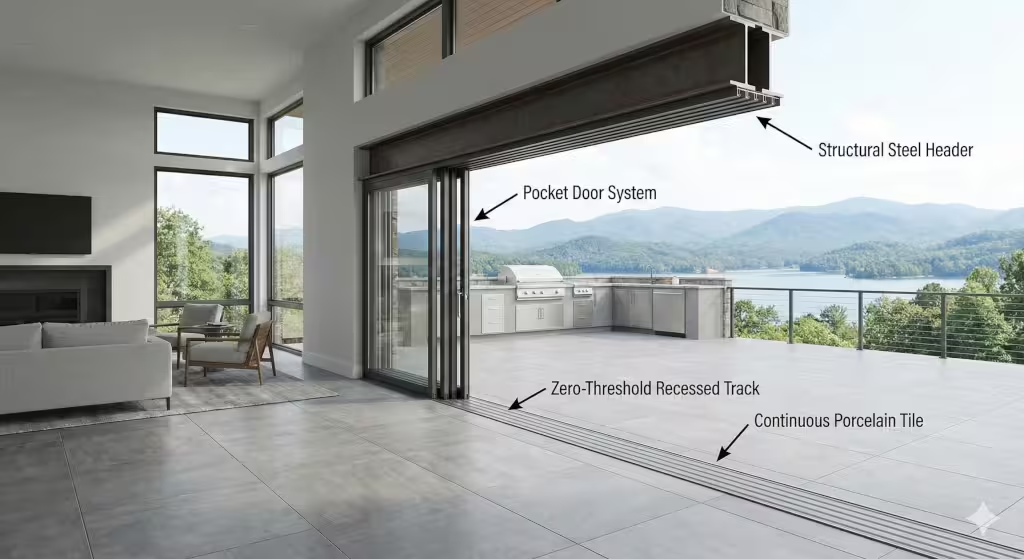
To truly understand the “how” behind home designs that feel limitless, we have to look closely at the engineering. It is one thing to draw a pretty picture of a glass wall, but it is another thing entirely to build it so that it works perfectly ten years from now. In our region, where the ground can shift and the weather is unpredictable, the technical side is everything.
The Engineering of the Disappearing Wall
In the world of high-end home designs, the “disappearing wall” is the crown jewel. This is usually achieved through a multi-slide or lift-and-slide door system. Unlike a standard patio door that sits on top of the floor, these systems are integrated into the structure of the house.
A lift-and-slide system is particularly impressive. When you turn the handle, the entire glass panel lifts up onto rollers. This allows even a massive, three-hundred-pound piece of glass to slide with just the push of a finger. When you close it and turn the handle back, the door drops down into a gasket. This creates a tight seal that keeps out the Tennessee wind and rain. For these home designs to be successful, the “header”—the big beam above the door—must be engineered to handle the weight of the roof without pressing down on the glass. If that beam moves even a tiny bit, your disappearing wall will get stuck.
Achieving the Zero-Threshold Transition
One of the biggest mistakes I see in average home designs is a “trip hazard” at the back door. Usually, there is a two or three-inch bump that you have to step over. In a luxury home, we want that to be gone. We want the transition to be as smooth as a sheet of paper.
This requires a “recessed track.” During the foundation phase, we actually leave a trench in the concrete slab. The door track is then “buried” into that trench. This allows the top of the track to sit exactly level with your hardwood floors inside and your stone pavers outside. It creates a visual line that never breaks. This is a high-level skill that requires your concrete team and your door installers to talk to each other weeks before the doors even arrive on the job site.
Material Continuity and the “Mirror Effect”
The secret to “flow” in the best home designs is actually a trick of the eye. If you use a dark wood floor inside and a light grey concrete patio outside, your brain will always see two separate spaces. To fix this, we use the “mirror effect.”
We look for materials that can live in both worlds. For example, many modern home designs use large-format porcelain tiles. These tiles are incredibly tough. We can use a smooth version inside the house and a “textured” version of the exact same tile outside. The color and pattern are identical, but the outside version has a bit of grit so you don’t slip when it’s wet. When the doors are open, the floor looks like one continuous piece of stone stretching toward the mountains.
We do the same thing with the ceiling. If we use cedar planks on the inside, we run those same planks right through to the porch. It draws your eye outward and makes the room feel twice as large.
Structural Symmetry and Sightlines
Finally, we have to think about the “bones” of the house. In luxury home designs, we align the structural columns of the porch with the walls of the interior room. If the columns are offset, it creates visual “noise” that ruins the feeling of flow.
We also pay close attention to the “sightlines.” When you walk through the front door of a home built with these home designs, your eye should be able to travel through the foyer, through the great room, and straight out to the view without hitting a single solid wall. This is why we often use “corner-less” glass systems. These are doors that meet at a ninety-degree angle without a support post in the corner. When you open them, the entire corner of the house simply disappears, leaving you with nothing but fresh air and a view of the Tri-Cities landscape.
It takes a lot of “behind the scenes” work to make a home feel this effortless. It’s all about the precision of the plan.
Designing for the Tennessee Seasons
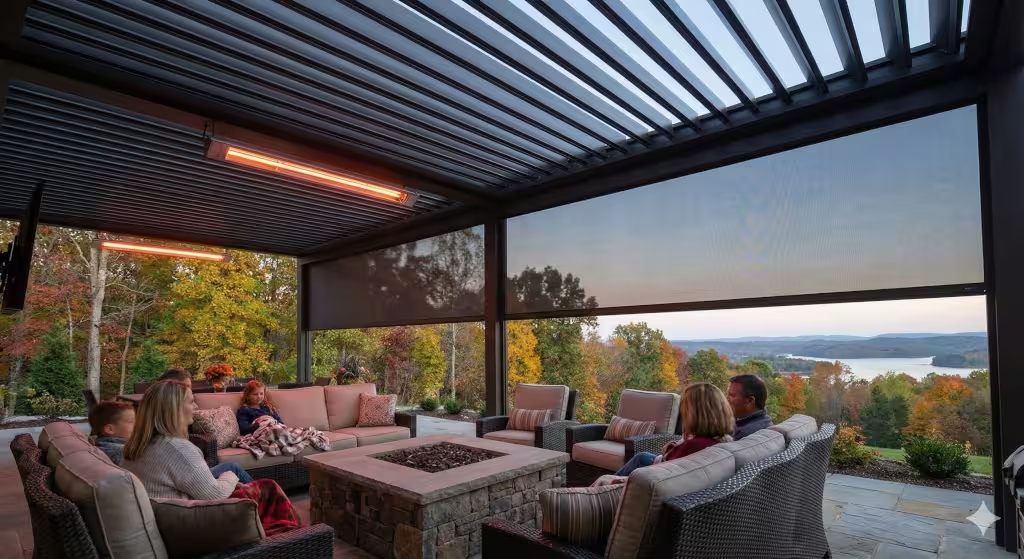
Our weather in East Tennessee is beautiful, but it can be tricky. We have hot summers, cold winters, and plenty of rain in between. To make luxury home designs work year-round, we have to plan for these changes. One of the best tools we use today is the motorized louvered pergola. Think of this as a roof for your patio that has slats like a window blind. When the sun is too hot, you can tilt the slats to give you shade. If it starts to rain, you can close them completely to keep your outdoor furniture dry.
In our area, we also have to deal with bugs in the summer. No one wants to enjoy a nice dinner while fighting off mosquitoes. That is why we integrate retractable motorized screens into the house frame. With the push of a button, a fine mesh screen comes down from the ceiling. It keeps the bugs out but lets the breeze in. For the colder months, we install infrared heating systems in the porch ceilings. These heaters do not just warm the air; they warm the people and the furniture. This allows you to enjoy a view of the snow on the mountains while staying perfectly cozy.
Common Questions About Modern Home Designs
When people talk to a builder about new home designs, they always have a few common questions. One of the most frequent is whether these open designs actually add value to the property. In the Tri-Cities market, the answer is a big yes. People are moving here specifically for the natural beauty. A house that helps you enjoy that beauty is always going to sell for more than a house that shuts it out.
Another question is about privacy. If you have a thirty-foot glass wall, how do you keep people from looking in? We handle this with smart landscaping. Instead of a wooden fence that blocks your view, we use “layered” landscaping. This means we plant trees and bushes at different heights and distances. It creates a screen that lets you see out, but makes it very hard for someone to see in. We can also use smart glass that turns from clear to frosted with a switch.
People also worry about energy bills. It is a fair point. If you have that much glass, you might think your air conditioner will run all day. However, modern glass technology is amazing. We use “Low-E” glass, which stands for low emissivity. This glass has a special coating that reflects heat. In the summer, it keeps the sun’s heat out. In the winter, it keeps your furnace’s heat in. Good home designs take these costs into account from day one.
Materiality and Aesthetics in Luxury Home Designs
To make the transition feel real, the materials must be consistent. This is where we show our competence and precision as builders. Below is a quick guide to some of the materials we recommend for these types of builds.
| Feature Area | Recommended Material | Why It Works for Flow |
| Main Flooring | Large-format Porcelain Tile | You can use this inside and out; it resists freezing and slipping. |
| Wall Accents | Tennessee Fieldstone | Bringing the exterior stone inside the house ties the two spaces together. |
| Ceiling Finish | Tongue and Groove Cedar | Extending the wood from the great room to the porch ceiling leads the eye outside. |
| Countertops | Honed Granite or Quartzite | These are tough enough for an outdoor kitchen but look elegant in a main kitchen. |
The Zen Factor: Wellness and Biophilia
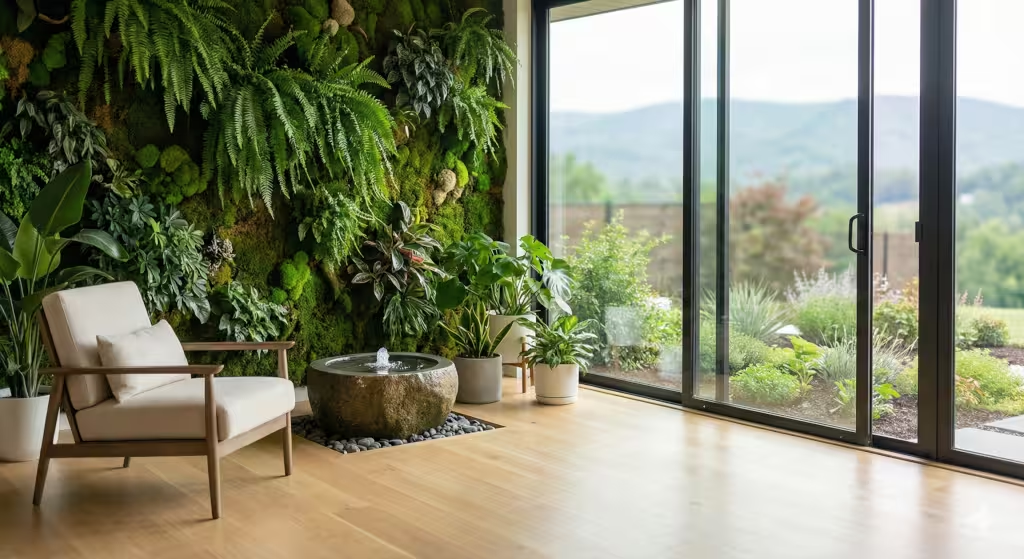
There is a scientific reason why we love these home designs. It is called biophilia. This is the idea that humans have a natural need to be connected to nature. When we build a house that lets in lots of natural light and fresh air, it actually makes the people inside feel better. It lowers stress and helps people sleep better.
Some builders like to add what are call “sensory bridges.” This might be a small water feature that starts just outside the glass wall. The sound of the water trickles into the living room when the doors are open. It creates a calm atmosphere that washes over the whole house. We also use plants as part of the architecture. A “living wall” inside the house that matches the garden outside is a great way to make the home feel alive. This is the “zen” part of modern home designs that turns a house into a home.
Navigating Legal and Structural Logistics in Tennessee
Building in the Tri-Cities is different than building in Nashville or Knoxville. We have specific rules in places like Sullivan County and Washington County. For example, if you want to build a large outdoor structure that is attached to your home, you have to be careful about “setbacks.” These are rules that say how close you can build to your neighbor’s property line.
From an engineering view, the biggest challenge with these home designs is water. In East Tennessee, we get heavy rain. If your patio is at the exact same level as your living room floor, where does the water go? We have to design a special drainage system under the door track. It is a hidden trench that catches the rain and carries it away before it can ever touch your carpet. It takes a lot of precision to get this right, which is why you need a builder who understands the local climate and terrain.
Building Your Legacy in the Tri-Cities
At the end of the day, your home is more than just a place to sleep. It is where you build your life. When you choose home designs that prioritize the connection between inside and out, you are choosing a lifestyle of freedom. You are choosing to wake up with the sun and watch the stars from your living room.
In Johnson City and the surrounding areas, we are lucky to have such incredible views. It would be a waste to hide behind solid walls. Whether you are looking at a lakefront property on Boone Lake or a mountain retreat near Bristol, the best home designs are the ones that let the outside in. It takes a bit more planning and a bit more technical skill, but the result is a home that feels like it has always been part of the land.
Bonus: Project Checklist for Indoor-Outdoor Flow Project Design
Since we are aiming for that perfect transition where you can’t tell where the living room ends and the porch begins, you need to be very specific with your team. These types of home designs require a high level of precision. If one person is not on the same page, you could end up with a step-up or a water leak that ruins the whole effect.
Here is a checklist of technical questions I recommend you take to your architect and builder.
Foundation and Floor Leveling
How will we achieve a “flush” transition? Ask if they plan to “drop the slab” in the outdoor area. To have the indoor and outdoor floors at the exact same height, the concrete under the patio usually needs to be poured lower to account for the thickness of the door tracks and the exterior stone.
What is the plan for “sub-sill” drainage? In many home designs, water can get trapped in the tracks of large sliding doors. Ask how they will pipe that water away from the house foundation so it doesn’t back up during a Tennessee thunderstorm.
Are the flooring materials rated for both environments? If you are using tile, ensure the outdoor version has a high “slip resistance” rating so it isn’t dangerous when wet, while still matching the indoor look.
Structural Engineering and Openings
Is the “header” beam strong enough to prevent sagging? When you have a twenty-foot opening for a glass wall, the beam above it carries a massive amount of weight. If it sags even a tiny bit over time, those expensive glass doors will get stuck and won’t slide.
Can we use a “pocket” door system? Ask if the walls are thick enough to hide the glass panels when they are open. This is one of the most popular features in modern home designs because it makes the wall completely disappear.
How will the roofline protect the glass? To keep your cooling bills down, you want a roof overhang that blocks the high summer sun but lets in the low winter sun.
Environmental and Comfort Controls
Will the HVAC system be “zoned” for this area? When you open a giant glass wall, your air conditioner will try to cool the whole neighborhood. Ask if that room can be on its own thermostat or if the system can automatically shut off when the doors are open.
Where will the “invisible” screens go? If you want motorized screens to keep the bugs out, the housing for those screens needs to be built into the ceiling early on. It is very hard to add these to home designs after the house is already finished.
Is there a plan for “outdoor task lighting”? You need enough light to cook and walk safely, but not so much that it creates a glare on the glass when you are inside looking out.
Utility and Finishing Touches
Are the outdoor outlets and switches hidden? To keep the “luxury” look, you don’t want ugly plastic outlet covers everywhere. Ask about “pop-up” outlets or hiding them in the stone “skirting” of the house.
How will we handle the ceiling transition? If you have wood planks on the ceiling, ask the builder how they will align the boards so the lines continue perfectly from the inside to the outside.
Is the outdoor kitchen vented properly? If your grill is under a roof that is part of the main home designs, you need a high-powered vent hood so smoke doesn’t drift back into your living room.