

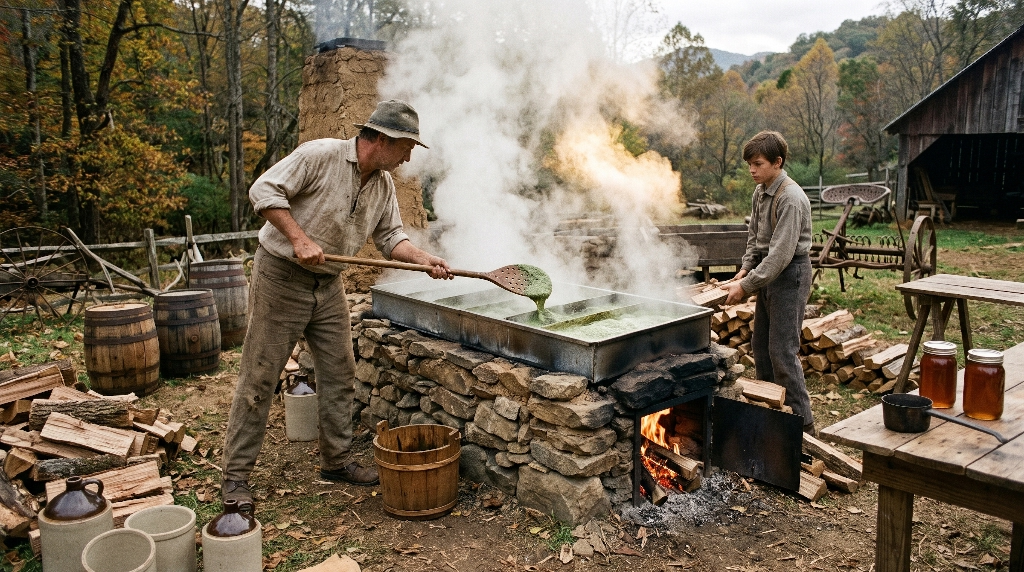
Stand on a crisp October ridge in East Tennessee just as the morning fog lifts off the hollers, and you can smell something sweet and earthy drifting through the trees. Woodsmoke curls up from a low stone furnace. A thick cloud of steam rises off a long metal pan, carrying the rich, grassy scent of boiling cane juice. Nearby, a heavy draft horse walks a slow, steady circle, creaking a wooden beam that turns iron rollers and squeezes bright green juice from armfuls of green stalks.
This is an autumn stir-off, one of the oldest and proudest food traditions in the southern mountains. While most folks today think of this golden syrup as a nostalgic topping for hot biscuits, the history of Appalachian sorghum mills during Civil War sugar shortages tells a much deeper story of grit, survival, and kitchen smarts.
During the 1860s, war cut the southern mountains off from the rest of the world. Store shelves went bare, and white sugar vanished from the pantry almost overnight. Mountain families could not simply do without sweetness, because sugar was a vital part of baking, preserving fruit, and keeping hard-working bodies fueled through long winters. Out of pure necessity, farmers and cooks across East Tennessee, Western North Carolina, and Southwest Virginia turned to a hardy grass called sweet sorghum. By building local sorghum mills and mastering the slow art of boiling cane juice over open fires, Appalachian communities kept their families fed and created a culinary treasure that still defines our regional table today.
To understand why this syrup matters so much to our food heritage, you have to taste the difference between modern white sugar and real mountain sorghum. Refined white sugar gives you pure, flat sweetness and nothing else. It has been stripped of every mineral, color, and natural flavor. Pure sorghum syrup, made the old way at traditional sorghum mills, is thick, dark amber, and full of character. That deep, honest flavor was born during one of the hardest chapters in American history, and it remains one of the best ingredients a cook can keep in the kitchen.
The Civil War Sugar Crisis: Blockades and the Loss of Louisiana Cane
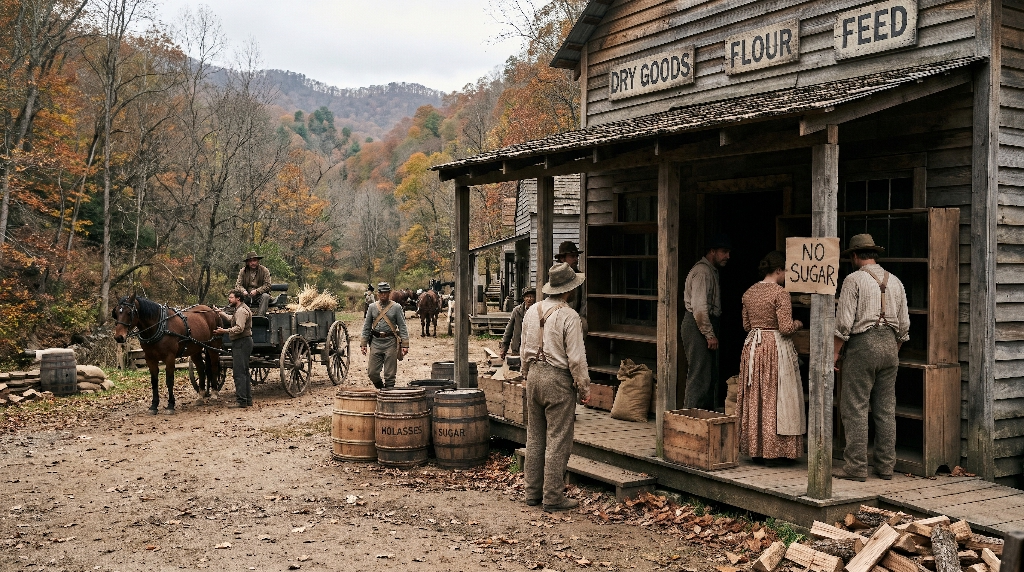
Before the Civil War broke out in 1861, Americans across the South loved their sweets just as much as people do today. Most of the sugar used in Southern kitchens came from two places. The first was the warm islands of the Caribbean, where giant plantations grew tropical sugarcane and shipped barrels of raw sugar and molasses into Southern ports like Charleston, Savannah, and New Orleans.
The second source was Louisiana. Along the warm, wet banks of the Mississippi River, a region known as the Louisiana Sugar Bowl produced tens of thousands of tons of cane sugar every single year. Steamboats carried those heavy wooden hogsheads of sugar up the rivers, and wagons hauled them along rough dirt roads into the hills and valleys of Appalachia.
When the war began, that supply chain broke down with shocking speed. Union warships formed a tight ring along the Atlantic and Gulf coasts, a military strategy known as the Anaconda Plan. This naval blockade choked off trade with the outside world, stopping ships from bringing Caribbean sugar into Southern ports. Then, in the spring of 1862, Union forces captured New Orleans and took control of the Mississippi River. Almost immediately, the Louisiana Sugar Bowl was cut off from the rest of the Confederacy. Overnight, the primary domestic source of cane sugar vanished.
For folks living in the rugged mountains of East Tennessee, Western North Carolina, and Southwest Virginia, the crisis hit even harder. Tropical sugarcane requires a long, hot, frost-free growing season of nearly a full year to mature. Up in the high valleys of Southern Appalachia, spring comes late and autumn frosts arrive early. Mountain farmers simply could not grow traditional sugarcane on their steep, rocky hillsides. Once the local country stores sold their last scoops of brown and white sugar, there was no more coming over the mountain passes.
Prices for whatever sugar remained skyrocketed to levels ordinary families could never afford. By 1863, a single pound of sugar in Confederate towns could cost more than a farmhand earned in an entire week. Confederate army quartermasters bought up whatever small supplies existed for military hospitals and soldiers’ rations, leaving nothing for the folks at home. Newspapers and farm journals across the South began printing urgent warnings and practical advice, begging farmers to plant a relatively new crop called Chinese sugarcane, which we know today as sweet sorghum. Without the rapid spread of local sorghum mills across the hills, thousands of mountain families would have gone years without a single spoonful of sweetness in their diets.
Enter Sweet Sorghum: The Hardy Crop That Saved the Appalachian Pantry
Sweet sorghum, known to botanists as Sorghum bicolor, was not native to the Blue Ridge or the Great Smoky Mountains. The plant originally came from Africa and made its way through Asia and Europe before arriving in the United States in the 1850s. At first, many American farmers looked at it with suspicion. It looked almost identical to corn, with tall green stalks, wide leaves, and a bushy seed head at the top. Yet within just a few years, that tall grass became the single most important crop in the Appalachian pantry.
What made sweet sorghum such a miracle for wartime mountain farmers was its sheer toughness. Unlike finicky tropical sugarcane, sweet sorghum thrives in poor, rocky soil and laughs at summer droughts. Its deep roots reach far down into the dry clay of Appalachian ridges to find water when corn crops are wilting in the heat. Better yet, sweet sorghum matures in just 100 to 120 days. A farmer in Johnson City, Tennessee, or Boone, North Carolina, could plant sorghum seed in May after the last spring frost and harvest tall, sugar-packed stalks by September or early October.
During the Civil War, nothing on an Appalachian farm went to waste, and sweet sorghum gave families three distinct harvests from a single planting. First, the juicy stalks provided the raw material for syrup. Second, the heavy clusters of grain at the top of each stalk were cut off and dried to feed chickens, hogs, and cattle when winter grain was scarce. Third, once the stalks were run through the rollers at local sorghum mills, the flattened, crushed fibers, called bagasse, were piled up to dry. Farmers used that dried bagasse as bedding for livestock, mulch for gardens, or even fuel to keep the fires burning under the syrup pans.
This crop also reshaped the everyday language of mountain cooking. In 19th-century Appalachia, cooks divided their sweeteners into two clear categories: short sweetening and long sweetening. Short sweetening meant dry, granulated white or brown sugar, which was measured by the spoonful or cup and ran out quickly. Long sweetening meant thick liquid sweeteners like wild honey and sorghum syrup, which stretched out in a long, slow stream from a pitcher or spoon. When the war took away short sweetening, sorghum mills ensured that mountain kitchens never ran out of long sweetening.
Inside a Civil War-Era Appalachian Sorghum Mill
To turn a field of tall green grass into sweet syrup, a community needed a sturdy, reliable machine. During the Civil War, hundreds of small sorghum mills sprang up in creeks, hollers, and farmyards throughout Southern Appalachia. While these setups looked simple to the untrained eye, they were clever feats of rural engineering built to squeeze every drop of juice out of tough plant fibers.
At the heart of almost every operation was a three-roller vertical cane mill. Picture three heavy cylinders standing upright inside a stout timber frame. One large central roller had gear teeth at the top that meshed with two smaller rollers pressed tightly beside it. Extending out from the top of the main roller was a long, curved wooden pole called a sweep, usually cut from a strong hickory or oak sapling. A mule or heavy workhorse was hitched to the outer end of this sweep. As the animal walked in a wide, steady circle around the mill, the sweep turned the center roller, which in turn spun the two smaller rollers.
Feeding the mill required steady hands and careful timing. Farmers harvested the sorghum in early autumn by stripping the leaves off the standing stalks with wooden paddles, cutting off the seed heads, and chopping the canes close to the ground. At the mill, a worker stood by the feed chute and pushed two or three stalks at a time between the first and second rollers. That initial squeeze cracked the tough outer rind and pressed out the first burst of juice. A curved metal guide plate then directed the flattened cane around the center roller and forced it through a much tighter gap between the center and third rollers, wringing out the remaining liquid.
In the earliest days of the war, before metal became widely available for farm tools, some mountain blacksmiths and carpenters built sorghum mills with rollers carved from dense white oak or hickory logs. Those wooden rollers worked in a pinch, but they absorbed juice, swelled up in damp weather, and cracked under heavy pressure. As the demand for syrup grew, local iron foundries in East Tennessee and Virginia began casting heavy iron rollers despite wartime metal shortages. Cast-iron sorghum mills were prized possessions across the mountains. A well-made iron mill could crush wagonloads of cane without breaking down, pouring a steady stream of pale green juice through a clean burlap cloth strainer and into waiting wooden barrels.
The Art and Science of the Boil: From Green Juice to Amber Syrup
Extracting the raw juice was only half the battle. Freshly pressed sorghum juice looks like murky pond water, smells like fresh-cut lawn clippings, and spoils quickly in warm weather if it is not cooked right away. Turning that raw green liquid into shelf-stable, golden-brown syrup required heat, patience, and a sharp eye for food science.
Early in the Civil War, many mountain families boiled their sorghum juice in big black cast-iron wash pots hung over open campfires. While iron pots got the job done, they had a major flaw. Because the pots were deep and round, the juice took hours to boil down, and the intense heat at the bottom often scorched the sugars, leaving the syrup dark, bitter, and smoky. As sorghum mills became more common, local tinsmiths and coppersmiths began building shallow, rectangular evaporator pans made of sheet copper or galvanized iron.
These evaporator pans sat atop long, low furnaces built from fieldstone and red clay, with a firebox at one end and a tall chimney at the other to draw the heat evenly underneath the metal. Inside the pan, metal dividers called baffles created a winding, back-and-forth maze. Raw juice flowed slowly into the cool end of the pan near the chimney. As it heated up, the liquid moved around the baffles toward the roaring firebox at the front. This continuous-flow design cooked the juice in a thin layer, evaporating water quickly without burning the natural sugars.
From a culinary standpoint, boiling sorghum is all about concentration and clarification. Raw sorghum juice is roughly 85 to 90 percent water, along with natural sucrose, glucose, fructose, starch, and plant proteins. It takes about eight to ten gallons of raw green juice to make just one single gallon of finished syrup. As the juice reaches a rolling boil, the heat forces plant proteins, chlorophyll, and tiny bits of fiber to rise to the surface in a thick, frothy green blanket known as skimmings.
A skilled boiler stood beside the hot pan for hours, using a long-handled perforated paddle to constantly skim that green foam off the top and dump it into a slop bucket for the hogs. If those skimmings boiled back into the batch, the syrup turned cloudy, green, and harshly bitter. Without modern candy thermometers, Civil War-era boilers relied on folk diagnostics passed down through families. They watched the size and sound of the boiling bubbles change as the water cooked off. First came small, rapid bubbles they called frog’s eyes.
Next, the thickening syrup heaved up in larger domes known as tater hills, followed by glossy, slow-popping sheep’s eyes. When the boiler dipped a wooden paddle into the pan and the hot syrup sheeted off the edge in wide, heavy drops, a test called bat-winging, the batch was ready to be drained into jugs before it could burn.
Community, Labor, and the “Stir-Off” Tradition
Building and running sorghum mills took more money, iron, and horsepower than a single small mountain farm could usually afford on its own. As a result, sorghum production quickly became a cornerstone of community cooperation across Southern Appalachia. A farmer who owned a good set of iron rollers and a copper evaporator pan served as the neighborhood miller for an entire creek valley.
Throughout September and October, neighbors loaded their farm wagons high with freshly cut, stripped cane stalks and hauled them down dusty mountain roads to the local mill. Because cash was nearly worthless during the Civil War, especially inflated Confederate paper money, families operated on a fair and ancient barter system. The miller crushed the neighbor’s cane, provided the firewood, and boiled the juice into syrup. In return, the miller kept a toll, usually one-fourth or one-third of the finished syrup, while the farmer loaded the remaining jugs and barrels back onto his wagon for the winter ahead.
The Civil War also changed who did the heavy lifting around the furnaces. Southern Appalachia was deeply divided during the conflict, with thousands of young men leaving home to fight in either the Union or Confederate armies. With husbands, brothers, and older sons away at war, the survival of the home front fell squarely on the shoulders of women, children, and elderly grandfathers. Mountain women hauled heavy cordwood to feed the furnaces, drove the horses around the mill sweep, skimmed the boiling pans through the chilly night hours, and lifted heavy earthen jugs of finished syrup.
Despite the backbreaking labor and the constant shadow of wartime worry, the autumn sorghum stir-off became one of the most cherished social events of the year. Neighbors gathered at the mill after sundown to help tend the fires and share news from the front lines. Someone always brought a fiddle or a banjo, and music echoed off the hillsides while the firelight danced on the steam. Children stayed up late, chewing on sweet peeled cane stalks or dipping clean wooden sticks into the warm, sugary foam around the edge of the pan. In a time of deep hardship and division, sorghum mills brought isolated mountain communities together around warmth, music, and shared food.
Cooking Without Cane Sugar: Wartime Recipes and Culinary Adaptations
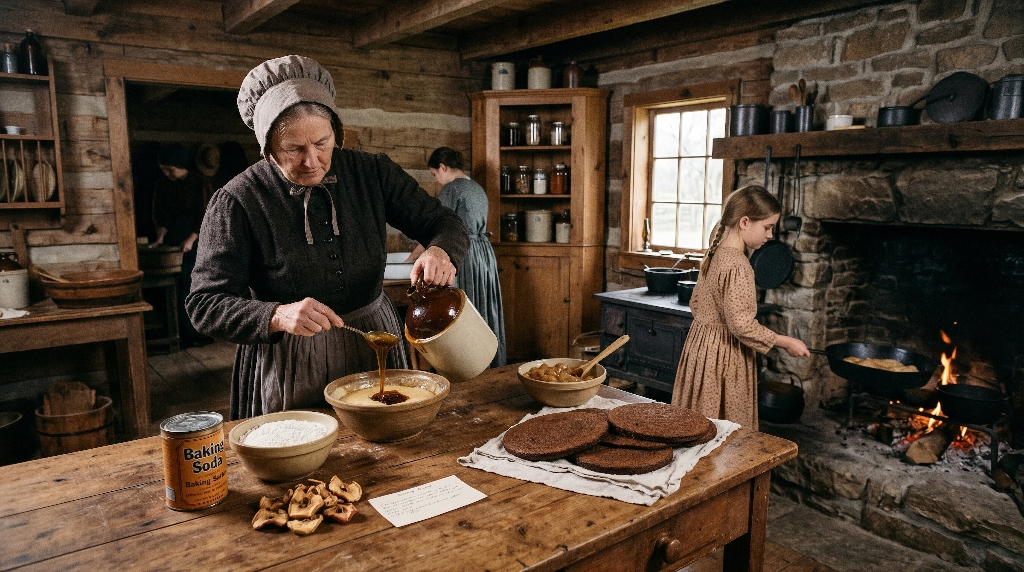
When those jugs of dark, glossy syrup finally made it into the farmhouse pantry, mountain cooks had to figure out how to bake and cook with them. Anyone who has spent time in a professional kitchen knows you cannot simply swap liquid sorghum cup-for-cup for dry white sugar without adjusting the rest of your recipe. Appalachian cooks learned the food chemistry of sorghum through daily trial and error, creating dishes that remain classics of Southern cuisine.
First, pure sorghum syrup adds a significant amount of moisture to batters and doughs, meaning cooks had to cut back slightly on milk or water when baking cakes and breads. Second, sorghum is naturally acidic. Mountain cooks discovered that mixing sorghum with baking soda caused an immediate chemical reaction that produced carbon dioxide bubbles, helping biscuits, gingerbread, and quick breads rise high and tender even without expensive cream of tartar or yeast. Third, because sorghum caramelizes at a lower temperature than white sugar, cooks learned to bake sorghum treats in a slightly cooler oven so the outside would not char before the center cooked through.
Out of these practical kitchen adjustments came some of Appalachia’s finest heritage foods. Take the famous Appalachian stack cake, a beloved wedding and holiday dessert that thrived during the sugar-starved war years. Instead of baking one tall, rich sponge cake loaded with expensive butter and white sugar, mountain women baked six to ten thin, spiced layers sweetened with sorghum, looking much like thick molasses pancakes. Between each warm layer, they spread a thick filling of stewed dried apples sweetened with a splash of sorghum syrup. As the cake sat overnight, the layers soaked up the apple moisture and turned into a rich, tender, sliceable masterpiece.
Sorghum also rescued daily breakfast and supper tables. Cooks stirred it into hot cornmeal mush, drizzled it over flaky buttermilk biscuits, glazed cured country hams, and baked thick gingerbread and blackberry cobblers. Even the morning cup of coffee relied on the harvest from local sorghum mills. With real coffee beans blocked at the ports, mountain families roasted dried sweet potatoes, parched corn, acorns, or okra seeds, brewed them in boiling water, and stirred in a spoonful of sorghum to smooth out the bitter taste. When autumn apples and late berries ripened, cooks boiled them down in thick sorghum syrup to make rich fruit butters and preserves that lasted safely in the cellar until spring.
Common Questions About Civil War Sorghum Mills
Why did sorghum become popular during the Civil War?
Sorghum became wildly popular during the Civil War because the Union naval blockade cut off imported Caribbean sugar, and the fall of New Orleans severed the South’s access to Louisiana sugarcane plantations. Unlike tropical sugarcane, sweet sorghum grew well in cooler northern and mountain climates, matured in a single summer, and allowed Appalachian farmers to produce their own sweetener locally.
What is the difference between sorghum syrup and molasses?
Although many folks in the mountains affectionately call it sorghum molasses, true molasses and sorghum syrup are two different products. True molasses is a dark byproduct left over after boiling sugarcane juice and spinning out the white sugar crystals. Sorghum syrup, by contrast, is made by crushing sweet sorghum stalks and boiling down the entire juice directly into a thick, sweet syrup without removing any sugar.
How many gallons of sorghum juice does it take to make a gallon of syrup?
On average, it takes between eight and ten gallons of raw, freshly pressed sorghum juice to produce one single gallon of finished syrup. The exact ratio depends on summer rainfall, soil quality, and the specific variety of cane, as drier summers produce sweeter juice with less water to boil away.
Did Union soldiers destroy sorghum mills in Appalachia?
In contested border regions like East Tennessee, foraging raids by both Union and Confederate troops posed a constant threat to local sorghum mills. Hungry soldiers frequently confiscated barrels of finished syrup, cornmeal, and draft horses, and rogue guerrilla bands occasionally wrecked farm equipment to deny supplies to the opposing side, forcing many mountain families to hide their syrup jugs in caves, haystacks, or buried pits.
Post-War Legacy: How Mountain Sorghum Mills Survived Into the Modern Era
When the Civil War finally ended in 1865, railroad tracks were rebuilt and white cane sugar slowly returned to Southern general stores. Yet the mountain families who had relied on sorghum mills for four long years did not abandon the craft. For decades after the war, cash remained scarce across rural Appalachia. Growing an acre of cane and paying a neighbor a gallon or two of syrup to boil it cost almost nothing out of pocket, making sorghum the everyday sweetener for working families well into the 20th century.
Whenever hard times returned to the hills, those trusty iron rollers and copper pans stood ready. During the Great Depression of the 1930s, families who could not afford a nickel for store-bought sugar dusted off old family mills and planted cane patches once again. A decade later, during World War II, government rationing strictly limited how much cane sugar American households could buy. Once more, Appalachian sorghum mills fired up their stone furnaces to fill the gap and keep mountain pantries stocked.
Today, while commercial corn syrup and refined sugars dominate supermarket aisles, a dedicated community of artisans, farmers, and living-history museums keeps the tradition alive. Across Southern Appalachia, you can still hear the creak of wooden sweeps and smell woodsmoke curling from working furnaces every autumn. Places like the famous Muddy Pond Sorghum Mill in Tennessee and historic Mabry Mill along the Blue Ridge Parkway draw thousands of visitors each fall to watch traditional sorghum production in action.
Smaller family-run sorghum mills scattered across the Tri-Cities region of East Tennessee, Southwest Virginia, and Western North Carolina still harvest cane by hand, skim copper pans with wooden paddles, and bottle small-batch syrup that tastes just like the batches our ancestors boiled over 160 years ago.
Tasting History in Every Spoonful
The story of how Appalachian sorghum mills carried mountain communities through the Civil War sugar shortages is far more than a dusty footnote in a history book. It is a living example of how resourceful cooks and farmers adapt when the world around them turns upside down. Faced with empty store shelves and harsh winters, our mountain ancestors took an unfamiliar tall grass, engineered community mills out of timber and iron, and mastered the delicate craft of turning raw green juice into liquid gold.
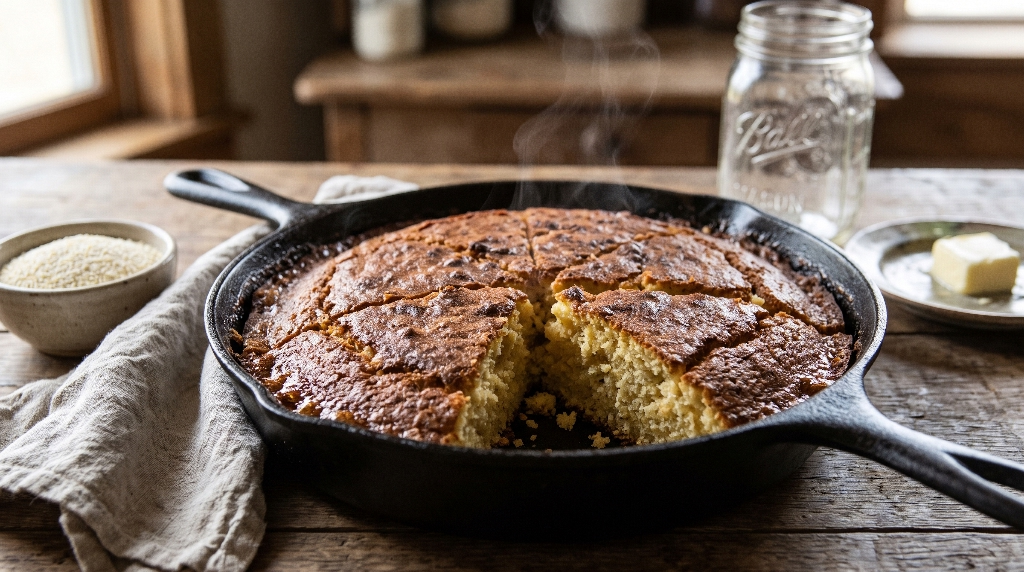
Every time you unscrew a jar of pure Appalachian sorghum today, you are tasting that unbroken chain of mountain ingenuity and hospitality. If you live near East Tennessee or plan to visit the Tri-Cities area this autumn, make a point to track down a local sorghum stir-off or stop by a regional farmers market to pick up a bottle of genuine, locally milled syrup. Bring it into your own kitchen, warm up a pan of cast-iron cornbread or buttermilk biscuits, and pour a generous ribbon of history right over the top.