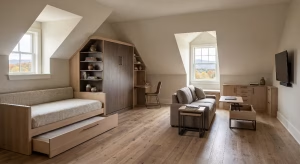
The Technical & Practical Challenge of Craft Flooring
When designing a flex room, sewing studio, or craft room, homeowners often treat the floor as a basic decorative choice. However, if you sew, quilt, or craft with textiles, you quickly learn that standard floors can cause major daily frustration. Fine thread tails wrap tightly around vacuum roller brushes. Lightweight fabric lint drifts into tiny floor cracks. Sharp dropped straight pins hide in soft carpet fibers, creating a safety hazard for bare feet and pets.
Choosing easy-clean flooring is an engineering decision just as much as an interior style choice. You need a surface that resists static electricity, withstands heavy cutting tables, rolls smoothly under desk chairs, and lets you sweep up fabric debris in seconds.
In this guide, we will walk you through the structural and material science behind selecting easy-clean flooring. Whether you are building a new custom home in the Tri-Cities area or remodeling an existing room, this guide will help you select easy-clean flooring that stays neat, looks great, and lasts for years.
The Worst Offenders: Why Carpet & Textured Flooring Fail
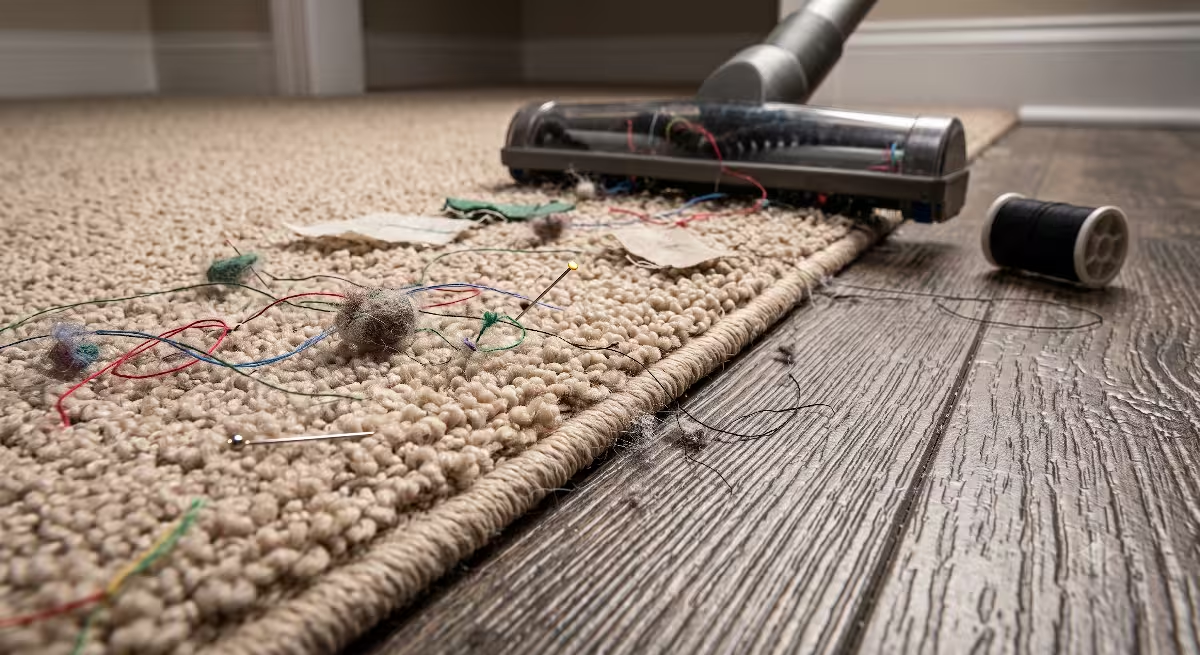
Before we explore the best options, we must understand why standard residential floors struggle with fabric waste. If a floor traps debris, it fails the basic test for easy-clean flooring.
Carpet as a Thread Magnet
Carpet is the single worst choice for any room where sewing or fabric cutting takes place. Woven carpet fibers act like tiny hooks that capture loose threads and lint. When thread lands on carpet, simple sweeping will not move it. Vacuums struggle because thread wraps around the rotating brush roll instead of entering the dust bin.
Even worse, dropped straight pins, needles, and safety pins fall deep into carpet pile. They often lodge vertically in the backing material. This creates a hidden injury risk for anyone walking across the room.
The Danger of Micro-Bevels and Grout Lines
Hard surface floors seem like an obvious fix, but many hard floors have design features that collect dirt. Many modern luxury vinyl planks and laminate products feature micro-beveled edges. These are tiny V-shaped grooves cut into the edges of the planks to make them look like individual wood boards.
In a standard living room, micro-bevels look nice. In a craft room, those grooves act as channels that catch fine fabric dust, thread bits, and lint. Standard brooms sweep material across the floor, only to drop it right into these small grooves. Tile floors present the same issue. Ceramic and porcelain tiles require grout joints. Even narrow grout lines trap fine lint and turn a smooth floor into a surface that is difficult to sweep.
Static Charge and Lint Friction
Static electricity plays a major role in how dirt behaves on your floor. Synthetic flooring materials like low-grade laminates can build up a static charge as you walk across them. Lightweight fabric debris, such as flannel lint, batting dust, and thread ends, carries a neutral or opposite charge.
This static attraction causes fabric dust to stick tightly to the floor surface. Instead of sliding easily across the room into a dustpan, the debris resists the broom. An effective easy-clean flooring surface must minimize static charge so that light debris glides off without sticking.
Top Recommended Easy-Clean Flooring Types for Thread, Lint, and Fabric Debris
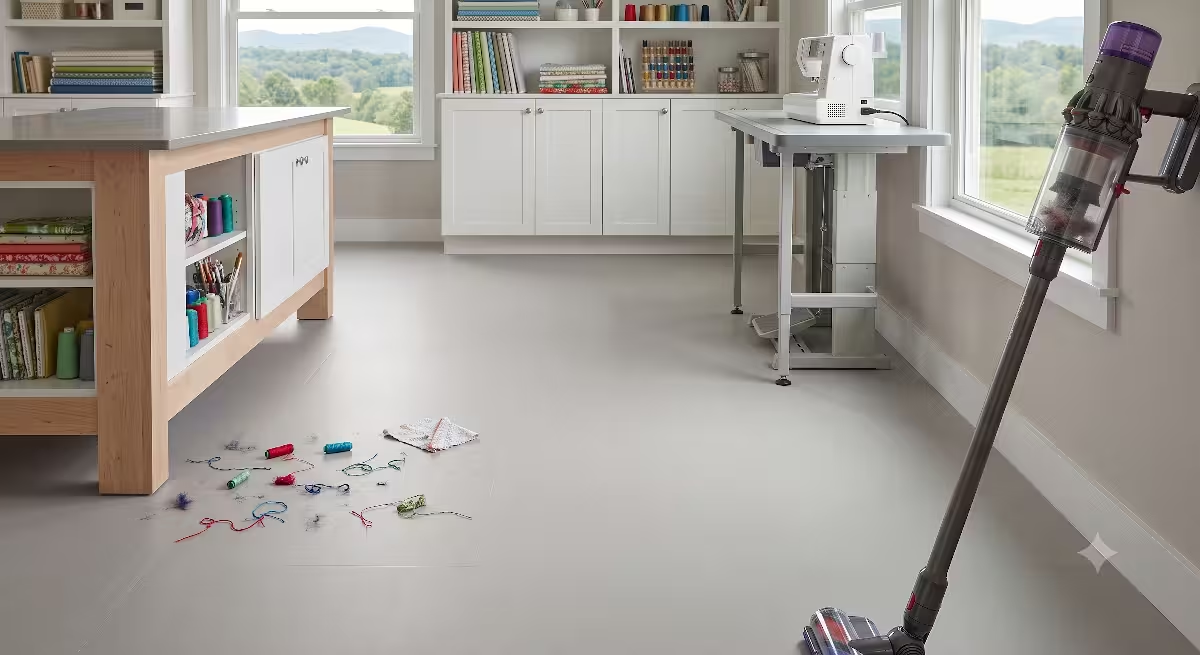
Now let us look at the top performing materials. Each option below offers a smooth surface that resists wear and makes cleanup fast and simple.
1. Square-Edge Luxury Vinyl Plank (LVP)
Square-edge luxury vinyl plank is one of the top choices for easy-clean flooring in modern homes. Unlike bevel-edge planks, square-edge planks meet completely flat at the seams. When installed over a level subfloor, the planks form a smooth, tight surface with zero grooves.
Why It Works: Loose threads slide across square-edge LVP without getting stuck in seams. The smooth surface lets microfiber mops collect thread and lint in a single pass.
Key Specs: Look for LVP with at least a 20-mil commercial wear layer. Ensure the top layer features an anti-static polyurethane finish to prevent lint cling.
Pros: Highly durable, 100% waterproof, comfortable underfoot, and available in many realistic wood finishes.
Cons: Requires a perfectly flat subfloor. Any subfloor bump can cause plank edges to stick up slightly, creating an lip that catches threads.
2. Premium Sheet Vinyl
If you want a floor with zero seams, premium sheet vinyl is an outstanding option. Modern sheet vinyl is far superior to older rolled vinyl from decades past. It features cushioned fiberglass backings and high-definition printed designs.
Why It Works: Sheet vinyl covers the entire room in one continuous piece. Without seams or joints, there is nowhere for fabric debris, thread, or lint to hide. This makes it an exceptional choice for easy-clean flooring.
Key Specs: Choose a solid fiberglass core sheet vinyl with a heavy duty wear layer and a matte or satin finish.
Pros: Completely seamless, easy to sweep, highly water-resistant, and comfortable to stand on for long periods.
Cons: Requires skilled professional installation to trim around doorways and walls cleanly. Sharp falling objects like heavy shears can gouge low quality sheet vinyl.
3. Sealed Hardwood or High-Grade Smooth Laminate
For homeowners who want natural wood throughout their home, sealed hardwood can serve as easy-clean flooring if you choose the right finish and grain profile.
Why It Works: Smooth, factory-sealed hardwood or high-grade smooth laminate allows sweeping without catching thread tails.
Key Specs: Select wood species with a high hardness rating, such as white oak or hard maple. Specify a smooth, flat surface with a satin or semi-gloss polyurethane coating. Avoid hand-scraped or wire-brushed textures.
Pros: Adds high resale value to your home and offers timeless natural beauty.
Cons: Natural wood can dent under heavy equipment or sharp dropping tools. It is also vulnerable to water damage if liquid spills sit on the surface.
4. Polished Concrete with Epoxy or Polyaspartic Coating
Polished concrete is a popular choice for ground-floor spaces, basement studios, and modern custom home designs across East Tennessee.
Why It Works: A polished concrete floor coated with clear epoxy or polyaspartic finish creates an ultra-smooth, non-porous floor. Fabric dust and threads sit directly on top, making sweeping nearly effortless.
Key Specs: Choose a high-solids clear polyaspartic coating with an anti-static additive.
Pros: Virtually indestructible, impervious to sharp pins, easy to sweep, and unaffected by moisture from below.
Cons: Very hard underfoot during long standing sessions. Requires thick anti-fatigue mats near cutting tables and ironing boards.
Key Features to Look For When Selecting Your Easy-Clean Flooring
When shopping for materials, keep these technical details in mind. Evaluating these four factors will ensure you select an authentic easy-clean flooring product that fits your routine.
+-----------------------------------------------------------------------+
|              4 KEY CRITERIA FOR EASY-CLEAN FLOORING                   |
+-----------------------------------------------------------------------+
| 1. EDGE PROFILE       | Square-edge only; avoid micro-bevel grooves.  |
| 2. SURFACE TEXTURE    | Smooth or ultra-low grain; no wire-brushing.  |
| 3. VISUAL CONTRAST    | Light to mid-tone satin; easy pin detection.  |
| 4. STATIC CONTROL     | Polyurethane finish with anti-static agents.  |
+-----------------------------------------------------------------------+
Edge Profile: Square-Edge vs. Micro-Bevel
Always check the edge profile on product samples. Hold two plank samples together under good lighting. Look directly at the seam where the boards touch. If you see a small V-shaped groove, that product has a micro-bevel.
For a craft room, pass on micro-beveled products. Choose square-edge planks that fit together flush. A square edge gives you a continuous flat surface, which is essential for true easy-clean flooring.
Color and Visual Contrast
Floor color affects how easily you spot dropped items. Extremely dark floors, such as dark walnut or black vinyl, show light-colored lint and white thread clearly, but hide dark threads and dropped steel pins. Very pale white floors show dark thread but blend in with white batting and light thread.
The ideal tone for easy-clean flooring is a light-to-mid-tone natural wood look or neutral warm gray. A mid-tone background offers high visual contrast against both light and dark threads. Choose a satin or low-sheen finish rather than high gloss. High gloss finishes reflect overhead lights, creating glare that makes fine needles and thin threads hard to see.
Static Resistance and Surface Coatings
Static electricity causes light fabric fibers to cling to floor surfaces. When evaluating easy-clean flooring samples, ask manufacturers about anti-static treatments in the top coat. Top coatings made with factory-applied polyurethane infused with ceramic micro-beads help reduce static build-up. This allows dry microfiber mops to glide smoothly and pull lint off the floor without resistance.
Underfoot Cushioning and Sound Attenuation
Sewing and crafting often involve standing at cutting tables or ironing boards for hours. A floor that is too hard causes foot, knee, and back fatigue. In addition, motor vibration from sewing machines, sergers, and embroidery equipment can resonate through hard floors and subfloors.
When installing easy-clean flooring like LVP or laminate, select a high-density acoustic underlayment. An underlayment made from dense foam or recycled rubber dampens machine noise and adds shock absorption underfoot, making long crafting sessions far more comfortable.
Material Comparison Matrix
The table below compares five popular flooring materials based on how well they perform for sewing and fabric craft spaces.
| Flooring Material | Ease of Thread Removal | Dropped Pin Visibility | Rolling Chair Resistance | Underfoot Comfort | Moisture & Spill Resistance |
| Square-Edge LVP | Excellent | High (Mid-tones) | Excellent | Good | Excellent |
| Sheet Vinyl | Excellent | High (Mid-tones) | Good | Excellent | Excellent |
| Smooth Hardwood | Good | Moderate | Moderate | Moderate | Fair |
| Polished Concrete | Excellent | High | Excellent | Poor | Excellent |
| Low-Pile Carpet | Poor | Poor | Poor | Good | Poor |
Matrix Analysis
As shown above, square-edge luxury vinyl plank and premium sheet vinyl provide the best overall performance for easy-clean flooring. They balance simple thread removal with durability and moisture resistance. Polished concrete offers top durability but lacks underfoot comfort, while carpet fails across almost every practical category for fabric handling.
Protecting Your Easy-Clean Flooring from Dropped Pins, Shears, and Rolling Chairs
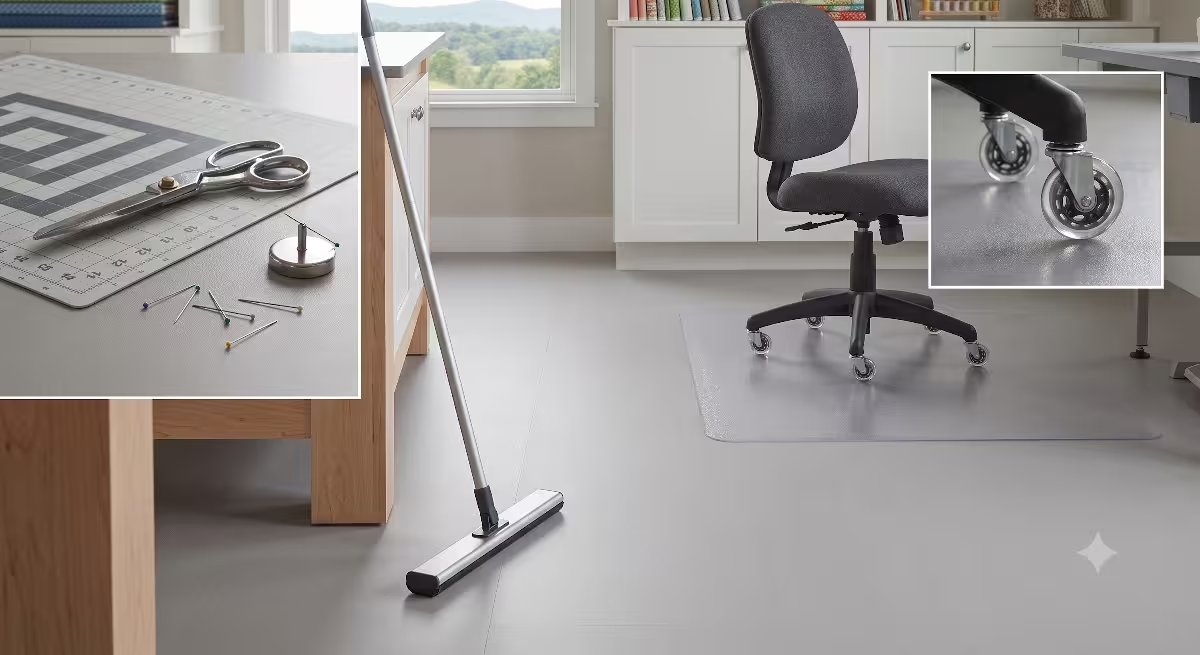
Installing easy-clean flooring is an investment in your home. To keep your new floor looking pristine, you must protect it from the mechanical wear typical of sewing and craft environments.
Understanding the Janka Hardness Scale
If you choose real wood for your easy-clean flooring, pay attention to its Janka hardness rating. The Janka scale measures how resistant a wood species is to denting and wear.
A high rating means the wood withstands pressure better when heavy items drop or rest on it. Soft woods like pine (rated around 380 to 690 on the Janka scale) dent easily under heavy table legs or dropped iron shears. Harder woods like White Oak (rated around 1,360) resist denting much better.
JANKA HARDNESS RATINGS (Higher numbers resist denting better)
+-------------------------------------------------------+
| Eastern White Pine : 380 (Too soft)                   |
| Black Walnut       : 1,010 (Moderate dent risk)       |
| Red Oak            : 1,290 (Good resistance)          |
| White Oak          : 1,360 (Strong performance)       |
| Hard Maple         : 1,450 (Excellent dent resistance)  |
+-------------------------------------------------------+
Wheel Casters and Protective Glides
Desk chairs and mobile utility carts can quickly damage floor coatings if equipped with cheap wheels. Standard hard nylon caster wheels press small grit particles into vinyl plank or hardwood, causing fine scratches over time.
Replace standard chair wheels with soft polyurethane inline-skate style caster wheels. These rubbery wheels distribute weight evenly and roll smoothly across easy-clean flooring without scratching the protective wear layer. For heavy cutting tables, install wide felt glides under the legs to distribute weight and prevent indentations.
Subfloor Preparation is Essential
As an engineer and custom home builder, I always stress the importance of subfloor preparation. Your easy-clean flooring will only perform as well as the subfloor underneath it.
If an OSB or plywood subfloor has uneven joints or high spots, the surface planks will mirror those flaws. Raised plank edges catch thread tails, block rolling chairs, and wear down quickly. Before laying easy-clean flooring, ensure your contractor checks the subfloor flatness. The subfloor should be flat within 3/16 of an inch over a 10-foot span. Use a cementitious self-leveling compound to fill low spots and sand down high joints.
Smart Cleaning Protocols for Fabric & Thread Debris
Even the best easy-clean flooring requires a smart cleaning strategy. Using incorrect tools can drag debris across the floor or damage your equipment. Follow this step-by-step cleaning routine to keep your space spotless.
Tri-Cities Custom Home Builder Insights & Recommendations
Building or remodeling a home in the Tri-Cities area of East Tennessee brings specific regional factors to consider. From Johnson City to Kingsport and Bristol, our local climate affects material choices and home design.
Regional Humidity Swings
East Tennessee experiences significant seasonal shifts in humidity. Summers are warm and humid, while winters bring cold, dry air. Wood framing, subfloors, and natural hardwood expand and contract as humidity levels change.
When installing easy-clean flooring such as floating luxury vinyl plank or engineered hardwood in the Tri-Cities, always allow proper perimeter expansion gaps. Leave a 1/4-inch to 3/8-inch gap along all walls, hidden beneath baseboards and shoe molding. If a floating floor lacks room to move during hot, humid summers, the planks can buckle or peak at the seams. Peaked seams disrupt the flat surface and destroy the benefits of easy-clean flooring.
Designing Flex Spaces for Long-Term Value
When designing a home, we encourage clients to think about long-term flexibility and resale value. While you may use a room as a dedicated sewing or quilting studio today, future buyers might want a home office, nursery, or guest bedroom.
Choosing high-quality square-edge luxury vinyl plank as your easy-clean flooring offers great versatility. It meets all the functional needs of a craft space while providing the warm, inviting look of hardwood that home buyers love. This approach preserves your home’s market value while creating a practical space for your current lifestyle.
Builder’s Checklist for Your Contractor
Before your builder or flooring contractor starts work on your easy-clean flooring project, go over this quick checklist with them:
[ ] Has the subfloor been inspected, sanded, and leveled to within 3/16 inch over 10 feet?
[ ] Are the selected luxury vinyl planks true square-edge, with no micro-bevels?
[ ] Is the wear layer on the vinyl flooring rated at 20-mil or higher?
[ ] Is a high-density acoustic underlayment included to absorb sound and cushion footfalls?
[ ] Have expansion gaps been planned around all walls and doorways?
[ ] Is the selected product backed by an anti-static surface guarantee?
Frequently Asked Questions about Easy-Clean Flooring
What is the best flooring for a sewing and craft room?
The single best choice is square-edge luxury vinyl plank (LVP) with a 20-mil wear layer, followed closely by premium sheet vinyl. Both provide a smooth, water-resistant surface without deep seams or grooves, making them ideal easy-clean flooring for capturing lint, thread, and fabric scraps.
Is carpet bad for spaces with thread, lint, and fabric scraps?
Yes, carpet is the worst option for fabric spaces. Carpet fibers loop around loose thread ends and hold onto lightweight lint. Dropped pins can nestle deep into carpet backing, creating a injury risk for anyone walking barefoot. Carpet fails every basic test for easy-clean flooring.
How do you get tiny threads and lint off floors easily without clogging vacuums?
Use a magnetic pick-up tool first to gather metal pins. Next, sweep the floor with a wide, flat microfiber mop. Collect the gathered piles using a straight-suction vacuum nozzle without a rotating brush roll. This process keeps your easy-clean flooring spotless while preventing thread-tangled vacuum rollers.
Can dropped pins and scissors damage luxury vinyl plank or hardwood floors?
Dropped pins will not damage quality luxury vinyl plank or hard woods like oak or maple. However, heavy iron tailor shears dropped from table height can dent softer woods or chip ceramic tile glaze. High-density LVP with a thick wear layer offers great resistance against dropped tools.
Is tile or hardwood better for rolling chairs and cutting tables?
Hardwood and LVP offer a smoother surface for rolling desk chairs than tile. Tile grout lines create a bumpy surface that jolts chair casters and collects fabric dust. Smooth hardwood or square-edge LVP allows chair wheels to glide easily while providing simple cleaning.
Summary of Recommended Specifications
To build a craft space that is simple to maintain, choose a light-to-mid-tone, square-edge luxury vinyl plank with a 20-mil or thicker wear layer. Pair it with an anti-static polyurethane finish and install it over a flat, level subfloor with dense underlayment.
By selecting true easy-clean flooring, you protect your investment, save time on chores, and create a safe, beautiful environment that lets you focus on the craft projects you love.