People in the Tri-Cities know exactly what it is like to wake up to a “surprise” winter storm. One minute you are cozy with your coffee, and the next, you are staring at a steep, icy driveway that looks more like a bobsled run than a path to the grocery store. Many builders look at a driveways and see more than just pavement; I see a system that needs to work for your family.
Whether you are building your dream home from scratch or looking to upgrade your current place, choosing a heated driveway is about more than just avoiding a shovel. It is about making sure your kids don’t slip on black ice when they run to the bus, and making sure you never have to worry about a heavy snow blower again. We want to walk you through the costs, the tech, and the “why” behind this investment with the same care I’d give a neighbor over the fence.
Breaking Down the Cost to Install a Heated Driveway System
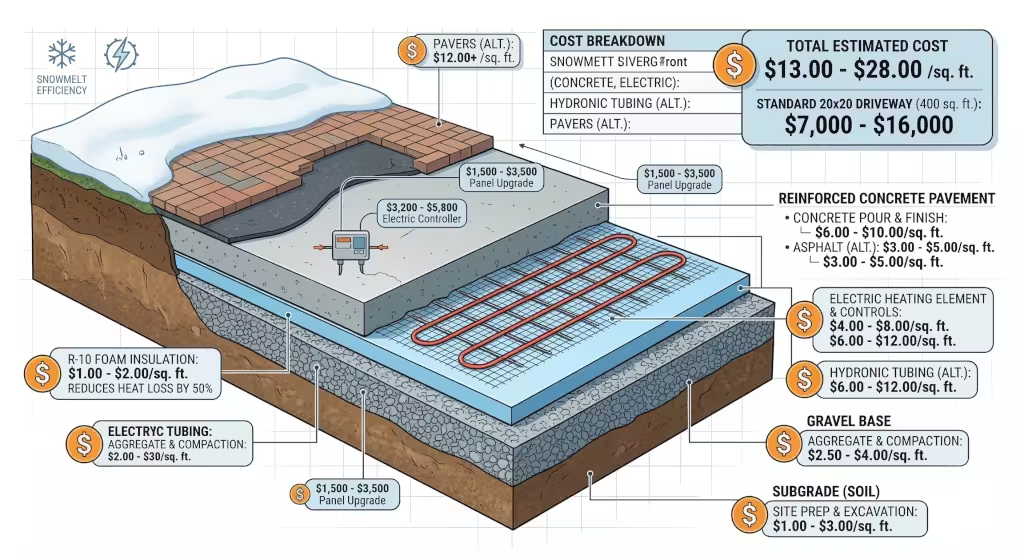
When we talk about the cost to install a heated driveway system, we are looking at a project that has several layers. In our corner of Tennessee, from the rolling hills of Sullivan County to the more urban lots in Johnson City, the prices can shift based on your specific land, but the national averages for 2026 give us a very solid starting point.
The total cost generally ranges from $12 to $28 per square foot. If you are looking at a standard 20×20 driveway, which is about 400 square feet, your total investment for a fully heated driveway will likely land between $7,000 and $16,000.
To help you plan your budget with precision, we find it helpful to look at these costs in three distinct “buckets”: the heating equipment, the driveway surface, and the labor.
1. The Heating Equipment and Materials ($4 to $15 per sq. ft.)
This is the “engine” of your heated driveway. Whether you choose electric or hydronic, you are paying for the technology that creates the heat.
Electric Components: This includes the heating cables or mesh mats. In 2026, the heating elements alone for a heated driveway typically cost between $3,200 and $5,800.
Hydronic Components: Since this system uses liquid, you are paying for PEX tubing and a dedicated boiler. The boiler is a significant expense, often costing between $3,200 and $9,000 depending on its efficiency rating.
Insulation: I cannot stress this enough—you need R-10 foam insulation installed under your heating elements. This costs an extra $1 to $2 per square foot, but without it, you will lose about 50% of your heat into the frozen ground.
2. The Driveway Surface Material ($3 to $15 per sq. ft.)
Since you are installing a heated driveway, you have to factor in the cost of the “lid” that goes over the heating system.
Asphalt: This is the most budget-friendly choice in the Tri-Cities. For a heated driveway, asphalt costs about $12 to $27 per square foot (including the heating system). It’s flexible, which is great for our East Tennessee freeze-thaw cycles
Concrete: This is the middle ground. A heated driveway with a concrete finish costs between $13 and $28 per square foot. It’s durable and looks very clean, but it can crack if the soil underneath shifts.
Pavers: If you want the “wow” factor for a custom home in a neighborhood like The Ridges, pavers are beautiful but pricey. A heated driveway using pavers can jump to $20–$50 per square foot because of the intensive labor required to lay each stone by hand over the heating mesh.
3. Labor and Specialized Trade Fees
In the building industry, we call this the “soft cost,” but the work is very “hard.”
Electrical Labor: You will need a licensed electrician to wire your heated driveway into your home’s power grid. If your current electrical panel is full, upgrading to a 400-amp panel to support the heated driveway can cost between $2,000 and $4,000.
Excavation and Site Prep: If we have to remove an old driveway first, that adds $1 to $3 per square foot to your cost to install a heated driveway system.
Drainage Engineering: Because a heated driveway creates a lot of water very quickly as snow melts, you may need a new drainage trench or a French drain. This can add $1,000 to $4,000 to the total bill, but it’s vital to keep that water from flooding your garage or freezing into a “moat” at the end of your drive.
The “Tire Track” Savings Tip
If the total cost to install a heated driveway system feels a bit high for your budget, there is a smart engineering trick we often use. Instead of heating the whole 20-foot width, we only install the heated driveway elements in two 24-inch wide strips where your tires go. This “tire track” method can cut your equipment and operating costs by more than 50%, often bringing the project total down to under $5,000.
New Construction vs. Retrofit: Which is Better?
In the world of home building, timing is everything. The best time to think about a heated driveway is before the first shovel hits the dirt. However, we also know that life doesn’t always work that way. Sometimes you buy a home and realize after one Bristol winter that the driveway is just too steep to handle manually.
Let’s look at the two paths you can take: building fresh or adding on.
New Construction: The Gold Standard
When you are building a new custom home, adding a heated driveway is what we call a “clean” install. This is the ideal scenario for a few reasons:
Lower Incremental Cost: Since you are already paying for the excavation, the gravel base, and the final surface (like concrete or asphalt), you are only adding the cost of the heating elements and the labor to lay them.
Perfect Engineering: We can design the drainage from day one. When a heated driveway melts snow, that water has to go somewhere. In a new build, we can install specialized trench drains to make sure that water doesn’t just run off and freeze into a sheet of ice on the sidewalk.
Insulation Efficiency: This is a big one. In a new build, we lay down solid foam insulation underneath the heating cables. This acts like a thermal blanket, forcing all the heat upward toward the snow rather than letting it wastefully soak into the cold Tennessee soil.
Retrofitting: Teaching an Old Driveway New Tricks
If you already have a finished driveway, you don’t necessarily have to tear the whole thing out to get a heated driveway. We have some clever ways to retrofit, though it requires a bit more “surgery.”
The Saw-Cut Method (Best for Concrete)
For existing concrete, we use a specialized industrial saw to cut thin grooves, usually about 1.5 inches deep, directly into your driveway. We then tuck the heated driveway cables into these grooves and seal them with a heavy-duty epoxy.
The Look: You will see the lines where the cuts were made, but many homeowners find this a small price to pay for a clear path.
The Cost: This is often cheaper than a full replacement, especially if you only heat “tire tracks.”
The Overlay Method (Best for Asphalt)
If you have an asphalt driveway that is in good shape, we can sometimes lay the heated driveway mats directly on top of your old surface and then pour a fresh “top coat” of asphalt over it. This gives you a brand-new looking driveway and a heating system all at once.
Which Is Better for You?
To help you decide, I’ve put together this quick comparison based on what I see most often here in the Tri-Cities.
| Feature | New Construction | Retrofit (Saw-Cut/Overlay) |
| Upfront Cost | $12–$28 per sq. ft. (Total) | $7–$17 per sq. ft. (Heating only) |
| Visual Appeal | Seamless & Hidden | Visible seams or slightly raised |
| Efficiency | Very High (includes insulation) | Moderate (harder to insulate) |
| Best For | New builds or total replacements | Adding heat to a solid, existing drive |
Tri-Cities Home Tip: If your current driveway has major cracks or “alligatoring” (where the asphalt looks like scales), do not attempt a retrofit. The ground underneath is likely shifting, and that movement could eventually snap your heated driveway cables. In that case, a full replacement is the only precise way to go.
The Decision Factor: Longevity
A heated driveway installed during new construction typically lasts as long as the driveway itself—30 to 50 years for concrete. A retrofit’s lifespan depends heavily on the health of your existing slab. As your home building expert, I always lean toward the “do it once, do it right” philosophy of new construction, but a well-executed retrofit is a fantastic way to upgrade your safety without a total demolition.
System Types: Hydronic vs. Electric
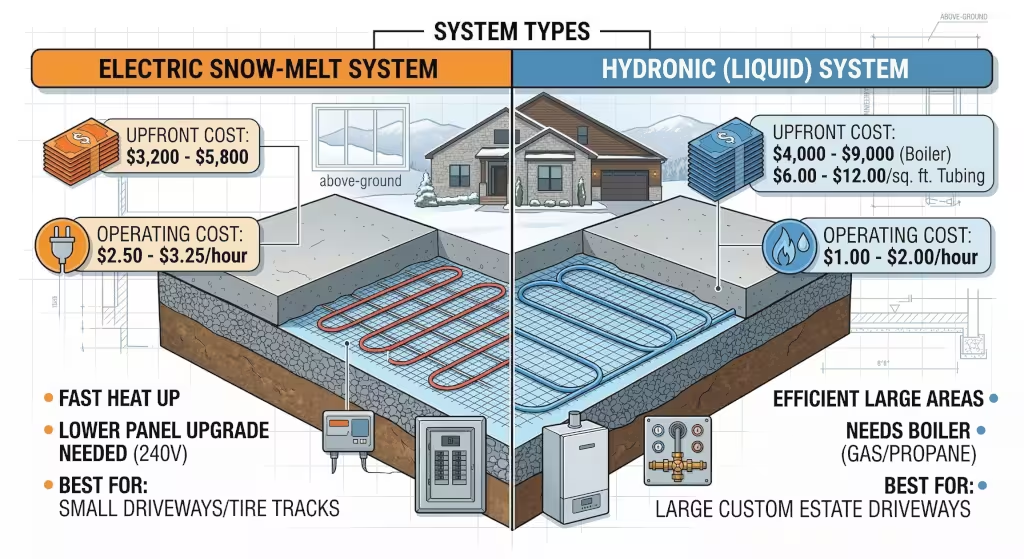
This is where my engineering background gets excited! There are two main ways to keep your driveway warm.
Electric Systems
Electric systems use a heated driveway mat or cable that looks a bit like a giant heating pad for your car.
The Good: They are cheaper to buy at first. The parts usually cost between $3,200 and $5,800. They also heat up very fast.
The Bad: Electricity can be pricey. If you have a huge driveway, your monthly bill might jump more than you’d like.
Hydronic Systems
Hydronic systems use a mix of water and antifreeze (called glycol) that flows through tubes.
The Good: They are very cheap to run. They use a boiler, which can run on natural gas or propane.
The Bad: They cost a lot to install—usually 30% to 50% more than electric. You also need a place to put a big boiler, usually in your garage or a basement room.
Key Factors Influencing Your Estimate
Every home in the Tri-Cities is different. Here is what changes the price:
Driveway Material: Asphalt is usually the cheapest to heat ($12–$25 per sq. ft.). Concrete is in the middle ($15–$30). Pavers—those beautiful stones—are the most expensive ($20–$50) because they take so much hand-work to lay down.
Smart Sensors: I always recommend an automated system. It has a sensor that “feels” when it is snowing. It turns the heated driveway on for you. This adds about $600 to $2,500 to the job, but it saves you from having to remember to flip a switch at 3:00 AM.
Your Electric Box: A big electric heated driveway needs a lot of power. You might need a professional electrician to upgrade your home’s main panel, which can cost $1,500 to $3,500.
Operating Costs: What Happens When the Snow Starts?
One question buyers from folks in Johnson City and Kingsport often wonder is, “Will this system make my electric bill skyrocket?” It is a fair concern. As an engineer, I like to look at the numbers before I make a decision. In our part of Tennessee, we have a bit of an advantage because our electricity rates are lower than the national average.
When the snow starts falling over Holston Mountain and makes its way to your front door, your heated driveway system springs into action. But how much does that actually cost per hour?
As of early 2026, residential electricity in the Tri-Cities is around 12 to 13 cents per kilowatt-hour (kWh). When you compare that to the 20 or 30 cents people pay up north, you can see why a heated driveway is becoming more popular here.
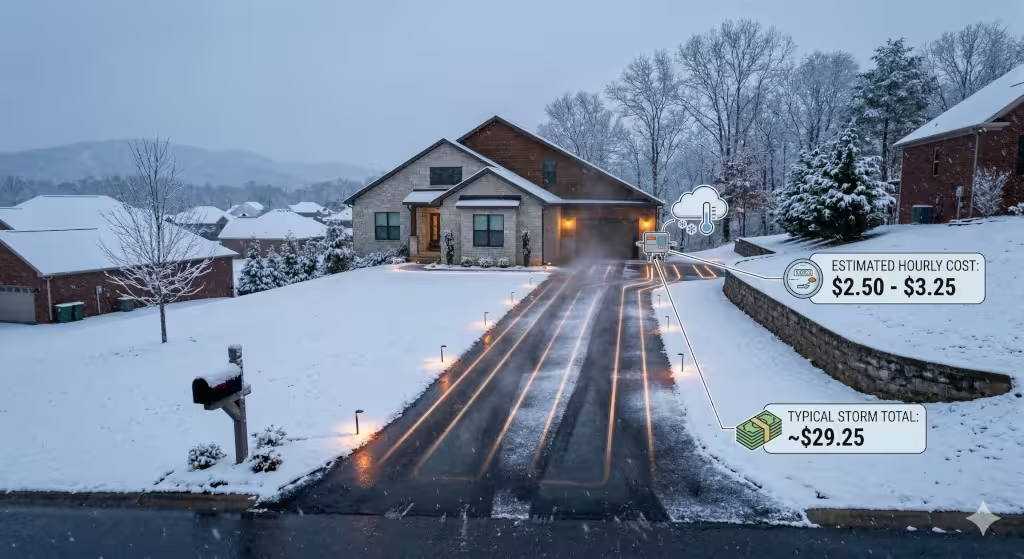
For a standard two-car driveway (about 400 square feet), an electric system uses roughly 20 kilowatts of power to keep the surface warm enough to melt snow. At our local rates, that costs about $2.50 to $3.25 per hour to run.
The Cost of a “Typical” Storm
In the Tri-Cities, we usually don’t get 12-hour blizzards. A typical snow event might last about six hours.
The Melting Phase: 6 hours x $3.25 = $19.50
The Drying Phase: Most smart systems stay on for about 2 to 3 hours after the snow stops to evaporate the water. This prevents “black ice” from forming. 3 hours x $3.25 = $9.75
Total for the Storm: Roughly $29.25
When you think about the fact that hiring a plow service can cost $75 to $150 per visit—and they often show up hours late—spending thirty dollars to have a clear, dry driveway the moment you need to leave for work is a pretty good deal.
Seasonal Totals
On average, the Tri-Cities gets about 6 to 9 inches of snow a year. Some years it is more, and some years we just get a lot of ice. Most homeowners in our area find that they spend between $150 and $400 per winter to operate their heated driveway.
How to Keep Costs Down
If you are worried about the monthly bill, there are two “precise” ways to save:
The Tire-Track Option: By only heating the two strips where your wheels go, you cut your power usage by 60% or more. Your hourly cost drops from $3.25 down to about $1.25.
Smart Sensors: Never use a manual “on/off” switch. You will eventually forget to turn it off, and you’ll be heating the neighborhood for three days straight. An automated sensor only runs the heated driveway when it detects both moisture and freezing temperatures.
Hydronic Operating Costs
If you choose a hydronic (liquid-based) system, your operating costs are even lower. Because these systems often run on natural gas or propane to heat the water, they cost about 30% to 50% less to run than electric. However, remember that the “cost to install” is much higher, so it usually only makes sense if you have a massive driveway or are already using a boiler for your home’s indoor heat.
Common Homeowner Concerns about Heated Driveways
Are heated driveways worth the money? Yes, especially if you plan to stay in your home. They save your back, they save your time, and they protect your pavement from the salt that eats away at concrete.
Do they work in the deep cold? Absolutely. A good heated driveway can melt about two inches of snow every single hour. Even in a big storm, your path stays clear.
Will it increase my home’s value?
In high-end neighborhoods in Bristol or Kingsport, a heated driveway is a huge selling point. Buyers love the “wow” factor and the safety it provides.
The Tri-Cities Advantage: Beyond the Shovel
In our area, we deal with the “freeze-thaw” cycle. That means snow melts during the day and turns into a sheet of ice at night. This is what causes potholes and cracks. A heated driveway stops this cycle because it dries the pavement as it melts the snow.
Also, as a dog lover, I have to mention pet safety. Rock salt can burn a dog’s paws and is toxic if they lick it. With a heated driveway, you don’t need salt. Your pets stay safe, and your lawn stays green because salt isn’t washing off into the grass.
Conclusion: Engineering Your Perfect Entryway
Investing in a heated driveway is a smart, precise way to take care of your home and your family. It is about making sure that no matter what the Tennessee weather does, your home is ready.
Choosing the right system now means decades of winter peace. You won’t just be buying a luxury; you’ll be buying time back into your life.