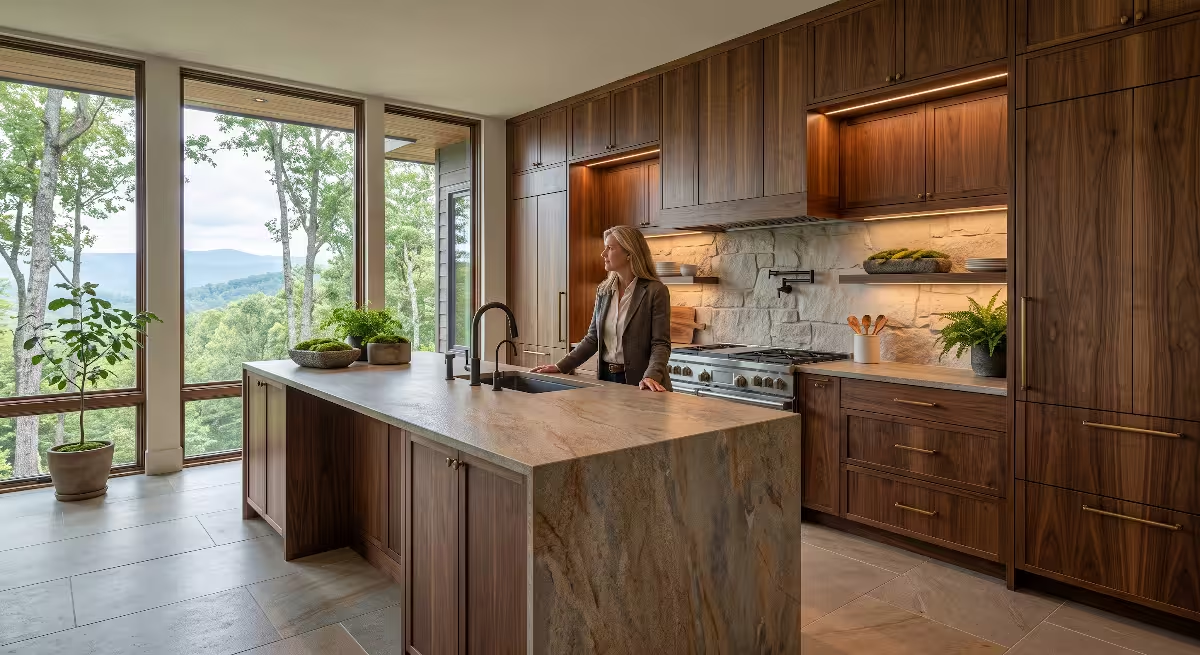


Lighting the Way Home: A Guide to Kitchen Safety and Clarity
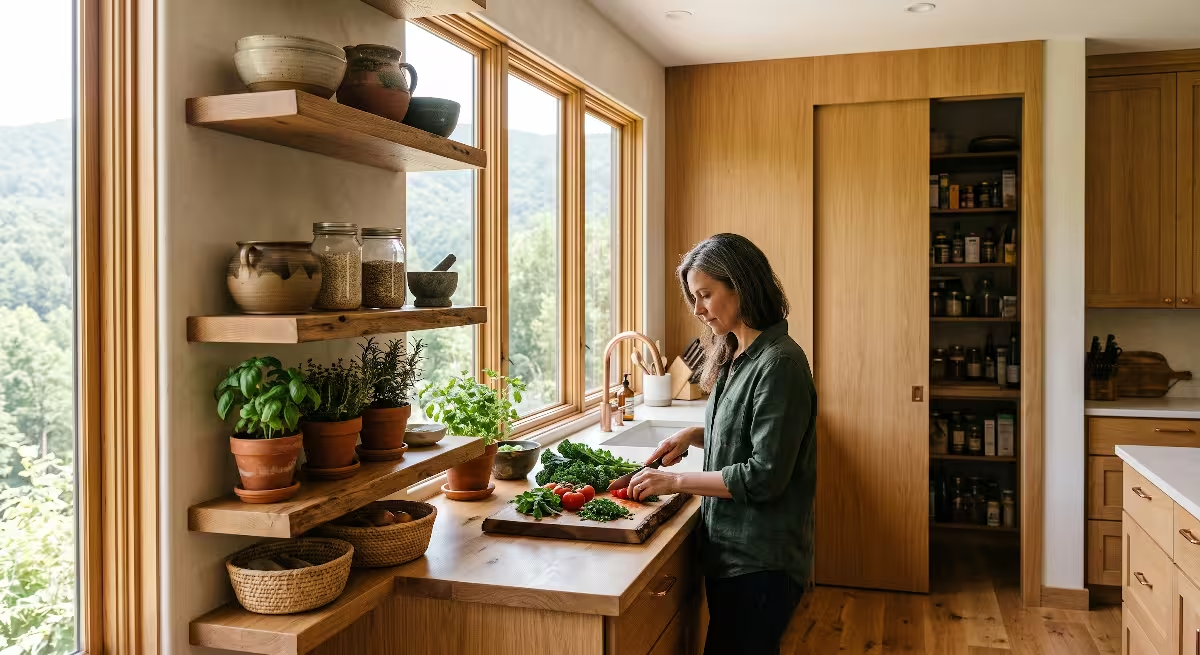
Imagine you are Martha sitting in a sun-drenched kitchen in Kingsport. She had lived in her home for thirty years. She knew every creak in the floorboards and every notch in the door frame. But that day, she was hesitant. She was trying to bake her famous sourdough bread, but she kept squinting at the measuring cup. She felt like the kitchen it was shrinking, or like a fog had rolled in over the counters. It was not the house that was changing, but her eyes. It was at this point that Martha realized that a beautiful kitchen is useless if you cannot see well enough to use it safely as you get older and/or lose your vision.
When we talk about how to increase kitchen lighting for low vision, we are talking about more than just buying brighter bulbs. We are talking about giving someone their independence back. Our goal with this article is to help you move from just having a bright room to having a smart room. We want to eliminate shadows that hide sharp knives. We want to make sure you can tell the difference between a salt shaker and a pepper shaker. Whether you are living in a classic ranch house in Kingsport or a new custom build in Johnson City, the right kitchen lighting can change your life.
In the Tri-Cities area, we have a mix of older homes with small windows and new homes with high ceilings. Both types of homes need a specific plan to make sure every corner is safe and bright.
The Technical Details of Light
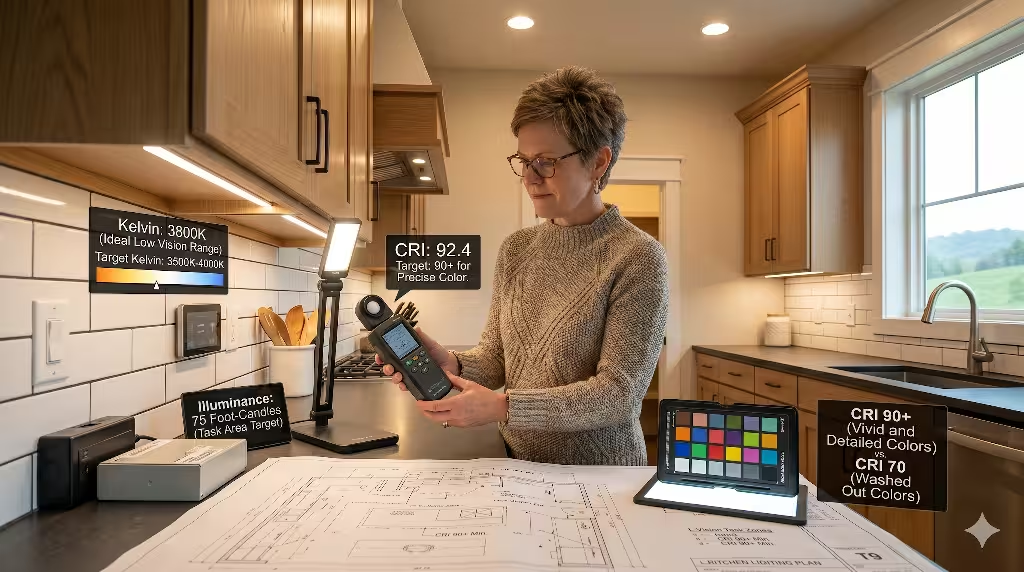
Before we pick out pretty fixtures, we have to look at the science of light. Think of this like the foundation of a house. If the foundation is weak, the rest of the building will struggle. There are three main things you need to know about kitchen lighting when you are dealing with low vision. These are CRI, Lumens, and Kelvin.
CRI stands for Color Rendering Index. Think of this like a box of crayons. If you have a small box of crayons, you only have a few colors. If you have a big box, you have every shade imaginable. A light with a high CRI, which is 90 or above, shows colors as they really are. This is very important in a kitchen. You need to be able to see if meat is fully cooked or if a vegetable is starting to spoil. High CRI kitchen lighting makes everything look vivid and clear instead of gray or washed out.
Next, we have Lumens. In the old days, we bought bulbs based on Watts. But Watts only tell you how much power a bulb uses. Lumens tell you how much light it actually puts out. For low vision, we need a high number of Lumens. You want your work areas to be very bright. It is like turning up the volume on a radio so you can hear every note.
Finally, there is Kelvin. This measures the color of the light. Lower numbers, like 2700K, are warm and yellowish like a candle. Higher numbers, like 5000K, are cool and bluish like a sunny day. For low vision, the best kitchen lighting is usually in the middle, around 3500K to 4000K. This provides a crisp, clean light that helps you see details without being too harsh on your eyes. It mimics the natural light we get here in the Tennessee mountains on a clear afternoon.
The Layered Lighting Strategy
One big light in the middle of the ceiling is never enough. It creates shadows. When you stand at the counter to chop onions, your body blocks the light from the ceiling. This puts your hands in the dark. To fix this, we use a layered approach to kitchen lighting.
The first layer is ambient lighting. This is your base layer. Think of it like a soft blanket of light that covers the whole room. In many Tri-Cities homes, we achieve this by installing recessed LED cans in the ceiling. These are tucked away so they do not create clutter, but they provide a steady glow. They help you move around the room without bumping into the kitchen island or the table.
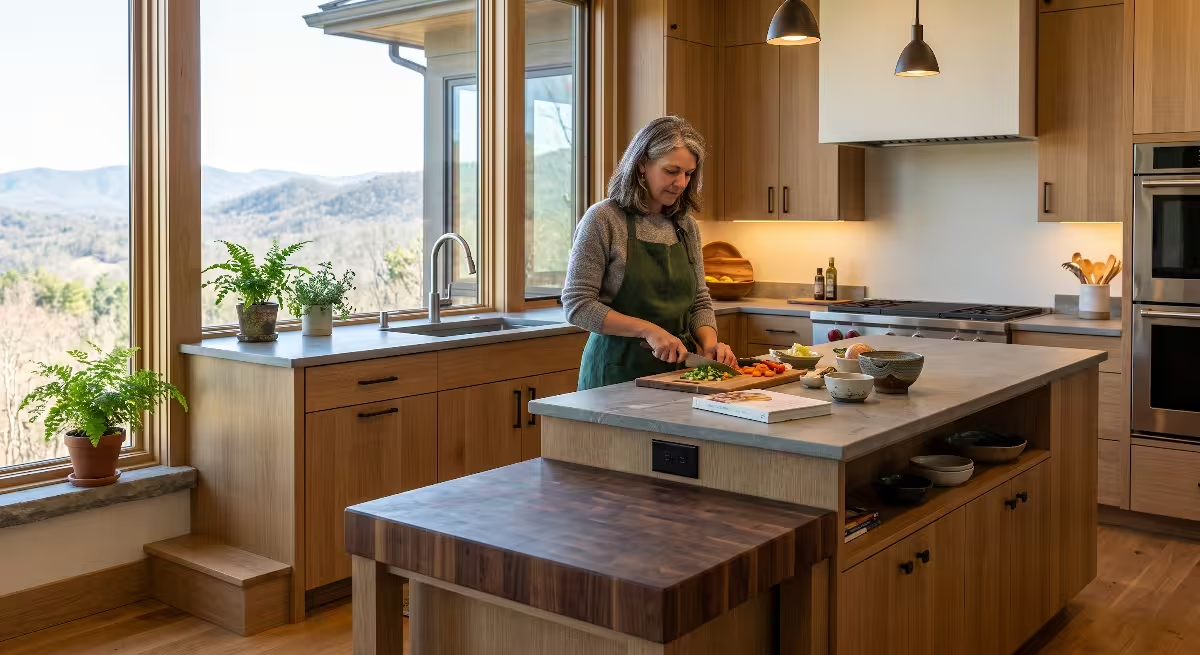
The second layer is task lighting. This is the most important part for someone with low vision. This is the “spotlight” that goes exactly where you are working. The best place for this is under the cabinets. We use LED tape lights that run along the bottom of the upper cabinets. This floods the countertop with light. It removes the shadows and makes it easy to read recipes or see the markings on a measuring cup. Good kitchen lighting in these work zones is a game changer for safety.
The third layer is accent lighting. This might sound like it is just for looks, but it serves a major purpose. We often install lights in the toe-kick area. This is the space between the bottom of your lower cabinets and the floor. By putting a soft strip of light there, we illuminate the floor path. This is wonderful for late-night trips to the kitchen for a glass of water. It helps prevent trips and falls by showing exactly where the cabinets end and the floor begins.
Eliminating Glare and Enhancing Contrast
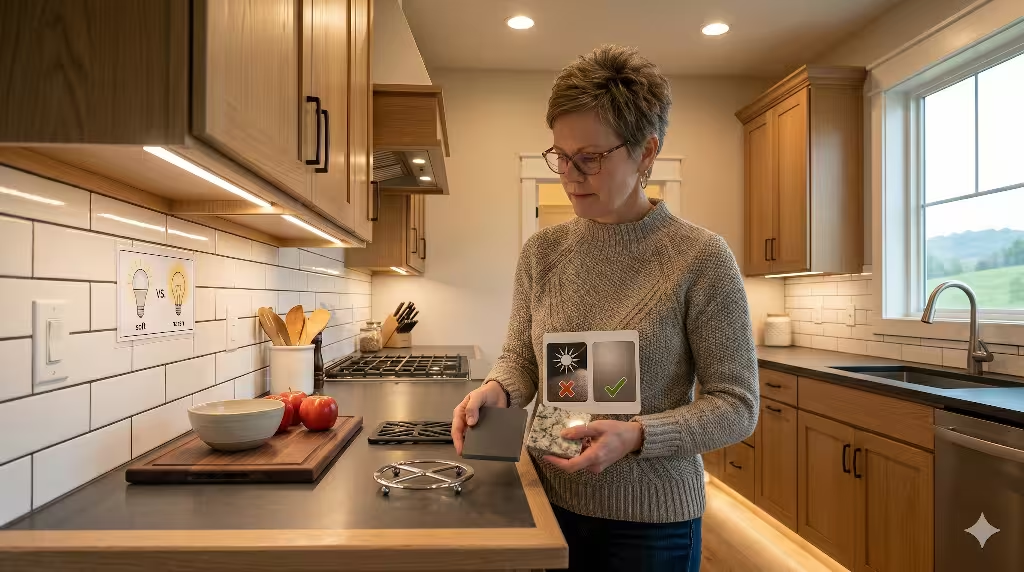
When we increase kitchen lighting, we have to be careful about glare. Glare is what happens when light bounces off a shiny surface and hits your eyes. It can be very painful and confusing for someone with low vision.
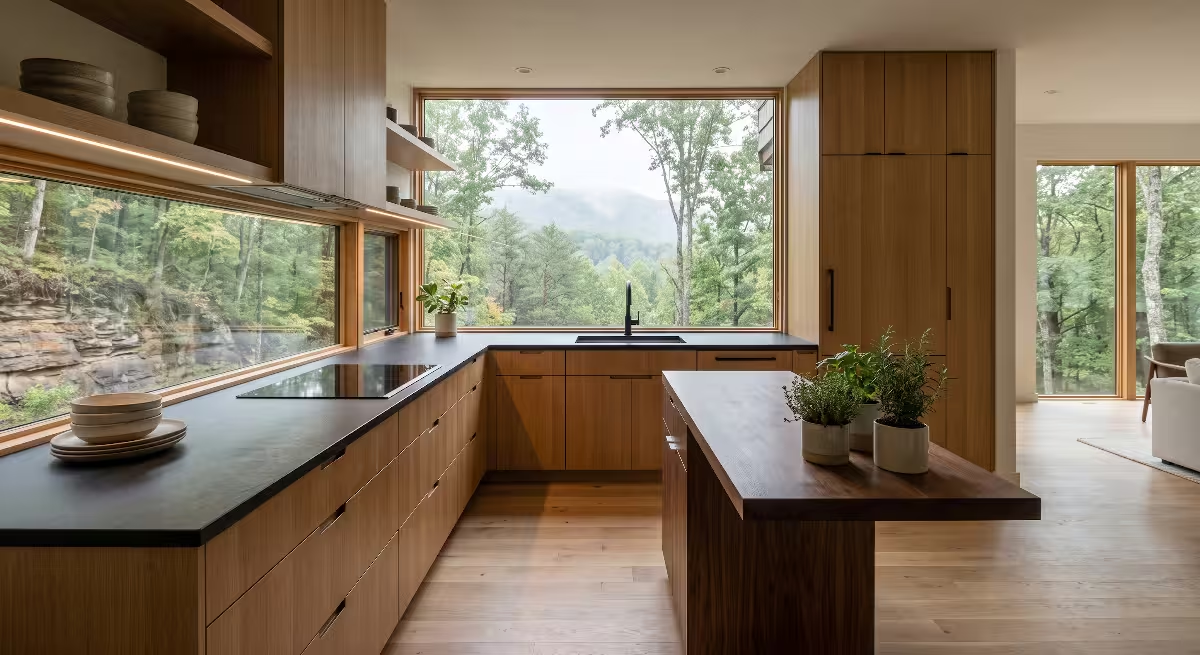
If you are planning a remodel, we always suggest matte finishes. Instead of shiny granite or high-gloss cabinets, go with honed stone or matte paint. These surfaces soak up the light instead of bouncing it back at you. If you already have shiny counters, you can use frosted covers on your kitchen lighting fixtures. These covers, called diffusers, soften the light so it spreads out evenly.
Contrast is another tool we use. If you have white plates on a white countertop, they are hard to see. If we use kitchen lighting to highlight the edges of the counters, or if we use a dark backsplash against a light counter, the shapes become much clearer. Lighting can be used to create these visual “cues.” For example, a bright light shining directly on the sink makes the sink stand out from the rest of the counter.
Smart Technology and Modern Controls
We live in an amazing time for home building. Technology has made it much easier to manage kitchen lighting. For someone with low vision, fumbling for a small switch on the wall can be hard.
Voice-activated systems are a great solution. You can walk into the room and simply say, “Turn on the kitchen lights.” This is not just a fancy trick. It is a safety feature. It ensures you never have to walk into a dark room.
Motion sensors are another favorite of many buyers. Buyers like to install these in pantries and large cabinets. When you open the door, the kitchen lighting inside the cabinet turns on automatically. No more digging around in the dark for a can of soup.
We also recommend using dimmers. Our eyes change throughout the day. In the morning, you might want very bright light to wake up. In the evening, your eyes might be tired and sensitive. Dimmable kitchen lighting lets you adjust the levels to what feels most comfortable for you at that exact moment. It gives you total control over your environment.
Addressing Common Questions about Kitchen Lighting with Low Vision
Many people wonder what the best kitchen lighting is for specific eye conditions like macular degeneration. For this condition, you often need much more light than a person with standard vision. However, you are also more sensitive to glare. The key is to use many small lights instead of one big, bright one. This creates a high level of brightness without the harsh “hot spots” that can cause discomfort.
Another common question is about how many lumens are needed. For a standard kitchen, we usually want about 30 to 40 foot-candles on the floor. But for task areas where you are using knives or heat, you might want 100 foot-candles. A foot-candle is just a way to measure how much light falls on a specific spot. By focusing your kitchen lighting on the stove and the prep counters, you make those areas much safer.
People also wonder about the color of the light. As we age, the lenses in our eyes can turn a bit yellow. This makes warm, yellow light look even more yellow. Switching to a cooler, whiter kitchen lighting can help counteract this. It makes the room look cleaner and helps you see colors more accurately.
If you cannot afford a full remodel, there are still ways to help. You can buy battery-operated LED puck lights. These stick under your cabinets with a simple adhesive. They are an easy way to add task kitchen lighting without having to hire an electrician. They are a great first step to seeing if more light helps your daily routine.
The Human Touch: Function Meets Form
It cannot be overstated that the small details matter. We want our homes to feel warm and welcoming, not like a hospital room.
Good kitchen lighting should make your kitchen look beautiful. It should highlight your favorite things. Maybe you have a set of colorful plates or a nice tile backsplash. By using hidden LED strips, we can make those features pop while still providing the safety you need.
We also need to think about the pantry. In many homes, the pantry is a dark closet where things go to be forgotten. By adding a simple light, we turn it into an organized workshop. When you can see the labels on your jars, you feel more in control. It reduces the stress of cooking. Kitchen lighting is really about making the heart of the home a place where you feel confident and happy.
Practical Steps for Your Tri-Cities Home
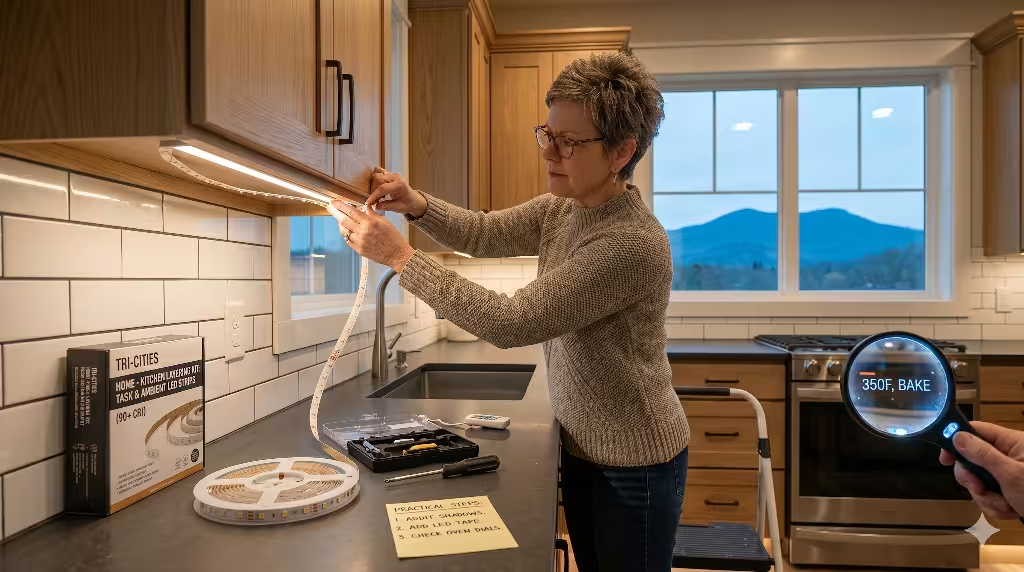
If you live in Johnson City or the surrounding area, you know we have some beautiful natural scenery. We want to bring that same feeling of clarity inside. Start by looking at your current kitchen during different times of the day. Notice where the dark spots are.
Ask yourself if you can see the numbers on your oven dial. Can you see the edge of the knife when you are cutting bread? If the answer is no, it is time to look at your kitchen lighting. You do not have to do everything at once. Start with one area, like the counter where you do most of your work.
Hire a professional who understands low vision needs. A good electrician or builder can help you pick the right bulbs and fixtures. They can make sure the wiring is safe and that the switches are in places that are easy to reach. Remember, we want the kitchen lighting to work for you, not the other way around.
Creating a Clear Path Forward
Building a home or a kitchen is a big job. It takes precision and care. When we design for low vision, we are being precise about safety. We are making sure that the home is a place of comfort, not a place of worry.
Proper kitchen lighting is one of the best investments you can make. It protects you from accidents. It helps you stay in the home you love for a longer time. It makes every task, from making a cup of coffee to hosting a family dinner, much easier.
In the Tri-Cities, we value our neighbors and our families. We want our elders to be safe and our homes to be strong. By focusing on how to increase kitchen lighting for low vision, we are taking care of our community. We are making sure that everyone, regardless of their eyesight, can enjoy the simple pleasure of a home-cooked meal.
Summary of Benefits for Enhanced Lighting
When you take the time to fix your kitchen lighting, you will notice a few things right away. First, you will feel less tired. Squinting all day takes a lot of energy. When the room is bright and clear, your brain does not have to work as hard to figure out what you are looking at.
Second, you will be faster. When you can see where everything is, you do not have to hunt for tools or ingredients. Everything is right there in the light.
Third, you will be safer. Most home accidents happen in the kitchen or the bathroom. Good kitchen lighting is the best way to stop those accidents before they happen. It gives you the confidence to move quickly and use your tools properly.
Designing for the Future
If you are planning to stay in your home a long time, you need to think about what your house will need ten or twenty years from now. Even if your vision is great today, adding high-quality kitchen lighting is a smart move. It adds value to your home. It makes the space more functional for everyone who visits.
We often talk about “universal design.” This is the idea that a home should be usable by everyone, no matter their age or ability. Good kitchen lighting is a perfect example of this. It helps the grandmother who is baking cookies, and it also helps the teenager who is making a late-night snack.
In Johnson City, we see a lot of people moving here to retire. They want homes that are easy to live in. If you are building a new home, talk to your builder about a lighting plan that includes plenty of task and ambient sources. Make kitchen lighting a priority from the very beginning. It is much easier to put the wires in the walls now than it is to go back and fix it later.
Detailed Look at Bulb Replacement
Many people start their journey by just changing bulbs. This is a great first step. When you go to the store in Kingsport or Bristol, look closely at the labels. Do not just grab the cheapest box. Look for the kitchen lighting options that say “High CRI” or “Natural Light.”
If you have old fluorescent tubes under your cabinets, consider replacing them with LED versions. Old fluorescent lights often flicker. You might not notice it at first, but that flicker can make low vision issues much worse. It causes eye strain and headaches. New LED kitchen lighting is steady and bright. It also stays cool to the touch, which is safer if you accidentally bump into it while reaching for a dish.
The shift to LED has changed everything for us as builders. We can now put lights in places we never could before. Because they are so small and thin, we can hide them inside drawers or at the very back of deep cabinets. This kind of detailed kitchen lighting is exactly what someone with low vision needs to stay organized and efficient.
The Importance of Color Contrast Revisited
We want to emphasize contrast one more time. The human eye detects edges through contrast. If you have a dark floor and light-colored cabinets, it is much easier to see where the path is.
If your kitchen is all one color, you can use kitchen lighting to create contrast. For example, if your walls and cabinets are both tan, you can put a very bright light under the cabinets to make the counter look much lighter than the wall. This “washes” the surface in light and creates a clear visual break. This simple trick of kitchen lighting helps your brain map out the room without you even thinking about it.
Creating a Maintenance Plan
Once you have your perfect kitchen lighting set up, you have to keep it that way. LEDs last a long time, but they do eventually dim or fail. Make it a habit to check your lights once a month.
Dust can also be a problem. In a kitchen, grease and dust can coat your light fixtures. This makes the kitchen lighting look dim and yellow. Every few months, give your light covers a gentle wipe with a damp cloth. You will be surprised at how much brighter the room feels just by keeping things clean.
If a bulb goes out, replace it right away. Do not wait. A dark spot in your kitchen lighting plan can lead to a trip or a cut. Keeping your system in top shape is part of being a responsible homeowner and taking care of your health.
Your Home, Your Light
We have covered a lot of ground today. From the technical details of CRI and Lumens to the practical side of motion sensors and matte finishes. The main thing we want you to remember is that you have the power to change your environment.
Kitchen lighting is a tool. Like a hammer or a saw, it is something we use to build a better life. In our beautiful corner of Tennessee, we take pride in our homes. We want them to be places of joy. By focusing on how to increase kitchen lighting for low vision, you are making a choice to live better.
Whether you are doing a small DIY project or a full kitchen remodel, keep the light in mind. It is the most important part of any room.
As we finish up, take a look around your own kitchen. Is it as bright as it could be? Does the kitchen lighting make you feel safe? If not, you know what to do. Start small, plan carefully, and watch how much easier your life becomes when the shadows disappear. Your kitchen is the heart of your home, and it deserves to shine.
Thank you for reading, and we hope your home in the Tri-Cities is always filled with light and warmth.