From the rolling hills of Kingsport to the cozy neighborhoods of Johnson City, there is one thing that connects us all: that thick, red Tennessee clay. If you have ever tried to start a backyard project, you know exactly what we are talking about. It is heavy, it is stubborn, and it can break a shovel (and your spirit) in about ten minutes flat.
But there is a secret for you that can be shared with every homeowner looking to add some life to their property. You do not have to fight the ground to have a beautiful space. In fact, for many of the women who want a manageable, productive, and gorgeous growing area for their families, the answer is a raised bed garden. This approach changes everything. It takes the “work” out of the dirt and lets you focus on the joy of watching things grow.
Whether you are looking to teach your kids where their food comes from or you just want a quiet place to enjoy a cup of coffee among the flowers, starting a raised bed garden is the most precise and rewarding way to bypass our local soil struggles.
In this guide, we are going to walk you through exactly how to pick the right kit for our Zone 7 climate and how to set it up so it lasts as long as the home you live in.
Why Raised Bed Garden Kits are Essential for Zone 7 Clay
Understanding our local soil is the first step to becoming a successful gardener in East Tennessee. Whether we are working on a home project in Johnson City or helping a neighbor in Kingsport, the conversation always turns to the “red dirt.” If you have spent any time trying to plant a rose bush or a row of tomatoes in our area, you know that our ground is not just dirt. It is a dense, heavy clay that acts more like pottery material than garden soil. This is exactly why a raised bed garden is not just a luxury for us; it is a necessity for anyone who wants to grow healthy plants without a constant struggle.
To understand why a raised bed garden works so well, we have to look at what is happening under your feet. Our Zone 7 clay is made of very tiny, flat particles. Think of them like microscopic plates. When it rains in the Tri-Cities, these plates get wet and stick together. There is almost no room for air or water to move between them. In the construction world, we love this because it makes for a very stable base for a foundation. But in the gardening world, it is a nightmare. Plant roots need oxygen just as much as they need water. In our heavy clay, the roots can actually suffocate because the soil stays too wet for too long.
By using a raised bed garden, you are taking control of the environment. You are essentially building a custom home for your plants that sits on top of the native soil. This creates a “perched water table” where the extra water can drain out of the bottom of your kit and move into the clay at its own slow pace. This keeps your plant roots in a zone where they have access to both moisture and air. In a raised bed garden, the soil stays loose and crumbly, which allows roots to spread out and grow deep. Deep roots mean stronger plants that can handle our hot Tennessee summers much better.
Another thing to consider is the “bathtub effect.” This is something we see when people try to “improve” their clay soil by digging a hole and filling it with potting mix. In our region, that hole acts like a bucket. The water goes in, hits the hard clay walls and bottom, and just sits there. The roots of your plants end up sitting in stagnant water, which leads to root rot. A raised bed garden prevents this because the water moves downward through the light soil mix and then spreads out across the surface of the clay under the bed. It never gets trapped in a “hole” because you haven’t dug one.
For the busy women in our community who are balancing careers, family, and home life, the ease of a raised bed garden cannot be overstated. When you use a raised bed garden, you are working at a height that is much more comfortable. You are not bending over as far, and you are not fighting with a heavy tiller every spring. Because the soil in a raised bed garden is not walked on, it stays soft. You can often pull weeds with just two fingers because the ground never gets packed down. It makes the whole experience of gardening feel like a hobby instead of a chore.
Top-Rated Raised Bed Garden Kits for Clay Soil
When you are looking for a raised bed garden kit, you want something that can handle the weight of the soil and the moisture of our climate. Looking at it from a builder’s perspective, we look for “structural integrity.” Here are the three main types of kits I recommend for our Zone 7 area.
Galvanized Metal Kits
Metal has become very popular lately, and for good reason. A galvanized metal raised bed garden is incredibly durable. These kits are usually made from steel coated in a zinc-aluminum alloy that prevents rust. In our humid Tennessee summers, wood can sometimes rot or attract pests, but metal stays strong. Brands like Vego Garden offer modular kits that you can bolt together in different shapes. They have a modern, clean look that fits beautifully with newer home designs in the Tri-Cities.
Cedar and Redwood Kits
If you prefer a more traditional look that matches a classic Kingsport home, cedar is the gold standard. Natural cedar is rot-resistant and doesn’t need to be treated with chemicals. A cedar raised bed garden smells wonderful and ages to a soft gray color over time. When buying a wood kit, make sure the boards are at least an inch thick. Thinner boards can bow under the pressure of the wet soil we get during our rainy seasons.
Composite and Stone Options
For those who want something that will literally last a lifetime, composite kits are the way to go. These are made from a mix of wood fibers and recycled plastic. A composite raised bed garden will never rot, never need staining, and won’t splinter. It is the “set it and forget it” option. They are a bit heavier and more expensive, but from a long-term home value perspective, they are a fantastic investment.
Engineering Your Garden: The No-Dig Setup on Clay
One of the best things about a raised bed garden is that you do not have to be a professional builder to set one up correctly. However, there are a few tips that will make your raised bed garden much more successful. The “no-dig” method is the secret to making this work on our heavy clay.
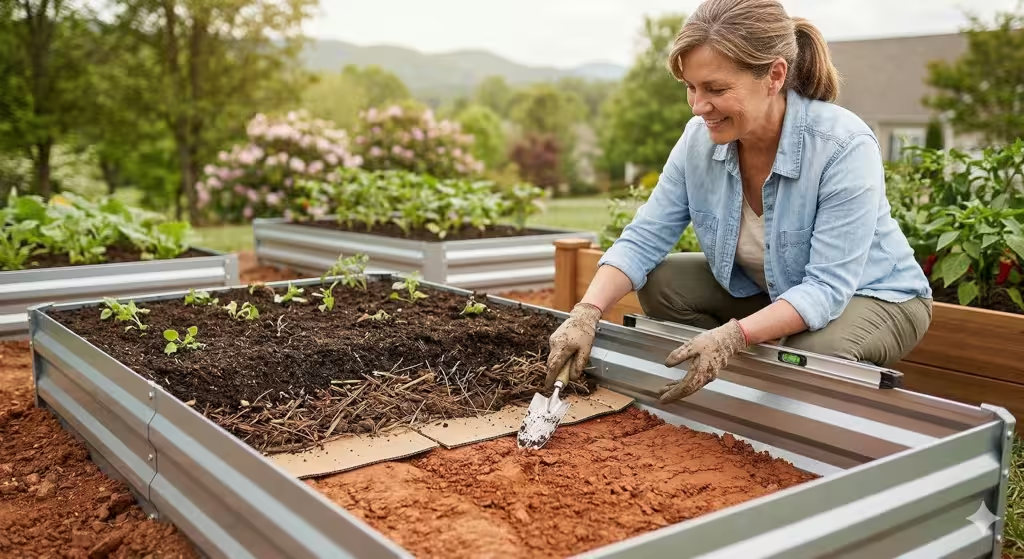
Instead of trying to dig up the grass or till the clay, you start by placing your raised bed garden kit directly on top of the area you want to use. Before you add any soil, you should lay down several layers of plain brown cardboard. This cardboard acts as a weed barrier that will eventually break down and turn into compost. It stops the grass from growing up into your new raised bed garden while allowing the worms to move up and down through the layers.
Another tip is to make sure your raised bed garden is level. Even a small slope can cause water to run to one side of the bed. This means some of your plants will be drowning while others are thirsty. Use a simple bubble level on the edges of your raised bed garden kit before you fill it. If the ground is uneven, you can tuck a little bit of extra dirt or gravel under the low side to even it out.
If you have a problem with moles or voles in your Tri-Cities yard, you should also add a layer of hardware cloth. This is a wire mesh that you can staple to the bottom of your raised bed garden. It allows water and worms to pass through but keeps the furry critters from digging up into your garden and eating your root vegetables. It is a small step that saves a lot of frustration later on.
The Perfect Soil Recipe for Zone 7 Raised Beds
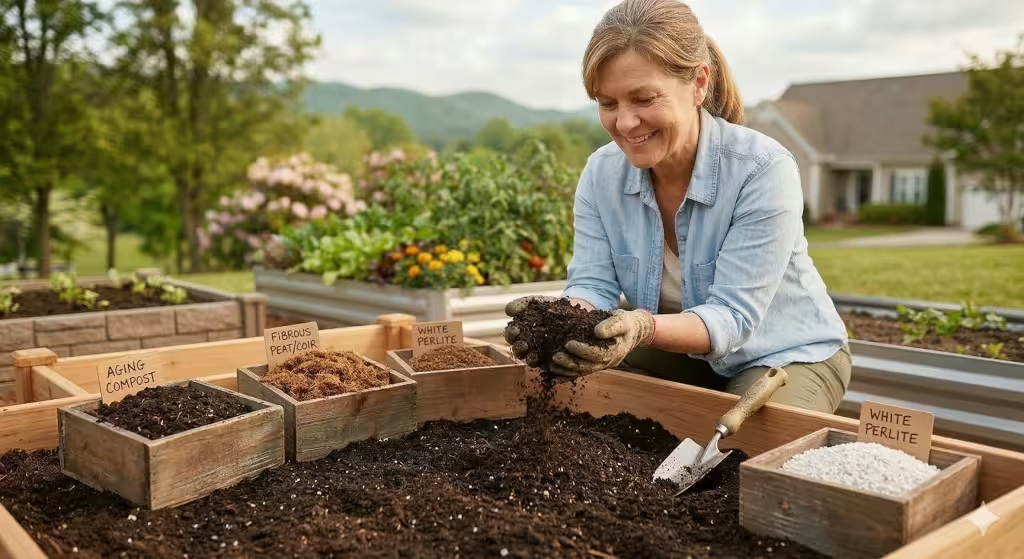
You have the kit, you have the spot, now you need the “engine,” the soil. You cannot just go into the woods and dig up dirt for a raised bed garden. That soil is often too heavy and might contain weed seeds or pests. For a successful raised bed garden in the Tri-Cities, we recommend a 50-25-25 mix.
50% High-Quality Compost: This is the food for your plants. You can find great local compost in the Tri-Cities or make your own.
25% Peat Moss or Coconut Coir: This helps the soil hold onto just enough moisture so you aren’t watering every five minutes during a hot July day.
25% Coarse Sand or Perlite: This creates “air pockets.” Roots need to breathe just as much as they need water.
In a raised bed garden, this mix creates a loose, friable texture. If you squeeze a handful of it, it should stay in a ball for a second but then crumble easily. That is the “dream soil” that our Tennessee clay can never be on its own.
How Deep Should a Raised Bed Be for Clay Soil?
A common question we get is how high you should build your raised bed garden. If you are placing your garden on top of our heavy clay, I suggest a height of at least 12 to 17 inches. While some plants have shallow roots, many of our favorite vegetables like tomatoes and peppers like to send their roots deep into the ground.
A taller raised bed garden also provides more of a buffer against the weather. In the Tri-Cities, we can have a week of rain followed by a week of baking sun. A deep raised bed garden holds a larger volume of water, so the moisture levels stay more consistent. This prevents your tomatoes from cracking and keeps your lettuce from turning bitter.
From a practical standpoint, a taller raised bed garden is also easier on your back. If you have a raised bed garden that is 17 inches or taller, you can often sit on the edge of the bed while you work. This makes gardening accessible for everyone, regardless of their physical strength. It turns the work of a raised bed garden into a relaxing outdoor activity that you can enjoy for hours.
What Grows Best in Zone 7 Raised Beds?
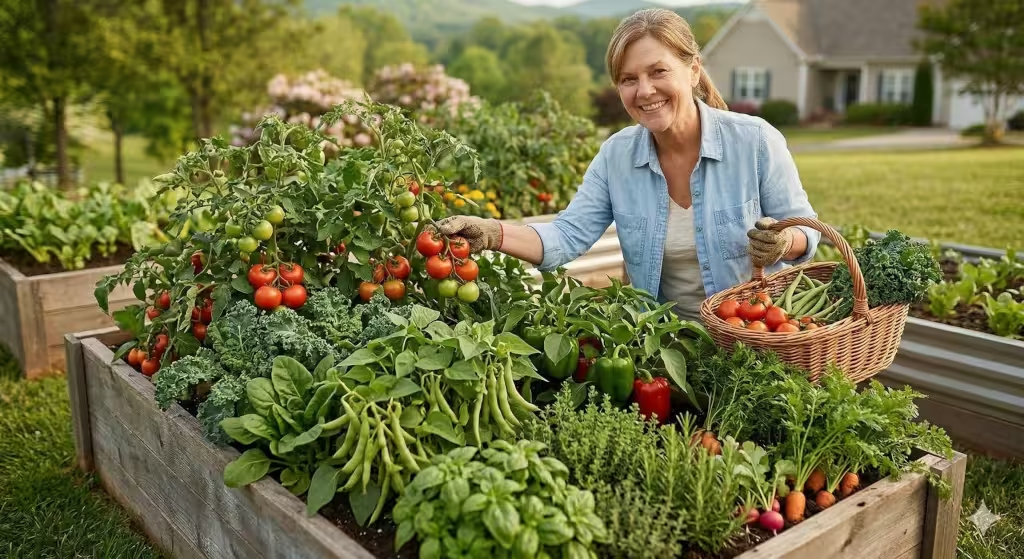
Because our Zone 7 climate has a long growing season, you can use your raised bed garden almost all year round. In the early spring, your raised bed garden will be much warmer than the ground. This is the perfect time to plant cool-weather crops like spinach, kale, and sugar snap peas. These plants love the fast drainage that a raised bed garden provides. If you are planting a garden for pollinators, it is helpful to look for deer-resistant species.
Once the danger of frost has passed in late April or early May, you can move on to the summer favorites. Tomatoes thrive in a raised bed garden because the soil stays warm and the drainage is excellent. Peppers also love the heat that the elevated soil provides. Because the drainage is so good, you will find that root vegetables like carrots and radishes grow much straighter and larger than they ever would in the clay ground. In fact, many gardeners find that their peppers are much hotter and more productive when grown in a raised bed garden compared to the heavy clay ground.
As we move into the fall, you can plant a second round of cool-weather crops in your raised bed garden. Because you can easily add a small cover or “hoop house” to a raised bed garden, you can often keep harvesting fresh greens well into December. The versatility of a raised bed garden allows you to get the most value out of your backyard space throughout the entire year.
Do I Need to Put a Bottom on My Raised Garden Bed?
When you are setting up your raised bed garden on clay, you might be tempted to put a solid bottom on it to keep the “bad” soil away. However, I always advise against this. You want your raised bed garden to be open to the earth below. This is because the clay actually has some benefits if we use it correctly.
Clay is very rich in minerals. While it is too dense for roots to grow in easily, it is a great “bank” for nutrients. By having an open bottom on your raised bed garden, the roots of your larger plants can eventually find their way down into the top layer of the clay to pull up those minerals. Also, you want the local earthworms to be able to move up into your raised bed garden. They are the best workers you have, as they will naturally aerate the soil and add their own fertilizer for free.
The only time you should put a bottom on a raised bed garden is if you are placing it on a deck, a patio, or an area where the soil might be contaminated. For a standard Tri-Cities backyard, an open-bottom raised bed garden is the best choice for the health of your plants and the long-term quality of your soil.
Maintenance and Long-Term Success
Once your raised bed garden is up and running, maintenance is much easier than a traditional garden. Because you aren’t stepping in the bed, the soil stays loose and airy year after year. However, you do need to keep an eye on moisture.
Raised beds dry out faster than the ground. We always suggest installing a simple drip irrigation system or a soaker hose. This delivers water right to the base of the plants. Also, don’t forget to mulch! A layer of straw or wood chips on top of your raised bed garden will keep the soil cool and prevent the water from evaporating.
In a raised bed garden, the soil will settle about an inch or two every year as the organic matter breaks down. Every spring, we just add a fresh couple of inches of compost to the top. There is no need to dig it in; the rain and the worms will move those nutrients down to the roots. It is a precise, clean, and efficient way to grow.
Building Value in Your Backyard
Starting a raised bed garden is more than just a hobby; it is an improvement to your home. It adds beauty to your landscape and provides fresh, healthy food for your table. For us here in the Tri-Cities, it is the smartest way to deal with the hand we were dealt by our local geology.
When you choose a quality kit and fill it with the right soil, you are setting yourself up for years of success. You are creating a space where you can relax and connect with nature without the back-breaking labor of fighting the clay. Whether you are in a historic home in Jonesborough or a new build in Bristol, a raised bed garden fits perfectly into the life we build here in East Tennessee.