

Living and Growing in Karst Country
If you dig into the ground across the Ridge and Valley region of East Tennessee, you quickly find that our earth has a personality of its own. Here in the Tri-Cities, from Johnson City to Kingsport and Bristol, our ground sits right on top of thick beds of ancient carbonate rock. When you garden or build on this land, you are working directly with limestone karst soil.
Many people move to this area expecting soft, dark dirt that behaves like a garden bed in the Midwest. Instead, they hit solid rock shelves, sticky orange clay, and soil water that tests high in alkaline minerals. They wonder why their favorite garden center plants turn yellow, drop their leaves, and refuse to grow.
The secret to success is learning how this ground works. When you understand the unique behavior of limestone karst soil, you stop fighting nature and start working with it. In this guide, we will walk through the science of our regional ground, look at why old-fashioned acid tricks fail, and explore how to grow a vibrant woodland landscape that thrives naturally.
Geochemical Baseline: The Carbonate Buffer System of Karst Profiles
To understand your yard, you first need to understand the rock beneath your feet. Karst is a special type of landscape created when water slowly dissolves soluble bedrock. In our region, that bedrock is mostly
The dirt resting on top of this dissolved rock is what we call limestone karst soil. This soil does not exist in isolation. It stays in constant contact with the parent stone right below it. As groundwater moves through the cracks, it carries dissolved calcium and magnesium ions upward through the soil profile.
This process sets up what soil scientists call a carbonate buffer system. Think of limestone as a giant antacid tablet sitting under your yard. When an antacid tablet enters an acidic stomach, it neutralizes the acid instantly. In the exact same way, whenever acid rain or decaying leaves release acid into limestone karst soil, the surrounding limestone immediately reacts with the acid and wipes it out.
Because of this constant chemical reaction, limestone karst soil almost always has a pH between 7.4 and 8.3. A neutral pH is 7.0, so anything above 7.0 is alkaline, or basic. The continuous presence of free calcium carbonate means this alkaline state is locked in place.
Another big factor is the epikarst. The epikarst is the upper layer of weathered, fractured bedrock right below the topsoil. In areas with limestone karst soil, the layer of true topsoil is often very thin. You might have only six to eighteen inches of soil before your shovel strikes solid rock. These cracks in the rock act like open drains during heavy rainstorms, pulling water away very fast. Later, during hot summer droughts, the dry air pulls mineral-rich moisture right back up to the surface. This continuous upward pull keeps limestone karst soil saturated with basic minerals year after year.
The Remediation Dilemma: Why Conventional Chemical Acidification Fails
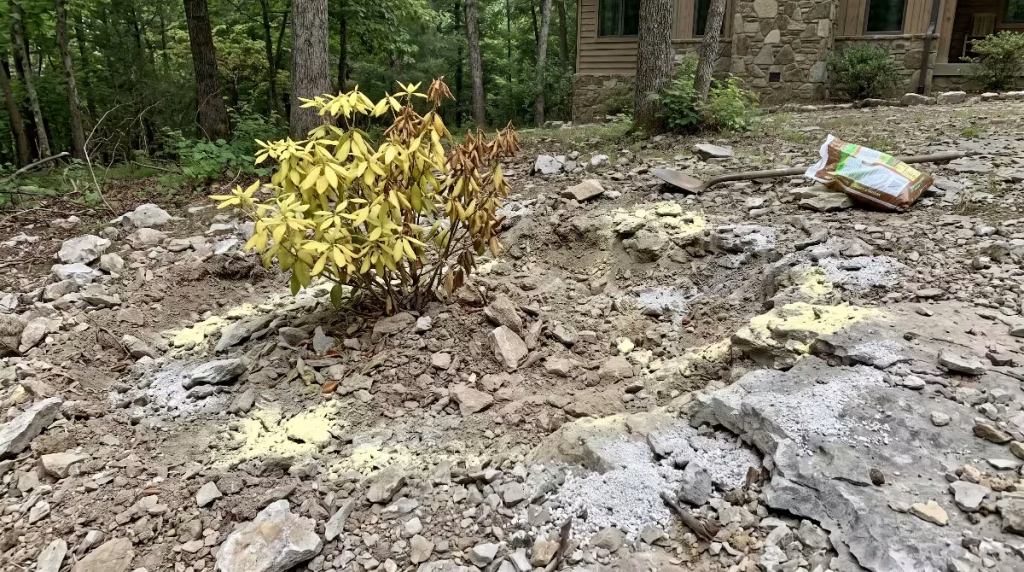
When people discover their ground is alkaline, their first reaction is usually to grab a bag of sulfur or aluminum sulfate from a home improvement store. Traditional gardening books often say that if your pH is too high, you just need to add elemental sulfur to bring it down.
While that advice works in sandy soils or simple loams with no rock beneath them, it fails completely in limestone karst soil.
Here is why that happens. Elemental sulfur does not lower pH by itself. Soil bacteria must eat the sulfur and turn it into sulfuric acid. When you spread sulfur across limestone karst soil, those bacteria do produce acid. But the moment that acid touches the soil water, it immediately reacts with the massive pool of calcium carbonate. The acid and the limestone cancel each other out, producing simple calcium sulfate, which is gypsum, and carbon dioxide gas.
The soil pH barely drops at all. To drop the pH of limestone karst soil by even one full point, you would have to apply thousands of pounds of sulfur per acre. You would literally have to dissolve tons of solid bedrock before the pH would stay down. Trying to chemically acidify this ground is like trying to empty the ocean with a plastic spoon.
Even worse, dumping heavy doses of sulfur onto limestone karst soil creates dangerous side effects. As the sulfur breaks down, it creates heavy loads of soluble salts in the upper root zone. These salts can burn tender feeder roots, kill beneficial soil earthworms, and destroy the good fungi that trees need to survive.
Because karst land is filled with cracks, sinkholes, and underground streams, excess chemical treatments do not stay in your yard. The sulfur and salts wash straight down through the fissures and enter our regional drinking water aquifers. For these reasons, attempting chemical acidification on limestone karst soil is chemically impossible, financially wasteful, and environmentally hazardous.
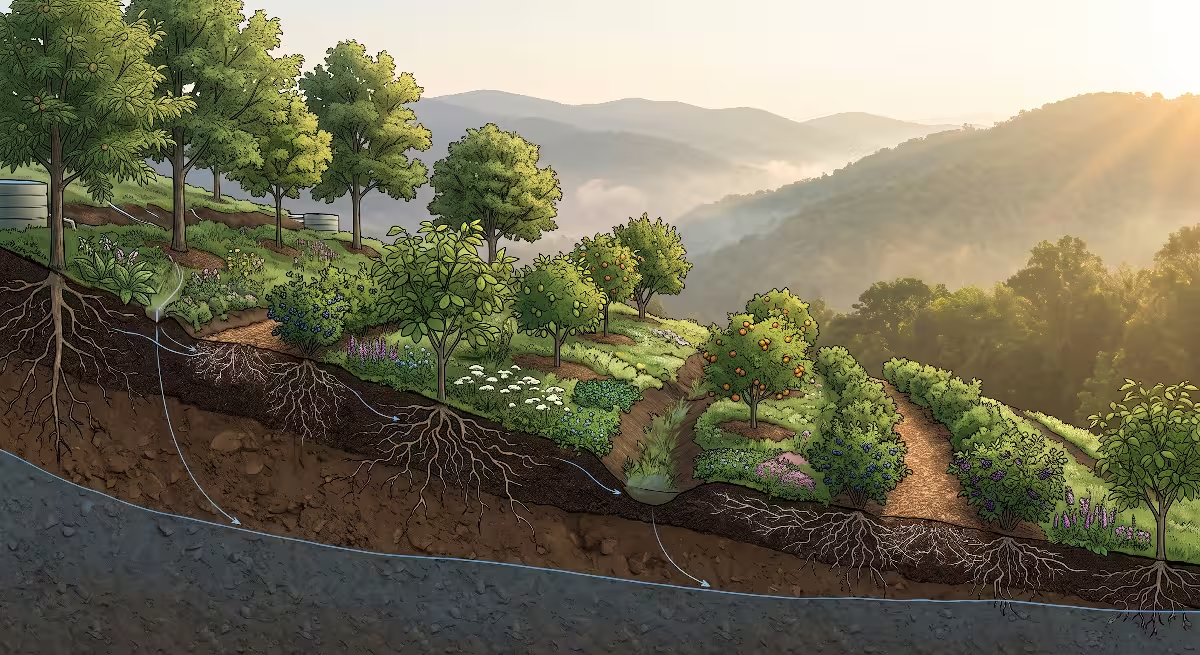
Instead of trying to change the entire chemistry of the earth, smart designers use a completely different strategy. We leave the deep mineral ground alone, and we build an organic sponge right on top of it.
Organic Remediation Protocols: Humic Buffering and Epikarstic Topdressing
If we cannot change the deep mineral rock, how do we help plants that prefer a milder soil environment? The answer lies in natural organic buffering. In an old-growth forest, nature does not dump chemical sulfur onto the ground. Instead, trees drop tons of leaves, twigs, and bark onto the surface every single autumn.
This natural leaf drop builds a rich layer of organic material known as an O-horizon. In limestone karst soil, this surface layer acts like a protective blanket. As forest leaves break down, wood-decay fungi take the lead. These fungi produce humic acids, fulvic acids, and natural humin. These organic compounds are gentle, complex acids that create a localized micro-climate around plant roots.
While the deep mineral layers of limestone karst soil remain alkaline at a pH of 7.8, the dark, crumbly organic mulch right above it can comfortably sit at a pH of 6.2 to 6.8. This allows delicate plant roots to grow happily within the upper organic horizon without ever touching the raw alkaline mineral dust below.
To build this system on your property, you should practice epikarstic topdressing. This simply means applying a steady, layered supply of organic matter to the surface of your limestone karst soil:
First, never till or churn the ground. Tilling brings raw limestone dust and alkaline subsoil clay straight up to the surface, destroying whatever organic layer already existed. Tilling also breaks up the fungal threads that hold the soil together.
Second, apply a two to three inch layer of shredded hardwood mulch mixed with composted leaves directly onto the surface. Oak, beech, and birch leaves are excellent choices because they break down slowly and feed beneficial woodland fungi.
Third, introduce biochar and concentrated liquid humates. Biochar is wood charcoal made through a special heating process that leaves thousands of microscopic pores intact. When you blend biochar into compost and spread it across limestone karst soil, it acts like a sponge. It absorbs excess calcium ions so they cannot tie up other nutrients, while simultaneously holding onto water during our hot summer dry spells.
Over time, this steady organic addition creates a stable biological buffer. It allows you to cultivate a wide range of woodland plants directly over limestone karst soil without a single drop of chemical acidifier.
Nutrient Bioavailability and High-Calcium Antagonisms
To keep plants healthy in this environment, you have to understand how minerals interact underground. Soil chemistry is all about balance. When one mineral is present in giant amounts, it pushes other critical minerals out of reach.
In limestone karst soil, calcium is the absolute ruler of the root zone. Calcium is an essential plant nutrient, but having too much of it creates serious roadblocks for plant roots. We call these roadblocks nutrient antagonisms.
The first major victim of high calcium is phosphorus. Plants need phosphorus to build strong root systems, produce flowers, and transfer energy inside their cells. In an acidic or neutral soil, phosphorus floats freely in the soil water where roots can easily drink it up. But in limestone karst soil, free calcium ions quickly grab onto dissolved phosphorus molecules. Together, they form an insoluble compound called calcium phosphate. Calcium phosphate turns solid, almost like microscopic grains of rock, making the phosphorus completely unavailable to most plants.
The second major issue is iron chlorosis. Iron is what plants use to make chlorophyll, the green pigment that catches sunlight and makes food through photosynthesis. Limestone karst soil is usually loaded with raw iron, but that iron is chemically locked away. At a high pH, iron oxidizes into an insoluble mineral form that plant roots cannot absorb.
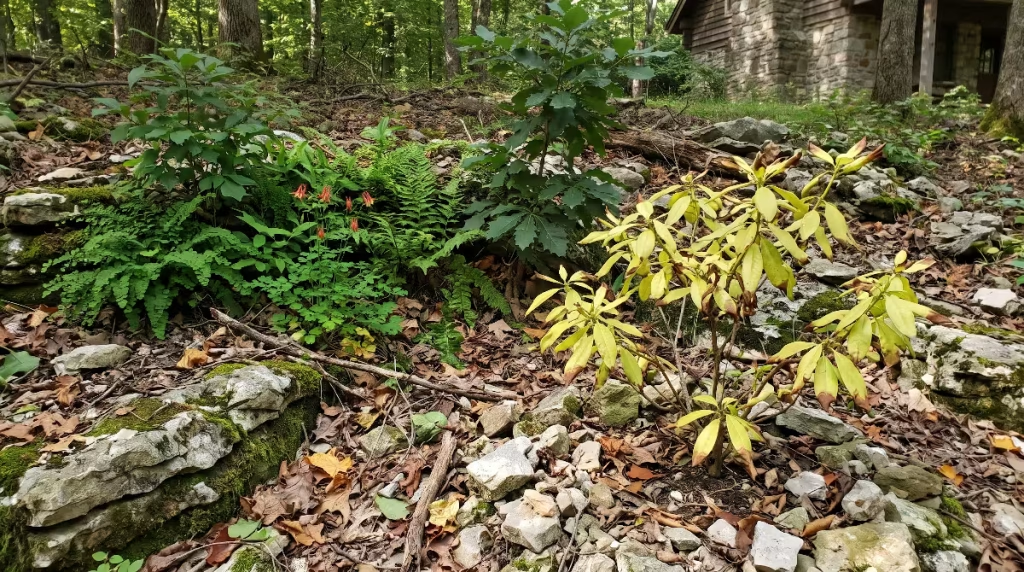
When a sensitive plant tries to grow in limestone karst soil, its newest leaves begin to turn pale yellow while the small veins remain bright green. This condition is iron chlorosis. If left uncorrected, the plant starves because it cannot photosynthesize enough sugar to support itself.
Similar lockups happen with manganese and zinc. Furthermore, when calcium fills up more than eighty-five percent of the soil’s holding capacity, it prevents roots from taking up potassium and magnesium.
To solve these problems in limestone karst soil, you have to use targeted biological techniques:
- Use chelated iron in the form of Fe-EDDHA. Many iron fertilizers break down and stop working as soon as the pH rises above 7.0. Fe-EDDHA is specially designed to remain fully soluble and active even in soil with a pH as high as 9.0.
- Encourage mycorrhizal fungi. These microscopic underground allies attach themselves directly to plant roots. They produce natural organic acids that dissolve insoluble calcium phosphate, delivering pure phosphorus straight into the plant’s vascular system.
- Maintain surface moisture with organic mulches. Drought causes minerals to drop out of solution even faster, worsening chlorosis in limestone karst soil during midsummer heat.
Botanical Grouping: Calcicoles vs. Calcifuges in Woodland Systems
One of the greatest mistakes people make when planting on limestone karst soil is choosing plants that are biologically programmed to hate lime. In botany, we divide woodland plants into two distinct groups based on how their cells handle calcium: calcicoles and calcifuges.
The word calcicole comes from Latin and means lime-dweller. Calcicoles are plants that evolved over hundreds of thousands of years on limestone bluffs, calcareous cedar glades, and alkaline valley floors. These plants have developed brilliant cellular adaptations to thrive in limestone karst soil.
Calcicole plants do not panic when they encounter high levels of calcium. Their cell membranes are equipped with special pump mechanisms that regulate how much calcium enters the plant. Inside their tissues, they can safely store excess calcium by forming tiny, harmless crystals of calcium oxalate. Furthermore, their roots release specialized natural chelating compounds that extract iron and phosphorus directly from alkaline rock particles. When you put a calcicole into limestone karst soil, it flourishes with deep green foliage and vigorous roots.
On the other side of the spectrum are calcifuges, a word that means lime-fleeing. Calcifuges evolved in ancient, deeply weathered mountain soils derived from sandstone, granite, or thick peat bogs where calcium is practically absent and the pH is very low, often between 4.0 and 5.5.
Famous calcifuges include blueberries, mountain laurels, cranberries, pin oaks, and many broadleaf evergreen rhododendrons. These plants have never developed defenses against heavy calcium or high bicarbonate levels.
When you plant a calcifuge directly into limestone karst soil, a biological crisis begins. The plant absorbs uncontrolled amounts of calcium, which jams its internal cellular machinery. The alkaline soil water shuts down its ability to absorb iron, manganese, and zinc. Its mycorrhizal partners die off because they cannot survive the high pH. Within months, the leaves turn pale yellow, the leaf tips scorch, the root tips decay, and the plant slowly declines.
Trying to force a true calcifuge to live in raw limestone karst soil is a recipe for heartbreak and high maintenance bills. True design brilliance means celebrating the plants that love our native limestone rather than trying to force acid-loving mountain plants into an environment that actively resists them.
Curated Native Woodland Palette for Limestone Karst Soils
Fortunately for us, the limestone valleys of East Tennessee are home to some of the most diverse, stunning woodland flora in North America. By choosing native species that naturally call limestone karst soil their home, you can create a lush, self-sustaining woodland garden that requires no chemical inputs.
Here is a curated palette of native woodland species grouped by forest canopy layer:
+---------------------------------------------------------------------------------+
|               NATIVE WOODLAND CANOPY & UNDERSTORY PALETTE                      |
+-----------------------+--------------------------+------------------------------+
| Forest Layer          | Botanical Name           | Common Name                  |
+-----------------------+--------------------------+------------------------------+
| Overstory Canopy      | Quercus muehlenbergii    | Chinquapin Oak               |
| Overstory Canopy      | Fraxinus quadrangulata   | Blue Ash                     |
| Overstory Canopy      | Celtis occidentalis      | Common Hackberry             |
| Sub-Canopy / Understory| Cercis canadensis       | Eastern Redbud               |
| Sub-Canopy / Understory| Cotinus obovatus        | American Smoketree           |
| Shrub Layer           | Staphylea trifolia       | American Bladdernut          |
| Shrub Layer           | Rhus aromatica           | Fragrant Sumac               |
| Shrub Layer           | Viburnum prunifolium     | Blackhaw Viburnum            |
| Herbaceous Groundcover| Aquilegia canadensis     | Wild Columbine               |
| Herbaceous Groundcover| Stylophorum diphyllum    | Celandine Poppy              |
| Herbaceous Groundcover| Phlox divaricata         | Wild Blue Phlox              |
| Epilithic Fern        | Asplenium rhizophyllum   | Walking Fern                 |
| Epilithic Fern        | Pellaea atropurpurea     | Purple Cliffbrake            |
+-----------------------+--------------------------+------------------------------+
Overstory Canopy Trees
The undisputed king of limestone karst soil is the Chinquapin Oak (Quercus muehlenbergii). Unlike the red oak family, which often suffers from chlorosis in high-pH ground, the Chinquapin oak belongs to the white oak group and actively prefers alkaline limestone. Its deep taproot seeks out rock cracks, breaking through tight crevices to find underground moisture. It produces sweet, low-tannin acorns that local wildlife adore, and its glossy, chestnut-like leaves never show a hint of yellowing.
Another outstanding canopy tree is the Blue Ash (Fraxinus quadrangulata). This rare and beautiful ash gets its name from the blue dye early settlers made from its inner bark. It has unique four-angled, winged twigs that make it easy to identify. Blue ash is an obligate calciphile, meaning it almost exclusively grows on limestone bluffs and calcareous uplands, showing remarkable natural resilience in limestone karst soil.
You should also look to the Common Hackberry (Celtis occidentalis). Hackberry is tough as nails, tolerating both wet spring clay and severe summer drought. Its deep root system stabilizes limestone karst soil on slopes, while its sweet purple berries feed dozens of songbird species all winter long.
Sub-Canopy and Understory Trees
For spring beauty, nothing rivals the Eastern Redbud (Cercis canadensis). Redbuds thrive naturally throughout our regional woods, often popping up directly out of limestone road cuts and rocky river bluffs. Because they are members of the legume family, redbuds can work with soil microbes to access atmospheric nitrogen, allowing them to grow rapidly even in lean, rocky limestone karst soil.
Another architectural gem is the American Smoketree (Cotinus obovatus). While many gardeners only know the purple European nursery variety, our native American smoketree is an extraordinary small tree that grows naturally on dry limestone ledges. In early summer, its flowering clusters look like delicate puffs of pinkish-gray smoke, and its fall foliage displays brilliant shades of scarlet, gold, and royal purple.
Native Shrub Layer
The American Bladdernut (Staphylea trifolia) is a superb understory shrub that forms upright colonies in rich, moist limestone karst soil along wooded slopes. In spring, it produces clusters of nodding white bells, followed by curious papery seedpods that inflate like tiny green lanterns.
For drier, sunnier woodland edges where the rock is close to the surface, Fragrant Sumac (Rhus aromatica) provides a dense, low-growing thicket. Its crushed leaves release an herbal, citrus scent, and its fiery orange and red autumn color can brighten any woodland border.
If you want edible berries and brilliant spring blooms, plant the Blackhaw Viburnum (Viburnum prunifolium). While imported viburnums often struggle with regional pests, Blackhaw is a durable native that shrugs off the high alkalinity of limestone karst soil, producing clouds of creamy white flowers followed by sweet, prune-flavored blue-black fruits.
Herbaceous Groundcover and Ferns
Down on the forest floor, you can create a living woodland carpet that thrives in shallow pockets of limestone karst soil.
Wild Columbine (Aquilegia canadensis) sends its roots directly into rock crevices, producing scarlet and yellow nodding flowers that attract early ruby-throated hummingbirds. Celandine Poppy (Stylophorum diphyllum) offers bold, golden-yellow blooms and lush, silver-backed foliage that spreads readily in rich, moist limestone leaf mold.
For fragrant spring color, plant Wild Blue Phlox (Phlox divaricata). Its soft lavender-blue petals carpet the forest floor just as the trees begin to leaf out.
Finally, do not overlook our native calciphile ferns. Walking Fern (Asplenium rhizophyllum) and Purple Cliffbrake (Pellaea atropurpurea) are true epilithic plants, meaning they love to grow directly on bare limestone rocks covered with a light dusting of limestone karst soil. Walking fern gets its name because its arching fronds bend down, touch moist moss on the rock surface, and sprout brand-new baby ferns from the leaf tips. These plants turn raw rock outcroppings into living, sculptural works of art.
Biophilic Site Integration: Building Alongside Karst Formations
Biophilic design is the practice of connecting buildings and interior spaces directly with nature. In our corner of East Tennessee, true biophilic architecture begins by honoring the natural stone landscape rather than scraping it away with heavy bulldozers.
Too often, commercial developers clear-cut native woodlands, blast out the bedrock with dynamite, haul away the native limestone karst soil, and replace it with generic subsoil clay and turf grass. This heavy-handed approach causes massive erosion, increases sinkhole risks, and destroys the site’s unique sense of place.
A biophilic approach takes the opposite path. We treat exposed limestone outcroppings and natural karst terrain as exquisite architectural assets.
Designing with Natural Stone Outcrops
When a home is sited on ground with shallow limestone karst soil, we can design foundation courtyards, screen porches, and reading nooks directly around undisturbed rock shelves.
Large glass walls can open toward natural mossy limestone ledges planted with Walking Ferns, Wild Columbine, and Maidenhair Ferns. When natural stone forms the backdrop of an outdoor living area, it anchors the home to its regional geography. The thermal mass of exposed limestone absorbs warmth from the sun during the day and slowly releases it into the microclimate at night, sheltering delicate woodland ephemerals from sudden spring freezes.
Protecting Epikarst Hydrology and Sinkholes
Karst landscapes are dynamic water systems. In an area dominated by limestone karst soil, water does not simply run off into distant rivers. Much of it drains straight downward through sinkholes and subterranean fissures into local aquifers.
When
Biophilic civil design avoids dumping roof runoff into pipes that empty into street sewers. Instead, we spread clean rainwater across broad, gently sloping woodland swales lined with rich organic mulch and limestone karst soil. The thick leaf mulch filters out roof dust and pollutants while allowing the water to soak slowly into the ground, recharging the underlying epikarst naturally without eroding the earth.
Celebrating the Forest Microclimate
By integrating native woodland canopy trees like Chinquapin Oak and Hackberry into the immediate building envelope, we provide passive cooling during humid southern summers.
Deciduous trees block harsh summer sunlight from penetrating large glass windows, reducing indoor air conditioning loads. In the winter, their leaves drop, allowing low winter sun to shine through the bare branches and warm the interior floors. The annual leaf drop is left in place across the woodland beds, continuously building that vital O-horizon that feeds the soil web and protects the limestone karst soil below.
Common Questions About Karst Limestone Soils
Homeowners and builders often ask practical questions when confronted with alkaline, rocky land. Here are direct, clear answers to the most common search queries regarding limestone karst soil.
Can you permanently change the pH of limestone karst soil?
No, you cannot permanently change the pH of limestone karst soil. The bedrock sitting beneath the soil is made of calcium carbonate and dolomite, which dissolve continuously into the groundwater. Whenever you apply an acidifying agent, the underlying rock immediately neutralizes the acid and restores the alkaline pH. Long-term landscape success relies on building a continuous layer of organic leaf mulch on top of the soil rather than trying to permanently change the mineral chemistry below.
What native plants grow best in thin, rocky limestone karst soil?
Plants that naturally evolved on limestone bluffs and calcareous cedar glades grow best. Top choices include:
- Canopy Trees: Chinquapin Oak, Blue Ash, and Common Hackberry.
- Understory Trees: Eastern Redbud and American Smoketree.
- Shrubs: Fragrant Sumac, American Bladdernut, and Blackhaw Viburnum.
- Perennials and Ferns: Wild Columbine, Celandine Poppy, Wild Blue Phlox, and Walking Fern.
All of these species handle the high calcium levels and shallow rooting depths of limestone karst soil without developing mineral deficiencies.
How do you fix iron chlorosis in plants growing over limestone bedrock?
To fix iron chlorosis in limestone karst soil, follow three steps:
- Apply chelated iron in the form of Fe-EDDHA. This specific chelate remains soluble and available to roots in alkaline soils with a pH above 7.0, whereas regular iron sulfate fails.
- Topdress the root zone with two to three inches of composted leaf mold. Decaying organic matter stimulates beneficial soil fungi that produce natural siderophores, which help roots absorb locked-up iron.
- Avoid over-watering heavy clay pockets. Excess water creates anaerobic, oxygen-poor conditions that worsen iron chlorosis in limestone karst soil.
Can you plant acid-loving woodland plants like Mountain Laurel or Azaleas near limestone?
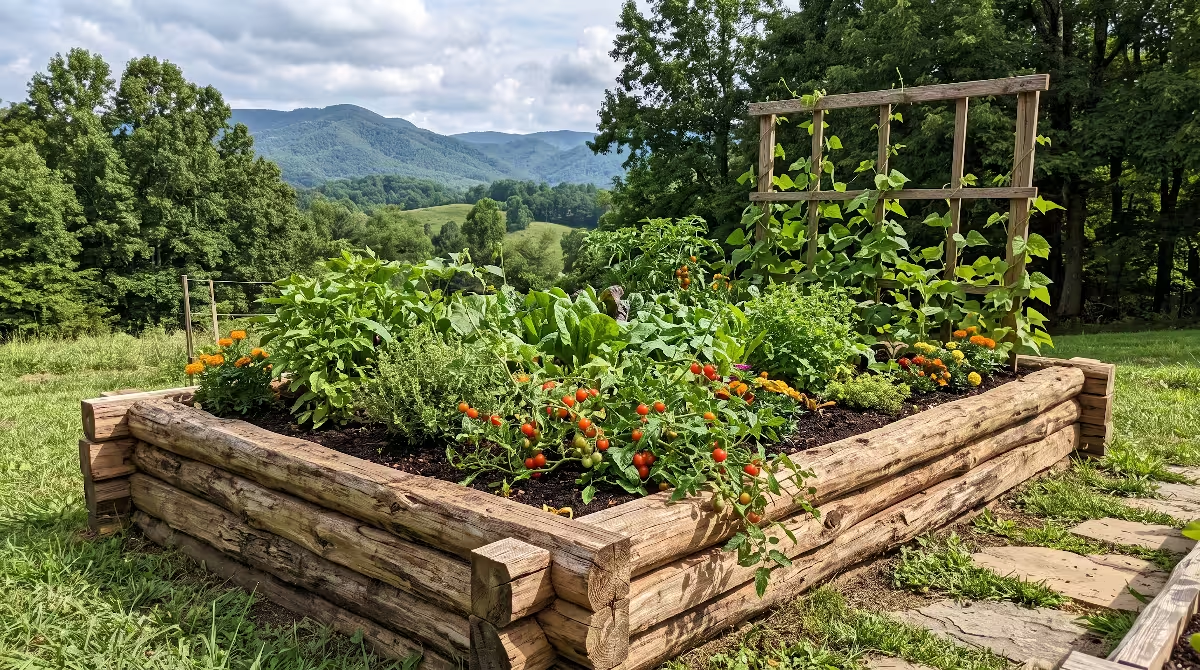
You should not plant acid-loving plants directly into limestone karst soil. True calcifuges like Mountain Laurel, native flame azaleas, and blueberries suffer severe chlorosis and root decline when their roots touch alkaline, calcium-rich ground. If you must grow these plants, you must construct raised beds that are completely separated from the native ground by an impermeable physical barrier. Fill these beds with an acidic, peat-free planting mix composed of pine bark, leaf mold, and compost, and irrigate them solely with soft rainwater rather than hard, alkaline well water.
Soil Sampling, Infiltration, and Field Diagnostic Protocols
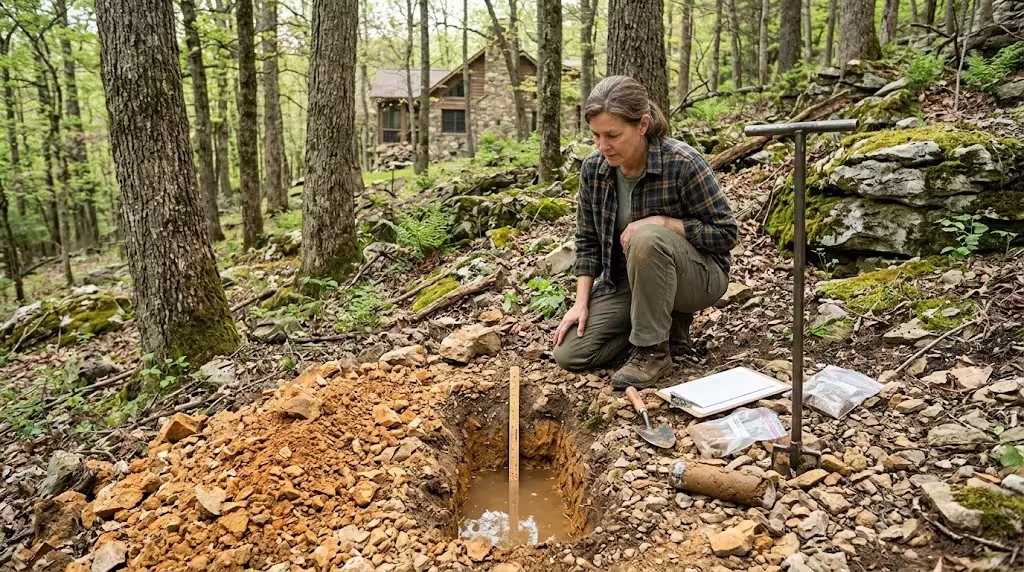
Before you plant a single tree or finalize a landscape design, you need accurate, objective data about your specific ground. Testing limestone karst soil requires specialized field techniques because standard testing procedures can produce misleading results.
High-pH Soil Testing Protocols
When you send a soil sample to an agricultural extension lab, you must inform them that your property contains limestone karst soil.
Standard soil tests often use the Bray P-1 extraction method to measure phosphorus. However, when the Bray P-1 test is used on soils with free calcium carbonate, the calcium in the sample neutralizes the testing acid, causing the lab report to show near-zero phosphorus even when adequate phosphorus is present.
For limestone karst soil, you must specifically request either the Olsen-P test (which uses a sodium bicarbonate solution) or the Mehlich-3 test calibrated for alkaline soils. These extraction methods give you an accurate picture of the plant-available phosphorus in high-calcium dirt.
When collecting your samples:
- Take samples from multiple spots across the planting area.
- Separate your samples by depth. Test the upper two to three inches of organic matter separately from the deeper mineral soil. This will show you the exact buffering capacity of your upper O-horizon compared to the raw limestone karst soil below.
- Check your base saturation percentages. If calcium base saturation exceeds eighty percent, you know that phosphorus, potassium, and micronutrients are at high risk of being locked away.
Non-Destructive Bedrock Depth and Void Mapping
Because karst ground can vary dramatically across a single yard, you need to map the subsurface terrain before digging. A spot with three feet of topsoil might sit only five feet away from a hidden limestone pinnacle that rises to within two inches of the grass.
Take a four-foot steel soil probe with a T-handle and walk your site in a grid pattern. Push the probe down into the ground by hand:
- If the probe hits solid refusal within a few inches, you have mapped a shallow rock shelf. These spots should be reserved for drought-tolerant calciphile perennials, epilithic ferns, or shallow-rooted shrubs like Fragrant Sumac.
- If the probe drops suddenly through a soft void, you may have located a subsurface fissure or opening into the epikarst. Never plant heavy canopy trees over open voids, as the soil can settle or wash away during heavy rain.
- Look for spots with twelve to twenty-four inches of uniform penetration. These represent deep soil pockets where large trees like Chinquapin Oak can sink a solid taproot into limestone karst soil.
Field Infiltration Testing
Karst soils can fool you with their drainage. A rocky slope might look like it drains instantly, but heavy, plastic red clays trapped inside rock crevices can hold standing water for days after a storm.
To run a simple percolation test:
- Dig a hole twelve inches deep and six inches wide into your limestone karst soil.
- Fill the hole with water and let it soak into the ground completely to saturate the surrounding clay.
- Fill the hole with water a second time and measure how many inches the water level drops every hour using a wooden ruler.
- If the water drops between one and two inches per hour, your drainage is ideal for standard woodland flora.
- If the water drains away in less than ten minutes, you are sitting over an open epikarstic fissure. Water is draining too quickly, meaning plants will dry out fast during midsummer heat.
- If the water drops less than half an inch per hour, you have hit dense, compacted karst clay. You must avoid digging a deep bowl that acts like a bathtub. Instead, you will need to plant high and build up with broad organic mounds.
Practical Field Execution Checklist (The 5-Step Planting Standard)
When it comes time to put plants into the ground, standard planting directions on nursery tags will lead to failure. If you dig a narrow, deep hole into limestone karst soil, fill it with potting soil, and drop the plant in, you have created a death trap. Water will pool in the bottom of the hole, the roots will refuse to enter the hard native clay, and the plant will drown.
Follow this field-tested, five-step installation standard designed specifically for limestone karst soil:
Step 1: Substrate Analysis and Site Mapping
- Test soil with an Olsen-P or alkaline Mehlich-3 extraction.
- Probe the bed to locate rock shelves, hidden voids, and deep soil pockets.
- Match plant species strictly to their botanical group: calcicoles go into native ground; calcifuges go into elevated, isolated acid beds.
Step 2: Excavate a Wide, Saucer-Shaped Planting Zone
- Never dig a deep, narrow hole. In limestone karst soil, dig a wide, shallow saucer that is three to four times wider than the root ball, but no deeper than the root ball itself.
- Score the sides of the hole with a hand trowel. Smooth, clay sides created by round shovels act like glazed ceramic walls that tree roots cannot penetrate. Roughening the edges gives roots easy access into the surrounding limestone karst soil.
- Set the plant so that the root flare, where the topmost roots spread out from the trunk, sits one to two inches higher than the surrounding ground level. As the soil settles, this prevents the stem from being buried in waterlogged clay.
Step 3: Microbiome Priming and Native Backfill
- Never backfill the hole with pure commercial bagged potting soil. If you fill the hole with fluffy peat, the roots will circle inside the soft mix and never venture out into the native ground.
- Backfill using ninety percent native limestone karst soil blended with ten percent aged compost or leaf mold. This forces the young roots to adapt immediately to the mineral environment they must inhabit for the rest of their lives.
- Dust the root ball and the planting hole with a broad-spectrum native endo- and ectomycorrhizal inoculant. These fungi are the secret weapon that allows woodland plants to unlock insoluble phosphorus and iron from raw limestone karst soil.
Step 4: Stratified Surface Mulching
- Water the newly backfilled planting zone deeply to settle the soil and eliminate subterranean air pockets.
- Spread a three-inch layer of double-shredded native hardwood bark and composted broadleaf mold across the entire root zone.
- Keep the mulch pulled back three to four inches away from the trunk of the tree or shrub. Piling mulch against the bark causes fungal rot and invites burrowing rodents.
- This mulch layer begins decomposing immediately, forming the humic buffer that protects shallow feeder roots from high-pH mineral water in the limestone karst soil below.
Step 5: Establishment Hydration and Leachate Management
- During the first growing season, water deeply once a week rather than giving shallow daily sprinkles. Deep watering encourages roots to push down into moisture-rich rock fissures.
- Whenever possible, irrigate with harvested rainwater collected from roofs. Municipal tap water and deep well water in karst areas are saturated with dissolved limestone minerals. Using hard well water adds continuous loads of alkaline calcium to the upper root zone, fighting against your organic mulch layer. Soft, neutral rainwater preserves the organic acidity of your topdress layer.
- Inspect plants monthly for signs of interveinal yellowing. If chlorosis appears on new leaves, apply a targeted soil drench of Fe-EDDHA chelated iron to carry the plant through its initial establishment phase.
Actionable Execution Schedule
To establish a woodland garden across limestone karst soil on your site, follow this seasonal timetable:
+-----------------------------------------------------------------------------------+
|               SEASONAL KARST REMEDIATION & PLANTING TIMETABLE                     |
+------------------+----------------------------------------------------------------+
| Season           | Concrete Execution Steps                                       |
+------------------+----------------------------------------------------------------+
| Late Summer      | Complete high-pH laboratory soil sampling (Olsen-P extraction).|
| (August - Sept)  | Map bedrock depths using a 4-foot steel T-handle probe.       |
|                  | Mark planting zones: deep pockets for trees, shelves for ferns.|
+------------------+----------------------------------------------------------------+
| Mid-Autumn       | Plant native calcicole trees, shrubs, and perennials.          |
| (Oct - Nov)      | Prime root zones with native mycorrhizal inoculants.           |
|                  | Apply a 3-inch topdress of shredded hardwood and leaf mold.    |
+------------------+----------------------------------------------------------------+
| Winter           | Install rain barrels or cisterns to capture soft rainwater.    |
| (Dec - Feb)      | Allow winter freezes and snow to settle the organic O-horizon. |
|                  | Protect exposed rock outcroppings from construction traffic.  |
+------------------+----------------------------------------------------------------+
| Spring           | Monitor leaf emergence for signs of interveinal chlorosis.     |
| (March - May)    | Apply Fe-EDDHA chelated iron drench if yellowing appears.      |
|                  | Plant delicate calciphile ferns directly into rock fissures.   |
+------------------+----------------------------------------------------------------+
| Summer           | Irrigate deeply using harvested rainwater during dry spells.   |
| (June - July)    | Replenish surface mulch to keep the epikarst root zone cool.   |
|                  | Never till; allow fungal networks to expand undisturbed.       |
+------------------+----------------------------------------------------------------+
By respecting the unique chemistry of our regional ground, designing with native calcicole species, and maintaining an active organic buffer, you can transform the challenges of limestone karst soil into a resilient, living woodland paradise.