Building a custom home is one of the biggest emotional and financial investments you will ever make. As a woman who has walked hundreds of job sites in work boots, managed multi-million-dollar construction budgets, and raised a family in this region, I view homes through a very practical lens. I look at how the framing holds up against our humid Tennessee summers, how the layout supports your daily family routines, and how quiet the bedrooms stay when the kids are active upstairs.
When people think about building a custom home, they often spend months picking out granite countertops, tile backsplashes, and cabinet colors. While those finishes are fun to choose, they are only the surface of your home. Real quality starts much deeper. True quality comes down to the importance of craftsmanship in architecture.
In this complete guide, we will explore why craftsmanship in architecture matters so much, how precise construction techniques protect your investment, and how you can ensure your new home is built with the highest standards from the foundation to the roofline.
What Distinguishes Architectural Design from Craftsmanship?
To build a great home, you need two distinct disciplines working together: architectural design and craftsmanship. Many home buyers confuse these two concepts, but understanding the difference is essential to getting the home you truly want.
Architectural design is the vision on paper. It is the creative process of planning spaces, setting proportions, designing window placements for light, and deciding how rooms flow into one another. A great architectural design sets the blueprint for how your home looks and functions. It creates the dream.
Craftsmanship is the physical realization of that dream. It is the skilled execution of those drawings in the real world using wood, steel, concrete, glass, and stone. An architect can draw a perfectly straight line on a computer screen in seconds. However, it takes real craftsmanship to construct that wall in the field, ensuring it is perfectly straight, square, and plumb to within a sixteenth of an inch.
Architectural Design (The Vision) + Craftsmanship (The Execution) = A High-Performance Home
Without good architectural design, even the finest craftsmanship can result in a house that feels awkward or poorly planned. But the reverse is also true. Without genuine craftsmanship, even the most brilliant architectural design will suffer from drafts, squeaky floors, cracked drywall, and water leaks.
What is the difference between architectural design and craftsmanship?
When you ask what is the difference between architectural design and craftsmanship, think of design as the musical score and craftsmanship as the live orchestra. The score contains the notes, but the skill of the musicians determines whether the music sounds beautiful or harsh.
In custom home building, craftsmanship takes static blueprints and turns them into a living environment. Design focuses on spatial concepts, geometry, and aesthetics. Craftsmanship focuses on material behavior, exact tolerances, structural connections, and weatherproofing. You need both to create a custom home that stands the test of time.
Structural Integrity: How Precision Craftsmanship Safeguards Your Home
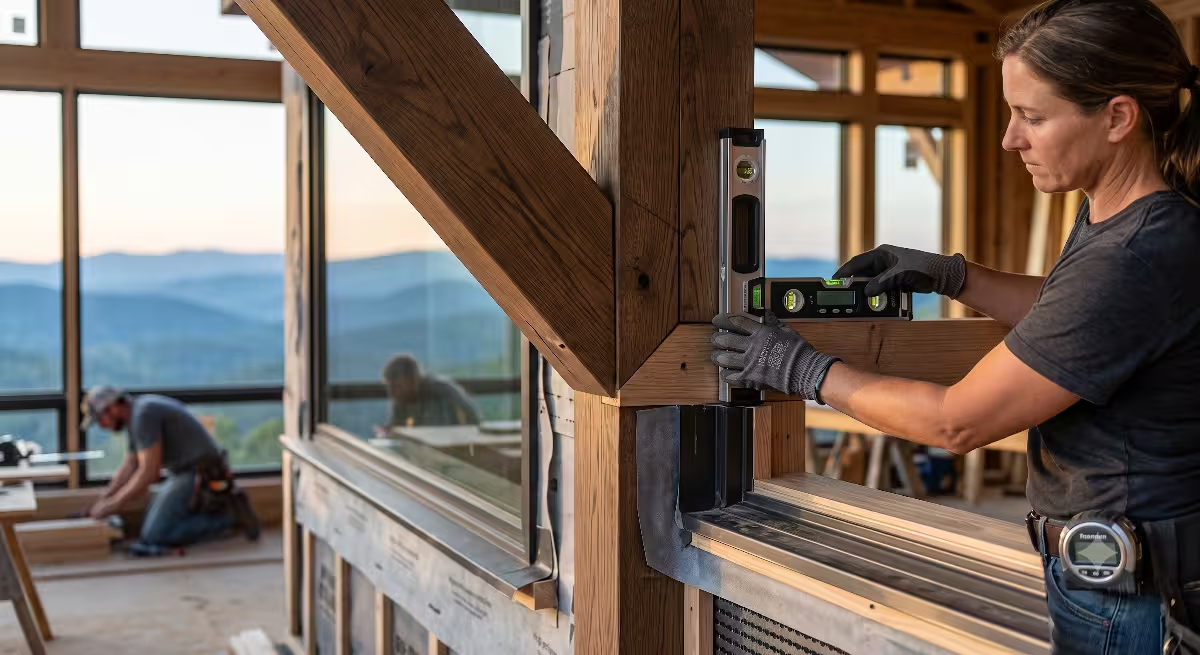
When I walk through a house during the framing phase, I am not just looking at the size of the rooms. I am looking at the framing tolerances, the load paths, and how the materials connect. True craftsmanship starts inside the walls long before the drywall is hung and painted.
+-------------------------------------------------------------------+
|                   THE CRITICAL BUILDING ENVELOPE                  |
|                                                                   |
|   Roof & Flashing  --> Redirects rain away from structure         |
|   Wall Framing     --> Micro-tolerances prevent sagging & drafts  |
|   Air & Moisture   --> Sealed joints stop mold and wood rot       |
|   Foundation       --> Level base ensures total structural balance |
+-------------------------------------------------------------------+
Tight Tolerances and the Building Envelope
The building envelope is the physical barrier between the conditioned air inside your home and the changing weather outside. In East Tennessee, our homes face hot, humid summers, rain-heavy springs, and cold winter freezes. Keeping moisture and air leaks out requires extraordinary craftsmanship.
When framers and carpenters work with tight tolerances, every piece of lumber is chosen carefully and installed with precision. Wood naturally expands and contracts with changes in humidity. A builder who relies on cheap tricks, like filling large gaps with spray foam or caulk, is setting you up for future problems. As time passes, caulk shrinks and cracks, allowing humid air and moisture into your wall cavities.
Superior craftsmanship relies on exact joinery, properly layered house wrap, precise window flashing, and tight air sealing. When a window is installed with proper craftsmanship, the flashing layers overlap like shingles on a roof. Water is naturally shedding away from your home by gravity rather than relying solely on a thin tube of sealant. This level of craftsmanship prevents wood rot, stops hidden mold growth, and keeps your energy bills low year after year.
Seamless Mechanical and Systems Integration
A house is a complex system of interconnected parts. Behind your walls lies a network of electrical wiring, plumbing pipes, and HVAC ductwork. One of the clearest indicators of true craftsmanship is how neatly these trade systems are installed.
In a well-built home, tradespeople take pride in their work even when it will be covered up forever. You will see neatly organized wiring runs, smooth plumbing bends, and rigidly supported ductwork.
From a practical perspective for family living, this behind-the-wall craftsmanship directly impacts your daily peace and comfort. Consider acoustics. Have you ever lived in a house where you could hear every footstep upstairs or hear water rushing through the walls every time a toilet flushed? That happens because of a lack of craftsmanship during construction.
When a skilled builder constructs a home, they use sound isolation techniques. They apply subfloor adhesive generously alongside screws instead of just nails to eliminate floor squeaks. They isolate plumbing pipes with rubber grommets so vibrations do not transfer into the wall studs. They build staggered stud walls between laundry rooms and bedrooms to block sound transfer. This hidden craftsmanship creates a quiet, restful home environment where your family can thrive.
Why is craftsmanship important in building design?
People frequently ask why is craftsmanship important in building design. The answer is simple: design creates potential, but craftsmanship delivers performance. Without precise craftsmanship during construction, energy-efficient designs fail, structural elements sag over time, and moisture ruins expensive interior finishes. Craftsmanship transforms architectural ideas into a safe, healthy, and durable living space.
Financial Value: Why Craftsmanship is the Ultimate Investment
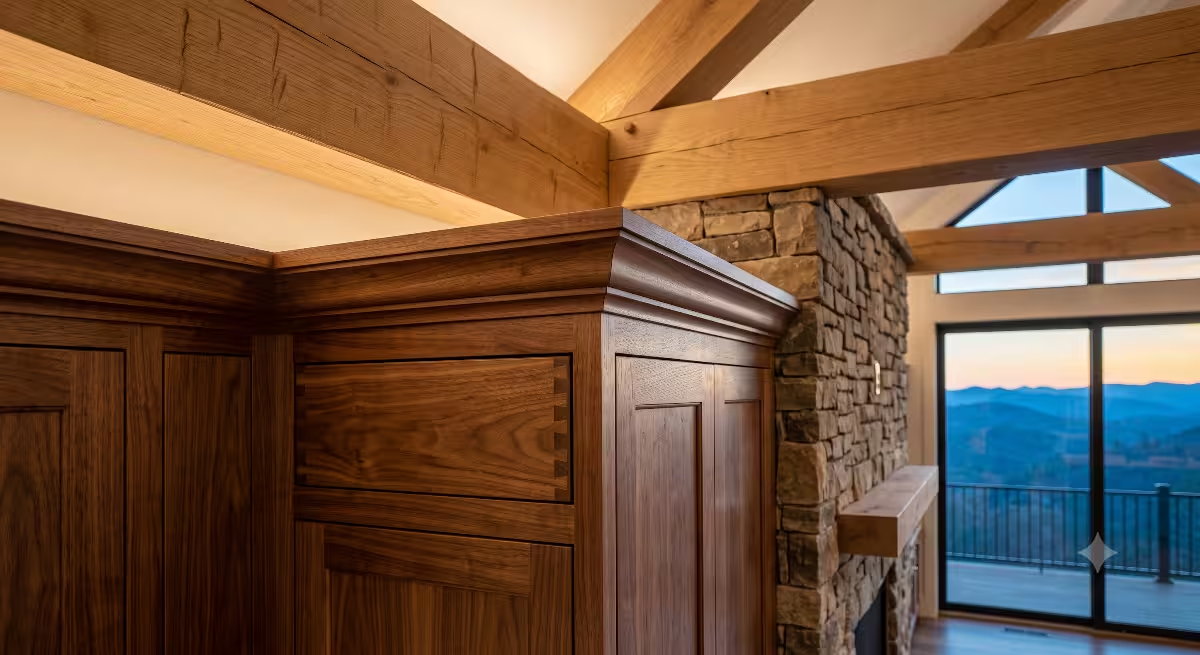
Building a custom home requires a significant financial commitment. As a former general manager in home construction, I always remind clients that true craftsmanship is not an added luxury expense. It is a long-term cost control strategy.
Short-Term Savings (Poor Craftsmanship)  --> High Maintenance Costs & Early Repairs
Upfront Investment (Quality Craftsmanship) --> Lower Utility Bills & Lasting Value
Durability vs. Cosmetic Luxury
There is a major difference between surface cosmetic luxury and deep building craftsmanship. Cosmetic luxury includes items like shimmering light fixtures, trendy paint colors, and commercial-grade kitchen ranges. These items look impressive during an open house, but they do not tell you how well the home was built.
True craftsmanship represents structural luxury. It is found in solid hardwood framing, hand-fitted cabinetry, thick subflooring, and flawlessly laid tile. Cosmetic trends change every few years, but structural craftsmanship maintains its value for generations.
| Feature | Surface-Level Luxury | True Architectural Craftsmanship |
| Trim & Millwork | Thin MDF trim glued with visible gaps filled by caulk | Solid wood trim with tight, hand-mitered joints |
| Subfloors | Minimal thickness boards nailed quickly | Thick tongue-and-groove panels glued and screwed |
| Wall & Framing | Fast framing with loose tolerances and uneven surfaces | Square, plumb framing shimmed for perfectly flat walls |
| Waterproofing | Standard code-minimum paint-on barriers | Multi-layer membrane systems with tested slope drains |
| Long-Term ROI | Requires cosmetic updates and repairs in 5 to 7 years | Retains structural integrity and appeal for decades |
When you invest your budget in high-grade building rather than just high-end cosmetic finishes, you protect your capital. A cheaper build with poor craftsmanship will quickly show its flaws through cracked drywall, sticking doors, uneven floors, and drafty rooms.
Reduced Maintenance and Lifecycle Costs
The true cost of a home includes what you pay to maintain it over 10, 20, or 30 years. High quality craftsmanship dramatically lowers your ongoing maintenance and replacement costs.
When a roof is installed with expert craftsmanship, step flashing is woven correctly into every wall intersection. This eliminates the mysterious roof leaks that plague poorly built homes after a few years. When custom tile showers are built with complete waterproofing behind the tile, you avoid thousands of dollars in water damage repairs down the road.
Investing in craftsmanship upfront means you spend far less money fixing builder mistakes later. Your home stays structurally sound, your energy bills remain stable, and your weekends are spent enjoying your home rather than managing repair workers.
Resale Premium and Market Longevity
In the Tri-Cities real estate market, buyers are becoming smarter every day. They can tell the difference between a house that was quickly flipped or built down to a minimum price point and a custom home built with genuine craftsmanship.
Homes that showcase superior craftsmanship hold their resale value far better over time. Buyers notice the heavy, solid click of a well-hung door, the perfectly flat hardwood floors, and the flawless custom trim work. These details signal to a buyer that the entire home was cared for during construction. As a result, homes built with true craftsmanship command higher prices per square foot and sell faster when it comes time to move.
How does craftsmanship affect the value and longevity of a home?
If you want to know how does craftsmanship affect the value and longevity of a home, look at older historic structures that are still standing strong today. They survived because their builders prioritized craftsmanship in every joint, post, and beam. Modern homes built with high levels of craftsmanship protect your financial equity by reducing maintenance costs, improving energy efficiency, and maintaining top market value for decades.
The Lived Experience: How Craftsmanship Shapes Daily Life

While structural integrity and financial value are vital, the most rewarding benefit of craftsmanship is how it makes you feel inside your home every day. As women, we often focus on how a home feels to live in, how it functions for our families, and whether it brings a sense of comfort and calm to our busy routines.
                       THE DAILY LIVED EXPERIENCE

   Tactile Comfort         Visual Harmony          Functional Design
   ---------------         --------------          -----------------
   Solid doors             Straight lines          Custom drop zones
   Smooth handrails        Flush transitions       Pantry organization
   Sturdy cabinetry        Balanced symmetry       Intuitive flow
Tactile Interaction and Human Scale
We interact with our homes physically every single day. We touch door handles, lean on kitchen islands, open cabinet drawers, and walk barefoot across floors. Craftsmanship elevates every single one of these daily interactions.
When cabinetry is built with precise craftsmanship, drawers slide smoothly without sticking or wobbling. Soft-close hinges operate silently. Door frames are set so square that heavy solid-core doors swing smoothly and latch with a satisfying, soft click.
These physical details may seem small individually, but together they create an overall feeling of solid quality. You can feel the craftsmanship in every room you enter.
Visual Harmony and Visual Noise Reduction
Visual noise refers to subtle visual flaws that clutter your sightlines and subconsciously cause stress. Examples of visual noise include crooked door casings, uneven gaps between cabinet doors, wavy drywall finishes, and misaligned tile patterns.
You might not immediately spot why a room feels off, but your brain picks up on these small mistakes. High level craftsmanship creates visual harmony by eliminating this visual noise.
When a carpenter uses true craftsmanship to set trim, every reveal is uniform and every corner joint meets cleanly. When a tile setter plans a layout with craftsmanship, the tile lines center perfectly on focal points like windows and vanity mirrors. This visual alignment creates a sense of calm, order, and relaxation throughout your living environment.
“True craftsmanship is the quiet discipline that eliminates visual noise, transforming a physical house into a peaceful, intuitive home.”
Functional Ergonomics for Family Living
Craftsmanship is not just about decorative millwork; it is also about smart, functional design tailored to how your family actually lives. Every family has daily routines, from morning prep to evening dinners and weekend gatherings.
Custom precision building allows you to build functional solutions directly into your floor plan:
- Custom Mudroom Drop Zones: Built-in cubbies, coat hooks set at accessible heights, and shoe benches that keep daily clutter organized and out of main living areas.
- Pantry and Kitchen Workstation Layouts: Pull-out shelving, heavy-duty drawer slides for cast iron cookware, and custom appliance garages designed around your cooking habits.
- Integrated Storage: Utilizing unused space under staircases or framing thick walls to add recessed medicine cabinets and bathroom shelving.
When your home is constructed with human-scale craftsmanship, daily tasks become easier and your living spaces stay organized effortlessly.
How does craftsmanship influence the emotional feel and living experience of a space?
When considering how does craftsmanship influence the emotional feel and living experience of a space, consider how you feel in a quiet, solid room versus a noisy, drafty one. Superior craftsmanship brings balance, warmth, and quiet strength to a house. By eliminating floor squeaks, drafty corners, and awkward layouts, craftsmanship creates a serene sanctuary where your family can relax and feel completely at ease.
Honoring Materials: Bringing Authenticity Back to Custom Homes
One of the great pleasures of custom home building is selecting the natural materials that give your home its character. Craftsmanship is the bridge that connects raw materials to finished architectural beauty.
       NATURAL MATERIALS                    CRAFTSMANSHIP
+------------------------------+     +--------------------------+
|  Local Tennessee Timber      |     |  Precision Joinery       |
|  Appalachian Stone & Masonry | ==> |  Custom Surface Finishes |
|  Architectural Metals        |     |  Moisture Protection     |
+------------------------------+     +--------------------------+
                                          ||
                                          \/
                            AUTHENTIC EAST TENNESSEE HOME
Working with Natural Elements
Natural materials like hardwood, natural stone, brick, and architectural metals have unique grain patterns, color variations, and physical traits. A mass-production builder often treats natural variations as defects because they slow down quick installations.
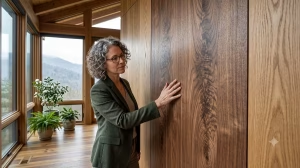
A true craftsperson respects these natural qualities. A skilled carpenter selects wood boards carefully, matching grain patterns across cabinet doors and hardwood flooring runs. A master mason places each natural stone intentionally, balancing shapes, colors, and mortar joints to create a beautiful, cohesive stone wall or fireplace. This thoughtful handling of raw materials gives custom homes an authentic, timeless quality.
Bridging Traditional Heritage and Modern Technology
There is a common misconception that craftsmanship means doing everything by hand using tools from a century ago. While traditional hand skills remain essential, modern building combines time-tested methods with advanced construction technology.
Today, a skilled craftsperson uses precision tools like laser levels, digital angle gauges, and computer-controlled milling equipment alongside traditional chisels and hand planes.
For example, high performance timber framing combines historic mortise-and-tenon wood joinery with engineered wood timbers and structural insulated panels. This blend provides modern energy efficiency while preserving historic architectural charm. Using advanced tools alongside proven trade techniques allows us to build stronger, tighter, and more comfortable homes than ever before.
Regional Context: Building in the Tri-Cities TN Region
Building a home in our local East Tennessee region requires specific building knowledge and regional craftsmanship. Our geography in Johnson City, Kingsport, and Bristol brings specific environmental factors that builders must respect:
- Mountain and Hillside Slope Framing: Many prime homesites in our region feature steep terrain or clay soils. Foundation craftsmanship here requires engineered footings, retaining wall waterproofing, and precise soil compaction to prevent settling.
- Seasonal Freeze-Thaw Cycles: Our winters bring freezing nights followed by milder days. Outdoor masonry, concrete drives, and stone porches require proper air-entrained concrete, expansion joints, and waterproofing sealers to prevent cracking and spalling.
- Humid Mountain Summers: Our summer humidity demands excellent vapor barrier placement, crawl space encapsulation craftsmanship, and properly sized dehumidification systems to protect wood framing and indoor air quality.
When your builder understands regional building science and local weather patterns, their craftsmanship keeps your home protected no matter what East Tennessee weather brings.
How to Ensure True Craftsmanship in Your Custom Build
Now that you understand why craftsmanship is so vital, how do you make sure you get it in your own custom build? As an engineer and former builder general manager, I recommend taking a structured, analytical approach to choosing your builder and monitoring your project.
                           YOUR BUILDER VETTING PROCESS

   Step 1: Check Active Sites  --> Look for clean, organized job sites
   Step 2: Ask Technical Questions --> Ask about framing & moisture standards
   Step 3: Inspect Rough-In Work  --> Check wiring, plumbing, and flashing
   Step 4: Verify Team Alignment --> Ensure architect & builder communicate
Vetting Custom Builders and Subcontractors
Not every builder who uses the word quality in their marketing actually delivers high-level craftsmanship. To find a true builder of quality, you need to look past glossy sales brochures and inspect active construction sites.
Here are practical questions to ask prospective custom builders:
- Can I visit one of your active framing-phase job sites?
- What to look for: A clean, organized site is a sign of a disciplined builder. Look for straight wall studs, swept floors, and building materials covered and protected from rain.
- What are your standard wall and floor framing tolerances?
- What to look for: A builder committed to craftsmanship will aim for tolerances tighter than standard residential codes, often within an eighth or sixteenth of an inch.
- How do you handle crawl space or foundation waterproofing?
- What to look for: Look for multi-layer waterproofing systems, perimeter drain tile installations, and full crawl space encapsulation rather than basic dampproof coatings.
- Do you use the same trade subcontractors on every project?
- What to look for: Strong relationships with skilled, long-term trade partners result in consistency across electrical, plumbing, framing, and finish trim work.
The Collaboration Between Architect, Engineer, and Builder
The highest level of craftsmanship happens when your architect, structural engineer, and custom builder work together as a team from the start.
       +-------------------------------------------------------+
       |             TRIANGLE OF BUILD COLLABORATION           |
       |                                                       |
       |                   ARCHITECT                           |
       |                  /         \                          |
       |                 /           \                         |
       |                /             \                        |
       |      ENGINEER ----------------- BUILDER               |
       |                                                       |
       +-------------------------------------------------------+
When all three professionals collaborate early during design, potential construction problems are solved on paper long before ground is broken. The architect sets the aesthetic vision, the engineer designs strong load paths, and the builder offers practical feedback on material availability, labor techniques, and cost efficiency. This collaborative approach prevents expensive field changes and ensures the final build matches the original design intent flawlessly.
Red Flags vs. Benchmarks of Quality
When you walk through your home during construction, knowing what to look for helps you catch errors early. Here is a handy reference guide comparing poor construction habits against true benchmarks of craftsmanship:
RED FLAGS (Poor Construction):
- Piles of trash and unprotected lumber soaking in mud on site
- Large gaps between framing members filled with excess spray foam
- Squeaky floorboards underfoot during rough framing
- Flashing tape applied haphazardly over dirty or wet surfaces
- Plumbing pipes cut roughly through load-bearing floor joists

BENCHMARKS OF QUALITY (True Craftsmanship):
- Clean, organized job sites with lumber stacked neatly off the ground
- Tight, flush wood joints fastened securely with proper hardware
- Subfloors glued and screwed firmly to joists with zero flex
- Flashing layered smoothly in water-shedding order around openings
- Cleanly drilled holes centered in studs for wiring and pipe runs
Craftsmanship as a Legacy
When you step back and look at the entire process of designing and constructing a custom home, it becomes clear that building is about much more than assembling wood, brick, and drywall. It is about creating a safe, comfortable, and lasting environment where your family will make memories for years to come.
The importance of craftsmanship in architecture is found in every layer of a well-built home. It lives inside the precise framing that protects your family during storms. It exists in the quiet, sound-isolated rooms that give you a restful night of sleep. It shines in the custom millwork and hand-fitted cabinetry that bring beauty and functional organization to your everyday routines.
As you begin your custom home building journey in the Tri-Cities area or anywhere else, remember to look beyond surface cosmetic finishes. Prioritize structural integrity, demand tight construction tolerances, and choose a team of builders and tradespeople who take true pride in their craft.
Investing in high quality building guarantees that your custom build will not only look beautiful on move-in day, but will stand as a proud, enduring legacy for decades to come.
Frequently Asked Questions about Craftsmanship in Architecture
To help you review the main takeaways of this guide, here are quick summaries of the most common homebuyer questions:
- What is craftsmanship in architecture?Craftsmanship is the skilled physical construction and material execution of architectural plans, ensuring tight building tolerances, long-term durability, and beautiful finish work.
- Why is craftsmanship important in building design?It ensures that an architectural design performs as intended, preventing water leaks, energy loss, structural sagging, and costly future repairs.
- How does craftsmanship affect the value and longevity of a home?Craftsmanship protects your equity by drastically reducing maintenance costs, improving energy efficiency, and helping your home retain top resale value over time.
- What is the difference between architectural design and craftsmanship?Architectural design is the spatial planning and aesthetic vision created on paper, while craftsmanship is the physical construction work that brings that design to life with technical accuracy.
- How does craftsmanship influence the emotional feel and living experience of a space?Craftsmanship eliminates visual clutter and physical flaws like floor squeaks and drafts, creating a quiet, comfortable, and harmonious home environment.