

The Hidden Risk of Private Well Systems
When you buy or build a home connected to a municipal city water line, you rarely think about where your water comes from. You turn on the faucet, brush your teeth, start the dishwasher, or run a load of laundry without a second thought. The city manages the pressure, monitors the pipes, replaces failing pumps, and ensures that water flows continuously to your tap.
However, when you live in a custom home powered by a private well system, you become the chief operating officer of your personal water utility. As a custom home builder with a background in civil engineering and hands-on carpentry, I have worked with hundreds of families across the Tri-Cities area of Tennessee. Whether you are building on a scenic hillside in Johnson City or setting up a homestead near Kingsport, owning a well offers wonderful independence. You get fresh groundwater without monthly municipal water bills. But that independence comes with direct personal responsibility.
The fundamental vulnerability of a private well system is that its most vital component is completely hidden from view. Your submersible well pump sits hundreds of feet underground, submerged in cold water, suspended at the end of a long drop pipe. Your pressure tank, pressure switch, and control box sit tucked away in a dark crawlspace, a basement corner, or an exterior pump house. Because these parts are out of sight, they are almost always out of mind. Most homeowners do not give their well system a single thought until the morning they turn on the shower and nothing comes out but a sputtering gasp of air.
When a well pump fails, the disruption to your daily life is instant and severe. For a busy family, losing running water stops everything in its tracks. You cannot cook dinner, flush toilets, wash clothes, or bathe your kids. The domestic routine comes to a complete halt. Beyond the immediate chaos, the financial impact of an unexpected well failure can be devastating.
Replacing a deep-well submersible pump currently costs between $3,000 and $8,000 or more, depending on the depth of your well, the horsepower of the motor, and local labor rates. If a hidden pipe burst occurs in your crawlspace while you are away at work, the resulting mold, rotted subflooring, and structural damage can easily add tens of thousands of dollars to the repair bill.
Most well pump failures do not happen overnight out of nowhere. Long before a motor burns out completely, your well system sends subtle warning signals. A pump might start turning on and off every thirty seconds because the pressure tank lost its air bladder charge. The motor might draw excessive electrical current because mineral scale is binding the internal impellers. Or the water level in your aquifer might drop during a hot, dry summer, forcing the pump to suck in air and run dry.
Under normal circumstances, you would never notice these warning signs until the pump suffers catastrophic damage. This is where modern technology changes the game. By installing smart water monitors, you can shift your home maintenance strategy from reactive emergency repair to proactive digital prevention. Modern smart water monitors act as a continuous health tracking system for your home water supply. They monitor electrical current, pipe pressure, and flow rates around the clock. By sending real-time alerts directly to your smartphone, smart water monitors let you catch minor mechanical issues, small plumbing leaks, and declining water levels long before they ruin your day or drain your savings account.
How Smart Water Monitors Track Well Pump Health
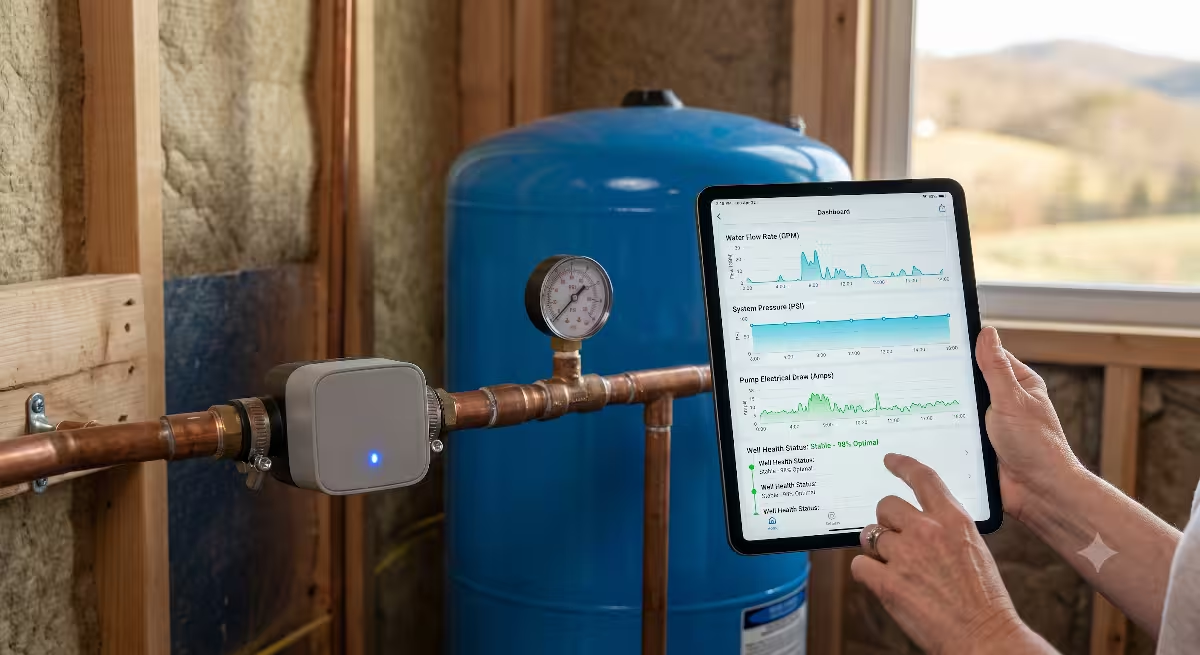
To understand why smart water monitors are so effective, it helps to look at how a private well system operates from an engineering perspective. A standard well setup relies on a delicate balance between mechanical components, electrical power, and fluid dynamics. When any part of this balance is disrupted, the system exhibits clear physical symptoms. Smart water monitors use advanced sensors to measure these physical changes in real time.
+-----------------------------------------------------------------------------------+
|                        SMART WELL PUMP MONITORING SYSTEM                          |
|                                                                                   |
|  [Underground Aquifer] ---> [Submersible Pump] ---> [Pressure Switch / Tank]     |
|                                    |                        |                     |
|                                    v                        v                     |
|                           (Current Sensors)        (Pressure Sensors)             |
|                                    |                        |                     |
|                                    +------------+-----------+                     |
|                                                 |                                 |
|                                                 v                                 |
|                                    [Smart Water Monitor Hub]                      |
|                                                 |                                 |
|                                                 v                                 |
|                                     (Smartphone App Alerts)                       |
+-----------------------------------------------------------------------------------+
Electrical Current Sensing via Current Transformers (CT Clamps)
One of the most reliable ways smart water monitors evaluate pump health is by watching the electricity the motor consumes. Submersible well pumps are high-power electrical machines. Most residential pumps run on 230-volt electrical circuits, while smaller or shallow setups may run on 115-volt circuits.
Smart water monitors often utilize non-invasive current transformers, commonly called CT clamps. These small, hinged sensors snap around the electrical wires leading to your pump control box or circuit breaker panel. CT clamps measure the magnetic field created by the electrical current passing through the wires, allowing the monitor to calculate exact amperage draw without cutting into live electrical lines.
When your well pump turns on under healthy conditions, it draws a predictable amount of electrical current. For example, a typical 1-horsepower, 230-volt pump might draw around 6 to 8 amps during normal operation. If mineral deposits begin to build up inside the pump housing, or if the mechanical bearings begin to wear out, the motor has to work much harder to push water. This mechanical resistance forces the motor to draw higher amperage.
Smart water monitors continuously log this electrical current. If the monitor detects a sudden high-amperage spike or a steady upward trend in baseline current over several weeks, it alerts you immediately. By flagging electrical strain early, smart water monitors give you the opportunity to clear mineral scaling or replace an aging motor on your own schedule, rather than waiting for the motor to overheat and short out during a holiday weekend.
Ultrasonic and Inline Flow Monitoring
Measuring electrical power tells you when the pump is running, but it does not tell you how much water is actually moving through your pipes. That is why high-quality smart water monitors combine electrical tracking with flow rate monitoring measured in Gallons Per Minute (GPM).
There are two primary methods smart water monitors use to track water movement: ultrasonic sensing and inline physical turbine monitoring.
Ultrasonic flow monitors attach to the exterior of your main water pipe using spring-loaded clamps. They transmit high-frequency sound waves through the pipe wall and into the flowing water. By calculating the time difference between sound waves traveling upstream and downstream (known as the transit-time Doppler effect), the monitor calculates the exact volume of water flowing through the pipe without ever coming into physical contact with the water itself.
Inline flow monitors, on the other hand, are plumbed directly into the main supply pipe just after your pressure tank. Water passes directly through a small, precision-engineered turbine or magnetic sensor inside the fitting.
By tracking continuous flow rates, smart water monitors establish a baseline profile of your family’s daily water usage. The system learns what a standard shower, toilet flush, or irrigation cycle looks like. More importantly, smart water monitors can detect extremely low, continuous water movement. If a toilet flapper in an upstairs bathroom leaks just 0.2 gallons per minute, human ears will never hear it. But over twenty-four hours, that tiny leak wastes nearly 300 gallons of water and forces your well pump to cycle dozens of times unnecessarily. Smart water monitors spot these tiny flow anomalies instantly, notifying you on your phone so you can fix a five-dollar rubber seal before it destroys your pump motor.
System Pressure and Water Level Telemetry
The third critical pillar of pump health tracking involves monitoring water pressure and aquifer levels. In a traditional system, a mechanical pressure switch monitors system pressure. This mechanical switch uses a rubber diaphragm and metal springs to turn the pump on when pressure drops to a low setpoint (typically 30 or 40 pounds per square inch, or PSI) and turns the pump off when pressure reaches a high setpoint (typically 50 or 60 PSI).
Smart water monitors upgrade this old mechanical setup by introducing digital pressure transducers. These electronic sensors read line pressure hundreds of times per second, transmitting continuous PSI data to your central hub.
Beyond surface pressure, advanced smart water monitors use specialized submersible pressure sensors dropped down into the well casing itself. These water level telemetry sensors measure static water level (the depth of the water when the pump is resting), drawdown (how far the water level drops while the pump is running), and recovery rate (how quickly the underground aquifer refilling the well returns to its baseline resting level after heavy water use).
If dry weather causes the local water table to drop, or if your well begins to silt up, the smart water monitor tracks the declining recovery rate long before your faucets run dry. This gives you advance warning to adjust your household usage, install water-saving fixtures, or schedule a well contractor to deepen the well.
Key Features and Benefits of Smart Well Pump Trackers
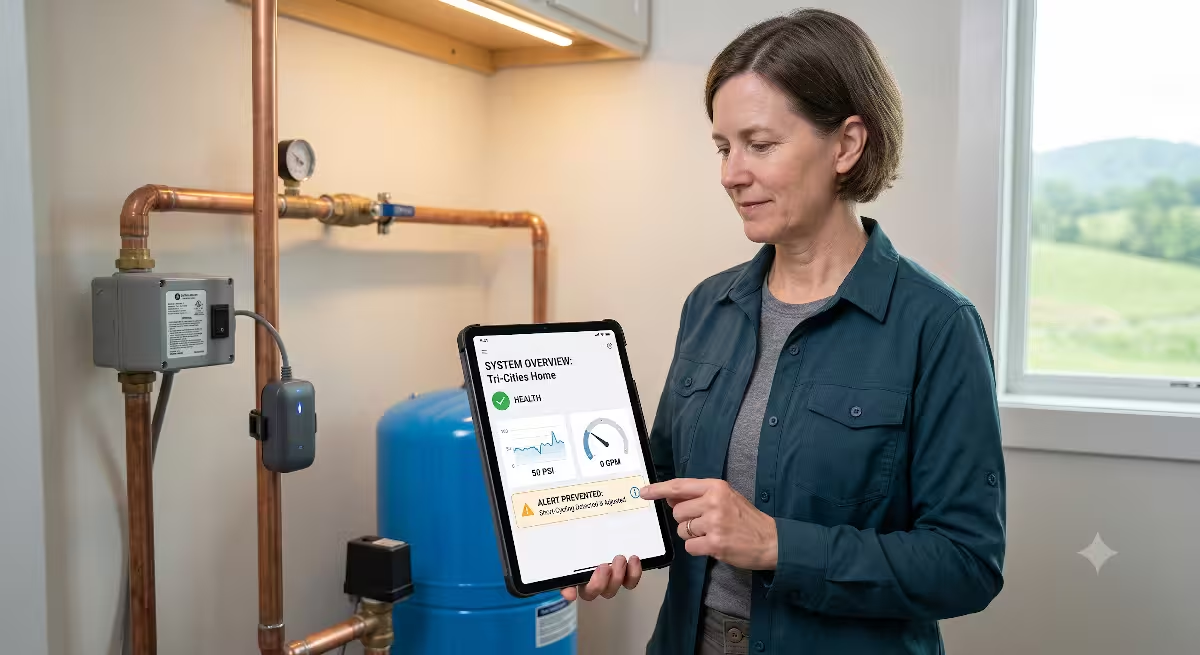
Investing in smart water monitors provides a wide range of operational features designed to protect your equipment, maintain home comfort, and give you complete peace of mind.
+-----------------------------------------------------------------------------------+
|                        PROTECTION FEATURES & SYSTEM BENEFITS                      |
|                                                                                   |
|  [Dry-Run Protection]   ---> Stops motor when well water level drops too low     |
|  [Short-Cycle Alerts]   ---> Detects waterlogged pressure tanks & bad valves     |
|  [Automatic Shutoff]    ---> Isolates water lines during sudden pipe bursts       |
|  [Electrical Defense]   ---> Monitors dangerous voltage spikes & power drops      |
+-----------------------------------------------------------------------------------+
Dry-Run and Low-Water Protection
Running a submersible pump without water is one of the fastest ways to destroy it. Ground well pumps rely on the cool groundwater flowing past the internal motor housing to keep the electrical windings cool. The water moving through the plastic or stainless-steel impellers also acts as a natural lubricant.
If your well runs low due to seasonal drought or extended water use (such as filling a swimming pool or running lawn sprinklers for hours), the water level can drop below the pump intake screen. When this happens, the pump sucks in air instead of water. Without water to cool and lubricate the unit, internal friction causes temperatures inside the motor to skyrocket within seconds. The impellers warp, melt, and seize, burning out the motor windings completely.
Smart water monitors provide reliable dry-run protection. By constantly tracking power consumption and flow rates, smart water monitors recognize the distinct signature of a dry-running pump. When a pump sucks air, the mechanical load on the motor disappears instantly, causing electrical current draw to plummet while the motor continues to spin at high speed.
When smart water monitors detect this sudden drop in electrical load accompanied by zero water flow, they issue an immediate emergency alert. Advanced units equipped with integrated relay controls can automatically cut electrical power to the pump instantly, turning off the motor before thermal damage occurs. The system keeps the pump powered down until the underground aquifer recovers to a safe operating level.
Short-Cycle Detection
Short-cycling is a silent killer of well pumps. It occurs when your well pump turns on and off rapidly in short bursts—sometimes every ten to fifteen seconds—whenever a faucet is turned on anywhere in the house.
Short-cycling is almost always caused by a failure in your system pressure tank. A standard pressure tank contains a heavy-duty rubber bladder filled with compressed air. This air cushion acts as a hydraulic shock absorber, storing pressurized water so you can run a faucet or flush a toilet without forcing the pump motor to start up every single time.
Over time, the rubber bladder inside the tank can degrade, develop small tears, or lose its air charge. When the tank becomes waterlogged, there is no air cushion left to absorb pressure changes. The moment a tap opens, line pressure drops instantly to 30 PSI, triggering the pump. Two seconds later, pressure shoots up to 50 PSI, shutting the pump off.
Starting an electric motor causes far more mechanical wear and heat buildup than letting the motor run continuously for several minutes. A healthy well pump should start no more than 60 to 80 times in a twenty-four-hour period. A short-cycling pump can turn on over 1,000 times a day. This rapid cycling destroys electrical start capacitors, burns out control box relays, and dramatically shortens the life of the pump motor.
Smart water monitors track cycle counts and run durations with extreme precision. If your system begins cycling more frequently than normal, the monitor identifies the pattern right away. It sends an alert to your phone stating that short-cycling has been detected. This allows you to recharge your pressure tank air bladder or replace a failing bladder tank for a few hundred dollars before the short-cycling destroys your multi-thousand-dollar pump.
Continuous Leak Detection and Automatic Shutoff
Major plumbing leaks are every homeowner’s nightmare. A burst washing machine hose, a cracked supply line behind a refrigerator ice maker, or a frozen pipe in a crawlspace can discharge hundreds of gallons of water per hour into your home.
In a city water setup, a burst pipe floods your home until someone physically turns off the main supply valve. In a private well setup, the situation is even worse. A burst pipe causes line pressure to drop to zero, which signals your well pump to run continuously at maximum capacity. The pump will keep pumping ground water directly into your home until your crawlspace is submerged, your electrical panel shorts out, or the well runs completely dry.
Smart water monitors solve this hazard by combining flow monitoring with intelligent leak alerts and automatic shutoff valves. You can customize the parameters inside your monitor app based on your family’s regular habits. For example, you can instruct the system to flag any continuous water flow that lasts longer than 45 minutes without stopping.
If a supply line bursts in the middle of the night while everyone is sleeping, smart water monitors recognize that continuous high-volume flow as an anomaly. The system sends an audible alarm to your smartphone and commands an electronic shutoff valve to close main line water flow immediately. At the same time, smart water monitors equipped with pump control relays shut off power to the pump itself. This two-step protection stops active flooding in its tracks and prevents your well pump from burning itself out while attempting to feed a massive leak.
Power Surge and Electrical Anomaly Monitoring
Electric well pumps are sensitive to the quality of electrical power supplied to your home. In rural and suburban locations across the region, severe weather, summer thunderstorms, and utility grid issues can cause frequent voltage drops (brownouts), high-voltage surges, and phase imbalances.
Low voltage is particularly dangerous for electric motors. When line voltage drops, an electric motor must draw higher current to produce the same mechanical output power. This high current generates excessive heat inside the copper motor windings. If a pump tries to start during a brownout when voltage drops to 190 volts instead of 230 volts, the motor may stall entirely while continuing to draw massive current, melting the internal wire insulation.
Smart water monitors continuously measure incoming line voltage alongside current draw. If incoming line voltage drops below safe operational limits, smart water monitors flag the dangerous power condition and safely disconnect power to the pump motor until utility power stabilizes. By protecting your motor from unstable grid power, smart water monitors prevent costly electrical failures caused by utility issues beyond your control.
System Architecture Comparison: Which Monitor Type Fits Your Well Setup?
Not all smart water monitors are designed the same way. Depending on your home’s layout, budget, technical comfort level, and specific well setup, different monitoring architectures offer distinct advantages. Understanding these differences helps you choose the right system for your property.
+-----------------------------------------------------------------------------------+
|                        MONITOR ARCHITECTURE COMPARISON                            |
|                                                                                   |
|  [Clamp-On Sensors]    ---> Easy DIY install, tracks power & flow externally      |
|  [Inline Controllers]  ---> Plumbed into line, provides exact GPM & auto-shutoff    |
|  [Submersible Telemetry]--> Dropped in well casing, measures deep aquifer levels   |
+-----------------------------------------------------------------------------------+
Non-Invasive Clamp-On Trackers
Non-invasive clamp-on smart water monitors are designed primarily for quick, straightforward installation without needing to cut into existing plumbing pipes or clear heavy electrical permits. These systems rely on external current transformer clamps placed inside your electrical panel or pump switch box, alongside acoustic or ultrasonic sensors strapped onto the outside of your main copper, PVC, or PEX supply line.
These entry-level systems excel at basic operational awareness. They monitor power consumption, track total pump runtime hours, count daily start-stop cycles, and provide reliable estimates of water usage based on ultrasonic flow calculations.
Because clamp-on smart water monitors do not penetrate the water line, they can be installed by handy homeowners in about thirty to forty-five minutes. However, because they lack internal physical valves, most non-invasive clamp-on models cannot automatically shut off physical water flow during an emergency unless paired with an optional secondary smart shutoff valve motor.
Inline Smart Controllers
Inline smart controllers represent the professional standard for comprehensive home water protection. These systems feature physical hardware units that are plumbed directly into your main water line right after your pressure tank setup. Inline smart water monitors combine internal magnetic flow turbines, digital pressure transducers, temperature sensors, and motorized ball valves into a single compact brass or high-grade composite housing.
Inline smart water monitors deliver precise, real-time measurements of flow rate down to fractions of a gallon per minute, while continuously reading system pressure in exact PSI increments. Because inline systems feature direct physical contact with the water stream, they can detect the smallest micro-leaks in your home plumbing network.
Furthermore, inline smart water monitors include built-in automatic shutoff capabilities. When an anomaly or massive leak occurs, the controller rotates its internal motorized valve to cut physical water flow instantly, while communicating wirelessly with a smart electrical relay to disconnect power to the well pump.
While inline systems cost more upfront and typically require basic plumbing and electrical skills to install, they offer the highest level of physical protection for private well systems.
Submersible Well-Head Telemetry Systems
For rural estates, working farms, mountain properties with deep wells, or regions prone to low water tables, submersible well-head telemetry systems offer the ultimate in deep-well diagnostics. These heavy-duty industrial systems feature specialized sensor packages installed directly down inside the well casing itself.
A well-head telemetry system includes a heavy-duty submersible pressure transducer lowered hundreds of feet down the well bore to sit below the resting water level. This deep sensor connects via armored signal cable to an exterior weather-proof gateway mounted on top of the well casing head. The gateway collects continuous data regarding static water depth, pumping drawdown levels, and aquifer recovery rates.
Submersible telemetry smart water monitors are designed for properties where water availability is a primary concern. They allow homeowners to monitor the health of their groundwater source across different seasons and weather conditions.
While these systems represent the highest financial investment and usually require professional well technicians to lower sensors into the well bore, they deliver unmatched insight into deep aquifer dynamics.
System Selection Guide
To help you compare your options, the table below breaks down the key characteristics, target applications, and typical cost ranges for each smart water monitor architecture:
| Monitor Type | Primary Sensors Used | Primary Best-Use Case | Installation Complexity | Price Range |
| Non-Invasive Clamp-On Trackers | Current Transformer Clamps, Ultrasonic Pipe Sensors | Easy DIY installation, monitoring pump electrical health and basic flow patterns | Low (30-45 minutes, basic hand tools) | $150 to $400 |
| Inline Smart Controllers | Internal Flow Turbines, Digital Pressure Transducers, Motorized Valves | Complete leak defense, precise GPM tracking, direct automatic water shutoff | Moderate to High (Requires plumbing cuts and electrical wiring) | $500 to $1,200 |
| Submersible Well-Head Telemetry | Deep-Well Water Level Transducers, IoT Gateway, Power Sensors | Deep wells, mountain properties, low-yield aquifers, and full groundwater tracking | High (Requires professional installation inside well casing) | $1,500 to $3,000+ |
Step-by-Step Guide to Choosing and Installing a Monitor
Selecting and installing the right smart water monitor setup requires careful consideration of your home’s existing mechanical infrastructure. Follow this step-by-step guide to ensure a smooth, successful system integration.
+-----------------------------------------------------------------------------------+
|                        INSTALLATION PREPARATION STEPS                             |
|                                                                                   |
|  [1. System Audit]     ---> Check voltage, pipe size, & pump placement            |
|  [2. Connectivity]     ---> Verify Wi-Fi strength or choose cellular gateway      |
|  [3. Mount & Wire]     ---> Attach sensors, current clamps, & control relays      |
|  [4. Calibration]      ---> Set pressure cutpoints, leak limits, & app alerts     |
+-----------------------------------------------------------------------------------+
Step 1: Assess Your Well System Parameters
Before purchasing any monitoring hardware, take time to conduct a thorough audit of your well system setup. Locate your pressure tank, pressure switch, pump control box, and main electrical breaker panel. Document the following critical technical details:
Electrical Voltage and Phase: Check your pump control box or main circuit breaker to determine whether your well pump operates on a 115-volt or 230-volt circuit. Most residential submersible pumps are 230-volt single-phase units, but smaller jet pumps may use 115 volts. Verify the maximum wire gauge size so you select current transformer clamps that fit cleanly around your supply conductors.
Pipe Material and Diameter: Examine the main water supply pipe coming out of your pressure tank before it branches off into your home plumbing. Note the pipe material (Rigid Copper, Schedule 40 PVC, PEX, or Galvanized Steel) and measure its outer diameter (typically 3/4-inch, 1-inch, or 1-1/4-inch). Non-invasive ultrasonic smart water monitors require compatible pipe materials to transmit sound waves cleanly, while inline smart water monitors must match your pipe size or use appropriate reduction adapters.
Pump Location and Type: Identify whether your system utilizes an underground submersible pump inside the well casing, or an above-ground jet pump located inside a basement or mechanical closet. Verify whether your pressure tank uses a modern internal bladder design or an older galvanized air-over-water setup.
Step 2: Evaluate Connectivity Requirements
Smart water monitors rely on continuous communication to send real-time alerts to your mobile phone. Therefore, evaluating wireless signal strength around your mechanical equipment is a crucial planning step.
Most standard residential smart water monitors use 2.4 GHz Wi-Fi to connect to your home internet router. Because well pressure tanks are often tucked away in remote crawlspaces, concrete basements, or detached exterior pump houses, Wi-Fi coverage can be weak or spotty in these areas.
Before purchasing a Wi-Fi-based system, stand next to your pressure tank with your smartphone and test your home Wi-Fi signal strength. If the signal is weak, consider installing a dedicated Wi-Fi mesh node or powerline network extender in the room closest to your well equipment.
For properties where extending home Wi-Fi is impractical (such as remote well heads located hundreds of feet away from the main house), look for smart water monitors equipped with cellular IoT connectivity (LTE-M or NB-IoT) or long-range wireless protocols like LoRaWAN. Cellular-enabled smart water monitors operate independently of your home Wi-Fi network, ensuring continuous data transmission even during home internet outages.
Step 3: Decide Between DIY vs. Professional Installation
Determining whether to install your smart water monitor yourself or hire a qualified professional depends on the architecture of the system you select and your personal comfort with basic home plumbing and electrical work.
DIY Installation Path: Non-invasive clamp-on smart water monitors are well within the capability of handy homeowners. Installing these units involves mounting the main smart hub on a wall near an electrical outlet, snapping current transformer clamps around the insulated wires inside your pump control box, and clamping ultrasonic sensors onto your main water line. No pipe cutting or electrical wiring connections are required.
Professional Installation Path: If you select an inline smart controller or a submersible well-head telemetry system, hiring a licensed plumber and electrician—or an experienced well service contractor—is highly recommended. Installing inline systems requires cutting into your primary copper or PEX supply line, soldering or crimping new mechanical fittings, installing inline flow meters, and wiring hardwired electrical power relays into your 230-volt pump circuit. Working with 230-volt power carries serious shock hazards, and improper plumbing connections can lead to major structural leaks. A qualified contractor ensures all work meets local building codes and operates safely.
Step 4: System Calibration and App Configuration
Once your hardware is physically installed and powered on, the final step is setting up software parameters within the monitor app:
Connect to Network: Pair your smart water monitor hub to your home Wi-Fi or activate its cellular data plan following the manufacturer’s pairing steps.
Set Pressure and Current Baselines: Enter your well pump’s rated operating parameters into the app settings, including operating voltage, motor horsepower, rated full-load amperage (found on the pump control box nameplate), and pressure switch cut-in/cut-out settings (e.g., 30/50 PSI or 40/60 PSI).
Establish Custom Alert Limits: Configure your push notification preferences. Set threshold limits for maximum continuous run duration (e.g., flag any continuous pumping over 30 minutes), high/low pressure limits, low voltage warnings, and unexpected middle-of-the-night flow detection.
Run Calibration Test: Perform a controlled test by opening a garden hose or bathtub faucet for several minutes. Verify that the app accurately reflects real-time flow rate in GPM, displays steady pressure readings, and logs motor amperage draw correctly.
Regional Groundwater and Building Realities (Builder Insights)

As a builder who has designed, managed, and constructed custom homes across the East Tennessee region, I can tell you that local geology plays a massive role in how private well systems perform over time. The mountain valleys and rolling hills of the Tri-Cities region sit atop unique geological formations that create specific challenges for private well owners.
+-----------------------------------------------------------------------------------+
|                        REGIONAL GROUNDWATER CHALLENGES                            |
|                                                                                   |
|  [Karst Limestone]     ---> Dissolved minerals lead to heavy impeller scale       |
|  [Seasonal Droughts]   ---> Water table drops rapidly during late summer months   |
|  [Mountain Terrain]    ---> Deep well depths demand higher pump motor work        |
|  [Smart Mitigation]    ---> Early tracking prevents mineral & low-water failure   |
+-----------------------------------------------------------------------------------+
Geological Challenges in East Tennessee Karst Limestone
A large portion of East Tennessee rests on karst topography, a geological landscape characterized by soluble bedrocks such as limestone and dolomite. Over millions of years, acidic groundwater dissolves underground limestone pathways, creating deep underground fissures, subterranean streams, and mineral-rich aquifers.
While karst aquifers often yield generous water volumes, the water pumped out of limestone formations is exceptionally hard. It carries high concentrations of dissolved calcium carbonate, magnesium, and dissolved silica. When this mineral-heavy water passes through your submersible pump, heat and friction cause dissolved minerals to precipitate out of solution, forming hard scale deposits inside the pump housing, on internal impellers, and inside pressure switches.
Over several years, mineral buildup increases internal drag on pump impellers, forcing the motor to draw higher amperage to move water. Left unchecked, scale can clog the small sensing port on your mechanical pressure switch, causing the switch to stick in the “on” position.
Smart water monitors are invaluable in karst limestone environments. By tracking amperage draw and pressure response times continuously, smart water monitors identify the early signatures of mineral drag long before scale locks up the motor completely. This gives you advance notice to flush your pressure lines or treat your well system with safe, approved mineral-dissolving treatments.
Additionally, groundwater levels in karst terrain can fluctuate sharply between seasons. During rainy spring months, the underground water table rises rapidly. But during dry late-summer months, local water tables can drop by dozens of feet in a matter of weeks.
Homeowners without monitoring systems often do not realize their water table has dropped until their pump sucks air, runs dry, and burns out its motor during a hot August heatwave. Smart water monitors provide continuous water level and drawdown tracking, giving rural families clear advance notice when groundwater drops to low thresholds so they can adjust water usage proactively.
Designing New Custom Builds for Smart Monitoring
If you are currently in the process of planning or building a custom home, integrating smart water monitors into your initial mechanical design is far easier and less expensive than retrofitting equipment years later. When I consult with clients on custom building plans, I always recommend incorporating smart monitoring infrastructure right from the start:
Dedicated Utility Closet Space: Avoid placing your well pressure tank and switch in a cramped, damp, inaccessible crawlspace corner. Design a clean, climate-controlled mechanical room or dedicated basement utility area with comfortable workspace around your well equipment. This makes visual inspections, sensor maintenance, and system upgrades simple and safe.
Electrical Power and Signal Outlets: Ensure your electrician installs dedicated, surge-protected 120-volt auxiliary electrical outlets right next to your well pressure tank and pump control panel. Smart water monitor hubs, gateways, and motorized shutoff valves require reliable auxiliary power.
Plumbing Layout and Bypass Loops: Have your plumbing contractor install a standardized 1-inch or 1-1/4-inch main manifold assembly equipped with clear, accessible straight pipe runs for ultrasonic or inline smart water monitors. Incorporate three-valve bypass loops around motorized shutoff valves so you can easily isolate hardware for future maintenance without turning off water to the entire house.
Hardwired Network Cables: While Wi-Fi is convenient, running a shielded Cat6 Ethernet cable directly from your central home network router to your mechanical utility room ensures rock-solid, zero-latency internet connectivity for your smart water monitor gateway, completely eliminating Wi-Fi dropouts.
Financial Breakdown and Return on Investment (ROI)
When evaluating any smart home upgrade, looking at the financial return on investment is just good practical management. Smart water monitors are not just high-tech gadgets; they are protective financial investments that pay for themselves by preventing catastrophic repairs and reducing everyday operational costs.
+-----------------------------------------------------------------------------------+
|                           FINANCIAL RETURN ON INVESTMENT                          |
|                                                                                   |
|  [Prevented Replacement]  ---> Saves $3,000 to $8,000+ in emergency pump repairs  |
|  [Flood Avoidance]        ---> Saves $10,000+ in water damage restoration         |
|  [Lower Electric Bills]   ---> Cuts waste from continuously running stuck pumps   |
|  [Insurance Discounts]    ---> Provides 5% to 15% annual premium reductions       |
+-----------------------------------------------------------------------------------+
Direct Cost Savings on Pump Replacement and Repairs
The most obvious financial benefit of installing smart water monitors is avoiding premature pump failure. The total installed cost to replace a deep-well submersible pump breaks down as follows:
Submersible Pump and Motor Assembly: $1,200 to $2,800
Heavy-Duty Submersible Electrical Wiring and Pipe Drop: $500 to $1,200
Crane / Pump Hoist Rigging and Well Crew Labor: $1,200 to $2,500
Total Emergency Replacement Cost: $2,900 to $6,500+
If a pump failure occurs outside standard business hours—such as on a Sunday morning or during a major winter storm—emergency service call rates can easily add $1,000 or more to the total invoice.
By preventing dry-run overheating, catching short-cycling before motor windings melt, and identifying high-amperage electrical strain early, smart water monitors easily double the operational lifespan of your well pump setup. Extending the life of a $5,000 well system by five to ten years yields immediate, direct capital savings.
Preventing Catastrophic Water Damage
Physical water damage caused by plumbing leaks is one of the most frequent and expensive homeowners insurance claims in the United States. According to industry data, the average residential water damage claim exceeds $11,000.
In a private well system where a pump can continuously push thousands of gallons into a flooded crawlspace or finished basement until power is cut, total remediation costs often exceed $25,000.
A quality inline smart water monitor costing $500 to $800 that detects a broken pipe and automatically shuts off water flow within two minutes eliminates this massive financial risk entirely.
Energy Efficiency and Utility Savings
An unhealthy well pump is an energy hog. If a sticky pressure switch or a pinhole leak in a drop pipe causes your 1.5-horsepower pump to run continuously twenty-four hours a day, the motor consumes approximately 25 to 30 kilowatt-hours (kWh) of electricity daily. Over a single month, a stuck well pump can add $100 to $150 in unnecessary extra charges to your monthly electric bill.
Smart water monitors identify unexpected pump runtimes instantly. By alerting you to stuck switches or continuous minor leaks within hours rather than weeks, smart water monitors prevent costly energy waste and keep your monthly utility bills low.
Insurance Premium Discounts
Because smart water monitors featuring automatic shutoff capabilities significantly reduce the likelihood of major water damage claims, many top-tier insurance companies offer homeowners insurance discounts for properties equipped with qualified monitoring hardware.
Installing an approved smart water monitor with automatic shutoff can qualify your home for annual premium discounts ranging from 5% to 15%. Over several years, these insurance savings directly offset the initial purchase and installation cost of your monitoring system.
Common Questions Answered about Smart Water Monitors
To help answer common questions homeowners ask when researching smart water monitors for well pump tracking, here are clear, direct responses to standard search queries:
How do smart water monitors track well pump health?
Smart water monitors track well pump health by continuously reading electrical current (amperage) drawn by the pump motor, line water pressure (PSI), flow rates in Gallons Per Minute (GPM), and runtime cycle frequencies. The monitor establishes a baseline profile of normal operating conditions. When physical deviations occur—such as elevated electrical amperage from mechanical binding, rapid pressure drops from a waterlogged tank, or zero flow during active motor operation—the system sends real-time alert notifications directly to your smartphone app.
Can a smart water monitor prevent my well pump motor from burning out?
Yes, smart water monitors actively prevent motor burnout by identifying dangerous operating conditions before thermal damage occurs. Specifically, smart water monitors detect “dry-run” conditions (when well water levels drop below the pump intake) and short-cycling (when the pump turns on and off rapidly due to pressure tank failure). Advanced smart water monitors connected to pump control relays automatically cut electrical power to the pump when these conditions occur, stopping the motor safely before internal components overheat or burn out.
What is the difference between clamp-on sensors and inline well flow meters?
The main difference between clamp-on sensors and inline flow meters lies in how they interact with your plumbing pipes and electrical lines. Clamp-on smart water monitors use non-invasive external sensors snapped onto the outside of existing wires and pipes, allowing for quick DIY installation without cutting into plumbing. They estimate water flow acoustically or ultrasonically. Inline flow meters are plumbed directly inside the main water pipe, utilizing physical turbines and internal pressure transducers. Inline smart water monitors offer higher measurement precision, micro-leak detection, and integrated motorized automatic water shutoff valves.
Do smart well pump monitors work in rural areas without strong Wi-Fi?
Yes, smart water monitors operate reliably in rural locations lacking strong Wi-Fi coverage. Many manufacturers offer smart water monitors equipped with cellular IoT connectivity (such as LTE-M or NB-IoT networks) or long-range LoRaWAN radio frequency gateways. Cellular smart water monitors send data and emergency push alerts directly to your smartphone app over cellular networks, functioning completely independently of home internet routers or local Wi-Fi strength.
Final Checklist
Managing a private well system does not have to be a stressful guessing game. As homeowners, we spend significant effort maintaining our home interiors, landscaping, and heating and cooling systems. Protecting your home’s water supply deserves that same proactive attention.
By installing smart water monitors, you transform your private well from a hidden, vulnerable risk into a modern, transparent, self-monitoring asset. Whether you opt for an easy-to-install clamp-on tracker or a comprehensive inline controller with automatic shutoff, smart water monitors provide the real-time data and automated defenses needed to protect your home budget, prevent disastrous property flooding, and preserve family peace of mind.
To help you get started on your well protection journey, use this quick action checklist:
+-----------------------------------------------------------------------------------+
|                        HOMEOWNER ACTION CHECKLIST                                 |
|                                                                                   |
|  [ ] Audit System: Note voltage (115/230V), pipe size, & tank condition.          |
|  [ ] Check Wi-Fi: Ensure strong wireless signal near pressure switch setup.       |
|  [ ] Select Architecture: Choose Clamp-On, Inline, or Submersible monitor type.   |
|  [ ] Schedule Installation: Complete DIY setup or hire a licensed pro contractor. |
|  [ ] Set Custom Alerts: Configure app limits for runtime, pressure, & flow.       |
|  [ ] Notify Insurance: Submit monitor receipt to insurer for policy discounts.    |
+-----------------------------------------------------------------------------------+