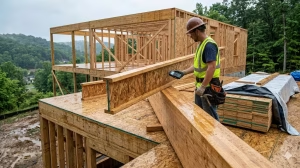
Custom home buyers look at a beautiful piece of vacant land in Washington or Sullivan County, and often see a future home. However, before you ever hammer a single nail or pour concrete, you have to solve the puzzle of how to bring the modern world to that dirt. This guide is built to help you understand how to manage the utilities on your land with precision and integrity.
Building a custom home is a big dream. It is also a big investment. Many buyers who found the perfect lot with a mountain view, only to find out that getting power or water to that spot cost more than the land itself. That is why we must be competent in our planning. We are going to walk through every step of getting your property ready. We will talk about everything from the wires in the air to the pipes deep in the ground. By the time we are done, you will have a clear map for your project.
Phase 1: The Investigation Before You Buy
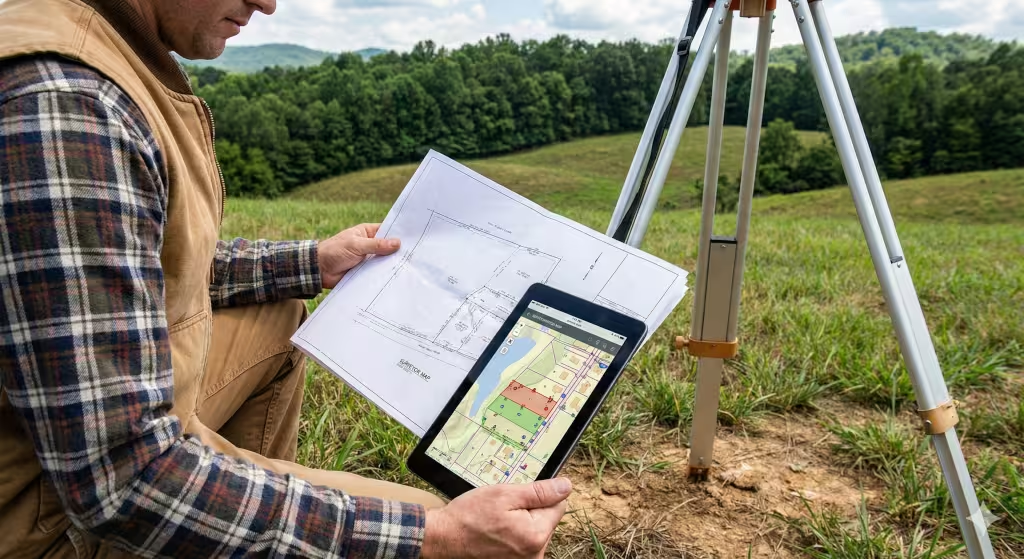
The very first thing you must do is become a bit of a detective. You might be looking at a lot that looks perfect, but looks can be deceiving. In the Tri-Cities, we have many different types of land. Some are in city limits, some in the county, and some are out in the woods. You need to know which utilities are nearby before you sign any papers.
One of the best tools we have is the Tennessee Property Data portal. You can also look at GIS maps for your specific county. These maps show property lines and often show where the main lines for utilities are located. If you see a water line on the map that stops two miles away from your land, you know you have a challenge.
You also need to check for what we call easements. An easement is a legal right for a company or a person to use part of your land. For example, the power company might have an easement to run lines across the back of your lot. If you want to get your utilities from the road to your house, you might need an easement from your neighbor. This is a legal step that requires a lot of precision. You do not want to start digging only to find out you are on someone else’s property.
Another thing to look for is the history of the land. Sometimes, a piece of land had a house on it fifty years ago. There might be an old well or an old septic tank hidden under the grass. Knowing this helps you plan. It can save you money if there is already a connection point for utilities that we can reuse or upgrade.
Power: Flipping the Switch in East Tennessee
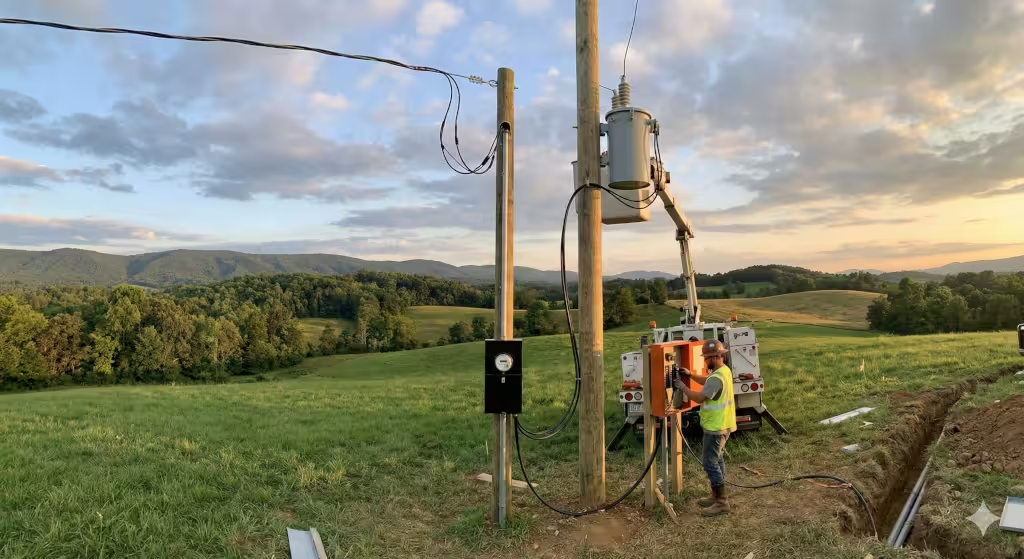
Getting electricity is usually the first big step once you start building. In our area, we have a few main choices for power. If you are in Johnson City or Jonesborough, you likely deal with BrightRidge. If you are over in Bristol, you have Bristol Tennessee Essential Services, which we call BTES. In other parts of the region, you might use Appalachian Power.
The process to get your utilities for power starts with a phone call. You will tell them you have vacant land and need a new service entrance. They will send a person called a field engineer to meet you at the property. This is a great time to be precise. You want to show them exactly where you want your house to be.
One big factor in cost is how far your house is from the nearest power pole. Most companies will run the first few hundred feet for a set fee. But if your house is deep in the woods, you might have to pay for new poles. This can cost thousands of dollars. You also have to choose between overhead lines or underground lines. Underground lines look better because you don’t see the wires, but they cost more because of the trenching.
You also need to think about temporary power. Your builders will need electricity to run their saws and tools. We usually set up a temporary pole near the road. This is one of the first utilities we get active so the work can begin. Once the house is framed and the wires are inside, the power company will come back to hook up the permanent meter.
Water: Tapping into the Source
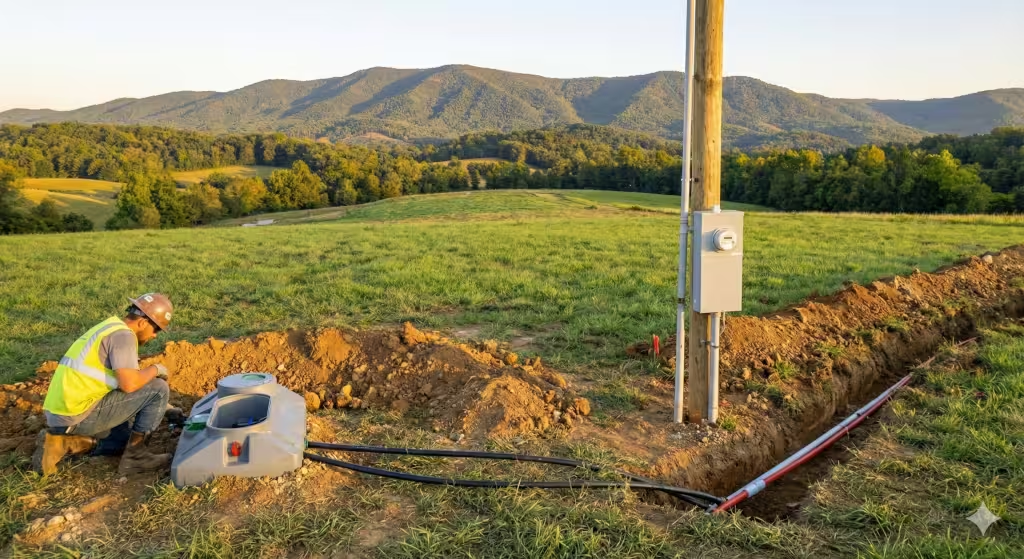
Water is life, especially for a new home. In the Tri-Cities, you usually have two options. You can connect to a city or county water system, or you can drill your own well.
If you are near a city like Kingsport or Johnson City, you will apply for a water tap. This is where the city connects a pipe from their main line to your property line. They will install a water meter in a box in the ground. You then pay a plumber to run a pipe from that meter to your house.
The cost for these utilities depends on the tap fee. In 2025, these fees can range from a few hundred dollars to several thousand. It often depends on if the city has to bore a hole under the road to reach you. Boring under a road is expensive work. It requires heavy machines and extra permits.
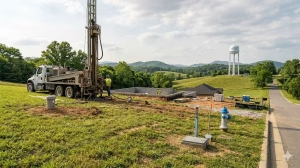
If you are out in a more rural area, you might need a well. Drilling a well is a bit of a gamble. You hire a licensed driller to bore a deep hole into the earth. You hope they find a good “vein” of water. In East Tennessee, wells can be 100 feet deep or 500 feet deep. You pay by the foot, so deeper wells cost more.
Once the well is dug, you have to test the water. We want to make sure it is clean and safe to drink. You also need to make sure the well produces enough water for your family. A good well should give you at least five gallons of water every minute.
Waste Management: Sewer vs. Septic
What goes into the house must come out. Dealing with waste is one of the most important parts of managing utilities on your land.
If you are lucky, there is a city sewer line near your property. Connecting to a sewer is usually simple but can be pricey. You pay a connection fee and then run a pipe. If the sewer line is “uphill” from your house, you might need a special pump called a lift station. This adds more parts to your utilities that need maintenance.
However, many beautiful lots in our area are not near a sewer line. In this case, you need a septic system. This is a private waste plant in your backyard. Before you can even get a building permit in Tennessee, you must get a septic permit from the Tennessee Department of Environment and Conservation, or TDEC.
The first step for a septic permit is a soil test. We often call this a “perc test.” A scientist comes to your land and digs holes. They watch how fast water soaks into the ground. If the water soaks in too slow or too fast, the land might not be good for a standard septic system.
If your soil is good, TDEC will tell you what size tank and how much “drain field” you need. A house with four bedrooms needs a bigger system than a house with two bedrooms. This is because more people create more waste. If the soil is poor, you might need an “alternative” system. These can be very expensive, sometimes costing twice as much as a regular system.
Natural Gas and High-Speed Internet
While power and water are essential, gas and internet are the utilities that make a house feel like a home.
In the Tri-Cities, natural gas is often provided by Atmos Energy or local city departments. Gas is great for heating your home and cooking. If a gas main is near the street, the company might run a line to your house for a small fee or even for free if you agree to use a certain amount of gas. If gas is not available, many people in our area use propane. You will see large white tanks in backyards. A truck comes by every few months to fill it up.
High-speed internet is the new “essential” utility. We are lucky in the Tri-Cities to have some of the best fiber-optic internet in the country. BTES and BrightRidge both offer very fast fiber. If you are building in their service areas, you should definitely include fiber in your list of utilities.
When you are digging trenches for your power or water, that is a great time to think about the internet. Sometimes you can put the internet cable in the same trench as the power line, though they usually need to be a certain distance apart for safety. Always talk to your providers early so they can coordinate their work.
The Master Utility Plan
It is advisable for prospective home buyers to make a “Master Utility Plan.” This is a map of your property that shows where everything will go.
You do not want your water line to be right under where you plan to build your driveway. If the pipe ever leaks, you would have to tear up your driveway to fix it. You also want to make sure your septic drain field is in a spot where you will never want to build a pool or a shed. Once a drain field is in the ground, you cannot build anything on top of it.
Precision is key here. You should have a surveyor mark your property lines and the corners of your future house. This helps the utility workers know exactly where to put the meters and the pipes. It also ensures that your utilities stay on your own land.
When we talk about the integrity of the project, we mean doing things the right way the first time. It might be tempting to save money by using cheaper pipes or skipping a permit. But in the long run, this always causes problems. If you try to sell your house later and the utilities were not installed correctly, it can ruin the sale.
Estimated Cost Table: Tri-Cities Utility Averages (2025)
We want to give you some real numbers to help you budget. These are based on average costs we see in the Johnson City and Kingsport areas right now. Remember, every piece of land is unique. Your costs might be higher if your land is very rocky or very far from the road.
| Utility Category | Typical Cost Range | Major Factor Influencing Price |
| Electrical Connection | $1,500 – $10,500 | Distance from the nearest existing pole |
| Municipal Water Tap | $1,000 – $5,000 | Whether a road bore is required |
| Well Drilling & Pump | $6,000 – $16,000 | Depth required to reach a stable aquifer |
| Septic System (Standard) | $4,500 – $9,000 | Number of bedrooms and soil quality |
| Septic System (Alternative) | $12,000 – $22,000 | Poor soil or high water table |
| Natural Gas Line | $0 – $2,500 | Distance from the main line at the street |
| Fiber Optic Internet | $100 – $1,500 | Proximity to the service provider’s node |
As you can see, the range for utilities can be very wide. If you add up the low end, you might spend $7,000. If you are on the high end, you could spend over $50,000. This is why the investigation phase is so important. You need to know these numbers before you start building.
Working with the Pros
Getting utilities onto land is not a “do it yourself” job for most people. You need to hire experts.
In Tennessee, anyone doing major utility work must be licensed and insured. For electricity, you need a licensed electrician. For water and sewer, you need a licensed plumber or a utility contractor. For septic, you need a person who is certified by the state to install those systems.
When you hire these people, ask for references. A good contractor will have a reputation for being precise and honest. They should be willing to explain the process to you in a way that makes sense. If they seem like they are hiding something or trying to skip steps, that is a red flag.
You also need to work with the government inspectors. For example, once your septic system is in the ground but before it is covered with dirt, a TDEC inspector must come look at it. They want to make sure it matches the permit. If you cover it up too soon, they might make you dig it back up. This is why coordination is one of the biggest parts of my job as a project manager.
Common Challenges and How to Solve Them
No project is perfect. You will likely hit a few bumps in the road when setting up your utilities.
One common problem in the Tri-Cities is rock. We have a lot of limestone in East Tennessee. If a contractor starts digging a trench for your utilities and hits a massive “ledge” of rock, the cost goes up. They might have to bring in a hammer attachment for their excavator. This is loud, slow, and expensive.
Another challenge is the weather. Our area gets a lot of rain in the spring. If the ground is too muddy, the heavy trucks used to install utilities can get stuck. They can also tear up your land. It is often best to wait for a dry spell before doing major earthwork.
Sometimes, the challenge is paperwork. You might find that the local utility company is backed up with work. It might take them a month to send someone out to look at your land. The best way to solve this is to start early. Don’t wait until you are ready to frame the house to call for power. Call them as soon as you own the land.
Common Questions about Utilities
How long does it take to get all utilities ready?
Usually, you should plan for three to four months. The soil test for septic can take a few weeks. The power company might need a month to schedule a crew. If you are drilling a well, that can take another week or two. If you plan ahead, you can often do these things at the same time.
Can I clear my own land for the utility lines?
If you are handy with a chainsaw and a tractor, you can do some of the work. You can clear brush and small trees. But you should be very careful. You don’t want to cut down a tree that falls on an existing power line. Also, most companies want the path for their utilities to be cleared to a specific width, usually 10 to 15 feet.
Do I really need a survey?
Yes. we cannot say this enough. A survey is the only way to be 100% sure where your land begins and ends. Many people think they know their property lines because of an old fence or a row of trees. But fences are often in the wrong place. If you put your utilities on a neighbor’s land by mistake, you might have to pay to move them later.
What if my soil fails the perc test?
Don’t panic. If your soil fails a standard test, you can often still build. You might just need a different kind of septic system. A “mound system” or an “aerobic system” can work in soil that doesn’t drain well. They cost more, but they allow you to use land that otherwise couldn’t be built on.
Maintaining Your Utilities After You Move In
Once your house is built and you are living in it, your job isn’t quite done. You have to take care of your utilities.
If you have a septic system, you should have the tank pumped out every three to five years. This prevents solids from moving into your drain field and clogging it. A clogged drain field is a very expensive problem to fix.
If you have a well, you should test your water once a year. This ensures that no bacteria or chemicals have gotten into your water supply. You should also keep an eye on your well pump. If you notice your water pressure getting low, it might be time for a tune-up.
For city utilities, your main job is to pay the bill and watch for leaks. A small leak in a water line can waste thousands of gallons of water and lead to a huge bill. Most modern water meters can tell you if water is running constantly, which is a sign of a leak.
Building with Precision and Integrity
Getting the utilities onto a piece of vacant land is a journey. It requires a lot of steps and a lot of different experts. But if you approach it with a calm mind and a good plan, it is a very rewarding process.
The best projects are the ones that are planned down to the last detail. When you are precise in your investigation, you avoid the “surprises” that break budgets. When you work with integrity and follow the rules, you build a home that will last for generations.
We love the Tri-Cities. We love seeing people build their lives here in the mountains. Whether you are building a small cabin or a large custom estate, getting your utilities right is the foundation of your success. Take your time, ask questions, and don’t be afraid to ask for help from the pros.
We hope this guide has been helpful for you and that you have a good experience setting up your land for your custom build.