Building a home in the Tri-Cities area is a dream for many families. Whether you are looking at a lot in the hills of Kingsport or a quiet street in Johnson City, you want your home to be a place of peace. As we move through 2026, the way we build homes has changed. We use more hard surfaces like tile and hardwood, and we love big, open rooms. While these look beautiful, they can make a home very noisy. If you can hear the TV from the basement in your upstairs bedroom, you have a sound transmission problem.
To fix this, we have to look at the engineering and the physics of sound transmission loss equations. This is not just about stuffing fluff in the walls. It is about using science to make sure your master suite stays a quiet sanctuary.
Why Your Walls Need a Physics Lesson
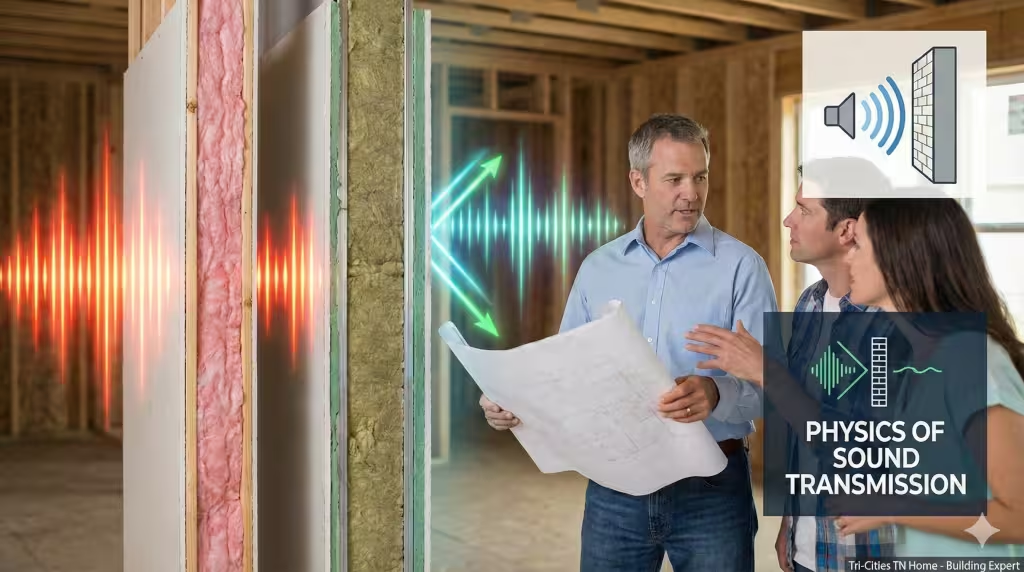
It is a known fact that many people spend thousands on fancy counters but zero on the walls. Then, after they moved in, they realized they could hear every footstep and every conversation. In the Tri-Cities, we have a lot of beautiful terrain, but sound travels differently in the mountains and near our lakes. Inside the home, sound transmission is the movement of noise from one room to another.
The goal of a high-quality build is to manage how sound moves. We do not just want to throw materials at a wall and hope for the best. We want to use the physics of sound transmission loss equations to plan the build. This means understanding how sound waves hit a surface and what happens to them. Some sound reflects back, some is soaked up by the wall, and some passes through to the next room.2 Our job is to make sure as little as possible passes through. This “quiet luxury” is the new standard for custom homes in Tennessee.
Decoding Sound Transmission Loss (STL)
To understand how to keep a house quiet, we have to look at Sound Transmission Loss, or STL. This is a measure of how much a wall or floor reduces the noise. It is measured in decibels. The higher the number, the better the wall is at stopping the noise.
There is a specific way to calculate this. The physics of sound transmission loss equations start with a simple idea. We look at the sound power hitting one side of the wall and compare it to the sound power that comes out the other side. The math looks like this:
In this equation, W1 is the sound hitting the wall and W2 is the sound getting through. Because this uses a “logarithm,” small changes in the numbers actually mean big changes in what you hear. For example, a 10-decibel drop in sound transmission makes the noise sound half as loud to your ears.
We also have to watch out for “flanking paths.” Think of sound like water. If there is a tiny hole or a crack, the sound will leak through. In a house, these leaks happen at electrical outlets, under doors, or through shared air vents. If you have a great wall but a big gap under the door, your sound transmission control is ruined.
The Fundamental Physics: Three Laws of Silence
When we design a home in Johnson City, we follow three main rules of physics to stop sound transmission.
The Mass Law
The first rule is the Mass Law. This is the simplest one to understand. It says that the heavier a wall is, the harder it is for sound to move it.6 If you have a thick concrete wall, it stops more sound than a thin piece of wood. The physics of sound transmission loss equations tell us that every time we double the weight of the wall, we gain about 6 decibels of quiet.7
The math for this is:
TL approx 20log(m X f) – 47
Here, m is the weight of the wall and f is the frequency or pitch of the sound. This shows that heavy walls are great, but they are better at stopping high sounds than low, rumbly sounds like a bass guitar.
Resonance and Stiffness
The second rule involves how stiff a wall is. Every material has a “natural note” where it likes to vibrate. This is called the resonance frequency. If a sound hits the wall at that exact note, the wall will vibrate easily and let the sound transmission happen almost perfectly. This is a “weak spot” in the wall. Engineers have to pick materials that do not have weak spots in the range of human speech.
The Decoupling Principle
The third rule is the most important for modern homes. Decoupling means breaking the connection between the two sides of a wall. In a standard wall, the studs touch the drywall on both sides. This creates a bridge for sound transmission to walk right across. If we use “staggered studs” or “resilient channels,” we break that bridge. The sound hits one side of the wall, but it has no path to get to the other side. This is like a gap in a bridge that stops a car from crossing.
Advanced Calculations for the Custom Home Buyer
When you are buying a custom home, you will hear a lot about STC ratings. STC stands for Sound Transmission Class.8 It is a single number that tells you how good a wall is at stopping speech. A normal interior wall usually has an STC of about 33. You can hear a normal conversation through it. A high-end wall should have an STC of 50 or higher. At that level, you would have to yell for someone to hear you on the other side.
We also have to look at “composite” ratings. This is where the math gets tricky but very important. If you have a wall with an STC of 60, but you put a window in it with an STC of 25, the whole wall’s ability to stop sound transmission drops significantly. The physics of sound transmission loss equations help us balance these materials so you do not waste money on a high-tech wall only to ruin it with a cheap door.
We also use OITC ratings now. This stands for Outdoor-Indoor Transmission Class. This is used for exterior walls. In parts of the Tri-Cities near the airports or the interstate, we use OITC to measure how well the house stops low-frequency noise like jet engines or truck tires.
Material Science and Modern Solutions
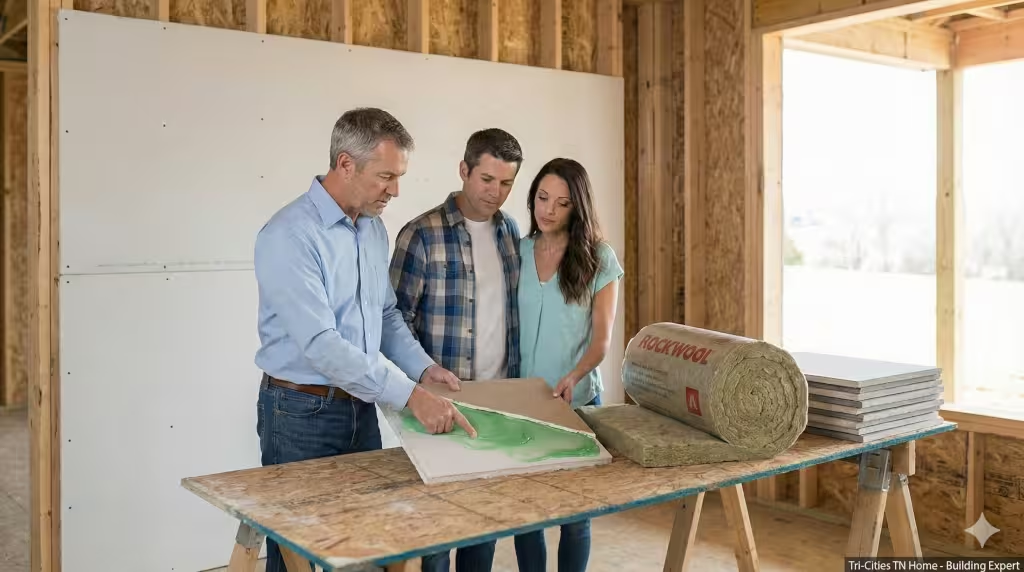
In 2026, we have some amazing tools to help with sound transmission. One of the favorites is “viscoelastic damping.” This is a fancy way of saying “glue that stays stretchy.” A lot of builders use products like Green Glue between two layers of drywall. When sound hits the wall, the glue stretches and turns the sound energy into tiny bits of heat. It is a very effective way to stop noise without making the walls three feet thick.
Many builders also use specialized drywall. Brands like QuietRock are made of different layers of material that are engineered to disrupt sound transmission. Instead of just using more mass, they use science to cancel out the sound waves.
For the insulation inside the walls, we have moved away from basic pink fiberglass. We now use mineral wool or Rockwool. It is much denser and is made from stone. It does a much better job of soaking up the sound that gets inside the wall cavity. This keeps the wall from acting like a drum.
Questions about Sound Transmission
A lot of buyers ask, “How do you calculate sound transmission loss in a finished house?” We do this by playing a very loud noise in one room and using a special microphone to measure how much quieter it is in the next room. This gives us a real-world number, not just a lab score.
Another common question is about the difference between STC and Transmission Loss. Think of Transmission Loss as the raw data for every different pitch of sound. STC is just a shortcut number that gives us a general idea of how it performs for human voices.
People also ask if they can 100% soundproof a room. The honest answer is no. You can get very close, but there is always a “flanking limit.” Sound can travel through the foundation or the ceiling joists.11 To get to 100%, you would have to float a room inside another room, which is very expensive and usually only done for professional music studios.
Building for the Ears, Not Just the Eyes
A beautiful kitchen is great, but a house that feels loud and hectic will eventually make you stressed. By using the physics of sound transmission loss equations during the design phase, we can build a home that feels solid and quiet.
It is much cheaper to plan for sound transmission when the house is just a drawing on a piece of paper. Once the drywall is up and the paint is dry, fixing a noisy room is much harder and more expensive. In the Tri-Cities, we value our privacy and our quiet time. Investing in the science of sound is the best way to protect that.
When we talk about the physics of sound transmission loss equations, we are talking about your quality of life. We are making sure that when the kids are playing video games in the den, you can still enjoy a quiet book in the living room. That is the true mark of a well-built custom home.
The Importance of Sound Transmission in Open Floor Plans
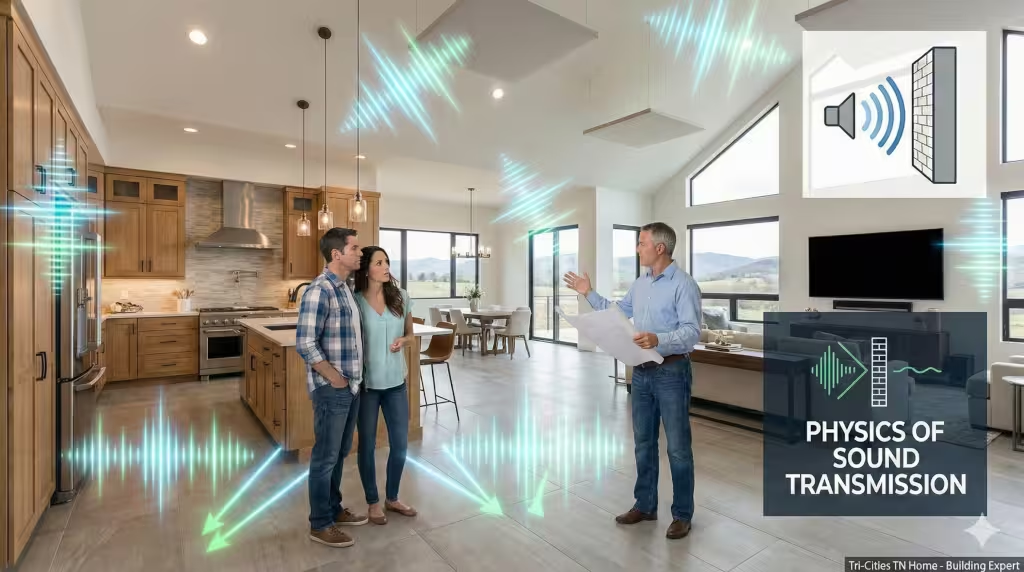
In recent years, many homeowners in the Tri-Cities have moved toward open floor plans. These layouts look great and allow for a lot of natural light, but they are a nightmare for sound transmission. When there are no walls to stop the noise, sound waves bounce off the hard floors and high ceilings. This creates an echo that can make a simple conversation feel very loud.
To fix this, we have to look at how sound transmission works in large spaces. We use the same physics of sound transmission loss equations, but we apply them to the surfaces. We might use acoustic “clouds” on the ceiling or special wall panels that look like art but are actually designed to soak up sound. Even the type of windows you choose can help. Triple-pane glass is not just good for keeping the heat in; it is excellent for stopping sound transmission from the outside.
Managing Noise from Local Traffic and Nature
Living in Johnson City or Kingsport means being close to nature, but it also means being near growing roads. As more people move to our area, traffic noise is increasing. This is where exterior sound transmission becomes vital. The physics of sound transmission loss equations tell us that the “envelope” of your house is only as strong as its weakest link.
Most noise comes through the windows and doors. By using laminated glass, which has a thin layer of plastic between two sheets of glass, we can break up the sound waves. This is a great way to handle the sound transmission of a passing truck or a neighbor’s lawnmower. It keeps the inside of your home feeling like a private island, even if you are right in the middle of town.
The Role of Interior Design in Sound Control
Builders focus on the “bones” of the house. But the “skin” of the house matters too. The things you put in your home affect sound transmission. Hard surfaces like marble and hardwood reflect sound. Soft surfaces like rugs, heavy curtains, and upholstered furniture soak it up.
When we use the physics of sound transmission loss equations, we can actually predict how much “reverb” or echo a room will have. If a room has too much echo, the sound transmission from a TV can feel like it is coming from everywhere at once. By adding soft materials, we help the walls do their job. This is why many high-end homes in our area now include “acoustic design” as part of the interior decorating process.
Understanding the Cost of Quiet
When buyers consider the quiet, they also have to be honest about their budget. Adding extra sound transmission control does cost more. It means more labor and more expensive materials. However, if you look at the total cost of a custom home, the cost to upgrade the walls is usually a very small percentage.
Using the physics of sound transmission loss equations helps us spend that money wisely. Instead of soundproofing every single wall, we focus on the “critical zones.” These are the walls between the master bedroom and the laundry room, or between the home office and the kitchen. By being precise, we get the best result for the lowest cost. This is the “competent and precise” approach I take to every build.
The Future of Home Building in Tennessee
As we look further into 2026 and beyond, the technology for managing sound transmission will only get better. We are seeing new “smart” materials that can change their stiffness to block different types of noise. We are also seeing better software that lets us “hear” what a house will sound like before we even start digging the foundation.
For anyone looking to build in the Tri-Cities, my advice is to ask your builder about sound transmission early on. Ask them if they understand the physics of sound transmission loss equations. If they just say, “We put extra insulation in,” they might not be giving you the full picture. You want a builder who understands mass, decoupling, and damping.
Final Thoughts on Sound Science
In the end, a home is more than just a shelter. It is where you go to get away from the world. If you can hear the world, or even the rest of your family, all the time, it doesn’t feel like a getaway. Taking the time to understand sound transmission is a gift you give yourself.
The physics of sound transmission loss equations might seem complicated, but the result is simple: a home that is as quiet and peaceful as a morning on the Holston River. Whether you are in Kingsport, Bristol, or Johnson City, you deserve a home that sounds as good as it looks.
Below is a list of Materials You Can Use to Reduce Sound Transmission
The table below shows common materials we use in the Tri-Cities area and how they perform. Remember, the STC rating is a score: 30 is poor, 50 is the “privacy threshold” where you can’t understand speech, and 60 is elite.
STC Ratings for Common Home Materials (2026 Standards)
| Material or Assembly Type | Estimated STC Rating | Best Use Case in Your Home |
| Standard Interior Wall (2×4 wood studs, 1/2″ drywall, no insulation) | 33 | Basic rooms where noise is not an issue. |
| Insulated Interior Wall (Standard wall + Mineral Wool/Rockwool) | 45 | Guest bedrooms or hallway walls. |
| Staggered Stud Wall (2×4 studs on a 2×6 plate + Mineral Wool) | 55 | Home theaters, master suites, or noisy playrooms. |
| QuietRock ES (Single Layer) | 49–52 | Great for retrofitting a room without making walls thicker. |
| Double Layer 5/8″ Type X Drywall (Both sides of wall) | 43 | A cost-effective way to add mass to any room. |
| Hollow Core Interior Door | 20–25 | Closets or laundry rooms where silence isn’t needed. |
| Solid Core Wood Composite Door | 30–35 | Standard for bedrooms and home offices. |
| Double-Pane Window (Standard 1/2″ air gap) | 26–32 | Standard for homes in quiet neighborhoods. |
| Acoustic Laminated Triple-Pane Window | 40–50+ | Homes near I-26, airports, or busy roads in Johnson City. |
| 8″ Concrete Block (CMU) Wall | 50–55 | Basement walls or detached garage workshops. |
A Pro Tip for the Tri-Cities Homeowner
When you look at this table, you might be tempted to just pick the highest number for everything. However, we suggest focusing your budget where it matters most. For example, if you are building a home office in your Johnson City house, go with a Solid Core Door (STC 35) and a wall with Mineral Wool (STC 45). That combination is usually enough to let you handle a business call while the kids are playing in the next room.
We also need to remember that these numbers are from a lab. In the real world, “leaks” are everywhere. A small gap under a door can drop a 35 STC door down to a 20 STC. This is why I always check the seals around the door frames and ensure the drywallers use acoustic sealant (caulk) at the bottom and top of the walls.