
Designing with Scent: Why Native Appalachian Aromatic Plants Anchor Olfactory Sensory Gardens
Most modern gardens are built almost entirely for the human eye. Landscape designers spend hours matching flower colors, leaf shapes, and stone textures, yet they often forget the oldest and most powerful sense we have: smell. When you design a garden around scent, you create a living space that speaks directly to human memory, emotion, and calm. Native Appalachian aromatic plants give designers an extraordinary living palette for this kind of sensory work. They bring authentic regional ecology together with rich, layered fragrances that shift with the sun, the wind, and the seasons.
The Evolutionary Link Between Biophilic Design and Olfaction
Biophilic design is the practice of bringing natural patterns and living systems into the spaces where people live, heal, and work. Humans evolved for hundreds of thousands of years inside complex landscapes, relying on subtle environmental cues to find clean water, shelter, food, and safety. Because of that deep history, our nervous systems still recognize healthy natural environments as safe places to rest and recover.
Smell plays a special role in this evolutionary connection. Unlike sight or sound, which pass through several processing stations in the brain before reaching our feelings, scent travels on a fast, direct path. When you breathe in natural plant oils, called volatile organic compounds, tiny scent molecules bind to receptors in your nose and send signals straight to the brain’s emotional and memory center. A single breath of crushed forest leaves or warm summer blossoms can lower heart rate, ease muscle tension, and awaken vivid childhood memories within seconds. Moving from visual-first landscaping to olfactory-first garden planning transforms a yard from a pretty picture into a deeply restorative refuge.
Why Appalachia Offers an Unmatched Aromatic Palette
Few places in North America rival the Appalachian Mountains for plant diversity and natural fragrance. Stretching from cool northern ridges down through the Blue Ridge, the Ridge-and-Valley province, and the Allegheny and Cumberland Plateaus, this ancient mountain chain holds a patchwork of microclimates. Moist, shaded mountain coves sit just miles away from dry, sun-baked shale slopes and windy upland balds.
Over millions of years, native flora adapted to these varied soils and weather extremes by producing specialized protective oils in their leaves, bark, roots, and flowers. As a result, Appalachian aromatic plants offer an astonishing range of scent notes across every layer of the woodland. In a single thoughtfully planned garden, visitors can experience bright lemon and spice from understory shrubs, cool peppermint and eucalyptus from sunny perennials, sweet licorice from goldenrod leaves, warm maple from fall wildflowers, and deep balsam resin from evergreen needles. Because these species evolved alongside local pollinators, soil fungi, and rainfall patterns, they thrive without heavy watering or chemical inputs while filling the air with natural fragrance.
Botanical Mechanisms: How Appalachian Plants Store and Release Fragrance
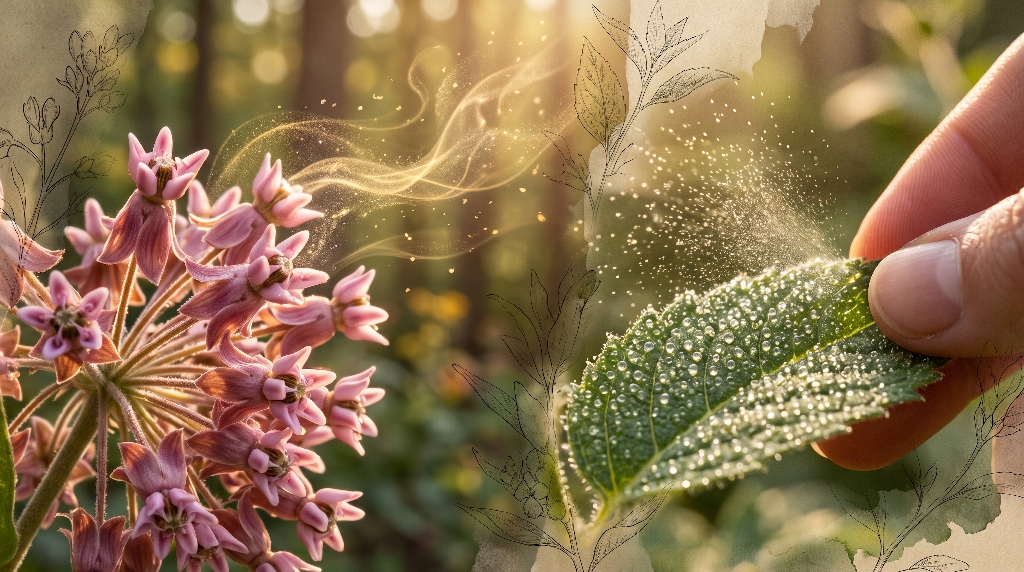
To design a successful scent garden, it helps to understand how different plants hold and share their fragrance. Not every fragrant species fills the air on its own. Some broadcast their perfume across an entire patio on a warm afternoon, while others keep their oils locked inside their leaves until a hand or foot brushes against them. Balancing both types of aromatic plants keeps a sensory garden dynamic and interactive from morning until night.
Passive Floral and Resinous Volatiles
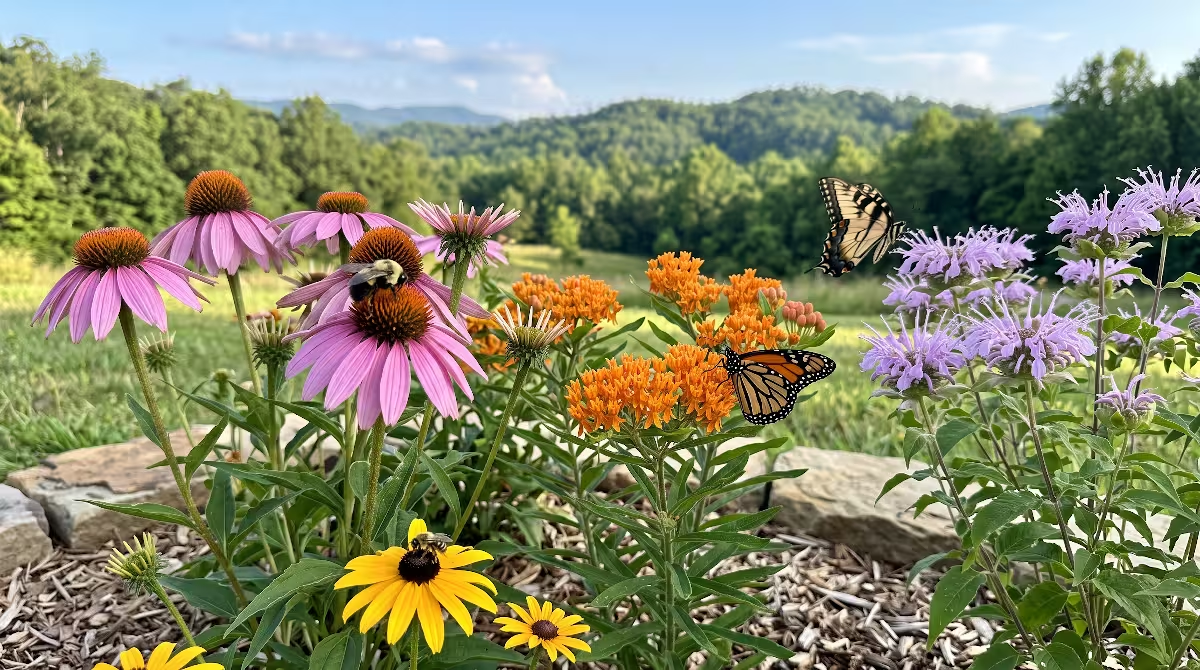
Plants that release fragrance without being touched are known as passive emitters. They produce lightweight scent molecules that evaporate easily into warm air currents, creating invisible clouds of aroma that drift along garden paths. Many summer wildflowers use passive floral scents to guide bees, moths, and butterflies toward nectar from dozens of yards away.
Common Milkweed (Asclepias syriaca) is one of the finest passive bloomers in eastern North America. In early to mid-summer, its dusty rose flower globes release a rich, sweet fragrance that reminds many people of classic lilacs mixed with honey. Sweet Joe-Pye Weed (Eupatorium purpureum) offers another unforgettable passive scent in late summer, when its tall domes of dusky pink flowers emit a gentle aroma of warm vanilla and fresh hay. Woody evergreens add a year-round passive layer through natural tree resins. Sweetgum (Liquidambar styraciflua) and Eastern Hemlock (Tsuga canadensis) release clean, woodsy balsamic notes whenever warm sunlight heats their needles, bark, and sap.
Foliar Glandular Trichomes and Mechanical Release
While flowers offer seasonal bursts of perfume, leaves provide dependable fragrance for months at a time. Many native aromatic plants store their essential oils inside microscopic, bubble-like hairs on the surface of their leaves and stems. Botanists call these structures glandular trichomes. Think of them as tiny, fragile glass balloons filled with concentrated plant oil.
As long as the leaf stays undisturbed, those oil glands protect the plant from hungry insects, harsh sunlight, and dry wind. The moment a visitor’s fingers, coat sleeve, or shoe brushes across the foliage, the tiny glands rupture and burst open, releasing an immediate wave of crisp scent. Members of the mint family, such as Mountain Mint (Pycnanthemum species), Wood Mint (Blephilia species), and Stone Mint (Cunila origanoides), rely on this touch-activated mechanism. Common Spicebush (Lindera benzoin) works in a similar way, storing aromatic oil cells directly inside its leaf tissue and green twigs so that a single gentle pinch fills the air with citrus and allspice.
Olfactory Sensory Garden Design: Spatial Layout, Airflow, and Scent Separation
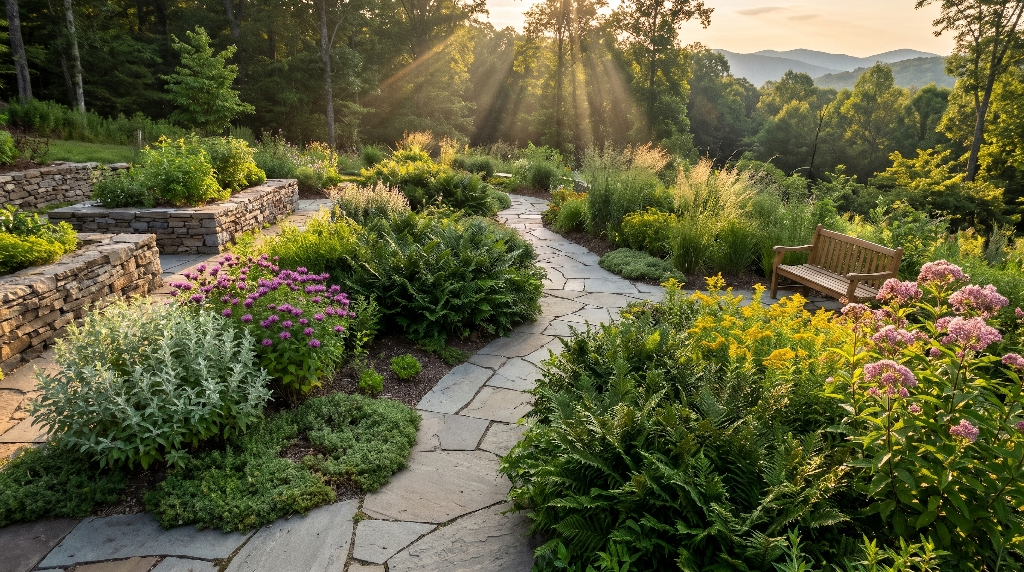
Planting dozens of fragrant species side by side might sound wonderful in theory, yet in practice it often creates a confusing muddle. Strong odors compete in the air, and the human nose quickly tires out. Good olfactory sensory garden design uses space, airflow, and thoughtful plant placement so every fragrance can be enjoyed clearly on its own.
Preventing Olfactory Fatigue Through Unscented Buffers
The human sense of smell adapts very fast to constant stimulation. When you walk into a room full of strong perfume, you notice it right away, yet ten minutes later you barely smell it at all. Designers call this phenomenon olfactory fatigue. In a sensory garden, crowding intense aromatic plants together causes visitors to lose their ability to tell individual scents apart after just a few steps.
To prevent nose fatigue, separate strong scent zones with unscented green buffers. Native ferns such as Christmas Fern (Polystichum acrostichoides), Marginal Wood Fern (Dryopteris marginalis), and Maidenhair Fern (Adiantum pedatum) work like visual and olfactory palate cleansers. Spacing major scent stations at least 8 to 12 feet apart, with lush, neutral-smelling foliage in between, allows the nose to reset. Each time a visitor steps up to a new aromatic plant, the fragrance feels fresh, distinct, and surprising.
Microclimate Mapping, Wind Corridors, and Thermal Pockets
Air movement and sunlight control where scents travel in an outdoor space. Before putting a single plant in the ground, spend time observing how breezes move across your yard during morning and late afternoon hours. Place passive floral bloomers like milkweeds, serviceberries, and joe-pye weed on the upwind side of benches, patios, and open windows so gentle breezes carry their perfume toward resting areas.
Sun-loving aromatic plants with oil-rich leaves need warmth to release their best fragrance. South-facing or west-facing garden beds act as natural thermal pockets. When afternoon sunlight warms the leaves of Sweet Goldenrod (Solidago odora) or Wild Bergamot (Monarda fistulosa), the heat lifts essential oils right off the foliage. Sheltered stone walls or evergreen hedges behind these beds trap warm air and prevent breezes from blowing the scent away too quickly.
Ergonomic Reach Zones, Raised Beds, and High-Traffic Touchpoints
Because many Appalachian aromatic plants require gentle touch to release their oils, placement along human pathways is critical. Interactive foliage should sit right at the edge of walkways, seating nooks, and entry steps where people naturally brush past or reach out a hand. Allowing low, mounding herbs to spill 4 to 6 inches over a stone path edge invites casual contact without blocking foot traffic.
True sensory design also welcomes visitors of every age and physical ability. Building raised stone or cedar beds between 24 and 36 inches high brings touch-activated aromatic plants within easy reach of children, older adults, and people using wheelchairs or walkers. Placing fragrant herbs beside benches, outdoor dining tables, and porch railings ensures that even seated guests can crush a leaf between their fingers and experience the garden up close.
Structural Anchor Species: Fragrant Native Appalachian Trees and Shrubs
Every enduring landscape begins with strong woody bones. Trees and shrubs shape the skyline of the garden, cast cooling shade, block harsh winds, and anchor the space during winter. Selecting native Appalachian trees and shrubs with fragrant flowers, bark, foliage, or fruit ensures that your sensory garden feels grounded and mature.
Canopy and Sub-Canopy Trees
Sassafras (Sassafras albidum) is an iconic Appalachian small-to-medium tree famous for its three distinct leaf shapes: single ovals, two-lobed mittens, and three-lobed forks. Every part of this tree carries a warm, spicy fragrance reminiscent of root beer, orange peel, and cinnamon. Snapping a young green twig or rubbing a summer leaf releases an instant burst of sweet spice, and its autumn foliage turns glowing shades of tangerine and gold.
For spring fragrance, Allegheny Serviceberry (Amelanchier laevis) and Downy Serviceberry (Amelanchier arborea) are unmatched understory trees. Before their leaves fully open in April, their branches fill with clouds of white blossoms that carry a delicate, sweet floral scent. Later in the spring, Chokecherry (Prunus virginiana) produces drooping clusters of white flowers with a rich almond-like perfume. In damp, shaded woodland corners, Pawpaw (Asimina triloba) adds tropical-looking foliage and late-summer fruits that smell like a blend of ripe banana and mango. Framing the perimeter with Eastern White Pine (Pinus strobus) or Eastern Red Cedar (Juniperus virginiana) adds a clean, resinous backdrop that smells crisp even in January.
Multi-Season Aromatic Shrubs and Vines
Common Spicebush (Lindera benzoin) is the undisputed star of the Appalachian shrub layer. Growing 6 to 12 feet tall in partial shade, this multi-stemmed shrub wakes up in early spring with tiny yellow flowers along bare branches. From spring through fall, its bright green leaves and young bark release a zesty, unforgettable aroma of fresh lemon and allspice when rubbed.
On drier, sunnier edges, New Jersey Tea (Ceanothus americanus) offers compact mounds of dark green foliage topped with frothy white summer flower clusters that attract dozens of native bees and emit a light, sweet honey scent. Northern Bayberry (Myrica pensylvanica) thrives in lean soils and holds gray-green, leathery leaves packed with a crisp, balsamic wax aroma that lingers well into winter. For rain gardens or boggy pond edges, Buttonbush (Cephalanthus occidentalis) produces spherical, pincushion-like white summer blooms with a sweet floral fragrance. To bring scent up to eye level on arbors or fences, Honeyvine Milkweed (Cynanchum laeve) climbs gracefully and offers small white summer flowers with a surprisingly sweet, clean perfume.
Curating the Herbaceous Layer: Appalachian Native Perennials by Scent Family
Once woody trees and shrubs establish the main framework, herbaceous perennials and groundcovers fill the garden with color, texture, and interactive scent. Organizing these perennial aromatic plants by scent family helps you craft distinct sensory zones or “rooms” along a garden walk.
| Scent Family | Signature Appalachian Species | Light & Soil Needs | How Fragrance Releases |
| Mint & Oregano | Clustered Mountain Mint (Pycnanthemum muticum), Stone Mint (Cunila origanoides), Hairy Wood Mint (Blephilia hirsuta) | Full sun to light shade; dry rocky to average soil | Crushing or brushing leaves |
| Anise & Maple | Sweet Goldenrod (Solidago odora), Anise Hyssop (Agastache foeniculum), Sweet Everlasting (Pseudognaphalium obtusifolium) | Full sun; dry to medium well-drained soil | Crushing fresh leaves or warming dried foliage |
| Wintergreen & Balsam | Wintergreen (Gaultheria procumbens), Aromatic Aster (Symphyotrichum oblongifolium) | Dappled shade (Wintergreen) to full sun (Aster); acidic or lean soil | Snapping leathery leaves or brushing fall stems |
| Sweet Floral & Vanilla | Common Milkweed (Asclepias syriaca), Sweet Joe-Pye Weed (Eupatorium purpureum), Common Blue Violet (Viola sororia) | Full sun to partial woodland shade; moist to average soil | Passive drift in warm breezes |
Mint, Camphor, and Oregano Notes
For pure sensory impact, few perennials compare to Clustered Mountain Mint (Pycnanthemum muticum) and Narrowleaf Mountain Mint (Pycnanthemum tenuifolium). Their silvery-white upper bracts look frosted even in July heat, and a single touch releases a bold, cooling wave of spearmint and eucalyptus. Better yet, their strong oils naturally deter mosquitoes and deer while drawing an astonishing variety of peaceful pollinators.
In shaded woodland borders, Hairy Wood Mint (Blephilia hirsuta) offers a softer, herbaceous mint aroma on upright stems topped with tiered whorls of pale lavender blooms. On dry, sunny slopes where many other perennials struggle, Stone Mint (Cunila origanoides), also known as American dittany, forms neat, airy mounds whose small leaves smell vividly of wild oregano and thyme when pinched. Adding Lyreleaf Sage (Salvia lyrata) as a low edging plant introduces mild, earthy sage and mint notes right along stone walkways.
Anise, Licorice, and Maple Notes
Warm, sweet spice notes bring comfort and depth to sunny borders. Sweet Goldenrod (Solidago odora) stands apart from every other goldenrod species in North America. Unlike its relatives, its narrow, smooth leaves contain high levels of estragole, giving them a clean, sweet fragrance of fresh anise and licorice whenever crushed. In late summer, its bright yellow flower plumes light up the garden without causing seasonal allergies, since goldenrod pollen is heavy and insect-carried rather than windborne.
Pairing Sweet Goldenrod with Anise Hyssop (Agastache foeniculum) doubles down on sweet licorice foliage while adding tall purple flower spikes beloved by bumblebees and goldfinches. Nearby, Sweet Everlasting (Pseudognaphalium obtusifolium) offers silvery, woolly foliage that carries one of nature’s most delightful surprises: its leaves and papery white fall flowers smell distinctly like warm maple syrup, especially on sunny autumn afternoons.
Wintergreen, Balsam, and Earthy Woodland Groundcovers
Low-growing groundcovers invite visitors to kneel down or brush the edge of a raised planter. Wintergreen (Gaultheria procumbens), also called Eastern Teaberry, forms a glossy, dark green carpet beneath oaks, pines, and rhododendrons. Snapping one of its thick, leathery leaves releases pure methyl salicylate, the classic crisp wintergreen aroma, followed by bright red berries that persist through snow.
On sunny, well-drained edges, Aromatic Aster (Symphyotrichum oblongifolium) creates dense cushions of foliage with a clean, resinous balsam scent that explodes into hundreds of lavender-blue flowers in October. Beneath taller shade perennials, Common Blue Violet (Viola sororia) weaves a gentle, sweet-scented spring groundcover, while Toadshade (Trillium sessile) adds mottled woodland leaves and subtle, earthy-spicy spring blooms to rich forest soil.
Temporal Scent Architecture: Continuous Fragrance from Early Spring to Winter
A garden that only smells good in June misses three-quarters of the year. By paying attention to plant phenology, which is the natural timing of leaf-out, blooming, and seed ripening, you can compose a year-round calendar of scent. Thoughtful seasonal layering ensures that something new awakens your nose every month.
Spring Awakening: Ephemerals and Flowering Shrubs
Early spring in the Appalachian woods brings a burst of delicate, fleeting fragrances before overhead trees leaf out and block the sun. Spring ephemerals like Virginia Spring Beauty (Claytonia virginica), Large-flowered Bellwort (Uvularia grandiflora), and Wild Hyacinth (Camassia scilloides) carpet the warming soil with honey-sweet floral notes that welcome early bumblebee queens.
Along shaded streams and moist slopes, native wild alliums add a savory, culinary twist to the spring air. Ramps (Allium tricoccum) and Nodding Onion (Allium cernuum) release a crisp onion-and-garlic aroma when breezes stir their broad leaves, reminding visitors that wild woodland gardens engage appetite as well as sight. Overhead, Serviceberry shrubs and Spicebush blossoms fill the cool April air with sweet floral and citrus notes.
Summer Peak: Sun-Baked Foliage and Nectar Clouds
When summer heat arrives, aromatic plants shift into high gear. Long daylight hours boost essential oil production in leaves, while warm evenings carry heavy floral perfumes across the yard. Scarlet Bee Balm (Monarda didyma) and Wild Bergamot (Monarda fistulosa) fill borders with crimson and lavender blooms, offering spicy citrus-oregano foliage that smells wonderful when brushed.
Milkweeds and Mountain Mints anchor the sunny mid-summer garden with steady nectar clouds and brisk minty foliage. In dappled woodland shade, Black Cohosh (Actaea racemosa) sends up towering, wand-like spires of creamy white flowers in June and July. Its blooms carry a distinctive, sweet yet slightly musky fragrance that draws woodland pollinators and lights up dark forest corners like candles.
Autumn and Winter Persistence: Balsam, Seedheads, and Evergreen Resins
Autumn brings a warmer, more nostalgic palette of scents. As summer flowers fade into seedheads, Sweet Joe-Pye Weed and Sweet Goldenrod release gentle notes of vanilla, dried hay, and sweet spice into crisp October air. Aromatic Aster hits its peak bloom right as maples turn scarlet, pairing purple flowers with resinous balsam leaves.
Even in the quiet of winter, an Appalachian sensory garden never goes completely dormant. Evergreen groundcovers like Wintergreen continue to release crisp oil when pinched on mild winter afternoons. Overhead, Eastern Hemlock and Eastern White Pine needles filter cold winds and fill sunny winter days with clean, comforting pine resin.
Beyond Olfaction: Pairing Aromatic Natives with Tactile, Auditory, and Edible Layers
Smell becomes far richer when it works alongside touch, sound, sight, and taste. In nature, our senses never work in isolation. Designing multi-sensory pairings turns a simple walk through native aromatic plants into a full-body experience.
Glabrous Versus Pubescent Foliage Contrasts
Plant texture is the natural partner to plant fragrance. Botanists divide leaf surfaces into two main categories: glabrous leaves, which are smooth, glossy, or waxy, and pubescent leaves, which are covered in soft hairs, fuzz, or velvet. Placing smooth, leathery leaves right beside soft, fuzzy ones encourages visitors to reach out and feel the difference, which naturally releases each plant’s essential oils.
For example, pairing the smooth, glossy leaves of Sweet Goldenrod or Wintergreen next to the velvety, silver-dusted leaves of Wild Bergamot or Sweet Everlasting creates an immediate tactile contrast. Adding woody plants with textured bark, such as the peeling strips of Ninebark (Physocarpus opulifolius) or the spicy, green-barked twigs of Sassafras, adds another layer of touch-driven discovery.
Acoustic and Gustatory Complements
Sound and taste complete the sensory circle. High-nectar aromatic plants like Mountain Mint, Bee Balm, and New Jersey Tea act as living sound machines. On warm summer afternoons, their blossoms hum with the gentle, soothing buzz of native bumblebees, sweat bees, and carpenter bees. Surrounding these beds with native warm-season grasses such as Little Bluestem (Schizachyrium scoparium) adds the soft rustle of wind through dry stems, while a small bubbling stone basin introduces the calming sound of moving water.
Adding safe, recognizable edible plants lets visitors taste the landscape as well. Ripe Serviceberry fruits offer a sweet flavor similar to blueberries with a hint of almond in June. In late summer, ripe Pawpaw fruit provides a rich, custard-like tropical taste, while the fuzzy red berry clusters of Smooth Sumac (Rhus glabra) can be steeped in cool water to make a tart, lemony sumac-ade.
Applied Planting Blueprints for Two Signature Appalachian Microclimates
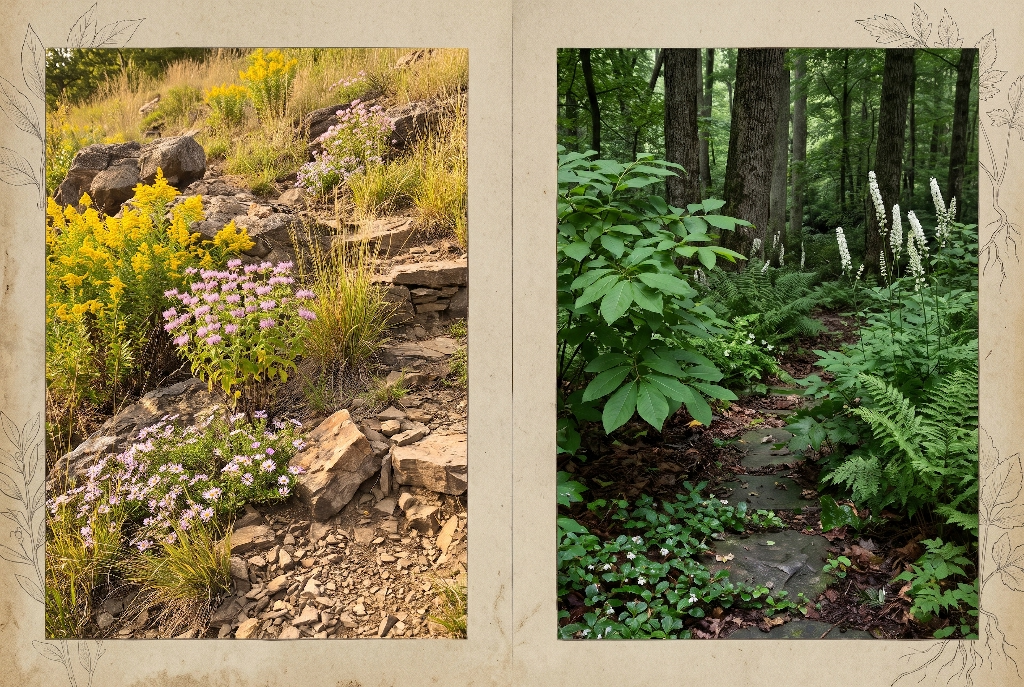
Because Appalachian soils and light levels change dramatically from ridge to valley, matching plants to your exact site conditions is the secret to effortless growth. The two blueprints below are designed for USDA Hardiness Zones 5a through 7b and require minimal watering once established.
Blueprint A: Sunny Dry Ridge and Shale Slope Palette
This design suits full-sun yards, south-facing slopes, driveway borders, and dry, rocky soils where turfgrass struggles. Plants here thrive in lean soil and produce extra-concentrated essential oils under bright sunlight.
- Backbone Shrub: Plant New Jersey Tea (Ceanothus americanus) in groups of three at the back or center of the bed for summer white blooms and honey fragrance.
- Mid-Layer Anise & Spice: Weave Sweet Goldenrod (Solidago odora) and Wild Bergamot (Monarda fistulosa) through the middle zone so afternoon sun warms their licorice- and oregano-scented leaves.
- Path-Edge Touch Zone: Line the front walkway edge with Stone Mint (Cunila origanoides) and Aromatic Aster (Symphyotrichum oblongifolium) so footsteps and hands brush crisp oregano and balsam scents from summer through late fall.
- Unscented Buffer: Tuck clumps of Little Bluestem (Schizachyrium scoparium) every 6 to 8 feet between the aromatic plants to separate scent zones and add airy movement.
Blueprint B: Mesic Woodland Cove and Partial Shade Palette
This design fits shaded patios, north-facing foundations, woodland edges, and moist, humus-rich soils beneath mature deciduous trees. It focuses on cool, refreshing leaf scents and sweet woodland blooms.
- Canopy & Shrub Structure: Anchor the back of the border with Common Spicebush (Lindera benzoin) for citrus-spice leaves and a single Pawpaw (Asimina triloba) where space allows.
- Mid-Layer Shade Aromatics: Plant drifts of Hairy Wood Mint (Blephilia hirsuta) and Black Cohosh (Actaea racemosa) in dappled shade for cool mint foliage and sweet mid-summer flower spires.
- Low Groundcover Carpet: Edge the shaded path with Wintergreen (Gaultheria procumbens) and Common Blue Violet (Viola sororia) to create an evergreen, sweet-scented carpet at ground level.
- Unscented Buffer: Frame each group of aromatic plants with Christmas Fern (Polystichum acrostichoides) so the deep green fronds clean the visual and olfactory palette between stations.
Non-Toxic Plant Selection, Conservation Ethics, and Low-Input Stewardship
An interactive sensory garden invites people to touch, crush, and smell leaves freely. Because visitors interact closely with every plant, safety, ethical sourcing, and gentle soil care must guide every decision.
Pediatric and Pet Safety in Interactive Sensory Gardens
When designing a space where children, families, and curious visitors are encouraged to pinch leaves, every plant within reach should be safe and non-toxic. Stick to well-known, gentle aromatic plants like mountain mints, serviceberries, violets, spicebush, and sweet goldenrod along public paths and raised beds.
Avoid planting toxic woodland look-alikes—such as White Snakeroot, Bloodroot, or Monkshood—anywhere inside a sensory zone. Even with safe plants, teach young visitors a simple garden rule: always ask an adult before putting any leaf or berry into your mouth, and rub leaves gently between your fingers rather than stripping stems bare.
Ethical Nursery Propagation Versus Wild Harvesting
The popularity of native plants has put growing pressure on wild Appalachian forests. Slow-growing woodland treasures such as Black Cohosh, Ramps, and Trilliums can take seven to ten years to grow from seed to flowering maturity. Digging these plants from the wild damages forest ecosystems and often kills the plants during transplant.
Always purchase your native aromatic plants from reputable native plant nurseries that propagate their stock ethically from nursery-grown seed or cuttings. Nursery-propagated plants develop stronger root systems, adapt faster to home gardens, and help protect wild mountain populations for future generations.
Pruning and Soil Management to Maximize Essential Oil Production
One of the most common mistakes gardeners make with aromatic plants is over-fertilizing and over-watering. Rich synthetic fertilizers force plants to grow soft, watery leaves packed with water rather than protective essential oils. In contrast, lean, well-drained native soil and natural leaf mulch encourage plants to produce higher levels of fragrant terpenes and oils.
Skip chemical fertilizers altogether. Instead, top-dress woodland beds each autumn with shredded leaves to mimic the forest floor. In late spring, pinch back the top third of tall mints, goldenrods, and bee balms by a few inches; this simple step encourages compact, bushy growth with plenty of fresh, oil-rich leaves right at hand height.
Frequently Asked Questions About Native Appalachian Olfactory Sensory Gardens
What are the best native Appalachian plants for a sensory garden?
Five standout performers cover every height and season: Common Spicebush (Lindera benzoin) for citrus-spice shrub foliage, Clustered Mountain Mint (Pycnanthemum muticum) for intense minty leaves, Sweet Goldenrod (Solidago odora) for sweet anise-scented foliage and yellow fall blooms, Wintergreen (Gaultheria procumbens) for evergreen wintergreen groundcover, and Sweet Joe-Pye Weed (Eupatorium purpureum) for passive vanilla-scented summer flowers.
How do you design an olfactory sensory garden so scents do not clash?
Space strong aromatic plants at least 8 to 12 feet apart and separate them with unscented foliage plants like native ferns or ornamental grasses. Place passive floral bloomers upwind of benches so breezes carry their scent gently, while keeping touch-activated herbs right along path borders where visitors can sample one fragrance at a time.
Which native woodland plants have fragrant leaves when crushed?
Shade-tolerant Appalachian natives with strongly fragrant crushed leaves include Common Spicebush (lemon and allspice), Sassafras (root beer and spicy citrus), Hairy Wood Mint (cool garden mint), and Wintergreen (crisp peppermint-wintergreen).
Are sensory garden plants safe for children and pets?
Many native aromatic plants, including mountain mints, serviceberries, spicebush, anise hyssop, and violets, are non-toxic and wonderful for hands-on exploration. Choosing non-toxic species for path edges and excluding poisonous woodland plants ensures safe discovery for children and family pets.
How does an olfactory garden support biophilic well-being?
Natural plant volatiles connect directly to the brain’s emotional and memory pathways, helping lower stress hormones, calm the nervous system, and anchor people in the present moment. Combining regional Appalachian flora with soothing textures and natural sounds creates a deeply restorative environment rooted in local ecology.