It is a known fact that the humid weather of East Tennessee can test even the sturdiest houses. When you are building a custom home in the Tri-Cities, you are not just looking for something that looks good for a few years. You are looking for a legacy. Whether it is the heavy rains we get in the spring or the ice storms that hit in the winter, the choices we make today decide how much work our kids will have to do later. In my years as a builder, I have learned that “pretty” is easy to find, but something truly durable is what keeps a family safe and happy for decades.
In this guide, we want to share our knowledge on what are the most durable and long-lasting building materials for our specific area. We will talk about everything from the rocks in our ground to the steel in our frames. My goal is to help you understand how to pick parts for your home that will stand the test of time, just like the mountains that surround us.
The Engineering of Longevity
It is helpful to think like an engineer, when thinking of longevity. We often get distracted by paint colors or fancy faucets. But a home is really just a machine for living. If the parts of that machine are durable, the machine will run better and longer. In the Tri-Cities, we have a unique climate. It is moist, it is hilly, and our seasons change quickly. This means we need materials that can handle getting wet and then freezing over and over again.
Building a “generational home” means picking things that do not rot or rust. It means looking at the total cost of the house over fifty years, not just what it costs to build this month. A durable home is an investment that pays you back in peace of mind.
The Foundations of Time: Natural & Traditional Materials
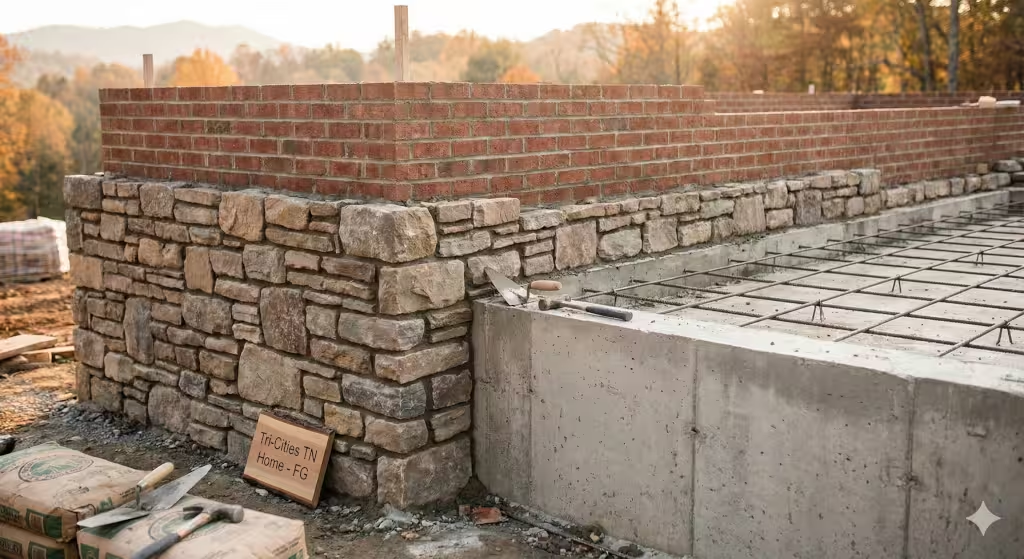
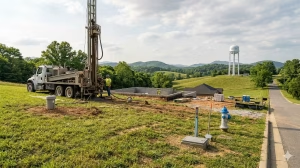
As we look closer at the ways to build a house that lasts, we have to start where every great project begins, the foundation. Generally, the homes that stay standing and looking beautiful are the ones where the builder chose the most durable materials for the base. Most builders first thought is always about how we can make the ground and the base as durable as possible. If the foundation is not durable, nothing else you do to the house will matter in the long run. We are going to examine why natural stone, brick, and concrete are the kings of the building world.
When we talk about the foundations of time, we are talking about materials that have been used for thousands of years. There is a reason why ancient structures in Europe or the old farmhouses here in East Tennessee are still around. They were built with a durable mindset. Those builders did not have fancy power tools, but they had a deep understanding of what makes a material durable.
In our modern world, we can take those old lessons and combine them with new engineering to create something truly special. A durable foundation is like a quiet promise. It tells you that your home will be there for your children and their children. Let us look at the specific materials that make this possible.
Natural Stone: The Gift of the Mountains
Living in the Tri-Cities means being surrounded by the beauty of the Appalachian Mountains. Those mountains are made of rock that has been there for millions of years. When we use natural stone in a home, we are using the most durable material on the planet. Stone does not need to be manufactured in a factory. It is already perfect. For a custom home, using stone like Tennessee Fieldstone or Limestone is a way to ensure your house is durable and fits in with the local scenery.
One of the reasons stone is so durable is its ability to handle pressure. In engineering, we call this compression strength. Stone can hold a massive amount of weight without changing shape or cracking. This makes it a great choice for the lower parts of a house that have to carry the weight of everything above them. When we build with stone, we are creating a durable barrier against the world.
Another benefit of stone is that it is naturally resistant to the things that usually destroy a house. Think about water. In East Tennessee, we get plenty of rain. Wood can rot if it stays wet, but stone just sits there. It is a durable choice because it does not soak up water like a sponge. It also does not care about bugs. Termites are a big problem in our area, but a termite cannot eat a piece of limestone. When you choose stone, you are picking a durable material that does not need a lot of maintenance. You do not have to paint it or seal it every year. It stays durable all on its own.
I often tell people that stone is an investment in time. It might cost more to buy and install because it is heavy and requires a lot of hard work. You need a mason who knows how to fit the pieces together like a puzzle. But once it is done, that stone is a durable part of your legacy. It adds a level of class and strength that you just cannot get from cheaper materials. If you want a house that feels like it grew right out of the ground in Johnson City, natural stone is the most durable way to go.
Brick Masonry: The Strength of Fired Clay
Brick is another material that has a very long history of being durable. Many of the historic buildings in downtown Kingsport are made of brick, and they look just as good today as they did a hundred years ago. Brick is made by taking natural clay and baking it in a very hot oven called a kiln. This process makes the clay turn into a hard, durable block that can stand up to almost anything.
One of the coolest things about brick is how it handles fire. Because bricks have already been through intense heat, they do not burn. This makes a brick house a very durable and safe place for a family. In fact, insurance companies often give better rates for brick homes because they know how durable they are in a fire.
Brick also has something we call thermal mass. This is a big part of why a brick home feels so good to live in. During a hot Tennessee summer day, the brick walls soak up the heat from the sun. Instead of letting that heat go straight into your living room, the durable brick holds onto it. Then, at night when it gets cooler, the brick slowly releases that heat. This helps keep your home at a steady temperature. A home that stays at a steady temperature is more durable because the parts of the house do not have to expand and contract as much.
When we talk about being durable, we also have to talk about the wind. We get some pretty strong gusts coming off the mountains here. Brick is heavy and solid. It provides a durable shield against wind and flying debris. While a house with thin siding might get damaged in a storm, a brick house usually comes through just fine. To keep brick durable, you just have to make sure the mortar, which is the “glue” between the bricks, stays in good shape. This is called repointing, and it only needs to be done every few decades. Other than that, brick is a set it and forget it choice for a durable exterior.
Concrete and Reinforced Concrete: The Modern Bedrock
Now we have to talk about concrete. Concrete is the most used building material in the world, and for a good reason. It is incredibly durable and very flexible in how it can be used. When you are building a new home in the Tri-Cities, your foundation will almost certainly be made of concrete. To make sure that foundation is durable, we have to do it the right way.
Concrete is made of a mix of water, cement, sand, and gravel. When it is wet, you can pour it into any shape you want. As it dries, it turns into a durable rock-like substance. But concrete has a secret weakness. While it is very strong when you push on it, it can be brittle if you try to pull it apart. This is why we use reinforced concrete. We put steel rods, called rebar, inside the concrete before it hardens. The steel and concrete work together to create a durable system that can handle the weight of the house and the movement of the earth.
In our part of the country, we have a lot of red clay soil. This clay can hold a lot of water and can shift as the seasons change. A durable foundation must be able to handle this shifting without cracking. That is why we pay so much attention to the PSI of the concrete. PSI stands for pounds per square inch. For a durable home, we want a high PSI so the concrete is dense and strong.
Concrete is also the main ingredient in one of my favorite building systems, which is the Insulated Concrete Form. As I mentioned before, these are durable walls made by pouring concrete into foam blocks. This creates a wall that is durable, energy efficient, and very quiet. It is a great example of how we can take a traditional durable material like concrete and use new technology to make it even better.
To keep concrete durable, we have to make sure it is poured and cured correctly. If it dries too fast, it can get weak. A good builder knows how to manage the process so the finished product is a durable base for the rest of the home. When you walk into your basement or garage and see that solid concrete floor, you are looking at a durable surface that can handle cars, heavy equipment, and the test of time.
The Modern Titans: Structural Innovations
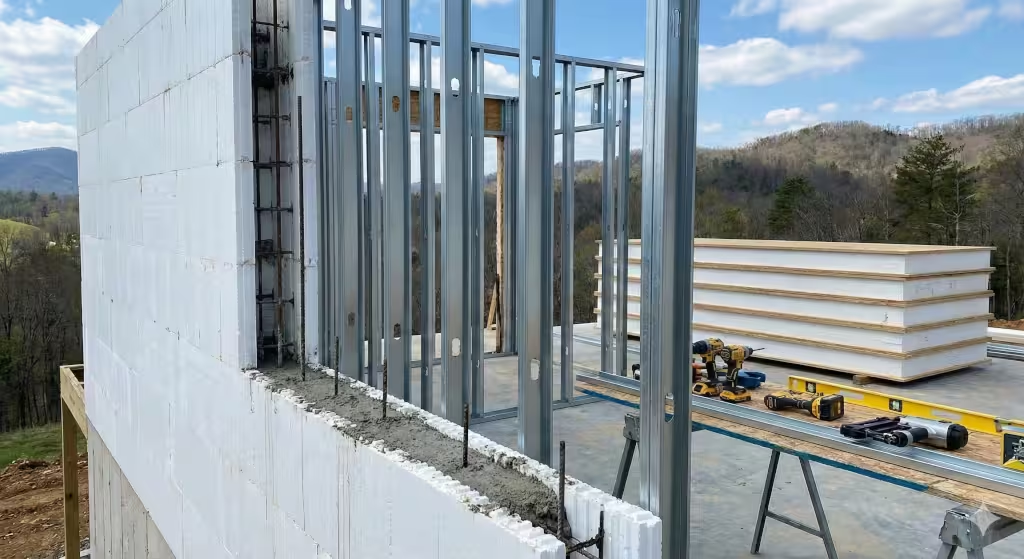
When we look at how home building has changed over the years, we see that we are in a new age of strength. The modern titans are the materials and systems that use 2025 technology to create a home that is even more durable than what our grandfathers could build. In the Tri-Cities, where we have to deal with hills, humidity, and the occasional heavy storm, these modern choices are changing the game. They allow us to build bigger, safer, and much more durable houses that can truly stand up to anything Mother Nature throws at us.
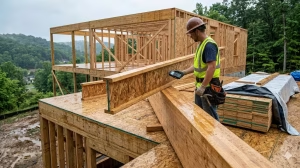
If the foundation is the feet of the house, the structural frame is the skeleton. In the past, almost every skeleton was made of wood. Wood is great, but it has limits. It can rot, it can burn, and bugs can eat it. The Modern Titans are different. They are designed to be a durable alternative that fixes the problems of the past. When you use these materials, you are building a home that is physically tougher and much more durable over a long period of time. Let’s look at the three biggest players in this area and see why they are so important for a durable home in East Tennessee.
Steel Framing: The Unshakable Skeleton
For a long time, if you wanted to see a steel frame, you had to go to downtown Kingsport and look at a big office building. But today, we are using light-gauge steel to frame custom homes. Steel is a perfect choice for someone who wants a durable house that never changes shape. One of the biggest issues with wood is that it can “breathe.” It grows a little when it is humid and shrinks when it is dry. This can cause cracks in your drywall or doors that stick.
Steel is different. It is a durable metal that stays exactly where you put it. It doesn’t warp, twist, or sag. This means your walls stay perfectly straight for decades. Because it is so durable, you can also have much wider rooms without needing a lot of extra support beams. This is great for the open floor plans that are so popular right now.
But the real reason steel is recommended as a durable choice in the Tri-Cities is because of the bugs. We have a lot of termites in our red clay soil. Termites love to eat wood, but they can’t do a thing to steel. When your home has a steel skeleton, it is naturally durable against pests. It is also much safer in a fire. Steel doesn’t provide fuel for a fire, which makes the whole structure more durable and gives your family more time to get out safely if something goes wrong.
Insulated Concrete Forms (ICF): The Fortress Wall
If I were building my own “forever home” in Johnson City today, I would give a very hard look at Insulated Concrete Forms, or ICF. I mentioned these earlier, but they really are one of the most durable ways to build a wall. Imagine taking big blocks of strong foam and stacking them up like Lego bricks. Inside the hollow part of the blocks, we put steel rebar. Then, we pour wet concrete into the middle.
When that concrete hardens, you have a solid wall of steel-reinforced concrete that is protected on both sides by thick foam.5 This is incredibly durable. These walls can stand up to the strongest winds we ever see in the mountains. In fact, ICF homes are often rated to survive tornadoes and hurricanes that would blow a normal wood house away.6 That is what I call durable.
Another thing that makes ICF so durable is how it handles the weather. The foam acts as a “blanket” for the concrete.7 It keeps the concrete at a steady temperature. This prevents the concrete from cracking during our cold Tennessee winters. It also makes your home incredibly quiet. The thick, durable walls block out all the noise from the street or the neighbors. Plus, because there is no wood in the exterior walls, there is nothing to rot. An ICF house is a durable fortress that stays cozy and dry no matter what is happening outside.8
Structural Insulated Panels (SIPs): Precision Strength
The third Titan is the Structural Insulated Panel, or SIP. These are big panels made in a factory. They have a core of thick foam and a skin of very strong board on both sides. Because they are made in a controlled factory, they are incredibly precise. When they arrive at your job site in the Tri-Cities, they fit together perfectly.
A home built with SIPs is very durable because the panels are extremely strong.9 They act as one solid piece. Think about how hard it is to break a single toothpick versus a whole bundle of them glued together. That is how a SIP house works. It is a durable system where the walls and the roof work together to hold the house tight.
SIPs are also a very durable choice for energy efficiency. Because there are so few gaps where air can leak in or out, your heater and air conditioner don’t have to work as hard. This is a big deal in our humid climate. Controlling the air inside the house is a key part of keeping the whole structure durable. If you can keep the moisture out, your home will last much longer. SIPs give you a durable, airtight seal that protects your investment for a lifetime.10
Why These Innovations are Worth the Investment
You might notice that these “Titan” materials often cost more than standard wood framing. As an engineer and a builder, I always look at the value, not just the price. A durable home is an investment. When you use steel, ICF, or SIPs, you are putting your money into the parts of the house that you can’t change later. You are buying a house that will be just as strong fifty years from now as it is today.
Being durable also means lower costs over time. You will spend less on heating and cooling. You will spend less on fixing cracks or dealing with bugs. And you will probably pay less for your home insurance. When you add all that up, a durable house built with modern materials is actually the cheaper choice in the long run. It is the smart way to build in the Tri-Cities.
Matching Modern Materials to the Land
When we build in places like Bristol or the hills around Johnson City, we have to think about the land. Our hills can be steep, and the ground can move. Modern materials like reinforced concrete and steel are much more durable when it comes to handling these challenges. They allow us to build safely on lots that might have been too difficult for older building methods.
I love seeing how these durable innovations allow people to build their dream homes in beautiful places. Whether you want a house overlooking the mountains or something tucked away in a quiet valley, these Modern Titans give you the durable foundation and frame you need to make it happen. They are the future of home building, and they are here right now to help you build a legacy that lasts.
Exterior Defenses: Siding and Roofing
The outside of your home is the first line of defense against our Tennessee weather. If the skin of the house fails, the rest of the structure is at risk.
Fiber Cement Siding
In the past, people used wood siding, but in our humid climate, wood needs a lot of painting and can eventually rot. Fiber cement siding is a much more durable choice. It is made of cement, sand, and wood fibers. It looks like wood but acts like stone. It does not rot, it is fire-resistant, and it holds paint for a long time. For a home in the Tri-Cities, this is a smart, durable pick.
Metal Roofing
We see a lot of metal roofs in the mountains, and for good reason. A standard shingle roof might last twenty years, but a good metal roof can last fifty or even seventy-five years. Metal handles our heavy snows and high winds very well. It is also very durable when it comes to fire safety. If a spark from a fireplace or a wildfire lands on a metal roof, it simply goes out.
Interior Durability: Keeping the Inside Fresh
A durable home is not just about the outside. The inside needs to handle the daily life of a family.
Flooring Choices
Tile and engineered hardwood are the best bets for our area. Tile is waterproof and nearly impossible to scratch, making it very durable for mudrooms or kitchens. Engineered hardwood is designed with layers that cross over each other. This makes it more durable in our humidity because it does not grow or shrink as much as solid wood planks.
Countertops
When picking a kitchen, quartz and granite are the top dogs. Granite is a natural stone that is very hard. Quartz is a man-made stone that is even more durable because it is not porous. This means it will not stain if you spill grape juice or wine on it. For a busy kitchen, a durable counter is a must.
Climate-Specific Performance in the Tri-Cities
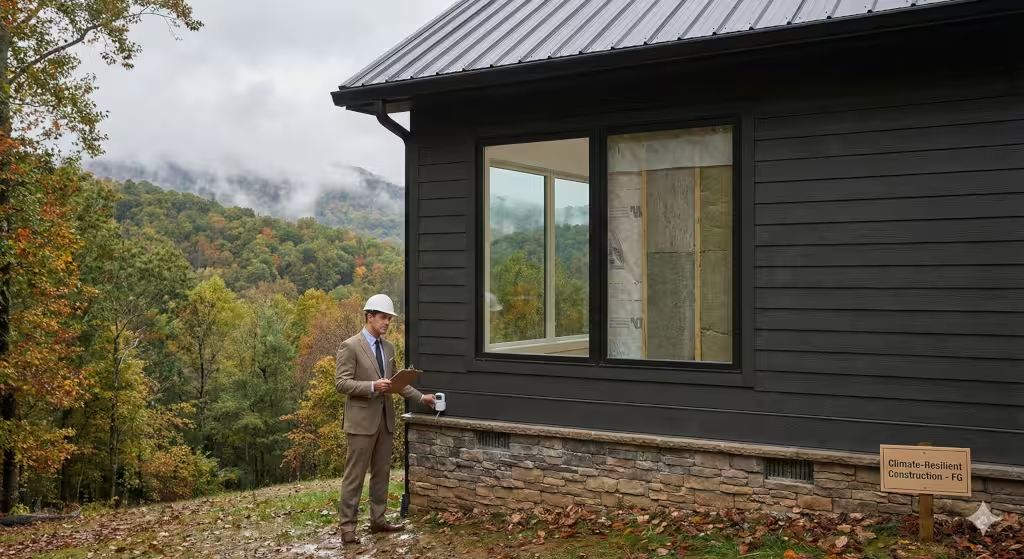
We have to talk about the “Freeze-Thaw Cycle.” This is what happens when water gets into a small crack, freezes, and then expands. This can break apart even strong materials. To build a durable home in Johnson City, we have to make sure water stays away from the structure.
We use vapor barriers and high-quality insulation like spray foam. These products seal up the house so moisture cannot get in. In a place as green and wet as East Tennessee, moisture is the biggest enemy of a durable house. By controlling the air and water, we protect the materials we spent so much money on.
Common Questions about Durable Materials
Folks often ask, “What is the single most durable material for a house?” If you want one answer, it is a tie between stone and reinforced concrete. Both can last for centuries if they are put together correctly.
Another question is, “What building material lasts 100 years?” Things like slate roofs, brick walls, and stone foundations are famous for hitting the century mark. Even modern materials like ICF and steel framing are designed to last that long if they are protected from the elements.
Lastly, people wonder if it is cheaper to build with wood or steel. Right now, in 2025, wood is usually a bit cheaper to buy at first. However, when you think about how durable steel is and how much you save on repairs and bugs, the “lifetime cost” of steel is often lower.
Lifecycle Cost Analysis
Now a look at the numbers. If you spend $10,000 extra today to get a more durable roof that lasts twice as long, you are actually saving money. This is called the “Total Cost of Ownership.” A durable home is easier to sell later, costs less to heat and cool, and requires fewer weekend chores.
In the Tri-Cities, where our housing market is growing, building a home that stays in great shape is a very smart move. It ensures that when you are ready to retire or move, your house is still a valuable asset, not a project for the next owner.
Sustainable Durability
Being “green” is not just about solar panels. The most eco-friendly thing you can do is build a house that does not need to be replaced. Every time a house has to be rebuilt because of rot or fire, it uses up a lot of energy and materials. A durable home is a sustainable home.
We also like to use local materials when we can. Using Appalachian timber for our inside beams or Tennessee stone for our chimneys reduces the fuel used to ship materials. It also means the materials are already “used to” our local weather.
Building Your Legacy in East Tennessee
Building a home is one of the biggest things you will ever do. It is where you will raise your family, celebrate holidays, and maybe even host your grandkids. By choosing the most durable materials available, you are making sure those memories are safe.
From the brick on the walls to the steel in the frame, every choice matters. The best homes are the ones built with care and a focus on lasting power. A durable home is more than just a building; it is a promise of safety for the people you love.
Whether you are just starting to dream about your custom home or you are ready to break ground, always keep durability at the top of your list. It is the secret to a home that is as timeless and sturdy as the Blue Ridge Mountains themselves.