The price is what you pay today. Value is what you keep for decades.
However, a lot of people confuse the two. They focus on the price of the granite countertop but ignore the insulation behind the wall. They worry about the price of the light fixtures but forget about the orientation of the sun. That is a mistake.
If you are looking to build in the Tri-Cities, you are already making a smart choice. Our area, Johnson City, Bristol, Kingsport, and the surrounding counties, offers a quality of life that is hard to beat. But building a custom home here is a significant investment. My goal, and the goal of Tri-Cities TN Home, is to make sure that investment pays you back.
In this article, we are going to look at exactly how to maximize the long-term value of a new house. We will look at the bones of the building, the land it sits on, and the features that future buyers will actually care about in 2030 or 2040. We are going to move past the trends and get down to the real science of building value. Whether you are building in a subdivision in Jonesborough or on a ridge in Sullivan County, these principles apply.
Site Selection and Land Engineering
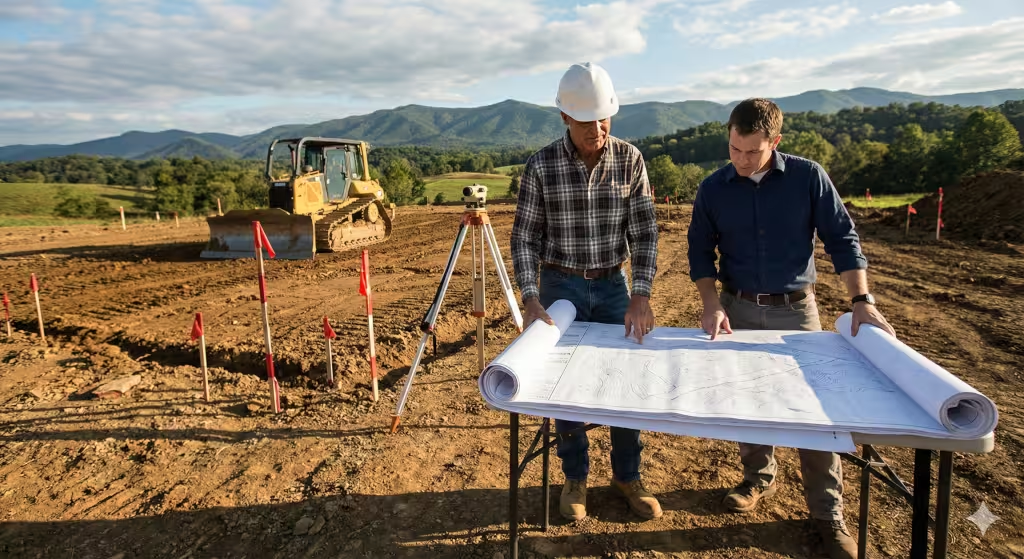
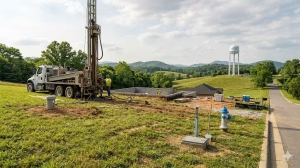
The most important decision you make happens before you pour a single drop of concrete. It happens when you pick the dirt.
In engineering, it is known that you cannot fix a bad foundation. The same is true for real estate value. The land you choose dictates everything else. In East Tennessee, we have beautiful rolling hills, ridges, and valleys. This topography is what makes our area stunning, but it also creates challenges.
Topography and Grading
A flat lot is cheaper to build on. That is a simple fact. If you buy a steep lot because it is cheaper upfront, you might end up spending that savings, and then some, on retaining walls, extra concrete for a taller foundation, and engineered fill dirt.
However, value is not just about keeping costs low. A sloped lot often provides a view. In the Tri-Cities, a house with a mountain view will always hold its value better than a house looking at a neighbor’s fence. You have to weigh the cost of the foundation against the long-term value of the view.
Drainage is another massive factor. Water is the enemy of a house. If you want to maintain value, you must keep water away from your foundation. When we look at a site plan, I want to see a clear path for water to move away from the home. If you build at the bottom of a hill without a serious drainage plan, you are inviting mold, rot, and structural failure. A dry basement adds immense value. A wet basement destroys it.
Solar Orientation
This is where the engineer in me gets excited. The sun is a free source of energy. If you orient your house correctly, you can lower your heating bills in the winter and your cooling bills in the summer.
To maximize value, you want the long side of your house to face south. This allows you to capture solar heat during our chilly Tennessee winters. If you design your roof overhangs correctly, they will block the high summer sun but let the low winter sun shine in. This is called passive solar design. It does not cost extra to turn your house the right direction on the lot, but it adds value every single month in the form of lower energy bills.
Structural Integrity and the Envelope
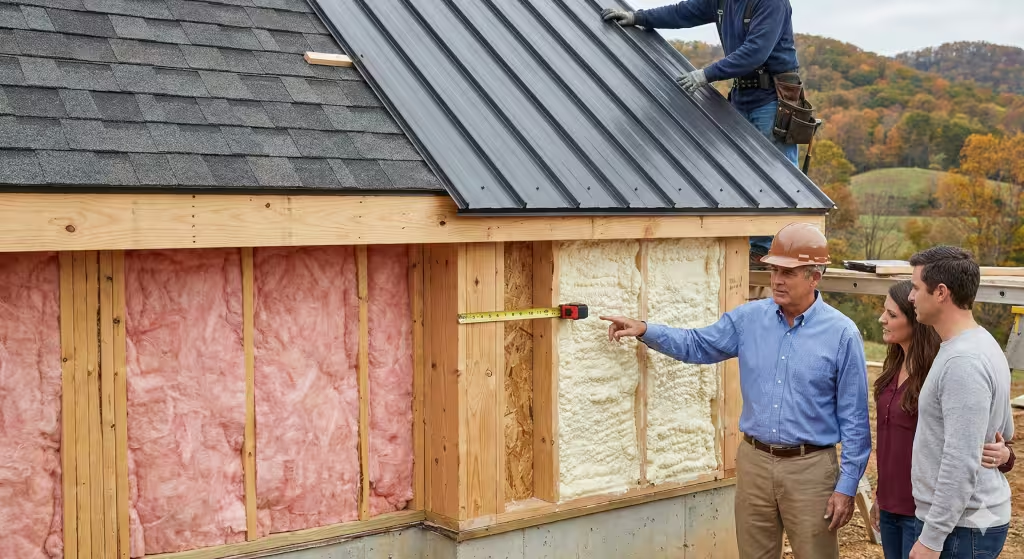
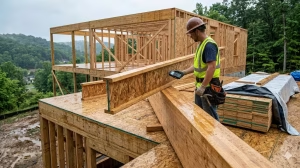
Now, let’s talk about the “envelope” of the house. This is the shell, the walls, the roof, and the foundation. This is where you should never cut corners. You can always change a carpet later. You cannot easily change the framing of your walls.
Framing: 2×4 vs. 2×6
Standard building code usually allows for 2×4 lumber for exterior walls. Most builders use it because it is cheaper. But if you want to maximize value, I recommend upgrading to 2×6 framing.
Why? It is not just because it is stronger. A 2×6 wall creates a deeper cavity. A 2×4 wall gives you 3.5 inches of space for insulation. A 2×6 wall gives you 5.5 inches. That extra two inches allows for significantly more insulation. Over the life of the home, the energy savings from that extra insulation will pay for the lumber many times over. Plus, a quieter, sturdier house feels more substantial. Buyers can sense that quality, even if they cannot see the studs.
Insulation Choices
Speaking of insulation, this is a major driver of value. In the past, everyone used pink fiberglass batts. They are fine, but they are not the best.
To truly seal the value into your home, look at spray foam or high-density cellulose. Spray foam acts as both an insulator and an air barrier. It seals up all the tiny cracks and gaps where air leaks in. In our climate, where we have humid summers and cold winters, stopping air leaks is crucial. An airtight home is comfortable, and comfort is something people will pay for.
The Roof Overhead
In the Tri-Cities, you will see a lot of asphalt shingle roofs. They are the standard. But you are also seeing more metal roofs.
An architectural shingle roof might last 20 to 25 years. A quality standing-seam metal roof can last 50 years or more. Yes, metal costs more upfront. But think about the long term. If you sell your house in 15 years, a shingle roof will be nearing the end of its life. That is a negotiating point for the buyer to lower your price. A metal roof will still have decades of life left. That adds value to your asking price. It is a feature that signals durability.
Future-Proofing the Floor Plan
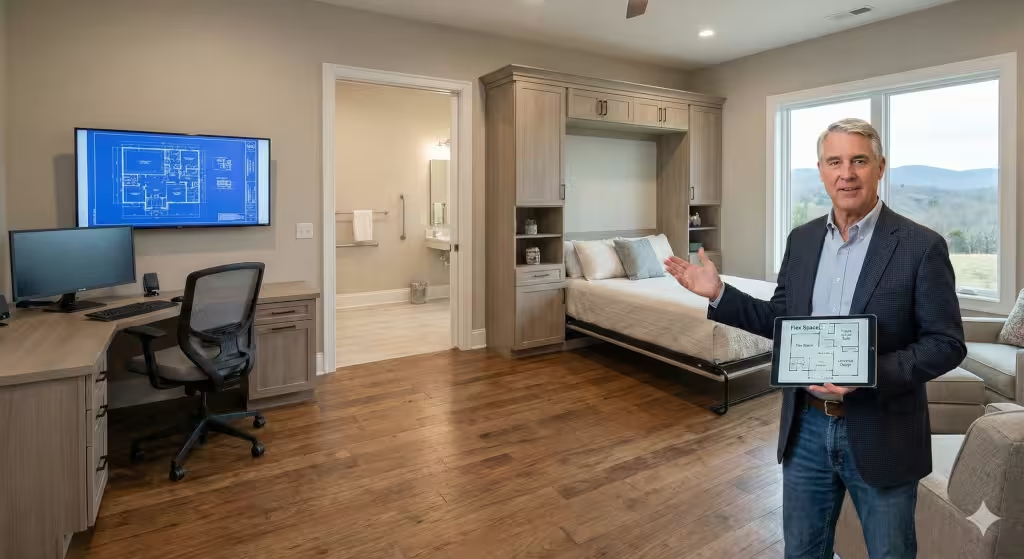
Trends come and go. Remember when everyone wanted a formal dining room? Now, many of those rooms sit empty. To maximize value, you need a floor plan that works for how we live now, but also adapts to how we might live in the future.
Flexibility is Key
The most valuable rooms are the ones that can change. We call these “flex rooms.”
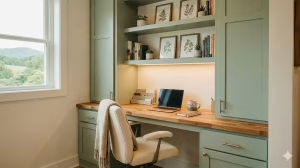
Imagine a room on the main floor with a closet and a nearby bathroom. When you move in, it might be a home office. Five years later, it might be a playroom for a toddler. Twenty years later, it might be a bedroom for an aging parent.
If you build a room that can only be an office, you limit your market. If you build a room that can be three different things, you increase the value of the home because it appeals to more buyers. This is smart design. It requires thinking ahead, which is something I always advise my clients to do.
Multi-Generational Living
In the Tri-Cities, we are seeing a strong trend of families living together. Grandparents are moving in with their adult children. Adult children are staying home longer.
Designing a space for multi-generational living is a huge value booster. This could be a second master suite, or even a basement area with a kitchenette and separate entrance. We call these Accessory Dwelling Units or ADUs. Even if you do not need it right now, having the plumbing and electrical rough-in completed for a future kitchenette adds value. It gives the next owner options.
Aging in Place
I know you might be young and fit now. But a house that is “visitable” is valuable to everyone. This means having at least one entrance with no steps, wider doorways (36 inches instead of the standard 30 or 32), and a full bathroom on the main floor.
This is often called Universal Design. It opens up your home to a massive market of retirees who want to move to East Tennessee but don’t want to climb stairs. If your home is designed so someone can live on the main level comfortably, you have just maximized your resale value significantly.
Systems: The Nervous System of the Home
Your home’s mechanical systems, HVAC, plumbing, electrical, are like the nervous system of the human body. If they don’t work well, nothing else matters.
HVAC Zoning
One of the biggest complaints from homeowners is that their upstairs is hot in the summer and their downstairs is freezing. This happens when you try to heat and cool a two-story house with a single thermostat.
To add value and comfort, you need a zoned system. This uses mechanical dampers in the ductwork and multiple thermostats to control the temperature on each floor separately. Even better, consider a mini-split system for bonus rooms or specific areas. This allows you to only heat or cool the rooms you are using. It is efficient, and efficiency equals value.
Smart Home Backbone
I am not talking about buying a smart refrigerator that tells you the weather. I am talking about the infrastructure.
Wireless technology is great, but it can be spotty. Hardwired connections are fast and reliable. To future-proof your home, run Cat6 ethernet cables to every room, especially to places where TVs or computers will go. Run conduit pipes from the attic to the basement so you can easily pull new wires in the future as technology changes.
This is cheap to do when the walls are open. It is very expensive to do after the drywall is up. A “smart-ready” home has more value to a tech-savvy buyer than one that relies solely on Wi-Fi.
Plumbing Innovations
Tankless water heaters are becoming the standard for high-value homes. They provide endless hot water and take up less space. While a standard tank heats water all day long whether you need it or not, a tankless unit only heats it when you turn on the tap. This saves energy.
Also, ask your builder about using a manifold plumbing system. This looks like a breaker box for your water. It allows you to turn off the water to a single sink or toilet without shutting off the water to the whole house. It is a detail that shows an engineer was involved in the build.
Finishes with ROI in Mind
Now we get to the pretty stuff. But even here, we need to think about value, not just fashion.
The Kitchen and Bath Rule
You have heard it before, and it is true: Kitchens and bathrooms sell homes. But you have to be careful.
If you choose a tile pattern that is super trendy right now, it will look dated in ten years. Do you remember the avocado green appliances of the 1970s? You don’t want your kitchen to be the avocado green of the 2020s.
To maximize value, stick to classic choices for the expensive items. White or wood-tone cabinets, quartz or granite countertops, and neutral tile are safe bets. These materials are durable and timeless. You can add color and personality with paint, towels, and hardware, things that are cheap and easy to change.
Flooring Durability
Carpet feels nice on your feet, but it does not hold its value. It gets dirty, it wears out, and it holds allergens.
Hard surface flooring is the way to go. Real hardwood is the gold standard in the Tri-Cities. It can be refinished multiple times and lasts for a hundred years. However, high-end Luxury Vinyl Plank (LVP) is also gaining respect. It is waterproof and incredibly tough.
If you put carpet in the main living areas, you are hurting your value. If you put down hardwood, you are building equity.
Exterior Cladding
In our humid environment, wood siding can rot if not maintained perfectly. Vinyl siding is low maintenance, but it can look cheap and brittle over time.
For the best balance of looks and longevity, I recommend fiber cement siding (like Hardie Board). It looks like wood, but it is made of cement and sand. It resists rot, fire, and termites. It holds paint much longer than wood. When a buyer pulls up to a house clad in fiber cement, they see a premium product. That perception increases the value of the home.
Outdoor Living: The Tri-Cities Advantage
We have four seasons here, but they are generally mild. We have a long spring and a long autumn. This means outdoor living spaces are usable for most of the year.
Covered Spaces
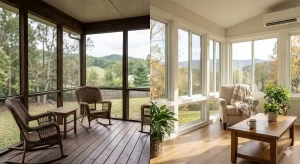
A simple concrete patio is okay, but a covered porch is valuable. A roof over your patio protects you from the summer sun and the spring rain. It effectively adds square footage to your living space.
If you add an outdoor fireplace, you extend the season even further. You can sit outside comfortably in November or March. In the mountains of Tennessee, connecting with the outdoors is a huge part of the lifestyle. A home that facilitates that connection will always have a higher value than one that isolates you indoors.
Energy Efficiency and Sustainability
Energy efficiency is no longer just for environmentalists. It is a financial calculation.
The “Green” Premium
When you sell your house one day, the buyer will ask to see the utility bills. If your 3,000-square-foot house costs $150 a month to heat and cool, that is a massive selling point. If it costs $400 a month, that is a liability.
Investing in energy efficiency maximizes value because it lowers the “total cost of ownership” for the next buyer.4 They might be willing to pay a higher mortgage payment if they know their electric bill will be lower.
Windows and Doors
Your windows are holes in your insulation. You need to plug those holes with high-quality glass. Look for double-hung windows with Low-E (low emissivity) coating and argon gas fill. These features reflect heat back to its source, keeping heat out in summer and in during winter.
Don’t buy the cheapest windows. Cheap windows fog up and draft. High-quality windows operate smoothly and keep the home quiet. Silence is a subtle indicator of quality and value.
Solar Readiness
You may not want to spend the money on solar panels right now. That is fine. But you should make your house “solar ready.”
This means running a conduit pipe from your attic to your electrical panel. It means designing the roof so there is a clear space for panels in the future. It costs very little to do this during construction. But if a future buyer wants solar, having the infrastructure in place makes your home much more attractive. It adds value by adding potential.
The Legal and Documentation Aspect
This is the boring part, but it is critical. The paperwork can protect your value.
Warranties
Ensure your builder offers a solid warranty. In Tennessee, a one-year builder warranty is standard, but many reputable builders offer structural warranties that last 10 years. This protects you against major failures. A transferable warranty is even better, it is a guarantee you can hand to the next owner.
The Home Health Manual
Here is a tip that costs almost nothing but impresses buyers immensely. Keep a “Home Health Manual.”
Get a binder. Every time you paint a room, write down the brand and color code. Keep the manuals for every appliance. Keep receipts for all maintenance, like HVAC servicing or gutter cleaning.
When you go to sell, leaving this binder on the counter tells the buyer: “This home was loved. This home was cared for.” That builds trust. Trust increases the perceived value of the property.
Common Questions about the Long-Term Value of Houses
What adds the most value when building a house?
Structural upgrades like 2×6 framing, energy-efficient insulation, and a functional, flexible floor plan add the most long-term value. While finishes like countertops are nice, the “bones” of the house determine its longevity and utility costs.
Is it cheaper to build or buy in Tri-Cities TN?
It depends on the market, but generally, building a custom home costs more upfront than buying an existing one. However, building allows you to control the quality and energy efficiency, which can save money and increase value over time.
How do I future-proof my new home?
Incorporating Universal Design features (like wide doorways), running conduit for future technology, and creating flex rooms that can serve multiple purposes are the best ways to future-proof a home.
Does a smart home increase resale value?
Yes, but only if the infrastructure is solid. Hardwired ethernet and integrated security systems add real value, whereas simple plug-in devices do not add significant equity.
Conclusion
Maximizing the value of a new house is not about luck. It is about engineering. It is about making decisions based on data and long-term thinking rather than short-term savings.
It is about choosing the right land and managing the water. It is about framing with 2x6s and insulating with foam. It is about designing a floor plan that can evolve with your family. It is about choosing systems and finishes that last.
In the Tri-Cities, we value hard work and common sense. Building a home this way reflects those values. It ensures that your home is not just a shelter, but a financial asset that will serve you well for years to come.
I hope this guide helps you look at your blueprints differently. Don’t build for today. Build for the next 20 years. If you are ready to discuss your custom build in the Tri-Cities, let’s look at your plans together. I would love to help you engineer a home that stands the test of time.