Whether you are hiking the Appalachian Trail or just trying to keep the kids’ sports gear from taking over your living room, you know that a home is only as good as its first line of defense. In the Tri-Cities, we live for the outdoors. We have the lakes, the mountains, and unfortunately, the red clay mud that seems to find its way into every carpet fiber if you aren’t careful. But if you want a home that truly stays clean and calm, you need more than a corner in the garage. You need a large mudroom.
A large mudroom is the tactical airlock of a modern home. It is where the chaos of the outside world stops, and the peace of your interior begins. When we talk about custom home plans with a mudroom for outdoor gear, we are talking about a space that honors your lifestyle. It’s about having a place for the muddy boots, fishing gear, the wet rain jackets, and the mountain bikes without sacrificing the beauty of your main living areas. My goal today is to walk you through exactly how to design this space so it works for you, stays within the law, and adds massive value to your life and your property.
The Appalachian Airlock: Why You Need a Large Mudroom
A home is a machine for living, and every machine needs a filter. In the Tri-Cities, that filter is the mudroom. When I call it the “Appalachian Airlock,” I’m being precise. Just like an airlock on a ship keeps the vacuum of space out of the cabin, a mudroom keeps the grit, moisture, and chaos of the Tennessee outdoors out of your sanctuary.
Let’s break down why this specific room is the most important square footage you will ever plan.
The Science of the “Dirty to Clean” Transition
When you are building a custom home in Johnson City or Kingsport, you have to account for our local geography. We aren’t just dealing with “dirt.” We are dealing with heavy, iron-rich Appalachian red clay. If that clay gets into your house, it acts like sandpaper on your hardwood floors and a permanent dye on your carpets.
A mudroom creates a physical and psychological boundary. It is a “decompression chamber.” When you step into a mudroom, your brain receives a signal: The work is done. The adventure is over. Now, we rest. Without this space, the “outside” leaks into the “inside.” You find yourself cleaning the kitchen floor three times a day because someone tracked in grass from the backyard or salt from a snowy driveway in Bristol. By designing a mudroom, you are literally engineering a cleaner, more peaceful life.
Managing the “Gear Explosion”
If you’re a woman managing a household here, you know the “Gear Explosion.” It happens the second the car doors open after a weekend at South Holston Lake or a soccer tournament at Civitan Park. Bags, cleats, coolers, and damp towels tend to migrate toward the center of the house—usually the kitchen island or the living room sofa.
A mudroom solves this by providing a high-capacity “landing pad.” It needs to be large because gear is bulky. A standard-sized entryway can’t handle a double stroller, a bag of mulch, and three pairs of hiking boots all at once. In a mudroom, there is a designated spot for everything before it ever crosses the threshold into the main living area. This isn’t just about being tidy; it’s about protecting the investment you’ve made in your home’s interior finishes.
The Health and Air Quality Factor
As a builder with an engineering background, I look at things that most people miss, like indoor air quality. Think about what is on the bottom of your shoes after a day out. There are pesticides from the lawn, oil from the driveway, and allergens from the mountain air. If you don’t have a mudroom, those particles are tracked deep into your home where they settle into the fibers of your rugs.
By stripping off outer layers and shoes in a mudroom, you are keeping those pollutants contained in a room designed to handle them. A mudroom with hard, non-porous flooring is easy to sanitized and wipe down. It acts as a shield for your family’s health, ensuring that the air in your bedrooms and living areas remains as pure as possible.
Emotional Value: The “Sanity Center”
We focus a lot on the technical side of building, but the emotional side is just as real. There is a specific kind of stress that comes from seeing a pile of shoes blocking the doorway or a wet raincoat draped over a dining chair. It creates a sense of “visual noise” that makes it hard to relax.
A mudroom provides a “hidden” place for that noise. When you have a large mudroom with plenty of hooks, benches, and cubbies, you remove the friction of daily transitions. No one has to scream, “Where are my keys?” or “Where is my other shoe?” because everything has a dedicated home. It turns the frantic morning rush into a smooth, mechanical process. To me, that is the ultimate luxury in a custom home.
Defining the Ultimate Gear-Focused Large Mudroom
Many people ask how big a large mudroom should be. We tell them to think about their busiest day. Imagine it is a rainy Tuesday. You have three kids coming in from practice, a wet dog, and your own gym bag. A small closet won’t cut it.
A truly large mudroom for a custom home should be at least 150 square feet. This gives you enough room for multiple people to stand and move at once. You need space to sit down and take off boots. You need space for “lockers” or cubbies for every family member.
In my experience as a project manager, the best plans divide the mudroom into three parts:
The Wet Zone: This is right by the door. It has the most durable flooring. It’s where the wet umbrellas and dripping coats go.
The Storage Zone: This is where the lockers and cabinets are. This is for the items that are dry but need a home, like backpacks and clean shoes.
The Transition Zone: This is the path leading into the rest of the house. It might have a mirror for a last-minute check before you head out or a charging station for your phone.
Must-Have Design Elements for Outdoor Enthusiasts
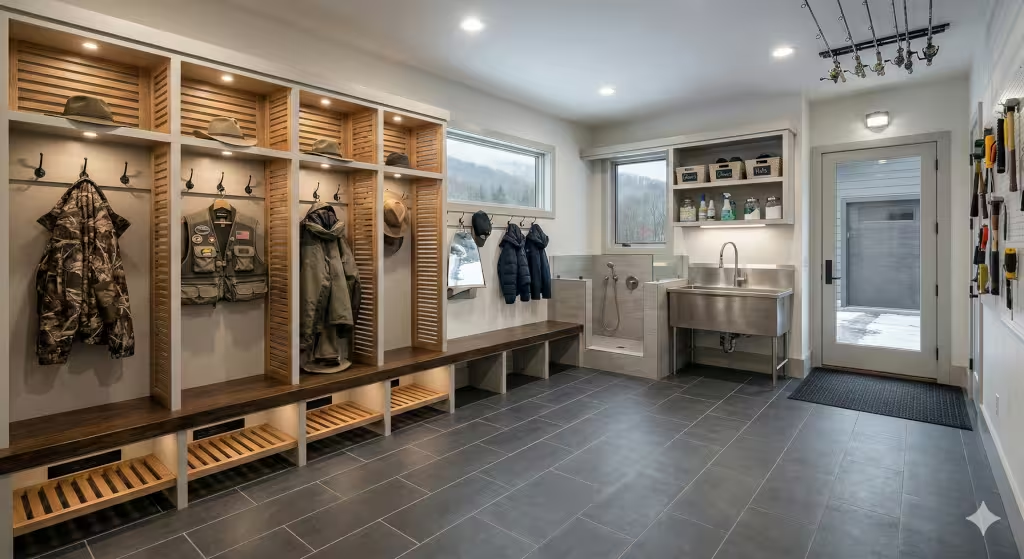
To make a mudroom work, you have to choose the right materials. If you use the wrong stuff, the room will just become another place you have to scrub.
Heavy-Duty Flooring
It is generally advised to stay away from wood in a mudroom. Even the best-sealed wood will warp if a wet pair of waders sits on it too long. Instead, look at porcelain tile or luxury vinyl plank (LVP).
Porcelain Tile: This is nearly indestructible. It won’t scratch from hiking boots and it won’t soak up water. In the Tri-Cities, I recommend a medium-tone tile with a matte finish. This hides the red clay dirt perfectly.
Luxury Vinyl Plank: This is a great choice if you want the look of wood but the power of plastic. It is 100% waterproof and much softer on the feet than tile.
Custom Built-Ins and Lockers
In a large mudroom, every family member should have a locker that is at least twenty-four inches wide. This gives you enough room to hang a bulky jacket without it being squished. The height of the locker is also important. If you hike or hunt, you probably have tall boots. A large mudroom locker should have a bottom shelf that is high enough to let those boots stand upright.
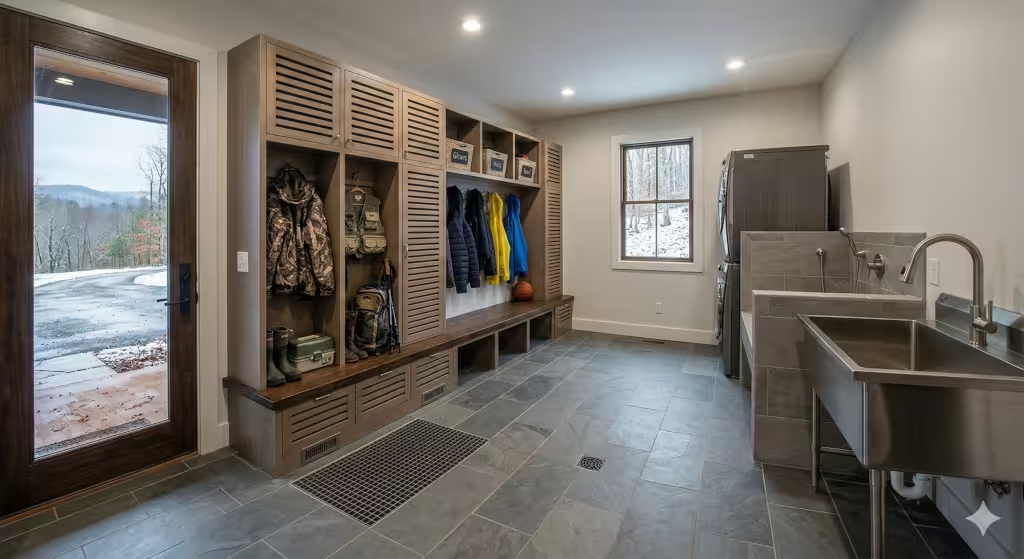
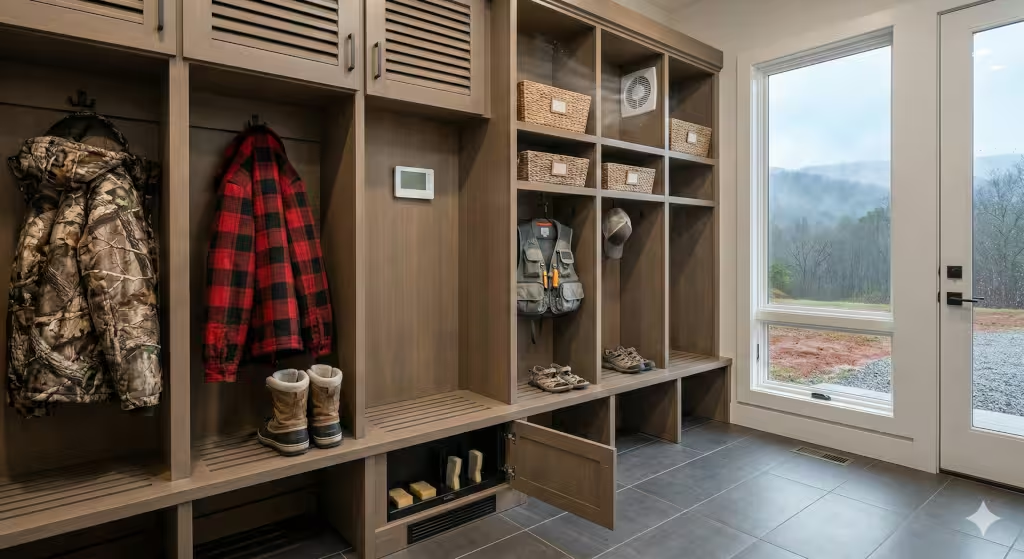
We also recommend using open lockers rather than doors. In a mudroom, airflow is your friend. Wet gear needs to breathe so it can dry. If you shut a wet coat inside a closed cabinet in a mudroom, it will start to smell like mildew. Open lockers allow the air to move around your gear and keep it fresh.
Ventilation is Key: If you put a damp jacket in a closed wooden cabinet, it will smell like a gym locker in two days. Ensure your custom cabinets have “breathable” fronts, like mesh or slats.
Boot Dryers: This is a pro-level move. You can actually have your builder install electric boot dryer vents directly into the bottom of the lockers. Your feet will thank you on those cold Tennessee mornings.
The Utility Station: More Than Just Storage
A mudroom can do more than just hold shoes. If you have the space, you should add a utility station.
The Utility Sink
Every mudroom needs a deep sink. This is where you wash the mud off your gardening tools or soak a stained jersey. It keeps the grime out of your kitchen sink, which is meant for food, not filth.
The Pet Wash Station
In the last few years, the “dog shower” has become the most requested feature in custom home plans. This is a small, raised shower area in the mudroom. It makes washing the dog so much easier on your back. It also means you aren’t dragging a dirty dog through the whole house to get to the bathtub.
Local Climate Considerations: The Tri-Cities Factor
We live in a four-season area. This means your mudroom has to be flexible.
In the winter, you need deep cubbies for heavy coats and space for salt-covered boots. In the summer, you need hooks for life jackets and beach towels for the lake. A lmudroom designed for the Tri-Cities should have adjustable shelving. As the seasons change, you can move the shelves up or down to fit your gear.
Humidity is also a factor here. Our summers are sticky. A mudroom should have its own exhaust fan, similar to a bathroom. This pulls the moisture out of the air so your gear dries faster and stays fresh.
Legal and Planning Aspects in Tennessee
When you add a mudroom to your custom home plan, you have to think about your “footprint.”
In places like Johnson City, there are limits on how much of your lot you can cover with a building. If you design a massive mudroom, it might push you over that limit. Always check with the local building department or your engineer before you fall in love with a floor plan.
You also have to follow the International Residential Code (IRC). This code has specific rules for things like “egress” (how you get out in an emergency) and “ventilation.” For example, if your mudroom connects the garage to the house, the door must be fire-rated and self-closing. These aren’t just suggestions; they are laws designed to keep your family safe.
The Return on Investment (ROI) of a Mudroom
Some people worry that spending money on a mudroom is a waste because it isn’t a “pretty” room like a kitchen. I disagree.
In today’s market, buyers are looking for “livability.” They want a home that makes their life easier. When a buyer walks into a house and sees a perfectly organized mudroom, they immediately feel a sense of relief. They see a home where they won’t have to trip over shoes.
Data shows that functional spaces like a mudroom add significant resale value. It shows the home was built with precision and care. It’s a sign of a quality build.
Frequently Asked Questions about Mudrooms
How much does it cost to build a mudroom?
On average, a mudroom addition can cost between $15,000 and $30,000 in the Tri-Cities area. This depends on how many custom cabinets you want and if you are adding plumbing for a sink or dog wash. However, if you include it in your initial custom home plan, the cost per square foot is much lower because it is part of the main foundation and roof.
Can I combine my mudroom with the laundry room?
Yes, this is a very popular choice. Combining a mudroom with a laundry room makes sense. You can take off your dirty clothes and throw them straight into the washer. Just make sure the room is big enough so you aren’t tripping over the laundry basket while you try to put on your shoes.
Organizing Your Mudroom for Success
Once the room is built, you have to use it right. I suggest using the “One-Touch Rule.” Every item in the mudroom should have a specific home. When you walk in, you should only have to touch your bag once to put it where it belongs.
Use baskets for small things like gloves, hats, and dog leashes. Label them! Labels are a mother’s best friend. If the kids know exactly which basket is theirs, they are much more likely to use it. A mudroom only works if the people living in the house follow the system.
Technical Precision: Lighting and Power
Don’t forget the “invisible” parts of the mudroom.
Lighting
You need bright, clear light in this room. I recommend recessed LED lights in the ceiling. You should also consider “under-cabinet” lighting for the bench area. This helps you see what you are doing when you are tying your shoes.
Power Outlets
In 2026, everything needs a charge. Your mudroom should have outlets inside the lockers. This is the perfect place to charge cordless vacuums, power tools, or even your electric bike. Keeping the charging cords in the mudroom keeps them out of your living room and kitchen.
The Importance of Professional Help
Building a custom home is a big job. You shouldn’t do it alone. When you are looking at plans for a mudroom, talk to a local builder who knows the Tri-Cities.
A local pro will know which way the wind blows and where the sun hits your lot. They can help you place the mudroom on the side of the house that makes the most sense for your driveway and your daily routine. They can also ensure that the plumbing for your mudroom sink is easy to connect to the main lines, saving you money on labor.
Final Thoughts: Building for Your Future
At the end of the day, your home should serve you. It shouldn’t be a place that creates more work. By investing in a large mudroom, you are choosing to put your family’s needs first. You are creating a space that respects the beautiful, muddy, active life we lead here in East Tennessee.
A mudroom is a hallmark of a well-engineered home. It shows that you value competence and precision. Whether you are building in the heart of Johnson City or on a quiet lot in Kingsport, make sure your plan includes this essential space.
Your future self, the one coming home after a long day on the lake with a wet dog and a heart full of memories, will thank you for it.