When it comes to building custom homes these days, one of the most important parts of a new build or a renovation is the home office.
It used to be that a home office was just a desk pushed into the corner of a guest room. But the world has changed. Today, the home office is the center of your professional life. It is where you make your living and where you focus your mind. In our region, we value our peace and our privacy. Whether you are an engineer like me or you work in healthcare or education, you need a space that keeps the noise of the household out so you can get your work done.
Building a space that is truly private and quiet takes more than just a “Do Not Disturb” sign on the door. It takes a bit of planning and some smart engineering. We want to walk you through how to create a sanctuary that helps you be your best.
The New Standard for Tennessee Living
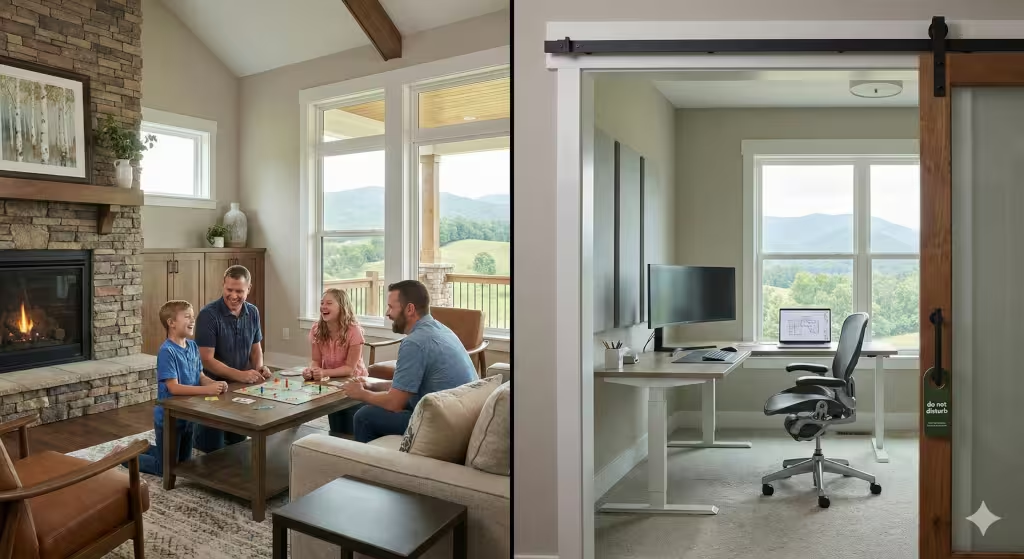
Living in the Tri-Cities is a blessing. We have the beauty of the mountains and the kindness of our neighbors. However, as more people move to our area and more of us work from home, the way we use our space has to evolve. A home office is no longer a luxury. It is a tool.
In the past few years, I have seen a huge shift in what buyers want. They are looking for a home office that feels like a real workplace. They do not want to hear the television in the living room or the kids playing in the yard. They want a space that represents their professional identity. This shift has changed how we look at floor plans in places like Bristol and Piney Flats. We are now thinking about sound travel and privacy from the very first sketch of a house.
The conflict most people face is simple. You love your family, and you love your home, but your work requires focus. A loud house can make you feel stressed. That is why we look at a quiet space as a structural goal. It is not just about the furniture you put in the room. It is about how the room is built. As someone with an engineering background, I look at a home office as a system. Every part of that system, the walls, the floor, the door, must work together to give you the quiet you deserve.
Location Scouting: Where Privacy Begins
The very first step in building a great home office is picking the right spot. If you are building a new home, you have a lot of choices. If you are fixing up an old one, you have to be a bit more creative.
In a good floor plan, you want to keep the home office away from the “loud zones.” These are places like the kitchen, the laundry room, and the mudroom. If your home office is right next to the kitchen, you are going to hear every cabinet door shut and every beep of the microwave. I always tell folks to try and put the home office in a spot that has “buffer zones.” A buffer zone could be a hallway, a large closet, or even a bathroom that sits between the office and the rest of the house.
If you are looking for more space, think about the basement or the attic. A basement home office is naturally quiet because the earth around the walls acts as a giant sound absorber. An attic home office can be very private because it is separated by a whole floor of the house. You just have to make sure you have good insulation so it does not get too hot in our Tennessee summers.
Some people in the Tri-Cities are even looking at their garages. If you have a garage, you can turn a portion of it into a conditioned home office. This means you add heat and air conditioning to that space. It gives you a totally separate entrance, which is great if you ever have clients come by. Just remember that you will need to check with the building departments in Johnson City or Kingsport. They have specific rules about what you can do with a garage. Getting a permit is important because it ensures your home office is safe and adds real value to your property.
The Physics of Silence: Soundproofing Your Sanctuary
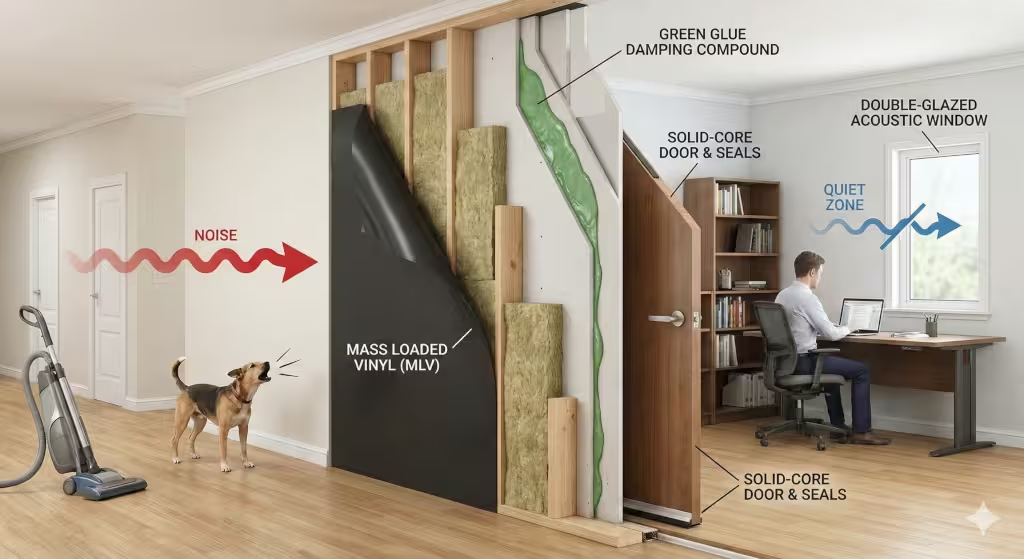
Now we get into the technical side of things. To make a home office truly quiet, we have to talk about how sound moves. Sound is just a vibration. It travels through the air and through the solid parts of your house. To stop it, we need to add mass and break the path of the vibration.
In a standard house, the walls are made of 2×4 wood studs with drywall on both sides. This acts like a drum. When someone talks on one side, the wall vibrates and carries the sound right into your home office. To fix this, we can use “staggered stud” walls. This is where we use a wider base plate and two sets of studs that do not touch each other. Because the studs do not touch both sides of the wall, the vibration cannot travel through as easily.
Another great trick is using Mass Loaded Vinyl. This is a heavy, flexible material that we hang inside the wall. It adds a lot of weight without taking up much space. It is like putting a heavy blanket inside your wall to soak up the noise. We also use something called Green Glue. It is a special compound you put between two layers of drywall. It turns the energy of the sound into a tiny bit of heat, which stops the noise from coming into your home office.
You also have to look at your door. Most interior doors are hollow. They are basically two thin pieces of wood with air in the middle. They do almost nothing to stop sound. If you want a quiet home office, you must install a solid-core wood door. It is much heavier and does a far better job of blocking noise. Don’t forget the gaps around the door, either. I recommend adding a door sweep at the bottom and weather stripping around the sides. If air can get through, sound can get through.
Windows are another big factor. If you live near a busy road in the Tri-Cities, the outside noise can be a distraction. Upgrading to double-glazed windows or laminated glass can make a world of difference. This helps keep your home office peaceful even if the neighbors are mowing their grass or a truck is driving by.
Lastly, think about the floors. If your home office is on the second floor, every footstep can sound like thunder to the people below. If you have people living above your home office, you will hear them, too. Using thick insulation in the ceiling and a high-quality underlayment beneath your hardwood or vinyl floors will help quiet those sounds.
2026 Design Trends: Aesthetics That Aid Focus
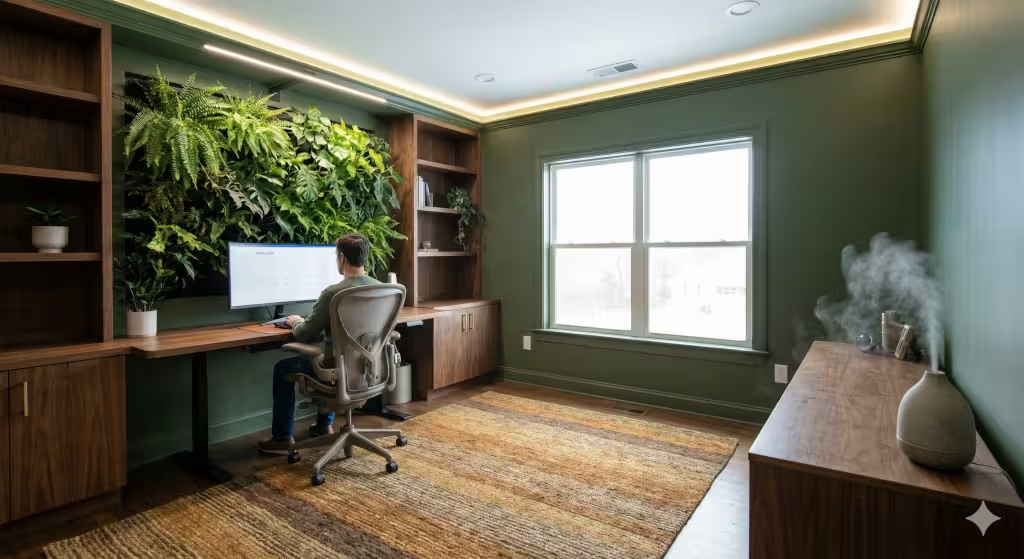
As we move through 2026, we are seeing some beautiful trends that actually help you work better. One of my favorites is biophilic design. This is a fancy way of saying we are bringing nature inside. In a home office, this means using real plants and natural materials like wood and stone. Plants are great because their leaves actually help absorb high-frequency sounds. Plus, looking at greenery helps lower your stress and keeps you calm while you work.
The colors we choose for a home office are changing, too. For a long time, everyone wanted gray walls. Now, we are seeing a move toward what I call “Mountain Modern” colors. These are colors that remind us of the East Tennessee landscape. Think of deep moss greens, warm browns like walnut wood, and soft yellows like the sun on the ridges. These colors make a home office feel cozy and grounded. They help you feel like you are in a professional space that is still part of a home.
Lighting is also a big deal. In 2026, we are using “circadian lighting.” These are smart light bulbs that change their color and brightness throughout the day. In the morning, the light is cool and blue to help you wake up and focus. In the afternoon, it gets warmer and softer to help you wind down. Having this kind of light in your home office helps your body stay on a natural schedule, which is very important when you don’t have to leave the house for work.
Questions Answered about Home Offices
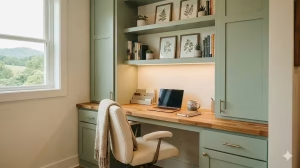
When people think about building a home office, they usually have the same few worries. One big question is how to make a small home office look bigger. If you have a tiny room, don’t worry. You can use vertical storage. Build your shelves all the way up to the ceiling. This draws the eye upward and gives you more floor space. Using a floating desk that attaches to the wall can also help. It keeps the floor clear and makes the room feel more open.
People also wonder about the best colors for productivity. It really depends on the kind of work you do. If you do a lot of math or technical work, a soft blue can help your brain stay logical. If you are an artist or a writer, you might like warmer tones that spark creativity. For most of us in the Tri-Cities, green is a great choice. It is the color of balance and helps you stay focused for long periods.
Another common question is how to separate work and home life when you have to share a room. If your home office is in a corner of your bedroom or living room, you need a visual boundary. You can use a tall bookshelf or a beautiful screen to hide your desk when you are done for the day. Using acoustic partitions can also help. These are movable walls made of sound-absorbing material. They help you feel like you are in a different world once you sit down to work.
Advanced Acoustic Treatments
Once you have the walls and doors right, you have to think about the sound inside the home office. Have you ever been in a room where your voice echoes? That makes it very hard to have a clear phone call or a video meeting. This is where we talk about absorption versus blocking.
Blocking is what we do with heavy walls and solid doors to keep outside noise out. Absorption is what we do to stop sound from bouncing around inside. If your home office has hard floors and bare walls, the sound will bounce like a ball. To fix this, you can use acoustic panels. In the past, these looked like ugly foam blocks. But now, you can get panels that look like beautiful art. You can even get them printed with photos of the Great Smoky Mountains or the Holston River. They look like decorations, but they are actually soaking up the extra sound.
You might also consider a sound masking system. This is a device that plays a very soft, steady sound called white noise or pink noise. It sounds a bit like a fan or a gentle rain. This sound helps to “cover up” small noises that might distract you. It is a great addition to any home office because it creates a consistent background that helps your brain stay in the zone.
The Tri-Cities Technical Check: HVAC and Humidity
One thing a lot of people forget when they build a private home office is the air. If you make a room very airtight to keep it quiet, it can get stuffy very fast. You need a good flow of fresh air. However, your air vents can also act like a telephone, carrying noise from the rest of the house right into your workspace.
To solve this, we use something called acoustic baffles or “sound boots” inside the ductwork. These are lined with sound-absorbing material that lets the air through but stops the noise. It is a small detail that makes a huge difference in how comfortable your home office feels.
We also have to think about humidity. Here in Tennessee, it can get very humid in the summer and very dry in the winter. High humidity is bad for your computers and your expensive office chair. It can also make the wood in your desk swell or crack. I recommend keeping your home office between 45% and 55% humidity. You can do this with a small dehumidifier or by making sure your main HVAC system is working properly. Keeping the air right protects your investment and makes the room a better place to spend eight hours a day.
Building the Perfect Foundation for Your Work
Creating a home office is a journey. It starts with a clear plan and ends with a space that reflects who you are. When you take the time to build it right, you are doing more than just adding a room to your house. You are creating a place where you can be your best self.
Buyers in the Tri-Cities should always think about the long term. A well-built home office adds a lot of value to your home. If you ever decide to sell, a buyer will be very impressed by a room that is already soundproofed and wired for high-speed work. It shows that you cared about the quality of the build.
Remember to start with the “bones” of the room. Get your insulation, your wiring, and your doors right first. You can always change the paint color or get a new chair later. But it is much harder to go back and fix a noisy wall once the room is finished. Take your time, do your research, and don’t be afraid to ask for help from a professional who understands the engineering of a quiet space.
Creating a Workflow that Fits Your Life
Once the physical work is done, you have to think about how you will actually use your home office. The layout is just as important as the soundproofing. You want a “work triangle” just like you would have in a kitchen. This means your desk, your storage, and your tech should all be within easy reach.
If you have a window in your home office, place your desk so the light comes from the side. If the window is directly behind you, it will create a glare on your computer screen during video calls. If the window is directly in front of you, the bright light might tire your eyes. A side view is usually the best balance. It lets you enjoy our beautiful Tennessee scenery without making it hard to see your work.
You should also plan for your cables. There is nothing that ruins the look of a nice home office like a mess of tangled wires on the floor. When we build custom offices, we often put “chases” or hidden channels inside the walls or the desk. This keeps your power cords and internet cables hidden away. It makes the room look much cleaner and more professional.
The Importance of Ergonomics in the Home Office
If you are going to spend a lot of time in your home office, you need to be comfortable. This is where ergonomics comes in.
Your desk should be at a height where your elbows are at a 90-degree angle. Your monitor should be at eye level so you are not leaning your neck down all day. Investing in a high-quality chair is one of the best things you can do for your health. A good chair supports your lower back and helps you stay energized.
In the Tri-Cities, many people are choosing “sit-to-stand” desks. These desks have a motor that lets you raise or lower them with the push of a button. Standing for part of the day is great for your circulation and keeps you from getting that mid-afternoon “slump.” It is a modern feature that fits perfectly into a well-designed home office.
Final Touches: Making the Space Yours
The final part of the process is the most fun. This is where you add the things that make the home office feel like yours. Maybe it is a bookshelf filled with your favorite engineering manuals or a wall where you hang your fishing trophies. These personal touches help you feel at home even when you are working hard.
Don’t forget about your “background” for video calls. Since so much of our work happens on screen now, the wall behind your chair is very important. Many people in our area like to use reclaimed wood from old Tennessee barns to create a “feature wall.” It looks great on camera and adds a bit of local history to your home office. It also acts as another layer of sound absorption.
Think about the scent of the room, too. A small cedar block or a candle that smells like the woods can make your home office feel like a retreat. When all your senses are happy, you can do your best work.
Conclusion: Investing in Your Output
Building a home office is a big project, but it is one of the most rewarding ones you can take on. In our fast-moving world, having a place where you can find silence and focus is a true gift. By following these steps—picking the right location, using the right building materials, and thinking about the details like lighting and air quality—you can create a space that helps you succeed.
Some people try to cut corners when they set up a home office. They think a cheap desk and a pair of headphones are enough. But after a few months, they realize they are tired and distracted. If you treat your home office like the professional environment it is, you will see the results in your work and your mood.
The Tri-Cities area is a wonderful place to live and work. We have the best of both worlds here. By engineering a private and quiet home office, you can enjoy your home life and your professional life without one getting in the way of the other. It is an investment in your career, your home value, and your peace of mind.
Take it one step at a time. Start with the plan, look at the engineering, and build a foundation that will last for years. You deserve a workspace that is as strong and reliable as a well-built Tennessee home.