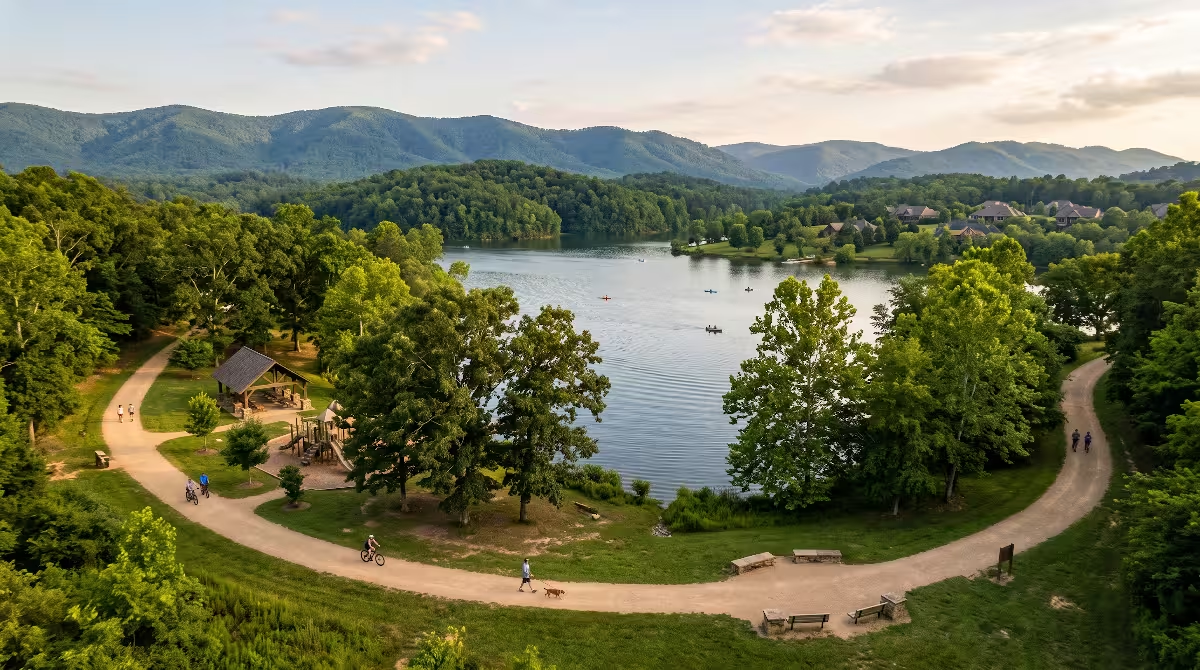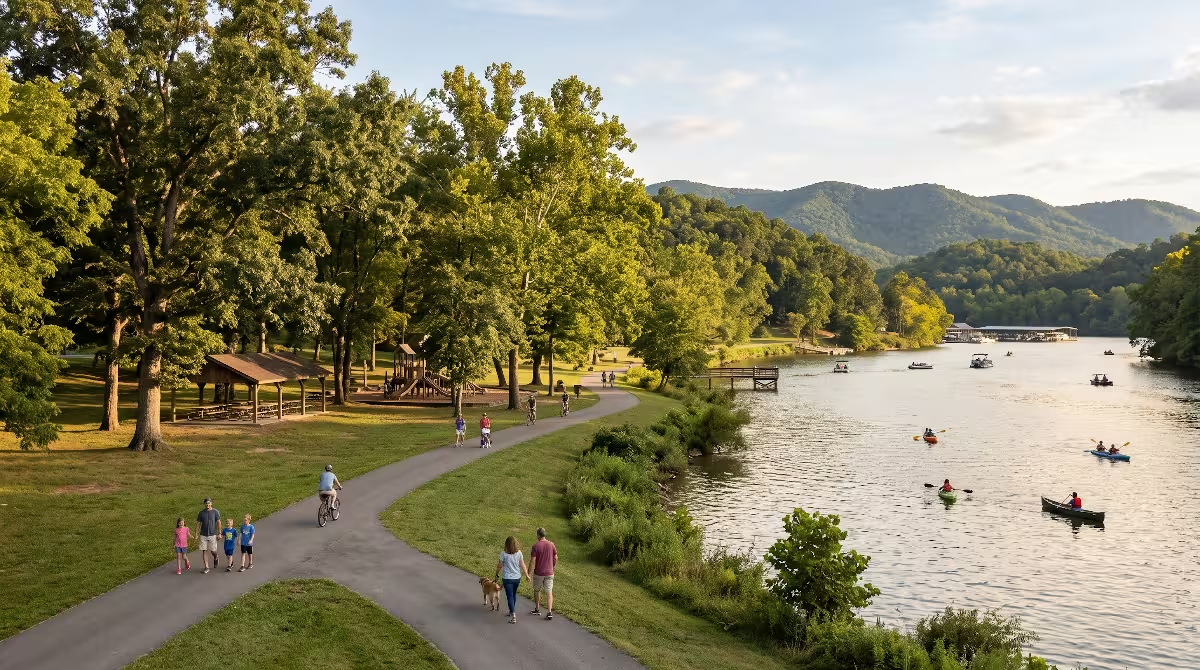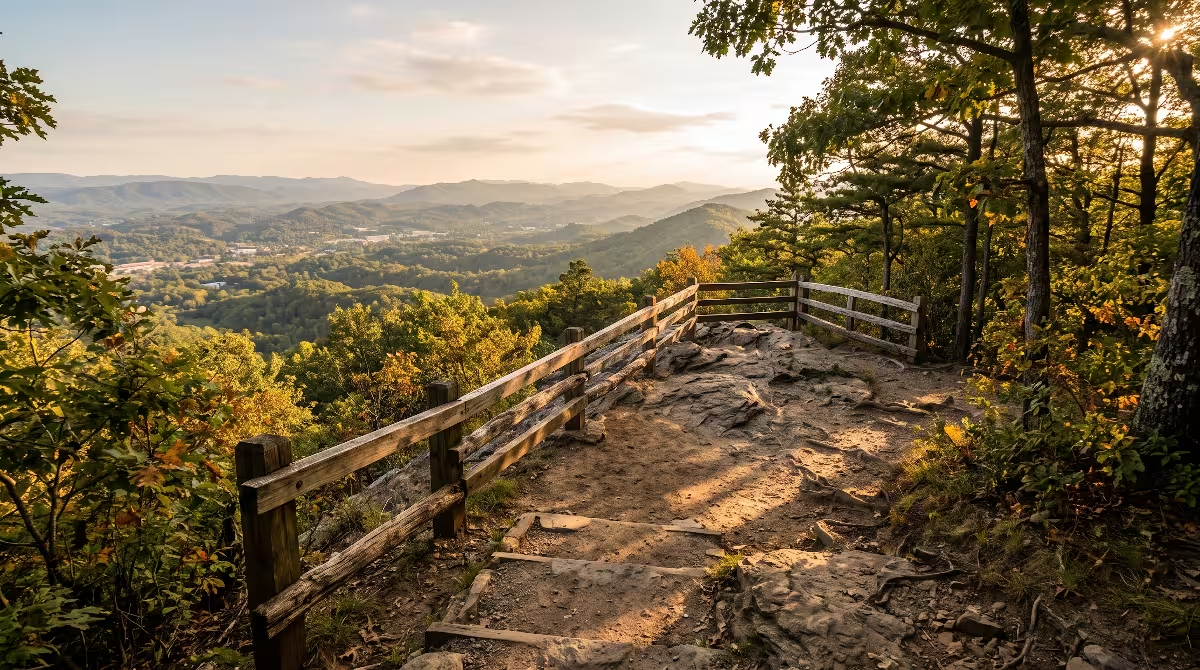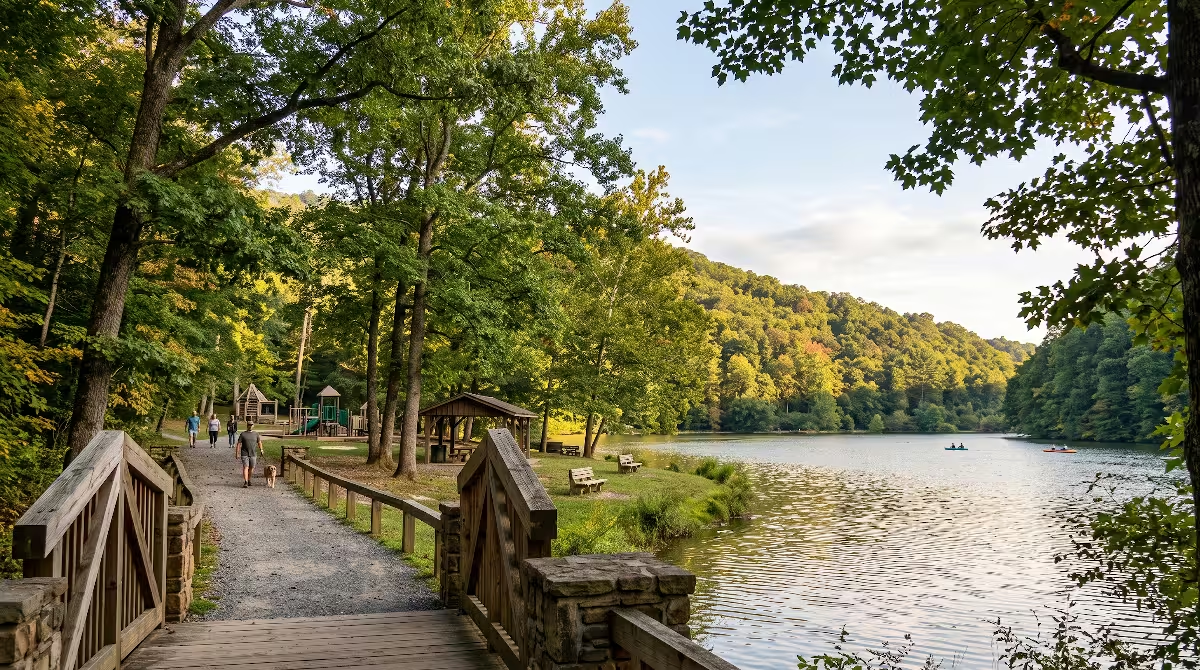


Few places in northeast Tennessee teach you to respect our regional geology and natural beauty quite like Bays Mountain Park.
This preserve is far more than just a weekend picnic spot for local families. It serves as a vital environmental anchor for our entire region. When people ask what makes our corner of Sullivan County so desirable, Bays Mountain Park is always near the top of the list. Below is an in-depth breakdown of the park, covering everything from its early engineering roots to the practical realities of building a home along its foothills.
Geographic Anatomy and Infrastructure Origins
Long before hikers walked these ridges, the property served an essential civic function. In the early part of the twentieth century, local leaders set aside this high basin to capture fresh mountain water for the booming industrial city of Kingsport. That single infrastructure choice protected thousands of acres of continuous forest canopy from timber clear-cutting. Today, the municipal origins of Bays Mountain Park demonstrate how good long-term public planning can protect natural resources for future generations.
Native Wildlife Habitats and Conservation
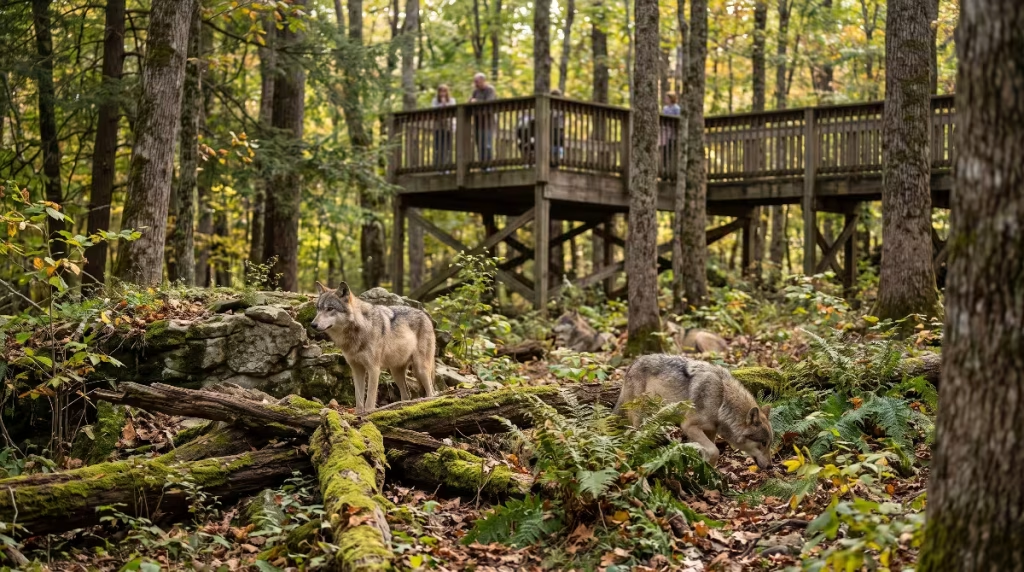
The animal habitats at Bays Mountain Park give visitors a rare, close look at native wildlife that once roamed our valleys in huge numbers. The most famous residents inside the reserve are the gray wolves. The wolf habitat at Bays Mountain Park allows visitors to observe these animals safely from raised wooden platforms. Park naturalists host regular howl sessions where you can hear the pack communicate across the mountain hollow.
Right beside the wolf habitat, the park operates a state-licensed raptor center. This open-air facility houses non-releasable birds of prey, including bald eagles, red-tailed hawks, and screech owls. Inside the climate-controlled nature center, visitors can view native snakes, turtles, and regional fish species. Outside the fenced enclosures, wild white-tailed deer, wild turkeys, and native black bears move freely through the protected woods of Bays Mountain Park.
Astronomy and the Planetarium Experience
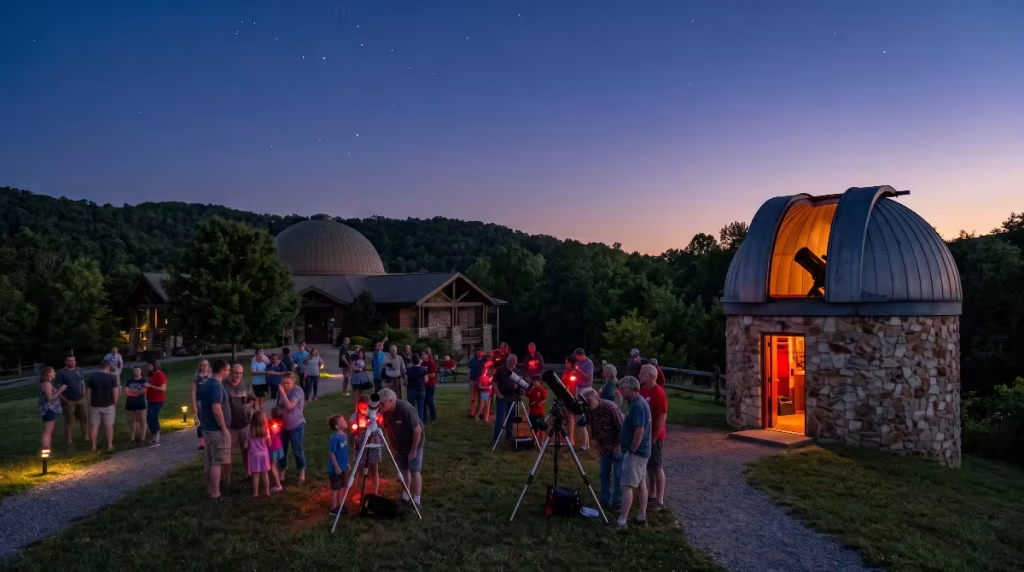
High-elevation mountain ridges provide clean sightlines and darker night skies than the valley floor. The planetarium at Bays Mountain Park is one of the top public science centers in the region. The theater features a forty-foot projection dome that pairs an optical star projector with modern digital display systems. The facility offers public star shows, educational films, and school field trips throughout the year.
Next to the planetarium dome, the park operates dedicated public optical observatories. During the daytime, special solar filters allow guests to observe solar flares and surface details on the sun safely. On clear weekend evenings, local astronomy clubs gather at Bays Mountain Park for scheduled public star watches. For children growing up across our region, this facility provides a wonderful hands-on introduction to space science.
Trail Systems: Hiking and Mountain Biking Topography
If you love exploring on foot or on two wheels, the trail network across Bays Mountain Park provides over 44 miles of mapped routes. The trails cover a wide variety of terrain, ranging from flat lakeside paths to rocky ridgelines.
For a calm afternoon walk, the Lakeside Trail provides an accessible, flat gravel loop that hugs the water. If you want a serious physical workout, the trail to the fire tower climbs steadily through dense oak, hickory, and tulip poplar woods. Built by the Civilian Conservation Corps in 1937, the steel fire tower offers clear views across the Holston River valley.
For cyclists, Bays Mountain Park features roughly 40 miles of approved mountain bike paths. You can ride smooth gravel service roads or challenge yourself on steep, rocky singletrack paths along the upper ridges. To ensure hiker and animal safety, bicycles are never permitted on the Lakeside Trail or directly within the animal habitat areas.
The Reservoir, Masonry Dam, and Water Operations
At the physical center of the park sits a peaceful 44-acre reservoir. The historic stone masonry dam, completed in 1916, is a durable example of early regional civil engineering. The hand-cut stone wall holds back mountain stream runoff to create the water basin that defines Bays Mountain Park.
During the spring, summer, and autumn months, visitors can take guided barge tours across the water. These electric-powered pontoon boats carry guests past active beaver lodges, quiet coves, and nesting waterfowl. The 44-acre reservoir inside Bays Mountain Park remains strictly protected to maintain clean water quality. Private kayaks, canoes, and paddleboards are prohibited, and swimming is not allowed. Regulated shore fishing from the stone dam is open to children under sixteen and adults fifty-five and older, following state wildlife guidelines.
Appalachian Cultural Heritage: The Farmstead Museum
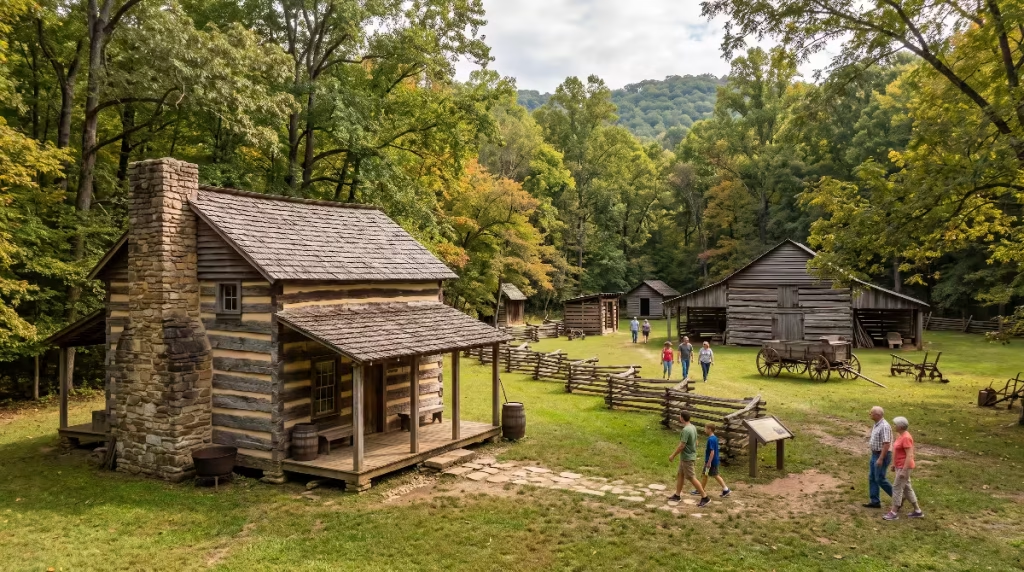
Bays Mountain Park also preserves the cultural memories of our early East Tennessee settlers. Just past the main nature center, visitors can walk through the Farmstead Museum. This living history area contains original nineteenth-century log cabins, a timber-framed barn, and authentic outbuildings moved from nearby mountain communities.
Walking through the farmstead shows visitors how early families cleared land, built homes, and farmed steep hollows without modern machines. During seasonal festivals, volunteers demonstrate traditional crafts such as blacksmithing, woodworking, and heirloom gardening. For those of us who appreciate hand-hewn logs, square-notched joints, and dry-laid stone foundations, this section of Bays Mountain Park offers a practical lesson in historic craftsmanship.
Land Development and Building in the Shadow of the Ridge
Buyers need to look at the ridges surrounding Bays Mountain Park with genuine appreciation and careful engineering respect. The parcels surrounding the mountain base present unique site conditions that require thoughtful planning before pouring a foundation.
First, the local geology consists of layered shale, limestone, and weathered sandstone. When building on steep slopes near Bays Mountain Park, proper site grading, detailed soil testing, and reinforced concrete foundation walls are necessary. Cut and fill work must be calculated carefully to prevent slope slippage during wet winter months.
Second, most home sites directly adjacent to Bays Mountain Park do not have access to municipal sewer lines. High-elevation mountain soils can be thin and rocky, which often limits standard septic drain fields. In these situations, builders frequently install engineered alternative systems, such as low-pressure pipe or drip dispersal systems, approved by the Sullivan County health department.
Finally, builders must plan around local mountain microclimates. The shadow cast by the northern face of the ridge reduces winter sunlight and solar heat gain. When designing custom homes near Bays Mountain Park, you should arrange floor plans, window layouts, and roof overhangs to capture daylight while protecting the house from cold mountain winds. Building near the park provides incredible privacy, but success depends on solid site engineering.
Visitor Logistics, Operations, and Seasonality
Planning a trip to Bays Mountain Park is simple once you know the basic visitor guidelines. The park charges a straightforward vehicle entry fee of seven dollars, though members of the park association receive free year-round entry. Operating hours shift with the seasons. During the summer months, the gates typically stay open from 8:30 in the morning until 8:00 in the evening. Winter brings earlier closings around 5:00 in the afternoon.
If you plan to bring your dog to Bays Mountain Park, keep in mind that pets must remain on a standard hand-held leash at all times. Dogs are welcome on the outer multi-use trails, but they are strictly barred from the central animal habitat areas and nature center to avoid stressing the wildlife.
Frequently Asked Questions About Bays Mountain Park
Here are clear, direct answers to common questions about Bays Mountain Park that visitors and prospective home buyers ask:
- Is Bays Mountain Park free to enter?
Standard passenger vehicles pay a seven-dollar gate entry fee. Frequent visitors can purchase an annual park membership to receive free admission. - Can you launch your own kayak or paddleboard at Bays Mountain Park?
No. Personal boats, paddleboards, and swimming are prohibited to protect the aquatic habitat and reservoir water quality. - Can you drive directly to the fire tower at Bays Mountain Park?
No. The access road to the fire tower is closed to public vehicular traffic. Visitors must hike or pedal a mountain bike to reach the observation deck. - Are dogs allowed everywhere inside Bays Mountain Park?
No. Leashed dogs are permitted on outer hiking and biking trails, but they cannot enter the animal habitat loop or the main visitor center. - What programs require extra tickets at Bays Mountain Park?
Planetarium presentations and pontoon barge tours require small additional tickets, which you can purchase at the gift shop desk inside the nature center.
Environmental Stewardship and Field Protocols
Keeping Bays Mountain Park healthy and clean requires cooperation from every hiker, biker, and family who visits. The park follows standard Leave No Trace outdoor principles. Whatever items or food containers you carry into the forest, you must carry back out.
Trail safety depends on clear field courtesy. Cyclists must yield the right-of-way to hikers, and all downhill travelers should yield to hikers climbing up the grade. Because native black bears inhabit these woods, always dispose of food wrappers in designated animal-proof trash bins. Local civic groups and trail volunteers spend hundreds of hours each year repairing footbridges and clearing downed trees across Bays Mountain Park. Treating these trails with care ensures that this mountain refuge stays pristine for generations to come.
Home Builder Verification Checklist for Parcels Near the Park
If you are evaluating land or planning a custom residential build near the perimeter of Bays Mountain Park, execute the following steps before closing on the property:
- Topographic Survey: Commission a boundary and elevation survey with two-foot contour intervals to identify natural drainage paths and grade breaks.
- Geotechnical Soil Boring: Complete two or three exploratory test borings within the planned foundation footprint to confirm bedrock depth and avoid unstable colluvial soils.
- Septic Feasibility Testing: Schedule an on-site percolation and soil profile test with the local county environmental health office to verify if a standard gravity trench or an engineered drip system is required.
- Utility Extension Audit: Verify the distance to the nearest public water main and electric service transformer along the road frontage to determine site development costs.
- Solar and Wind Orientation Review: Position the home on the parcel to account for ridgeline shadows and prevailing wind currents flowing down the mountain face.