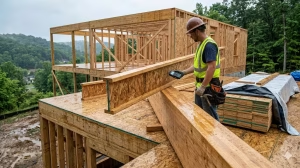
When we talk about our local rivers like the South Holston and the Watauga, we are talking about the heart of our region. For many women in our community, these waters are more than just a place to relax. They are where we teach our children about patience, where we find our own quiet strength, and where we build memories that last longer than any house we could ever frame.
From a professional view, a healthy river is the best sign of a healthy town. If the water is good, the economy is usually good too. I have seen how the beauty of our outdoors brings people here to build their dream lives. Today, we are looking at how trout fishing serves as a primary driver of the twenty one billion dollar outdoor industry in Tennessee. It is an economic engine that keeps our schools funded and our small businesses open.
By the Numbers: Statewide Economic Contributions
The strength of a home depends on the quality of its foundation. The same is true for our state. The economic foundation of Tennessee is built on our natural beauty, and the numbers behind trout fishing show exactly how sturdy that foundation is. When we look at the data from early 2026, we see that our outdoor world is not just a nice place to visit; it is a multi-billion dollar business that keeps our families moving forward.
Direct Spending: The First Ripple in the Pond
Every time a person decides to go trout fishing, they start a chain reaction of spending. It usually begins with the small things that we might not even think about. An angler has to buy a license from the state, which directly funds the protection of our waters. Then, they head to a local shop to buy flies, reels, and rods. For many women in our area, these shops are more than just retail stores; they are community hubs where we learn which sections of the Watauga are running clear and where the fish are biting.
Across the state of Tennessee, anglers spent about two point eight billion dollars in the last year alone. This spending covers everything from high-tech waterproof gear to the breakfast biscuits bought at a gas station at five in the morning. When a family comes to the Tri-Cities for a weekend of trout fishing, they are paying for hotel rooms or local rentals.
They are also hiring professional guides. In 2026, a full-day guided float trip can cost upwards of six hundred dollars. That money goes directly into the pocket of a local expert who then uses it to support their own family right here in our community. This direct spending is the fuel that keeps our local economy running at a steady pace.
The Multiplier Effect: How One Dollar Becomes Three
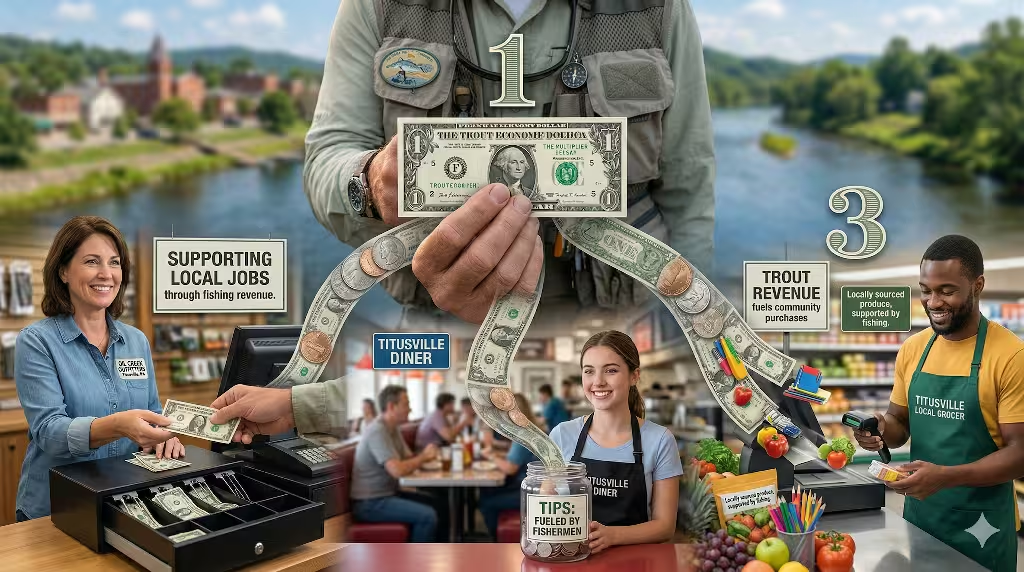
In my engineering background, I like to look at how systems work together. In economics, we use a term called the multiplier effect to describe how money travels. When we talk about trout fishing, the impact of a single dollar does not stop at the cash register. For every dollar an angler spends, it creates about one point five dollars of additional economic activity as it moves through our towns.
Think about a local fly shop in Johnson City. When that shop makes a sale related to trout fishing, they use a portion of that money to pay their rent. The landlord then uses that rent money to hire a local contractor to repair a roof or upgrade a kitchen. We then take that money and pay a crew of carpenters and electricians. The crew members then go to the grocery store or the local pharmacy. This means that even if a person never picks up a fishing rod in their entire life, their paycheck might still be supported by the fact that trout fishing exists in our backyard.
For the state of Tennessee, this total ripple effect from fishing reached over three point seven billion dollars this year. It is a powerful reminder that our rivers are connected to our dinner tables and our bank accounts.
Tax Revenue: Reducing the Burden on Families
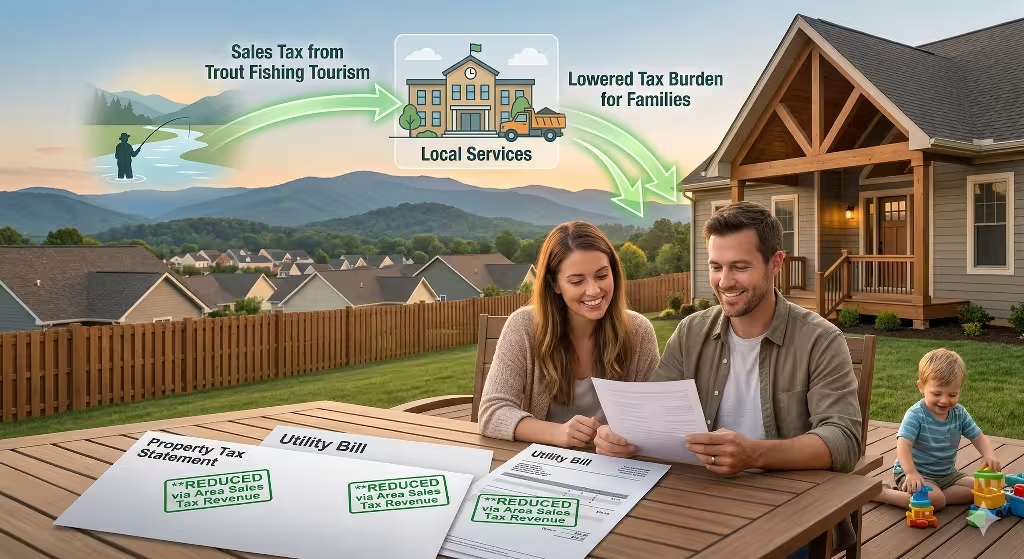
One of the most technical but important parts of the economic impact of trout fishing in Tennessee is how it affects our taxes. We all want our schools to be good and our roads to be safe, but we also want to keep more of our hard-earned money. Because so many people visit our state for trout fishing, they contribute a massive amount of sales tax. This is money coming from visitors that helps pay for our local services.
The latest research shows that outdoor recreation, led by activities like trout fishing, generates about one point eight billion dollars in state and local tax revenue every year. This is a staggering number. To put it in perspective for a typical household, this revenue from visitors and outdoor fans saves the average Tennessee family over one thousand dollars in taxes each year. As a mother and a homeowner, I appreciate that every time a visitor casts a line into the South Holston, they are helping to lower my personal tax bill. This revenue allows our state to stay one of the most affordable places to live in the country while still investing in our future.
Job Creation and Community Stability
We always want to make sure that workers have steady jobs they can count on. Trout fishing provides that same kind of stability for over twenty-two thousand people in Tennessee who work directly in the fishing industry. If we look at the broader outdoor world, that number jumps to over two hundred thousand jobs. These are not just seasonal jobs; they are careers.
These jobs are spread out across many different fields. We have the guides and the shop owners, of course. But we also have the people who work in boat manufacturing, the scientists who monitor water quality, and the hospitality workers who make our guests feel at home.
In the Tri-Cities, these jobs are the backbone of our smaller towns. In places like Elizabethton, the business generated by trout fishing helps keep the main street vibrant and full of life. It provides a way for young people to stay in their hometowns and make a good living. For women in our region, this industry offers many opportunities to start small businesses, from boutique lodging to specialized guide services. It is an industry built on precision and care, values that we hold dear here in East Tennessee.
Investment in Conservation: A High-Return Strategy
We know that if you don’t maintain your equipment, your business will eventually fail. Our state government views our rivers in the same way. In the 2026 budget, Tennessee has set aside millions of dollars to improve water quality and protect the places where people go for trout fishing. This is not just about being kind to nature; it is a smart financial investment.
For every dollar the state puts into fish habitat and clean water, we see a massive return in economic activity. It is much cheaper to keep a river healthy than it is to try to fix it once it is ruined. This is why we see such a strong focus on projects like the Bill Dance Signature Lakes and the restoration of mountain streams. These investments ensure that trout fishing remains a top-tier attraction for decades to come. When I see the state putting money into our watersheds, I see them protecting the property values of the homes I build. I see them protecting the future of the Tri-Cities.
By looking at these numbers, we can see that trout fishing is much more than a hobby. It is a vital part of the Tennessee success story. It supports our local shops, funds our public services, and creates a sense of pride in our community. Whether we are standing in the river ourselves or just enjoying the benefits of a strong economy, we all have a reason to value the cold, clear waters that make our home so special.
The Tri-Cities Engine: South Holston and Watauga Impact
In our neck of the woods, we have something truly world class. The South Holston and Watauga Rivers are known all over the country. People travel from thousands of miles away just to experience trout fishing in our tailwaters. A tailwater is the part of a river that sits right below a dam. Because the water comes from the bottom of the lake, it stays cold all year long. This is perfect for the fish. It means that while other states have to stop fishing in the hot summer, we can keep going. This year-round activity is a huge boost for places like Elizabethton and Bristol.
Our local hospitality industry relies heavily on this. Many people decided to build custom homes here specifically because they fell in love with the rivers. They start as visitors staying in local lodges, and then they decide to become neighbors. This creates jobs for builders, electricians, and plumbers. It also supports our local shops. When someone spends a week here for trout fishing, they are not just buying bait. They are buying clothing, local art, and professional guide services.
The state also makes a smart investment in our waters. Every year, the government spends money to stock fish and keep the habitat clean. While a million dollars might sound like a lot of money to spend on fish, the return is incredible. For every dollar the state spends on trout fishing, we get many more back in economic activity. It is like putting money into a high interest savings account. Our rivers are natural factories that produce joy for visitors and wealth for our residents.
Common Questions About Our Waters and Trout Fishing
Many people wonder how much the Tennessee Wildlife Resources Agency really helps our economy. This agency manages our wildlife and water. Their work supports over five billion dollars in annual income across the state. They make sure the rivers are healthy so that trout fishing can continue for generations. Without their careful planning, the fish populations could drop, and our local businesses would suffer.
Another common question is about how many people actually participate in this sport. There are over one million people who fish in Tennessee each year. A large portion of those people are focused specifically on trout fishing. Whether they are looking for brown trout or rainbow trout, these anglers are dedicated. They spend a lot of time and money on their passion. This high level of interest means that businesses related to the water are very stable.
People also ask about the jobs created by this industry. It is not just about fishing guides, though they are a big part of it. It includes people who work in hotels, people who manufacture boats, and even people like me who build homes for those who want to live near the water. Trout fishing supports over two hundred thousand jobs in Tennessee. These are jobs that cannot be moved to another country. They are tied to our land and our water.
The Intersection of Fishing and Real Estate
As a home builder, I see the direct link between the river and the value of a home. We call this the fishing premium. If I am building a house on a lot that has easy access to a good river, that house is worth much more. People are willing to pay a premium to be close to the best spots for trout fishing. They want to be able to walk out of their back door and be in the water in five minutes. This demand keeps our property values high, which is good for every homeowner in the Tri-Cities.
We are also seeing new trends in how neighborhoods are designed. Many developers are now creating lifestyle communities. These are neighborhoods that have shared docks or private trails leading to the river. They focus on the idea that the outdoors is part of your living room. In my work, I help buyers design homes that have large mudrooms for their waders and special storage for their rods. We are building homes that cater to the lifestyle of trout fishing.
In 2026, many people are moving here from big cities. They are looking for a slower pace of life and a connection to nature. When they look at a map of Tennessee, they see our rivers as a huge plus. They see that trout fishing offers a way to disconnect from the stress of work and reconnect with their families. As a builder, I am not just selling four walls and a roof. I am selling access to a world class outdoor experience. This is why our real estate market remains so strong even when other parts of the country might be struggling.
Infrastructure and Conservation: Protecting the Asset
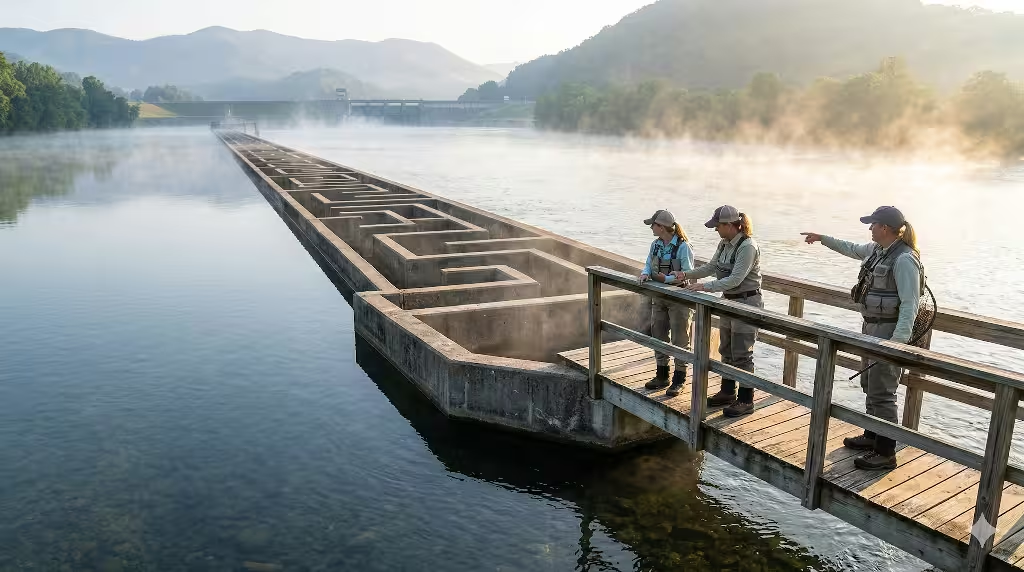
To keep the money flowing, we have to keep the water flowing correctly. This is where engineering comes in. At the South Holston Dam, there is a special structure called a labyrinth weir. It looks like a long, zigzagging wall in the water. Its job is to add oxygen back into the river when the dam is not generating power. Fish need oxygen just like we do. This weir ensures that even when the water is still, the fish stay healthy. It is a vital piece of infrastructure for trout fishing.
We also have to think about how we handle big weather events. We remember the heavy rains and floods that have hit our area in the past. These events can wash away the places where fish lay their eggs. Because trout fishing is so important to our economy, we invest a lot of money into habitat restoration. In 2025 and 2026, we have seen many projects to fix riverbanks and plant trees. This helps the water stay cold and clean.
Conservation is not just about being nice to nature. It is a hard-nosed business decision. If we let our rivers get dirty or let the fish die out, we lose billions of dollars. It would be like a factory owner letting their machines rust. As a builder, I make sure that the sites I work on do not let mud wash into the creeks. We use silt fences and careful planning to protect our watersheds. We all have a part to play in keeping trout fishing a strong part of our future.
A Sustainable Future
Looking ahead to the rest of 2026 and into 2027, the future of our region looks bright. We have a unique gift in our rivers, and we are learning how to manage them better every day. Trout fishing will continue to be a pillar of our economic health. It brings us together as a community and provides a stable base for our growth. Whether you are a professional guide, a shop owner, or a home builder like me, you benefit from the cold, clear water of the Tri-Cities.
Our commitment to integrity and precision in how we manage these resources will pay off for years to come. We are creating a place where people want to live, work, and play. By protecting the sport of trout fishing, we are protecting our way of life. It is a legacy we can be proud to leave for the next generation. We are building more than just houses; we are building a sustainable home for all of us.
I hope this gives you a clear picture of why our waters matter so much. If we keep our focus on quality and conservation, the ripple effects of our efforts will be felt for a long time. It is a great time to be in the Tri-Cities, and it is a great time to be out on the water.