

Walk into almost any newly built custom home today, and your eyes will immediately fall in love. You see soaring vaulted ceilings, huge walls of glass looking out over the mountains, and wide planks of white oak flooring stretching from the front door all the way to the kitchen island. Yet, the very first time a family moves their boxes into one of these stunning spaces, they almost always notice a surprising problem. The moment someone speaks, laughs, or drops a set of keys on the counter, the sound bounces off every wall like a ping-pong ball inside a metal box. That gorgeous, airy room suddenly feels loud, harsh, and exhausting.
When you are designing a home for your family, you want a space that feels like a true sanctuary at the end of a long day. A noisy room works directly against that goal. Even when you do not consciously realize it, constant background echo forces your brain to work harder just to follow a simple conversation at the dinner table. It makes children’s playtime feel overwhelming, turns movie night into a muddy mess of dialogue, and adds a layer of hidden stress to your daily routine.
Fortunately, you do not need to tear down your drywall or cover your ceilings in ugly foam panels to fix the noise. Understanding how area rugs and upholstery reduce echo in a room comes down to a simple, practical rule of physics: you have to interrupt flat, hard surfaces with soft, porous materials that trap moving air and turn sharp sound waves into quiet warmth.
Why Modern Custom Homes Often Feel Loud
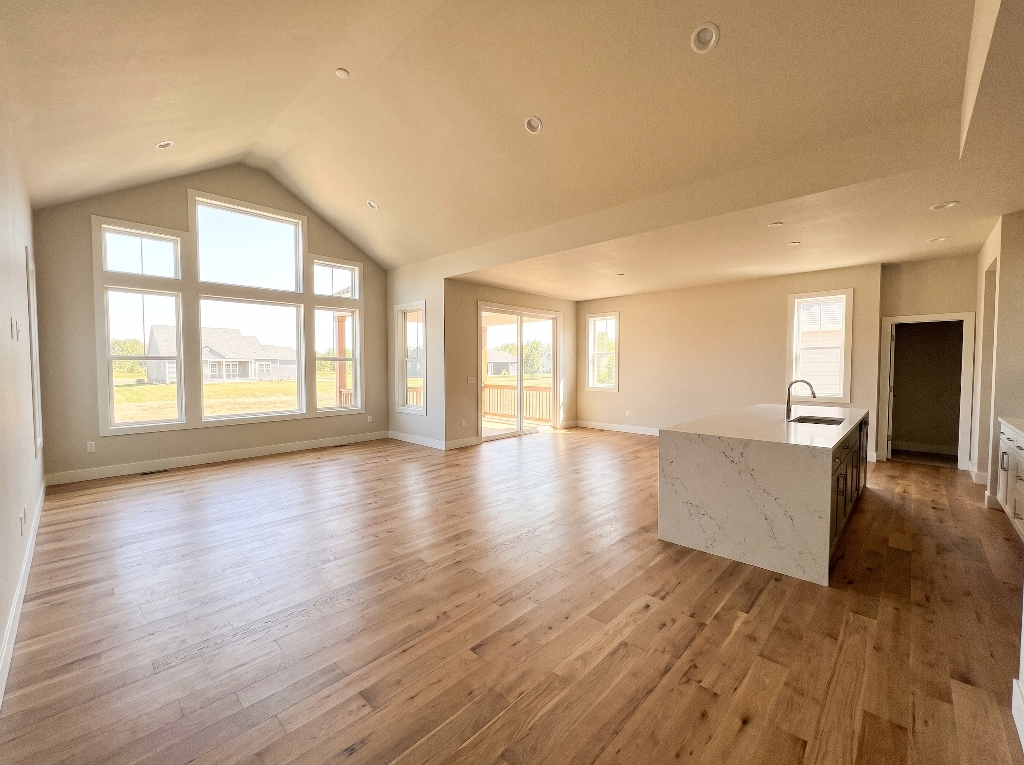
Over the past twenty years, home design has shifted away from small, closed-off rooms and toward wide, open-concept floor plans. While knocking down interior walls brings in wonderful natural light and lets you keep an eye on the kids while cooking dinner, it also removes the physical barriers that used to stop sound in its tracks. In older homes, hallways, doorways, and smaller rooms naturally broke up noise before it could travel far. In a modern great room, a single voice or the hum of a dishwasher has a clear, unobstructed path to travel forty or fifty feet across the house.
The building materials we love most today also play a big role in making rooms loud. Hard surfaces like engineered hardwood, luxury vinyl plank, polished concrete, quartz countertops, and expansive glass windows are durable and easy to clean, which makes them fantastic for busy households. However, from an engineering standpoint, these materials are dense, smooth, and non-porous. When a sound wave hits a smooth hardwood floor or a large picture window, it cannot sink in. Instead, almost all of that acoustic energy bounces right back into the room at the exact same speed it arrived.
For many women who take the lead on designing and organizing the family home, this acoustic clash creates a frustrating disconnect. You spend months picking out warm paint colors, soft lighting, and thoughtful finishes so your house feels welcoming, only to end up with a living room that sounds like a school gymnasium. A loud home makes it harder to unwind, harder to hear loved ones clearly, and harder to enjoy the peaceful atmosphere you worked so hard to build. Recognizing that sound is just as important as lighting or furniture layout is the first step toward fixing the problem for good.
What Happens When Sound Waves Hit Your Living Space
To understand why soft furnishings work so well, it helps to picture how sound actually moves through your house. Sound is not invisible magic; it is physical energy traveling through the air in waves, much like the ripples you see when you toss a pebble into a pond. When you speak, turn on the television, or run the blender, you create vibrations that push air molecules outward in every direction. Those ripples keep moving until they run into something solid, like your floor, your ceiling, or your drywall.
In any home, you are dealing with two main types of household noise: airborne sound and impact noise. Airborne sound includes things like voices, music, barking dogs, and television audio that travel directly through the air. Impact noise happens when two solid objects strike each other, sending vibrations straight through the structure of your house. Think of heavy footsteps on stairs, a dog’s nails clicking across wood planks, or a wooden block hitting the floor. Both types of noise contribute to how loud a room feels, though they behave slightly differently when they meet your furniture.
When airborne sound waves hit a hard, flat surface, they reflect. If you have two flat surfaces facing each other, such as a bare hardwood floor and a flat drywall ceiling, or two bare walls across from one another, those sound waves bounce back and forth rapidly. Acousticians call this flutter echo, and you can test for it right now by standing in an empty room and clapping your hands once.
If you hear a sharp, ringing, metallic zip after the clap, you are hearing flutter echo. When dozens of sounds bounce around like this at once, they overlap and linger in the air. Engineers measure how long it takes for a sound to fade away using a metric called reverberation time, or RT60. In a quiet, comfortable living room, sound fades quickly so speech stays crisp and clear. In a bare room with hard surfaces, sound lingers for too long, muddying every word.
Soft, porous materials break this cycle through a process called porous absorption. Instead of bouncing off a solid wall, sound waves enter the tiny spaces between fabric threads, wool fibers, and foam cells. As the vibrating air molecules squeeze through these microscopic twists and turns, they rub against the fibers. That friction converts the moving sound energy into a tiny, unnoticeable amount of heat. Because the energy gets used up navigating the maze of fibers, very little sound bounces back into the room.
How Area Rugs Tame Floor-to-Ceiling Reflections
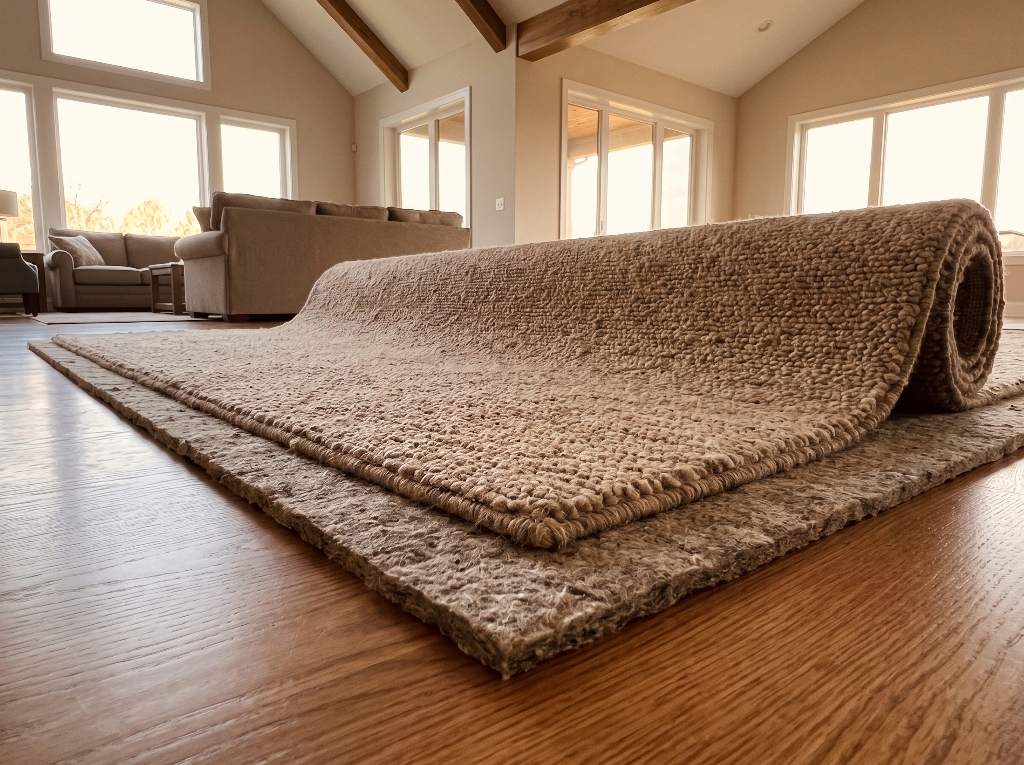
In almost every room of a house, the floor and the ceiling form the largest pair of parallel flat surfaces. Even if you hang artwork on your walls, your floor remains a giant, wide-open reflector that sends sound straight up to the ceiling and back down to your ears. Placing quality area rugs over bare flooring is the single most effective way to break up that vertical bounce path. When you lay down a textile barrier across the floor, you instantly stop a huge portion of sound waves from ever reaching the hard wood or tile beneath.
Not all floor coverings absorb sound equally, and looking at how a rug is made will tell you a lot about how well it quiets a room. Natural wool is the gold standard for acoustic performance in residential interiors. Under a microscope, wool fibers are not smooth tubes; they have tiny overlapping scales and a natural crimp, almost like a coiled spring.
When thousands of wool fibers are spun into yarn and woven together in an area rug, they create millions of tiny air pockets. Sound waves get trapped inside those pockets and lose their energy fast. Synthetic fibers like nylon, polyester, and polypropylene can still help soften a room, especially if they are woven thickly, but thin synthetic flatweaves allow much more sound to pass right through to the hard floor underneath.
When shopping for area rugs to quiet a noisy living area, pay close attention to pile density rather than just pile height. A lot of homeowners assume a super fluffy, long shag rug will absorb the most sound, but that is not always true. If a shag rug has long yarns spaced far apart, sound waves can easily slip between the strands and bounce off the backing. By contrast, a dense hand-knotted or tightly tufted rug packs thousands of fibers close together per square inch. That tight packing creates a much more effective barrier against mid-frequency and high-frequency sound waves, which are the exact frequencies where human speech and sharp household clatter live.
To get the absolute best acoustic results from your area rugs, you need to look at what goes underneath them. A rug pad is often treated as an afterthought just to keep a rug from sliding around, yet the right pad actually does half the heavy lifting when it comes to sound control. Thin, waffle-style rubber pads do almost nothing to absorb noise.
Instead, look for a dense, needle-punched felt pad or a combination felt-and-rubber pad that is at least a quarter-inch to three-eighths of an inch thick. Adding a thick felt pad beneath your area rugs significantly boosts the overall Noise Reduction Coefficient, or NRC, of your floor covering. It gives airborne sound waves an extra layer of dense fiber to travel through, while also cushioning footsteps and dropped items so impact noise never echoes through the subfloor.
The Role of Upholstery: Turning Furniture into Functional Acoustic Treatment
While floor coverings handle the vertical bounce between your floor and ceiling, upholstered furniture tackles the horizontal sound waves traveling across the room at ear level. Think about where your head is when you are sitting on the couch talking to a friend, or standing near the kitchen island chatting with family. Sound waves leave your mouth and travel outward horizontally toward the walls. If those waves hit bare drywall or glass windows, they bounce straight back across the seating area. Placing plush, upholstered furniture around the room puts soft, sound-absorbing obstacles right in the path of those horizontal waves.
What makes a sofa or an accent chair such a powerful acoustic tool is its sheer depth and internal construction. Unlike a thin curtain or a flat rug, a well-built sofa is essentially a giant, stylish acoustic bass trap disguised as living room seating. Inside the frame, seat cushions and back pillows are packed with thick layers of high-resiliency polyurethane foam, polyester batting, and sometimes feathers or down. When sound waves pass through the outer fabric of the couch, they penetrate deep into that foam core. Because the cushion is several inches thick, it can absorb a much wider range of sound frequencies than thin textiles can, taking the harsh edge off deep voices and television audio alike.
The outer fabric you choose for your upholstery also plays a major role in how much sound gets trapped inside the cushions. Open, textured weaves allow sound waves to pass freely into the cushion core without bouncing off the surface. Fabrics like heavy chenille, nubby bouclé, woven linen blends, and plush cotton velvet are wonderful choices for acoustic comfort. Their textured surfaces scatter sound waves in different directions while letting acoustic energy sink into the padding beneath.
On the other hand, smooth, non-porous upholstery materials behave a lot like hardwood floors. Top-grain leather and faux vinyl look gorgeous and wear well over time, especially in busy family homes, but their tight, sealed surfaces reflect high-frequency sound waves rather than absorbing them. If you love the look and durability of a leather sofa, you do not have to give it up for the sake of a quiet room. You simply need to balance that reflective leather surface by pairing it with thick area rugs, fabric accent chairs, and plenty of woven throw pillows so the room still has enough soft texture to soak up stray sound.
You can also look beyond the living room sofa to bring upholstered sound control into other noisy areas of your home. In a primary bedroom with tall ceilings and wood floors, a tall, fabric-tufted headboard acts like a soft acoustic wall right behind your bed, keeping voices and morning alarms from echoing. In a dining room where wooden tables and hard chairs often make dinner conversation feel loud and chaotic, swapping out bare wood chairs for fabric-upholstered dining chairs can dramatically lower the volume in the room. Even full-length, lined fabric drapery hung near large windows will absorb sound waves that would otherwise bounce sharply off the glass.
Strategic Placement: Designing a Quiet Room Without Sacrificing Style
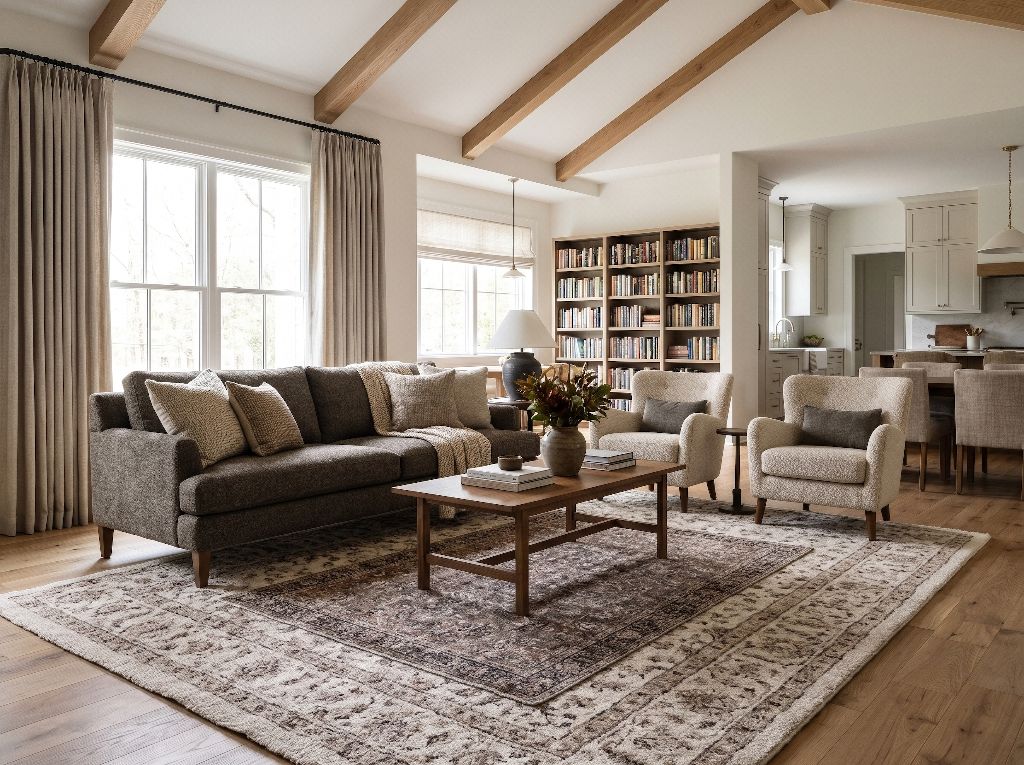
Buying great textiles is only half the battle; how you size and arrange them determines whether your room actually sounds peaceful. One of the most common mistakes I see homeowners make in large living rooms is buying area rugs that are far too small for the space. If you place a small five-by-seven rug floating in the middle of a large twenty-by-twenty great room, you are leaving huge expanses of bare hardwood exposed around the edges. Sound waves will simply hit the uncovered wood around your furniture and bounce up to the ceiling anyway.
To make a noticeable acoustic difference, your area rugs should cover roughly sixty to seventy percent of the exposed hard flooring in your main living zone. From a design and engineering standpoint, the best way to size a living room rug is to choose one large enough that at least the front legs of your sofa and all accent chairs rest comfortably on top of the fibers, while leaving a clean twelve-to-twenty-four-inch border of bare wood around the perimeter of the room. This layout anchors your furniture visually, defines the conversation zone, and puts a thick sound-absorbing pad directly beneath the exact spot where people sit and talk.
Layering textures is another smart strategy that pulls double duty for both interior design and sound control. If a large, custom-sized wool rug stretches your budget, you can start with a very large, affordable natural fiber rug—such as a braided jute or woven seagrass base—to cover the bulk of the floor. Then, layer a smaller, plush hand-knotted wool rug right on top of the jute under your coffee table. You get a rich, designer look with wonderful visual warmth, while doubling the thickness of the fibers absorbing sound in the center of the room.
When arranging your seating, think about breaking up long, uninterrupted walls. If you have a long wall of bare drywall facing a large window, place a fabric sofa, a pair of upholstered chairs, or a tall bookcase filled with books along that wall. Books of varying heights and depths act as natural sound diffusers, scattering sound waves so they cannot bounce cleanly back across the room. Pairing soft seating with layered textiles, throw blankets, and fabric window treatments creates a balanced acoustic environment where every surface works together to keep noise calm and controlled.
Common Questions About Area Rugs, Upholstery, and Room Echo
Homeowners frequently ask practical questions when trying to quiet down a loud living space without undergoing a major renovation. Here are clear, direct answers to the most common questions about using soft furnishings to control indoor noise.
Do area rugs actually stop echo in a room?
Yes, area rugs significantly reduce echo inside a room by absorbing mid-frequency and high-frequency airborne sound waves before they can bounce off hard floors. They also cushion footsteps and dropped objects, which cuts down on sharp impact noise. While a rug will not completely eliminate every sound wave in a massive room with vaulted ceilings, covering a large portion of bare wood or tile floor makes speech noticeably clearer and takes away that hollow, ringing sound.
What type of rug is best for absorbing sound?
Thick, densely woven wool area rugs paired with a heavy felt rug pad offer the best sound absorption for residential rooms. Wool fibers naturally trap air inside their crimped structure, and a dense weave prevents sound waves from passing through to the hard floor below. Adding a quarter-inch or thicker needle-punched felt pad underneath increases the total depth of the porous material, allowing it to absorb even more acoustic energy.
Does upholstered furniture reduce echo better than leather?
Yes, fabric upholstered furniture reduces echo much better than leather furniture. Woven textiles like chenille, bouclé, linen, and velvet allow sound waves to pass through the surface weave and get trapped inside the thick foam cushions underneath. Smooth, sealed leather reflects high-frequency sound waves back into the room in much the same way that glass or finished wood does.
How much of a room should be covered by a rug to reduce echo?
To effectively reduce echo in a living room, bedroom, or family room, your area rugs should cover about sixty to seventy percent of the open floor space. Ideally, the rug should extend underneath the front legs of your main seating pieces while leaving a twelve-to-twenty-four-inch border of visible flooring around the walls. Covering this central zone stops the strongest floor-to-ceiling sound reflections right where people gather.
What is the difference between reducing echo and soundproofing?
Reducing echo, known as acoustic absorption, softens the way sound bounces around inside a single room using soft materials like rugs, curtains, and upholstered sofas. Soundproofing, known as sound isolation, stops noise from traveling through walls, floors, or ceilings from one room to another. Soundproofing requires structural mass, airtight seals, and specialized construction materials, whereas reducing echo can be accomplished easily with everyday home furnishings.
Simple Steps to Test and Quiet Your Loudest Room
Creating a home that sounds as peaceful as it looks does not require an engineering degree or an acoustic laboratory. You can start right now with a simple walk through your house using the clap test. Step into your living room, dining area, or primary bedroom, clap your hands firmly once, and listen closely to what happens in the half-second afterward. If you hear a sharp ring, a flutter, or a lingering tail of sound, that room is telling you it needs more porous surfaces to balance out its hard finishes.
Start by anchoring your largest bare floor space with generously sized area rugs paired with thick felt pads underneath. Next, look at your seating and walls at ear level, adding deep fabric upholstery, textured throw pillows, or lined drapery where bare drywall and glass currently dominate. By thoughtfully layering soft, air-trapping textiles into your everyday decor, you transform a noisy, echo-prone house into a calm, welcoming sanctuary where every conversation feels effortless and every room feels like home.