

When you dye organic linen with native black walnut hulls, you unlock one of the richest, most durable earth tones in the botanical world. Juglans nigra, the Eastern American black walnut tree, packs its thick outer fruit husks with natural brown pigments and plant tannins that resist fading in sunlight and hold steady through years of washing. Unlike berries or flower petals that fade to pale gray after a few laundry cycles, black walnut creates warm golden tans, deep espresso browns, and smoky woodland shades that age with grace.
However, flax linen is a plant-based cellulose fiber, which means it does not grab onto natural color quite as easily as sheep wool or silk. To get deep, even, washfast color when you dye organic linen, you need a simple two-stage tannin and alum mordant process that locks those woodland pigments straight into the heart of each flax thread.
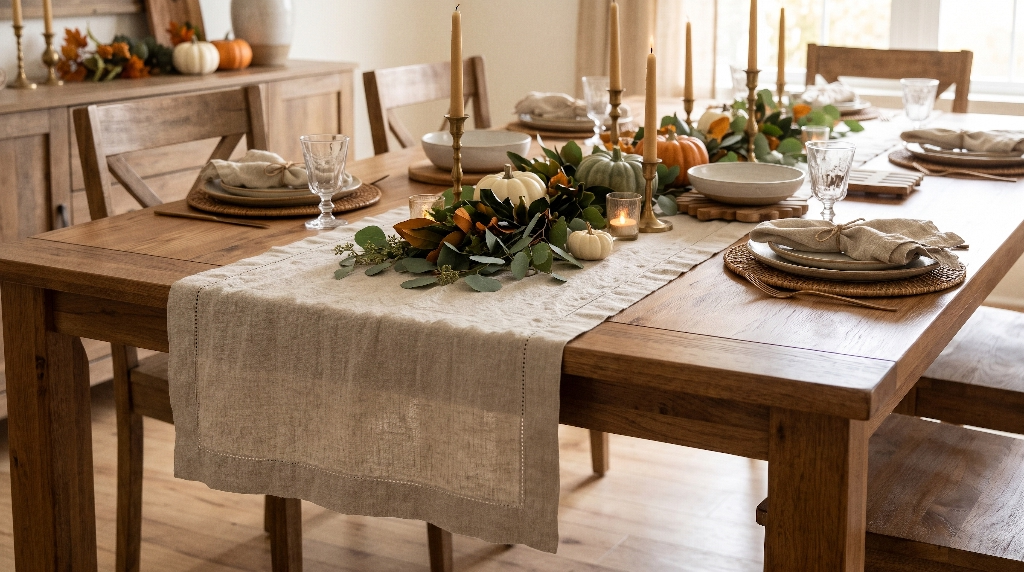
Bringing botanical color into your home also transforms how your living spaces feel and function. Modern commercial fabrics often rely on synthetic azo dyes and harsh chemical fixatives that can release volatile organic compounds, or VOCs, into indoor air. When you dye organic linen at home using fallen walnut hulls, water, and safe mineral salts, you create zero-VOC, non-toxic textiles that support healthy indoor air quality. Hand-dyed organic linen curtains, table runners, throw pillows, and chair covers bring the quiet, grounding palette of an Appalachian hardwood forest directly into your rooms. This biophilic approach connects daily life indoors with local ecology, turning ordinary household fabric into an heirloom piece rooted in the natural landscape.
Before you gather your pots and put on your gloves, review the project specifications below so you can plan your workspace and schedule smoothly.
| Project Parameter | Recommended Target |
| Total Active Hands-On Time | 2.5 to 3 hours (split across preparation and dyeing) |
| Passive Steeping Time | 24 to 72 hours (for hull extraction and overnight oxidation) |
| Target Temperature Range | 120°F to 190°F (49°C to 88°C) |
| Hull-to-Fiber Ratio (WOF) | 10% to 100% Weight of Fiber depending on shade depth |
| Expected Color Yield | Warm oatmeal, honey tan, walnut brown, and iron-shifted charcoal |
Understanding Juglans nigra Chemistry: Juglone and Tannins
To get predictable, repeatable results every time you dye organic linen, it helps to understand what happens inside the dye pot at a microscopic level. You do not need a chemistry degree to master natural dyeing, yet knowing how tree compounds interact with plant fibers takes all the guesswork out of the process.
Why Black Walnut Acts as a Substantive Dye on Protein vs. Cellulose Fibers
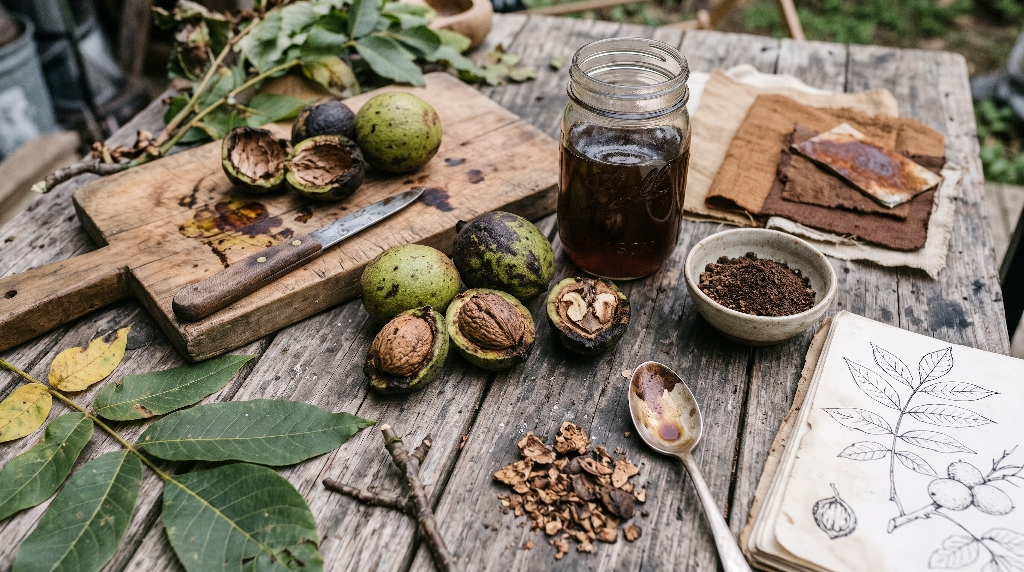
The secret behind black walnut color lies in two natural chemical groups found inside the fleshy outer husk, or pericarp, of the Juglans nigra nut. The first compound is called juglone (5-hydroxy-1,4-naphthoquinone). When fresh walnut hulls break open and meet oxygen in the air, juglone darkens from bright chartreuse green to deep brownish-black. The second group consists of hydrolyzable tannins, specifically ellagic acid and gallic acid. These are the same astringent plant polyphenols found in oak bark, tea leaves, and chestnut wood.
In natural dyeing, craftspeople divide fibers into two main families: protein fibers and cellulose fibers. Protein fibers come from animals, such as sheep wool, alpaca fleece, and silkworm silk. These fibers carry electrical charges and amino acid hooks along their strands. Because juglone binds straight to those protein hooks, black walnut acts as a substantive dye on wool and silk, meaning it sticks permanently without needing any extra helper chemicals.
Organic linen, harvested from the stalks of the flax plant (Linum usitatissimum), is a cellulose fiber. Cellulose strands are made of long, smooth chains of plant sugar molecules. They lack the reactive amino acid hooks found in wool. If you drop raw flax fabric into a walnut bath without preparation, the juglone will stain the surface temporarily, but much of that rich brown color will wash down the drain over time. When you dye organic linen properly, you use tannins and mineral salts to build a microscopic bridge between the smooth cellulose chain and the walnut pigment. Once that bridge is in place, the color becomes permanent.
Ethical Foraging, Seasonal Harvest, and Hull Preparation
Eastern American black walnut trees grow naturally across the Eastern Deciduous Forest, thriving in rich river valleys, cove forests, and pastures from Southern Ontario down through the Southern Appalachians and the Tri-Cities region of East Tennessee. In late September and October, heavy green globes thud onto the forest floor and lawn. Each fruit holds a hard, wrinkled inner shell containing the edible nut, wrapped inside a thick, spongy green hull.
When you forage hulls to dye organic linen, follow simple ecological stewardship rules so local woodlands stay healthy:
- Gather only fallen fruit: Never strip green nuts off living branches. Wait until ripe walnuts drop naturally to the ground.
- Leave plenty for wildlife: Squirrels, chipmunks, and white-footed mice depend on black walnuts for winter calories. Take only what you need for your dye pot and leave at least half of the crop behind.
- Ask permission on private land: Collect from your own yard, public areas where foraging is permitted, or neighbors who are happy to have you clear bumpy nuts from their mowing paths.
You can work with black walnut hulls in three different forms depending on the season and your storage space:
- Fresh Green or Brown-Spotted Hulls: Smash the whole nuts gently with a rubber mallet on a concrete slab or inside an old burlap sack, then peel away the outer husks. Fresh hulls deliver vibrant, warm golden-brown tones.
- Frozen Whole Hulls: If you gather a bumper crop in autumn but want to dye organic linen in winter, pack clean hulls into freezer bags. Freezing bursts the plant cells, which actually helps release pigment faster when you thaw and simmer them later.
- Dried and Ground Hull Powder: Commercial natural dye suppliers sell dried, crushed, or powdered black walnut hulls year-round. Dried hulls pack concentrated pigment by weight. Use 30% to 50% Weight of Fiber (WOF) of dried hulls for a rich medium walnut brown, or 75% to 100% WOF for a deep espresso shade.
Workshop Safety and Dedicated Dye Equipment
Even though black walnut is completely natural and biodegradable, juglone is a powerful biological compound that demands basic workshop respect. First, always wear sturdy nitrile or rubber gloves whenever you handle wet hulls, stir the pot, or wring out fabric. Juglone bonds instantly to the keratin protein in human skin, leaving dark brown stains on your hands and fingernails that take up to two weeks to wear off.
Second, dedicate a separate set of tools strictly to natural dyeing. Never reuse your kitchen soup pot, measuring spoons, or pasta strainer for food after using them with mordants or iron modifiers. Choose a large, heavy-bottomed pot made of non-reactive 304 or 316 stainless steel. Avoid aluminum, bare iron, or chipped enamel pots for your main dye extraction, because reactive metals dissolve slowly into the acidic tannin bath and shift your colors unpredictably.
Third, pay close attention to how you dispose of spent dye water. Black walnut trees practice allelopathy, a natural survival strategy where the tree releases juglone from its roots, leaves, and husks to slow the growth of competing plants nearby. Tomatoes, peppers, potatoes, azaleas, rhododendrons, and pine seedlings are especially sensitive to juglone. Never dump leftover walnut dye liquor or rinse water onto your vegetable garden or flower beds. Instead, pour cooled dye water down a standard household drain connected to municipal wastewater treatment, or pour it onto a gravel driveway far away from sensitive roots.
Preparing Organic Linen for Maximum Dye Uptake
Experienced natural dyers know a golden rule: 80% of your final color quality happens before the fabric ever touches the dye pot. If you skip fabric preparation when you dye organic linen, you risk blotchy streaks, dull shades, and rapid fading. Take your time with weighing, scouring, and mordanting so your flax fibers accept color evenly from selvedge to selvedge.
Step 1: Weighing Dry Fiber (WOF) and Scouring Out Pectins
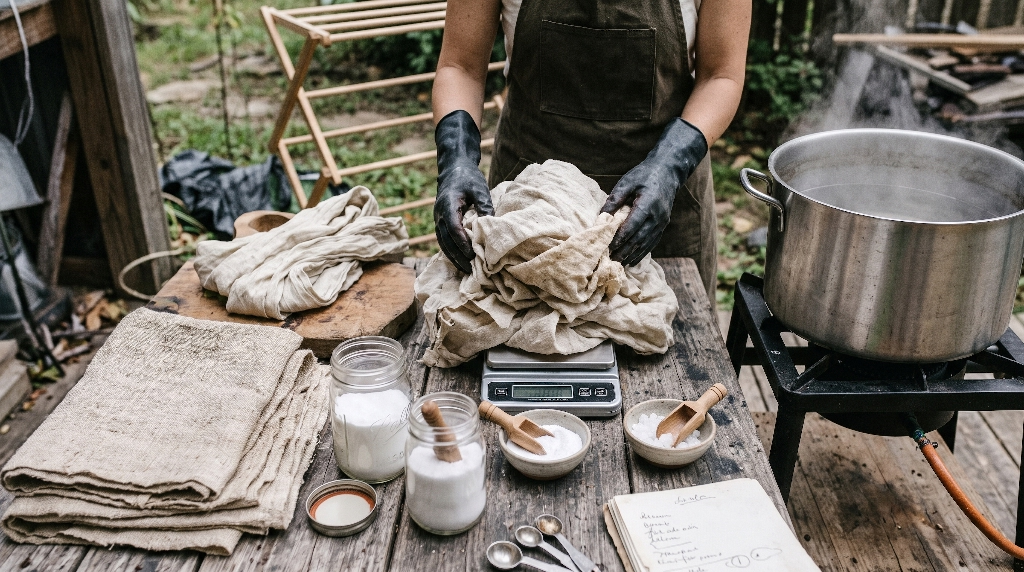
Every reliable natural dye recipe relies on a simple measurement called Weight of Fiber, abbreviated as WOF. Instead of measuring ingredients by cups or gallons of water, you calculate every hull, tannin, and mineral amount as a percentage of the dry fabric weight. This method works equally well whether you are dyeing a single lightweight linen napkin or four heavy drapery panels.
Place your completely dry, unwashed organic linen on a digital gram scale and write down the exact number. For example, suppose your dry linen weighs 500 grams (just over 1.1 pounds). Here is how WOF math works for that batch:
- 100% WOF equals 500 grams
- 50% WOF equals 250 grams
- 15% WOF equals 75 grams
- 2% WOF equals 10 grams
Once you record the dry weight, it is time to scour the fabric. Even certified organic linen contains natural plant waxes, gummy pectins, spinning oils, and handling residues left behind during weaving. Those invisible coatings act like a raincoat over the flax fibers, blocking water and dye from soaking in evenly.
To scour your fabric, fill your stainless steel pot with enough warm water for the linen to move freely without crowding. Dissolve 2% WOF sodium carbonate (also sold as soda ash or washing soda) and 0.5% WOF of a pH-neutral textile surfactant such as Synthrapol or a mild, fragrance-free liquid dish soap. Submerge the linen, bring the water to a gentle simmer around 180°F (82°C), and hold it there for 60 minutes while stirring occasionally. Turn off the heat, let the water cool enough to handle safely, and rinse the fabric thoroughly in warm tap water until all soap suds disappear.
Step 2: The Two-Stage Tannin and Alum Mordant Protocol
Now that your flax fibers are clean and thirsty, you need to build that mineral bridge so your color stays vibrant when you dye organic linen. While some dyers skip mordanting with black walnut, adding a structured tannin and alum sequence dramatically improves color depth, increases washfastness, and prevents premature sun fading on household textiles.
Stage A: The Low-Heat Tannin Base Cellulose fibers love tannins, and black walnut hulls provide their own built-in tannin supply. Weigh out 15% to 25% WOF of dried walnut hulls (or 40% to 50% WOF of fresh hulls) and steep them in hot water to make a light, tea-colored bath. Strain out the solids, then submerge your damp, scoured linen into this tannin bath. Keep the temperature at or below 120°F (49°C) for 1 hour.
Keeping the heat gentle matters because high boiling temperatures can break down hydrolyzable tannins and weaken how tightly they cling to cellulose. After 1 hour of gentle warmth, turn off the burner and let the linen soak in the tannin bath overnight. Lift the fabric out in the morning and give it a light rinse.
Stage B: The Aluminum Mineral Bridge Next, lock that tannin layer in place with an aluminum mordant. You have two great options depending on your workspace:
- Potassium Aluminum Sulfate (Alum) + Soda Ash: Dissolve 15% WOF alum and 2% WOF soda ash in a small jar of hot water, then pour the clear solution into your dye pot filled with warm water. Add the damp, tannin-treated linen and simmer gently at 180°F (82°C) for 45 to 60 minutes. Let the fabric cool inside the pot, then rinse lightly in cool water.
- Aluminum Acetate (Cold-Water Option): If you prefer to save stove energy, dissolve 5% to 8% WOF aluminum acetate in hot water, add it to a tub of warm water (around 110°F or 43°C), and soak the tannin-treated linen for 2 to 4 hours with occasional stirring. Rinse lightly before dyeing.
At this stage, your linen may look soft beige or pale tan from the first tannin bath. More importantly, every flax thread is now coated with invisible aluminum-tannin complexes ready to bond tightly with juglone in the main dye bath.
Step-by-Step Protocol: Dyeing Organic Linen with Black Walnut Hulls
With your organic linen scoured and mordanted, you are ready for the most rewarding part of the process. Follow these four steps carefully to extract maximum pigment, achieve streak-free coverage, and customize your final shade.
Step 3: Extracting and Filtering the Walnut Dye Liquor
Measure your main batch of black walnut hulls based on the final color you want when you dye organic linen:
- Soft Oatmeal to Warm Sand: 15% to 25% WOF dried hulls (or 35% to 50% WOF fresh hulls)
- Classic Medium Chestnut Brown: 40% to 60% WOF dried hulls (or 80% to 120% WOF fresh hulls)
- Deep Espresso / Dark Chocolate: 75% to 100% WOF dried hulls (or 150% to 200% WOF fresh hulls)
Place the hulls into your dedicated stainless steel pot and cover them with soft water or filtered rainwater. Hard tap water high in calcium or iron can dull warm brown tones, so using filtered water gives you cleaner, brighter results. Let the hulls cold-soak in the water for 24 to 48 hours. This soak softens the tough outer pericarp and begins releasing water-soluble pigments before you even turn on the stove.
After soaking, place the pot on your burner and slowly raise the temperature to a gentle simmer between 180°F and 190°F (82°C to 88°C). Hold this gentle simmer for 1 to 2 hours. Keep the temperature below a hard rolling boil, because excessive heat can degrade subtle golden-amber hues into flat, muddy tones.
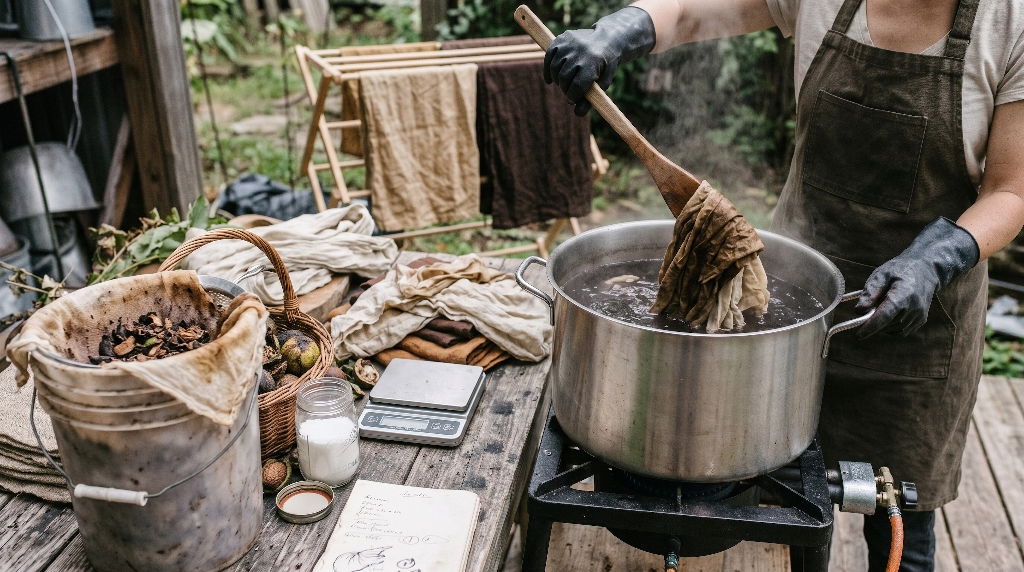
Once the liquid turns a deep, opaque coffee-black, turn off the heat and let it cool slightly. Set a colander over a clean bucket or second pot and line the colander with two layers of unbleached muslin or tightly woven cheesecloth. Pour the entire pot through the cloth liner, squeezing the cooled hull pulp with gloved hands to extract every drop of rich dye liquor. Never skip thorough straining. Even tiny specks of walnut grit left in the pot will settle onto woven linen and leave permanent dark dots.
Step 4: Submersion, Simmering, and Overnight Oxidation Steep
Before putting your mordanted linen into the strained dye pot, soak the fabric in plain warm water for 20 minutes. Dry or unevenly damp linen absorbs dye too quickly in some spots and too slowly in others, causing tiger stripes or blotchy clouds. Wetting the fabric thoroughly ensures smooth, even penetration.
Pour your strained walnut dye liquor back into the clean stainless steel pot and top it up with warm water so the liquid volume is roughly 15 to 20 times the weight of your dry fabric. A generous water-to-fiber ratio gives your linen plenty of room to open up and swirl freely without tight creases.
Gently squeeze excess plain water from your pre-wetted linen, unfold it completely, and lower it into the warm dye bath. Use a long stainless steel spoon or smooth wooden dowel to press the cloth below the surface and release trapped air bubbles. Slowly bring the dye bath up to 180°F to 190°F (82°C to 88°C) and maintain this gentle simmer for 60 minutes. Every 10 minutes, lift and unfold the fabric gently with your spoon so fresh dye liquor reaches every crease.
When the 60-minute simmer ends, turn off the heat, place a lid on the pot, and walk away. Let the organic linen steep inside the cooling dye bath overnight for 12 to 24 hours. During this long, slow rest, oxygen interacts with juglone molecules inside the flax fibers, deepening the shade by two or three full tones without using any extra fuel.
Step 5: Modifying Tones with a Ferrous Sulfate (Iron) Afterbath
One of the joys of learning how to dye organic linen with black walnut is discovering how easily you can shift the color temperature using a simple mineral afterbath. Left unmodified, black walnut produces rich, warm browns with golden, amber, or reddish-chestnut undertones. If your room design calls for cooler, moodier neutrals like driftwood gray, taupe, charcoal, or near-black, you can modify the color with ferrous sulfate ($\text{FeSO}_4$), known in natural dyeing simply as iron.
Iron reacts chemically with the ellagic and gallic tannins already bonded to your linen, instantly darkening or “saddening” warm brown into cool slate and charcoal tones. Because ferrous sulfate is potent, measure it carefully on your gram scale:
- Soft Taupe or Driftwood Shift: 0.5% to 1% WOF ferrous sulfate
- Medium Slate or Mushroom Gray: 1.5% to 2% WOF ferrous sulfate
- Deep Charcoal or Near-Black: 2.5% to 3.5% WOF ferrous sulfate
Fill a clean plastic bucket with warm tap water and stir in your measured ferrous sulfate until the pale green crystals dissolve completely. Lift your freshly dyed, wet linen directly from the walnut pot (do not dry it first), give it a quick rinse, and lower it into the iron bucket while stirring continuously. You will watch the fabric shift from warm brown to cool smoky gray in less than 60 seconds.
Keep moving the fabric in the iron bath for 5 to 15 minutes until you reach your target shade. Remember that wet linen always looks roughly 20% darker than it will once dry. Also avoid exceeding 3.5% WOF ferrous sulfate or soaking the cloth for hours in iron. Over time, heavy iron deposits can oxidize and weaken cellulose fibers, making linen feel stiff or prone to tearing. Two brief dips in a mild iron bath followed by a walnut re-dip will build deep charcoal safely while keeping your linen soft and supple.
Step 6: Rinsing, Curing, and Long-Term Care
When you lift your organic linen from the final walnut or iron bath, resist the urge to scrub it under running water right away. Instead, gently squeeze out excess liquid with gloved hands, place the damp fabric inside a covered plastic tub or tied bag, and let it rest at room temperature for 24 hours. Giving natural dyes a damp curing period allows final oxidation bonds to settle firmly into the cellulose fibers.
After 24 hours of curing, rinse the fabric in cool water until the runoff looks completely clear and free of loose brown tint. Next, wash the linen once in warm water using a small drop of pH-neutral detergent such as Synthrapol or a gentle plant-based soap without optical brighteners. Avoid harsh alkaline laundry powders, oxygen bleach, or vinegar rinses at this stage, as sharp pH swings can shift walnut undertones.
Shake out the damp fabric, smooth the seams with your hands, and hang it on a clothesline in a shaded outdoor spot or breezy indoor drying rack. Direct midday sunlight will not ruin well-mordanted walnut linen, yet drying in open shade protects the freshly cured fibers and keeps the color remarkably even. Once dry, press your organic linen with a warm steam iron to relax wrinkles and reveal the natural luster of the flax weave.
Troubleshooting Common Black Walnut Linen Dyeing Issues
Even careful dyers occasionally pull a piece of fabric from the pot that looks lighter, darker, or more textured than planned. Because natural dyeing works with living plant harvests rather than factory-standardized chemicals, small variations are part of the craft. Use the diagnostic guide below to pinpoint what happened and fix uneven results quickly.
| Visual Issue | Most Likely Root Cause | Practical Solution |
| Pale or washed-out tan after rinsing | Fabric was not scoured to remove mill waxes, or the alum mordant step was skipped. | Re-scour the fabric with 2% WOF soda ash, run the two-stage tannin and alum mordant protocol, and re-dye in a fresh walnut bath. |
| Splotchy clouds or marbled streaks | Dry linen was dropped into the pot, or the dye pot was too small so fabric folded tightly. | Always pre-wet linen for 20 minutes before dyeing, use a larger pot with more water, and stir gently every 10 minutes. |
| Tiny dark specks across the weave | Crushed hull grit or fine walnut powder was not strained out of the dye liquor. | Pour dye liquor through two layers of tightly woven muslin or cheesecloth before adding fabric. |
| Brown color rubs off onto white cloth | Excess unbound surface tannins remained on the fibers after a hurried rinse. | Rinse thoroughly in cool water, wash once with pH-neutral detergent, and cure damp fabric for 24 hours before washing. |
| Fabric feels stiff or slightly brittle | Too much ferrous sulfate was used in the iron afterbath, or cloth soaked too long in iron. | Keep iron modifiers at or below 2% WOF, rinse immediately after color shifts, and soften fabric with a warm tumble dry. |
Frequently Asked Questions about How to Dye Organic Linen
Do you need a mordant when dyeing linen with black walnut hulls?
Yes, you should use a mordant whenever you dye organic linen with black walnut hulls if you want rich, long-lasting color. While black walnut dyes animal fibers like wool and silk permanently without a mordant, organic linen is made of plant cellulose. Without a tannin and alum mordant bridge, juglone stains linen only on the surface, causing deep browns to fade into pale beige after several washes. Using a simple two-stage tannin and alum protocol locks the pigment onto the flax fibers so your textiles stay dark and rich for years.
How many black walnuts do you need to dye 1 pound of linen?
To dye 1 pound (about 454 grams) of dry organic linen to a rich medium brown, you need roughly 20 to 25 whole fresh black walnuts, which yields about 1 pound (100% WOF) of wet outer hulls. If you are using dried, crushed black walnut hulls or hull powder, use 135 to 225 grams (30% to 50% WOF) for a warm medium walnut shade, or 340 to 450 grams (75% to 100% WOF) for a deep espresso brown. Weighing your dry fabric first makes scaling any batch effortless.
How do you get black or charcoal linen from black walnut dye?
You can achieve deep charcoal or near-black shades when you dye organic linen by layering a concentrated walnut bath with a mild ferrous sulfate (iron) afterbath. First, dye your scoured and mordanted linen in a strong 75% to 100% WOF black walnut bath and let it steep overnight until it reaches dark chocolate brown. Next, dip the damp brown linen into a warm water bath containing 2% WOF ferrous sulfate for 10 minutes. For true jet-charcoal without weakening the flax fibers, rinse the iron-shifted fabric and dip it back into the warm walnut dye bath for 30 minutes to layer even more tannin-iron complexes onto the weave.
Does black walnut dye fade in the wash or sunlight?
No, properly cured black walnut dye ranks among the most lightfast and washfast natural dyes available, standing alongside indigo and madder root in archival textile testing. When you scour the flax thoroughly, apply an alum mordant, and let the damp fabric cure for 24 hours before rinsing, the walnut tannins and juglone resist ultraviolet sun rays remarkably well. To maximize longevity, wash walnut-dyed organic linen in cool or warm water with a pH-neutral detergent and dry it out of harsh direct afternoon sun.
Can you use black walnut hulls that have already turned black on the ground?
Yes, you can definitely use black walnut hulls that have already turned dark brown or black on the ground, provided they are firm rather than mushy and mold-rotted. Fresh green hulls darken naturally on the forest floor as oxygen activates the juglone inside them. In fact, dark brown fallen hulls are often easier to peel away from the inner nut shell than hard green hulls. If the fallen hulls have been rained on heavily for weeks, simply increase your hull weight by 20% to 30% WOF to make up for any pigment that leached into the soil.