
The Battle of Acoustic Wall Technologies
Building a custom home in the Tri-Cities area is an exciting journey. When buyers design their dream house, they spend a lot of time picking out granite countertops, hardwood flooring, and exterior stone features. However, one of the most common complaints people have after moving into a newly built house is sound transmission. You can hear the television in the living room while trying to sleep in the primary bedroom. You can hear phone calls from the home office down the hallway. You can hear foot traffic or a running dishwasher across the house.
A standard interior wall built in modern homes consists of two-by-four wood studs spaced 16 inches on center with a single sheet of half-inch drywall on each side. In the construction industry, we measure sound control using a scale called Sound Transmission Class, or STC. A standard interior wood stud wall with half-inch drywall has an STC rating of about 34.
What does an STC rating of 34 mean in real life? It means that normal conversation spoken on one side of the wall can be heard and understood on the other side. Loud voices or television noise will pass through the wall almost as if it were not even there. For custom home buyers who want quiet home offices, peaceful master suites, isolated nurseries, or heavy-duty media rooms, an STC rating of 34 is simply not good enough.
To solve this problem, home builders turn to specialized soundproofing materials. Two of the most popular high-performance options on the market today are Mass Loaded Vinyl, often called MLV, and QuietRock.
Mass Loaded Vinyl is a thick, flexible, heavy rubber-like sheet that adds dense mass to a wall assembly to block sound waves. QuietRock is an engineered soundproof drywall panel that uses a special inner core to absorb sound energy and stop it from vibrating through the wall.
Both materials promise to turn noisy walls into quiet barriers. However, Mass Loaded Vinyl and QuietRock work on entirely different physical principles. They also differ in how they are installed, how much they cost, and how they handle different types of noise.
In this guide, we will compare Mass Loaded Vinyl and QuietRock side by side. We will delve into the science of soundproofing into simple concepts, examine job site mechanics, look at real installed costs, answer the most common questions home buyers ask, and give you a clear decision guide for your home build.
Practical Soundproofing Physics: Limp Mass vs. Damping
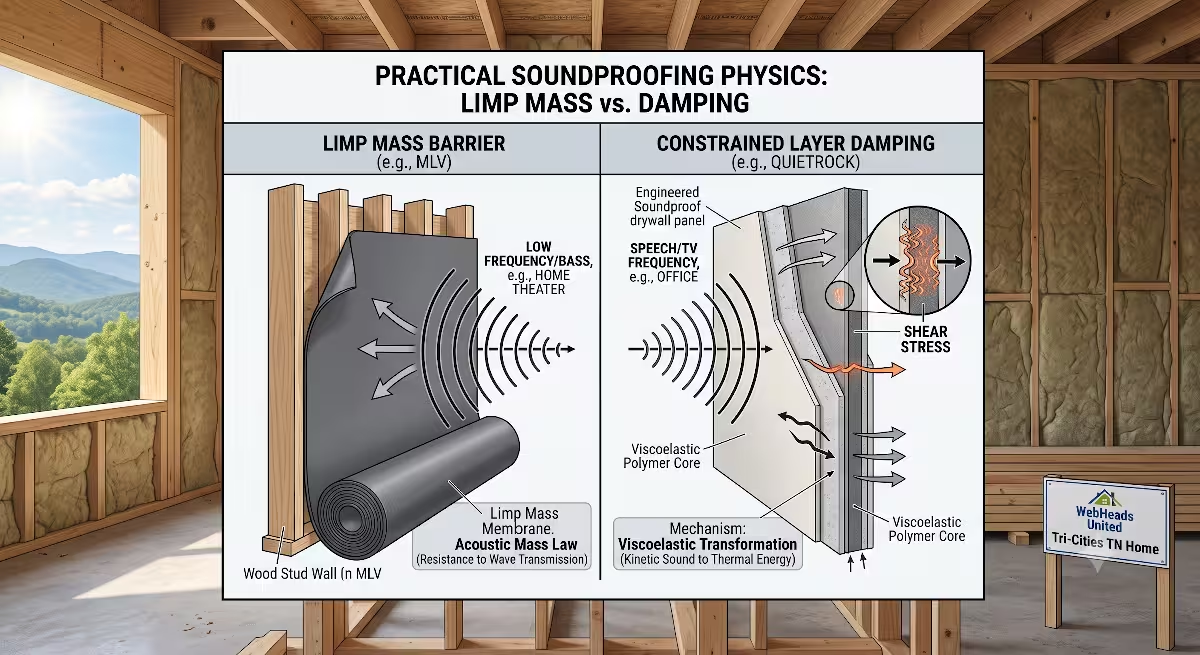
To understand why Mass Loaded Vinyl and QuietRock perform differently, we need to understand basic sound physics. Sound travels in waves through the air. When a sound wave hits a wall, it causes the wall material to vibrate. That vibration travels through the studs and drywall sheets and pushes air on the other side, creating sound waves that your ears can hear.
To stop sound from passing through a wall, you must do one of two things. You must either make the wall so heavy that the sound wave cannot push it, or you must create a way to trap the energy inside the wall so it cannot vibrate through to the other side.
The Law of Mass and Mass Loaded Vinyl
Mass Loaded Vinyl operates on the Acoustic Mass Law. The Mass Law states that the heavier and denser a wall assembly is, the harder it is for sound waves to move it.
Standard vinyl by itself is relatively light. To make Mass Loaded Vinyl, manufacturers mix heavy mineral powders, such as barium sulfate or calcium carbonate, into a vinyl polymer base. This creates a material that is thin yet extremely dense. A typical roll of one-pound Mass Loaded Vinyl is only one-eighth of an inch thick, but it weighs one pound per square foot. A two-pound version is one-quarter of an inch thick and weighs two pounds per square foot.
In soundproofing physics, Mass Loaded Vinyl is known as a limp mass barrier. The word “limp” is critical here. If you hang a rigid sheet of heavy metal on a wall, that metal can still ring or vibrate like a bell when sound waves hit it at certain resonant frequencies. Because Mass Loaded Vinyl is flexible and limp, it does not ring or vibrate. When sound waves hit Mass Loaded Vinyl, the material absorbs the energy without vibrating. It acts as a dead weight inside the wall cavity.
Because Mass Loaded Vinyl relies on pure physical mass, it excels at blocking low-frequency noise. Low-frequency noise consists of long, heavy sound waves. Examples include the deep bass from a home theater subwoofer, the rumble of a diesel engine, HVAC compressor vibrations, and heavy footfalls. Mass Loaded Vinyl stops these long waves simply because the wave lacks the energy to push past such a dense material.
Constrained Layer Damping and QuietRock
QuietRock takes a completely different scientific approach. Instead of relying solely on heavy mass, QuietRock uses a physical mechanism called Constrained Layer Damping, or CLD.
A sheet of QuietRock looks like a standard piece of drywall from the outside, but inside it is an engineered sandwich. QuietRock combines two layers of dense gypsum board joined together by a thin center layer of viscoelastic polymer.
When sound waves hit a sheet of QuietRock, the outer gypsum layers try to move and vibrate. As they move, they create a shearing action against the center polymer layer inside the QuietRock panel. The viscoelastic polymer resists this shear force and converts the mechanical energy of the sound vibration into tiny amounts of harmless heat energy. Instead of sound passing through the wall, the energy is trapped and transformed right inside the QuietRock sheet.
This damping mechanism makes QuietRock remarkably effective at stopping mid-range and high-frequency sound waves. Mid-range and high-frequency sound waves include human voices, ringing telephones, crying babies, television dialogue, and barking dogs. Because these sounds create fast vibrations, the viscoelastic core inside QuietRock snaps into action immediately, damping the vibration before it can pass into the room.
Frequency Performance Breakdown
When comparing Mass Loaded Vinyl and QuietRock, frequency matters. Sound is measured in Hertz, or Hz. Low frequencies range from 50 Hz to 250 Hz. Mid-to-high frequencies range from 250 Hz up to 4,000 Hz.
For low-frequency sound control between 50 Hz and 250 Hz, Mass Loaded Vinyl is generally the stronger choice. The heavy mass of Mass Loaded Vinyl blocks deep bass waves that might easily pass through a single damped panel like QuietRock.
For mid-frequency sound control between 250 Hz and 4,000 Hz, QuietRock shines brightly. The viscoelastic core inside QuietRock targets human speech frequencies with extreme precision. If your primary goal is stopping voice transmission between an office and a living room, QuietRock provides incredible speech privacy.
Installation & Job Site Mechanics
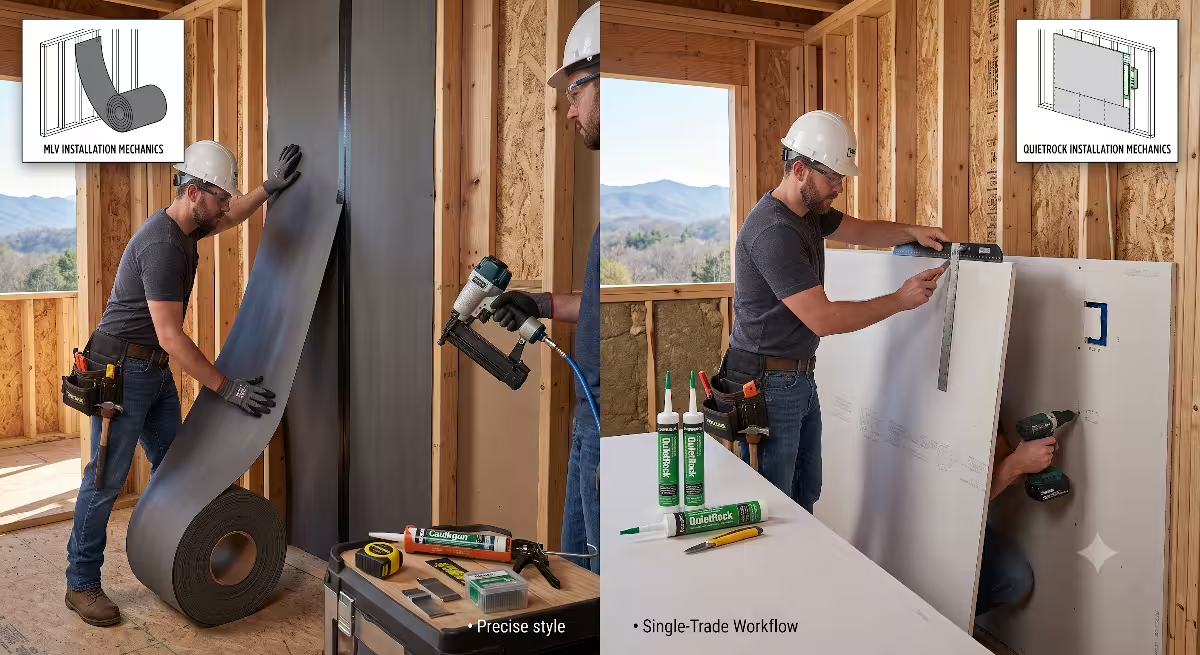
A soundproofing material is only as good as its installation on the job site. Even the highest-rated acoustic product will fail if it is installed incorrectly or leaves air gaps. Let us walk through how both Mass Loaded Vinyl and QuietRock are handled during construction.
Installing Mass Loaded Vinyl (MLV)
Installing Mass Loaded Vinyl is a distinct, two-stage process that happens before standard drywall is hung.
First, the framing crew or acoustic subcontractor unrolls the heavy Mass Loaded Vinyl sheets. Because a 100-square-foot roll of one-pound Mass Loaded Vinyl weighs 100 pounds, handling this material requires two workers. The material is held up against the bare wood or steel studs and fastened using pneumatic cap staplers or large-head roofing nails.
The sheets of Mass Loaded Vinyl must be installed tightly. All seams between sheets must be either overlapped by two inches or tightly butt-jointed. Every single seam must then be sealed with acoustic caulk and taped with heavy-duty acoustic seam tape.
Once the Mass Loaded Vinyl is stapled and sealed across the entire stud wall, a layer of standard drywall, usually 5/8-inch Type X drywall, is hung directly over the Mass Loaded Vinyl. The drywall screws pass through the drywall, pierce the Mass Loaded Vinyl layer, and bite into the wood studs.
Here are the key installation challenges with Mass Loaded Vinyl:
It requires two complete steps: hanging and sealing the Mass Loaded Vinyl membrane first, then hanging drywall over top of it.
Handling 100-pound rolls in tight hallways or on scaffolding takes physical effort and extra labor hours.
Every cut around electrical outlet boxes, switch boxes, and HVAC vents must be cut tightly and sealed with acoustic putty or caulk to prevent sound leaks.
Installing QuietRock
Installing QuietRock follows a workflow that drywall contractors already know well. Because QuietRock is built as a single drywall panel, hanging QuietRock replaces hanging standard drywall sheets.
Your drywall crew brings sheets of QuietRock onto the job site just like normal drywall. Entry-level QuietRock panels, such as QuietRock 510, are half an inch thick and can be scored and snapped using a standard utility knife and straight edge. Heavier commercial grade panels, such as QuietRock 530, are 5/8-inch thick and include an embedded metal layer for impact resistance and fire ratings. QuietRock 530 panels require deeper scoring or a power saw to cut cleanly.
The crew fastens QuietRock directly to the wall studs using standard drywall screws spaced according to the manufacturer specifications. Once the QuietRock panels are screwed into place, the joint finishing process is identical to standard drywall. Taping, mudding, sanding, and painting are completed using standard drywall finishing tools.
However, achieving a high STC rating with QuietRock requires three critical sealing steps outlined by the manufacturer:
Hang the QuietRock panel: Screw the QuietRock sheet securely to the stud wall.
Wrap electrical boxes with acoustic putty: Every electrical box on a QuietRock wall must be wrapped on the back with specialized acoustic putty pads to prevent sound from sneaking through electrical cutouts.
Seal the perimeter with acoustic sealant: A continuous quarter-inch bead of acoustic sealant must be applied along the bottom edge, top edge, and corners where the QuietRock panel meets adjoining walls and floors.
Trade Management and Job Site Efficiency
From a builder’s perspective, trade management is a major difference between these two products.
Using Mass Loaded Vinyl introduces a secondary step to the wall assembly. You must schedule workers to hang, seal, and tape the vinyl barrier before your drywall crew can start hanging wallboard. If the vinyl installation is delayed or done carelessly, it can slow down your drywall crew and create scheduling conflicts.
Using QuietRock keeps your project moving under a single sub-contractor trade. Your standard drywall crew handles the material from start to finish. They unload the QuietRock sheets, hang the QuietRock wallboard, seal the perimeter joints, and complete the finish mudding. This single-trade workflow reduces labor scheduling risks and keeps project timelines tight.
Moisture and Envelope Considerations
Whether you choose Mass Loaded Vinyl or QuietRock, you must consider vapor barriers and wall assembly moisture.
Mass Loaded Vinyl is a non-breathable vinyl membrane. It acts as a vapor barrier inside the wall cavity. If you install Mass Loaded Vinyl on an exterior wall without proper moisture planning, you risk trapping condensation inside the wall, which can lead to mold growth. Mass Loaded Vinyl is safest and most effective when used on interior partition walls.
QuietRock panels handle moisture similarly to standard drywall. Standard QuietRock sheets are designed for dry interior walls. If you are soundproofing a bathroom wall or a basement partition, you should specify moisture-resistant versions of QuietRock or ensure proper humidity control inside the home.
Cost Analysis & STC Efficiency Per Dollar
When planning a custom home build, every line item matters. Soundproofing is an investment, so we need to evaluate both the material costs and total installed costs for Mass Loaded Vinyl and QuietRock.
Material Pricing Breakdown
Material pricing can vary based on regional supply chains and order quantities, but let us look at average retail and distributor costs:
Mass Loaded Vinyl (1 lb per sq. ft.): Costs approximately $1.50 to $2.00 per square foot.
Standard 5/8-inch Type X Drywall: Costs approximately $0.40 to $0.60 per square foot.
QuietRock 510 (1/2-inch Entry Level): Costs approximately $2.50 to $3.50 per square foot.
QuietRock 530 (5/8-inch High Performance/Fire Rated): Costs approximately $3.50 to $5.50+ per square foot.
At first glance, Mass Loaded Vinyl appears significantly cheaper than QuietRock. However, you must remember that Mass Loaded Vinyl cannot be left exposed. It requires a finishing layer of standard drywall over top of it.
To calculate the true material cost of an MLV wall, you must combine the cost of the Mass Loaded Vinyl ($1.75 average) with the cost of a sheet of standard 5/8-inch drywall ($0.50 average). That puts the combined material cost for an MLV wall assembly at roughly $2.25 to $2.60 per square foot.
By comparison, a single sheet wall using QuietRock 510 or QuietRock 530 runs between $3.00 and $5.50 per square foot for materials alone.
Labor and Total Installed Costs
Material cost is only half the equation. Labor rates dictate the final budget.
Because Mass Loaded Vinyl requires a two-step installation process, labor costs are higher. Laborers must measure, cut, staple, caulk, and tape the Mass Loaded Vinyl membrane first. Then drywall hangers must come in to install standard drywall over the vinyl. Total installed costs for a mass-loaded vinyl plus drywall wall typically range from $3.50 to $4.50 per square foot.
Because QuietRock replaces standard drywall in a single step, labor costs are lower. Drywall crews charge standard hanging rates, plus a small premium for applying acoustic sealants and handling heavier QuietRock panels. Total installed costs for a QuietRock wall generally range from $4.50 to $6.50 per square foot.
Cost Per STC Point Gained
To measure real value, acoustic engineers calculate the cost per STC point gained over a standard wall assembly.
Remember, a basic wood stud wall with standard half-inch drywall gives you an STC rating of about 34.
If you add fiberglass insulation inside the stud cavity and install a layer of one-pound Mass Loaded Vinyl under 5/8-inch Type X drywall, your wall assembly STC jumps to roughly 50 to 52. That is an improvement of 16 to 18 STC points. At an installed cost of roughly $4.00 per square foot, you are paying about $0.22 to $0.25 per square foot for every STC point gained.
If you add fiberglass insulation to the stud cavity and install a layer of QuietRock 510, your wall assembly STC reaches approximately 49 to 52. If you use premium QuietRock 530, your STC reaches 52 to 55. At an installed cost of $5.50 to $6.50 per square foot, you are paying roughly $0.30 to $0.38 per square foot per STC point gained.
This value analysis shows that Mass Loaded Vinyl delivers about 30% to 40% more sound blocking performance per dollar spent. However, QuietRock offers something that MLV cannot match: maximum acoustic performance in a thin wall assembly without adding extra wall layers or taking up floor space.
Common Questions Answered about Mass Loaded Vinyl (MVL) vs. QuietRock
When home buyers research soundproofing materials online, they encounter specific questions. Here are the top four questions from search queries, answered from a custom builder perspective.
1. Is Mass Loaded Vinyl better than QuietRock?
Neither material is universally better than the other. The right choice depends on the type of noise you want to block, your installation schedule, and your budget constraints.
Mass Loaded Vinyl is better than QuietRock if your goal is blocking low-frequency noise like deep bass subwoofers, heavy machinery, or traffic rumble. The sheer mass and flexibility of Mass Loaded Vinyl stop long sound waves far better than a single rigid panel. Mass Loaded Vinyl is also better if you are working on a large home project where stretch-your-dollar efficiency matters.
QuietRock is better than Mass Loaded Vinyl if your goal is blocking mid-frequency human speech, TV dialogue, or office noise. QuietRock is also better if you want a clean, single-step installation handled entirely by a standard drywall trade crew without adding thickness to your walls.
If you want speed and speech privacy, QuietRock wins. If you want bass control and higher STC value per dollar, Mass Loaded Vinyl wins.
2. Can you use QuietRock and Mass Loaded Vinyl together?
Yes, you can use QuietRock and Mass Loaded Vinyl together in the same wall assembly, but you must evaluate whether the performance gain justifies the cost.
When you combine Mass Loaded Vinyl with QuietRock, you create a hybrid wall structure that uses both limp mass barrier technology and constrained layer damping. In a typical assembly, you would install wood studs filled with mineral wool insulation, staple a layer of one-pound Mass Loaded Vinyl over the studs, and screw a layer of QuietRock 510 or QuietRock 530 directly over the vinyl membrane.
This combination can achieve outstanding STC ratings of 60 to 65 or higher. The Mass Loaded Vinyl blocks low-frequency bass waves, while the QuietRock panel eliminates mid-range speech frequencies.
However, for most residential homes, combining Mass Loaded Vinyl with QuietRock is expensive. The material cost alone can exceed $6.00 to $7.00 per square foot before labor.
For high-end home theaters or commercial recording studios, combining Mass Loaded Vinyl with QuietRock is a great strategy. But for standard residential rooms, combining Mass Loaded Vinyl with standard 5/8-inch Type X drywall, or using a sound-damping glue like Green Glue between two standard drywall sheets, will give you nearly identical performance at a much lower price point.
3. Is QuietRock worth the extra money compared to standard drywall?
QuietRock is definitely worth the extra money if wall thickness is restricted and you need high sound performance without building complex wall framing.
A standard sheet of half-inch drywall costs about $15 per sheet, while a sheet of QuietRock 510 costs between $40 and $60 per sheet. A high-end QuietRock 530 panel can cost $90 to $120 per sheet. That is a significant price jump.
However, consider what it takes to make standard drywall soundproof. To match the STC 52 rating of a single sheet of QuietRock 530 on a insulated stud wall, you would have to build a staggered-stud frame or double-stud wall and hang three or four layers of standard drywall.
Building a double wall takes up several extra inches of room floor space. It also doubles framing lumber costs and increases labor hours.
When space is tight, QuietRock allows you to achieve high STC noise reduction using standard single-stud framing while keeping your wall thickness at standard dimensions. In custom homes, preserving room square footage while gaining peace and quiet makes QuietRock worth the investment.
4. What is the STC rating comparison between MLV and QuietRock?
To compare STC performance accurately, we must look at complete wall assemblies tested under ASTM E90 lab standards, not just individual materials sitting on a shelf.
Here is how common 2×4 wood stud wall assemblies (with fiberglass insulation inside the cavity) compare across different drywall and barrier configurations:
Standard Wall: 2×4 studs + 1/2-inch standard drywall on both sides = STC 34
Upgraded Standard Wall: 2×4 studs + 5/8-inch Type X drywall on both sides = STC 38
MLV Wall Assembly: 2×4 studs + 1 lb Mass Loaded Vinyl on one side + 5/8-inch Type X drywall on both sides = STC 50 to 52
QuietRock 510 Assembly: 2×4 studs + QuietRock 510 (1/2-inch) on one side + 5/8-inch Type X drywall on opposite side = STC 49 to 52
QuietRock 530 Assembly: 2×4 studs + QuietRock 530 (5/8-inch) on one side + 5/8-inch Type X drywall on opposite side = STC 52 to 55
Double QuietRock Assembly: 2×4 studs + QuietRock 530 on both sides = STC 56 to 58
Staggered Stud Wall with QuietRock 530: Staggered 2×4 studs on 2×6 plate + QuietRock 530 = STC 57 to 62
Notice how closely matched Mass Loaded Vinyl and QuietRock are in overall STC scores. Both products easily elevate a wall from a noisy STC 34 up into the whisper-quiet STC 50+ range. The key distinction remains frequency control: Mass Loaded Vinyl performs better against low bass rumble, while QuietRock performs exceptionally well against voices and television noise.
Builder Recommendation & Decision Matrix
In custom home building, there is rarely a one-size-fits-all product. The best acoustic strategy involves selecting the right material for each specific room in your house floor plan.
Below is our professional recommendation matrix based on custom builds in East Tennessee.
| Room & Project Scenario | Recommended Choice | Primary Engineering Reason |
| Dedicated Home Theater / Media Room | Mass Loaded Vinyl (MLV) | High mass is required to stop low-frequency bass waves generated by subwoofers. |
| Primary Executive Home Office | QuietRock | Outstanding reduction of speech frequencies; keeps phone conversations completely private. |
| Primary Master Suite Partition Wall | QuietRock or MLV + Drywall | Both reach STC 50+; choose QuietRock for speed or MLV for budget savings. |
| Nursery / Children Bedroom Walls | QuietRock | QuietRock absorbs high-frequency crying and voice noise while maintaining standard wall thickness. |
| Laundry Room / Mechanical Closet | Mass Loaded Vinyl (MLV) | MLV deadens equipment vibrations and mechanical motor rumbles effectively. |
| Basement Rental Unit / In-Law Suite | QuietRock 530 or MLV System | QuietRock 530 provides fire ratings plus acoustic separation between dwelling units. |
| Space-Constrained Retrofit / Remodel | QuietRock 510 | QuietRock 510 installs directly over existing drywall without needing major demolition. |
Complete Room Soundproofing Protocols
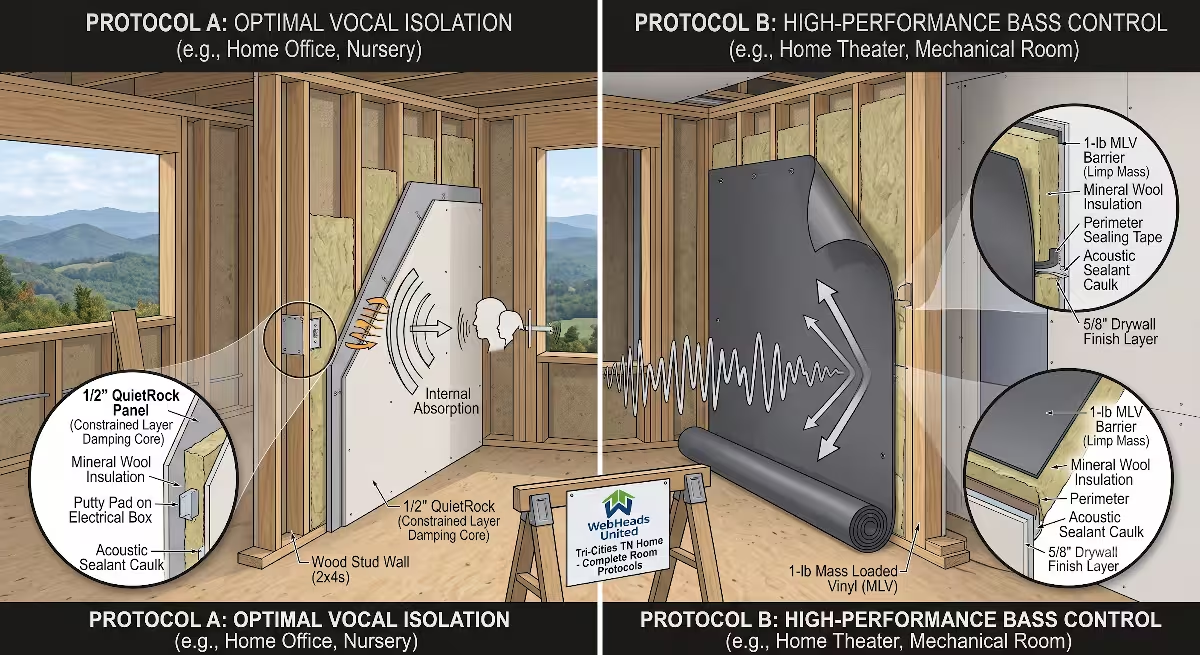
To help home buyers and builders execute these acoustic strategies on the job site, let us examine detailed room protocols for incorporating Mass Loaded Vinyl and QuietRock into real construction workflows.
Protocol A: The Ultimate Home Office Privacy Wall
If you work from home, conduct client video calls, or manage confidential business, you need complete acoustic isolation. Human conversation sits right in the 300 Hz to 3,000 Hz spectrum. This is where QuietRock excels.
Framing: Frame partition walls using 2×4 wood studs spaced 16 inches on center.
Cavity Insulation: Fill every stud cavity completely with high-density mineral wool insulation batts (such as Rockwool Safe ‘n’ Sound). Mineral wool absorbs airborne sound energy inside the hollow wall frame.
Electrical Box Treatment: Before hanging wallboard, apply QuietPutty pads over the back and sides of all metal and plastic electrical junction boxes inside the office wall. This seals the box openings where sound leaks occur.
Wall Board Installation: On the home office side of the wall, hang a single layer of QuietRock 510 or QuietRock 530 panels. On the adjacent hallway or living room side, hang standard 5/8-inch Type X drywall.
Perimeter Sealing: Leave a deliberate 1/4-inch gap between the bottom edge of the QuietRock panel and the subfloor. Fill this bottom gap, along with top and side edges, with a continuous bead of QuietSeal Pro acoustic sealant.
Finishing: Mud, tape, sand, and paint the QuietRock surface following standard drywall procedures. Install solid-core interior doors equipped with bottom drop-seals to prevent sound from sneaking under the door frame.
Following this protocol yields an STC rating above 52. Someone speaking in a loud voice outside your office wall will sound like a faint whisper inside.
Protocol B: The Home Theater Low-Frequency Shield
Home theater subwoofers generate deep bass notes that shake framing members. QuietRock alone struggle against deep sub-bass vibrations. Mass Loaded Vinyl is the primary line of defense here.
Framing: Frame theater walls using 2×4 wood studs, or better yet, staggered studs on a 2×6 bottom and top plate. Staggered framing mechanically decouples the interior wall skin from the exterior wall skin.
Cavity Insulation: Install mineral wool insulation batts between all studs.
MLV Barrier Application: Unroll one-pound or two-pound Mass Loaded Vinyl horizontally across the studs. Fasten the Mass Loaded Vinyl using pneumatic cap staples spaced every 8 inches along the studs.
Seam Management: Overlap adjacent Mass Loaded Vinyl sheets by two inches. Run a continuous bead of acoustic caulk along the lap joint, press the sheets firmly together, and seal the outer seam with heavy acoustic tape.
Drywall Layer: Install 5/8-inch Type X drywall directly over the Mass Loaded Vinyl membrane. Drive drywall screws through the board and Mass Loaded Vinyl into the framing studs.
Optional Damping Layer: For elite theater performance, apply Green Glue damping compound over the first sheet of drywall, and install a second sheet of 5/8-inch Type X drywall or QuietRock directly over it.
Perimeter Sealing: Seal all floor, ceiling, and corner gaps with non-hardening acoustic sealant.
This heavy-mass hybrid wall assembly easily surpasses STC 58 to 62. It traps intense bass waves inside the theater, keeping the rest of your house quiet.
Sound Flanking Paths and Critical Details
Builders will generally home buyers about the 80/20 rule of soundproofing: 80% of sound leakage happens through 20% of wall openings. You can buy the most expensive QuietRock panels or install heavy Mass Loaded Vinyl across every wall, but if you ignore flanking paths, sound will find a way around your investment.
Sound behaves just like water. If there is a hole or air leak in a wall assembly, sound will pour right through it. Here are the five most common sound leaks in custom home builds and how to fix them:
1. Electrical Outlets Back-to-Back
Electricians like to save wiring length by placing wall outlets in adjacent rooms inside the exact same stud cavity, back-to-back. This creates a direct hole through your wall.
The Fix: Never allow electricians to place outlet boxes back-to-back in soundproof walls. Require at least one stud cavity of separation (16 inches apart). Always wrap the back of every outlet box with QuietPutty pads or acoustic putty before hanging QuietRock or drywall.
2. Unsealed Floor and Ceiling Perimeters
When drywall hangers install wallboard, they leave a 1/4-inch to 1/2-inch gap at the floor line so the sheet does not crack under load. If this gap is left open beneath baseboards, sound travels under the drywall layer directly through the wall.
The Fix: Require your contractor to seal every floor and ceiling perimeter gap using a non-hardening acoustic sealant like QuietSeal Pro before baseboards and trim are installed. Standard painter caulk dries hard and cracks over time, whereas acoustic sealant remains flexible for decades.
3. Hollow Core Interior Doors
A high-performance QuietRock wall rated at STC 52 will lose its effectiveness if you install a standard hollow-core cardboard-filled interior door in that wall. A standard hollow-core door has an STC rating of roughly 20.
The Fix: Always specify solid-core wood interior doors for quiet zones like bedrooms, offices, and media rooms. Ensure door frames include rubber weatherstripping gaskets and perimeter door bottom seals to block air gaps.
4. Shared HVAC Ductwork
HVAC supply vents and return air grilles act as speaking tubes between rooms. If a single metal duct runs directly from a master bedroom vent to a living room vent, voice audio will travel straight through the ductwork, bypassing your QuietRock wall entirely.
The Fix: Use flexible insulated duct runs or acoustic duct silencers for rooms requiring acoustic privacy. Never place supply vents or return air grilles back-to-back on opposite sides of a shared wall.
5. Recessed Ceiling Lighting
Installing unsealed recessed can lights in a soundproof ceiling cuts holes straight through your ceiling drywall layer, allowing sound to travel into floor joist spaces and upper stories.
The Fix: Use sealed, fire-rated recessed light enclosures or surface-mounted light fixtures in sound-sensitive rooms. Wrap the back of recessed light cans with acoustic putty covers.
Retrofit and Remodel Applications
So far, we have focused primarily on new custom home construction where wall studs are exposed. But what if you already live in a home in Kingsport or Johnson City and want to soundproof an existing wall?
Let us look at how Mass Loaded Vinyl and QuietRock perform during home remodeling and retrofitting.
Retrofitting with QuietRock
QuietRock is an exceptional product for home remodeling because of entry-level sheets like QuietRock 510.
If you have a noisy bedroom wall or home office wall made of existing standard drywall, you do not have to tear down your existing walls. Tearing down drywall creates dust, mess, and high labor disposal costs.
With QuietRock 510, you can leave the existing drywall in place. First, locate the wall studs using a stud finder. Second, apply a continuous bead of QuietSeal Pro sealant around the perimeter of the existing wall. Third, screw a layer of half-inch QuietRock 510 directly over the existing drywall, sinking long drywall screws straight into the underlying studs. Finally, tape, mud, sand, and paint the new QuietRock surface.
This simple retrofit process adds only half an inch of thickness to your wall while boosting your wall sound insulation from a noisy STC 34 up to an impressive STC 47 to 50. It is clean, fast, and highly effective for occupied homes.
Retrofitting with Mass Loaded Vinyl
Retrofitting an existing wall with Mass Loaded Vinyl is more complicated.
Because Mass Loaded Vinyl must be fastened directly to stud framing and covered with a finishing sheet of drywall, using Mass Loaded Vinyl in a retrofit usually requires stripping the existing wall down to the bare studs. Demolishing existing drywall creates dust, haul-off dumpster fees, and extra labor hours.
While you could theoretically staple Mass Loaded Vinyl over existing drywall and then screw another layer of drywall on top, doing so adds significant weight and wall thickness. You will have to extend electrical outlets, door jambs, and window trim to accommodate the thick double-wall layer.
For home retrofits and remodels, QuietRock is almost always the easier, cleaner, and more economical choice.
Summary Comparison Table
To synthesize everything we have covered, here is a complete side-by-side technical comparison between Mass Loaded Vinyl and QuietRock.
| Feature / Metric | Mass Loaded Vinyl (1 lb/sq ft) + Drywall | QuietRock 510 / 530 Panels |
| Primary Technology | Limp Mass Barrier (Density) | Constrained Layer Damping (CLD) |
| Panel Thickness | 1/8″ MLV + 5/8″ Drywall (3/4″ total) | 1/2″ (QR 510) or 5/8″ (QR 530) |
| Weight Per Sq. Ft. | ~3.0 lbs/sq ft (MLV + Drywall) | 2.13 lbs (QR 510) to 2.88 lbs (QR 530) |
| Best Frequency Target | Low-Frequency Bass (50–250 Hz) | Mid-to-High Speech (250–4,000 Hz) |
| Average Wall Assembly STC | STC 50 to 52 | STC 49 to 55 |
| Material Cost / Sq. Ft. | ~$2.25 – $2.60 (MLV + Drywall) | ~$2.50 – $5.50+ (QuietRock board) |
| Installed Cost / Sq. Ft. | ~$3.50 – $4.50 | ~$4.50 – $6.50 |
| STC Value Per Dollar | Outstanding (~30% higher value) | Moderate (Premium for thin profile) |
| Trade Requirement | Two steps (MLV Installer + Drywall) | Single step (Standard Drywall Crew) |
| Retrofit / Remodel Ease | Moderate to Hard (Requires Demo) | Easy (Installs over existing walls) |
| Fire Rating Support | Requires Type X Drywall cover | Built-in UL Fire Ratings (QR 530) |
Final Thoughts for Custom Home Buyers
Investing in soundproofing is one of the smartest upgrades you can make when building a custom home in the Tri-Cities area. While decorative finishes like light fixtures and tile can be swapped out easily years later, acoustic soundproofing sits inside your walls. Once your wall drywall is taped, painted, and sealed, changing wall internals becomes messy and expensive.
When deciding between Mass Loaded Vinyl and QuietRock, remember these three practical conclusions:
Match the material to the noise problem: If you are building a home theater, basement gym, or mechanical room where low bass and motor rumbles dominate, Mass Loaded Vinyl offers physical mass to block low frequencies. If you are building a quiet home office, master suite, or nursery where human speech and television sound are the main concerns, QuietRock offers tailored damping for speech privacy.
Respect trade schedules and space limits: If keeping wall thickness thin and maintaining a fast, single-trade construction schedule matters most, QuietRock allows your drywall contractor to handle soundproofing without adding extra steps or sacrificing room floor space.
Seal every air gap: No acoustic product can do its job if sound leaks around electrical boxes, baseboards, or hollow doors. Require your builder to use mineral wool insulation, QuietPutty box wraps, and QuietSeal Pro perimeter sealant on every soundproof wall assembly.
Building a custom home should give you a comfortable, beautiful, and quiet sanctuary for your family. By understanding sound physics, planning wall assemblies early, and selecting the right acoustic materials, you can ensure your home stays peaceful for years to come.