When you walk out into your backyard on a cool evening in East Tennessee, there is nothing quite like the sight of a flickering flame. It sets the mood for everything from a quiet glass of wine to a loud family cookout. A well-placed fire pit can turn a simple patio into the most popular spot in the house. But before you pick up a shovel or call a gas company, you have to answer the big question: should you go with wood or gas?
This decision is more than just about how you start the fire. It is about how much work you want to do, how much money you want to spend, and what kind of rules your neighborhood has. We are going to look at the technical side of things, like how heat moves and how gas lines are run. We will also look at the simple joys, like the smell of hickory wood on a crisp October night. By the time we are done, you will know exactly which type of fire pit is right for your home and your lifestyle.
The Wood-Burning Fire Pit: The Traditionalists Choice
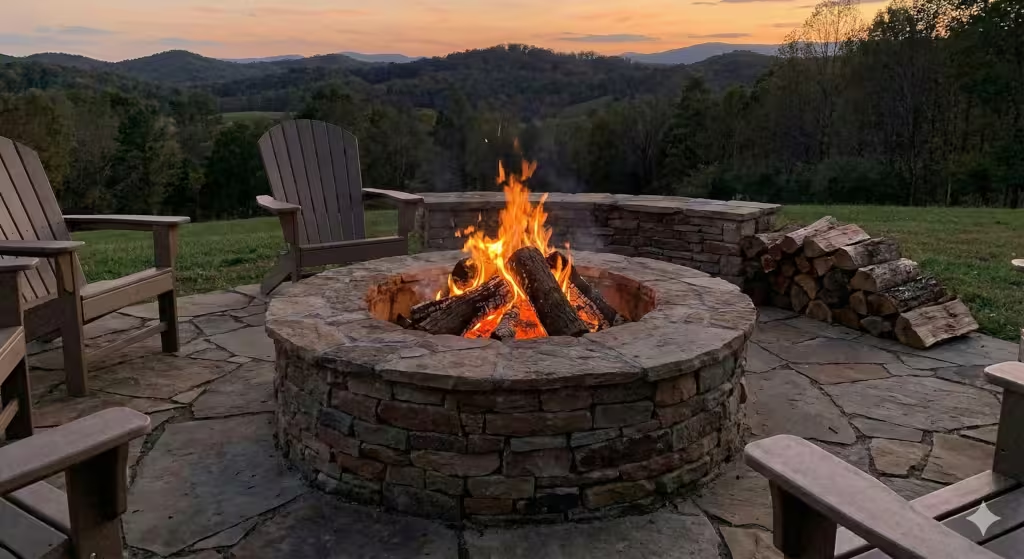
There is a special feeling you get from a wood fire pit that is hard to copy. It starts with the sound of the crackle and the smell of the smoke. For many folks in the Tri-Cities, this is the only way to have a fire. It reminds us of camping trips in the Smokies or old family gatherings. A wood fire pit is usually the most affordable way to get started. You can buy a simple metal ring for under a hundred dollars, or you can build a beautiful stone circle yourself over a weekend.
One of the best things about a wood fire pit is the heat. Wood fires can get much hotter than gas fires. If you want to stay warm when the temperature drops into the thirties, wood is the way to go. You can also use it for cooking. Whether you are roasting marshmallows with the kids or grilling a steak over hot coals, the flavor you get from a wood fire pit is authentic. However, you have to be ready for the smoke. Depending on which way the wind is blowing, you might find yourself playing “musical chairs” to stay out of the smoke cloud.
Engineering Highlight: Smokeless Technology
In the last few years, a new kind of fire pit has changed the game. Brands like Solo Stove and Breeo have created “smokeless” designs. They do this using something called secondary combustion. In a normal fire, the smoke is actually just unburned fuel. These new pits have double walls with holes at the bottom and the top.
As the fire burns, air is pulled into the bottom holes. It gets heated up between the walls and then shoots out of the top holes. This hot air mixes with the smoke and burns it off before it ever leaves the fire pit. This means you get all the heat and sound of a wood fire pit without the stinging eyes and smelly clothes. If you are worried about the mess of a traditional fire, these high-tech wood pits are a great middle ground.
Gas and Propane Fire Pits: The Convenience Factor
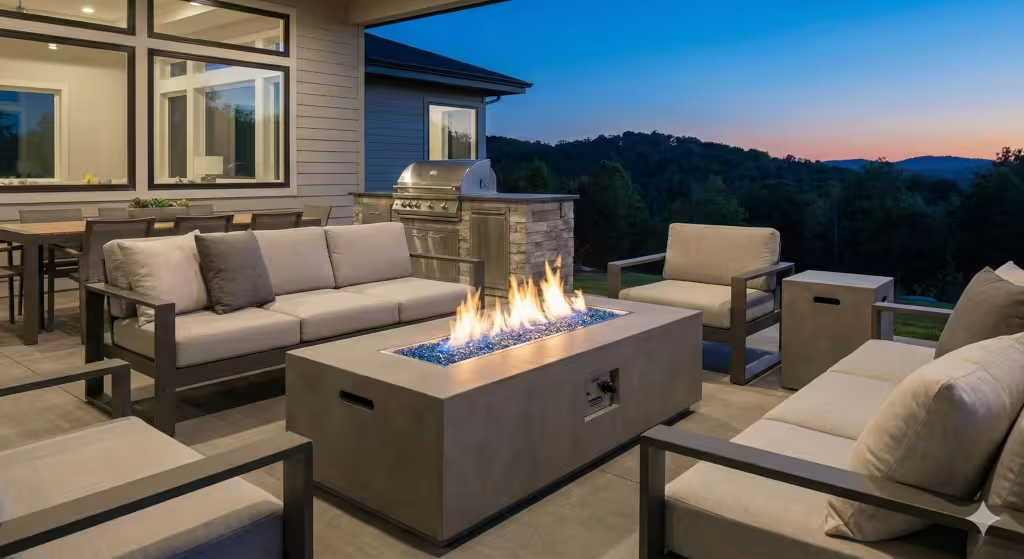
If you are a busy professional or someone who just wants to relax without a “to-do” list, a gas fire pit might be your best friend. With a gas fire pit, there is no wood to chop, no matches to strike, and no ash to shovel. You simply turn a knob, press a button, and you have a perfect flame in seconds. This makes it much easier to enjoy a fire for just twenty or thirty minutes before bed.
There are two main ways to fuel a gas fire pit. The first is liquid propane. This usually involves a tank, like the one you use for your gas grill. You can hide the tank inside the base of the fire pit or run a hose to a tank hidden behind a nearby chair. The second way is natural gas. This requires a permanent line run from your house. While it costs more to set up, you never have to worry about running out of fuel in the middle of a party. A gas fire pit is also a lot cleaner. You can use beautiful fire glass or lava rocks to create a look that fits a modern home perfectly.
Cost Analysis: Upfront vs Long-Term
When we talk about the cost of a fire pit, we have to look at two things: what you pay today and what you pay every month. A basic wood fire pit is very cheap to start. You can get a nice one at a local hardware store for $150 to $300. If you want a custom stone fire pit built by a pro, you might spend $1,500 to $2,500. The long-term cost is mostly the price of firewood. If you have trees on your land and a chainsaw, your fuel might even be free.
A gas fire pit is a different story. A nice propane fire pit table might start at $500, but a custom natural gas fire pit can easily cost $3,000 or more. This is because you have to pay for the burner system and the labor of a licensed plumber to run the gas line. However, the monthly cost to run a natural gas fire pit is very low. You also save a lot of time. In my experience as a builder, many people find that the higher upfront cost of a gas fire pit is worth it because they actually end up using it much more often.
Local Considerations for Tri-Cities Residents
Living in East Tennessee means we have to think about our specific environment. In Johnson City, for example, the city rules are very strict about “open-air burning.” You are generally not allowed to just burn a pile of leaves or brush. However, a small fire pit used for warmth or cooking is usually okay as long as you follow safety rules. In Kingsport, the fire marshal requires a wood fire pit to be at least 15 feet away from any building if it has a spark screen, and 25 feet away if it doesn’t.
You also have to think about our humidity. We get a lot of rain and moisture in the Tri-Cities. If you buy a cheap steel fire pit and leave it out in the rain, it will rust through in just a few seasons. I always recommend spending a little extra on a fire pit made of stainless steel or thick masonry. If you go with wood, make sure you have a dry place to store your logs. Wet wood creates a lot of smoke and is hard to light.
Safety and Maintenance: A Professional Perspective
Safety should always come first when you are playing with fire. For a wood fire pit, the biggest danger is flying embers. One little spark can land on a dry leaf or a wooden deck and start a fire you didn’t plan for. That is why you should always use a spark screen. You also need to have a way to put the fire out completely before you go inside. Dumping a bucket of water on a wood fire pit is effective, but it creates a messy ash soup that you have to clean up later.
A gas fire pit is safer in many ways because there are no sparks. You can also turn it off instantly. But gas has its own risks. You have to check the connections for leaks every season using a simple soap-and-water test. If you see bubbles, you have a leak. Maintenance for a gas fire pit is mostly about keeping the burner clear of spider webs or debris. For a wood fire pit, you have to shovel out the ash regularly. If ash sits in a metal pit and gets wet, it becomes acidic and eats through the metal very quickly.
Decision Matrix: Which One Should You Build?
So, how do you choose? I like to tell my clients to look at their lifestyle. If you love the “ritual” of building a fire, finding the kindling, stacking the logs, and watching the flames grow, then a wood fire pit is for you. It is the best choice for people who want the most heat and that classic campfire smell. It is also the best choice if you are on a tight budget and want to do most of the work yourself.
If your life is fast-paced and you only have a little bit of free time in the evenings, go with a gas fire pit. It is perfect for a quick wind-down after work. It is also the smarter choice if you want to put your fire pit on a wooden deck or very close to your house, as it is much easier to control. Just remember that you will need to invest more money at the start to get a high-quality gas fire pit that will last.
Questions Answered about Fire Pits
Which fire pit gives off the most heat?
Generally, a wood fire pit will give off more heat than a gas one. A large pile of burning hardwood can produce a massive amount of radiant energy. Gas pits are usually limited by the size of the burner, which is measured in BTUs. While a gas fire pit is plenty warm for a small group, it won’t heat up a large backyard like a big wood fire will.
Can you put a fire pit on a wood deck?
I get asked this a lot in Johnson City. You should never put a wood-burning fire pit directly on a wood deck. The heat and the sparks are just too dangerous. A gas fire pit is much safer for a deck, but you still need to follow the manufacturer’s rules. You might need a heat shield or a special “deck protector” mat under the fire pit to keep the wood from getting too hot.
Is a gas fire pit worth the money?
If you value your time, then yes. Many people buy a cheap wood fire pit and find that they only use it once a year because it is too much work to set up and clean up. People with a gas fire pit often use it several times a week. If you use it more, the cost per use goes down, making it a great investment for your home.
Does a gas fire pit attract mosquitoes?
Actually, wood smoke is a natural way to keep bugs away. Mosquitoes don’t like the smell or the thickness of the smoke. A gas fire pit burns very clean, so it doesn’t have that same “bug spray” effect. However, the heat and light from any fire pit might attract some insects, so it is always good to have some citronella candles nearby just in case.
Fueling the Fire: Hardwood vs Softwood
If you choose a wood fire pit, the type of wood you burn matters just as much as the pit itself. In the Tri-Cities, we are lucky to have plenty of hardwood like Oak and Hickory. These are the “gold standard” for fires. Oak burns very slowly and gives off steady heat for hours. Hickory is great if you want a strong, pleasant smell or if you plan to cook some hot dogs.
Avoid burning “softwoods” like Pine or Cedar as your main fuel. These woods have a lot of sap and resin in them. When they burn, they pop and snap, sending sparks everywhere. They also create a lot of “creosote,” which is a sticky black soot. Softwood is fine for starting the fire because it lights quickly, but once the fire is going, switch to seasoned hardwood for the best experience. “Seasoned” just means the wood has been dried out for at least six months. Green or wet wood will just hiss and create a ton of smoke that will ruin your evening.
Designing Your Backyard Oasis
When I am designing a home in Kingsport, I think about how the fire pit fits into the “flow” of the backyard. You don’t want your fire pit to be an island in the middle of nowhere. You want it to feel like a room. If you go with a gas fire pit, you can often build a “fire table” that has space around the edges for drinks and plates. This makes it a very social spot.
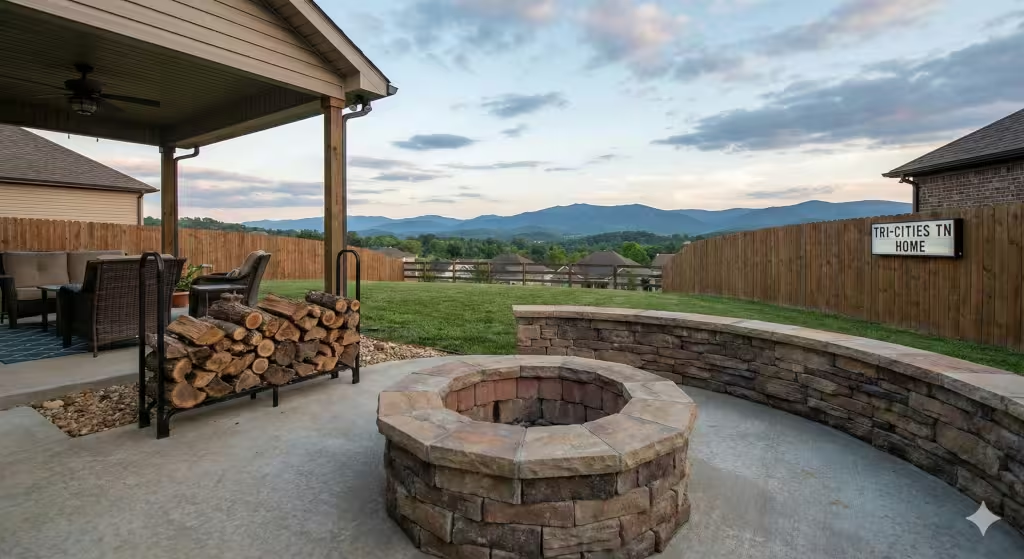
For a wood fire pit, you need more space. I recommend at least 7 feet of “seating room” around the pit so people can move their chairs back if it gets too hot. You also need a place nearby to store your wood. A nice-looking wood rack can actually add to the look of your yard. No matter which one you choose, think about the lighting. A few string lights overhead can make the whole area feel magical once the sun goes down and the fire pit is glowing.
Final Thoughts from Tri-Cities TN Home
Building a fire pit is one of the best things you can do for your home’s value and your own happiness. Whether you choose the rugged, powerful heat of a wood fire pit or the sleek, easy-to-use style of a gas fire pit, you are creating a place where memories are made. Take your time to look at your budget and your backyard layout. Talk to your neighbors and check your local city codes to make sure you stay on the right side of the law.
At the end of the day there is no “wrong” answer, only the answer that fits you best. If you live in a windy spot near a lot of trees, go gas for safety. If you have a big open field and love the smell of the woods, go with wood. Either way, you are going to love those cool Tennessee nights a whole lot more once your fire pit is up and running.
Bonus Section: Ready to Put Together Your Fire Pit?
Building a backyard fire pit that lasts is all about choosing the right materials from the start. In the Tri-Cities, we deal with plenty of moisture and temperature swings. If you don’t build with precision, the freeze-thaw cycles in East Tennessee will crack your masonry in just a few years. You need to look at a fire pit as an engineering project. You need a solid base for drainage, a heat-resistant core to protect the structure, and a durable exterior that looks great in your landscape.
Below is a detailed shopping list organized by the layers of construction. We have selected these materials based on their ability to handle high heat and our local climate.
The Foundation: Base and Drainage Materials
The most common mistake we see in Johnson City is building a fire pit directly on the grass. You need to excavate and create a foundation. Because we have high humidity, drainage is key. If water sits under your fire pit and freezes, the ground will heave and shift your stones.
Crushed Stone or Road Base: You will need about 4 to 6 inches of compacted crushed stone. This provides a stable “floating” foundation.
Paver Sand: A 1-inch layer of leveling sand on top of the crushed stone helps you get your first layer of blocks perfectly level.
Lava Rocks: These are excellent for the very bottom of the fire pit interior. They allow water to drain away while withstanding the heat from the embers above.

I highly recommend the American Fire Glass Small Black Lava Rock. These small rocks are efficient at filling the gaps and providing a clean look at the base of your fire pit.
The Inner Core: Fire Bricks and Refractory Mortar
Standard red bricks or concrete blocks are not designed for direct fire contact. They can trap moisture and actually explode when they get too hot. To do this right, you must line the inside of your fire pit with fire bricks. These are made of refractory ceramic that reflects heat back into the fire.
Fire Bricks: These are the “armor” for your fire pit. They are rated for thousands of degrees.
Refractory Mortar: This is a special cement that stays strong under high heat. Regular mortar will crumble under the stress of a fire pit flame.
For a classic look, I suggest the Rutland 604-1 Fire Brick. These are intermediate-duty bricks that are perfect for residential use. They measure 9 inches by 4.5 inches, making them easy to stack in a circle.
To hold those bricks together, you will need Rutland Dry Mix 211 Refractory Mortar. This mortar is a favorite among builders because it can be used for both joining and as a thin over-coat to give the inside of your fire pit a smooth finish.
The Fire Ring: Steel Liner
Even with fire bricks, I always recommend a steel fire pit liner. This acts as an extra layer of protection for your stone and helps contain the ash. It also makes the fire pit much easier to clean. In Kingsport, using a steel liner is often a safety preference because it helps prevent heat from transferring too quickly to nearby combustible materials.
36-Inch Steel Ring: This is the standard size for a family-sized fire pit. Look for heavy-duty steel with a high-temperature powder coating.
The Blue Sky Outdoor Living 36 in. Round Fire Ring is an excellent choice. It is made of heavy-duty steel and features a finish that won’t peel or flake under the intense heat of a fire pit.
The Exterior Wall: Decorative Stone and Pavers
This is where you give your fire pit its personality. In the Tri-Cities, we have access to beautiful natural fieldstone, but concrete pavers are also a very durable and easy-to-install option. You want a stone that is non-porous so it doesn’t absorb water and crack during a winter freeze.
Landscaping Pavers: These come in uniform shapes, making them much easier for a DIY project.
Natural Flagstone: Best for a rustic, Appalachian look. Granite and slate are the most durable for our region.
If you want a traditional look, the MSI Belgium Paver Block Gray Granite Cobblestone is incredibly tough. Granite is one of the densest stones you can buy, meaning it will stand up to the Tennessee weather for decades without losing its color or strength.
Summary of the Build
By following this list, you are building a professional-grade fire pit. You have the drainage layer to handle the rain, the fire bricks to handle the heat, and the granite or steel to handle the elements.
| Layer | Material Recommendation | Why It Matters |
| Foundation | Crushed Stone & Lava Rock | Prevents shifting and allows drainage. |
| Inner Core | Rutland Fire Bricks | Reflects heat and protects outer stone. |
| Bonding | Refractory Mortar | Stays strong at 2,000°F+. |
| Liner | 36″ Steel Ring | Containment and ease of cleaning. |
| Exterior | Granite or Concrete Pavers | Durability and aesthetic appeal. |