If you are a woman planning your dream home in the Tri-Cities, you know that a house is more than just four walls. It is a sanctuary for your family and a place where memories take root. When you look at a beautiful lot in Johnson City or Kingsport, those massive, ancient oak trees are often what make you fall in love with the land. They offer shade for summer picnics, a home for local birds, and a sense of history that you just cannot buy at a hardware store.
Many buyers see trees as vital parts of your home’s infrastructure. Saving large oak trees is not just about being kind to nature; it is a smart financial move that protects your property value. A dead oak tree is a liability that costs thousands of dollars to remove, but a healthy one is a legacy.
Our goal is to help you navigate the building process with a calm, precise plan so your new home and your old trees can thrive together for generations.
The Value of a Tri-Cities Legacy
In our part of East Tennessee, we have a deep respect for the land. A lot of builders and buyers often think about the history these trees have seen. Some of the white oaks in our area were saplings when the first settlers arrived. Saving large oak trees is a way to honor that past while building your future.
From a professional standpoint, these trees do a lot of heavy lifting. They keep your yard cool, which lowers your air conditioning bills. They also act as giant sponges that soak up rainwater, which is very important given our hilly terrain and occasional heavy storms. If you cut them down, you might deal with more mud and erosion. Saving large oak trees and keeping them healthy is a win for your wallet and your peace of mind.
The Cost of Neglect
However, buyers need to be cautioned that often a builder tells a homeowner they will “be careful” around a tree, but they do not have a real plan. Six months after the family moves in, the leaves start to turn brown in July. By the next year, the tree is a skeleton. At that point, you have to bring in a crane to take it down over your brand-new roof.
Saving large oak trees requires a proactive approach. It is much cheaper to spend a little extra time and money on protection during construction than it is to pay for a dangerous tree removal later. Think of tree protection as a form of insurance for your landscape. It is about doing the job right the first time.
Implementing a Zero Impact Strategy
When we talk about saving large oak trees, we aim for a “Zero Impact” strategy. This means we want the tree to behave as if the construction never happened. We do this by looking at the tree from the ground up, and especially from the ground down.
Most people think the roots of an oak tree look like a mirror image of the branches, going deep into the earth. In reality, oak roots are more like a wide, flat pancake. They stay mostly in the top two feet of soil where they can get oxygen. If we can keep that “pancake” of roots safe from heavy trucks and digging, the tree has a great chance of staying healthy.
Hiring a Certified Arborist
Before you even pull a building permit, you should talk to a certified arborist. Think of them as a doctor for your trees. While I handle the engineering and the construction side, the arborist tells us exactly what the tree needs to survive.
They can look at a tree and tell if it is already sick or if it has structural problems that make it dangerous. Saving large oak trees is only worth it if the tree is healthy enough to live for another fifty years. An arborist will give us a professional report that we can use to design your home’s footprint around the most important trees.
Determining Survivability
Not every tree on your lot can be saved, and that is okay. Sometimes a tree is right where the driveway has to go, or it is already leaning toward where your bedroom will be. Saving large oak trees is about picking the “winners,” the strongest, healthiest trees that add the most beauty to your site.
We look for signs of health like dark green leaves, a full canopy, and a trunk that does not have large holes or mushrooms growing out of it. If a tree is already in bad shape, it might be better to remove it before the house is built so you can plant a new, healthy tree in its place.
Mapping the Assets
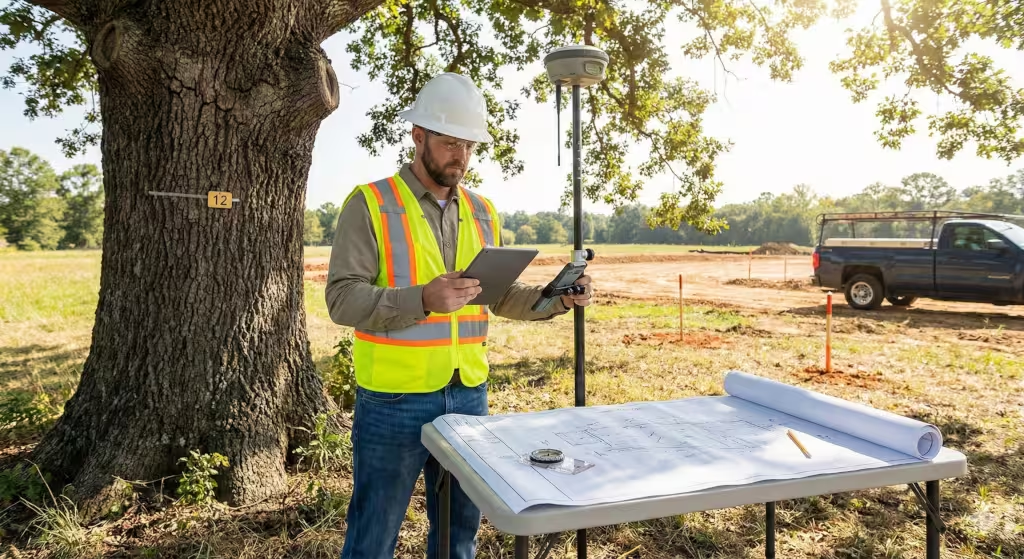
Once we know which trees we want to keep, we put them on the map. A professional surveyor will mark the exact center of each tree on your site plan. We also measure the Diameter at Breast Height, or DBH. This is just a fancy way of saying we measure how wide the tree is at about four and a half feet off the ground.
Knowing the DBH is vital for saving large oak trees. It tells us how much space the roots need. We use this data to make sure your foundation, your utility lines, and your driveway stay far enough away to keep the tree happy.
The Mathematics of Protection
We use a simple formula to find the Critical Root Zone, or CRZ. For every inch of tree diameter, we allow for at least one foot of radius for protection. So, if you have a massive oak that is 30 inches wide, we need a circle with a 30-foot radius around that tree.
Saving large oak trees is a numbers game. If we ignore these numbers, we are just guessing. By calculating the CRZ, we create a clear “no-go zone” for the construction crew. This ensures that the most important roots are never touched.
Defining the Tree Protection Zone
Once we have the math done, we create a physical Tree Protection Zone, or TPZ. This is the area on the ground that must remain undisturbed. No digging, no driving, and no storage of materials can happen inside this circle.
Saving large oak trees depends entirely on how well we respect this zone. It is not just a suggestion; it is a boundary that protects the life of the tree. When the TPZ is clearly marked, every person working on your house knows exactly where they are allowed to be.
Visualizing the Root System
It helps to visualize what is happening under the grass. Imagine the tree is a giant straw, sucking up water and nutrients from the soil. The tips of the roots, which are often out past the edge of the branches, are the most important parts for drinking.
Saving large oak trees means protecting those tiny “feeder roots.” If we park a heavy truck over them, we crush the tiny tunnels in the soil that hold air and water. Without air, the roots suffocate. That is why the protection zone needs to be as large as possible.
Using Technical Terms for Better Health
When we talk to experts about saving large oak trees, we use specific terms. For example, we look at the “root flare,” which is where the trunk widens out at the bottom. We also talk about “soil aeration,” which is making sure the ground stays loose so the roots can breathe.
Using the right words helps us communicate better with the workers on the job site. It shows that we are serious about the health of the landscape. We also pay attention to the “canopy drip line,” which is the imaginary circle on the ground where rain falls off the outer leaves.
The Orange Fence Myth
You have probably seen those thin, orange plastic fences around trees at construction sites. To be honest, they are almost useless. A bulldozer can drive right through them, and workers often push them over to eat lunch in the shade.
Saving large oak trees requires a real barrier. Some builders prefer using chain-link fencing or heavy wooden frames made of 2x4s. These are much harder to move and send a strong signal that the tree is off-limits. If the fence is sturdy, the tree stays safe.
Trunk Wrapping for Safety
Sometimes a house is being built in a tight space, and equipment has to move close to the trees. In these cases, we use trunk wrapping. we strap several 2×4 boards vertically around the trunk of the tree using strong wire or straps.
This acts like a suit of armor. If a piece of lumber or a small machine accidentally bumps the tree, the wood takes the hit instead of the bark. Saving large oak trees means protecting the bark, because the bark is like the tree’s skin. If it gets peeled off, the tree can get “infections” from bugs or fungus.
Signage and Education
Make sure that your builder has big, clear signs on the fences that say “Tree Protection Zone: Do Not Enter.” But signs aren’t enough. subcontractors when they arrive on the site need to be advised about the tree protection zone.
Explain that saving large oak trees is a priority for the homeowner. Make sure that contractors know not to pour out extra concrete or paint thinner near the trees, as these chemicals can kill the roots quickly. When everyone understands the “why” behind the rules, they are much more likely to follow them.
The Silent Killer: Soil Compaction
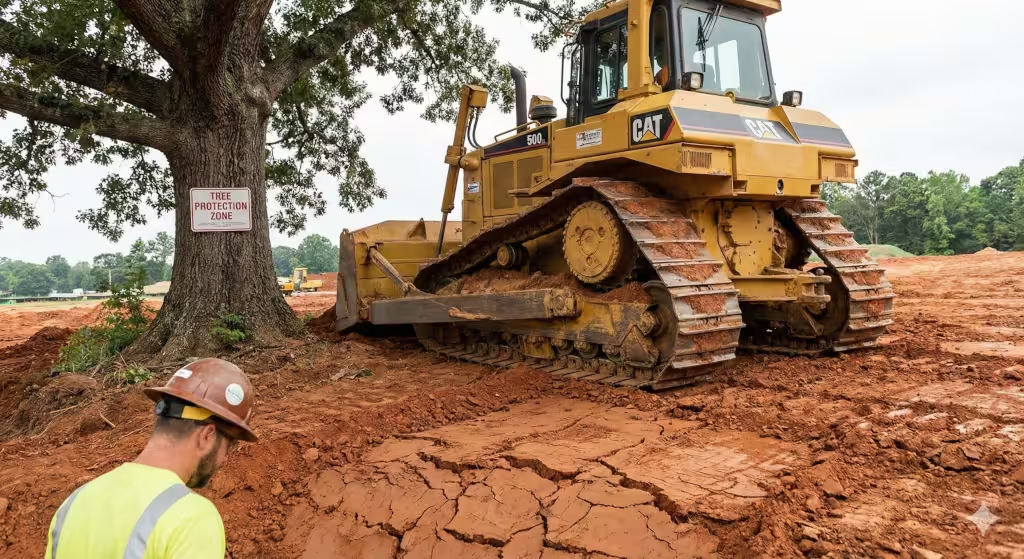
In our Tri-Cities area, we have a lot of clay in our soil. Clay is very easy to pack down. When a heavy truck drives over clay soil, it squishes it until it is almost as hard as a brick. This is called soil compaction, and it is the number one reason trees die during construction.
Saving large oak trees is mostly about preventing this compaction. Once the soil is packed down, it is very hard to fix. The roots can’t grow through it, and water can’t get in. That is why we keep the trucks far away from the root zones of your favorite oaks.
Horizontal Boring for Utilities
Normally, when a builder needs to run a water line or a power line, they dig a big trench. If that trench goes right through a tree’s root system, it is like cutting off the tree’s legs. To avoid this, we use a method called horizontal boring.
This uses a machine to drill a hole underground instead of digging from the surface. We can go right under the roots without hurting them. Saving large oak trees is much easier when we use technology like this to stay out of the tree’s way.
Air-Spade Excavation
If we absolutely must see where the roots are, we use a tool called an air-spade. This tool uses a high-powered blast of air to blow the dirt away from the roots. It is amazing because the air doesn’t hurt the tough tree roots, but it clears the soil away perfectly.
This allows us to see exactly where the main roots are located. We can then adjust our plans to avoid them. Saving large oak trees is much more precise when we can actually see the root system we are trying to protect.
Building Foundations Near Trees
Sometimes you want your house to be very close to a beautiful tree so you can see it from your window. In these cases, we can’t use a standard “dig and pour” concrete foundation. Instead, we might use something called “helical piles” or “pier and beam” foundations.
These are like stilts that go deep into the ground. They have a very small footprint, so they don’t crush many roots. Saving large oak trees while building close to them is possible if we use the right engineering techniques to bridge over the root zones.
Local Codes and Ordinances
In places like Johnson City and Kingsport, there are often rules about how many trees you can cut down. Some neighborhoods have “tree preservation” rules that you must follow to keep the community looking beautiful.
Saving large oak trees helps you stay in the good graces of the local planning commission. It can also save you from paying fines for removing protected trees without a permit. We want your building process to be smooth and legal.
Stormwater and Erosion Control
When you have a lot of rain in East Tennessee, the water needs somewhere to go. Large oak trees are like natural pumps. One mature oak can soak up hundreds of gallons of water in a single day.
Saving large oak trees helps manage the “stormwater” on your property. If you remove the trees, you might have to build expensive drainage systems or “retention ponds” to keep the water from flooding your yard or your neighbor’s yard. The trees do this work for free.
Protecting Boundary Trees
Sometimes the best tree on the lot is actually right on the line between your land and your neighbor’s land. These are called “boundary trees.” Legally, you usually share ownership of these trees with your neighbor.
Saving large oak trees on property lines is vital for keeping a good relationship with the people next door. If you damage a neighbor’s tree, it can lead to expensive legal battles. We always recommend talking to your neighbors early and showing them your plan for keeping the shared trees safe.
Post-Construction Care
The work isn’t done just because the house is finished. The first few years after construction are a “stress test” for the tree. It needs extra love and attention during this time. Saving large oak trees often involves a plan for watering and fertilizing after the builders leave.
If the soil did get a little bit packed down, we can use “radial trenching.” This is when we dig small trenches away from the tree and fill them with good, loose soil and compost. It gives the roots a fresh place to grow and helps the tree recover from the stress of construction.
Hydration and Mulching
Trees get thirsty, especially after their environment has changed. When you build a house, you might change how the wind blows or how much sun hits the ground. This can dry out the soil. Saving large oak trees requires keeping the soil moist but not soggy.
We also recommend a thick layer of wood mulch around the base of the tree (but not touching the bark). Mulch acts like a blanket. It keeps the roots cool, holds in moisture, and slowly turns into food for the tree as it breaks down. It also keeps people from mowing the grass too close to the trunk.
Monitoring for Decline
Even with the best plan, you need to keep an eye on your trees. I tell my clients to look for “early fall color.” If an oak tree starts turning red or brown in August when it should still be green, it is a sign of stress.
Saving large oak trees is an ongoing process. If you see signs of trouble, call your arborist right away. Catching a problem early—like a bug infestation or a fungus—is much easier than trying to save a tree that has already lost half its leaves.
The Financial Impact of Trees
Let’s talk about the money side of things. Studies have shown that a mature, healthy tree can add up to 10% or even 20% to the value of a home. In a nice neighborhood in the Tri-Cities, that can mean tens of thousands of dollars in equity.
Saving large oak trees is one of the best investments you can make. You are essentially getting a piece of “living architecture” that grows more valuable every year. When you go to sell your home someday, those big oaks will be a major selling point for the next family.
Environmental Benefits
We all want to do our part for the planet. A large oak tree is a powerhouse for the environment. It cleans the air by breathing in carbon dioxide and breathing out oxygen. It also provides food and shelter for squirrels, birds, and beneficial insects.
Saving large oak trees is a way to keep the ecosystem of your yard healthy. When you keep the old trees, you keep the birds that eat the mosquitoes, and you keep the shade that protects your garden. It is all connected, and it starts with those big oaks.
Why Oak Trees are Special
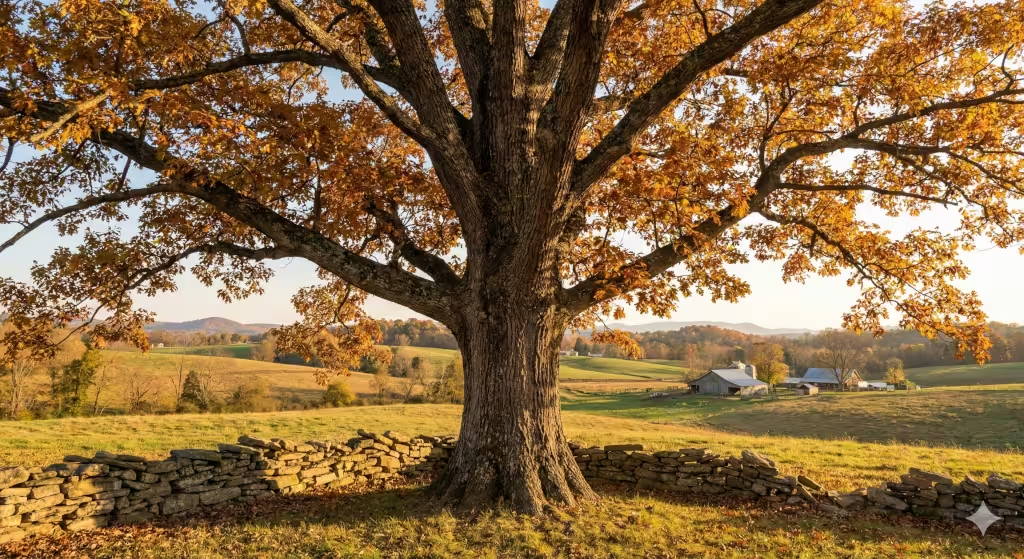
In Tennessee, the oak is a symbol of strength. There are many types, like the White Oak, the Red Oak, and the Pin Oak. They are known for their hard wood and their ability to live for hundreds of years. Unlike some trees that grow fast and fall down in a windstorm, oaks are built to last.
Saving large oak trees is rewarding because they are so resilient. If you give them a little bit of help, they can survive a lot. They are the “anchor” of the landscape, providing a sense of permanence and stability to your new home site.
Working with Subcontractors
Subcontractors are often focused on getting their specific job done. The plumber wants to lay the pipes, and the framer wants to put up the walls. They might not be thinking about your trees.
Saving large oak trees requires constant supervision. I make sure to do walk-throughs every day to ensure fences are standing and no one has parked a truck in a root zone. It takes a “boots on the ground” approach to make sure the plan is actually being followed.
Planning Your Driveway
One of the biggest threats to trees is the driveway. People often want a straight path from the road to the garage, but that path might go right over a root system. Saving large oak trees often means being flexible with your driveway design.
We can curve the driveway to go around the tree, or use “pervious pavers” that allow water and air to reach the roots underneath. A curved driveway often looks more elegant and high-end anyway, so it is a win-win for the look of your home and the health of the tree.
Understanding Tree Stress
Trees don’t scream when they are hurt. They suffer in silence, and it often takes a long time for the damage to show up. A tree might look fine for two years after you build, only to die in the third year because its roots were crushed during the first week of work.
Saving large oak trees is about understanding this “lag time.” We have to be disciplined from day one. We can’t say, “Oh, it’s just one truck for one hour.” One heavy truck can cause enough compaction to start the decline of a hundred-year-old tree.
Creating a “Tree First” Mindset
Talk to your builder about putting the trees first. Instead of trying to fit a tree into a house plan, try to fit the house into the trees. This creates a home that feels like it has always been there.
Saving large oak trees is easier when they are the stars of the show. We can design windows that frame the branches and decks that wrap around the trunks. This makes your home unique and deeply connected to the beautiful Tennessee landscape we call home.
Final Thoughts on Preservation
Building a home is a big journey. It can be stressful, but it is also one of the most exciting things you will ever do. By focusing on saving large oak trees, you are making a choice to build with integrity and foresight.
You are creating a home that is not just a building, but a part of the natural world. Those trees will provide shade for your children and a backdrop for your family photos. They are worth the effort, the planning, and the precise care that we put into every build.
Saving large oak trees is a team effort. It involves you, your builder, your arborist, and every worker on the site. When we all work together, we can create something truly special, a beautiful new home that lives in harmony with the ancient giants of the Tri-Cities.
Most Tri-Cities builders can help you look at your lot and figure out the best way to move forward while saving large oak trees.