Building a legacy starts with a single decision. In the Tri-Cities, where the rolling hills of Kingsport meet the bustling streets of Johnson City, we don’t just put up walls; we craft shelters that stand the test of time. If you want to build a house that your great-grandchildren will live in, you have to look beyond the surface. You have to out-engineer the elements and out-think the trends.
When you decide to build a house in our beautiful Appalachian region, you are making a promise to the future. You are saying that quality matters more than speed. You are saying that integrity is the most important ingredient in your mortar. To build a house that will last 100+ years, we must respect the land, the materials, and the science of how things stay dry. It is a journey of precision and competence, and we are here to guide you through every structural layer and legal hurdle.
Site Selection and Geotechnical Integrity
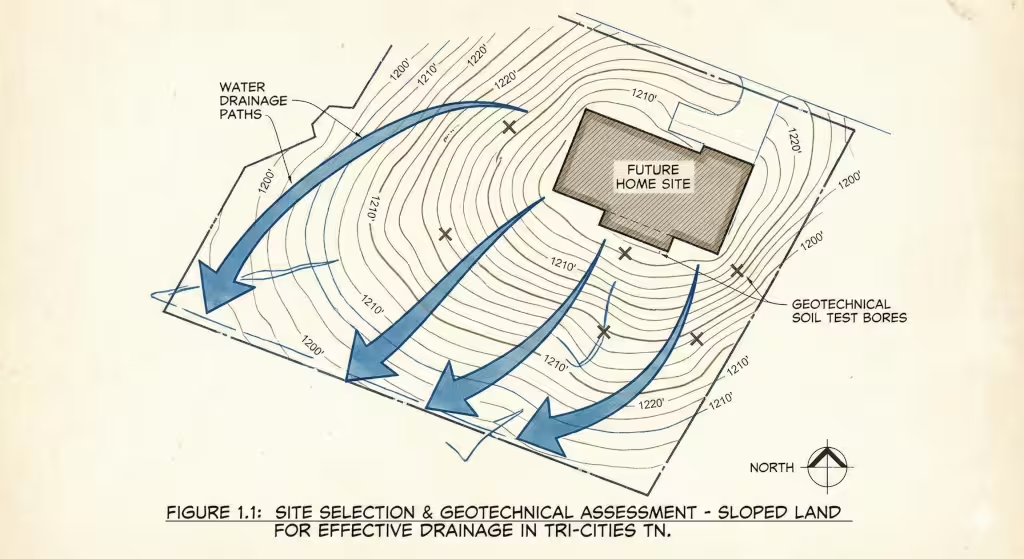
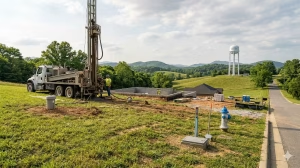
The first step when you build a house is to look at the ground. You cannot have a 100-year home on 10-year soil. In the Tri-Cities area, we deal with a lot of clay. Clay expands when it gets wet and shrinks when it gets dry. This movement can crack a foundation over time. To build a house that stays still for a century, you need a geotechnical assessment. This is when a scientist tests the soil to see how much weight it can hold.
You also want to look for the “high ground.” Water is the biggest enemy of any building. If you build a house at the bottom of a hill, you are inviting every rainstorm to visit your basement. We want to find a spot that naturally sheds water away. In places like Sullivan and Washington County, there are also legal rules about erosion. You must have a plan to keep your soil on your land. A professional structural engineer can help you plan a site that keeps your home high and dry for many decades.
When you decide to build a house in Kingsport or Johnson City, you have to respect the hills. Our region is beautiful, but it can be tricky. The first thing anybody who wants to build a house should look at is the “lay of the land.” You want a lot that has a natural slope. This slope should carry water away from where the foundation will be. If you build a house in a “bowl” or a low spot, you are fighting a losing battle against gravity.
In the Tri-Cities, we also have to think about “karst” topography. This is a fancy word for land that has limestone underneath it. Sometimes, limestone can have small caves or sinkholes. This is why you must have a geotechnical engineer look at the land. They use tools to see what is under the grass. If you build a house on unstable ground, the best materials in the world won’t save it from cracking.
You also need to think about the sun. To build a house that lasts, you want to position it so the sun doesn’t beat down on the front door all day. This helps your siding and your cooling bill. In our part of Tennessee, we get a lot of wind from the west. Placing trees or using the shape of the land to block that wind can protect your roof for a hundred years.
The Foundation: Beyond Code Requirements
A foundation is like the roots of a tree. It is the most important part of the project. If the foundation fails, the house is over. When you build a house, you have to think about the weight. A large custom home weighs hundreds of thousands of pounds. All that weight pushes down on the footings.
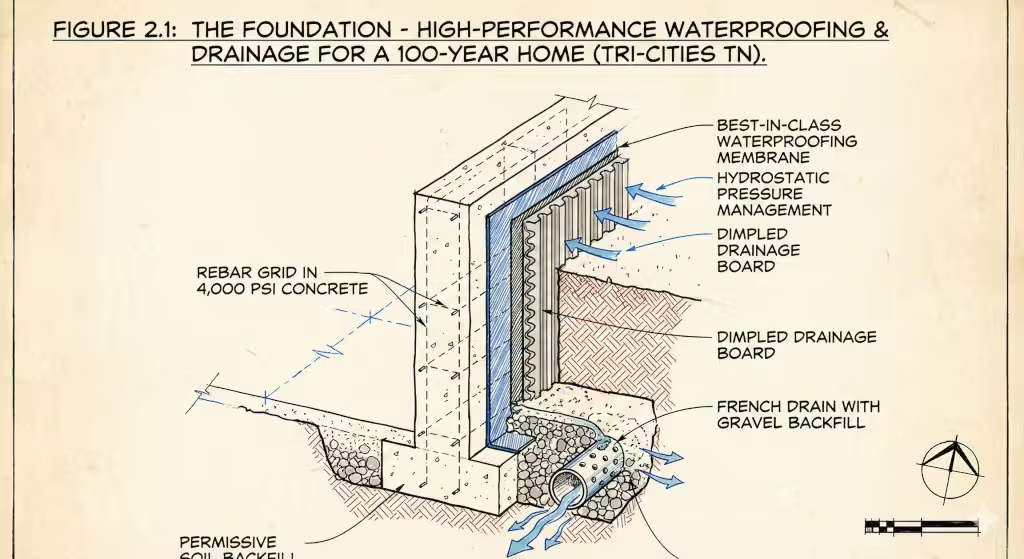
To build a house that doesn’t sink, we make the footings wider and deeper than the local code requires. Most builders only do what the law requires, which is the bare minimum. But when you build a house that lasts, the minimum is not enough. It is advised to use reinforced concrete with a high PSI rating. PSI stands for pounds per square inch, and it tells you how strong the concrete is. We also use a lot of rebar. Rebar is the steel “skeleton” inside the concrete that keeps it from pulling apart.
Another key to a lasting foundation is managing hydrostatic pressure. This is a fancy way of saying “the weight of the water in the soil.” If water sits against your walls, it will eventually find a way in. To keep water out we have to talk about “waterproofing” versus “damp-proofing.” Most builders just spray a thin black liquid on the walls. That is damp-proofing, and it only lasts a few years.
To build a house that stays dry for a century, you need a thick rubber membrane. This membrane is like a giant raincoat for your foundation. On top of that, you need to put in a dimpled plastic board. This board creates a small space for water to fall straight down into the drain pipes rather than sitting against your wall.
We use rebar in every foundation. Rebar is steel that has ridges on it. When concrete dries around rebar, they become one solid unit. The concrete handles the weight, and the steel handles the pulling and stretching. This is how bridges are built. If you build a house using bridge-building logic, it will not move.
Structural Framing: Engineering for Stability
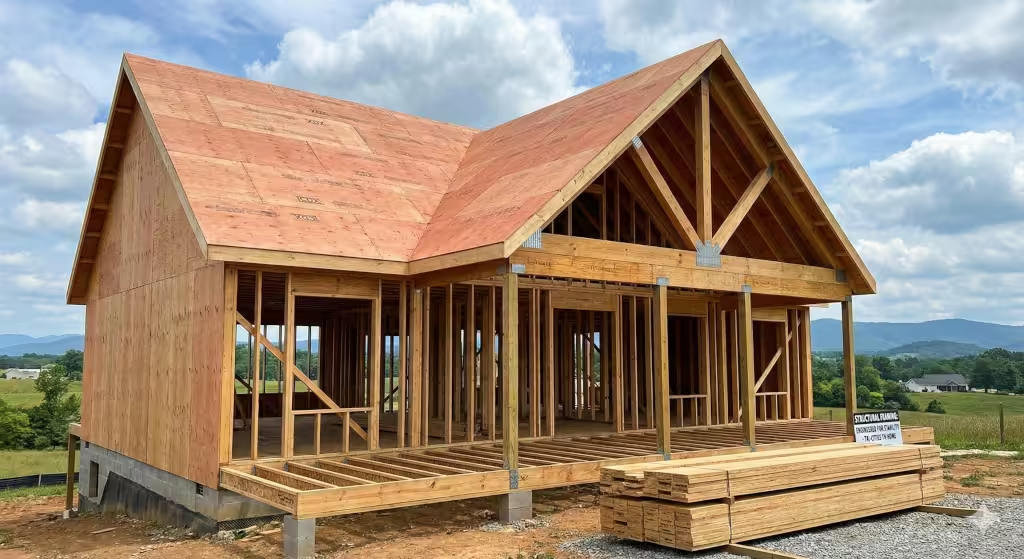
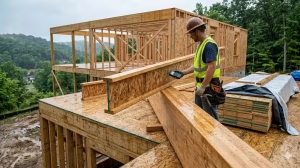
Once the foundation is set, it is time to build a house frame. This is when you start to see the shape of the home. Standard “green” lumber wood from the local big-box store is okay, but it can warp or shrink as it dries. This leads to cracks in your drywall and doors that won’t close.
For a 100-year home, it is preferable to use engineered lumber. Engineered wood, like I-joists and LVL beams, is made in a factory. It is perfectly straight and won’t shrink. This includes things like Laminated Veneer Lumber (LVL). These beams are made by gluing thin layers of wood together. They are much stronger and straighter than a regular log. When you build a house with a solid frame, the whole structure feels “tight” and quiet.
We also pay attention to the “skin” under your siding. Most builders use OSB, which is made of wood chips. It is cheap, but it can soak up water like a sponge. When you build a house to last, use 3/4 inch CDX plywood. Plywood handles moisture much better. It doesn’t swell up as much if it gets a little damp during construction. This keeps your floors and walls flat and solid for a very long time.
We also use “advanced framing” techniques. This means we place the studs in a way that allows for more insulation. It also means we use less wood in places where it isn’t needed for strength. This helps the house stay warmer in the winter and cooler in the summer. To build a house that is efficient, you have to think about the physics of heat.
The Building Envelope: Weatherproofing for the Tri-Cities
The outside of your home is like a shield. It takes the hit from the rain, the snow, and the sun. In the Tri-Cities, we have seen many homes with wood siding that rots after twenty years. To build a house that lasts 100 years, you need materials that do not decay.
Natural Tennessee stone is one of the best choices. It has been sitting in our mountains for millions of years. It isn’t going to fall apart because of a few rainstorms. Brick is also a fantastic choice. If you look at old buildings in downtown Johnson City, many of them are over 100 years old. They are still standing because brick and mortar are very durable.
If you don’t want stone or brick, you can use high-quality fiber cement. This is a mix of sand, cement, and wood fibers. It looks like wood but it won’t rot and bugs won’t eat it. When you build a house, you should also think about the “rain screen.” This is a gap of about half an inch between the siding and the house wrap. It lets air move behind the siding. This air keeps the wall dry. It is a simple step that many builders skip, but it is vital to build a house that survives a century.
Roofing Systems: The 100-Year Shield
The roof is the part of the house that works the hardest. It has to handle the weight of the snow and the heat of the July sun. Most people build a house with asphalt shingles. These are just paper and oil. They dry out and crack and only last about 20 to 25 years. To build a house with a legacy, you need a metal roof or a slate roof.
A standing seam metal roof is a great option. The “seams” or the places where the metal sheets join are raised up. This keeps the water away from the screws. It is a very smart design. A good metal roof can last 75 years or more. If you want the ultimate roof, you choose slate. Slate is actual stone. A slate roof can last 150 years if it is installed correctly.
The “flashing” is just as important as the roofing material. Flashing is the metal used in the corners and around the chimney. When you build a house, do not use aluminum for this. Aluminum can get small holes in it over time. Instead, use copper. Copper is expensive, but it lasts forever. It also turns a beautiful green color as it gets older, which adds a lot of character to a custom home.
High-Performance Windows and Doors
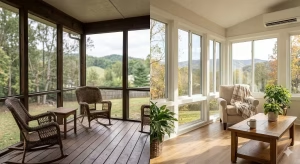
Windows are where the inside meets the outside and are often the weakest point in a building’s envelope. They are also where a lot of energy is lost, by letting heat out in the winter and moisture when it rains. To build a house that is comfortable, you need the best windows you can afford. In our region, vinyl windows are very popular because they are cheap. But vinyl expands and contracts a lot in the sun. Over time, the seals break, and the window gets “foggy.”
When you build a house for the long term, choose fiberglass or aluminum-clad wood windows. Fiberglass is made of glass fibers and resin. It expands and contracts at the same rate as the glass panes inside it. This means the seals stay tight for decades. You should also look for “triple-pane” glass. This adds an extra layer of protection against the noise and the weather.
The front door should also be a statement of quality. A solid wood door is beautiful, but it needs a lot of care. A high-end fiberglass door can look just like wood but won’t warp or rot. When you build a house, the doors and windows are the “jewels” of the design. They should be strong and beautiful.
Mechanical Systems and Modern Comfort
A house is like a human body. It must be comfortable to live in, or nobody will want to save it. The plumbing and electrical systems are like the veins and the nerves. If they fail, the whole house has a problem. To build a house that is easy to maintain, you want a “manifold” plumbing system. This uses PEX-A piping. PEX-A is a flexible plastic that is very hard to break. It can even expand if the water inside it freezes.
In a manifold system, every pipe goes back to one central hub. This is great because if a faucet in the bathroom starts to leak, you can turn off the water to just that one faucet at the hub. You don’t have to turn off the water to the whole house. Also, there are no joints hidden inside the walls. To build a house with fewer leaks, you want fewer joints.
For the electrical system, we use oversized conduits. A conduit is a pipe that wires run through. When you build a house today, you don’t know what technology will be like in fifty years. By using conduits, a future owner can pull out old wires and put in new ones without tearing down the walls. This is what we call “future-proofing.”
Indoor Air Quality and Moisture Control
To build a house that lasts, the air inside must be clean and dry. In the Tri-Cities, we have very humid summers. If the air inside your home gets too humid, you will get mold. Mold eats wood and makes people sick. This is why we use “whole-house dehumidifiers.” These are machines that work with your air conditioner to pull the water out of the air. Keeping your home’s humidity between 40% and 60% is the “sweet spot.”
We also use Energy Recovery Ventilators (ERVs). These are very smart machines. They bring fresh air from outside and filter it. Then, they use the cool air leaving the house to pre-cool the warm air coming in. This saves a lot of money on your power bill. To build a house that is healthy, you must have a plan for fresh air.
When we install the HVAC ducts, we seal them with a special gray paste called “mastic.” Most builders just use duct tape. But duct tape dries out and falls off after a few years. Mastic stays flexible and keeps the air in the pipes. To build a house that is efficient, you have to make sure the air goes where it is supposed to go.
Utilizing Local Appalachian Materials
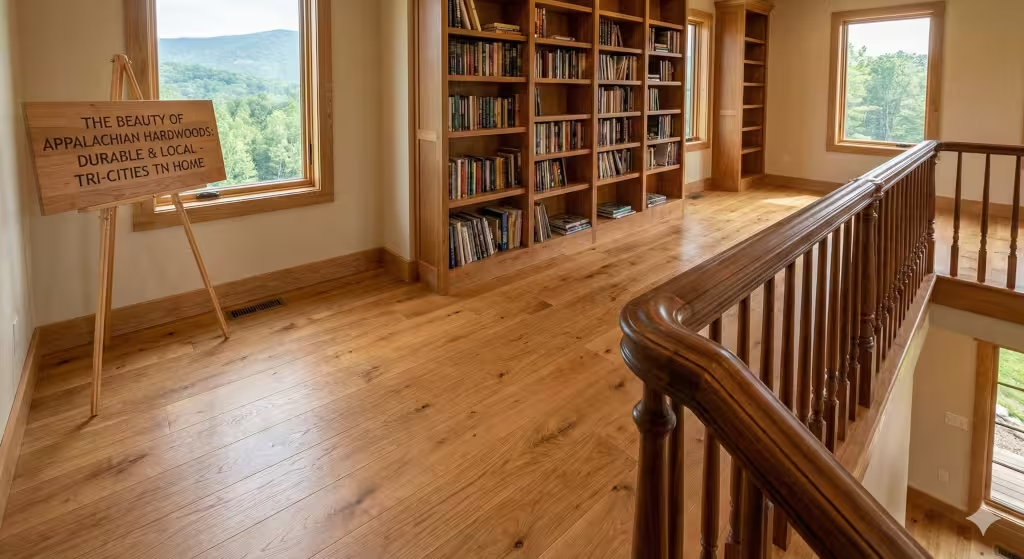
One of the best things about living in East Tennessee is our access to incredible wood. When you build a house, using local hardwoods like white oak or cherry is a great choice. These woods are very dense and strong. They can be sanded and refinished many times. This means your floors can look brand new even after fifty years of use.
Using local materials also helps the local economy and reduces the energy needed for shipping. When you build a house with local stone and local wood, the house feels like it grew right out of the ground. This connection to the land is a big part of why people love living in the Tri-Cities.
We also use “thick” trim and moldings. In cheap houses, the trim is very thin and made of compressed sawdust. When you build a house for a century, you use real wood trim. It handles bumps and scratches much better, and it adds a level of “competence” and “precision” to the interior design that you can really feel.
The Maintenance Legacy and Legal Documentation
When you build a house, you are also creating a set of legal documents. You want to make sure you have clear contracts with your builder. You also want to make sure that all the “permits” are closed correctly with the city or county. In Sullivan and Washington County, this is a very important step. If you are building a house that lasts 100 years, you have to think about who will take care of it after you.
To build a house that stays in the family, you should also think about “transferable warranties.” This means that if you ever sell the house, the warranty on the roof or the windows stays with the house. This adds a lot of value. I also recommend keeping a “maintenance log.” This is a book where you write down every time you service the HVAC or clean the gutters.
Finally, keep a copy of your blueprints in a safe place. If someone wants to remodel the kitchen in the year 2080, they will need to know where the load-bearing walls are. When you build a house with the future in mind, you are making life easier for the next generation. Building a 100-year home is about more than just lumber and nails. It is about a commitment to excellence. If you are ready to build a house that stands as a pillar of quality in the Tri-Cities, be sure to read the checklist below to get the right materials.
Detailed Checklist for High-Performance Materials
Building a home that lasts for a century is a noble goal. It requires a shift in how we think about construction. Most people build a house to satisfy their needs for the next ten or fifteen years. But when you build a house for the next hundred years, you are building for your children and their children. This is the difference between a temporary structure and a permanent legacy. In the Tri-Cities area of Tennessee, we have the climate and the materials to make this happen, but it takes a dedicated plan and a refusal to cut corners.
As we go through this guide, I will break down every part of the process. We will start from the dirt beneath your boots and go all the way to the peak of the roof. To build a house that survives the test of time, you must be precise. You must have integrity in the things that people will never see, like the pipes inside the walls and the steel inside the concrete.
If you are ready to talk to a contractor, take this list with you. These are the specific items that separate a standard home from a century home.
| Category | High-Performance Choice | Why It Matters |
| Foundation | 4,000+ PSI Concrete with Rebar | Prevents cracking and shifting over decades. |
| Waterproofing | Dimpled Membrane + French Drain | Keeps hydrostatic pressure from pushing water into the basement. |
| Subfloor | 3/4″ CDX Plywood (Glued and Screwed) | Much more moisture-resistant than OSB; prevents floor squeaks. |
| Framing | LVL Beams and Kiln-Dried Lumber | Reduces warping, shrinking, and wall cracks as the house settles. |
| Roofing | 24-Gauge Standing Seam Metal | Can last 50 to 100 years with almost no maintenance. |
| Flashing | Copper or Stainless Steel | Will not rust or corrode like aluminum or plastic. |
| Windows | Fiberglass or Aluminum-Clad Wood | Handles the Tennessee heat without warping or losing its seal. |
| Plumbing | PEX-A with Manifold System | Fewer joints mean fewer chances for a leak to ruin your structure. |
| Siding | Natural Stone or Brick Masonry | Does not rot, burn, or require painting every few years. |
Final Thoughts on Building a Legacy
Building a house that will last 100+ years is a big job. It requires more money and more time than a standard build. But the result is a home that is safer, quieter, and more valuable. It is a place where memories can be made for decades. In my experience as a general manager and project manager, the people who invest in quality never regret it.
When you are ready to build a house in the Tri-Cities, remember to focus on the things that matter. Focus on the foundation, the moisture control, and the quality of the materials. Don’t get distracted by fancy light fixtures or trendy paint colors. Those things can be changed easily. The “bones” of the house cannot.